















This is a growing field in quantum computing. This article will provide you with all the information that you need to know about how quantum computers work and the many ways that this new technology can positively impact your lifestyle. In this article, we will discuss and define, in simple terms, some of the concepts involved in quantum physics and quantum computing, and give a brief description of some concepts associated with quantum cryptography.
Summary
This beginner’s guide to quantum mechanics helps you learn the basics — including wave particle duality, uncertainty principle, superposition, entanglement, and tunneling — and provides examples of how you can use these concepts as an example to develop qubits, quantum gates, and quantum circuits.
In addition, the guide compares and contrasts the capabilities of quantum computing and classical computing, highlighting where speedups and efficiencies are possible. Finally, this guide describes quantum cryptography (specifically, Quantum Key Distribution) and the additional layer of security it provides.
#Quantum AI Simulation: Solving 7 Breakthrough Problems Classical Computers Can’t Model
Finally, the guide will give an overview of the potential uses for quantum computing in the future, as well as the obstacles that must be overcome before widespread use occurs, such as maintaining the stability of qubits, decreasing the amount of errors, making the technology cheaper, making the technology scalable, and interfacing with current computer hardware.
The Quantum World
Quantum physics behaves in strange ways and defies our everyday understanding of the world; it is governed by rules that are generally the exact opposite of what you might expect in your home. At the atomic level or lower, particle behavior differs completely from that described by classical physics (i.e., deterministic). Quantum Physics Guide – Future Applications & Hurdles
Wave-Particle Duality
One of the more confusing ideas in quantum mechanics is wave-particle duality. Depending on the measurement method used, electrons, photons, and other small particles exhibit properties of both waves and particles.
The double-slit experiment demonstrates wave-particle duality. In the double-slit experiment, light passing through two slits creates an interference pattern, indicating that it acts like a wave. However, when observing the individual photons passing through the slits, each photon acts like a particle.
Uncertainty Principle
Heisenberg’s Uncertainty Principle is a key component of Quantum Theory. Heisenberg’s Uncertainty Principle states that if you try to measure two other observables (such as Position and Momentum) with complete precision at the same time, you cannot do so. Therefore, this principle has a fundamental limit in its potential to determine Quantum Systems, thereby changing the classical idea of determinism.
Key Concepts in Quantum Mechanics
The ability to use Quantum Mechanics to introduce several fundamental concepts in Quantum Computing enables Quantum Computers to solve problems that would require classical computers significantly more time.
Superposition
One of the most interesting properties of Quantum Mechanics is that a Quantum Particle can be in all possible states (i.e., multiple states) at the same time. Think about flipping a coin that is in mid-air; the coin has not landed on either heads or tails; the coin is in both a heads AND tails state at the same time.
Because Quantum Particles can exist in multiple states simultaneously, Quantum Computers can process large quantities of data simultaneously, providing them with a significant processing advantage over Traditional Computers, which process data sequentially, one bit at a time. In addition, the possibilities for technological and computational innovation are theoretically infinite due to the computing capabilities of Quantum Computers.
Entanglement
When entangled (i.e., connected by a quantum mechanical relationship), the states of two particles will directly affect each other’s states regardless of the distance between them. If an event occurs to the first particle, then an instantaneous event will occur to the second particle, no matter how far apart they may be.
Einstein called this phenomenon “spooky action at a distance,” which he used to describe entanglement, the quantum mechanical phenomenon that causes entangled particles to instantaneously react with each other regardless of the distance between them. Entanglement has been applied in both theoretical models and practical applications; for example, researchers have successfully used entanglement to link qubits (quantum bits, the building blocks of quantum computers), thereby increasing the efficiency and effectiveness of these qubits.
Quantum Tunneling
Quantum Tunneling is the phenomenon in which particles, such as electrons, can pass through barriers that would be considered impassable according to classical physics. Quantum tunneling is an interesting aspect of quantum systems. In quantum tunneling, it is similar to ghosts passing through walls without encountering resistance.
Quantum tunneling also allows particles to move through barriers even when they do not have enough energy to overcome them and are therefore physically unable to cross. Quantum tunneling is an important part of many other physical processes, including the very complex process of nuclear fusion. Therefore, quantum tunneling illustrates some of the many counterintuitive aspects of many quantum phenomena and clearly shows that the quantum world is very different than our everyday world.
What is Quantum Computing?
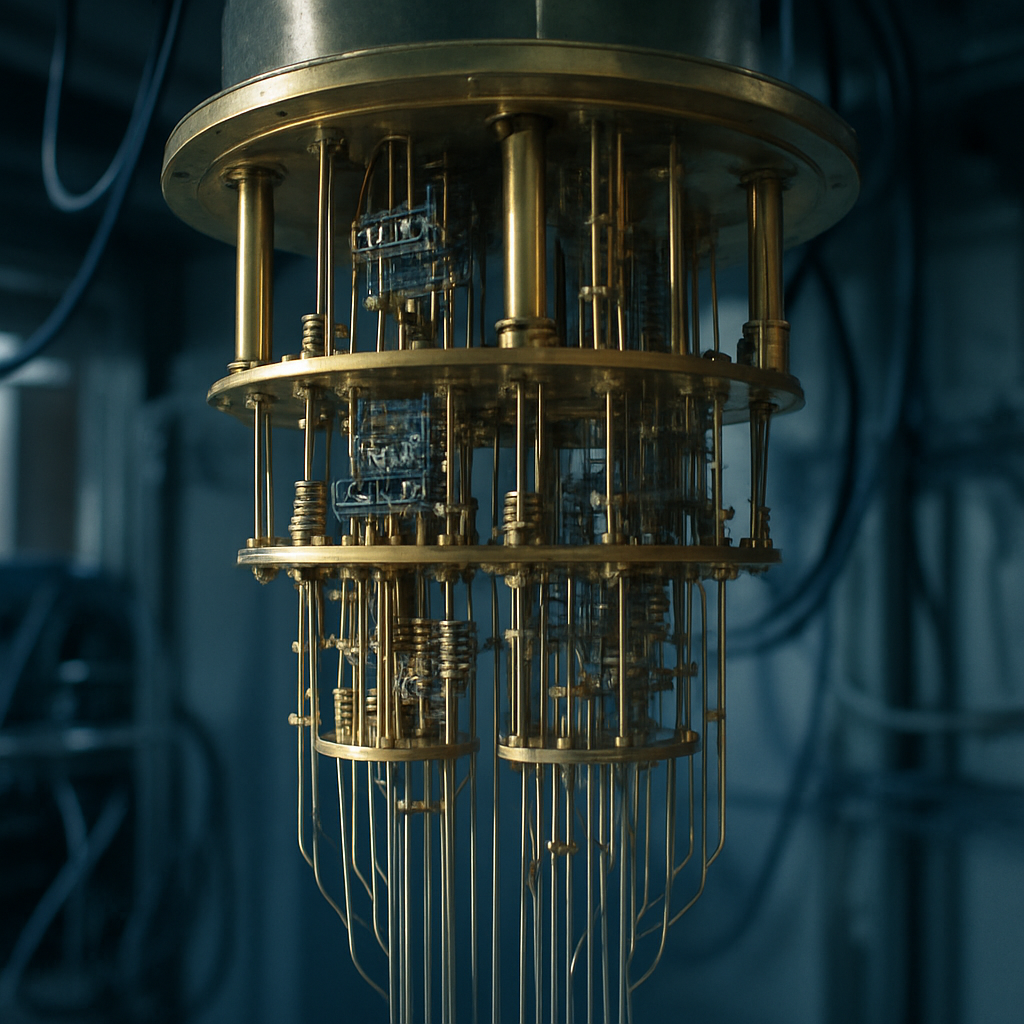
Quantum Computing utilizes the principles of quantum mechanics to control the flow of information. Unlike classical computers that use binary (bits) to process information (0 or 1), quantum computers use quantum bits (qubits).
The Power of Qubits
Qubits are the most basic building block of a Quantum Computer. While each bit on a classical computer represents 0 or 1, qubits possess a unique characteristic known as superposition.
Because they can be in multiple states at once (both 0 and 1), quantum computers can process many pieces of information simultaneously, allowing them to perform certain computational tasks much faster than classical computers. Therefore, quantum computers will provide tremendous capabilities and thus make them very viable in the future.
Entanglement in Qubits
Quantum computers are able to generate entanglements within their qubits; through entanglement, the state of one qubit is known based on the state of the other qubit. The quantum relationship arising from qubit entanglement enables quantum computers to process information at speeds that exceed those of classical computers.
The entangled qubits of a quantum computer enable it to perform computational tasks that would require significantly more time or resources for a classical computer. Therefore, entanglement may be used by quantum computers to provide efficient solutions to very complex problems.
Quantum Gates and Circuits
Quantum Gate’s purpose is to allow logic operations on qubits (quantum bits), as they are performed using classical computer gate logic. As a result, they are implemented as quantum gates that manipulate qubit states. Therefore, quantum gates will be required to enable computation, thereby realizing the complex capabilities of quantum computers.
Combining quantum gates in a quantum circuit provides the basis for solving complex problems using quantum algorithms. In this manner, the complexity of a problem can be approached efficiently (compared to classical approaches), thereby providing solutions to areas of application such as cryptography, optimization, and data analysis.
Quantum Computing vs. Classical Computing
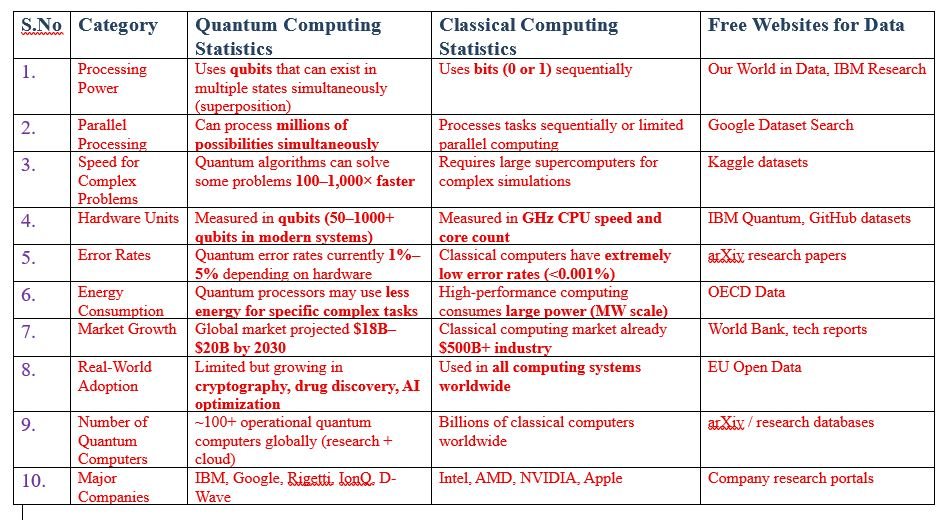
One of the primary advantages of a quantum computer is that it can solve numerous specific computational problems at speeds far superior to those of classical computers. Factoring very large numbers and molecular simulation (for example, used in drug discovery) are examples of problems that can be solved exponentially faster by a quantum computer than by a classical computer.
Speed & Efficiency
A quantum computer can execute a virtually limitless number of complex algorithms at a speed and efficiency far superior to those of a classical computer. The greater speed at which a quantum computer can process information and solve problems results in increased productivity across all types of data processing and problem-solving applications.
This has also been responsible for some major scientific breakthroughs in such fields as cryptography (protection of information), and drug discovery (development of new drugs and treatments). The technology of quantum computers will have a tremendous influence on the way scientists and technologists approach and solve complex problems and challenges.
Problem-Solving Capabilities
Quantum computers can process and analyze large amounts of data and complex systems much more efficiently than classical computers. In addition to their potential use in other areas, such as weather forecasting (where large amounts of data need to be processed to forecast atmospheric conditions), they are particularly valuable for cryptographic uses (security) in an increasingly digital communication environment.
Classical computers will never be able to perform at the same level as quantum computers because of the two unique characteristics of quantum computers that allow them to process and evaluate information in a completely different way than classical computers, i.e., superposition and entanglement.
Optimization problems with many variables that must be evaluated simultaneously to determine the best possible outcome are the type of problem that quantum computers are best suited to solve.
Resource Utilization
Quantum computers will be able to perform some of the same computations (but many more) as traditional computers, using significantly less energy; this is an added environmental benefit, given the increased energy efficiency of quantum computing, combined with faster speeds and more effective completion of numerous computational tasks.
As such, quantum computing may provide additional “green” computing technologies that could ultimately help sustain technological advancements for years to come, in addition to protecting the environment for future generations. Additionally, the decreased resource requirements of quantum computers represent another significant advantage to their sustainability.
Quantum Cryptography
Quantum cryptography uses the principles of quantum physics to provide an unbreakable way to encode information. It will provide an entirely new level of security as we become increasingly dependent on technology in every area of life.
Quantum Key Distribution (QKD)
The most well-known application of quantum cryptography is Quantum Key Distribution (QKD). QKD uses quantum mechanics to create a secure, encrypted key between two or more users. Any attempt to intercept the encrypted key would disturb the quantum system; therefore, any such attempt would be detected by the legitimate user(s).
Secure Communication
Due to the entanglement property in Quantum Cryptography, any attempt to intercept or “read” a quantum-encrypted message will disrupt the overall system, alerting the rightful parties to an intrusion and thereby maintaining the secrecy of the communications. This can provide a method for protecting sensitive data.
Unbreakable Security
Quantum Cryptography could offer nearly unbreakable encryption by leveraging the physical attributes of quantum mechanics, which describe how quantum systems interact. Therefore, if an unauthorized party intercepts a message in transit, it would be impossible to decrypt or understand its contents without also detecting the interception, thereby providing a very reliable means of preventing cyber threats.
Benefits of Quantum Cryptography
Quantum Cryptography Offers Advantages in Securing Communication and Data.
Enhanced Security
Because the fundamental principles of quantum mechanics underlie the encryption methods used in Quantum Cryptography, these methods are essentially unbreakable by traditional hacking methods. As a result, there is an increasing need for this level of security to protect sensitive information because technology is advancing so quickly and it will eventually be able to penetrate every aspect of our lives with the use of digital systems. As we continue to send more and more of our personal information through the Internet, the need for secure communications continues to grow.
Reliability and Assurance
Quantum cryptography improves the confidentiality and integrity of information and its transmission.
One of the greatest benefits of quantum cryptography is its reliability in protecting the confidentiality and integrity of information. The use of quantum mechanics to provide information security is highly reliable. Another benefit of quantum cryptography is that it allows users to determine if someone is attempting to intercept or read an encrypted message.
Quantum cryptography relies on the laws of nature, which dictate that once someone attempts to intercept an encrypted message, the sender can instantly detect the interception. In this manner, the dependability of sensitive communications is increased with the use of quantum cryptography
Future-Proofing
A growing fear is that the advance of quantum technology may leave current classical encryption methods vulnerable to its new capabilities. The potential risks of these new quantum technologies are significant. If left unchecked, it could lead to major disruptions in the protection of sensitive data.
Fortunately, researchers have found a viable solution to this problem. That solution is Quantum Cryptography and can offer secure, encrypted communication with quantum computers.
The Future of Quantum Computing
Quantum computing is a developing technology, but has nearly endless potential. There are several researchers addressing these limitations such as qubit instability and error rates, to make more usable, practical quantum computers for people to utilize on an everyday basis.
Expanding Applications
As stated previously, there are many possible applications of quantum computers, including multiple fields and sectors. For example, in the medical field, quantum computers may be used to accurately model molecular complexes, thereby expediting the development of new medications. In addition, in the financial sector, quantum computing could dramatically change how portfolio management is conducted.
With the advent of quantum computers, companies will have the opportunity to develop new tools to determine optimal investment strategies for their clients’ portfolios and to more accurately assess and manage risk. The advancements enabled by quantum computers, in addition to providing significant benefits to investors, will also represent the next step in artificial intelligence (AI), making machine learning (ML) algorithms significantly more powerful and efficient than those available today.
Advances in AI enabled by quantum computers will create many opportunities for new technologies and business practices across the technology and manufacturing industries.
Overcoming Technical Challenges
One of the primary obstacles hindering the advancement of quantum computing is the numerous technological barriers that exist. The most significant barrier is developing long-lived and reliable qubits — the smallest units of quantum information — and devising methods to reduce the error rate in quantum systems.
Both increasing qubit longevity and reducing error rates in quantum systems are necessary to realize the full potential of quantum computers and advance the development of new technologies and applications. To utilize quantum computing as an instrument of future innovation and discovery across a wide variety of fields, we first have to overcome the technological obstacles.
Accessibility and Scalability
Right now, researchers are focusing on making quantum computers available to a wider group of people; increasing the size of the computer to meet the needs of different types of businesses (such as healthcare, finance, and logistics); and creating large-scale, working quantum computers.
The goal of large-scale functionality is to enable the development of high-performance systems that can work with multiple groups or industries. When we successfully integrate quantum computing across sectors, it is expected to be one of the most significant innovations, driving the next wave of change and transformation with new solutions and approaches to complex problems.
Challenges Facing Quantum Computing
Quantum Computing has several impediments to overcome, and while it has many advantages;
Technical Challenges
One of the most significant technological barriers to building a working quantum computer is the development of stable qubits (quantum bits), the smallest unit of quantum information.
To build a reliable quantum computer and to create a computer that can perform a job consistently and efficiently across all its applications, this issue needs to be resolved, as does the other issue listed above. As each of these issues is resolved, it will become an important stepping stone toward moving the field forward toward the ultimate goal of making Quantum Computing available for everyday use.
Cost and Infrastructure
To remove these obstacles, we will need additional R&D investment to reduce the overall cost of using a quantum computer. Also, we must ensure that the public has access to this type of computer so everyone can understand its potential.
The cost of developing and maintaining a quantum computer is substantial because specialized equipment is required to operate it properly. Due to the unique needs of these computers, there are barriers to their use beyond cost.
Scalability and Integration
A continuing focus of research is on developing commercially viable large-scale quantum computers, which face numerous hurdles. As such, researchers and engineers continue to develop the quantum computer to enable a variety of applications.
The second major hurdle is integrating quantum computers into the current state-of-the-art technology we use; however, this is essential for realizing the full potential of quantum computing and its industrial applications. Ultimately, overcoming all of these hurdles will determine whether future quantum-based technologies are commercially viable.
Conclusion
Quantum computing is one of the fastest-growing disciplines in computer science, and its innovations are changing how we can solve complex problems by providing access to problems we were unable to address before.
Understanding the fundamentals of quantum mechanics and how the foundations of quantum computing were developed is critical to your ability to recognize and take advantage of the many ways this revolutionary technology will change our world.
As more research is conducted, the number of potential applications appears limitless, so I am confident this will be an exciting time as we unlock new opportunities.
Additionally, Quantum Computing is advancing rapidly, and it may be challenging to keep pace with the pace of new technologies that will greatly influence our daily lives and how we conduct business. As innovators and researchers continue to push the boundaries of what is possible, it becomes evident that Quantum Computing will be transformative across many disciplines and a driving force behind the next generation of technological developments.
Q&A
Question: What is it about a qubit that makes it fundamentally different from a classical bit?
Answer: The main reason there’s a difference is because of the two basic characteristics of qubits that aren’t found with classical bits. First, qubits are capable of existing in a superposition (both 0 and 1 at the same time). Classical bits, however, will always be either 0 or 1.
Second, qubits are capable of being “entangled,” which means that when qubits are tied together so tightly that the state of one qubit is dependent upon the state of another. In combination with superposition, entanglement creates an environment in which certain calculations performed by a quantum computer run at a significantly higher rate than they would on a classical machine.
Question: Are there tasks that a quantum computer can solve in less time than a classical computer?
Answer: Yes – but it all depends on what is being done, and it is rare to know in advance which will work faster. There are situations where Quantum computers will clearly be better than classical computers – such as factoring large numbers much faster than classical computers (Shor) or simulating molecular systems with accuracy that classical computers cannot match (Feynman).
Quantum computers may also be useful for optimization problems such as the traveling salesman problem or production scheduling. Most computational tasks will still need to be run on a classical computer, though. Quantum computers should more properly be considered as another tool to help you solve certain types of problems that are particularly well-suited to Quantum computation.
Question: Quantum Gates and Circuits: How do they operate in computation?
Answer: Quantum gates create interference effects in qubit states by changing their amplitude and phase angle for the correct solution. A Quantum circuit is an arrangement of Quantum gates that are designed to run an algorithm (gates in sequence). A Quantum computer can use the final state of the qubits to amplify the probability of finding the correct answer if it is properly designed.
Question: What makes quantum encryption (and specifically QKD) so safe?
Answer: Security in Quantum Key Distribution is based on the fact that all measurements of a quantum system are destructive; therefore, when a hacker attempts to “steal” the key by intercepting it during transmission, he will be forced to measure the qubits, causing a change that the rightful owners of the qubits can observe and determine with certainty that an unauthorized measurement has taken place.
In theory, quantum mechanics may be useful for secure communications because the security of a transmission is tied to physical law rather than to mathematical complexity. Unlike many traditional encryption methods (which, although theoretically unbreakable, can still be broken in practice), QKD does not provide a basis for hackers to make unauthorized copies of messages. Any attempt to do so will result in measurable changes that the rightful owners of the encrypted message will detect.
Question: What is the greatest challenge for developing practical, commercial use of large-scale quantum computers?
Answer: The most important issues are technical and logistical: reducing decoherence to maintain qubit stability over time; lowering error rates in the calculation process; developing fault-tolerant systems; reducing costs; and building the infrastructure needed to facilitate the commercialization of this technology.
Currently, many researchers are working to establish long-term reliability within their systems; to create processes with extremely low error rates; and to offer affordable solutions that allow users to acquire and use large numbers of reliable Quantum Computers, as well as to integrate these systems into their current work environments.

Garikapati Bullivenkaiah is a seasoned entrepreneur with a rich multidisciplinary academic foundation—including LL.B., LL.M., M.A., and M.B.A. degrees—that uniquely blend legal insight, managerial acumen, and sociocultural understanding. Driven by vision and integrity, he leads his own enterprise with a strategic mindset informed by rigorous legal training and advanced business education. His strong analytical skills, honed through legal and management disciplines, empower him to navigate complex challenges, mitigate risks, and foster growth in diverse sectors. Committed to delivering value, Garikapati’s entrepreneurial journey is characterized by innovative approaches, ethical leadership, and the ability to convert cross-domain knowledge into practical, client-focused solutions.