














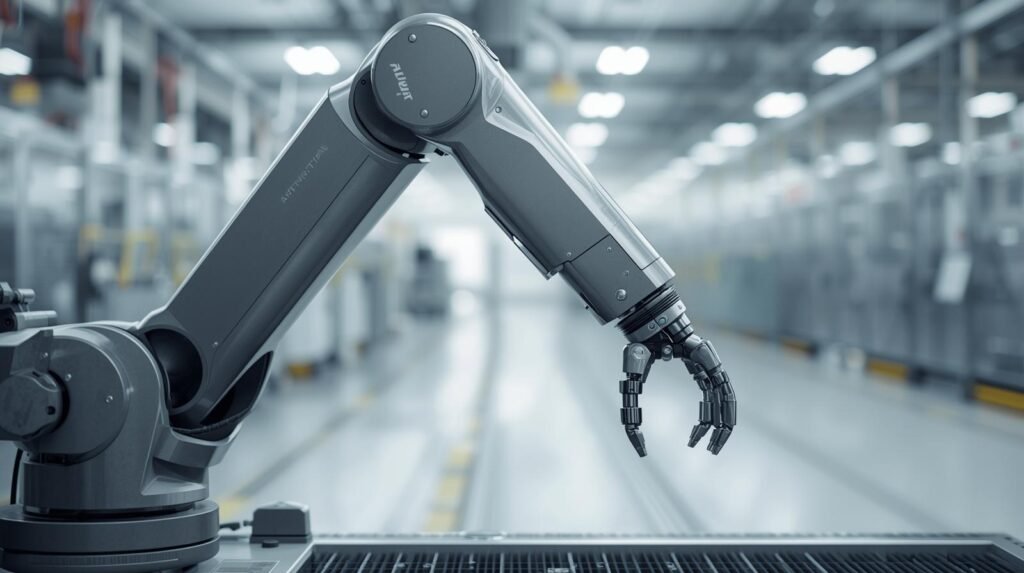
How many people have reached for a book located on a high shelf, bent their arm to pick up a drink, or turned their forearm to open a door? The industrial robot was based on the same basic concept as those examples. There is one main difference, however; these machines can be made much stronger, much faster, and repeat the same movement (over a million or more times) and will never get tired. In essence, that’s what industrial robots are. While those types of machines may look like something out of science fiction, they are quietly affecting the world we live in.
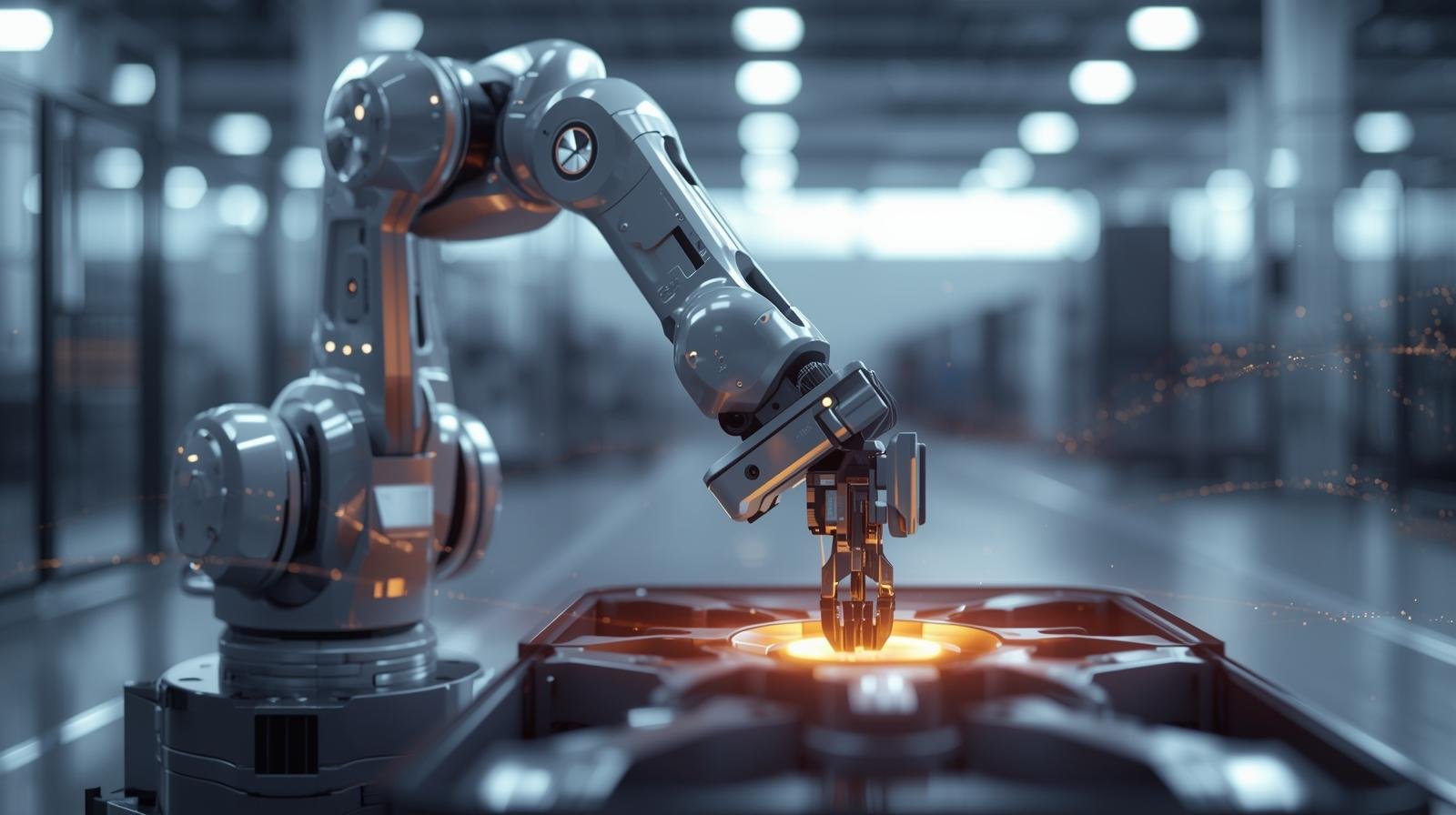
Industrial robot arms: with articulated joints and a gripper performing automated tasks on a modern factory floor
Industrial robots used on factory floors today are basically identical to employees who will never tire out; they have a mechanical body with a series of joints that can be extended into individual cells to perform one or more operations (such as picking, placing, welding, or assembly) on a variety of different products. The operational capability of industrial robot arms is due to their mechanically articulated structure.
This type of structure (which is simply a series of rotary joints) allows for the required degrees of freedom, which enable the arm to physically interact with stationary objects within a cell; to access components located at varying distances and/or orientations and/or angles; and to precisely follow a predetermined path over and over again.
#What Is SLAM? Smart Essential Guide to How Robots Know Their Location
The “end” of an arm in robotics is generally called the “hand”. In most robotic systems, the hand is equipped with a gripper or a tool. Parallel grippers are used to hold individual components of a product to be packed. Vacuum grippers are used for lifting flat objects such as panels or boxes. Torches, spray guns, or spindles may be attached to the end of an arm for welding, spraying paint, or driving screws. As a result, industrial robots can quickly replace their end effectors when switching between tasks using different end effectors or tools.
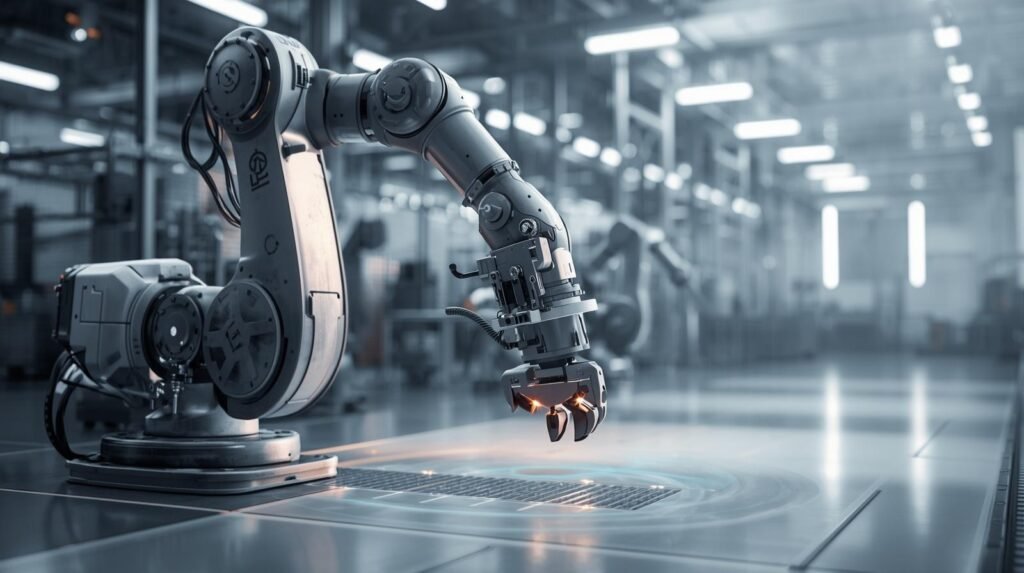
Industrial robot arms consist of mechanical parts for movement and sensing and control components. Each joint has an encoder that measures each part’s position and speed. The encoder sends those measurements to the controller so it can keep the arm on course. In addition to encoders, some robots have force/torque sensors that tell the controller when parts are being contacted. Some also use vision systems that can detect parts placed randomly on a conveyor. All types of sensor data feed into the robot’s control loop, ensuring the robot moves smoothly, safely, and consistently, even as the load varies.
The robot’s brain is located in the controller box. It is here that the motion planner takes direction from the user and turns the instruction into motion of all parts of the arm. Traditionally, industrial robot arms were taught using one of three methods: offline programming (where the user teaches the robot without being physically present); hand guiding (where the user physically guides the end effector to teach the robot); or point-by-point with a pendant (where the user physically moves the end effector and enters the points).
Once the user has successfully tested and validated the routine, the robot will run automatically 24 hours a day, 7 days a week, with minimal variation from cycle to cycle. This allows users to reduce the risk of defects caused by worker fatigue or process variations.
Given the growing importance of safety in industrial robotics, many modern industrial robot arm implementations have included light curtains as part of a guard system. These allow the robotic arm to be deployed in areas where humans may be present. There also exists collaborative robotic systems. These systems slow and weaken the robotic arm when it senses a human. Other ways to ensure a safe, efficient working environment for employees and maintain production throughput and predictability include risk assessments, emergency stop mechanisms, and proper work cell layout.
Industrial robots are used for repetitive, hazardous, and high-accuracy tasks. Examples of these tasks include palletizing large, heavy boxes, tending CNC machines, producing uniform welds, and assembling small parts. Due to their articulated nature and the grippers at their ends, industrial robot arms offer considerable flexibility. They can also provide a high level of intelligence by incorporating sensors and control software. With manufacturers seeking higher production throughput and quality, using industrial robot arms has become one of the most viable options for achieving automation at a scale comparable to their production volume.
While industrial robot arms may appear to be moving in synchronization with each other to the untrained eye, understanding the inner workings of industrial robot arms does not have to be accomplished by attaining an engineering degree. To avoid overwhelming the reader with too much information, this guide will break down the process of learning to work with industrial robot arms into 7 easy-to-follow steps. The first step will focus on the mechanical aspects of the robotic arm. The second step will involve the robot’s digital (brain) aspect.
We will cover:
- The Body: The structural core of a robot.
- Joints: A way to provide flexibility in the movement of a robot.
- The Hand: The specialized device or tools at the end of the robotic arm.
- Brain: The computer system controlling the robot’s actions.
- Senses: The method by which a robot senses or detects objects and the environment.
- Family: Different types of robots, each designed for specific job functions.
- Job: The actual job a robot performs on a daily basis.
Summary
Industrial robot arms are modern versions of human arms designed to provide significant force, speed, and accuracy. The following guide will explain how industrial robots work in 7 simple steps, starting with the Manipulator (a rigid metal structure) that provides the robot’s structural support and strength, and needs to be instructed on what to do and how to move. Step 2 of this guide will describe the joints and “degrees of freedom” of the robot arm and show you how adding more axes increases the arm’s flexibility, particularly for the most common 6-axis articulated robots, which can extend and rotate tools in multiple directions.
Step 3 of the guide will cover the end-of-arm tooling (EOAT)—the swappable “hand” part of the robot arm—that determines the task to be completed. Examples include a gripper/suction cup, a welder, and a screwdriver. The controller (brain) of the robot, which holds programs and can be used to instruct the robot using a handheld teach pendant to record movement, will then be covered. Robots use sensors (machine vision and force/torque sensors) that enable them to locate parts visually, conduct quality checks, and apply a gentle touch (which improves safety).
The major families of robots (articulated robots, SCARA robots, and collaborative robots) will be illustrated in step 5 of the guide, along with how each design type is best suited to specific tasks. Steps 6 through 8 will demonstrate where industrial robots work daily and perform their dull, dirty, dangerous jobs across various industries, and provide information on typical costs to purchase an industrial robot and how the lower cost of cobots has increased accessibility for the general public.
Example
A metal fabrication shop has purchased an industrial robotic arm (with 6 axes) that has a servo-operated grip for use as a tending device on a press brake. It picks the blank sheet of material from a pile of blanks, positions it exactly at the back gauge, and holds the part in place as it folds or bends it using the press brake.
Once folded/bent, it will rotate the part into the appropriate position for the next fold/bend, and repeat this process until all bends are completed. Once the folding/bending operation is complete, the same robotic arm will place the finished parts into labeled containers by job number. The addition of this equipment reduced the manual labor required to handle these parts; it also significantly reduced the time spent bending the wrong way due to improper placement of the blank before bending, and it enabled continuous production during night hours.
Industrial Robotics: Industrial robotics drives speed, accuracy, and reliability in manufacturing
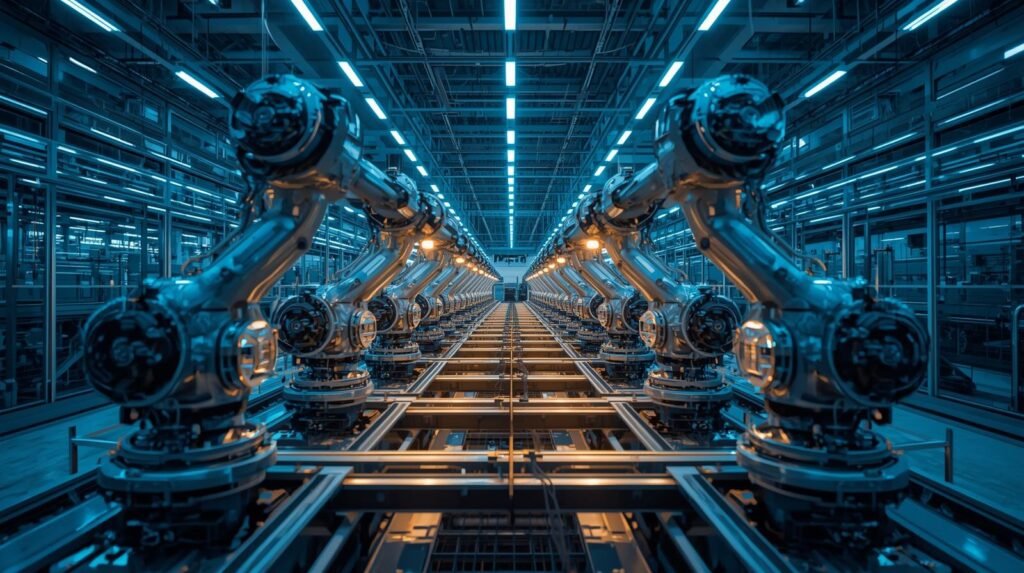
Industrial robotics is revolutionizing manufacturing by increasing the speed, accuracy, and dependability in which these tasks can be completed. It accomplishes this on such a scale that it is extremely difficult for humans to accomplish. The majority of manufacturing plants utilize industrial robotics to automate repetitive, hazardous, and/or precise activities (i.e., welding, palletizing, machine tending, painting, inspection, and assembly) that would otherwise require human intervention.
This allows manufacturers to run their plants on an hour-by-hour basis, providing consistent and reliable cycle times. Consequently, manufacturing companies experience increases in production volume and decreases in defects, as well as more consistent production schedules, due to demand variations.
#Robot Fleet Management: A Smart Essential Guide in 5 Steps
Many manufacturing automation cells rely on industrial robot arms with rigid mechanical linkage and motion control to generate very accurate movement patterns at predetermined locations. The accuracy of industrial robot arms enables manufacturing operations to be conducted within tighter tolerances, to create uniform weld bead sizes, and to consistently position components in the same manner every time.
In addition, Industrial Robotics dramatically reduces process variation; for example, when industrial robot arms are used to load/unload CNC machines or presses, they reduce the small amount of timing variance associated with these applications, which may result in premature tool wear, scrap, and bottlenecks.
Although modern Industrial Robotics has moved far beyond simply providing predefined motion, it uses vision, force sensors, and high-level controller technology to allow industrial robot arms to adapt to real-world conditions (e.g., random part orientation, slight positional deviations in conveyor systems).
Industrial Robot Arms can select parts from bins, accurately align components prior to inserting them into another component, and verify the presence/orientation of a component prior to proceeding to the next process step, often using high-level vision systems, force-sensing systems, and high-level controller systems. Due to their flexibility, Industrial Robotics can be applied to both high-volume/production and mid-volume production, where there are multiple changeovers and products.
Reliability represents the second most important advantage of Industrial Robotics. Humans can become tired during repetitive motions performed at the same interval; however, Industrial Robots do not experience fatigue and thus provide consistent takt time and smoother downstream processes. Additionally, maintenance schedules, health checks, and diagnostic systems are other ways to maximize the availability of Industrial Robot Arms for operation.
Smart Work Cell Design also enables the use of Industrial Robot Arms to enhance employee safety by providing protection from heat, sharp objects, heavy loads, and fumes, while maintaining employees’ ability to focus on inspection, quality control, and exception handling.
Continued growth in Industrial Robotics is expected due to increasing adoption of lean manufacturing methodologies, which improve product traceability and response to evolving customer requirements. With Industrial Robot Arms, manufacturers can significantly increase productivity, improve quality standards, and remain competitive in the marketplace. The enhanced reliability of Industrial Robot Arms is evident in many facilities through the consistent accuracy and precision they deliver during production runs.
Example
An automotive parts maker built an automated robotic assembly line to build battery trays. The automation uses two (2) robots – the first applies an adhesive bead continuously, while the second places reinforcements and bolts them down in a predetermined sequence. As the final action, a vision system will confirm that the part is present and oriented correctly before the fasteners are applied.
Once all actions are complete, the torque applied to each fastener will be recorded by a digital torque sensor in the production database. When any step is completed incorrectly, this process will divert the tray to a designated “rework” station with a clearly defined error description. In addition to increasing First Pass Yield, it provides the level of traceability required for safety-related parts.
Industrial Automation: Industrial automation reduces manual labor and boosts production efficiency
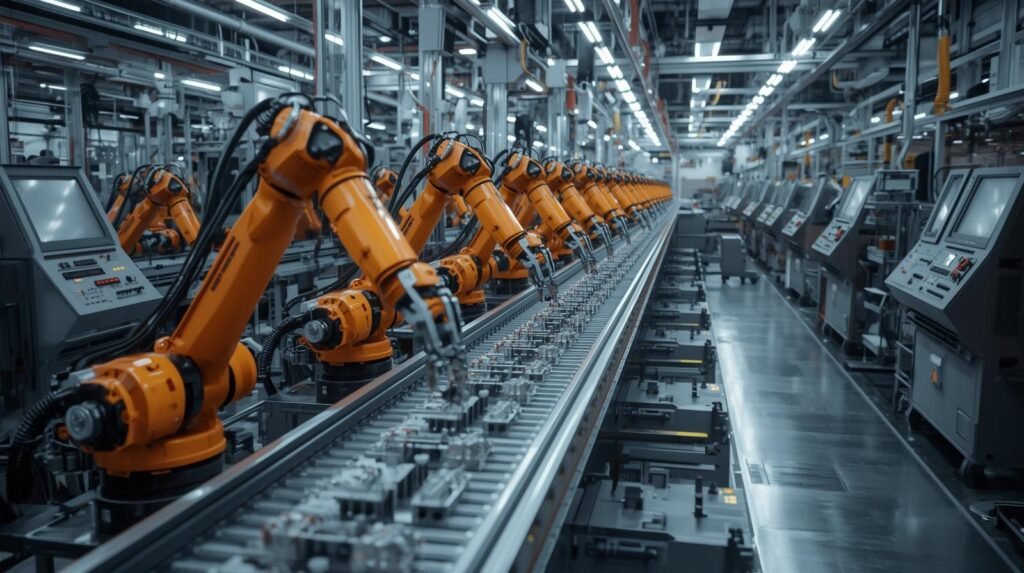
Industrial automation is used to increase production efficiency, improve product quality with consistent results, and enhance production safety for manufacturers. This is achieved by automating many tasks currently performed manually, using equipment that includes connected machine devices, sensors, control systems, and data feedback to help maintain continuous production processes and reduce downtime.
#Revolutionary Cloud Robotics Explained for Everyone
Typically, the Work Cell concept is applied on the shop floor using Programmable Logic Controllers (PLCs), industrial robot arms, drives, conveyors, and vision systems. The most common applications for industrial robot arms include repetitive material-handling operations (pick-and-place, palletizing, packaging, machine tending). For example, when an industrial robot arm loads a CNC machine or press on a fixed cycle, it eliminates small timing variations that can cause bottlenecks, excessive tool wear, and variable product quality.
In addition to providing Production Line speed and cost advantages, Industrial Automation also produces Quality Control Advantages. Inline sensors and cameras can determine product dimensionality, orientation, labels, and surface defects during production line inspection; therefore, product defects may be detected prior to end-of-line inspection. Also, should product defects be discovered, the system may reject the defective product, notify personnel, or modify process conditions. Additionally, some production lines use industrial robot arms with vision guidance to locate parts, improve repeatability, and reduce scrap rates.
Another advantage of Industrial Automation is that it enables the assignment of safer jobs. Humans have been relieved of the heavy lifting, sharp objects, heat, fumes, and repetitive motion, and these have been assigned to machines. These robotic arms for industry can operate around the clock when properly safeguarded, interlocked, and controlled with safety-rated controls, while humans continue to perform supervisory functions, restock materials, and handle exceptions. In this type of operation, there is usually a reduction in accidents and an alleviation of labor shortages while maintaining production rates.
Industrial automation has another major impact on long-term equipment reliability by enabling diagnosis and predictive repair. Collecting data from every piece of equipment (for example, motor load, vibration, temperature, cycle count) can provide warning signs of impending failure, allowing maintenance personnel to order replacement parts before equipment fails. Whether you want to improve the speed, quality, or safety of your business operations, Industrial Automation provides a logical path to upgrade your manufacturing processes, with industrial robot arms being the most cost-effective and scalable component.
Example
An industrial process manufacturing facility has implemented an integrated automated control system for the fill operation across all three stations on its production line; sensors measure bottle locations, and the control unit synchronizes the conveyor belt and filler-capper speeds. The checkweigher is used to remove any under-filled units as they are detected. The production line is monitored in real time via a SCADA interface that displays current throughput, causes of downtime, and active alarms.
Upon cessation of operation, the system will record when the stoppage occurred and what caused it (i.e., which station) and provide operators with a suggested checklist for restarting the line. With fewer manual adjustments to machinery and more time spent troubleshooting to prevent downtime, overall operational efficiency increased. Additionally, the use of industrial automation improved Overall Equipment Effectiveness (OEE) by eliminating mini-downtimes and standardizing bottle-size conversions.
Robotic Arms: Robotic arms perform precise movements for repetitive industrial tasks
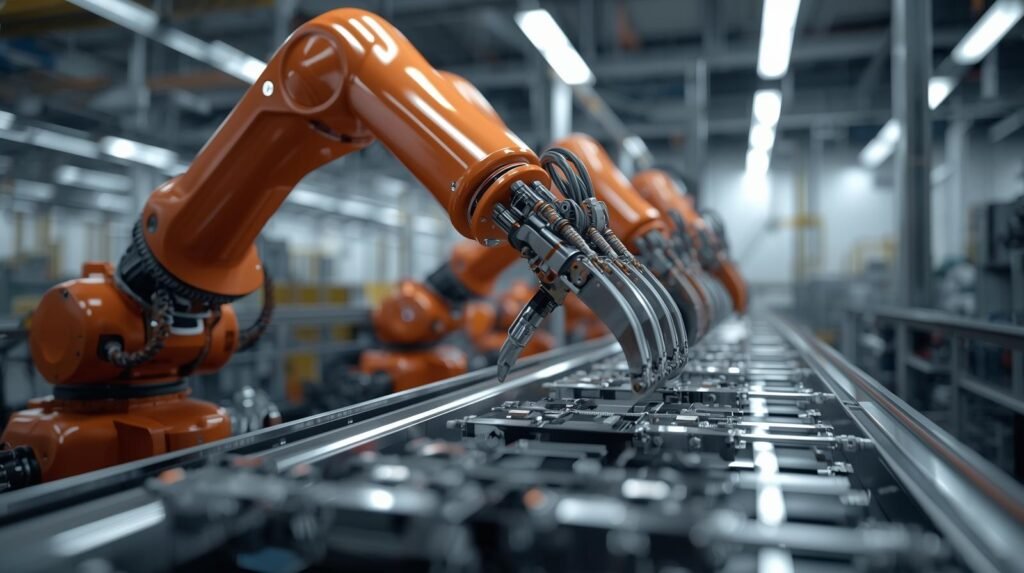
Industrial robotics is used in a variety of manufacturing environments. The primary benefit of using an industrial robot arm in manufacturing is that it can perform tasks that require constant positioning, constant speed, and consistent cycle time. For example, if a task needs to be performed in excess of 1,000 times per day (shift), this could create a lot of fatigue for workers. Consistent task performance also reduces variability in products manufactured and improves product quality.
Industrial robot arms are typically represented in manufacturing environments as articulated manipulators (joints) that include shoulder, elbow, and wrist joints. This configuration allows movement from various directions, enabling the robot to reach parts around a fixture or obstacle(s) in the work cell. Industrial robot arms are generally designed with rigidity, payload capacity, and precision in mind, allowing them to be programmed to follow tight paths (e.g., arc welds), apply uniform paint/sealant coatings to surfaces, or precisely place components into assembly.
The functionality of an industrial robot arm depends on its control system. Smooth motion and accurate stopping rely on real-time positional information from the joint encoders. In addition to encoders, some industrial robot arms have additional sensor inputs to enable more complex sequential steps, such as part placement on a conveyor, maintaining a constant insertion pressure, or other similar functions. Due to their ability to function properly even with slight deviations in component placement, industrial robots are ideal for many applications where component placement varies (e.g., automotive assembly lines).
Another advantage of robotic arms is end-of-arm tooling. The types of end-of-arm tooling available depend upon the nature of the product being handled; for example, grippers and palletizers for parts that need to be picked up, vacuum cups for flat products, and special-purpose tools (e.g., screwdrivers, polishers, and welders) to perform specific functions. Users may use quick-change tooling systems to enable rapid transitions between tasks, making a single cell useful for multiple applications. This flexibility is also why industrial robot arms are widely accepted across industries, including automotive, electronics assembly and manufacturing, food packaging, and metal fabrication.
In addition to increased productivity, robotic arms can help improve both safety and ergonomics. Many heavy-lifting, hot-processes, sharp-edge-handling, and fume-generating work environments can be safely managed by industrial robots, with people responsible for supervising operation, maintenance of equipment, and any exception(s) that occur. As companies seek ways to enhance quality and increase production volumes, robotic arms offer an effective means to automate many repetitive, precise tasks at very high rates.
Example
A Contract Electronics Manufacturer has used robotic arms to perform repeated screw driving of Control Units. There is a small robot that will pick up a housing (part), position the housing in front of an electrically powered screw driver, then drive the four screws to a pre-programmed torque and angle. As soon as cross-threading is detected by a Force Sensor, the cycle will stop immediately and flag the unit for further inspection.
Once the inspection is complete, the robotic arm will apply a label to the part and place it in an ESD-safe tray, so the next piece can be placed in the same tray but at a different location for testing. The automated process using robotic arms reduces operator fatigue associated with manual wrenching, provides greater consistency during fastening across shift changes, and automatically generates logs for Quality audits.
Manufacturing Robots: Manufacturing robots handle welding, assembly, and material handling
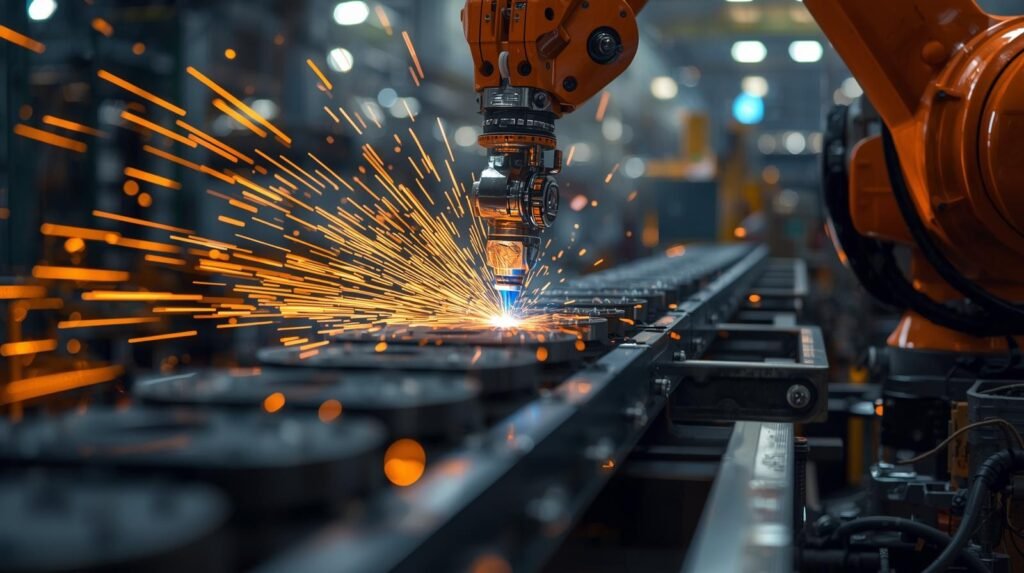
Manufacturing Robots play an important role in modern manufacturing systems, including welding, assembly, and material handling, which have been shown to perform better and faster than their human counterparts.
In high-volume production settings, Manufacturing Robots have been shown to positively impact process stability (cycle time), product quality (reduced defect rate), and continuous operation of the production line by reducing variability and worker fatigue associated with manual labor.
The ability of Manufacturing Robots to support increased production volumes and improved delivery schedules results from creating a stable production environment through automation.
Consistent weld quality is achieved when welding applications utilize Manufacturing Robots to control torch angle, travel speed, and path. Thousands of welding cycles have been successfully completed at consistent levels. Industrial Robot Arm designs provide the necessary stiffness and precision to achieve tight tolerances in a variety of challenging environments.
Applications involving assembly have utilized manufacturing robots, in conjunction with vision and force feedback, to locate and assemble parts into a final product. Vision has been used to align parts, while force feedback has enabled the installation of parts and the application of screws with controlled torque. Products that contain small parts or repetitive subassemblies are ideal for this type of assembly. In addition to locating and assembling parts, the industrial robot arms in these assembly cells may remove parts from trays, position them accurately, and repeat the sequence with minimal variation. This improves product quality and traceability.
Manufacturing robots have many uses in material handling. These include palletizing, depalletizing, case packing, machine tending, conveyor-based pick-and-place, and other types of motion-based tasks that require predictable timing and good grip control. Industrial robot arms, equipped with an appropriate end effector (parallel gripper, vacuum tool, magnetic gripper, custom fixtures, etc.), can rapidly and efficiently move both large and small, difficult-to-handle items. When manufacturing robots are used to perform loading and unloading operations for CNC machines and presses, they can reduce downtime and improve overall equipment effectiveness.
Whether a manufacturing robot is located in a secure, isolated work cell or in proximity to operators, it will help remove labor-intensive or dangerous process elements from workers’ exposure; this provides workers with opportunities to observe processes, conduct quality checks, and respond to exception conditions. The desire by manufacturers to create more efficient, reliable production environments has continued to expand the use of manufacturing robots, and as such, industrial robot arms are leading the way in the development of new, more reliable, and cost-effective methods of automating welding, assembly, and the movement of materials throughout their facilities.
Example
A manufacturer of household appliances is employing an array of manufacturing robots. The first type of robot will perform spot welding onto a fixture that holds two panels together in the appropriate geometric relationship. In turn, a second type of robot will apply sealant to the seam.
Next, a third type of robot will load the assembled oven frame into a curing rack. After each process step, all three types of robots will read barcodes associated with specific models to automatically select the appropriate program. By using robots for repetitive tasks, the factory can reduce workers’ exposure to excessive heat, improve weld quality and consistency, and decrease takt time while maintaining a constant staffing level.
Robot Manipulators: Robot manipulators mimic human arm motion with high precision
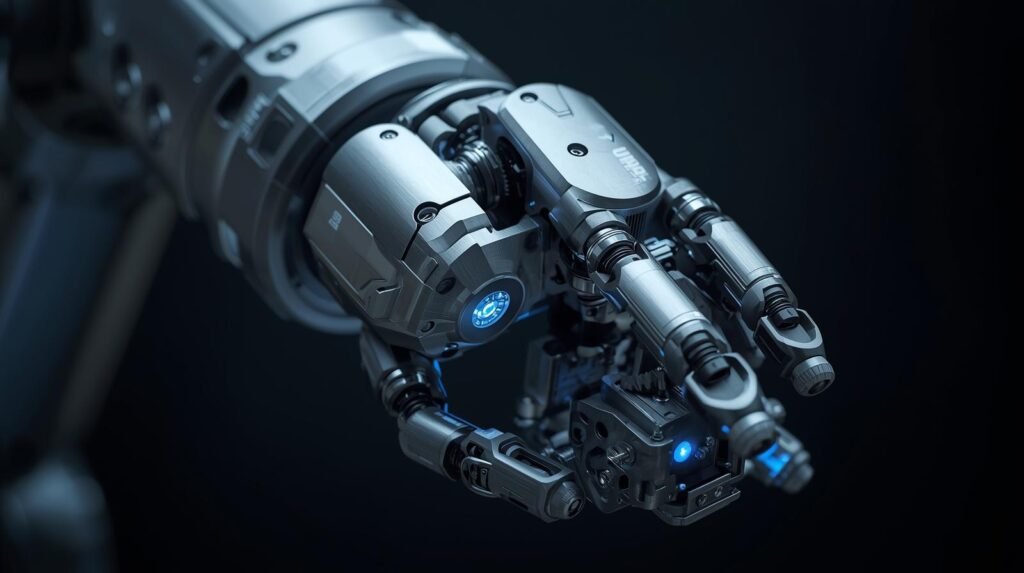
Industrial Robot Arms have evolved to replicate the versatility of the human arm while repeating motions with greater consistency and reliability. In practice, Robot Arms have been used in manufacturing environments to pick up, move, and deposit parts, tools, and products at specific locations along a predetermined path, repeated with minimal deviation. The widespread adoption of robotic arms for applications where movement (millimeters, micrometers) can result in significant improvements in overall process efficiency or in costly rework is due to their ability to repeat movements with very high precision.
Industrial robot arms most commonly feature a number of joints similar to those of the human arm; i.e., shoulder, elbow, and wrist. Each joint provides one degree of freedom, which allows the arm to move about an object, reach into a location from a variety of angles, and position the tooling as necessary.
Therefore, many manufacturers use industrial robot arms to perform this function in their plant primarily because of their stiff construction, stable motion at high velocities, and consistent performance under load. Since most manufacturing processes involve repetitive tasks, industrial robot arms offer the precise motion and structural integrity required to meet specifications, since a particular task may need to be performed 10’s of thousands of times in succession.
Industrial robot arms can provide precision in various ways. First, control and sensory inputs allow Robot Manipulators to achieve high accuracy. Second, encoders that provide real-time feedback on each axis’s position and speed enable the Robot Manipulator to move smoothly across all axes. Additionally, sensors (such as cameras and force/torque sensors) enable the Robot Manipulator to account for the many variations present in real-world scenarios, while still achieving precise location. Industrial robot arms can perform actions such as locating a part, orienting it correctly, and then inserting, welding, or dispensing it at a constant pressure and location.
The end-of-arm tooling of Robot Manipulators enables them to become specific task-specific devices. For example, grippers can be used for packaging and/or machine tending. Vacuum cups can be used to lift flat objects. Custom tools can be created to facilitate welding, painting, polishing or screwdriving. Since the end-of-arm tooling is easily replaceable, the same Robot Manipulator can perform a variety of tasks, thereby increasing its versatility. Robot Manipulators are also being widely accepted throughout a variety of industries, including assembly, automotive, electronic components, metal fabrication, and general material handling.
Robot Manipulators improve both worker safety and ergonomics. They permit heavy lifting, repetitive motions, and hazardous processes. By implementing proper guarding, interlocks, and safety-rated controls, Robot Manipulators can operate safely, thereby permitting the worker to concentrate on other important aspects of the production process, such as inspection, supervision, and exception management. Industrial robot arms have human-like dexterity and reach, repeatability, and long-term reliability/durability. Therefore, industrial robot arms will continue to be a key component of manufacturing automation.
Step 1: Meet the Arm—It’s More Than Just a Metal Limb
The mechanical body of an industrial robot is known as a manipulator. This manipulator comprises a mechanical arm with multiple links and joints. As an industrial robot manipulator is built using extremely durable components and possesses high stiffness, it can withstand the planned activities of the robot. An industrial robot manipulator may be described as a long-lasting mechanical arm, similar to a human arm, but capable of performing tasks repeatedly without becoming fatigued, unlike humans.
The primary purpose of an industrial robot manipulator is to perform repetitive physical tasks. An industrial robot manipulator may repeat a single task, such as placing thousands of electronic chips into a specific location on a circuit board.
An additional example of an industrial robot manipulator is one that uses welding equipment to weld hundreds of automobile bodies at a car manufacturing facility. Consistency in the physical performance of a manipulator is crucial to the successful production of manufactured products and to manufacturing as a whole. Consistent manipulator performance is particularly important when a specific task is too physically taxing, too dangerous, or too boring for a person to accomplish by hand.
Although an industrial robot manipulator is essential to the operation of an industrial robot, it will not function independently of a controller. In fact, the controller is the “brain” of the industrial robot, and the manipulator is merely the “arm.” Once the controller receives a command to initiate a specific activity, it sends a signal to the arm indicating the position to which the arm should travel and the manner in which it should travel to complete the next step in the sequence of events. Therefore, the question remains: How does the controller signal the arm to bend, twist, etc.?
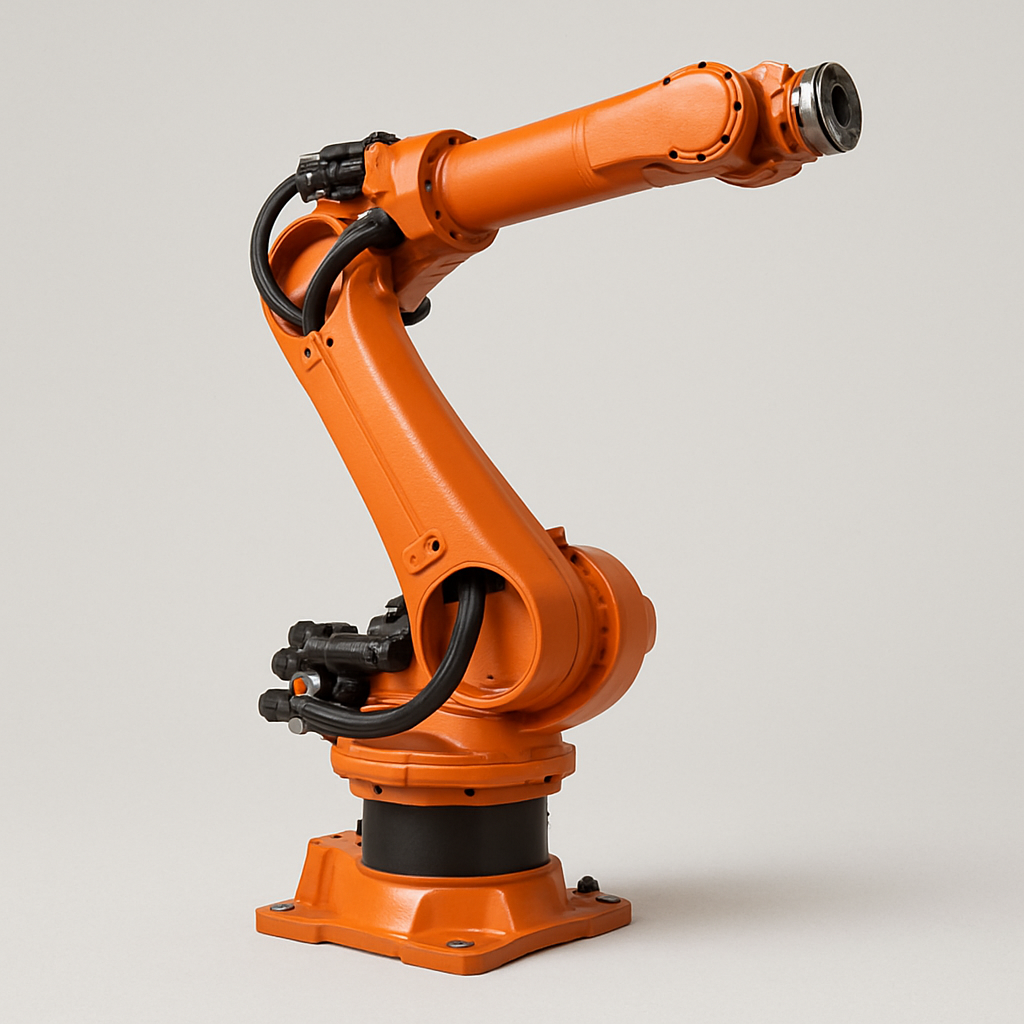
Step 2: Unlocking Movement—What Are ‘Degrees of Freedom’?
A robotic arm is similar to your arm; both have the same types of joints, which provide movement and rotation. Movement and rotation by an arm are called a “degree of freedom,” or an “axis.” A robot’s flexibility depends on the total number of axes. For example, a simple lever can only be moved in one way (up/down), and therefore, only possesses one degree of freedom. Your arm can go to almost any place in the room because of the multiple axes of movement.
A simple task, such as stacking boxes on a pallet, would use a relatively simple robot arm having only 3-4 axes. The robot arm is very efficient at this type of job on a flat plane, but lacks the dexterity to handle more complex tasks, such as welding a curved car door or navigating into a small engine compartment. To perform more complex tasks, the robot arm needs to twist and turn to increase its dexterity. Increased dexterity comes from the robot arm’s additional axes (degrees of freedom), which allow it to perform more complex tasks.
Most industrial robots currently made are 6-axis articulated robots. Because the robot has six degrees of freedom, it can duplicate the full range of motion of the human arm from the shoulder to the wrist. Therefore, the robot can position a tool in any orientation within the space around it and provides the dexterity to assemble electronic components, paint complex surfaces, or handle fragile materials. However, the robot arm’s capability of performing work is dependent upon a tool being attached to the end (the wrist)
Degrees of Freedom Explained
| Robot Type | Degrees of Freedom | What it means |
|---|---|---|
| Cartesian Robot | 3 | Moves in straight X, Y, z directions |
| SCARA Robot | 4 | Fast Horizontal movement, limited vertical |
| Articulated Robot | 6+ | Full human-like flexibility |
| Delta Robot | 3-4 | Ultra-fast, lightweight tasks |
Insight: More degrees of freedom = more flexibility, but also more complexity.
Source:
- International Federation of Robotics (IFR)
https://ifr.org - ABB Robotics Guide
https://new.abb.com/products/robotics
Step 3: The ‘Hand’ Swap—What is End-of-Arm Tooling (EOAT)?
A robot’s “hand” is actually a mounting area for various tools that can be connected to enable a robot to complete a task. These devices are known as the End-of-Arm Tooling (EOAT), or end-effector; essentially, it is the robot’s “custom-built,” swappable hand designed to accomplish one particular task. The EOAT allows a robot to transition from a basic mobile device to a specialized machine capable of completing a single task.
One of the greatest benefits of these types of tools is their interchangeability. On Monday, the robot arm could be equipped to weld a car chassis, but by Tuesday, it could be fitted with a gripper to stack boxes. The ease with which the EOAT can be swapped out makes many different types of industrial robots suitable for use on the factory floor, even though they appear very similar. Although the robot arm provides mobility, the EOAT defines the robot’s intended use.
There are numerous options available when selecting an EOAT for your application:
- Grippers imitate the action of fingers or claws so that the EOAT may grasp and retain objects.
- Suction cups create a vacuum to lift flat objects made of smooth materials like glass or cardboard.
- Welders join two separate pieces of metal by generating very high temperatures.
- Screwdrivers automate fasteners in many electronic and automotive applications.
To choose the right EOAT for your application, consider the task you want the EOAT to perform and the type of object it will come into contact with. Also, the payload of the robotic arm (its maximum safe load) is important.
The first requirement for successful operation is having the correct EOAT. However, this is just the beginning. The robot must have sufficient information on how to use the EOAT to ensure it is used correctly. This could mean using the gripper to lightly touch an egg or to tightly clamp onto a steel beam. The robot cannot receive direct instructions from the EOAT on how much force to apply. Therefore, the EOAT must provide some form of instruction. Now, the question is: What does the robot need to know to operate the EOAT properly?
End-of-Arm Tooling (EOAT) Types + Use Cases
| EOAT Type | Function | Industry Example |
|---|---|---|
| Gripper | Picks and holds objects | Packaging lines |
| Vacuum Cup | Suction-based lifting | Glass handling |
| Welding Torch | Joins metal parts | Automotive |
| Paint Spray | Coating surfaces | Car manufacturing |
| Screwdriver Tool | Fastening parts | Electronics assembly |
Example: Automotive factories use welding EOAT to assemble car frames with precision.
Source:
- Robotiq EOAT Guide
https://robotiq.com - FANUC Robotics Applications
https://www.fanucamerica.com
Step 4: The ‘Brain’ in the Box—How Does a Robot Know What to Do?
“Behind the scenes of this type of robotic arm, there is essentially an unthinking ‘muscle,’ because the primary control unit for the robotic arm is referred to as the controller. The controller is a high-powered computer designed to store all programs for the robotic arm and to communicate directly with the arm to tell it where to go, how fast to move, and when to begin or stop. It could be considered similar to a gaming console, and the arm resembles the character(s) in the game. The controller would provide the instructions for the gaming program and direct the character (arm) to perform the specified action.
Programming a robotic arm is also a process of learning versus developing a complex algorithm. The typical end user of a robotic arm will use a handheld device, commonly known as a teach pendant. A teach pendant is typically a ruggedized, industrial-grade tablet with joysticks and/or buttons, allowing the end-user to physically move the robotic arm along the desired path while the teach pendant records the arm’s exact location at each step. This type of programming is a key part of most beginner-level robotic arm implementation guides, since they enable the end-user to define a specific path for the arm to follow without having to write any code.”
Once the path is saved to the computer, the robot will execute it repeatedly with complete accuracy, no matter how many times it is repeated. The ability to store a path and be able to repeat it accurately each time is what makes these types of machines so useful, not because they can “think” about a problem, but because they are able to execute the same action (path) every time without tiring from doing so, even if that path is repeated millions of times. One simple way to store paths is to use memory. This method of storing paths is used in many ways to program all sorts of robots, including collaborative robots.
After a path is stored by the robot, it remains valid only until an environmental change could affect it. For example, if a part was previously located at one end of an assembly line and is now at another end, the path developed for the robot would no longer be valid. To account for the ever-changing environment around the robot, the robot needs some form of sensor input.
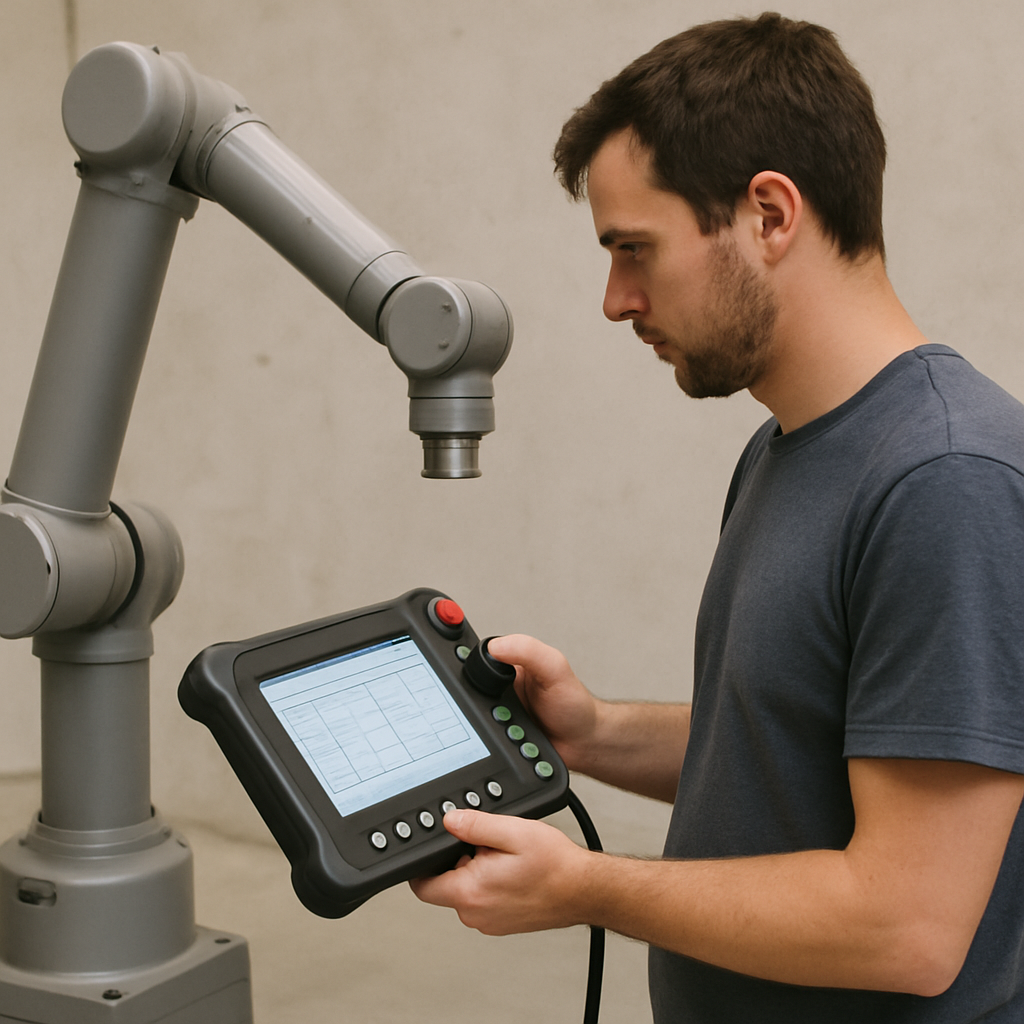
Robot “Brain” Architecture
| Component | Role |
|---|---|
| Controller | Executes programmed instructions |
| Sensors | Provide real-time feedback |
| Software | Defines taks and logic |
| Actuators | Convert commands into motion |
| HMI (Interface) | Allows human interaction |
Insight: Industrial robots combine hardware + software + feedback loops to operate autonomously.
Source:
- KUKA Robotics Tech Overview
https://www.kuka.com - Siemens Industrial Automation
https://www.siemens.com
Step 5: Giving Robots ‘Senses’—How Do They See and Feel?
A mindless robot can run the conveyor belt just fine as long as all parts are predictable. As soon as an unpredictable part appears on the conveyor belt, the robot will need some form of “sensing” to know how to react.
A robot usually gets its information from machine vision. Machine vision is essentially a means of perception.
Machine vision uses a high-speed camera and sophisticated computer software to help locate a product, locate a defect in a product, and/or read a barcode located on a product. The main difference between a robot finding a cup’s location with no knowledge of where the cup actually is, and a robot finding the cup’s location before reaching for it is machine vision.
While there are numerous applications of robotics technology, several job types require extreme delicacy to accomplish the required tasks. For example, when attempting to insert eggs into a carton using a large engine block-lifting machine, the operation would be nearly impossible. A possible solution to this dilemma could involve utilizing highly sophisticated robots that include force/torque sensors (also known as force/torque sensing) in their design.
The majority of these force/torque sensors are installed at the base of the robot’s wrist and enable the robot to measure force and torque (resistance to the robot) during the placement of a fragile product into a carton. In addition to providing a critical safety feature in modern robotic arm designs, force/torque sensors also enable robots to perform tasks without posing a threat to human workers.
The combination of the senses of sight and feel allows a robot to be significantly more adaptable and functional than a purely mechanical device. Sight provides the ability for robots to manipulate delicate products and perform various levels of quality control, whereas feel provides the ability for robots to function in ways they previously have not been able. When a robot has a brain, specialized hands, and new senses, the next aspect to consider in the puzzle is the mechanical design of the arm itself, and how this design changes depending upon the specific task the robot is required to perform.
Types of Industrial Robot Arms: Different robot arm types suit different industrial applications
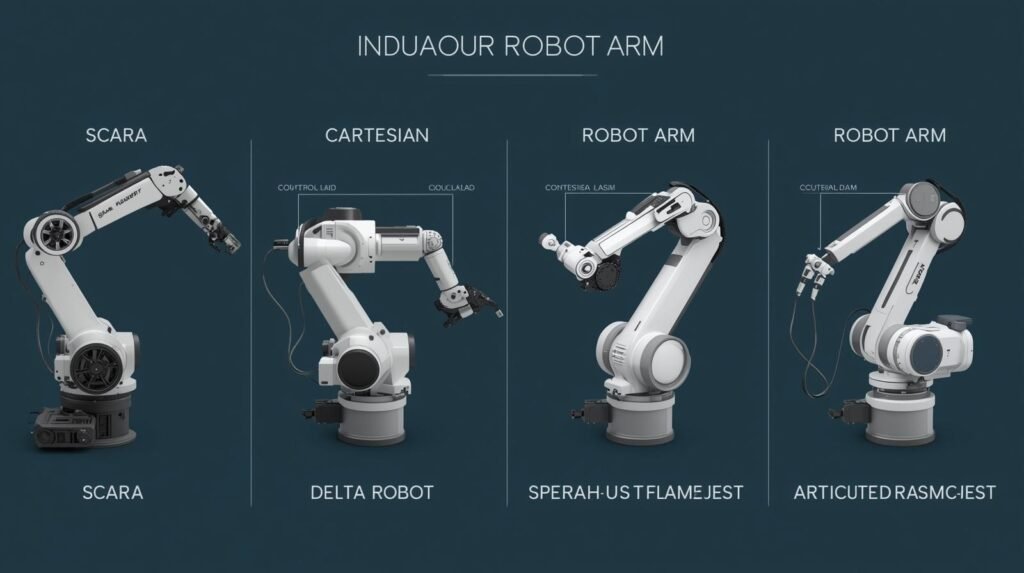
There are many types of designs and capabilities for industrial robot arms because no single design fits all manufacturing operations. The main things to look at when you are comparing the capabilities of an industrial robot arm include the payload, the reach, the speed, the repeatability, the footprint and the amount of motion needed to do the job; therefore, the first step to selecting the correct industrial robot for your specific task is to determine which kinematic configuration best suits your application needs.
Also, knowing the different types of industrial robot arms will help manufacturers select automated systems that deliver the highest levels of productivity and reliability for their specific applications.
The articulated industrial robot arm is probably the most commonly used type, with six degrees of freedom. Due to their arm-like design, articulated industrial robot arms are used most often for welding, painting, assembly, and machine tending. Articulated robot arms can reach over fixtures to access almost any angle. As such, articulated industrial robot arms are the preferred choice for many general-purpose, versatile, and flexible applications in facilities where manufacturing processes change regularly or where there is a variety of workpiece orientations.
Robots classified as SCARA are considered one of the categories under the “Types of Industrial Robot Arms.” They are well known for providing fast, accurate motion on a horizontal plane. These types of industrial robot arms are commonly used for high-cycle volume applications in areas including, but not limited to, high-speed assembly, pick-and-place, and small-part handling. SCARA-type industrial robot arms can provide rapid motion and high accuracy within a relatively confined workspace.
Industrial robot arms fall into four categories.
Firstly, there is the cylindrical-coordinate-system type of industrial robot arm. The cylindrical coordinate system can represent both linear and circular motion and support multi-axis motion. They are ideal for most types of material handling and assembly operations. Because of their versatility, cylindrical coordinate system industrial robot arms are among the most widely used.
Secondly, we have Cartesian (gantry) systems. These systems can travel along the x-, y-, and z-axes. They are typically used for heavy-duty tasks that require large envelopes and larger payloads. For example, they may be used for palletizing, CNC loading/unloading, or transporting products across a plant. Because gantries use rails and/or overhead structures, they provide an economical means of deploying Cartesian industrial robot arms to perform predictable motion.
Thirdly, we have delta robots. These robots offer fast, light-weight pick-and-place capabilities. They are commonly found in the food, beverage, and packaging industries. In addition, their unique design allows them to accelerate rapidly and offer high throughput. However, due to their design, delta-type industrial robot arms have limited payloads and reach when compared to larger industrial robot arms.
Lastly, we have collaborative robots (cobots). Cobots are designed with safety in mind so they can work safely alongside humans. As a result, cobots are becoming increasingly popular for low- to medium-volume applications where the ability to quickly redeploy the robot is necessary, and they will operate alongside manual processes. As many users have realized, using various types of industrial robot arms across different stations within a single facility has yielded the best results. Each station utilizes the industrial robot arms that best meet the requirements of speed, accuracy, and workload for each individual process.
Step 6: Meet the Robot Family—Articulated vs. SCARA vs. Cobot
A runner’s body is designed for different purposes than a weightlifter’s. Likewise, a robot arm is designed with the same purpose or function as a machine. With hundreds of thousands of manufacturing robots currently operating across various industries, there are many categories used to classify these machines. Once you categorize the type of robot you are looking at, you will find almost all of the information you need to know about its application by examining the structure of its body.
The majority of manufacturing robots are Articulated Robots. This style of manufacturing robot comprises numerous joints that enable it to articulate (move) much like a human arm. Compared with other types of robots, articulated robots offer significant flexibility and are therefore the most widely available on factory floors. As a result of their flexibility and articulation capabilities, articulated robots can easily access areas above, below, and beside the robot. For these reasons, articulated robots are usually used for production tasks such as welding car frames, painting doors, and moving large parts between production lines.
The other extreme of robotics is the SCARA Robot (Selective Compliance Assembly Robot Arm). SCARA Robots are fast. They have 2 joints that permit rapid movement side-to-side on a flat surface. Next, they extend a quill to the top and bottom of the surface. Due to its design, a SCARA Robot can’t maneuver around obstacles like an articulated robot can. Therefore, the speed and accuracy of a SCARA Robot make it ideal for repetitive pick-and-place operations. Because of these attributes, SCARA Robots are most commonly used for the assembly and packaging of small electronic components and medical supplies.
Another type of robot is being introduced into manufacturing environments: Collaborative Robots, or “Cobots”. The key difference between traditional robots and cobots is that traditional robots are enclosed in cages for safety, whereas cobots are designed to be operated alongside humans.
Additionally, cobots have advanced sensor systems that cause them to immediately stop operating when a person makes contact with them. The primary difference between the collaborative nature of cobots and the industrial nature of traditional robots is that cobots enable humans and machines to work together in the same space, leveraging their respective strengths: human problem-solving and robotic durability.
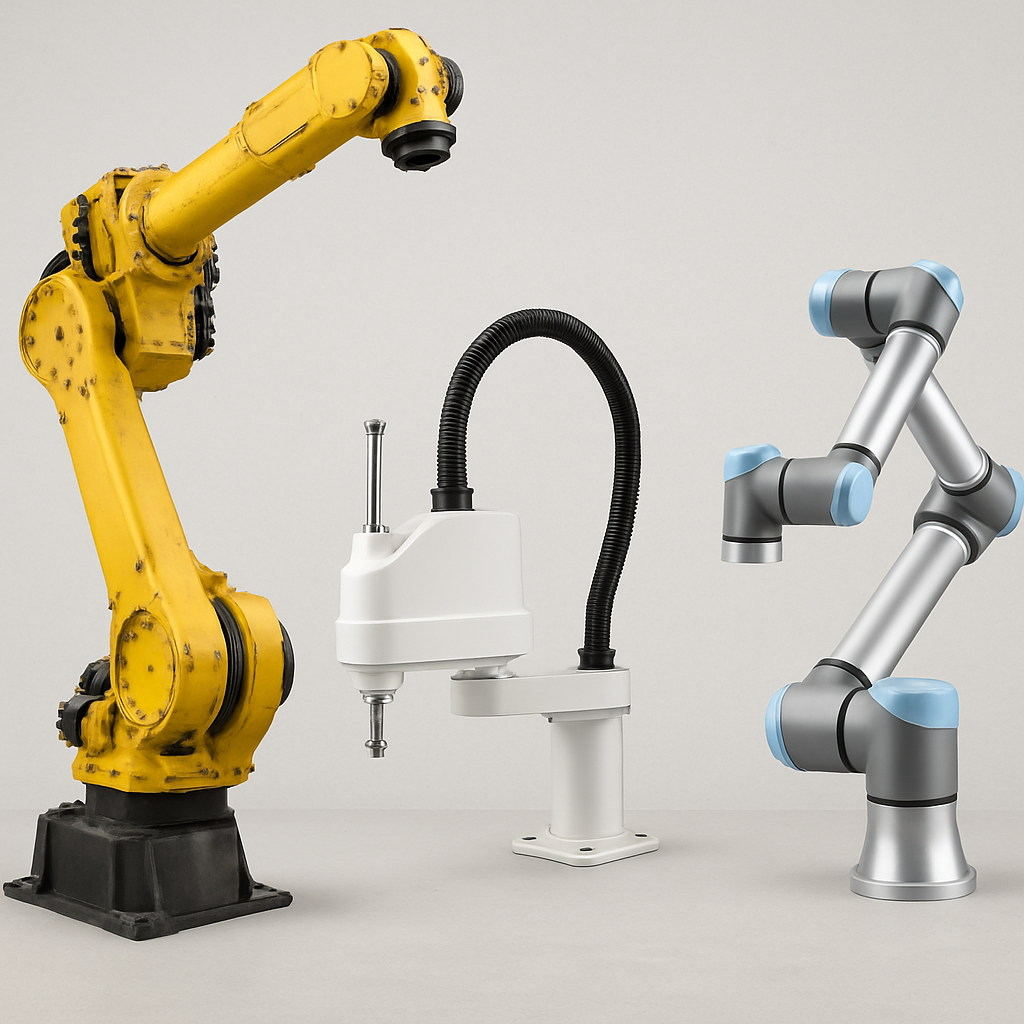
Industrial Robot Types Comparison
| Robot Type | Strength | Best Use Case |
|---|---|---|
| Articulated | High flexibility | Welding, painting |
| SCARA | Speed & Precision | Assembly, electronics |
| Delta | Ultra-fast | Food packaging |
| Cartesian | Accuracy | CNC machining |
| Cobot | Safe collaboration | Small-scale automation |
Insight: Choosing the right robot depends on speed, precision, and workspace needs
Source:
- IFR Robot Classification
https://ifr.org - Universal Robots Learning Center
https://www.universal-robots.com
Step 7: The Real-World Job—Where Robots Are Hiding in Plain Sight
The picture of an industrial-sized articulated robot welding a car chassis is often thought of as representative of the widespread influence of robots in the workplace. However, it represents only one part of the larger story of how robotic automation has evolved over time. There is a much greater narrative in how robotic arms have emerged into the workplace and how they are influencing how products are made, in terms of efficiency, safety, and consistency, for many products we all consume.
From the clean rooms where smartphone components are assembled and packaged, to the food processing facilities where our grocery items are processed and packaged, robotic arms are the un-noticed employees that enable many of the same processes, including sterilization, assembly, packaging, and testing.
Why are robotic arms emerging in so many different areas of our lives? The answer generally comes down to the “Three Ds”: Dull, Dirty, and Dangerous. In general, these are the types of jobs that require machines rather than humans. Robots can ideally work repetitively (e.g., placing thousands of identical caps on bottles without losing focus). They are at their best when performing “dirty” jobs (i.e., painting furniture in a smoky booth). And most importantly, they can also perform “dangerous” jobs that put human workers at risk (e.g., lifting heavy objects or working with dangerous chemicals).
As a result, focusing on the “Three Ds” provides a clear understanding of the benefits of robotic automation in the manufacturing industry. For example, assembling circuit boards on a computer or stacking boxes in a warehouse distribution facility are examples of robotic jobs. Therefore, the accessibility of robotic technology makes a robotic arm for a small business seem less like science fiction.
Industrial Robot Adoption Statistics
| Metric | Data |
|---|---|
| Global Robots Installed (2023) | 5,53,000 units |
| Total Operational Robots | 4 + Million |
| Top Industry | Automotive (25%) |
| Fastest Growing Sector | Electronics |
| Asia Market Share | 70% |
Key Insight: Industrial robots are rapidly expanding, especially in Asia and electronics manufacturing.
Source:
- International Federation of Robotics (World Robotics Report)
https://ifr.org - Statista Robotics Data
https://www.statista.com
Your New ‘Robot Literacy’ and What Comes Next
You once looked at an industrial robot as just a single machine composed of many parts. Now you see that it is really three separate components: the physical “arm” of the robot, the “hand” or tool that performs the actual work, and the computer “brain” that controls everything that happens with the robot. You have turned something mysterious into a system that you can comprehend and a powerful extension of what we want to accomplish.
As you can see, the next logical question is: How much money would I need to invest in a robotic arm? The prices of robotic arms vary widely depending on the robot’s size, power, and speed. A complete robotic arm system for a small business could cost anywhere from $25,000 for a small, collaborative robot arm to over $200,000 for large, high-power arms designed to lift extremely heavy items, such as automobile body panels.
The lower cost of cobots has made it possible for small business owners to afford robotic arms. Cobots (Collaborative Robots) have created a new market for robotic arms in small businesses. When you view a robotic arm, you see much more than just a machine. You see a tool designed to perform those dull, dirty, and hazardous tasks so that your human partner can focus on creativity and problem-solving. They are not meant to replace us. They are meant to assist us in our collaborative future.
My Viewpoint
My viewpoint for this article is “robot literacy for non-engineers”: industrial robot arms aren’t mysterious or threatening—they’re understandable systems made of clear building blocks that work together to deliver reliable motion. Instead of treating robots as a single complex machine, the article frames them as a practical toolkit: a strong mechanical body, joints that define flexibility, a swappable “hand” (EOAT) that determines the job, and a controller that turns taught points into repeatable action. From that lens, automation becomes less about hype and more about how factories actually improve quality, safety, and consistency.
This viewpoint also keeps the human role central. Robot arms are presented as purpose-built partners for the “dull, dirty, and dangerous” work, freeing people to focus on supervision, problem-solving, and process improvement. The inclusion of sensors (vision and force) and robot families (articulated, SCARA, cobots) reinforces a grounded message: the “best robot” depends on the task, workspace, and risk—not on buzzwords. Overall, the article’s perspective is empowering: once you understand the seven steps, you can evaluate robots realistically, communicate with vendors confidently, and spot where automation fits (and where it doesn’t).
Conclusion
Industrial robot arms are not enigmatic devices: they are clearly defined, function-based systems that include a robust structure, flexible connections, a task-specific end-effector, and a control system that translates commands into consistent, repeatable motion. Once one understands degrees of freedom, end-of-arm tooling, and how robots are trained and programmed, it is apparent why the utility of industrial robot arms exists – they can perform predictable functions at high speeds, continuously over a long period of time, without losing any performance due to fatigue.
The addition of advanced “percepts” to industrial robot arms, including vision and force sensing, enables them to expand their capabilities beyond simple repetition to more intelligent, adaptable automation that accommodates variability, maintains product quality, and improves workplace safety.
Additionally, the design options available for industrial robot arms allow companies to select the most suitable type of robot for each specific application – articulated robots for complex reach applications; SCARA robots for fast and precise planar movements; and collaborative robots (cobots) for effective and safe human-robot interaction – as opposed to selecting a generic “one size fits all” solution.
In general terms, the primary point of this article is that industrial robot arms are best suited for tasks that are monotonous, hazardous, or unproductive, thereby limiting production and posing risks to employees. As the costs associated with the acquisition and deployment of industrial robot arms continue to decline, and the process of integrating them becomes easier, these technologies are becoming increasingly accessible to more small to medium-sized organizations, enabling teams to optimize productivity, quality levels, and allocate their human resources to supervision, maintenance/troubleshooting, and innovation.
FAQs
- What is an industrial robot arm (manipulator)?
A robotic arm is composed of links and jointed elements and provides force and repeatability; however, it requires a controller (a computer) to determine how far and in which direction it should move. - What do “degrees of freedom” (axes) mean, and why does a 6-axis matter?
Degrees of freedom are a way for the robot to move (pivot and/or slide); therefore, additional degrees of freedom provide greater versatility. For this reason, a six-axis articulated robot can position a tool in multiple orientations; as such, these robots are commonly used in welding, painting, and complex assembly processes. - What is EOAT, and why is it so important?
End-of-Arm Tooling (EOAT) refers to the interchangeable “hands” on a robot, such as grippers, vacuum cups, welders, and screwdrivers. While the arm provides motion, the EOAT defines which task(s) the robot can accomplish. - How are industrial robot arms programmed?
Most are trained using a teach pendant; during training, an operator guides the arm to define the robot’s movement at key points and records the sequence. Once complete, the controller will store the robot’s path, enabling it to repeatedly perform the same task at the same locations. In addition to teaching via a teach pendant, more advanced systems will utilize Offline Programming (OLP). - How do robots “see” or “feel” to handle real-world variation safely?
Machine Vision enables a robot to identify parts, recognize orientation, and examine quality. Force/Torque Sensors enable a robot to feel what it is doing by providing a sense of touch for delicate insertion into a part, controlled contact with a part, and safety when the robot encounters unexpected conditions.

Garikapati Bullivenkaiah is a seasoned entrepreneur with a rich multidisciplinary academic foundation—including LL.B., LL.M., M.A., and M.B.A. degrees—that uniquely blend legal insight, managerial acumen, and sociocultural understanding. Driven by vision and integrity, he leads his own enterprise with a strategic mindset informed by rigorous legal training and advanced business education. His strong analytical skills, honed through legal and management disciplines, empower him to navigate complex challenges, mitigate risks, and foster growth in diverse sectors. Committed to delivering value, Garikapati’s entrepreneurial journey is characterized by innovative approaches, ethical leadership, and the ability to convert cross-domain knowledge into practical, client-focused solutions.