


ADVERTISEMENT
  • About NezzHub
  • Author Bio
  • Privacy Policy
  • Advertise & Disclaimer
  • Cookie Policy
  • Terms & Conditions
  • Contact Us
Latest Technology | Nezz hub
Advertisement
  • Home
    • All
    • 5G/6G Technologies
    • AI & Machine Learning
    • AI in Healthcare & Biotech
    • AI Tools, Frameworks & Platforms
    • Autonomous Mobile Robots (AMRs)
    • Biomanufacturing Automation
    • Biotechnology & Health Tech
    • Computer Vision & Image Recognition
    • Connectivity & Networking
    • Cybersecurity
    • Cybersecurity Tools & Frameworks
    • Data Security & Compliance
    • Digital Twins & Simulation
    • Gene Editing & Genomics
    • Generative AI & LLMs
    • Healthcare IoT (IoMT)
    • Humanoids & Embodied AI
    • Industrial Robots & Cobots
    • Internet of Things (IoT)
    • IoT Devices & Sensors
    • Natural Language Processing (NLP)
    • Quantum AI in Simulation
    • Quantum Computing
    • Robotics and Automation
    • Robotics Software (ROS, ROS2)
    • USA AI Jobs & Careers
    • USA Artificial Intelligence
    • USA Healthcare & Biotech AI
    • USA Quantum Computing
    • USA Robotics & Automation
    • USA Tech & Innovation
    • USA Tech Industry News
    Is AI in India Transforming a Better Future for Everyone?

    Is AI in India Transforming a Better Future for Everyone?

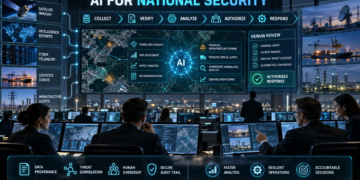
    Security analyst using AI-powered systems in a modern operations center for national security monitoring

    How AI for National Security Today

    Smart city with modern buildings, IoT technology, and a person managing digital systems in an urban environment

    How Smart Cities Use AI, IoT, and Robotics

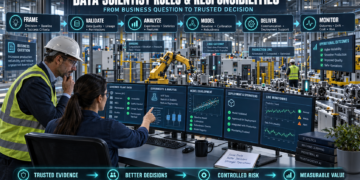
    Data scientist analyzing data and working with charts and code on multiple screens in a modern office

    Data Scientist Roles and Responsibilities Explained

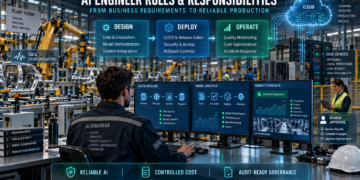
    AI engineer working in a modern office with multiple screens showing code, data, and machine learning models

    AI Engineer Roles and Responsibilities Explained

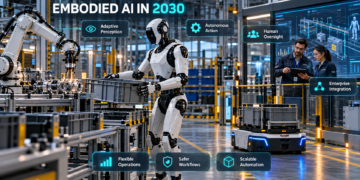
    Tesla Optimus humanoid robot working with a human in a modern office workplace environment

    What Tesla Optimus Can Do and Why It Matters

  • AI & Machine Learning
    • All
    • AI in Healthcare & Biotech
    • AI Tools, Frameworks & Platforms
    • Computer Vision & Image Recognition
    • Generative AI & LLMs
    • Natural Language Processing (NLP)
    Is AI in India Transforming a Better Future for Everyone?

    Is AI in India Transforming a Better Future for Everyone?

    Security analyst using AI-powered systems in a modern operations center for national security monitoring

    How AI for National Security Today

    Smart city with modern buildings, IoT technology, and a person managing digital systems in an urban environment

    How Smart Cities Use AI, IoT, and Robotics

    Professional working on a laptop with AI-generated text visuals representing GPT models in a modern workspace

    What Are GPT Models and How They Work

    Pharmaceutical scientist using AI technology to analyze molecular data and develop new drugs in a modern laboratory

    How AI Is Transforming Drug Development

    Professional working with generative AI software in a modern office, creating text, images, and digital content using advanced AI tools.

    How Generative AI Creates Content in Modern Systems

    • AI Tools, Frameworks & Platforms
    • AI in Healthcare & Biotech
    • Computer Vision & Image Recognition
    • Deep Learning & Neural Networks
    • Generative AI & LLMs
    • Machine Learning Fundamentals
    • Natural Language Processing (NLP)
  • Quantum Computing
    • All
    • Quantum AI in Simulation
    Scientist analyzing quantum molecular simulation in a modern lab with holographic molecule visualization and advanced computing tools

    How Quantum Molecular Simulation Helps Drug Discovery

    Quantum computing engineer analyzing quantum error correction data on screen beside advanced quantum hardware in modern laboratory.

    Why Quantum Error Correction Is Important for Scaling

    Quantum AI simulation visual showing glowing qubits and neural networks modeling complex systems beyond classical computing

    How Quantum AI Simulation Solves Complex Problems

    Quantum computing concept illustrating qubits and advanced computational processing

    What is Quantum Computing and Why It Matters

    • Quantum AI in Simulation
    • Quantum Algorithms
    • Quantum Applications in Biotech
    • Quantum Computing Industry Trends
    • Quantum Cryptography & Security
    • Quantum Hardware & Processors
  • Robotics and Automation
    • All
    • Autonomous Mobile Robots (AMRs)
    • Digital Twins & Simulation
    • Humanoids & Embodied AI
    • Industrial Robots & Cobots
    • Robotics Software (ROS, ROS2)
    Digital robot automating computer tasks on multiple screens, representing robotic process automation in modern office workflows.

    What Is Robotic Process Automation and How It Works

    AI-powered predictive maintenance system in an automated factory monitoring equipment performance with real-time data analytics.

    What Is Predictive Maintenance in Automation

    AI in manufacturing quality using computer vision and analytics to detect defects on a production line.

    How AI Improves Manufacturing Quality Checks

    Industrial robot arms with articulated joints and gripper performing automated tasks on a modern factory floor.

    How Industrial Robot Arms Work in Real Applications

    Collaborative robot assisting a small business worker in a shared workspace.

    Why Cobots for Small Businesses Are Useful

    Collaborative robot working safely alongside a human in a shared industrial workspace.

    What Are Cobots? Powerful & Friendly Robots That Work with Humans

    • Automation Tools & Workflow Systems
    • Autonomous Mobile Robots (AMRs)
    • Digital Twins & Simulation
    • Humanoids & Embodied AI
    • Industrial Robots & Cobots
    • Robotics Software (ROS, ROS2)
  • Connectivity & Networking
    • All
    • 5G/6G Technologies
    Telecom engineer managing 5G deployment technology near a cell tower in a modern smart city environment

    How 5G Deployment Technology Is Changing Network Infrastructure

    Tech professional setting up a Wi-Fi 7 router with connected smart devices in a modern home office environment

    What is a Wi-Fi 7 Router and How Does It Improve Connectivity

  • Internet of Things (IoT)
    • All
    • Healthcare IoT (IoMT)
    • IoT Devices & Sensors
    Network engineer monitoring connected IoT devices and smart systems on multiple screens in a modern office, illustrating how devices communicate intelligently.

    How IoT Devices Communicate with Each Other

    Internet of Medical Things (IoMT) connecting medical devices and hospital systems

    How IoT is Used in Hospitals (IoMT Explained)

  • Biotechnology & Health Tech
    • All
    • Biomanufacturing Automation
    • Gene Editing & Genomics

    Genetic Privacy Regulations: What to Expect by 2030

    Scaling strategies for biomanufacturing enabling efficient large-scale production

    Scaling Strategies for Biomanufacturing: That Works

  • Cybersecurity
    • All
    • Cybersecurity Tools & Frameworks
    • Data Security & Compliance
    Cybersecurity professional monitoring compliance dashboards and data protection systems in a modern business workplace

    Cybersecurity Compliance Trends Businesses Should Know

    Cybersecurity analyst monitoring identity and access management tools and authentication dashboards in a modern enterprise security operations center.

    Identity and Access Management Tools Explained

    Cybersecurity compliance analyst reviewing a SOC 2 compliance checklist and data protection dashboards in a modern U.S. corporate IT security office.

    SOC2 Compliance Checklist for Data Security

    • Cybersecurity Tools & Frameworks
    • Data Security & Compliance
    • Healthcare & Biotech Security
    • Identity, Access & Zero Trust
    • Network & Cloud Security
    • Ransomware & Incident Response
  • USA Tech & Innovation
    • All
    • USA AI Jobs & Careers
    • USA Artificial Intelligence
    • USA Healthcare & Biotech AI
    • USA Quantum Computing
    • USA Robotics & Automation
    • USA Tech Industry News
    Security analyst using AI-powered systems in a modern operations center for national security monitoring

    How AI for National Security Today

    Data scientist analyzing data and working with charts and code on multiple screens in a modern office

    Data Scientist Roles and Responsibilities Explained

    AI engineer working in a modern office with multiple screens showing code, data, and machine learning models

    AI Engineer Roles and Responsibilities Explained

    Tesla Optimus humanoid robot working with a human in a modern office workplace environment

    What Tesla Optimus Can Do and Why It Matters

    Professional interacting with an advanced robotic dog in a modern workplace representing Boston Dynamics robotics innovation

    Boston Dynamics Robots: What They Can Do Today

    Healthcare cybersecurity specialist monitoring HIPAA compliance and patient data protection systems in a modern U.S. hospital IT security center.

    HIPAA Cybersecurity Requirements for Healthcare Organizations

    • USA Artificial Intelligence
    • USA Quantum Computing
    • USA Healthcare & Biotech AI
    • USA Robotics & Automation
    • USA AI Jobs & Careers
    • USA Tech Industry News
No Result
View All Result
  • Home
    • All
    • 5G/6G Technologies
    • AI & Machine Learning
    • AI in Healthcare & Biotech
    • AI Tools, Frameworks & Platforms
    • Autonomous Mobile Robots (AMRs)
    • Biomanufacturing Automation
    • Biotechnology & Health Tech
    • Computer Vision & Image Recognition
    • Connectivity & Networking
    • Cybersecurity
    • Cybersecurity Tools & Frameworks
    • Data Security & Compliance
    • Digital Twins & Simulation
    • Gene Editing & Genomics
    • Generative AI & LLMs
    • Healthcare IoT (IoMT)
    • Humanoids & Embodied AI
    • Industrial Robots & Cobots
    • Internet of Things (IoT)
    • IoT Devices & Sensors
    • Natural Language Processing (NLP)
    • Quantum AI in Simulation
    • Quantum Computing
    • Robotics and Automation
    • Robotics Software (ROS, ROS2)
    • USA AI Jobs & Careers
    • USA Artificial Intelligence
    • USA Healthcare & Biotech AI
    • USA Quantum Computing
    • USA Robotics & Automation
    • USA Tech & Innovation
    • USA Tech Industry News
    Is AI in India Transforming a Better Future for Everyone?

    Is AI in India Transforming a Better Future for Everyone?

    Security analyst using AI-powered systems in a modern operations center for national security monitoring

    How AI for National Security Today

    Smart city with modern buildings, IoT technology, and a person managing digital systems in an urban environment

    How Smart Cities Use AI, IoT, and Robotics

    Data scientist analyzing data and working with charts and code on multiple screens in a modern office

    Data Scientist Roles and Responsibilities Explained

    AI engineer working in a modern office with multiple screens showing code, data, and machine learning models

    AI Engineer Roles and Responsibilities Explained

    Tesla Optimus humanoid robot working with a human in a modern office workplace environment

    What Tesla Optimus Can Do and Why It Matters

  • AI & Machine Learning
    • All
    • AI in Healthcare & Biotech
    • AI Tools, Frameworks & Platforms
    • Computer Vision & Image Recognition
    • Generative AI & LLMs
    • Natural Language Processing (NLP)
    Is AI in India Transforming a Better Future for Everyone?

    Is AI in India Transforming a Better Future for Everyone?

    Security analyst using AI-powered systems in a modern operations center for national security monitoring

    How AI for National Security Today

    Smart city with modern buildings, IoT technology, and a person managing digital systems in an urban environment

    How Smart Cities Use AI, IoT, and Robotics

    Professional working on a laptop with AI-generated text visuals representing GPT models in a modern workspace

    What Are GPT Models and How They Work

    Pharmaceutical scientist using AI technology to analyze molecular data and develop new drugs in a modern laboratory

    How AI Is Transforming Drug Development

    Professional working with generative AI software in a modern office, creating text, images, and digital content using advanced AI tools.

    How Generative AI Creates Content in Modern Systems

    • AI Tools, Frameworks & Platforms
    • AI in Healthcare & Biotech
    • Computer Vision & Image Recognition
    • Deep Learning & Neural Networks
    • Generative AI & LLMs
    • Machine Learning Fundamentals
    • Natural Language Processing (NLP)
  • Quantum Computing
    • All
    • Quantum AI in Simulation
    Scientist analyzing quantum molecular simulation in a modern lab with holographic molecule visualization and advanced computing tools

    How Quantum Molecular Simulation Helps Drug Discovery

    Quantum computing engineer analyzing quantum error correction data on screen beside advanced quantum hardware in modern laboratory.

    Why Quantum Error Correction Is Important for Scaling

    Quantum AI simulation visual showing glowing qubits and neural networks modeling complex systems beyond classical computing

    How Quantum AI Simulation Solves Complex Problems

    Quantum computing concept illustrating qubits and advanced computational processing

    What is Quantum Computing and Why It Matters

    • Quantum AI in Simulation
    • Quantum Algorithms
    • Quantum Applications in Biotech
    • Quantum Computing Industry Trends
    • Quantum Cryptography & Security
    • Quantum Hardware & Processors
  • Robotics and Automation
    • All
    • Autonomous Mobile Robots (AMRs)
    • Digital Twins & Simulation
    • Humanoids & Embodied AI
    • Industrial Robots & Cobots
    • Robotics Software (ROS, ROS2)
    Digital robot automating computer tasks on multiple screens, representing robotic process automation in modern office workflows.

    What Is Robotic Process Automation and How It Works

    AI-powered predictive maintenance system in an automated factory monitoring equipment performance with real-time data analytics.

    What Is Predictive Maintenance in Automation

    AI in manufacturing quality using computer vision and analytics to detect defects on a production line.

    How AI Improves Manufacturing Quality Checks

    Industrial robot arms with articulated joints and gripper performing automated tasks on a modern factory floor.

    How Industrial Robot Arms Work in Real Applications

    Collaborative robot assisting a small business worker in a shared workspace.

    Why Cobots for Small Businesses Are Useful

    Collaborative robot working safely alongside a human in a shared industrial workspace.

    What Are Cobots? Powerful & Friendly Robots That Work with Humans

    • Automation Tools & Workflow Systems
    • Autonomous Mobile Robots (AMRs)
    • Digital Twins & Simulation
    • Humanoids & Embodied AI
    • Industrial Robots & Cobots
    • Robotics Software (ROS, ROS2)
  • Connectivity & Networking
    • All
    • 5G/6G Technologies
    Telecom engineer managing 5G deployment technology near a cell tower in a modern smart city environment

    How 5G Deployment Technology Is Changing Network Infrastructure

    Tech professional setting up a Wi-Fi 7 router with connected smart devices in a modern home office environment

    What is a Wi-Fi 7 Router and How Does It Improve Connectivity

  • Internet of Things (IoT)
    • All
    • Healthcare IoT (IoMT)
    • IoT Devices & Sensors
    Network engineer monitoring connected IoT devices and smart systems on multiple screens in a modern office, illustrating how devices communicate intelligently.

    How IoT Devices Communicate with Each Other

    Internet of Medical Things (IoMT) connecting medical devices and hospital systems

    How IoT is Used in Hospitals (IoMT Explained)

  • Biotechnology & Health Tech
    • All
    • Biomanufacturing Automation
    • Gene Editing & Genomics

    Genetic Privacy Regulations: What to Expect by 2030

    Scaling strategies for biomanufacturing enabling efficient large-scale production

    Scaling Strategies for Biomanufacturing: That Works

  • Cybersecurity
    • All
    • Cybersecurity Tools & Frameworks
    • Data Security & Compliance
    Cybersecurity professional monitoring compliance dashboards and data protection systems in a modern business workplace

    Cybersecurity Compliance Trends Businesses Should Know

    Cybersecurity analyst monitoring identity and access management tools and authentication dashboards in a modern enterprise security operations center.

    Identity and Access Management Tools Explained

    Cybersecurity compliance analyst reviewing a SOC 2 compliance checklist and data protection dashboards in a modern U.S. corporate IT security office.

    SOC2 Compliance Checklist for Data Security

    • Cybersecurity Tools & Frameworks
    • Data Security & Compliance
    • Healthcare & Biotech Security
    • Identity, Access & Zero Trust
    • Network & Cloud Security
    • Ransomware & Incident Response
  • USA Tech & Innovation
    • All
    • USA AI Jobs & Careers
    • USA Artificial Intelligence
    • USA Healthcare & Biotech AI
    • USA Quantum Computing
    • USA Robotics & Automation
    • USA Tech Industry News
    Security analyst using AI-powered systems in a modern operations center for national security monitoring

    How AI for National Security Today

    Data scientist analyzing data and working with charts and code on multiple screens in a modern office

    Data Scientist Roles and Responsibilities Explained

    AI engineer working in a modern office with multiple screens showing code, data, and machine learning models

    AI Engineer Roles and Responsibilities Explained

    Tesla Optimus humanoid robot working with a human in a modern office workplace environment

    What Tesla Optimus Can Do and Why It Matters

    Professional interacting with an advanced robotic dog in a modern workplace representing Boston Dynamics robotics innovation

    Boston Dynamics Robots: What They Can Do Today

    Healthcare cybersecurity specialist monitoring HIPAA compliance and patient data protection systems in a modern U.S. hospital IT security center.

    HIPAA Cybersecurity Requirements for Healthcare Organizations

    • USA Artificial Intelligence
    • USA Quantum Computing
    • USA Healthcare & Biotech AI
    • USA Robotics & Automation
    • USA AI Jobs & Careers
    • USA Tech Industry News
No Result
View All Result
Latest Technology | Nezz hub
No Result
View All Result
Home AI & Machine Learning

How AI for National Security Today

Garikapati Bullivenkaiah by Garikapati Bullivenkaiah
May 2, 2026
in AI & Machine Learning, USA Artificial Intelligence
0
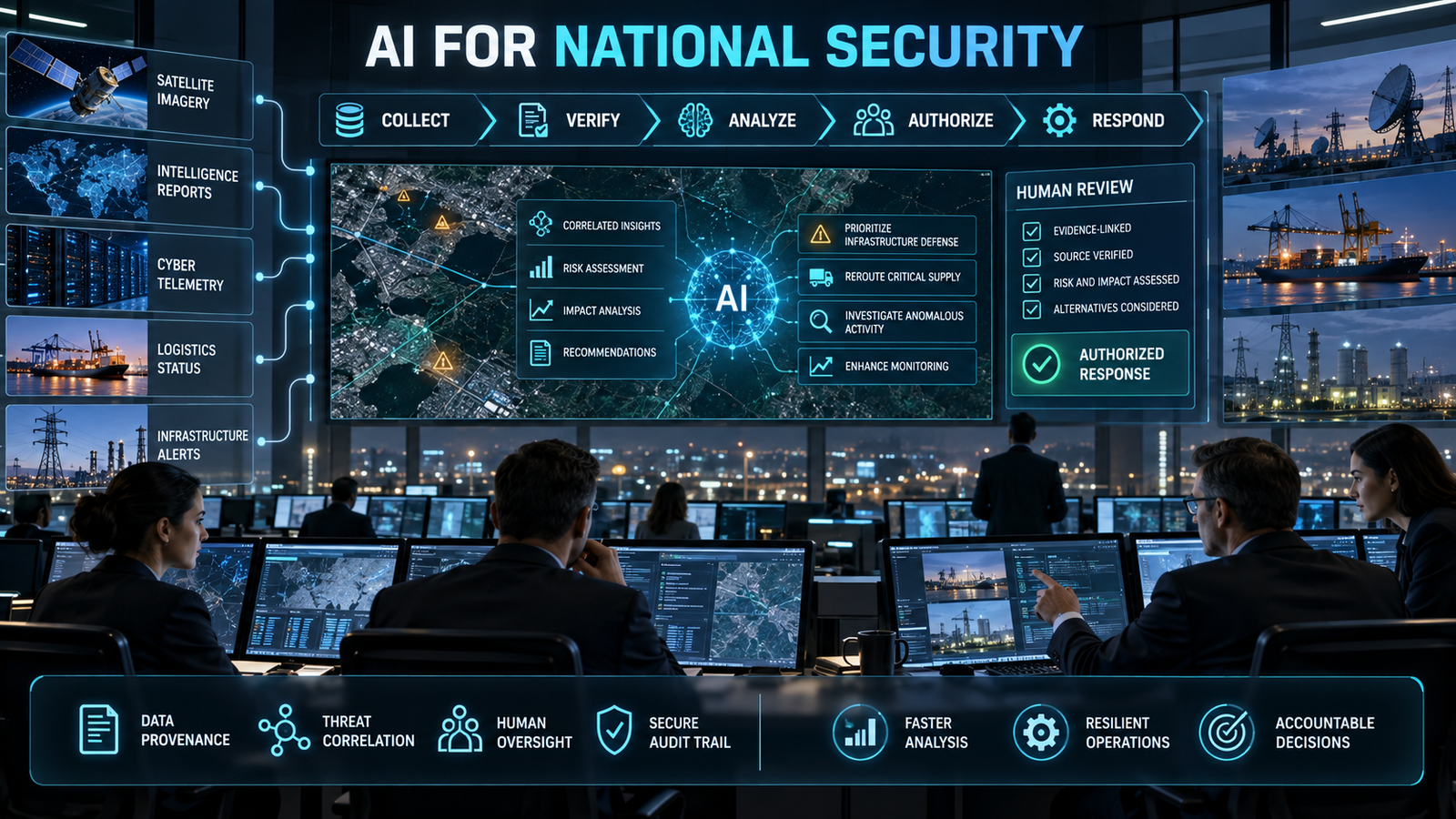
Security analyst using AI-powered systems in a modern operations center for national security monitoring
Share on FacebookShare on Twitter
Security analyst using AI-powered systems in a modern operations center for national security monitoring

The international environment in which we work today has never been more dynamic. Threats are no longer confined solely to traditional battlefields but also extend to digital platforms, increasingly complex supply lines, and the vastness of space. To stay ahead of rapidly evolving adversary capabilities, we require our protective systems to evolve as well. That is precisely why we believe Artificial Intelligence (AI) plays such a significant role in protecting America’s national security.

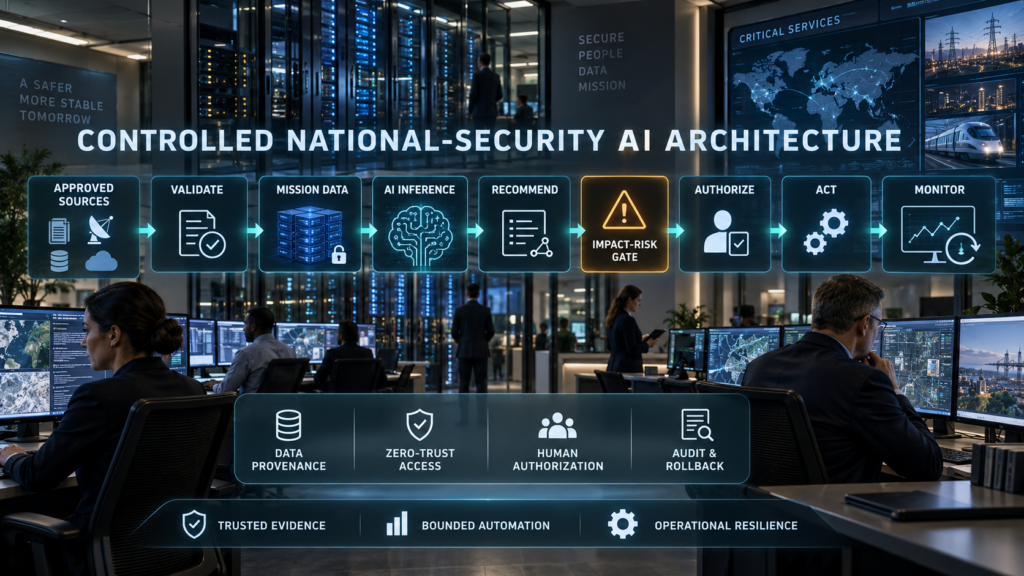
When we talk about Next-Gen AI for National Security: Protecting a Better Future for Everyone, we do not see it as something from a science-fiction movie depicting a dystopian future. Rather than describing a futuristic, sci-fi vision of AI for military purposes, we are defining it as a very real set of technologies developed to protect people, data, and other assets through advanced, practical methods. Ultimately, using AI in national security is about anticipating and countering emerging threats while upholding core human values.

In this detailed manual, we will outline how Next Gen AI is changing the way militaries conduct their missions, improving defenses against both cyber and physical attacks on U.S. interests, and providing greater resilience to America and its allies.

Summary

“The article ‘Next-Generation AI for National Security: A Safer Tomorrow For All’ provides an overview of how today’s advanced artificial intelligence (AI) is evolving the way nations defend themselves through a shift from a reactive defensive posture to a proactive offensive posture.

As such, Next Gen-AI will strengthen national defense in areas of cyber security by identifying potential threats in real-time; enhance border security through smart(er) surveillance and quicker decision making; improve Intelligence Surveillance Reconnaissance (ISR) capabilities by reducing large amounts of data into actionable information; predict potential risk through the use of predictive analytics; and optimize military logistics, including maintenance, supply chain management and overall operational readiness via AI enhanced systems.

In addition to these enhancements, the article points out that next-gen AI is not simply about using technology alone, but rather utilizing human-machine collaboration to create safe and effective outcomes. In this regard, the benefits of AI include the necessary speed and scalability, while human oversight provides contextualization, ethical considerations, and accountability.

Additionally, the article discusses the growing importance of Sovereign AI in protecting sensitive data and reducing dependence on third-party systems. Lastly, the article addresses the issue of Responsible AI in Defense Systems, specifically transparency, bias reduction, safe system deployments, and human oversight, to ensure that Intelligent Systems protect the citizenry while maintaining respect for Civil Liberties.

Breaking & Progressive AI Regulation News in the United States

AI for national security uses advanced technologies to detect threats, enhance defense systems, and protect citizens through smarter, faster decision-making

The use of AI for national security enhances a country’s ability to defend its citizens by leveraging advanced technology to identify potential threats, strengthening defensive capabilities, and making decisions about citizens’ safety with greater speed and intelligence.

AI for National Security will also assist intelligence professionals who must analyze large volumes of information (such as signals, cyber telemetry, satellite imagery, open-source reports, and logistical records) to determine whether a pattern of activity can be identified before it happens.

Cyber defense through AI for National Security can identify malicious phishing campaigns, malware activity within an organization’s computer system, and intrusion attempts, enabling defenders to take action to stop the attack from spreading to other critical infrastructure. In the context of intelligence, surveillance, and reconnaissance (ISR), predictive models can also be used to identify objects in images or video, detect changes over time, and correlate multiple ISR sources to enhance situational awareness.

The use of predictive systems within military logistics enables predicting when equipment maintenance will be required, optimizing delivery routes, and reducing downtime — all factors that ultimately improve a unit’s readiness while reducing costs associated with unnecessary maintenance and waste.

If we want to ensure that we build a better future for generations to come, then it is crucial to pair AI for national security with proper governance. This includes testing for bias in AI models, as well as the overall model’s performance under real-world conditions. It also requires human oversight when making life-or-death decisions. The secure handling of sensitive data, building AI systems with resilience, and providing transparent and accountable use of these tools are all important to earning trust.

In doing so, AI for National Security provides a deterrent to potential adversaries; enhances government emergency response capabilities; and ultimately enables governments to protect their citizens’ rights and lives in today’s increasingly diverse, dynamic, and ever-present threat environment.

AI in National Security Use Cases

SectorAI ApplicationExampleOutcome
CybersecurityThreat detectionMalware detection systemsReduced attacks
Border SecuritySurveillanceAI drones & camerasFaster response
DefenseAutonomous systemsAI-powered vehiclesEnhanced operations
IntelligenceData analysisPattern recognitionBetter decisions
Disaster ResponseRisk predictionFlood/earthquake alertsSaved lives

Source:
World Economic Forum
https://www.weforum.org

The Paradigm Shift: Traditional Defense vs AI-Powered Systems

The first step toward understanding how Next-Gen Technology will affect Defense is to compare the old way of doing things, as in Traditional Defense, with the new way, which is AI-Powered Systems. In the past, defense methods were always after-the-fact. A breach occurred. An alert went off. The Human Operator would then attempt to repair the damage that had already happened. All information was compartmentalized (siloed), and it could take days or weeks for Analysts to review Intelligence for patterns.

AI, however, changes everything about how defense is done; instead of reacting to breaches, the focus shifts from Reaction to Prevention. By using Predictive Analytics, Modern Defense Systems can analyze both Historical Data & Real-Time Data at scale to identify potential threats before they occur.

Illustration showing transition from traditional radar systems to AI-powered network intelligence in modern defense technology

Here is how AI-powered systems outpace traditional defense:

  • Speed: Algorithms can process billions of data points in milliseconds, detecting anomalies that human analysts would naturally miss.
  • Adaptability: Machine learning models learn from new data, continuously updating their defensive postures.
  • Scale: AI operates 24/7 without fatigue, simultaneously monitoring millions of network nodes or hundreds of miles of terrain.

Ultimately, artificial intelligence acts as a digital immune system, constantly evolving to counter new strains of physical and cyber threats.

Traditional Defense vs AI-Powered Systems

AspectTraditional DefenseAI-Powered Defense
Decision SpeedSlow, manualReal-time, automated
Threat DetectionReactivePredictive & proactive
Data HandlingLimitedBig data + AI analytics
AccuracyModerateHigh precision
ResponseDelayedInstant response systems

Source: NATO
https://www.nato.int

Predictive Analytics: Predictive analytics uses AI to anticipate threats and improve proactive national security strategies

Analyst using predictive analytics dashboards to forecast risks in a modern security operations environment

Predictive Analytics utilizes Artificial Intelligence (AI) to predict risks and proactively create more strategic national security efforts. Rather than waiting until a threat has occurred, predictive analytics combines past events with current trends in real time — such as cyberlogs, travel/trade activity patterns, satellite imagery, Open Source Information (OSI), and sensor data — to determine where risks may be developing and how to act. In doing so, it changes the way we plan and prepare by shifting our response to incidents toward providing an early warning system and taking preventive measures.

Using AI for National Security, predictive analytics can assist in identifying clusters of suspect behaviors; forecasting probable targets; recommending whether to prioritize surveillance or protection based on likelihood and/or possible effect; for Cybersecurity, predictive analytics models can forecast which vulnerabilities will be most likely to be attacked and which systems are at greatest exposure, enabling teams to remediate their vulnerabilities through patching and segmentation prior to when the attacker strikes; and for Borders and Ports, predictive analytics can aid in risk scoring to provide inspection priority to those shipments or travelers at highest risk while causing minimal disruptions to lawful movement.

Predictive analytics helps make better resource allocations by forecasting required personnel, routing patrols, predicting equipment failures, and improving logistical preparedness by forecasting supply shortages and maintenance demand.

Predictive Analytics also facilitates intelligence fusion by integrating disparate weak signals from different agencies, allowing analysts to identify coordinated attack campaigns at a much earlier stage than previously possible and significantly reducing the amount of “noise” in large volumes of data.

For Predictive Analytics to be successful in applying AI to national security, certain operational and ethical requirements must be met. The first requirement is quality data. Secondly, models must continually be validated. Thirdly, there must always be human oversight, especially when models influence civil liberties or decisions made under extreme circumstances. By providing transparent applications of Predictive Analytics models, along with auditing capabilities and secure deployment, we believe that AI can be used to defend our nation in many ways, including reacting more quickly, providing stronger, more targeted defense, and helping prevent damage before escalation.

Complete Guide to AI Engineer Roles and Responsibilities: Essential Skills for a Successful Career

Fortifying the Digital Frontier: Cyber and Critical Infrastructure

Code-based attacks in the 21st century could be the worst kind of attack, lacking a physical weapon. AI for Cybersecurity is probably the biggest component of defensive strategy in the 21st century. State-sponsored hackers, criminal hackers, and cyber hackers are currently using automated tools to identify network vulnerabilities. Defenders will need to use AI-driven cyber threat detection to counter such attacks.

Proactive Cyber Defense

The most significant difference in how traditional Antivirus software works compared to Next Generation AI is that traditional Antivirus uses signature-based detection; essentially, it has a list of known malicious code (a.k.a. blacklisting), whereas Next Generation AI uses Behavior Analysis. The next-generation AI will flag the behavior as suspicious if a user account attempts to download large amounts of sensitive data during non-business hours (such as 3:00 am), immediately isolate the user’s workstation, and block the transfer.

Unlike traditional AV, which detects malware based on predefined signatures, the Next-Gen AI monitors and records normal network behavior over time, then looks for abnormal patterns.

Protecting the Grid

Beyond military networks, there is a pressing need to secure critical infrastructure with AI. Power grids, water treatment plants, and transportation networks are increasingly targeted by malicious actors.

  • Anomaly detection: AI constantly monitors industrial control systems (ICS) for unauthorized commands that could disrupt public utilities.
  • Self-healing networks: If a node in a communication grid goes down due to a cyberattack, AI can dynamically reroute data to keep essential services online.

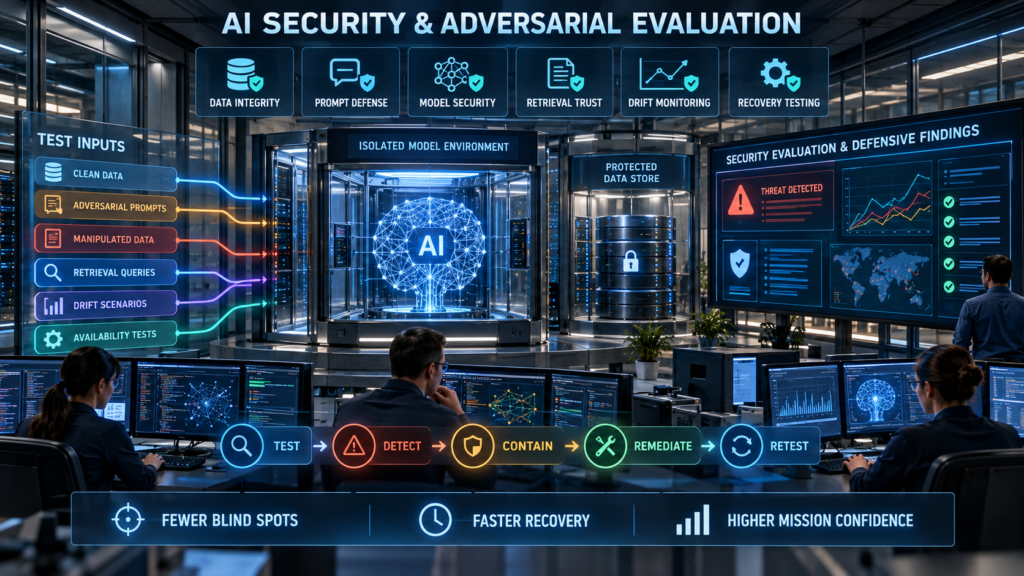
Actionable Tip: Organizations involved in national security should conduct routine penetration testing using AI-simulated adversaries to identify vulnerabilities in their critical infrastructure before real attackers do.

AI for Cybersecurity: It strengthens digital defenses by detecting and preventing threats in real time

Cybersecurity analyst monitoring AI-powered threat detection systems in a modern security operations center

AI for Cybersecurity is a key enhancement of cyber defense by providing real-time threat detection and response, helping human-only teams keep pace with cyberattacks. AI for Cybersecurity analyzes massive streams of signals from various sources (network traffic, endpoint behavior, identity logs, cloud events, and email telemetry) to identify anomalies that indicate phishing or malware attacks, including internal risk or lateral movement.

By learning what “normal” looks like in a specific environment, AI for Cybersecurity can flag suspicious deviations early in the process, reducing alert fatigue by prioritizing the most credible threats.

AI for National Security sensors, speed, and scale are important.

AI for Cybersecurity can automate first-line action such as removing access to a compromised device, forcing credential resets, blocking malicious domains, or throttling unusual data exfiltration – often in seconds. It also supports threat hunting by connecting weak signals across tools and over time, helping analysts see a campaign that would otherwise have been recognized only as disconnected incidents.

Another benefit of using artificial intelligence (AI) for cybersecurity is predictive defense. AI for cybersecurity uses a variety of methods to predict the types of attacks that will occur by analyzing past attack patterns, the potential damage if they succeed, and which assets would be impacted. This allows security personnel to prioritize their patching and strengthening efforts to address the highest risk vulnerabilities first, rather than waiting until there has been a compromise. Additionally, AI-based tools can help streamline incident response by quickly identifying the cause of an issue and guiding containment efforts to minimize downtime and prevent downstream problems.

However, it is possible to build public trust in the use of AI for national security issues, such as cyber threats, through responsible cybersecurity use. To do this, we need to ensure that effective governance measures are in place when deploying AI for cybersecurity. These include ensuring that all components of AI models and datasets are secured and protected at all times; continuously testing AI cybersecurity models against known and unknown adversarial activity; and establishing clear guidelines on who has authority to take action under specific circumstances.

Cybersecurity Threat Detection Efficiency

MetricWithout AIWith AI
Threat Detection TimeDays/WeeksSeconds/Minutes
Accuracy70%90-95%
False PositivesHighReduced significantly
Response SpeedManualAutomated
Cost ImpactHigh lossesLower breach costs

Source: IBM
https://www.ibm.com/security

Advancing Physical Safety: Borders and Real-Time Awareness

The physical world must be secured at all costs, while the cyber world must be secured even more heavily. If your question is about what form AI will take to enhance border protection, then it can be summed up with one word: “multiplier,” or in other words, it will provide an endless supply of manpower.

Securing thousands of miles of borders in rough, remote areas has always been a nightmare for logisticians. With next-generation AI technology, this problem will be greatly diminished by providing autonomous drones, smart cameras, and interconnected sensors that work together.

Drone and surveillance cameras monitoring a border area at night representing AI-powered security and reconnaissance systems

With sensor data fed into real-time situational awareness systems, border agents will now see their entire area of operations from a single platform.

  • Smart Threat Recognition: AI can differentiate between a stray animal, a changing weather pattern, and unauthorized human movement, drastically reducing false alarms.
  • Optimized Patrols: Predictive models analyze terrain, weather, and historical data to recommend optimal patrol routes for border agents, ensuring resources are deployed exactly where they are needed most.

Border Security: AI-powered border security enhances surveillance, detection, and real-time response capabilities

Security officer monitoring AI-powered border surveillance systems in a modern control center

Border Security: The use of Artificial Intelligence for Border Security enables better surveillance, detection, and real-time response to incidents by integrating multiple sensor sources into a single, actionable intelligence system. This will allow systems to integrate data from multiple technologies, including cameras, drones, thermal imaging devices, radar, ground sensors, license plate readers, and cargo scanning equipment, to increase surveillance coverage across larger geographic areas. Additionally, with the use of AI, Border Security will require much less constant operator oversight and focus instead on providing timely, high-confidence alerts of potential threats.

The most significant benefit of using AI for National Security is speed. AI-based solutions can identify and distinguish normal from abnormal activity, reducing false alarms, while also identifying events that may require immediate attention, such as unusual movement within a restricted area, repeated probing of a specific entry point, or coordinated traffic diversions. As a result, Border Security can help prioritize higher-risk events over lower-risk ones, allowing operators to focus on the most critical events rather than responding to every motion detector or low-quality tip.

With Border Security AI being able to make fast responses to alerts as they are confirmed, Border Security AI will be able to provide recommendations of the most effective course of action—such as a route for dispatches, how to assign drones, what sensors need to be assigned elsewhere, etc.—to assist border agents and their partners (nearby units) based on a number of factors such as terrain, weather, distance and historical patterns.

Over time, Border Security AI’s predictive analysis can create better plans for Border Security by identifying recurring areas of high activity, predicting when traffic is likely to be heaviest during the day/week/month/year, and creating the most efficient possible staff and patrol schedules.

In addition, Border Security AI has requirements similar to those of other AI for National Security. To maintain the trust of both U.S. citizens and foreign visitors, the decision-making processes associated with Border Security AI must include human oversight. Agencies using Border Security AI must review all data collected through this application to determine whether there are any biases, inaccuracies, or negative impacts on individuals’ rights (privacy).

Additionally, strong data protection practices, clear accountability, and policy transparency will enable the development of responsible AI for National Security that utilizes AI-enabled Border Security to allow law enforcement personnel to quickly react to situations that may pose a threat to public safety, utilize agency resources more effectively, and reduce the risk of harm without disrupting lawful travel across our borders.

Modernizing Military Operations: ISR and Logistics

The backbone of any successful national security operation is information and supply. AI is completely overhauling both fields, leading to faster, safer, and more decisive operations.

Uncovering the Truth with Data

In the field of Intelligence, Surveillance, and Reconnaissance (ISR), the amount of data collected via Satellites, Drones, and Ground Sensors is enormous. It’s impossible for an analyst to view and analyze thousands of hours of video at once.

To address this problem, ISR uses Automated Data Processing using Artificial Intelligence. The AI algorithms will go through the Satellite Imagery and identify changes — such as the construction of a new military facility or slight vehicle movement when a vehicle is concealed — and allow the analyst to focus only on what is important for them to examine. As a result, analysts can provide critical intelligence in real time.

Revolutionizing Supply Chains

Military Logistics is a highly complex field with many variables. Military Logistics includes moving troops, fuel, medical supplies, and munitions (ammunition) into hostile environments. AI works by using predictive maintenance and routing to optimize logistics operations for the military. Using sensor data from military equipment, such as helicopter rotors or truck engines, AI can detect when an engine or rotor may be about to fail. Once the problem has been identified, the replacement parts will be ordered before the failure occurs. The use of AI in predictive maintenance ensures that all military equipment is at maximum operational availability and reduces the risk of loss of life in the field.

Military Logistics & ISR Impact

AreaWithout AIWith AI
Supply Chain SpeedSlowOptimized routes
Resource AllocationManualAI-optimized
Surveillance AccuracyLimitedReal-time insights
Decision-MakingDelayedData-driven
Mission EfficiencyModerateHigh efficiency

Source: U.S. Department of Defense
https://www.defense.gov

Intelligence Surveillance & Reconnaissance: AI-driven ISR systems provide advanced monitoring, data analysis, and actionable intelligence.

Analyst monitoring AI-driven surveillance and reconnaissance data in a modern intelligence operations center

Intelligence Surveillance & Reconnaissance with Artificial Intelligence (AI): The use of AI in Intelligence Surveillance & Reconnaissance systems will enable better real-time monitoring and analysis of data, as well as actionable intelligence by allowing teams to quickly analyze, process, and act on collected information.

Traditional Intelligence Surveillance & Reconnaissance processes are often slowed by the volume of video, imagery, and signal data collected from a variety of sources, including satellite, drone, aircraft, ground sensors, maritime systems, and other open-source platforms. For example, the use of AI in Intelligence, Surveillance & Reconnaissance systems enables users to convert this massive amount of video, imagery, and signal data into usable intelligence.

The daily operation of Intelligence, Surveillance & Reconnaissance systems is enhanced by automating object detection, tracking, and change analysis. These models identify changes such as new construction, atypical vehicle activity, changes in terrain, and abnormal maritime activities and send the most relevant images/video to analysts for verification. In doing so, it allows analysts to target their area of interest rather than having to watch all areas of interest.

The primary value of AI for national security is decision advantage. Fusion using AI enables the correlation of weak signals from disparate data (e.g., imagery, communication patterns, logistics activities, cyber indicators), helping identify potential threats sooner and eliminate unnecessary noise. Additionally, AI-enabled fusion can provide summaries, timelines, and confidence ratings that enhance a commander’s situational awareness and speed up their decision-making.

Intelligence Surveillance & Reconnaissance (ISR) capabilities can also increase operational efficiency. Forecasting collection gaps, prioritizing sensor tasking, and suggesting where ISR assets may need to go next all enable an Intelligence Surveillance & Reconnaissance capability to become more proactive and less reactive. Finally, the ability to support “human-machine teaming” will allow humans to focus on applying their judgment and context while machines handle continuous monitoring and initial triage of raw intelligence, while ensuring that both the machine and the human are subject to applicable laws, regulations, and ethical standards.

For AI for National Security to effectively utilize Intelligence Surveillance & Reconnaissance capabilities, they must be able to operate securely and accountably. The agencies developing these models must validate their performance, test them against deception and adversarial attacks, and ensure humans remain in the decision loop when critical or impactful decisions are made. When properly governed, AI for National Security can use AI-driven Intelligence, Surveillance & Reconnaissance to produce actionable intelligence faster and at lower cost than traditional methods, without sacrificing accuracy, accountability, trustworthiness, or oversight.

Military Logistics: AI improves military logistics by optimizing supply chains, resources, and operational efficiency

Logistics professional managing AI-powered supply and transport operations in a modern command center

Military logistics is one of the most important areas where artificial intelligence can enhance supply chain management, resource allocation, and overall operational efficiency — strengthening a force’s ability to remain prepared, mobile, and resilient in high-stress environments. Military Logistics encompasses everything from fuel, ammunition, and medical supplies to replacement parts, maintenance scheduling, transportation route planning, and inventory visibility in multiple theaters. For example, because disruptions to a supply chain are so detrimental to a force’s readiness, AI is increasingly being utilized to reduce disruptions and delays and increase reliability.

One key advantage is forecasting. In Military Logistics, predictive modeling enables demand estimates based on Mission Tempo (MT), consumption patterns, weather/terrain conditions, and Adversary Activity. This permits planners to position supplies in advance, prevent shortages, and minimize the costs associated with overstocking. Additionally, AI enhances Predictive Maintenance. Through analysis of sensor data from vehicles, aircraft, and other equipment, Military Logistics teams can identify impending component failure(s) and schedule repairs before they occur; thereby maintaining fleet availability while minimizing downtime.

Additionally, AI can support optimizing Movement/Routing in Military Logistics. Platforms supporting Military Logistics can provide recommendations on transportation routes that account for various constraints, including Air Transport Capacity (ATC), Port Throughput, Road Conditions, Threat Zones, and Time Windows. If conditions change, AI can rapidly re-route shipments and rebalance assets; thus enhancing continuity during Contested Operations. Within warehouses and depots, automation and analytics enable enhanced picking accuracy, reduced loss, and faster throughput.

Military logistics for national security AI is associated with a greater capability to deter and respond. In addition to increasing the speed at which forces can be deployed, sustained operations may continue for extended periods, and recovery time from disruptions (caused by cyberattacks, natural disasters, or contested supply chains) will decrease. Bottlenecks and single points of failure across suppliers/contractors can be identified through AI; therefore, increased resiliency will result as well.

AI for national security military logistics will achieve this potential when it is used responsibly in the use of AI in national security military logistics: using secure data flows; establishing robust access control mechanisms; and implementing continuous validations of the data being processed by the AI system to ensure that the information input into the AI system is valid and accurate. Additionally, the use of sound governance practices and human oversight will provide a framework for measuring and demonstrating the effectiveness of AI-enabled military logistics in readiness, operational efficiency, and mission completion.

Advanced Threat Mitigation in the Field

As defense technologies advance, so do the methods used to disrupt them. Next-gen AI is uniquely equipped to handle complex, chaotic environments where traditional systems fail.

Mastering the Electromagnetic Spectrum

Defense analysts have frequently been asked this question: What does cognitive electronic warfare mean? The battlefield has become increasingly competitive as the Electromagnetic Spectrum has become a primary source of information for radar, radio, and GPS. Pre-programmed jamming techniques are the means by which traditional Electronic Warfare responds to enemy communications. Machine Learning is used in cognitive electronic warfare (CEW) to analyze unknown, complex radar signal patterns in real time, enabling the creation of new dynamic countermeasures immediately. Simply put, CEW uses AI to rapidly outsmart an enemy’s communication systems in real time.

Security analysts reviewing data dashboards and AI insights in a modern operations center for national security decision-making

Securing the AI Itself

Adversaries attempt to manipulate AI through deception, given its power, thereby spurring the development of adversarial machine learning defenses. Adversary attempts may include slight changes to data (e.g., designing a military vehicle so that an AI targeting device identifies it as a civilian school bus). In addition, “data poisoning” and evasion will need to be defended against using robust AI systems designed to withstand attacker-driven manipulations.

The Power of Synergy

Adversaries attempt to manipulate AI through deception, given its power, thereby spurring the development of adversarial machine learning defenses. Adversary attempts may include slight changes to data (e.g., designing a military vehicle so that an AI targeting device identifies it as a civilian school bus). In addition, “data poisoning” and evasion will need to be defended against using robust AI systems designed to withstand attacker-driven manipulations.

Crisis Management and Disaster Response

AI is having a significant impact on emergency management beyond national defense. The use of AI is changing how we prepare for disasters and protect our citizens from major natural hazards such as hurricanes, wildfires, and flooding.

An example of this can be seen in an overall review of the use of AI in integrated emergency planning, which shows how predictive modeling will help forecast where storms will land (hurricane tracking), when fires will spread (wildfire forecasting), and how high water levels will rise (flood zone mapping). This allows us to move people out before a disaster occurs, rather than waiting until one has occurred.

AI-based autonomous systems for disaster relief are helping save lives in situations that would be too dangerous for humans.

  • Swarm Drones: AI-guided drones can map collapsed buildings and use thermal imaging to locate survivors.
  • Automated Supply Drops: Unmanned aerial vehicles (UAVs) can deliver blood, medicine, and rations to isolated areas cut off by earthquakes or floods.

Ethics, Sovereignty, and Global Standards

Great power comes with an absolute necessity of strong guardrails. As countries compete to adopt next-generation technologies, ethical considerations must be upheld. Without accountability, ai becomes a liability rather than a shield.

The Push for Domestic Independence

The trend quickly emerging in this space is Sovereign AI & Security. As more and more countries are coming to realize, relying on foreign-developed AI models or imported cloud infrastructure puts their countries’ data at risk. Therefore, countries are investing heavily in building localized, proprietary AI ecosystems that can be controlled by each country’s defense department. These ecosystems will provide the means for them to protect their data sovereignty and to ensure that defense algorithms do not have hidden backdoors.

Ensuring Fairness and Accountability

At the same time, the need for accountable AI in Defense has never been greater. Ethical artificial intelligence in defense means that algorithms are aligned with international humanitarian law and rules of engagement.

A key component of this is preventing biased decision-making through machine-learning-based surveillance. The risk of using an algorithmically biased tool developed from a flawed dataset for surveillance at borders or airports is that it would unfairly profile different demographic groups. As such, defense agencies will have to ensure they use diverse datasets to train their systems and continually audit those systems to ensure they protect citizens’ rights rather than violate them.

Building the Right Framework

Implementing responsible AI frameworks requires a multifaceted approach:

  1. Transparency: AI decision-making processes must be explainable (Explainable AI, or XAI) so that human operators understand why a system recommends a certain action.
  2. Accountability: Clear chains of command must establish who is responsible for an AI system’s actions.
  3. Reliability: Systems must have fail-safes and manual overrides to handle unpredictable behavior.
Security analysts reviewing data dashboards and AI insights in a modern operations center for national security decision-making

Actionable Tip: Defense contractors and tech firms should establish independent AI ethics boards. These boards must have the authority to halt the deployment of algorithms that fail to meet strict ethical and bias-free standards.

The Need for International Cooperation

Finally, because AI crosses borders effortlessly, we desperately need global security standards for AI. Just as the international community created treaties for nuclear non-proliferation and chemical weapons, there must be a unified effort to govern the military applications of artificial intelligence. Agreements on the ban of fully autonomous lethal weapons (systems that choose targets and fire without human intervention) are essential to prevent dangerous arms races and unintended escalations.

Responsible AI & Global Security Standards

PrincipleDescriptionBenefit
TransparencyClear AI decision processesBuilds trust
AccountabilityHuman oversight requiredReduces risk
Data SovereigntyNational data controlSecurity independence
FairnessBias-free AI systemsEthical use
SafetyRisk-controlled deploymentPrevents misuse

Source: OECD
https://www.oecd.org

Breaking & Progressive AI Regulation News in the United States

Sovereign AI & Security: Sovereign AI ensures national control over data and strengthens independent security capabilities

Professional monitoring sovereign AI systems and secure data networks in a modern high-tech workspace

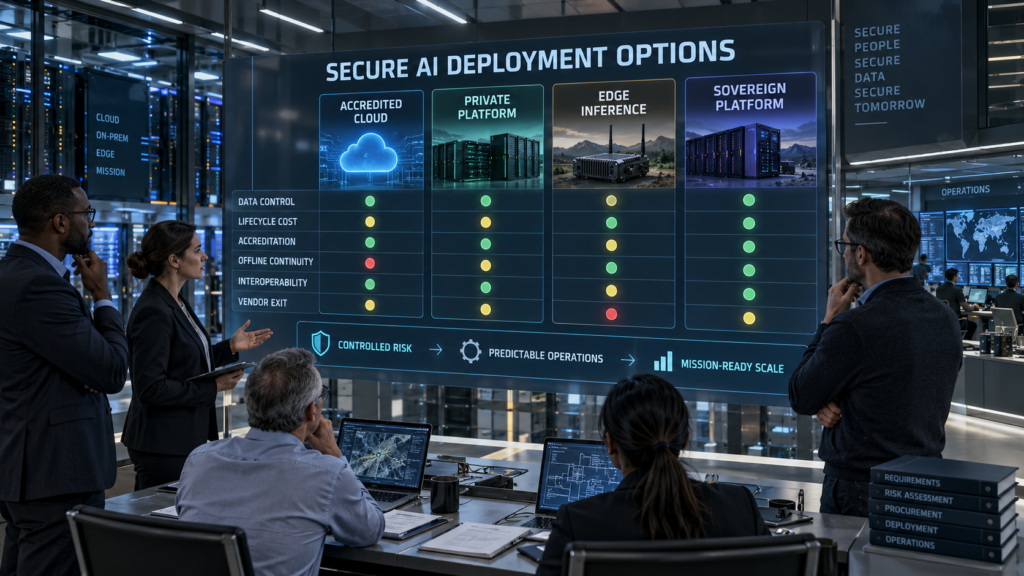
Sovereign AI & Security is based on the idea of sovereign nations owning the data, infrastructure, and AI systems that support and drive the critical decision-making processes for their own security. By maintaining all of this sensitive information (i.e., defense networks, intelligence reports, critical infrastructure telemetry and other public sector records) under national authority, Sovereign AI & Security removes from foreign jurisdictions the ability to obtain access through legal means, the risk associated with the supply chain, as well as reliance upon third-party platforms.

When it comes to using AI for National Security, establishing and operating models, training pipelines, and deployment environments within domestic or clearly defined allied governance structures enables an agency to verify how those systems operate, how they’re updated, and who has access. In addition to building an enhanced sense of resilience, sovereign AI & Security prevents vendor lock-in, supports business continuity during periods of geopolitical disruption, and enables a more rapid response to identified security flaws in systems.

A good strategy to build your own Sovereign AI & Security is to use secure computing locally (in the country) as well as securely on-premises using either a domestic cloud provider or your organization’s own resources; protect your model weights and source code through secure methods of protecting information; encrypt all sensitive information and manage keys appropriately; and apply appropriate identity, access, and auditing controls.

Additionally, you will need to test all aspects of your models, including their ability to produce accurate output, avoid bias, and withstand various adversarial attacks. All of these tests should assess their reliability when operating at the network edge, since internet connectivity is often limited.

Implementing these controls will help to ensure that the outputs from the AI used for National Security can be relied upon, challenged if needed, and audited/traced throughout the process. This is especially critical for applications that have potential life-or-death implications.

Sovereign AI & Security also provides governance and accountability. The policies related to data exchange among government agencies, open procurement practices, and independent monitoring provide clear guidelines on how capabilities developed within the framework of AI for National Security will operate within the bounds of national laws and civil liberties protections. In addition to these benefits, Sovereign AI & Security will increase the domestic capability by developing home-grown talent and creating an industrial base for secure AI development.

Finally, implementing Sovereign AI & Security ensures that AI for National Security delivers autonomous defense capabilities, so national decision-makers maintain complete control over the data and systems that support detection, deterrence, and response in a rapidly evolving threat landscape.

Responsible AI in Defense: Responsible AI in defense promotes ethical, transparent, and safe use of intelligent systems

Professional reviewing ethical AI systems in a defense technology workspace representing responsible AI in national security

Responsible AI in Defense (Defense): The responsible development, deployment, and use of artificial intelligence within a military context to provide assurance that AI-based systems are designed to support national security goals while minimizing risk to individual rights, public trust, and government accountability.

The foundation for all aspects of Responsible AI in Defense will be the application of legal principles, including lawfulness, necessity, proportionality, and the role of human judgment as the decision-maker in high-risk situations. Therefore, in practical terms, Responsible AI in Defense refers to an agency’s ability to implement “Human-in-the-Loop” or “Human-on-the-Loop” oversight mechanisms—particularly for targeting operations, surveillance activities, and protective measures related to critical infrastructure.

Transparency is also essential in AI for National Security because a commander needs to know the reasons behind an AI system’s recommendations. As such, Responsible AI in Defense advocates for maximum possible explanation of AI-generated results; traceable audit logs; and detailed documentation of training data sources, limitations, and known failures. With this type of information available, both commanders and policymakers can question AI-generated outputs, limit their reliance on those outcomes, and develop decision-making processes based on defensible analysis.

Security & Safety are equally important. Testing and validation of AI systems before deployment into operational environments (red teaming, environment-wide stress testing, etc.), as well as ongoing monitoring for potential “model drift,” are required. In addition, there must be robust cybersecurity for the AI system itself, including protecting the flow of data to/from the AI; protecting the AI’s model weights during training & deployment; and ensuring that the AI cannot be manipulated or stolen at its deployment endpoint.

AI systems have the potential to provide benefits when properly implemented; however, without appropriate safeguards and responsible use, they can become vulnerabilities. Fairness and Civil-Libertarian protections are critical to implementation. Responsible AI in Defense promotes fairness by assessing biases and protects civil liberties through privacy-preserving data collection methods and secure access controls to prevent misuse.

Where AI systems make determinations about who will be screened, who will be placed on a watchlist, or how resources will be allocated, Agencies utilizing these types of AI systems must implement fair governance to limit the possibility of discriminatory outcomes and ensure that citizens have a legal mechanism to appeal those outcomes.

For AI for National Security, Responsible AI in Defense is about providing lasting credibility. The intent behind creating and implementing Responsible AI in Defense is to build confidence among citizens and foreign allies alike in the agency’s ability to effectively utilize AI capabilities, while ensuring independent oversight/accountability and clearly defined policies that specify when AI systems can/should be utilized and when they should not.

A Safer Tomorrow

Defense will be forever changed by the use of AI, as it is the greatest advancement in military technology since the development of the internet. From invisible cyber threats to power grid safety to the deployment of rescue drones after natural disasters, the technologies being developed today represent a fundamental shift in how we protect our citizens.

The technology itself is neutral but the potential impact is totally up to humans. We can determine the true value of this new generation of technology by how we develop and implement it with respect to ethics, strong security practices, and human interaction. It’s not simply creating better defense systems using next-generation AI. Rather, it is helping create a safer, more prosperous world for all.

Conclusion

The next generation of artificial intelligence is becoming a foundational capability for national security today. It will enable governments to detect threats earlier than they otherwise would, analyze complex situations faster, and respond more precisely.

From real-time cyber defense to AI-supported border surveillance, and from support for intelligence analysis and predictive analytics to optimized military logistics, next-gen AI can reduce uncertainty and give decision-makers more time and options when dealing with threats to the country’s interests. When used responsibly, AI will also help to enhance resilience across critical infrastructure, emergency response, and defense operations – protecting citizens and safeguarding stability in an increasingly contested world.

But the benefits are only durable if strong governance exists. There must still remain human oversight for high-stakes decisions, and systems must be tested for reliability, bias, and adversarial manipulation. Data security, transparent accountability, and clear rules for deployment are essential to maintain trust and protect civil liberties. Additionally, investing in sovereign ai capabilities will help to reduce risks of dependency on foreign sources of capital and technology for national security and keep all sensitive national data under appropriate control.

Ultimately, “Next Gen AI for National Security: Protecting a Better Future for Everyone” argues that AI is not a substitute for strategy or ethics; it is an accelerator. When guided responsibly, it can help build a safer, more secure Future for all.

FAQs

1) What does “next-gen AI for national security” mean?

It refers to modern AI systems (machine learning, computer vision, and advanced analytics) that help defense and security teams detect threats, analyze data faster, and support better decisions across cyber, physical security, intelligence, and logistics.

2) How does AI improve cybersecurity for national security?

AI can detect unusual behavior across networks and endpoints in real time, prioritize high-risk alerts, and automate first-response actions (such as isolating devices or blocking malicious activity), helping to stop attacks before they spread.

3) How is AI used in Intelligence Surveillance & Reconnaissance (ISR)?

AI helps process huge volumes of satellite imagery, drone video, and sensor data by spotting objects, tracking changes, and flagging anomalies—so analysts can focus on the most relevant intelligence and respond faster.

4) What is “sovereign AI,” and why does it matter?

Sovereign AI means keeping sensitive data, infrastructure, and AI systems under national control. It reduces dependence on external platforms, lowers supply chain risk, and supports secure, accountable use of AI in defense.

5) How do agencies ensure AI is used responsibly in defense?

By applying responsible AI practices: human oversight for high-stakes decisions, bias testing, explainability where possible, robust cybersecurity for models and data, continuous monitoring, and clear accountability and governance.

Previous Post

How Smart Cities Use AI, IoT, and Robotics

Next Post

Is AI in India Transforming a Better Future for Everyone?

Garikapati Bullivenkaiah

Garikapati Bullivenkaiah

Garikapati Bullivenkaiah is a seasoned entrepreneur with a rich multidisciplinary academic foundation—including LL.B., LL.M., M.A., and M.B.A. degrees—that uniquely blend legal insight, managerial acumen, and sociocultural understanding. Driven by vision and integrity, he leads his own enterprise with a strategic mindset informed by rigorous legal training and advanced business education. His strong analytical skills, honed through legal and management disciplines, empower him to navigate complex challenges, mitigate risks, and foster growth in diverse sectors. Committed to delivering value, Garikapati’s entrepreneurial journey is characterized by innovative approaches, ethical leadership, and the ability to convert cross-domain knowledge into practical, client-focused solutions.

Next Post
Is AI in India Transforming a Better Future for Everyone?

Is AI in India Transforming a Better Future for Everyone?

Leave a Reply Cancel reply

Your email address will not be published. Required fields are marked *

  • Trending
  • Comments
  • Latest
Quantum computing concept illustrating qubits and advanced computational processing

What is Quantum Computing and Why It Matters

May 1, 2026
A visual AI learning roadmap showing a beginner progressing step by step through artificial intelligence skills from basics to advanced projects

How to Start Learning Artificial Intelligence Step by Step

May 1, 2026
Digital robot automating computer tasks on multiple screens, representing robotic process automation in modern office workflows.

What Is Robotic Process Automation and How It Works

May 2, 2026
Key Machine Learning Advancements You Should Know Today

Key Machine Learning Advancements You Should Know Today

May 1, 2026
Quantum computing concept illustrating qubits and advanced computational processing

What is Quantum Computing and Why It Matters

8
What is Artificial Intelligence and How Does It Work?

What is Artificial Intelligence and How Does It Work?

5
smart IoT sensors collecting and transmitting data for intelligent AI-driven systems

How Smart IoT Sensors and AI Work Together in Real Systems

5
Side-by-side comparison of image classification and object detection: the left shows a single label identifying a dog, while the right shows multiple objects in the same scene marked with bounding boxes

Object Detection vs Image Classification: Key Differences Explained

4
Is AI in India Transforming a Better Future for Everyone?

Is AI in India Transforming a Better Future for Everyone?

May 4, 2026
Security analyst using AI-powered systems in a modern operations center for national security monitoring

How AI for National Security Today

May 2, 2026
Smart city with modern buildings, IoT technology, and a person managing digital systems in an urban environment

How Smart Cities Use AI, IoT, and Robotics

May 4, 2026
Data scientist analyzing data and working with charts and code on multiple screens in a modern office

Data Scientist Roles and Responsibilities Explained

May 2, 2026

Recent News

Is AI in India Transforming a Better Future for Everyone?

Is AI in India Transforming a Better Future for Everyone?

May 4, 2026
Security analyst using AI-powered systems in a modern operations center for national security monitoring

How AI for National Security Today

May 2, 2026
Smart city with modern buildings, IoT technology, and a person managing digital systems in an urban environment

How Smart Cities Use AI, IoT, and Robotics

May 4, 2026
Data scientist analyzing data and working with charts and code on multiple screens in a modern office

Data Scientist Roles and Responsibilities Explained

May 2, 2026
Latest Technology | Nezz hub

NezzHub is a technology-focused knowledge hub delivering insights on AI, robotics, cybersecurity, biotech, and emerging innovations. Our mission is to simplify complex technologies through research-driven content and analysis.

Follow Us

Browse by Category

  • 5G/6G Technologies
  • AI & Machine Learning
  • AI in Healthcare & Biotech
  • AI Tools, Frameworks & Platforms
  • Autonomous Mobile Robots (AMRs)
  • Biomanufacturing Automation
  • Computer Vision & Image Recognition
  • Connectivity & Networking
  • Cybersecurity Tools & Frameworks
  • Data Security & Compliance
  • Digital Twins & Simulation
  • Gene Editing & Genomics
  • Generative AI & LLMs
  • Healthcare IoT (IoMT)
  • Humanoids & Embodied AI
  • Industrial Robots & Cobots
  • IoT Devices & Sensors
  • Natural Language Processing (NLP)
  • Quantum AI in Simulation
  • Quantum Computing
  • Robotics and Automation
  • Robotics Software (ROS, ROS2)
  • USA AI Jobs & Careers
  • USA Artificial Intelligence
  • USA Healthcare & Biotech AI
  • USA Quantum Computing
  • USA Robotics & Automation
  • USA Tech Industry News

Recent News

Is AI in India Transforming a Better Future for Everyone?

Is AI in India Transforming a Better Future for Everyone?

May 4, 2026
Security analyst using AI-powered systems in a modern operations center for national security monitoring

How AI for National Security Today

May 2, 2026
  • About NezzHub
  • Author Bio
  • Privacy Policy
  • Advertise & Disclaimer
  • Cookie Policy
  • Terms & Conditions
  • Contact Us

© 2025/ website made by nezzhub.com.

No Result
View All Result
  • AI & Machine Learning
  • Quantum Computing
  • Robotics and Automation
  • Biotechnology & Health Tech
  • Connectivity & Networking
  • Internet of Things (IoT)

© 2025/ website made by nezzhub.com.