







AI Tools, Frameworks & Platforms
AI Tools, Frameworks & Platforms influence how organizations build, integrate and operate artificial intelligence applications. This NezzHub subcategory helps business owners, IT managers, professionals and students evaluate AI development tools without treating every product as suitable for every workload.
The coverage includes practical AI assistants, machine learning frameworks, application programming interfaces, cloud services and enterprise AI platforms. Readers can examine their capabilities alongside integration effort, data controls, scalability, security and total operating cost.
Explore AI Tools, Frameworks & Platforms
An AI tool normally performs a focused task such as content generation, research, coding assistance or image creation. A framework provides reusable libraries and components for building models, while a platform may combine development, deployment, storage, monitoring and governance services.
The correct choice depends on the problem being solved, the sensitivity of the data and the organization’s technical capacity. A product that works well for an individual experiment may not provide the access controls, service reliability or integration options required for enterprise deployment.
Readers beginning with the broader subject can visit the AI and Machine Learning category for related coverage of models, applications, architectures and responsible implementation.
Business and Enterprise Applications
Businesses use AI development tools for document processing, marketing analysis, software development, customer-service support, research and workflow automation. Value depends on whether the selected system reduces a measurable operational problem without introducing unacceptable cost or risk.
Entrepreneurs comparing search and content platforms can examine the AI SEO tools for entrepreneurs. The guide focuses on practical selection questions rather than assuming that automated output is always accurate.
Smaller organizations and student founders may need accessible tools with manageable learning requirements and transparent usage limits. The AI tools for small businesses and student founders guide provides a separate pathway for budget-sensitive users.
Commercial evaluation should consider more than the advertised subscription price. Data preparation, API usage, cloud computing, integration, employee training, security reviews and ongoing monitoring can materially affect the complete operating cost.
Architecture, Integration and Deployment
A production system may connect a user interface, business application, external model, data store, identity service and monitoring layer. Each connection creates technical dependencies that must be documented before the system is placed into regular operation.
Deployment teams should evaluate:
- Compatibility with existing applications and data formats
- API limits, response time, availability and scalability
- Identity, access and credential-management controls
- Data storage, retention and geographic processing locations
- Logging, evaluation and human-review requirements
- Model or service changes introduced by the vendor
- Migration options if the organization changes providers
Large language models are one component within this architecture rather than a complete business solution. Readers who need a clearer model-level explanation can review how GPT models work before comparing products built on top of them.
Risks, Security and Governance
AI platforms can produce inaccurate output, expose sensitive information or behave differently after a model update. External services may also create vendor dependence when applications rely on proprietary APIs, stored prompts or provider-specific workflows.
Organizations should classify information before sending it to an external system. Confidential business data, personal information, source code and regulated records require stronger controls than material already intended for public use.
Procurement and security reviews should examine contractual terms, data usage, access permissions, retention settings, incident procedures and service availability. Human review remains important whenever an AI-generated answer could affect customers, employees, financial decisions or regulated operations.
How to Use This Subcategory
Select articles according to the decision you need to make:
- Business owners: Compare use cases, subscription limits and complete operating costs.
- IT managers: Examine APIs, architecture, access controls, monitoring and vendor dependence.
- Developers: Review model capabilities, frameworks, integration requirements and deployment options.
- Students and beginners: Start with accessible tools before moving to custom model development.
- Technology buyers: Validate vendor claims through controlled testing with representative workloads.
Frequently Asked Questions
What is the difference between an AI tool, framework and platform?
An AI tool usually performs a specific user-facing task. A framework supplies development components, while a platform may support several stages of building, deploying and managing AI applications.
How should a business choose an AI platform?
Begin with a clearly defined workflow, required data, acceptable risk and measurable outcome. Compare shortlisted services using representative tasks rather than marketing demonstrations alone.
Are free AI tools suitable for business use?
Free plans can support learning and limited experimentation, but their usage limits, data terms, support and security features may not meet business requirements. Review the current provider terms before processing organizational information.
What costs should be evaluated before deployment?
Evaluate subscriptions, API usage, computing, storage, integration, data preparation, training, security review and ongoing monitoring. Also consider the cost of migrating if the selected provider no longer meets operational needs.
Latest AI Tools, Frameworks & Platforms Articles
Explore the latest NezzHub articles below for practical comparisons, technical explanations and implementation guidance covering AI Tools, Frameworks & Platforms.
Tool capabilities, prices and commercial terms can change. Check each article’s publication and update dates, and verify important purchasing decisions against the provider’s current documentation.
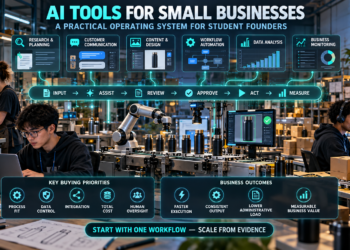
AI Tools for Small Businesses in 2026: Workflow Choices for Student Founders
Executive Summary The best AI tools for small businesses do not replace a student founder’s judgment. They compress research, drafting,...
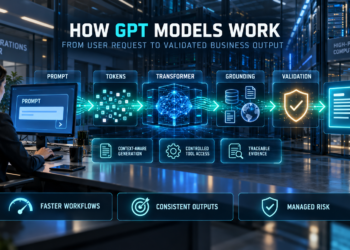
How GPT Models Work: Tokens, Attention and Training
Executive Summary GPT models generate language one token at a time, but an enterprise-grade system is far more than next-token...
















Recent News







NezzHub is a technology-focused knowledge hub delivering insights on AI, robotics, cybersecurity, biotech, and emerging innovations. Our mission is to simplify complex technologies through research-driven content and analysis.