


















Operating a new startup while attending school classes, taking exams, and launching a company is an incredible amount of work. However, in 2026, there have never been fewer barriers to market entry for young start-up founders. Due to major advancements in artificial intelligence (AI), it is now possible to build a successful start-up without millions of dollars or hundreds of employees. Are you looking for the top Artificial Intelligence Tools for Small Businesses that Students Can Use in 2026? You’re at the right spot.
The artificial intelligence of today serves as your Co-Founder, Marketing Agency & Financial Advisor all-in-one. Using Scalable AI Solutions for Young Entrepreneurs of Generation Z in 2026, students will be able to build profitable companies out of their dorm rooms by being smart about how they use technology to operate, grow, and maintain their side hustles.
Summary
“Recommended AI Tools for Small Business Startups by Students in 2026” describes how student entrepreneurs can use AI as a co-founder to establish and expand ventures when there is no time or money to do so. This article illustrates the “AI Advantage” for solo entrepreneurs through tools that automate repetitive work, create content (including advertising), and rapidly provide insights from data.
In addition to highlighting AI-based marketing and content creation, such as modern SEO tools that go beyond simply researching keywords to analyzing user search intent, clustering topics and improving an enterprise’s organic visibility on search engines; it also explores creating an online presence using AI-based website builders, and using AI-based chatbots for advanced customer support that can answer FAQ’s, process refunds, and sell additional products to customers while students are attending school.
To help with operational issues, the article identifies AI-based financial tools to forecast cash flow and prepare for tax season, as well as AI-based inventory management systems to predict product demand and order products automatically. Sections on productivity and project management demonstrate how a business’s automation can connect applications, summarize all customer messages, and turn each customer conversation into a task.
Lastly, the article provides examples of low-code/no-code app development for building apps without requiring extensive coding knowledge, and AI-based consulting services as a cost-effective way to receive strategic advice. The article concludes with suggestions on how students can ethically use AI in their business ventures (such as transparency, customer data protection/privacy, and creating original content) and suggests students begin by implementing one or two AI tools to eliminate the most significant barriers to entry.
What Are GPT Models and How They Work

AI Tools for Small Businesses: Smart AI tools help small businesses improve efficiency, customer service, and daily operations in 2026.

The reason AI tools for small businesses will be so important by 2026 is that they deliver tangible improvements in speed, quality, and costs while also enabling employees to manage their workload more efficiently. To this end, AI tools for small businesses enable the ongoing automation of administrative tasks (e.g., scheduling, data entry, invoice generation).
Using these tools, companies can avoid moving information across multiple formats (e.g., email, spreadsheets, Customer Relationship Management systems) when updating contact information or sending reminders or follow-up communications. Teams using AI tools can collect new lead contacts, update customer contact information, and automatically send reminders or follow-up communications, eliminating lost opportunities.
Customer Service is another area where AI Tools for small businesses can see rapid improvement. The modern assistants in many AI tools for small businesses can respond to frequently asked questions, allow users to check the status of orders placed through the company website, assist users in creating responses that consistently represent the brand, and, when necessary, pass along complex issues to live agents.
As such, AI tools for small businesses help small companies provide “always available” customer service, resulting in faster response rates to client inquiries and greater communication about products and services. Additionally, AI tools for small businesses help identify trends in complaints against the company by analyzing data from service interactions.
Just as many AI Tools for Small Businesses provide operational benefits. By using historical sales data and seasonal patterns, many AI tools can predict future demand. They also assist with determining optimal inventory levels by providing a recommended “reorder point.” Additionally, other AI tools will flag potential disruptions in your supply chain that may result in significant cost issues if not addressed prior to those events.
The efficiency of route optimization, staff scheduling, or appointment slotting is another area where AI tools can help reduce downtime. Marketing also benefits from increased efficiency through AI tools, which can create multiple campaign versions, personalize messages based on the delivery channel, and generate summarized performance reports for the owner/manager to act on.
AI tools for small businesses produce the most effective results when applied in a limited scope. Select a specific business process, determine how you will measure success within this process (e.g., time saved, number of errors reduced, etc.), and establish controls and/or “guardrails” to ensure the integrity of the information being used (i.e., data accuracy, customer privacy) and approval processes. When used appropriately and with accountability, AI tools for small businesses enable owners and lean management teams to operate more efficiently, enhance customer service, and make more informed decisions without expanding their workforce.
Example
A college student has been running a pop-up bakery near campus. She uses a point-of-sale (POS) application in conjunction with an artificial intelligence (AI) helper that takes in data on daily sales, local weather conditions, and upcoming events in the area, and generates recommendations on how many items she should produce or purchase as ingredients for tomorrow’s baking needs. Additionally, the tool generates captions for her weekly Instagram posts, creates a weekly newsletter for customers, and provides suggestions on whether to offer a discount on certain slow-moving baked goods.
In addition, the AI-powered chatbot is available on the website to provide information regarding potential allergens and assist customers in scheduling appointments to have custom cakes created. At the conclusion of each week, the AI-powered assistant compiles an analysis of her profits by item type and identifies areas where food waste may be occurring at excessive levels. This allows the student to spend her Sundays studying rather than creating spreadsheets, while her bakery consistently sells out. The AI-powered tool also serves as a reminder to order additional supplies, such as packaging materials, and schedule employees’ work hours.
AI Tool Comparison Table
| AI Tool | Best For | Key Feature | Free Plan | Ideal Users |
|---|---|---|---|---|
| ChatGPT | Content & research | AI writing and brainstorming | Yes | Students & Startups |
| Canva | Design & marketing | AI image and presentation tools | Yes | Entrepreneurs |
| Notion | Productivity | AI notes and task management | Yes | Teams & students |
| Jasper | SEO content | AI copywriting | Limited | Small businesses |
| Zapier | Automation | No-code integrations | Yes | Startups |
Statistic: 77% of businesses are exploring or using AI tools to improve operations.
Source: IBM Global AI Adoption Index
Business Automation AI: Business automation AI simplifies repetitive tasks, saving time and increasing productivity for startups and students

Business Automation AI will be one of the best and most effective methods for new startups or Student Founders with little time or money to build momentum in 2026. By automating these common tasks through integration with common software (e.g., emails, calendars, crm’s, spreadsheet applications, support ticketing systems, etc.), Business Automation AI removes the need for manual data entry.
Using Business Automation AI as an example, when a lead fills out your application/lead capture form, it captures that lead information, “enriches” the contact information (by adding additional details), logs that lead into your CRM, sends them a custom/personalized reply to their inquiry, and schedules a follow up with that individual; all of this is done in less than 5-10 minutes.
As students are constantly juggling multiple classes and due dates, Business Automation AI greatly reduces the amount of “context-switching” you experience. As an example, Business Automation AI can summarize long email chains, turn meeting notes into actionable tasks, sort/prioritize your email inbox based upon importance, and even create drafts for status updates for your team members.
With regard to business operations, Business Automation AI can auto-generate invoices, reconcile your expense accounts, categorize transactions using predefined tags, and provide weekly performance reports for your company, allowing you to focus on developing your product and sales knowledge and learning.
Many teams are using Business Automation AI combined with AI Tools for Small Businesses to develop a complete workflow from start to finish. For example, all inquiries that come in as leads will automatically be generated as tickets, then converted to orders and ultimately to task-based fulfillment. This means that there is virtually no human intervention involved once you have set up your system. When implemented properly, the results can include fewer errors, consistent follow-up, and keeping customers informed of the status.
To achieve true ROI (Return On Investment), it is recommended to use Business Automation AI along with tools such as guardrails to define which actions can run hands-off (automatically). Implement approvals for customer-facing communications. Protect confidential information.
Review automation log files frequently. It may take some trial and error to find the correct combination of automation, but if you start by focusing on one specific area of your business that is a bottleneck, lead management, support triage, or invoicing, for example, measure how many hours you save over a month, and then expand upon this. When done correctly, Business Automation AI enables small teams to achieve higher output than before and helps student-led organizations appear much larger.
Example
Two classmates launch a tutoring marketplace. Every inquiry arrives via a Typeform. Business Automation AI parses the form, checks availability, and creates a booking link that matches the subject, time zone, and price tier. When a session is booked, it automatically issues an invoice, adds the event to Google Calendar, and sends a prep checklist to the tutor and student. After the call, it transcribes notes, drafts a recap email, and triggers a feedback survey. If a rating is low, it opens a support ticket and schedules a founder review. Weekly, it summarizes revenue, churn, and which subjects need more tutors next.
Business Automation Workflow
| Manual Task | AI Automation Tool | Time Saved Per Week |
|---|---|---|
| Email responses | HubSpot | 5-7 hours |
| Social media scheduling | Buffer | 4 hours |
| Invoice generation | QuickBooks | 3 hours |
| Customer support | Tidio | 6 hours |
| Meeting summaries | Otter.ai | 2 hours |
Statistic: Businesses using automation tools report productivity increases of up to 40%.
Source: McKinsey & Company
AI Consulting for Small Businesses: AI consulting helps small businesses choose the right AI solutions to grow faster and work smarter

AI consulting for small businesses is on track to be a more direct route to better decision-making and faster solution implementation in 2026. Instead of trying to determine which digital tools are necessary and/or how to integrate them, AI consulting for small businesses matches an owner’s real-world business needs — sales, marketing, customer service, financials, operational processes — with the actual functionality of AI.
A successful engagement should begin by creating a map of business processes and conducting a rapid assessment of data quality and security compliance, as well as the existing team’s readiness, enabling consultants to provide actionable recommendations rather than “hyping” products.
The main advantage of AI consulting for small businesses is vendor selection and implementation planning. Consultants evaluate competing vendors, examine cost structures, and identify what applications would truly function within your existing technology stack (e.g., CRM, accounting system, inventory management system, e-commerce platform, help-desk application) and assist in defining success measures — time savings, faster response rates, increased conversions, decreased error rates — so that you can measure return on investment (ROI).
Implementation is where the value of your investment grows. A phased approach with AI Consulting for Small Businesses will allow you to begin by implementing a single workflow that has a significant impact on your business (lead qualification, support triage, invoicing, content repurposing) and grow from there after the initial implementation is solidified. Additionally, AI Consulting for Small Businesses will provide guidance in terms of governance – who needs to approve all customer-facing output; how to manage sensitive data; and how to track the accuracy and bias of outputs.
As much as the technology matters, so does employee training and change management. An additional service provided through AI Consulting for Small Businesses is the development of company-wide “playbooks”, templates, and role-specific training to ensure that employees/student founders understand how to utilize these new technologies in a safe and consistent manner. Ultimately, AI Consulting for Small Businesses enables small businesses to develop their own internal “AI Operating System”: defined procedures for utilizing various technologies; reusable automations; and routine reviews of outputs.
Example
A college student took over the family’s landscaping business for the summer and had a consultant from a technology firm spend a single day in the field with her as she created quotes, planned routes, and completed bills. The next day, he called her and recommended three very inexpensive tools. The first tool was a quotation assistant that could provide estimates based on the company’s prior work.
The second tool would help optimize each employee’s route. And third, he provided a way to automatically create invoices and manage the accounts receivable process. He also helped the student develop basic data privacy procedures, created standard template prompts to estimate the amount of material required for each project, and established metrics for measuring performance (quote-to-win ratio, time spent driving to jobs, and the number of days it takes to collect payment).
AI SEO Tools for Small Businesses: AI SEO tools improve website rankings, keyword research, and online visibility for small businesses

By 2026, Artificial Intelligence (AI) Search Engine Optimization (SEO) tools will provide businesses with limited resources a competitive advantage in search rankings by enabling them to achieve rankings at no cost, without the need for a dedicated SEO expert.
The primary function of AI SEO Tools for Small Businesses is to accelerate keyword identification by identifying semantically related search phrases, assessing user intent behind each phrase, and grouping those related terms into “topic clusters” that support better site architecture. Rather than trying to rank for every possible keyword, AI SEO Tools for Small Businesses allow small companies to focus on the fewest topics/pages most likely to drive quality leads.
In addition, content generation and optimization processes are being streamlined by the use of AI SEO Tools for Small Businesses. AI SEO Tools for Small Businesses provide an outline for creating new content based on search intent, identifying subtopics that may be missing in current content, and automatically recommending internal linking opportunities to increase topical authority.
Additionally, many AI SEO Tools for Small Businesses perform audits of on-page elements, including title tags, H1/H2 headings, meta descriptions, image alt text, and schema.org markup recommendations, to ensure all pages meet the technical requirements of today’s search engines. In addition to creating entirely new content, many AI SEO Tools for Small Businesses offer services to update outdated sections in existing blog articles/posts, add frequently asked questions (FAQs), and provide suggestions on clarity and structure to improve both readability and user engagement.
The visibility of your website depends on its credibility, performance, and content. Most AI SEO Tools for Small Businesses will contain at least some basic tools to check the overall health of your website, such as broken link reports, page load speed assessments, and crawling problems that keep you from being ranked. Many will also report on how many competitor websites cover rankings and other SEO-related topics. Additionally, they will report how much you have moved up or down the list and what has changed. This makes it a lot easier to respond quickly to changes.
When used alongside all-inclusive AI Tools for Small Business, these SEO insights can then become part of the workflow of creating marketing calendars, sending emails, and posting on social media, so that one post can be repurposed into several different posts.
In order to generate consistent results with AI SEO Tools for Small Businesses, create a routine by selecting a primary topic cluster, consistently publishing new content based on this cluster and a specific schedule, regularly updating your top-performing pages every quarter, and tracking a few KPI’s (rankings, click-through rates, and conversion rates). If used properly, AI SEO Tools for Small Businesses eliminate most of the guesswork associated with improving an online presence and deliver long-term, sustainable traffic growth.
Example
Using a small-business version of AI SEO tools, this college student discovered three different “search cluster” terms that could be used to develop an article strategy for his website, such as bench-top pipette holders, lab drawer inserts, etc., and developed a content map connecting product-related articles to instructional-type articles. Using the tool’s audit function, he found that images were loading too slowly and that there was no structured data (schema) on his site. Using clear step-by-step directions, he corrected these issues.
He also used the tool’s title rewrite feature to generate titles based on the intent behind the keywords, suggested additional internal links, and monitored new pages created by his competitors’ sites. Within just two months, one of his best guides made its way onto Page One of Google’s search results; organic traffic tripled, and he eliminated all paid advertising for lab products to fund more prototype development.
AI SEO Growth Statistics
| SEO Activity | AI Benefit | Popular AI Tool |
|---|---|---|
| Keyword research | Faster Keyword discovery | Semrush |
| Content optimization | Better rankings | Sufer SEO |
| Technical SEO audits | Error detection | Ahrefs |
| AI article outlines | Faster publishing | Frase |
| Competitor | Market insights | Moz |
Statistic: 68% of online experiences begin with a search engine.
Source: BrightEdge
AI for Entrepreneurs: AI for entrepreneurs supports smarter decision-making, automation, and business growth in competitive markets

In 2026, AI for Entrepreneurs is less about novelty and more about practical leverage in crowded markets. AI for Entrepreneurs supports smarter decision-making by turning scattered information—sales data, customer messages, website analytics, and competitor activity—into clear summaries and next-step recommendations. Instead of relying on gut instinct alone, AI for Entrepreneurs helps founders spot patterns, test hypotheses faster, and prioritize the actions most likely to move revenue or retention.
Automation is another advantage. AI for Entrepreneurs reduces manual work by drafting emails, generating proposals, scheduling follow-ups, and automatically updating CRM notes. It can also streamline operations by forecasting demand, flagging inventory risks, and identifying process bottlenecks. When combined with AI Tools for Small Businesses, these automations keep day-to-day tasks moving even when the team is small, remote, or balancing other responsibilities. Many founders use AI Tools for Small Businesses to connect marketing, sales, and support workflows, ensuring smoother customer handoffs and consistent response times.
In a highly competitive environment, growth may depend on both how quickly an entrepreneur can research their space and how clearly they articulate what they do. AI for Entrepreneurs provides a tool to rapidly research markets, analyze consumer reviews, and compare how competitors position themselves across products, services, and marketing strategies. Additionally, AI for Entrepreneurs helps accelerate marketing iteration by rapidly generating brainstormed angles, developing targeted messages for specific audience segments, and creating easy-to-understand performance metrics (i.e., a dashboard) rather than complicated metrics.
For product-led companies, AI for Entrepreneurs can collect user feedback from various sources (e.g., social media platforms, email campaigns), identify frequently requested features, and suggest experiments to enhance onboarding experiences or reduce customer churn.
AI for Entrepreneurs should be used responsibly. To do so, entrepreneurs will need to establish “guardrails.” Guardrails include protecting sensitive information, requiring approval before releasing customer-facing output, and reviewing automated decision-making processes.
Begin using AI for Entrepreneurs in one measurable area (for example, lead qualification, customer service triage, pricing analysis, etc.) and grow to other areas once you have created a stable workflow. Thoughtfully using AI for Entrepreneurs enables smaller organizations to effectively compete with larger ones by working faster, learning more quickly, and making better-informed decisions.
Example
A student founder has developed a subscription service that sends boxes of snacks to gamers. An “AI for Entrepreneurs” platform is used by the student to ingest information from her sales (number of subscriptions), customer comments on her Discord server, supplier costs, and return reasons. The “AI for Entrepreneurs” platform also provides recommendations for monthly themes along with estimated demand and profit margins. The platform simulates how the business will be affected in terms of sales and profits if shipping costs increase or there is a delay from one of her suppliers.
This allows the student founder to create safe bundles based on the potential risks associated with each bundle. Additionally, the platform creates draft letters to reach out to potential partners (esports clubs) and draft proposals for A/B testing of landing pages. The platform also identifies customers who have stopped opening her messages, indicating an increased likelihood that they will cancel their subscription.
As such, the student founder receives weekly briefs that provide her with guidance on operating her business. In turn, she can make changes more quickly than her competitors, avoid stock-outs during tournament periods, and increase her recurring revenue streams without hiring additional employees. She can use this additional free time to pursue further education.
AI Tools for Startups: AI tools for startups help teams streamline workflows, reduce costs, and accelerate innovation in 2026

AI Tools for Startups have become an increasingly common element in developing, deploying, and expanding on new products using lean teams as we begin 2026. AI Tools for Startups enable entrepreneurs to automate repetitive tasks associated with marketing, sales, support, finance, and product operations. For example, AI Tools for Startups can collect lead information from web-based forms; add contact information; draft outreach communications (e.g., emails); schedule follow-up communications; and keep their pipeline(s) filled with new potential customers without manually entering each new customer into the system.
Another significant advantage of using AI Tools for startups is cost savings. Early in a startup’s development, instead of needing to hire various professionals to produce content or provide other specialized services that may be needed later, many startups utilize AI Tools for Startups to complete initial drafts of written content such as blog posts, social media updates, and/or website content; generate multiple designs based upon one original design to test different design elements and see which version performs best; sort through large amounts of customer inquiries to identify which ones should receive immediate attention versus those that can wait until at a later time; and analyze financial statements to summarize important items.
Additionally, in terms of finances, many AI Tools for Startups assist with generating invoices, categorizing expenses related to a business’s operations, and forecasting future cash flow. These tools help startups maintain discipline in how they spend money when their runway is limited.
AI Tools for Startups, therefore, positively impact the speed of innovation by enabling startup teams to test their ideas as quickly as possible. AI Tools for Startups enable startups to conduct research at an accelerated pace through AI-generated summaries of market reports, competitor pages, and customer reviews, and to convert insights into feature hypotheses. Additionally, AI Tools for Startups can aid in product development by enabling rapid prototyping, documentation, QA test case creation, and faster iterations, particularly when combined with low-code tools and structured review mechanisms.
In terms of go-to-market (go-to-market), AI Tools for Startups will assist in generating campaign positioning, personalized landing page messages, and reusing content across multiple platforms, thereby expanding your reach without adding to your headcount.
Therefore, to gain long-term benefits from implementing AI Tools for Startups, startups need to establish guardrails around how AI is being implemented within their organization, such as defining which specific use cases are approved, protecting sensitive data, requiring review prior to deployment of customer-facing outputs, and monitoring ROI metrics such as time savings, conversion increases, and decreased support resolutions.
Example
Three engineering students build a SaaS application (micro) that uses AI tools to schedule club meetings, helping startups get from concept to release quickly. The AI Tools will be used to assist with building the product; these include:
1) Product Assistant- takes in customer interview results to create ordered requirements; 2) Coding Copilot- produces boilerplate code for your API’s; 3) QA Bot- creates automated test cases based on Acceptance Criteria. To get ready for Go-To-Market, another tool will take one blog post and turn it into a LinkedIn Thread, Email Sequence, and Short Demo Script. To provide Customer Support, another tool will answer frequent Setup Questions and Tag Feature Requests in their Backlog. Eight Weeks after graduation, they shipped version 1, kept Burn Low, and iterated on the product based on actual usage Data.
Startup AI Budget Planning
| Startup Need | Recommended AI Tool | Estimated Monthly Cost |
|---|---|---|
| AI writing | Copy.ai | Free-$36 |
| Website creation | Wix | Free-$27 |
| AI presentations | Beautiful.ai | $12-$40 |
| Workflow automation | Make | Free-$29 |
| Team communication | Slack | Free-$15 |
Statistic: 91% of small businesses using AI say it boosts business growth.
Source: U.S. Chamber of Commerce
AI Productivity Tools: AI productivity tools enhance learning, organization, and business performance for students and professionals alike

AI Productivity tools are becoming an increasingly practical benefit for both students and working professionals who are looking to develop their skills at a faster pace while managing their workloads, staying organized, and consistently meeting deadlines. Individually, AI productivity tools aid learning by enabling users to summarize articles, generate study guides, explain complex ideas in multiple ways, and transform lectures into flashcards and practice problems.
When it comes to meeting looming deadlines, AI productivity tools assist with prioritization of assignments, scheduling realistic timelines, and minimizing downtime caused by “context switching”.
At the organizational level, AI productivity tools serve as a personal operational layer connecting users’ email, calendar(s), document(s), and chat applications. As such, they can draft emails, rewrite content for clarity, record action items from meetings, and automatically add them to the appropriate project’s task list.
To enhance business performance, AI Productivity Tools can streamline and standardize processes by eliminating “friction” within a team’s workflow. AI Productivity Tools can also provide users with draft versions of business documents, such as proposal outlines, summaries of competitors’ offerings, and status reports, created directly from real-time project data.
Teams comprising three employees or fewer may be able to leverage AI Productivity Tools along with AI Tools for Small Business to automate all routine work transitions—leads logged, support tickets tagged, customer information updated—that occur when staff is insufficient to perform tasks. Many organizations utilize AI Tools for Small Business to integrate their productivity tools into CRM systems, Help Desks, and dashboard analytics tools, providing an organization with a better understanding of its overall operation.
The most effective method of using AI Productivity Tools is to identify one process that will have AI assist (i.e., note-taking, email sorting, meeting minutes, and/or content development), then establish what level of quality you expect from those tools; finally, on a regular basis, evaluate the output from your tools. By establishing strong guardrails—(1) privacy rules for your company’s AI products, (2) procedures to ensure approvals prior to external communications made on behalf of your organization, and (3) audit schedules—you can rely upon your AI Productivity Tools to improve focus, eliminate unnecessary work, and improve both academic success and business performance.
Example
The Working Student balances school work and a part-time social media business. AI productivity tools record meeting audio, summarize meeting notes, and generate tasks (with due dates) directly onto her project board. At the beginning of each day, the AI will scan her email and Slack for new messages that require her attention; highlight all urgent conversations she needs to review; and draft responses in her voice for final approval. During exam weeks, the AI will block out dedicated study time on her schedule when an assignment is approaching or has a deadline.
Once she schedules her study time, it will provide a suggested 30-minute plan to complete any remaining parts of an assignment. For her clients, she can develop a content brief, check posted content for compliance with client-branded guidelines, and compile a weekly report detailing her performance for each client. This enables the Working Student to manage her weekly hours, meet all her client obligations on time, and maintain a high grade average. Because the AI stores all templates used in client communication, the onboarding process is greatly streamlined.
The AI Advantage for Student Founders
Traditionally, startups followed a “script” that included hiring specialized people to run each aspect of their businesses. However, today, with AI for Entrepreneurs, we can focus on empowering all entrepreneurs (solo founders) to access tools that handle ALL aspects of a business as if they had unlimited employees.
As students, we face two main constraints in our education: time and money. With high-quality AI Tools for Startups, we can automate many time-consuming tasks, enabling us to generate ideas/products/creative work faster than ever before. Additionally, because these tools can process large amounts of information quickly, we can make better-informed decisions about our businesses without spending a fortune. Therefore, using intelligent software will allow us to grow our businesses at a much faster pace while still keeping up with school.
Mastering Marketing and SEO on a Student Budget
Most people view marketing as the biggest time commitment for small business owners. To use AI to automate your small-business marketing efforts, the key to success is developing a connected web of generative tools.
The new generation of Multimodal AI Content Creation Tools enables Founders to create content that can be used across multiple social media platforms (e.g., write one blog post, get an automatic Podcast Script, Instagram Reels, and a Customized LinkedIn Infographic) all from a single text prompt or blog post.
SEO and Organic Traffic
Getting eyes on your product without spending money on ads requires solid Search Engine Optimization (SEO). Modern AI SEO Tools for Small Businesses go far beyond basic keyword research. In 2026, these tools analyze search intent, predict algorithm updates, and automatically cluster your content to build topical authority.
Actionable Tips:
- Content Repurposing: Use AI to turn your class research papers into engaging, SEO-optimized blog posts for your niche business.
- Competitor Analysis: Utilize AI-driven SEO extensions to see exactly which keywords your competitors are ranking for and generate outlines to out-write them.
Building and Managing Your Online Presence
Your customers’ initial perception of your company will likely be through your online store. There’s no longer a need to learn HTML & CSS to create something visually appealing when building your site.
Website Generation
You can find the top AI-powered website tools designed specifically for students looking to launch a side hustle by next weekend. The website builder asks you just three easy questions about your business, generates a fully operational, mobile-friendly website that looks professional within 2 minutes (including payment integration options & calendar booking), and completes it.
Customer Support
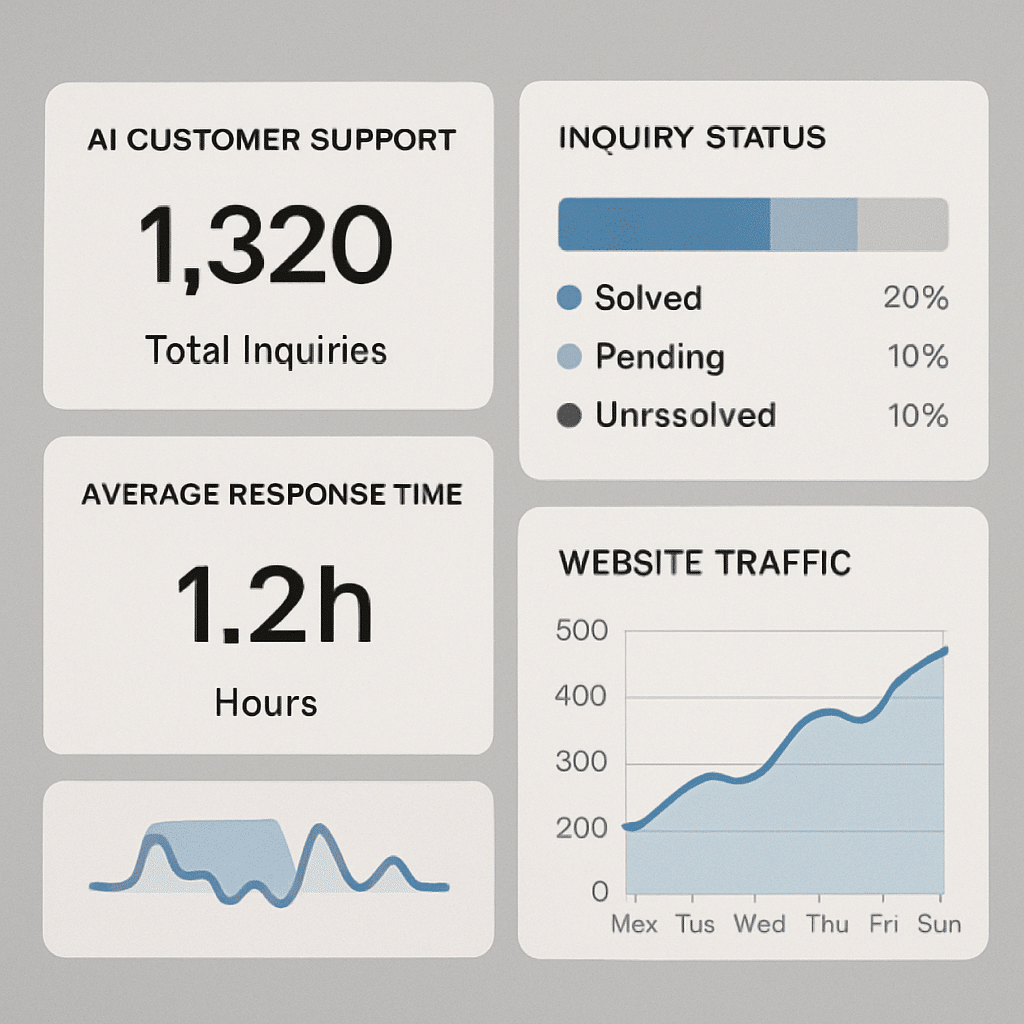
You can’t be awake 24 hours a day to respond to customers. It’s lucky that there are so many low-cost AI systems that allow for self-service automated customer service. The modern chatbot is much different from the clunky, repetitive scripted answers of the early 2020s.
Modern chatbots are specifically trained on your company’s data and can resolve refund requests, provide detailed responses about your products and services, and upsell naturally. For those with absolutely no budget, there is a wide variety of completely free artificial intelligence tools available for college startup founders.
Operations, Finance, and Inventory Logistics
Managing the operational aspects of a business may become monotonous. That is when AI makes this transition from a “fancy device” to a vital business companion.
Financial Management
Cash flow is essentially the bloodline of every startup. With AI-powered forecasting tools for freelance students, it removes the guesswork from your earnings. Once you connect your bank accounts, as well as your invoicing applications, to an AI-based financial assistant, it will calculate your expected monthly cash flow. It also identifies how much money needs to be saved each month for quarterly tax obligations. Furthermore, it notifies you whenever you have exceeded the budgeted amount for software subscription services.
Inventory and Retail
Do smart inventory tools work for part-time e-commerce businesses? In 2026, yes, they do. They will track how quickly you are selling products, take into account the time suppliers need to ship goods to you, and even help you identify seasonal product trends that indicate when you should order again so you don’t run low.
Generative artificial intelligence (AI) and predictive analytics are two types of retail technologies that small retailers need to understand.
- Generative AI is used to create hyper-personalized product descriptions, marketing emails, and dynamic product imagery.
- Predictive Analytics is the engine that analyzes historical data to forecast which products will sell best next month, helping you allocate your limited student budget efficiently.
In addition, you can use AI to lower operational costs through autonomous agents. Autonomous agents perform tasks such as negotiating shipping rates with courier services or finding cheaper sources of raw materials online.
Project Management and Productivity
Working with a team of fellow students requires extreme organization. Integrating AI into student-led project management workflows ensures that nothing falls through the cracks when everyone is busy with midterms.
The Power of Automation
AI is the “glue” that connects all of your applications. Using AI can allow you to automate an entire workflow, such as receiving an email from a lead and then having the email summarized by AI; the summary would be dropped into a Slack channel, and then a new task would be created within your project management system — all this happens with no involvement from humans.
You can also use collaborative AI agents when working with remote students. The AI agent joins the video call (the virtual meeting), takes smart notes on what was discussed, tracks the decisions made, and assigns follow-up tasks to each member of the remote team based on who spoke about which topic.
The same top-of-the-line productivity tools that provide the most advanced features will act as your own personal assistant if you are a solo-founder. An AI business assistant for a student entrepreneur can help you to schedule your calendar, prioritize your emails, and proactively block off study time vs. entrepreneurial time.
AI Productivity Use-Case Matrix
| Student/Business Task | AI Productivity Solution | Benefit |
|---|---|---|
| Note-taking | Notion AI | Faster organization |
| Scheduling | Calendly | Saves Meeting time |
| Research summaries | Perplexity AI | Faster learning |
| Team collaboration | Trello | Better workflow tracking |
| AI coding assistance | GitHub Copilot | Faster development |
Statistic: AI productivity tools can reduce repetitive work by nearly 30%.
Source: Deloitte AI Insights

Scaling and Development: Building Without Code
Although your great SaaS product idea may have been based on experience with technology, this does not need to be a barrier to creating the product.
Low-Code and No-Code Platforms
A new generation of low-code artificial intelligence (AI) application development for non-technology students has created a revolution in product creation. Now you can create complete web-based applications using conversational AI. For example, “I would like to create an application for mobile devices that will allow a local dog walker to schedule appointments as well as pay clients” — the AI creates all the programming, database, and user interface.
Seeking Strategic Advice
As your small business grows, you may need higher-level strategy and planning assistance. Since it’s unlikely that a traditional consulting firm will have a “student” budget for this type of work, using AI Consulting for Small Businesses is another option. The specialized AI models are trained with Harvard Business School cases and current (and emerging) startup best practices, so they can audit your business model; assess potential vulnerabilities within your supply chain; and help you plan pivots.
When evaluating AI Tools for Small Businesses, make sure to choose platforms that offer API access. This allows you to transition from small businesses to larger-scale businesses and use them as part of your enterprise system once you graduate.
Navigating the Rules: Ethics and AI
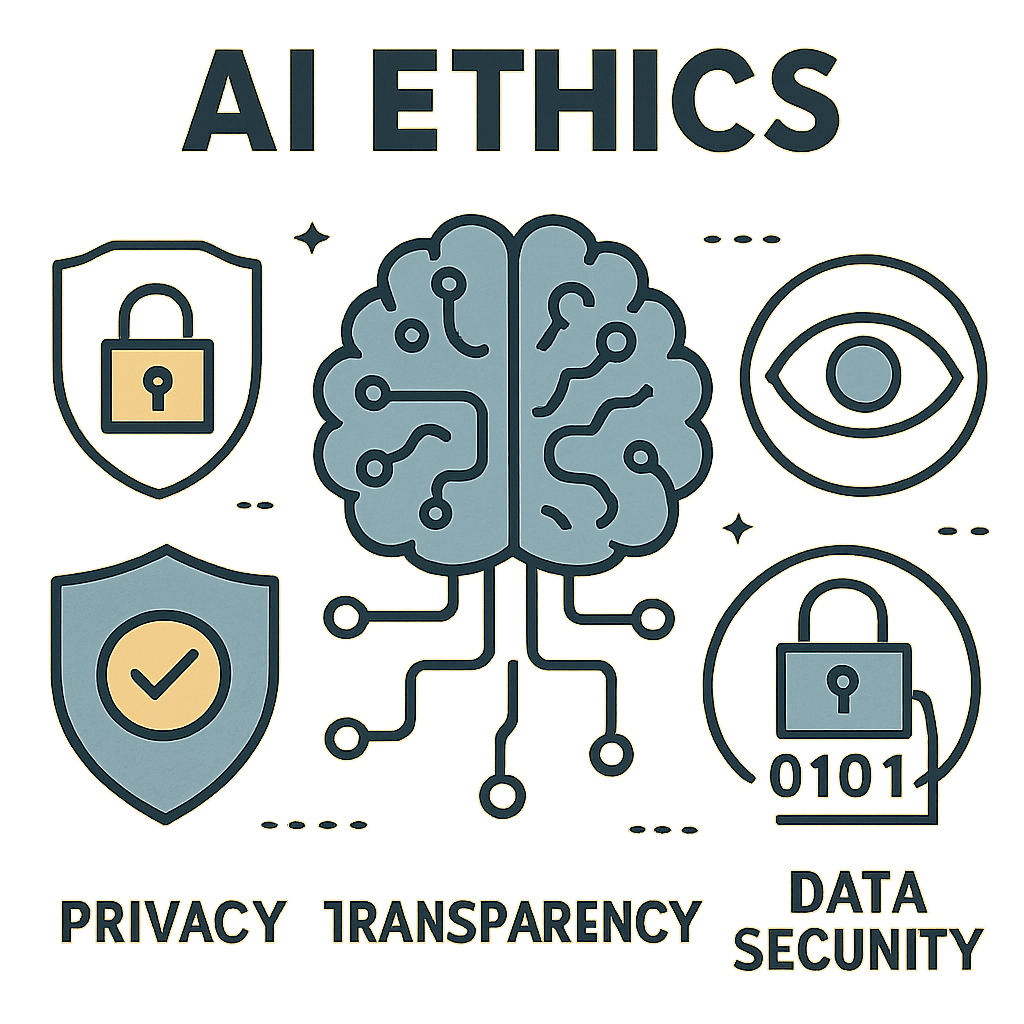
Using technology responsibly is key to both a successful business and maintaining your good name. By using AI ethically, you can avoid legal trouble and maintain your customers’ trust.
Best Practices to keep in mind:
- Transparency: Always disclose when a customer is interacting with an AI customer support bot rather than a human.
- Data Privacy: Ensure the AI tools you use comply with global data protection laws (like GDPR or CCPA). Do not feed sensitive customer data into open, public AI models where it could be used for training purposes.
- Originality: Use generative AI as a brainstorming partner or a first-draft generator, but always inject your unique voice and human perspective to avoid copyright infringement and maintain brand authenticity.
Conclusion
College entrepreneurship has proven to be a marathon, and you don’t have to run it by yourself. In 2026, the best AI tools for small businesses for students give you an incredible amount of leverage as well. With these tools, you can automate all your marketing efforts, improve your financials, create your own custom applications, etc., without having to write a single line of code.
When you use this technology wisely now, you’re doing more than surviving through the college entrepreneurial grind. You’ll be creating a strong, viable business model that will generate substantial profits long after you graduate. So start small. Choose one or two tools that help you eliminate the most pressing issue currently holding you back, and let artificial intelligence do the heavy lifting so you can work towards developing your vision.
FAQs
- What are the best AI tools for small businesses that students should prioritize in 2026?
Start with tools that remove your biggest bottlenecks: an AI writing/repurposing tool for marketing, an AI SEO tool for organic growth, an AI chatbot/help desk tool for customer support, an automation tool to connect your apps, and an AI finance assistant for invoicing and cash flow basics. - How can AI help a student-run business save time day to day?
AI can automate repetitive work like scheduling, drafting emails, summarizing messages, logging CRM notes, creating tasks from meetings, and generating first drafts of content—so you spend fewer hours on admin and more on classes, customers, and product improvements. - How do AI SEO tools improve rankings for small business websites?
They help with keyword discovery and intent, create topic clusters, suggest on-page improvements (titles, headings, internal links), and identify technical issues that block visibility. Many also track competitors and summarize what changes may be affecting rankings. - Can AI really handle customer service and operations while I’m in class?
Yes—modern chatbots can answer FAQs, track orders, handle simple refund flows, and escalate complex issues. On the operations side, AI can forecast demand, flag inventory risks, and help maintain consistent follow-ups so customers don’t feel ignored. - What are the most important ethical and privacy rules when using AI in a small business?
Be transparent when customers interact with bots, avoid putting sensitive customer data into tools that don’t guarantee privacy, keep a human review step for high-stakes messages, and add your own voice and verification to AI-generated content to maintain trust and originality.

Garikapati Bullivenkaiah is a seasoned entrepreneur with a rich multidisciplinary academic foundation—including LL.B., LL.M., M.A., and M.B.A. degrees—that uniquely blend legal insight, managerial acumen, and sociocultural understanding. Driven by vision and integrity, he leads his own enterprise with a strategic mindset informed by rigorous legal training and advanced business education. His strong analytical skills, honed through legal and management disciplines, empower him to navigate complex challenges, mitigate risks, and foster growth in diverse sectors. Committed to delivering value, Garikapati’s entrepreneurial journey is characterized by innovative approaches, ethical leadership, and the ability to convert cross-domain knowledge into practical, client-focused solutions.