



















Neutral Atom Quantum Technology has evolved into an emerging discipline within Quantum Computing.
Using neutral atoms as “qubits” (quantum bits), the basic elements of quantum information, this technology will ultimately enable the development of new computing methods that can be scaled and performed efficiently.
Neutral atoms are confined and controlled using highly sophisticated laser-trapping techniques. By controlling both the position and interaction of each individual atom, it is possible to achieve high levels of precision.
The Atomic Arrays are the backbone of such systems; they enable the execution of complex quantum algorithms. The scalability of atomic arrays is essential to the construction of large-scale quantum computers.
Quantum gate operations with neutral atoms are executed through laser-induced interaction. Laser-induced interaction is necessary for executing calculations.
Researchers are currently developing neutral-atom quantum processors capable of performing complex computations and potentially surpassing the performance of other quantum computing technologies.
Summary
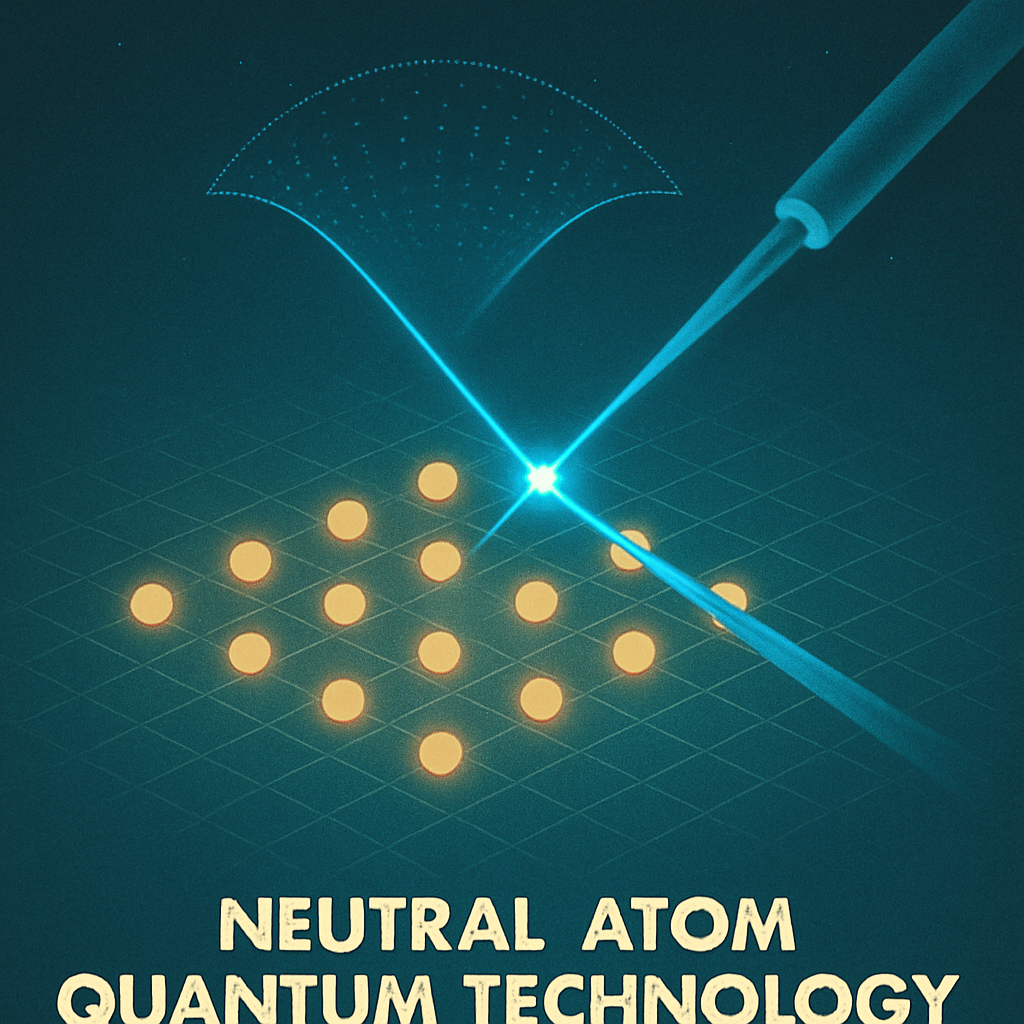
“Designing & Building” (how) “Neutral Atom Quantum Technology” explains how quantum computer engineers use neutral atoms as qubits due to their long coherence times and reduced sensitivity to environmental noise. This article describes how a combination of laser trapping and optical tweezers is used to individually trap, cool, and place single atoms to construct ordered atomic arrays that serve as scalable registers for a quantum processor.
Next, this article outlines how computations are performed using targeted laser pulses to apply quantum-gate operations to each qubit’s state, while Rydberg states enable controlled entanglement between atoms.
Next, this article uses these basic building blocks to describe the overall architecture of a reconfigurable array and the modularity of scalable quantum computing systems. This article also describes the progression from laboratory configurations to prototype neutral-atom quantum processors, including how engineering is implemented through layout design, testing, and optimization.
Additionally, the article identifies several major hurdles to scalability for neutral atom-based quantum computers, specifically the development of robust error-correcting protocols and the maintenance of quantum processor stability.
The article concludes by listing examples of recently developed technologies or methods for addressing these issues, as well as possible paths forward; namely, scaling up arrays, integrating hybrid technologies, developing new algorithms, and the impact neutral atom-based quantum processors may have in the fields of cryptography, health care, and optimization.
How Does Neutral Atom Quantum Research Work at a Fundamental Level?
What Is Neutral Atom Quantum Technology?
Neutral Atom Quantum Technology uses neutral atoms as qubits (quantum bits), an important part of a quantum computer. Neutral Atoms will allow researchers to represent and control quantum information by utilizing the characteristics of the atom itself.
Because they have long coherence times, these atoms can serve as a solid basis for quantum computation. Also, unlike other qubit types, when used as neutral atoms, these atoms interact minimally with their environment, which increases their stability.
Neutral atom quantum technology involves several key elements:
- Laser Trapping: Use of lasers to confine and control atoms.
- Optical Tweezers: Precision tools for arranging atoms into arrays.
- Atomic Arrays: Structures that support scalable quantum architectures.
The use of optical tweezers and laser trapping allows researchers to precisely manipulate individual atoms. These methods also enable the construction of the atomic arrays necessary for many quantum processes.
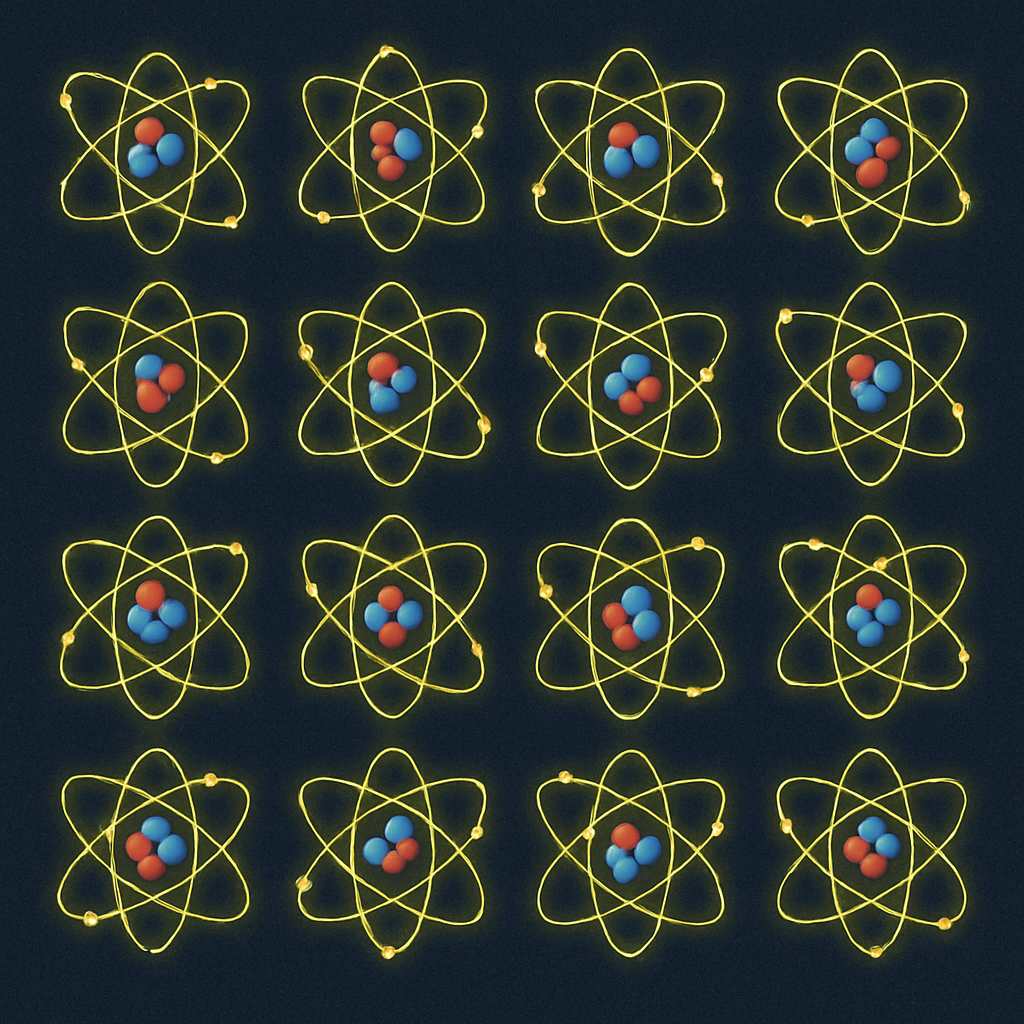
Utilizing Neutral Atom Quantum Technology offers a means to develop large-scale, practical quantum computers. Scientists believe this technology has the ability to create a system capable of achieving “Quantum Supremacy.
Neutral Atom Quantum Computing vs Other Quantum Technologies
| Technology | Qubit Type | Scalability | Connectivity | Typical Use Case |
|---|---|---|---|---|
| Neutral Atoms | Individual trapped atoms | Very High | Flexible | Large-scale quantum computing |
| Superconducting Qubits | Electrical circuits | Moderate | Fixed neighbors | Commercial quantum processors |
| Trapped lons | Charged atoms | Moderate | High | High-fidelity calculations |
| Photonic Quantum | Photons | High | Flexible | Quantum communication |
Key Insight: Neutral atom systems can naturally scale to hundreds or thousands of qubits using optical tweezer arrays.
Source: QuEra Computing, IBM Quantum, Nature Reviews Physics
Link: https://www.quera.com
Link: https://www.ibm.com/quantum
Neutral Atom Quantum Technology: Advancing scalable quantum computing through precision-controlled atomic systems

Quantum technology based on neutral-atom qubits has the potential to enable scalable quantum computing by using individual neutral atoms as qubits in programmable two- and three-dimensional arrays. These platforms utilize laser cooling and optical trapping to cool isolated atoms to microkelvin temperatures, whereas tightly focused beams or optical lattices provide a near-atomic-precision definition of the site geometry. Since the qubits are identical by nature, Neutral Atom Quantum Technology enables extremely uniform device properties, reducing calibration requirements as devices scale up.
One major factor enabling this is the capability to dynamically activate interactions. Typically, gate operations selectively excite specific atoms into Rydberg states, thereby enabling a controlled interaction (an entangling gate) over a tunable distance. The “interaction when needed” design paradigm enables a sparsely connected crosstalk environment and flexibility in the connections used for error correction.
At the hardware level, Neutral Atom Quantum Technology utilizes ultra-stable lasers, high-numerical-aperture optics, vacuum systems, and fast electronic controls to produce low-noise, low-drift, and repeatable pulse timing. Fluorescence imaging allows for parallel readout and feedback to prevent loss due to de-population of the atomic register.
Scalability is possible because larger atomic registers can be assembled without fundamentally altering the qubit. Increasing the number of traps increases the capacity of the atomic register, and reconfigurable tweezer arrays enable routing of atoms to meet either algorithmic needs or syndrome-measurement layout requirements.
Neutral Atom Quantum Technology also enjoys modular engineering — vacuum cells, optical bench assemblies, and control stack units are decoupled, allowing upgrades to each component to address specific limitations (e.g., laser linewidth, photon collection) associated with scaling up. As researchers continue to improve the fidelity and loss mitigation strategies in Neutral Atom Quantum Technology, it appears poised to bridge today’s noisy intermediate-scale quantum devices and future fault-tolerant quantum computers.
Further improvements in packaging, automation, and calibration software could position Neutral Atom Quantum Technology as a viable path forward for the development of large, accurate, and affordable quantum processing units. Ultimately, Neutral Atom Quantum Technology uses precision-controlled atomic systems to convert scalable architectures into scalable performance. The rate of advancement toward this goal continues to accelerate worldwide today.
Example
A national laboratory has developed an experimental test bed for studying logistics optimization using neutral atomic systems. Engineers have cooled rubidium atoms to near absolute zero in a vacuum chamber and then trapped them in a two-dimensional tweezer lattice. Camera-based feedback is used to position the cold rubidium atoms as close as possible to a defect-free configuration prior to each experiment.
A scheduler uses problem-graph representations of problems, compiling them into specific patterns of Rydberg interactions and selecting which atom pairs will be entangled at each layer of interaction. The team measures performance by iteratively varying laser detuning and pulse shapes, and by comparing solutions generated on the test bed with those produced using classical heuristic methods. The “reconfigure/run/measure/reload” nature of the test beds cycle allows for very rapid experimentation with different settings of hardware parameters and algorithmic mappings.
The Science Behind Neutral Atoms as Qubits
Neutral atoms form a foundation of quantum information systems. Neutral atoms can be used as qubits (the smallest unit of quantum information) because they possess intrinsic properties that make them useful in this role.
Key characteristics make these atoms ideal for use as qubits:
- Coherence: They maintain quantum states longer.
- Isolation: Limited interaction with the environment.
- Scalability: Suitable for large-scale quantum systems.
These intrinsic properties allow neutral atoms to store information within quantum states. By manipulating the quantum state of atoms using electromagnetic fields, researchers have been able to encode and process information with very little decoherence.
Researchers use electromagnetic fields to manipulate the quantum states of neutral atoms. This field-based control allows researchers to exert precise control over the behavior of neutral atoms during quantum-level manipulations.

by Shubham Dhage (https://unsplash.com/@shubhudi)
In addition, researchers are developing methods to control the quantum states of neutral atoms, enabling quantum gate operations. Quantum gates are essential operations for the efficient processing of quantum information. Research has focused on identifying the most effective ways to realize these properties for practical use.
Research on using neutral atoms across different architectures for quantum computing demonstrates the versatility of neutral atom-based systems. Because of the design of neutral atom-based systems, researchers believe they will provide high performance and low error rates, and therefore less environmental interference.
Laser Trapping Technology: The Foundation of Control
Laser trapping is a basic method used for controlling neutral atoms in quantum systems. Using lasers to apply force to atoms via light to trap or move them to specific locations is an exacting process that allows very detailed control over how you manipulate the atom(s) with the laser.
The primary tools used in laser trapping to achieve this level of detail include optical tweezers. Optical tweezers use high-powered laser light to create localized, extremely stable “traps” in which one can capture single atoms. These highly localized traps allow researchers to arrange individual atoms into specific (and reproducible) ordered arrays.
Key features of laser trapping technology include:
- Precision: Exact positioning of atoms.
- Versatility: Configurations adapted easily.
- Scalability: Supports large atomic arrays.
Using highly precise adjustments to the laser’s power output and/or wavelength (frequency), researchers can achieve significant stability and coherence in their systems. In particular, when adjusting these parameters to optimize either the frequency or the intensity of the laser, researchers can ensure that, once trapped, the atoms remain there rather than drifting away from their designated location(s).

by Snapmaker 3D Printer (https://unsplash.com/@snapmaker_official)
In addition to providing researchers with a means to stabilize and manipulate individual atoms, laser trapping also enables the construction of atomic array-based quantum systems. Atomic array-based systems are a key component of scalable quantum computer architecture. Researchers use this method to construct platforms upon which they execute complex quantum operations by fixing the spatial arrangement of the individual atoms involved.
Therefore, laser trapping technology provides the foundation for the operation of quantum algorithms by enabling control over both the position and interactions of individual atoms. Further development of laser-trapping technology will ultimately increase efficiency and scalability, leading to stronger, more robust quantum processor designs.
How Laser Trapping Builds a Neutral Atom Quantum Computer
| Step | Process | Purpose |
|---|---|---|
| 1 | Cool atoms with lasers | Reduce atomic motion |
| 2 | Trap atoms in optical tweezers | Isolate individual qubits |
| 3 | Arrange atoms into arrays | Create quantum architechture |
| 4 | Excite atoms to Rydberg states | Enable interactions |
| 5 | Perform quantum gates | Execute computations |
Example: Rubidium atoms are commonly trapped and arranged into programmable quantum arrays.
Source: Harvard Quantum Initiative
Link: https://quantum.harvard.edu
Laser Trapping Technology Quantum: Focused laser beams precisely trap and position atoms for computation

Laser Trapping Technology Quantum is the enabling technology that allows single atoms to be turned into controllable qubits by creating a well-defined optical potential. Laser Trapping Technology Quantum uses tightly focused, far-off-resonant laser light (Optical Tweezers) to retain neutral atoms at specific locations within an ultra-high vacuum container. With the application of laser cooling, the temperature of the atoms is cooled down to MicroKelvin levels. The spatial coherence needed for coherent manipulation, repeatable gates, and high-quality measurements is provided by Quantum Laser Trapping Technology.
One advantage of Quantum Laser Trapping Technology is its reconfigurability. Using Acoustic Optics Deflectors (AODs), Electro-Optic Deflectors (EODs), and other deflector technologies allows researchers to steer beams very quickly, thereby updating the trap location. Researchers can create arrays free of defects, move atoms as desired, and adjust quantum-bit connections for algorithms.
Rapidly changing configurations are central to Neutral Atom Quantum Technology because the registers can be dynamically switched between operations to optimize the layout of entanglement gates and enhance the efficiency of error-correction methods. Parallelism is also supported by Laser Trapping Technology Quantum. Many simultaneous traps can be created to form larger two-dimensional or three-dimensional arrays with site-by-site addressability.
The engineering aspects of the performance depend upon how good and stable the optical system is. The optical system will experience heating and decoherence if it exhibits low-frequency components in intensity fluctuations caused by beam-pointing drift or wavefront errors. Therefore, Low-Noise Lasers (LNLs), High-Numerical-Aperture (HNA) Objectives, Active Stabilization Systems, and Good Opto-Mechanical Design should be employed in all Laser Trapping Technology Quantum systems.
Motional Excitation and Position Uncertainty will decrease the Entanglement Fidelity when they are integrated with Gate Mechanisms (often Rydberg-mediated interactions) in Neutral Atom Quantum Technology. Fluorescence Imaging requires a trade-off between Confinement and photon collection efficiency to achieve Fast, high-contrast state discrimination.
When Arrays get Larger, Laser Trapping Technology Quantum becomes a Systems Problem including Optical Components, Control Electronics, Calibration Software, Thermal Management. As discussed above, the physical backbone of the processor in Neutral Atom Quantum Technology is characterized by Precise Placement, Fast Rearrangement Capability, and Robust Confined Space.
Example
In a university laboratory setting, a student has designed an optical tweezer system capable of accurately positioning atomic structures with sub-micron precision. The optical tweezer utilizes a single 1,064 nanometer (nm) wavelength laser that was split into many individual beams using both an acousto-optic deflector as well as a spatial light modulator, ultimately resulting in the generation of two hundred (200) individually controllable “traps” which can each contain one or more atoms. The student measured the uniformity of the trap depth by observing how many atoms survived over time and made per-site adjustments to optimize the power distribution across the array, making it as uniform as possible.
The student also took steps to minimize heating effects caused by the laser light interacting with the atoms. These steps included using active stabilization techniques to maintain the pointing direction of the laser beams and improving the alignment of the objective lenses to correct for any aberrations present in the system. Ultimately, these efforts resulted in a stable lattice structure that supported very long experimental sequence times and provided a reliable means of transporting atoms throughout the system for future entanglement experiments.
What DARPA Quantum Research Is Doing and Why It Matters
Building Atomic Array Quantum Systems
Neutral Atom Quantum Technology has been using Atomic Array Quantum Systems as an important element of its research. The arrays are made up of individual atoms, each being trapped and placed in a regular, geometric formation to create a grid-like system needed for quantum computing.
Researchers have used Laser Trapping and Optical Tweezers to construct these arrays of atoms. This was done by placing the atoms in specific formations so that researchers could effectively perform quantum gate operations. Each atom would act as a qubit in this complex network of atoms performing computational tasks.
One major advantage of atomic arrays is scalability. Researchers can add more atoms to the array with minimal loss of coherence or control. Because of its scalability, it is ideal for developing a Large-Scale Quantum Processor.
Key elements in building atomic arrays include:
- Arrangement: Align atoms in stable configurations.
- Interconnectivity: Ensure effective interactions between qubits.
- Scalability: Expand systems with minimal complexity.

by Shubham Dhage (https://unsplash.com/@theshubhamdhage)
Arrays of atoms enable the creation of Quantum Algorithms. Arrays provide researchers with the configuration needed to run complex quantum algorithms by enabling them to define qubit interactions.
Building Atomic Array Quantum Systems is critical to advancing neutral-atom quantum technology. As they evolve, these systems will be key to establishing scalable architectures for Quantum Computing that transform how computations are performed across many areas.
Atomic Array Quantum Systems: Organized atom arrays create programmable platforms for quantum information processing
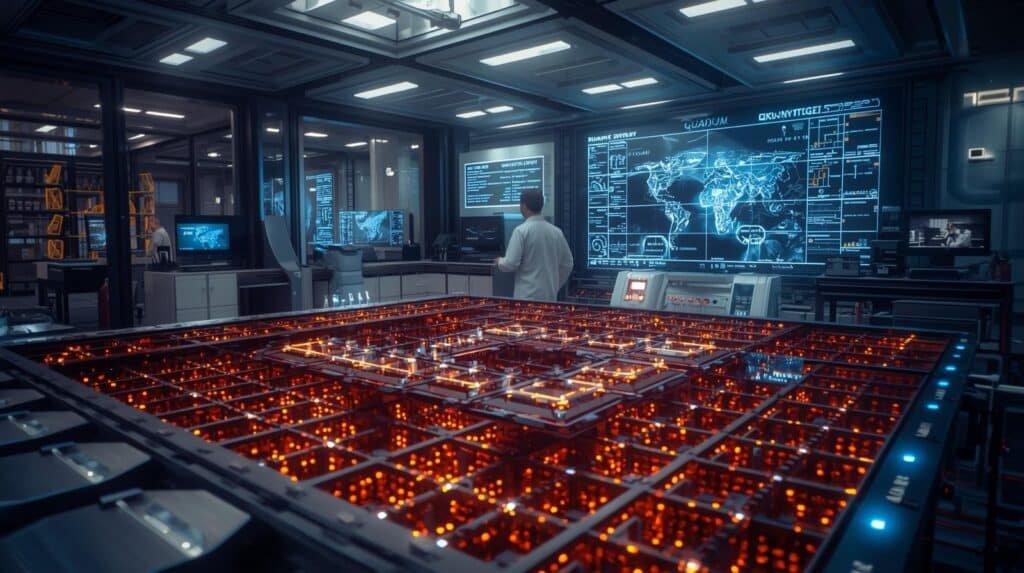
The ability to easily move an individual atom from its site of creation to another site in the atomic array is a key feature of Atomic Array Quantum Systems. The “atom-by-atom” algorithms allow the healing of vacancies (vacant sites), thereby achieving high filling factors before the computation begins. Atomic Array Quantum Systems can also perform both local, non-interfering operations on a subset of atoms and single-qubit operations in parallel, all using targeted laser addressing.
Many Atomic Array Quantum Systems utilize Rydberg excitation to produce tunable, strong two-qubit interactions that enable two-qubit gates between arbitrary pairs of sites. The degree of connection between sites can then be controlled through adjustments of spacing, pulse design, and schedule. These capabilities align with the Neutral Atom Quantum Technology roadmap’s emphasis on programmable, flexible interaction graphs rather than rigid, wired architectures.
Hardware requirements for Atomic Array Quantum Systems include high-vacuum chambers, laser-cooled atoms, frequency-stable lasers, high-numerical-aperture imaging optics, and low-latency electronic systems. Calibration software is becoming increasingly important for managing these systems; it addresses aspects such as trap uniformity, laser beam intensity profile, phase noise, and drift, all of which ultimately affect coherence and gate fidelity. When constructing larger atomic arrays, Atomic Array Quantum Systems will need to track atom loss and heating during operation via monitoring techniques, possible recapture/reload strategies, and/or mid-computation cooling.
Future development of Atomic Array Quantum Systems represents a viable path to increasing register sizes by improving trap-generation methods and automating these processes, while maintaining the same number of qubits. Improvements in both fidelity and loss management may make Atomic Array Quantum Systems a leading implementation architecture within Neutral Atom Quantum Technology for programmable, large-scale quantum processors.
Example
A defense contractor develops a platform specifically designed to simulate magnetic materials using quantum simulations in atom-based arrays. Optical tweezers are used to generate a honeycomb structure, in which the distances between particles and the geometric shapes can be adjusted before each experiment. An automated procedure (an arrangement) generates nearly perfect particle occupancy; then, sequences of global and local pulses are applied to approximate an effective spin Hamiltonian.
Interaction strength and disorder parameters are varied to obtain experimental evidence of phase transition by calculating correlations derived from single-shot photographs of the entire array. To confirm their findings, they compared data from their small arrays with predictions from tensor network calculations. Programmable operation allows them to study a variety of possible lattice configurations without developing new hardware, thereby converting a single device into a “reconfigurable quantum material emulator.”
Quantum Gate Operations with Neutral Atoms
Quantum gate operations provide the means to process information within a quantum computer. Researchers have achieved quantum gate operation using laser-induced interactions in neutral atom systems. By controlling these interactions, researchers can manipulate qubit states and ultimately perform computations.
Researchers use lasers to target and influence individual atoms with precision. Applying a laser to an atom can alter its energy state, enabling quantum gate operation. This level of precision allows researchers to control the quantum process much better than they otherwise could.
Researchers also use Rydberg states in neutral-atom systems to increase the strength of atom-atom interactions. Rydberg states create strong connections between atoms and facilitate complex quantum processes. Additionally, the ability to rapidly transition between states enhances computational performance.
Key factors for quantum gates with neutral atoms include:
- Precision: Ensure laser accuracy in targeting.
- Interaction Strength: Use Rydberg states for enhanced operations.
- Speed: Achieve rapid state transitions.

by Steve A Johnson (https://unsplash.com/@steve_j)
Precision is key to performing the gate operations needed to run quantum algorithms that solve problems current classical computers cannot solve. As researchers continue to develop and innovate new methods of utilizing quantum gate operations in neutral atoms, researchers expect significant advancements in both computational power and efficiency.
Quantum Gate Operations Neutral Atoms: Fast quantum gates enable complex calculations through atomic interactions
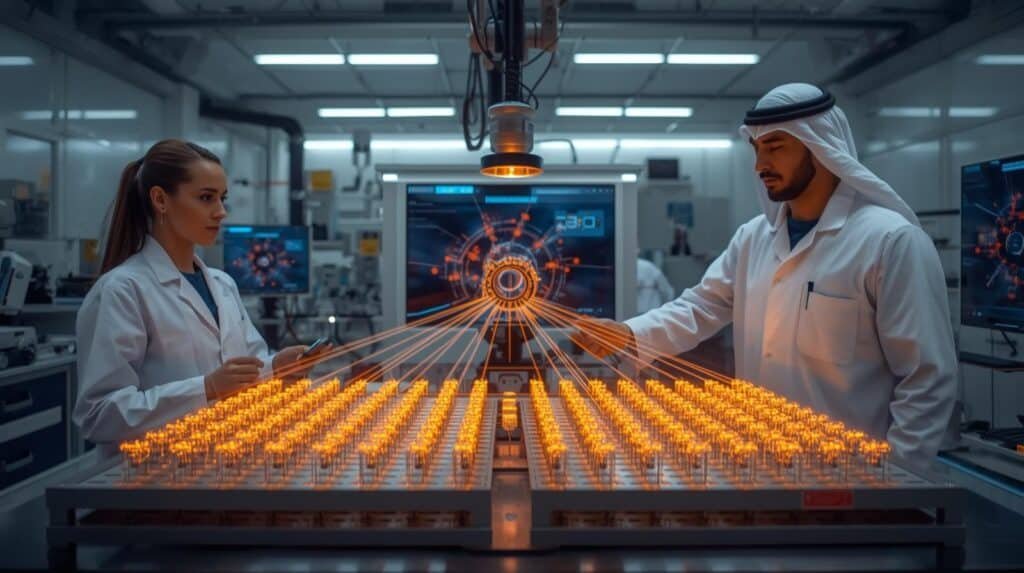
Quantum Gate Operations: Neutral Atoms are the central computing elements that enable arrays of trapped neutral atoms to operate as a quantum computer. The majority of single-qubit gate operations in this type of system are carried out using either resonant microwave pulses or Raman laser pulses, which provide highly accurate rotations of atomic hyperfine states.
Entangled states have been produced via two-body Rydberg-mediated interactions: when a pair of atoms is excited to one of its higher-lying Rydberg states, it creates a significant dipole interaction. This interaction may produce either a controlled phase shift or a “blockade” effect. These mechanisms enable Quantum Gate Operations Neutral Atoms to execute quantum logic gates much faster than decoherence times, allowing for the execution of deeper circuits and more complex algorithms.
The primary advantages of Quantum Gate Operations with Neutral Atoms include programmable connectivity. Since individual atoms can be addressed separately, gates can be programmed to act between specific atom pairs as desired, without being physically wired together; therefore, interaction graphs can be developed that reflect the native structure of the problem and satisfy error-correction requirements. Programmable connectivity is a major advantage in Neutral Atom Quantum Technology, since scaling in this technology is closely tied to maintaining qubit uniformity while increasing addressability and control bandwidth.
Additionally, Quantum Gate Operations on Neutral Atoms can be executed locally between neighboring atoms in a densely packed array or over longer distances by adjusting the characteristics of the excitation beams and/or the interatomic spacing. Therefore, Quantum Gate Operations on Neutral Atoms offer a viable path to reduce circuit complexity in applications where it is a limiting factor.
Achieving high accuracy (high fidelity) requires substantial engineering effort. Fluctuations in laser phases, intensities, magnetic fields, Doppler shifts, and residual motion can all negatively impact operational accuracy; thus, Quantum Gate Operations with Neutral Atoms require stabilized lasers, precisely shaped pulses, actively controlled magnetic fields, and cooling methods.
Crosstalk is minimized through tightly focused beams, spectral selectivity, and calibration methods that account for optical frequency shifts due to spatial variations within the beams. Similarly, readout quality is critical since errors in measurement will accumulate through algorithms; therefore, Quantum Gate Operations Neutral Atoms focus on optimizing both the gate operations and the state-detection techniques.
In Neutral Atom Quantum Technology roadmaps, improvements to the Rydberg lifetime, reductions in motional heating, and refinements to error modeling are expected to eventually bring Quantum Gate Operations Neutral Atoms to the threshold necessary for implementing practical error correction schemes. Advances in Quantum Gate Operations for Neutral Atoms will result in larger executable circuits, more reliable, logically correct qubits, and faster, more complex quantum computations.
Example
A team of researchers used Rydberg blockade to create a controlled-Z gate. Atoms were first placed into their respective hyperfine qubit states. Then, an initial-shaped laser pulse was applied to one atom to transition it from its ground state to a Rydberg state, depending on the atom’s logical value. When this transition occurred, the Rydberg state prevented the other atom from being excited, thereby creating a conditional phase shift.
To verify the gate’s operation, the team performed randomized benchmarking (RB) and found that the primary sources of error were Doppler motion and laser phase fluctuations. The team also improved the gate fidelity by implementing sideband cooling and incorporating DRAG-like pulse shapes to reduce leakage. With these improvements, the team was able to increase the speed at which they could run multilayered circuits before decoherence caused their quantum system to lose coherence.
Quantum Hardware Neutral Atoms: Innovative hardware uses neutral atoms to deliver stable and scalable quantum performance
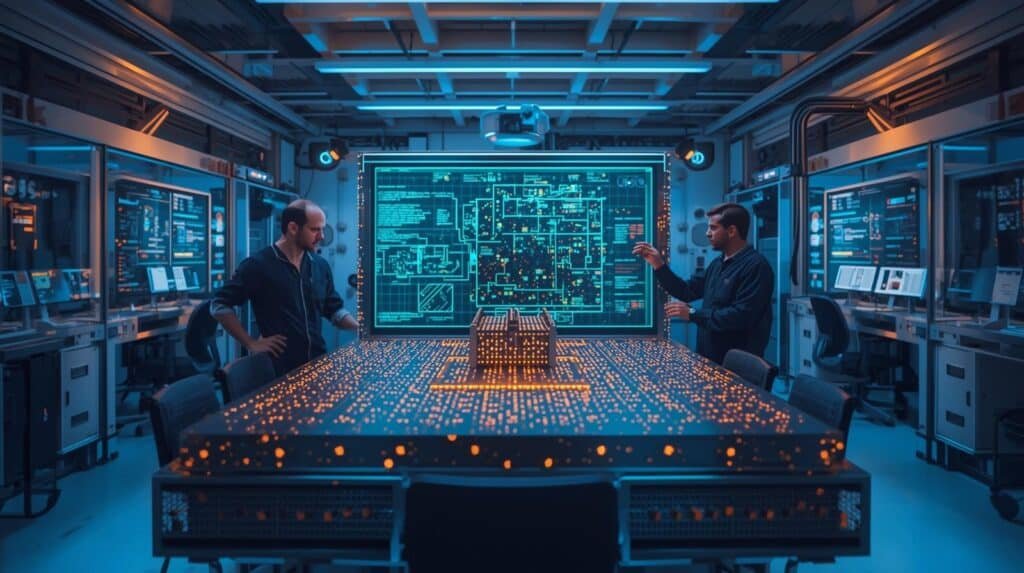
Scalable Architectures: Neutral Atoms is based on a single concept: using identical, naturally stable atoms as qubits and controlling them with precision optics and electronics. Typically, Quantum Hardware Neutral Atoms uses an ultrahigh-vacuum chamber, laser cooling, and optical trapping to position microkelvin-temperature atoms. Physical stability is fundamental to long coherence times and repeated operation, which is why Quantum Hardware Neutral Atoms has potential for scalable architectures in Neutral Atom Quantum Technology.
Modular layered architecture is another major feature of Quantum Hardware Neutral Atoms. The “core physics” comprises vacuum components, an atom source, magnetic fields, and high-numerical-aperture imaging optics for preparation and readout. On top of this, Quantum Hardware Neutral Atoms utilizes frequency-stabilized lasers, beam-shaping optics, and fast steering devices to reach individual sites and perform gates.
Fast control hardware – FPGAs, synchronization system, and low-noise RF chain – synchronize pulse with sub-microsecond accuracy so Quantum Hardware Neutral Atoms may operate with complex sequences with minimal drift.
Optically and control-wise, scalability is largely an issue. Quantum Hardware Neutral Atoms will increase capacity by producing more traps or expanding the viewing area; automation software will measure trap depth, correct aberration, and manage array fill. For Neutral Atom Quantum Technology, scaling does not require new qubit material fabrication but only a repeatable trapping & control stack. Additionally, Quantum Hardware Neutral Atoms offers flexible connectivity via Rydberg interactions, enabling entanglement without direct coupling and allowing the layout to be programmatically changed for various workloads.
There remain engineering challenges, including laser linewidth requirements, pointing stability, thermal management, and atom loss. But the improvements in packaging, photonics integration, and closed-loop calibration have consistently improved performance. With the maturation of these subsystems, Quantum Hardware Neutral Atoms should provide more registers, better gate fidelity, and greater reliability – key milestones for Neutral Atom Quantum Technology to transition from laboratory demonstration to practical, scalable quantum computers.
Example
An industrial team develops stable neutral-atom devices for long-term operation. The team modifies the vacuum chamber using low-outgassing materials, implements automation for recovery after a laser lock loss, and performs health checks on power, temperature, and vibration levels. Each night, a calibration service is performed. The calibration service includes measurements of the intensity distribution (beam profile), trap depth, and magnetic field offset. It uses the data collected during these measurements to update a configuration database that is used by the runtime.
To minimize downtime due to atom loss, an automatic dispensing sequence is implemented. This sequence automatically adjusts the dispensing current and the detuning of the cooling frequency in a closed loop such that the number of atoms available at the end of each cycle is maintained close to its initial value. Long-term field testing has demonstrated that this type of device can operate continuously for extended periods with very little reduction in fidelity, showing that neutral-atom quantum hardware can be engineered as a reliable instrument rather than a delicate experiment.
Designing Scalable Quantum Computing Architectures
Scalable quantum computing architectures are crucial for realizing the full potential of neutral atom systems. A primary goal is to increase the number of qubits without compromising performance. Neutral atom arrays offer a promising pathway due to their reconfigurable nature.
These systems achieve scalability by arranging atoms in optical lattices. The lattices provide a stable and precise environment for qubit manipulation. This setup allows researchers to expand qubit networks in a modular way and test quantum algorithms incrementally.
Several factors contribute to scalable architectures in neutral atom systems:
- Reconfigurability: Dynamic changes to atom arrangements.
- Modularity: Add qubits without redesigning the entire system.
- Connectivity: Ensure efficient communication between qubits.

Scalable Quantum Computing Architecture: Flexible architectures designed to support thousands of interconnected qubits
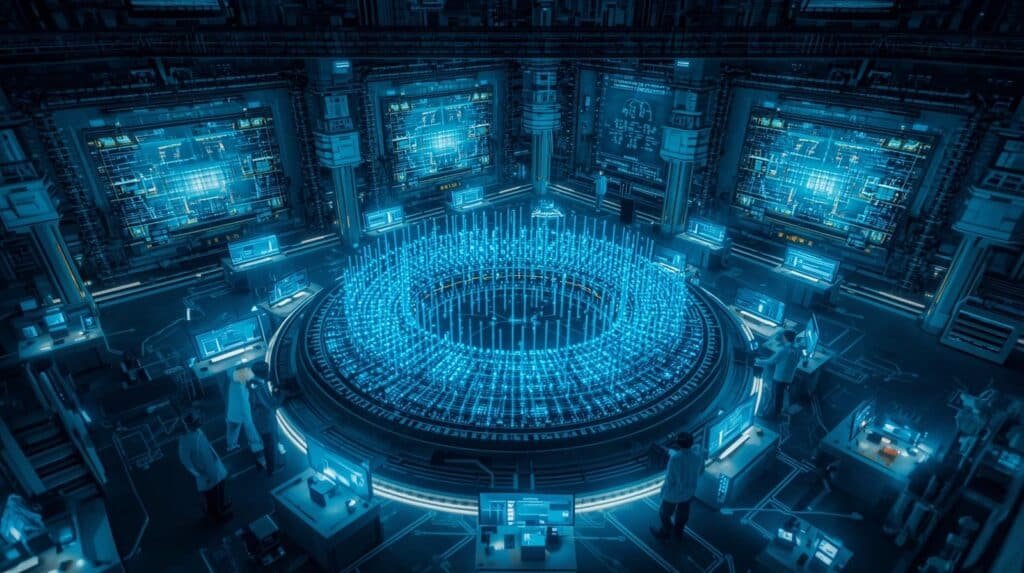
Scalable Quantum Computing Architecture refers to system-level designs that can grow from today’s prototypes to machines with thousands of reliably connected qubits. A practical Scalable Quantum Computing Architecture must balance three constraints at once: high-fidelity operations, manageable control complexity, and predictable performance as size increases. In platforms such as Neutral Atom Quantum Technology, these architectural goals are shaped by how qubits are arranged, addressed, entangled, and measured at scale.
A modern Scalable Quantum Computing Architecture typically emphasizes modularity and reconfigurability. Instead of hardwiring a single connectivity pattern, the architecture supports programmable interaction graphs, allowing circuits and error-correction layouts to be matched to hardware capabilities. In Neutral Atom Quantum Technology, scalable designs often use large, reconfigurable arrays of atoms with site-by-site addressing, enabling a Scalable Quantum Computing Architecture that expands by adding traps and control channels rather than changing the qubit itself. This approach helps maintain qubit uniformity and reduces fabrication variability.
Error correction is the defining requirement for any Scalable Quantum Computing Architecture. Architectural choices—such as lattice geometry, gate locality, measurement parallelism, and feedforward latency—directly affect the overhead needed to create logical qubits. Therefore, a Scalable Quantum Computing Architecture must include fast, synchronized control electronics, high-throughput readout, and software that schedules gates, calibrates drifts, and routes qubits efficiently. It also needs strategies for loss, crosstalk, and noise: as systems grow, small imperfections can accumulate, limiting usable depth.
Interconnects and multi-module scaling are increasingly important. A Scalable Quantum Computing Architecture may combine multiple registers linked by photonic channels or shuttling/rearrangement protocols, thereby scaling beyond a single field of view. Neutral Atom Quantum Technology is well positioned here because arrays can be reconfigured and expanded while preserving uniform qubit physics.
Ultimately, Scalable Quantum Computing Architecture is about turning “more qubits” into “more capability.” By designing flexible connectivity, robust error-correction support, and automation-driven calibration, a Scalable Quantum Computing Architecture can enable large-scale quantum computation with predictable, repeatable performance.
Example
A systems team proposes scaling to 5,000 qubits by tiling ten identical neutral-atom modules. Each module contains its own vacuum cell, lasers, and imaging, hosting a 500‑qubit array. A central timing backbone distributes a phase-coherent clock so gates across modules stay synchronized. Workloads are partitioned: error-correction cycles run locally, while inter-module links are created through a photonic interface that entangles “bridge atoms” at module edges. The compiler maps circuits to minimize expensive cross-module operations. Architecture metrics track readout bandwidth, feedforward latency, and calibration time per qubit, ensuring the control burden grows sublinearly as modules are added.
Neutral Atom Quantum Processors: From Lab to Prototype
Developing neutral atom quantum processors marks a significant leap from theory to tangible applications. In labs, scientists meticulously craft these processors, focusing on enhancing stability and coherence. Neutral atom processors leverage advanced laser techniques to manipulate atom arrays.
Prototypes are integral to transitioning these systems from experimental settings to potential commercial use. During this stage, researchers test processors’ capabilities with simple algorithms. Prototypes also reveal practical challenges, such as maintaining error rates within acceptable thresholds.
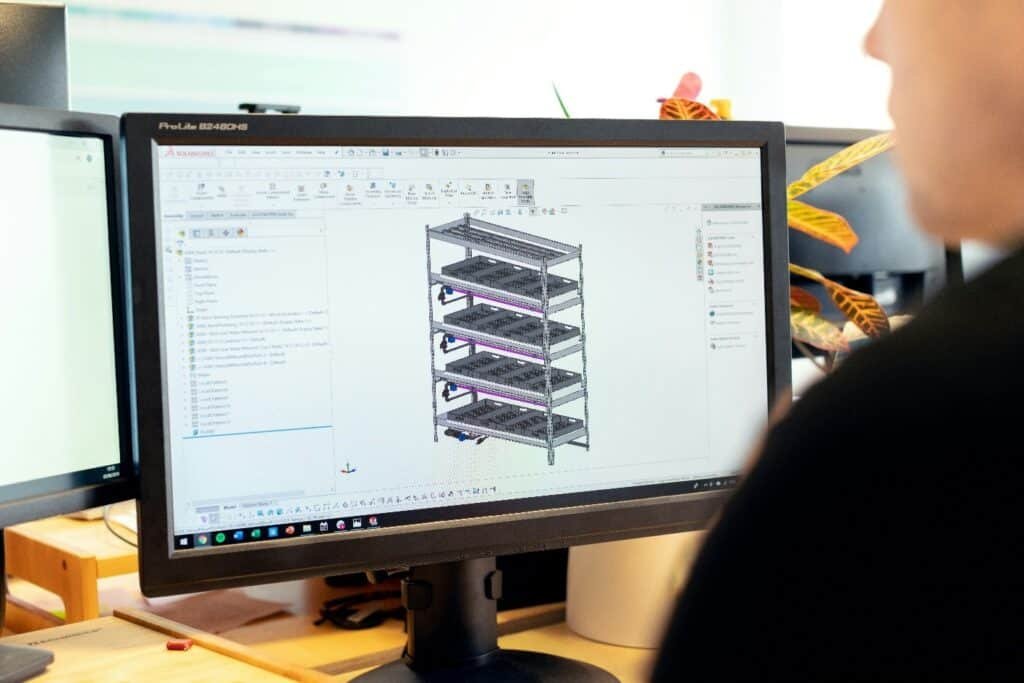
The journey from lab to prototype involves various stages:
- Initial Design: Outlining the qubit layout and laser configurations.
- Testing Phase: Running basic operations to ensure functionality.
- Optimization: Adjusting system parameters for improved performance.
by ThisisEngineering (https://unsplash.com/@thisisengineering)
Neutral atom processors, though nascent, exhibit promising scalability. The modular nature allows incremental increases in qubit numbers. Moreover, these systems’ potential to maintain coherence at scale indicates their promise for future quantum applications. As prototypes mature, neutral atom processors could redefine computing and open new technological frontiers. Continued research and investment are vital to bridge the gap to full-scale quantum computing solutions.
Neutral Atom Quantum Computing Statistics (2024–2025)
| Metric | Recent Achievement |
|---|---|
| Largest Neutral Atom Arrays | Over 1,000 atoms |
| Logical Qubit Demonstrations | Growing rapidly |
| Gate Fidelity | Above 99% in leading systems |
| Processor Reconfiguration Time | Milliseconds |
| Industry Investment | Billions globally in quantum technologies |
Example Companies
- QuEra Computing
- Pasqal
- Atom Computing
Sources: QuEra, Pasqal, Atom Computing
Links:
https://www.quera.com
https://www.pasqal.com
https://atom-computing.com
Neutral Atom Quantum Processors: Powerful quantum processors built from arrays of individually controlled atoms

Neutral Atom Quantum Processors are quantum computing devices that use trapped, individually addressable neutral atoms as qubits arranged in programmable arrays. Because each atom is fundamentally identical, Neutral Atom Quantum Processors can deliver highly uniform qubit behavior across large registers, an advantage that supports scaling efforts in Neutral Atom Quantum Technology. Arrays are formed with optical tweezers or lattice traps in ultrahigh vacuum, and laser cooling reduces motion, enabling precise operations.
Control in Neutral Atom Quantum Processors is typically site-resolved. Single-qubit rotations are driven by microwave or Raman pulses, while entangling operations often use Rydberg excitation to create strong, controllable interactions between selected atoms. This allows Neutral Atom Quantum Processors to implement gates with flexible connectivity: qubits can interact with neighbors or at longer range depending on spacing, addressing strategy, and pulse design. Such programmability is a core reason Neutral Atom Quantum Technology is viewed as a promising route to scalable, reconfigurable quantum computation.
Building reliable Neutral Atom Quantum Processors is a systems-engineering challenge. The hardware stack includes stable lasers, beam steering and shaping optics, magnetic-field control, high-NA imaging for readout, and low-latency electronics to synchronize pulses with sub-microsecond timing. Software is equally important: calibration routines compensate for light shifts, intensity inhomogeneities, and drift, while array preparation workflows fill traps and rearrange atoms to remove defects. As Neutral Atom Quantum Processors grow, these automation layers become essential for repeatability and uptime.
Performance depends on sustaining coherence while increasing gate depth and parallelism. Neutral Atom Quantum Processors must manage heating, crosstalk, and atom loss by employing improved trapping, optimized pulse sequences, and rapid reloading strategies. Parallel measurement enables fast diagnostics and feedback, supporting longer runs and more complex circuits.
As fidelities improve and loss mitigation matures, Neutral Atom Quantum Processors are moving from proof-of-concept demonstrations toward platforms capable of error correction and, eventually, fault-tolerant operation. Within Neutral Atom Quantum Technology roadmaps, Neutral Atom Quantum Processors represent a scalable, programmable hardware foundation for executing increasingly powerful quantum algorithms.
Example
A startup demonstrates a 256-qubit neutral-atom processor for variational chemistry. Before execution, the control stack loads atoms into 300 traps, images occupancy, and shuffles atoms to fill a contiguous 16×16 register. Microwave pulses implement single-qubit rotations while targeted Rydberg pulses perform two-qubit entangling gates on selected pairs. During compilation, the software selects gate routes that minimize crosstalk by spacing simultaneous interactions. After each circuit, the parallel fluorescence readout produces a full bitstring sample. The team reports improvements by upgrading laser linewidth and recalibrating local light shifts, boosting gate consistency across the array.
Overcoming Challenges: Error Correction and Stability
One of the paramount challenges in neutral atom quantum technology is error correction. Error rates can hinder the accuracy of quantum computations, impacting reliability. Neutral atom systems must implement sophisticated error correction protocols to address these issues effectively.
Stability is another critical concern. Maintaining stable qubit states requires precise control of environmental conditions and laser operations. Even slight variations can lead to decoherence. Researchers employ cooling techniques to reduce thermal noise to near-absolute zero. This maximizes the qubit lifespan and operational efficiency.
To tackle these challenges, several strategies are pursued:
- Advanced Error Correction: Developing algorithms to detect and fix errors.
- Environmental Control: Using vacuum systems to minimize external interference.
- Dynamic Reconfiguration: Allowing real-time adjustments to atomic arrays.
Addressing these challenges is crucial for building reliable and efficient quantum systems. Success in these areas will likely enhance the overall performance of neutral atom quantum processors. Continued advancements could unlock the true potential of quantum computing, paving the way for robust applications across various fields.
Recent Advances and Future Directions
Recent advancements in neutral atom quantum technology have pushed the boundaries of what is possible. Researchers have developed techniques to trap and manipulate individual atoms with remarkable precision. These improvements have resulted in enhanced qubit control and reduced error rates, bringing us closer to practical quantum computing solutions.
Future directions include integrating neutral atom systems with other quantum technologies. Combining different approaches could lead to hybrid systems that enhance computing power and efficiency. Additionally, there’s significant interest in scaling up atomic arrays. Larger arrays can perform more complex quantum operations, opening new doors for advanced research and applications.
Key areas of focus moving forward include:
- Hybrid Integration: Merging different quantum systems for better performance.
- Scalability: Developing methods to increase atomic array size.
- Algorithm Development: Crafting new quantum algorithms tailored for neutral atoms.

by MeSSrro (https://unsplash.com/@messrro)
As researchers continue to explore these avenues, neutral atom quantum technology promises to play an essential role in future scientific and technological breakthroughs. The potential to revolutionize computing and solve complex problems keeps this field at the forefront of cutting-edge research.
Real-World Applications of Neutral Atom Quantum Technology
| Industry | Application | Potential Benefit |
|---|---|---|
| Pharmaceuticals | Drug Discovery | Faster molecular simulations |
| Finance | Portfolio optimization | Better risk analysis |
| Logistics | Route optimazation | Reduced costs |
| Materials Science | New material design | Faster innovation |
| Cybersecurity | Quantum-safe research | Stronger security systems |
Example: Quantum simulations may help researchers model molecular interactions beyond classical computing capabilities.
Source: World Economic Forum Quantum Reports
Link: https://www.weforum.org
Applications and Impact of Neutral Atom Quantum Technology
Neutral atom quantum technology holds transformative potential across various sectors. One primary area of impact is cryptography. Advanced quantum algorithms can significantly enhance the security of data transmission, safeguarding sensitive information more effectively than current methods.
The healthcare industry could also benefit from quantum advancements. Drug discovery and development can be accelerated through quantum simulations, reducing the time and cost associated with bringing new medications to market. Quantum technology allows researchers to model complex molecular interactions with unprecedented accuracy.
Key applications include:
- Cryptography: Enhancing data security through robust encryption methods.
- Healthcare: Accelerating drug discovery processes via detailed simulations.
- Optimization: Solving complex logistical and resource allocation problems.

by Shubham Dhage (https://unsplash.com/@theshubhamdhage)
As these applications develop, the economic and societal impact of neutral atom quantum technology will be profound. By enhancing capabilities in multiple fields, this technology promises to address pressing global challenges and improve quality of life around the world. The future is bright for industries ready to harness the power of quantum advancements.
Neutral Atom Quantum Technology Development Roadmap
| Timeframe | Expected Development |
|---|---|
| 2025 | Larger Programmable atom arrays |
| 2026-2028 | Improved error correction |
| 2028-2030 | Thousands of controllable qubits |
| 2030+ | Fault-tolerant quantum computing |
| Beyond 2030 | Commercial quantum advantage at scale |
Key Statistic: Governments and private companies have committed tens of billions of dollars globally to quantum technology research and development.
Source: Quantum Economic Development Consortium (QED-C)
Link: https://quantumconsortium.org
Conclusion: The Road Ahead for Neutral Atom Quantum Technology
Neutral atom quantum technology is on the cusp of major breakthroughs. With concerted efforts from academia and industry, these advancements are set to redefine computing paradigms. Exciting possibilities lie in universal quantum computers that could tackle problems beyond classical limits.
Collaboration between diverse disciplines is crucial. Progress demands innovation in quantum mechanics, laser physics, and engineering. As researchers push the boundaries, the interplay of these fields will spur further innovation and practical applications.
Though challenges remain, the momentum is undeniable. With continued research and development, the dream of scalable, reliable quantum computing may soon become reality. The potential to revolutionize domains ranging from cryptography to healthcare positions neutral-atom quantum technology as a cornerstone of future scientific endeavors. As we move forward, the quest to unlock its full capabilities continues with fervor and optimism.
FAQs
1) What is neutral atom quantum technology?
It’s a quantum computing approach that uses neutral atoms as qubits. Their internal atomic states store quantum information, and their weak interaction with the environment can support long coherence times.
2) How are neutral atoms trapped and positioned for computation?
Researchers use laser trapping and optical tweezers to cool atoms and hold them in stable, precisely defined locations. This lets them build ordered arrays in which each trapped atom serves as an individually addressable qubit.
3) How do quantum gates work in neutral-atom systems?
Single-qubit gates are driven by carefully tuned electromagnetic or laser pulses. Two-qubit entangling gates are often created using laser-induced interactions—commonly by exciting atoms to Rydberg states to strengthen and control atom–atom coupling.
4) What makes neutral-atom platforms scalable?
Atoms can be arranged into larger arrays without changing the basic qubit type, and the layouts can be reconfigured. This supports modular qubit-count growth while maintaining consistent qubit behavior across the system.
5) What are the biggest challenges in building neutral atom quantum processors?
Key challenges include reducing gate and measurement errors, maintaining stability against drift and noise, managing decoherence, and implementing effective error-correction techniques that remain practical as arrays scale up.

Garikapati Bullivenkaiah is a seasoned entrepreneur with a rich multidisciplinary academic foundation—including LL.B., LL.M., M.A., and M.B.A. degrees—that uniquely blend legal insight, managerial acumen, and sociocultural understanding. Driven by vision and integrity, he leads his own enterprise with a strategic mindset informed by rigorous legal training and advanced business education. His strong analytical skills, honed through legal and management disciplines, empower him to navigate complex challenges, mitigate risks, and foster growth in diverse sectors. Committed to delivering value, Garikapati’s entrepreneurial journey is characterized by innovative approaches, ethical leadership, and the ability to convert cross-domain knowledge into practical, client-focused solutions.