

















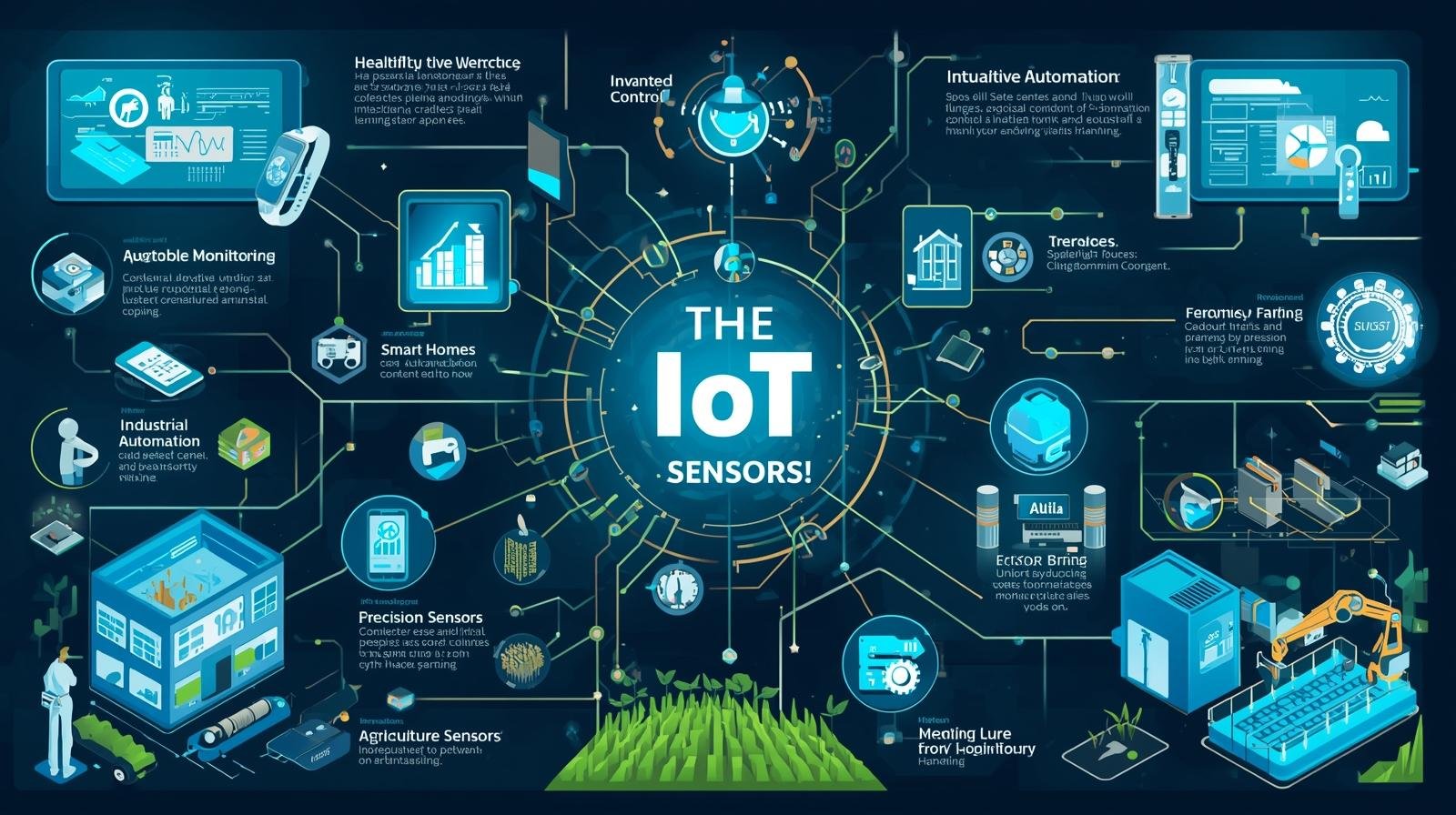

Smart IoT sensors collect environmental data (light, temperature, vibration, movement, air quality, etc.) and forward it to an application that acts on it. Unlike dumb sensors that send raw data to another device for processing, smart IoT sensors have built-in intelligence, enabling them to analyze the data they collect and make decisions accordingly.
Almost all smart IoT sensors include a sensing module, a microprocessor, a power management module, and a means of communicating with other applications via Wi-Fi, BLE, ZigBee, LoRaWAN, NB-IoT, or 5G protocols. Some smart IoT sensors will contain “edge AI”, which is a small artificial intelligence engine embedded in the sensor or gateway. This enables the sensor to detect anomalies (for example, a bearing failure in a machine), allowing only the relevant information to be transmitted, thereby reducing bandwidth costs and improving response speed.
Many industries benefit from the real-time visibility and quick decision-making enabled by smart IoT sensors. In manufacturing, sensors are used to measure vibrations and currents to enable predictive maintenance and identify early warning signs of potential serious issues. Sensors are installed in building environments to measure occupancy, CO2 levels, and humidity, enabling better control of HVAC and lighting systems and more efficient operation while maintaining a comfortable environment.
#How IoT Works in Hospitals: IoMT is Revolutionary & Lifesaving
IoT-based sensors help companies make better decisions. For example, health care organizations use wearable sensors to track patients’ physical activity, heart rate, and sleep patterns. Logistics companies use sensors that track a shipment’s GPS location and environmental conditions (temperature) during transport to ensure cold-chain products remain within safe temperature ranges. Farmers can utilize soil moisture and weather sensors to automatically irrigate crops and save water.
Companies can act faster and see what they are doing thanks to real-time data from these sensors. These devices can alert you to potential downtime before it occurs, improve safety, and enable the automation of business processes.
However, there are some challenges associated with deploying IoT-based sensors. First, the device will eventually lose power; this limits how far away it can be deployed, especially in rural locations. It is also important to recognize that the quality of the data collected by the device affects its usefulness for decision-making. If the device is poorly calibrated or not properly positioned, the data it collects may not accurately reflect the situation.
Companies should also consider security when deploying these devices and require the device manufacturer to provide high-level authentication, encrypt communications between the device and the servers receiving the information, and provide regular firmware updates. Lastly, standards and protocols are often used for communication between devices (e.g., Wi-Fi), but there are instances where devices do not follow them.
To get optimal performance from your Smart IoT sensors, first determine which use case you want to solve, then select the required connectivity based on the device’s range and power requirements. Secondly, develop a scalable device management system, and thirdly, establish a secure path from the sensor to the cloud (or edge), and finally to the application.
Your motion-sensor floodlight likely turns on every time something passes by (including a cat, a car, or an extremely windy day). Although this is somewhat helpful, it does not fully leverage the concept of being “Smart”. This type of product uses a very basic trigger system that cannot distinguish between important and unimportant information.
The next step is for that light to distinguish the difference. Think about this… That light only alerts you when someone walks up the path and ignores every single other little disruption that occurred in the day. That is the key to all of today’s “Smart” technology.
There is one major distinction between making a sensor intelligent and simply reporting a condition (e.g. Motion detected): an intelligent IoT sensor acts as a brain, makes decisions based on its data analysis before sending it to you or taking action. Even though this technology may seem futuristic at first glance, it is currently powering many Smart home technologies, enabling your thermostat to learn your daily routine so it can conserve energy and modern security cameras to differentiate between a person and a pet. This shift from “Connected” to “intelligent” is changing how we live at home.
Growth of Global IoT Sensor Deployments
| Year | Global IoT Devices Installed | Estimated Sensors per Device | Total Active Sensors |
|---|---|---|---|
| 2018 | 12.2 billion | 3-5 sensors | 40 billion |
| 2023 | 15.1 billion | 5-7 sensors | 80 billion |
| 2026 | 27 billion | 6-10 sensors | 160 billion |
| 2030 | 29-32 billion | 8-12 sensors | 250 billion |
Sources: Ericsson Mobility Report, Statista IoT Device Forecast, IoT Analytics: Global IoT Market Report
What’s the Difference: From a “Dumb” to an “Intelligent” Sensor?
“Smart” is commonly used as a loose term within the technology industry; however, with regard to sensors, “smart” or “dumb” is primarily defined by an upgrade process, with each upgrade adding to a growing set of functionalities. A basic sensor is typically only capable of sensing an item or condition; however, for it to be classified as a “smart” sensor, it must also be able to connect to the Internet and provide feedback.
#Empowering Smart IoT Wearables and AI: How They Track Your Health
The three stages listed below illustrate this development process. Stage one consists of a stand-alone local sensor. Stage two is when the same sensor can connect to the Internet, thereby allowing data to be sent back to you. Stage three completes the transition from a simple on/off switch to a smart sensor, enabling the device to complete its tasks independently.
A smart thermostat illustrates the difference in how different kinds of sensors think:
- Dumb Sensor: Your old white wall thermostat is a dumb sensor. It performs only two functions: it turns on when it gets cold and turns off when it gets warm. That’s it!
- Connected Sensor: This kind of sensor is the most commonly used smart thermostat with Wi-Fi connectivity. Connected sensors send temperature readings to an app so you can view them and turn the heater on/off from anywhere. However, you still have to decide whether to turn the heater on/off.
- Intelligent Sensor: An intelligent sensor is a highly advanced smart thermostat that senses temperature and also learns your daily routines. For example, if you always leave for work at 8:00 AM, the heating/cooling will automatically adjust to save energy.
Hence, the final “jump” from simply transmitting data to make its own decision is what makes a smart device. Additionally, the ability to make decisions by processing information on the device itself (“the edge”) is what distinguishes a smart device from a connected device. How do small devices “learn” a routine; how do they “decide”? The answer is based on how these devices were designed to think.
Smart IoT Devices: Sensors That Think and Respond
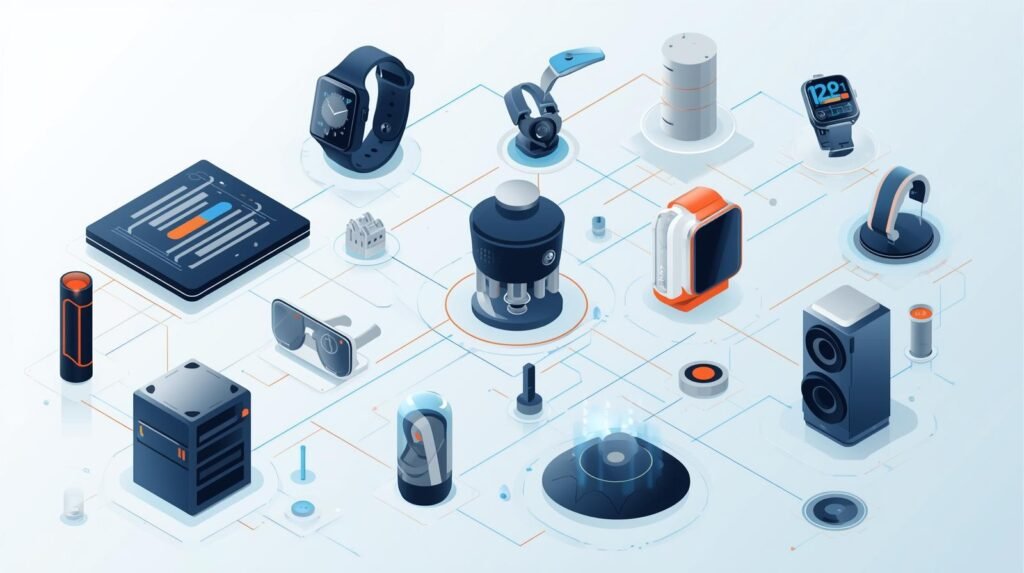
Smart IoT devices are multifunctional systems, made up of sensors and actuators, that collect data and make decisions using environmental data. Smart IoT devices act on data as soon as it is gathered. For example, a smart home thermostat adjusts its temperature settings based on your daily routine, while a Smart IoT factory monitor sends alerts about potential problems with your factory’s machines. Real-time decision-making is enabled by Smart IoT devices across all industries. Most Smart IoT devices use sensors to detect signals such as temperature, movement, vibration, noise, air quality, pressure, and location.
In today’s devices, the “intelligence” exists in the data pathway. Smart IoT Sensors can transmit measured data directly to on-device logic or to an Edge AI model, which looks for patterns in the data, removes unimportant details (noise), and detects anomalies. Many Smart IoT devices also do not send all of the raw data to the cloud. Instead, they will send a summary of the most important details to be processed, such as “unusual vibrations found” or “occupancy status changed”.
This approach reduces the bandwidth required to transport the summarized data to the cloud and increases response times. Summarized data is especially useful when devices require continuous operation (uptime), rapid reaction (safety), or low-latency responses.
Practical automation is possible with the Internet of Things (IoT) in many everyday settings. Practical automation can be accomplished through intelligent IoT devices, such as automatically turning on your house lights as soon as you walk into a room, controlling how much energy you use, or remotely monitoring your home security systems.
Smart IoT devices provide commercial properties with comfort and efficiency by using sensors to measure occupant density, carbon dioxide (CO2), relative humidity, and temperature, creating optimal workspaces while maintaining high efficiency. For industrial purposes, smart IoT devices prioritize reliability; sensors monitor motor currents, temperatures, and vibrations to support predictive maintenance, reducing the likelihood of equipment failure and resulting downtime.
While all smart Internet-of-Things (IoT) devices depend upon network connectivity to function, different types of connectivity are used based on the intended application. Smart IoT devices that require high data transfer rates may operate over Wi-Fi, Ethernet, or other wired or wireless communication protocols that support higher throughput. Conversely, Smart IoT devices that need extended communication distance(s), low power usage, and/or lower cost typically make use of wireless communication protocols such as Bluetooth Low Energy, Zigbee, LoRaWAN, or cellular.
To protect the reliability of Smart IoT sensor systems and prevent unauthorized access, strong authentication, secure data transmission via encryption, and periodic firmware updates are necessary for the long-term value and sustainability of the fleet of Smart IoT devices.
In addition to ensuring long-term reliability of data collected by Smart IoT devices, there are several factors to consider when creating long-term value through Smart IoT sensors. Collecting reliable data depends on the proper placement and calibration of the Smart IoT sensors, so that the resulting analysis of the physical environment accurately reflects its conditions. Reliable data collection and sustainable design will enable Smart IoT devices to recognize changes in their environment, determine their context, and implement actions that enhance the safety, efficiency, and resilience of their respective operational environments.
Typical of an Architecture of AI-powered by IoT sensor System
| Layer | Technology Used | Purpose |
|---|---|---|
| Sensing Layer | Temperature, Vibration, Motion, Pressure sensors | Collect environmental signals |
| Edge Processing | Microcontrollers, Edge AI chips | Analyze data locally |
| Connectiivity Layer | Wi-Fi, LoraWAN, BLE, ZigBee, NB-IoT | Tranmit Insigts |
| Colud Platform | AWS IoT, Azure IoT Hub | Large-scale analytics |
| Application Layer | Dashboards, alerts, Automation systems | Business decision making |
Sources: IEEE Internet of Things Journal, Microsoft Azure IoT Architecture Documentation
How Do AI-Powered Sensors Actually “Think” On Their Own?
The term thinking does not indicate that a sensor is aware of what it is doing or has emotional responses; however, it is used to define a sensor’s capability to process the information it receives in real time using its own microprocessor – a small computer embedded within the sensor. In essence, this means that instead of transmitting all the information received back to a central location (HQ) for analysis by another individual, the sensor can perform the analysis on-site (using its processor).
This type of on-site analysis is a key aspect of Edge Computing (Edge AI), which allows the sensor to determine whether an event is sufficient to generate a signal, thereby limiting the amount of data transmitted over networks.
For example, take a smart home security camera. A basic security camera transmits a continuous video stream to the cloud; therefore, you must review hours of footage for any indication of a significant event. Conversely, an intelligent security camera conducts the same type of analysis in real time and asks questions about each occurrence, such as “Was that motion a human, or simply the wind?”
As an additional benefit of this level of analysis, an intelligent camera limits the amount of unnecessary data transmitted over networks by filtering out unwanted “noise” and providing the end user with only one relevant insight (e.g., “A person was detected at your front door”). It transforms a flood of raw data into one clear and actionable alert.
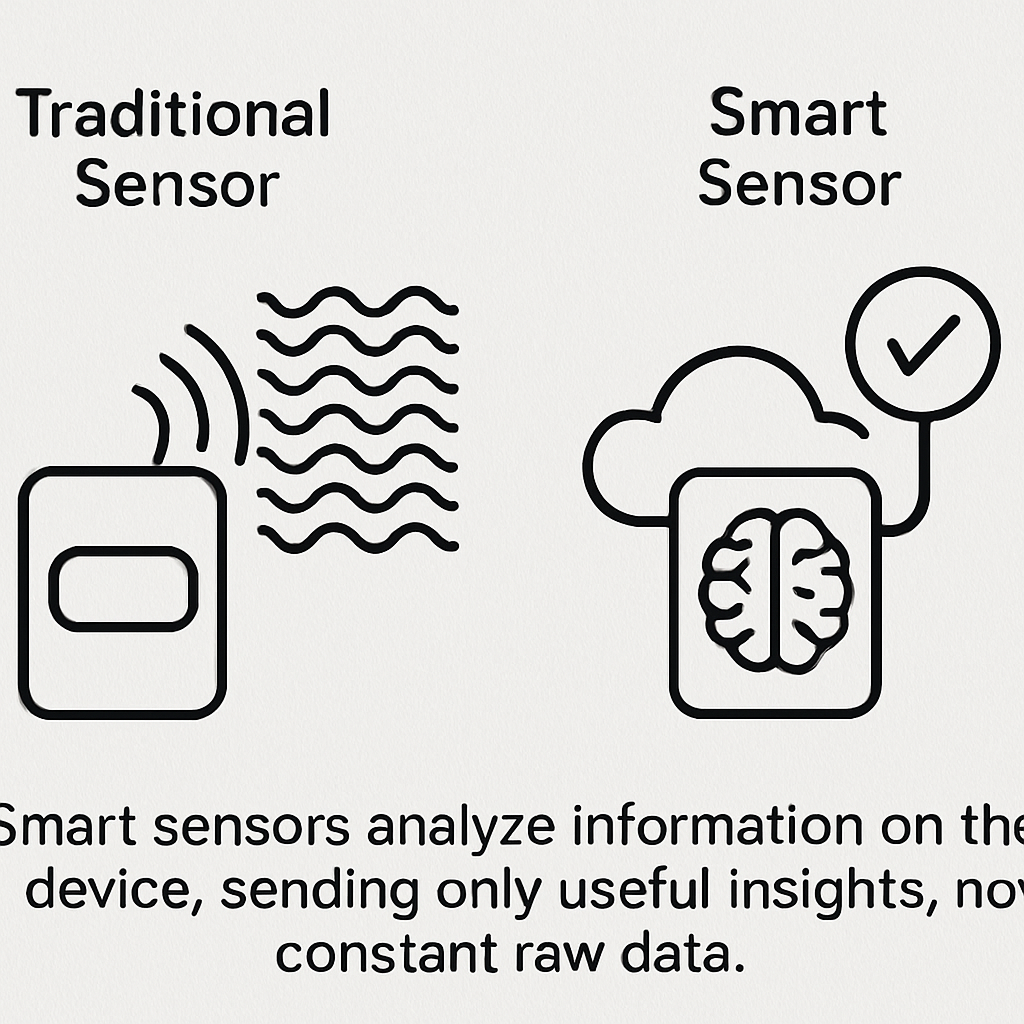
In short, an intelligent camera system can greatly enhance onboard data processing and, therefore, improve privacy and the time to receive alerts. This technology has the potential to open up new uses, as many devices are now developing their own “thinking” capabilities.
Sensor Data Analytics: Turning Raw Data into Intelligence

Sensor Data Analytics is the process of transforming raw sensor data into meaningful actions/insights. Today’s systems generate large volumes of sensor data (for example, temperature, vibrations, pressures, motion, sounds, and/or locations) from smart IoT devices collecting it, but without Sensor Data Analytics, these data points remain isolated. When you apply Sensor Data Analytics to the same data, the data becomes actionable intelligence, i.e., an alert, prediction, or decision that improves your ability to perform or reduces risk.
Sensor Data Analytics begins with data acquisition and preprocessing. Since many Smart IoT sensor systems produce noisy data (e.g., due to interference, drift, or poor placement), Sensor Data Analytics includes techniques such as noise reduction/filtering/smoothing; calibration and validation; and methods for handling missing data. Following this, Sensor Data Analytics pipelines incorporate context by including timestamp information, unique device identifiers, and/or environmental factors to enable comparisons of “normal” system behavior across devices, locations, or routes.
Real – World IoT Sensor Use Cases by Industry
| Industry | Sensor Type | Business Problem Solved |
|---|---|---|
| Manufacturing | Vibration & Current sensors | Predict Machine failures |
| Logistics | GPS + Temperature sensors | Cold chain monitoring |
| Healthcare | Wearable biometric sensors | Remote Patient Monitoring |
| Agriculture | Soil moisture & Weather sensors | Smart irrigation |
| Smart Cities | Air quality & traffic sensors | Urban monitoring |
Sources: World Economic Forum IoT Report, McKinsey Global Institute – IoT Value Potential
Anomaly Detection is an important goal of Sensor Data Analytics. Anomalies are patterns in the data that differ from historical observations. For example, using Sensor Data Analytics to analyze changes in vibration patterns (as recorded by Smart IoT sensors mounted on motors) could predict when a bearing will fail before it actually fails. In addition, Sensor Data Analytics could be used to determine if anomalies exist in indoor building environments related to humidity or CO2 levels, indicating potential ventilation problems. Lastly, Sensor Data Analytics could be applied to monitor temperature fluctuations during shipping and identify the points in time and space where those fluctuations occur.
Sensor Data Analytics also has a significant additional field of application: prediction. By using historical data, Sensor Data Analytics can leverage past trends to forecast future equipment failure and environmental change requirements. The forecasts from Sensor Data Analytics can help companies with predictive maintenance, improve inventory management, and increase overall operational safety. Some Sensor Data Applications are located in the cloud because they process large volumes of historical data; others are located near the sensor because they require fast processing and low-bandwidth communication.
If Sensor Data Analytics is going to be successful, it needs to generate an action. The results from Sensor Data Analytics may generate alerts, create a maintenance work order, adjust an operating system, or change an operator’s dashboard display. It is here that true value is delivered by intelligent IoT sensors: they provide timely, objective information to those who depend on them, allowing them to stay informed and continue operating their systems successfully.
To achieve this, organizations must focus on developing robust data governance practices and ensuring the integrity of sensor-generated data. Intelligent smart IoT sensors must incorporate authentication processes, communications must be encrypted, and access must be limited to ensure data reliability. Once the data pipeline is defined and reliable, Sensor Data Analytics converts raw readings into actionable intelligence to support informed decision-making every day.
Edge AI vs Cloud IoT Processing Comparison
| Feature | Edge AI Processing | Cloud Processing |
|---|---|---|
| Data processing location | On device or Gateway | Remote data center |
| Letency | Very low (milliseconds) | Higher |
| Bandwidth Use | Reduced | High |
| Privacy | Better (local data) | More exposure |
| Best use cases | Industrial safety, vehicles, smart homes | Large-Scale analytics |
Sources: Gartner Edge Computing Report, IDC Edge Intelligence Study
Smart Sensing Technology: The Future of Real-Time Awareness

The way that individuals and companies view their surroundings is changing as a result of the use of Smart Sensing Technology. Smart Sensing Technology is used to monitor and measure machine performance, building usage, vehicle operating conditions, and public space activities by using continuous, near-real-time signal information rather than waiting for reports or conducting periodic inspections; this results in faster decision-making and safer and more efficient automated processes as a direct result of the integration of awareness directly into the environment.
#Breakthrough Guide to Genomic Data and Why AI Needs It
The core of Smart Sensing Technology is the networked sensor(s), which can measure various environmental parameters (vibration, temperature, motion, pressure, air quality, noise, and/or location). Most of these networked sensors are smart Internet of Things (IoT) devices that can detect changes in the measured parameter and transmit the data to software applications, where the sensed information can be analyzed. When deployed across all areas of a large-scale operation, the combination of individual sensors will create a “real-time” condition map of an organization’s building/facility, supply chain, or city.
These sensors can also become “smart” by adding intelligence to the basic sensing function. Lightweight artificial intelligence (AI) models and edge computing technologies enable rapid determination of whether the collected sensor data constitutes a behavioral pattern. Examples include smart IoT sensors installed on industrial machinery that could detect abnormal vibrations or other behavioral patterns indicative of an impending mechanical failure.
In addition, smart buildings can use Smart Sensing Technology to dynamically control lighting and ventilation based on current occupancy levels and indoor air quality. Additionally, Smart Sensing Technology is used to remotely monitor patients by detecting significant variations in patients’ activity/vital signs.
Smart Sensing Technology’s design for both connectivity and power is a major factor in its development. With respect to connectivity, based upon the application, Smart Sensing Technology uses either Wi-Fi or Ethernet for high-speed applications and Bluetooth Low Energy, Zigbee, LoRaWAN, and Cellular IoT for long-range applications. The majority of smart IoT sensors are designed to be low-energy and use sleep modes or event-driven reporting to extend battery life.
For Data and Security (Trust), data and security must be in real time; thus, security and data integrity cannot be afterthoughts. For Smart Sensing Technology to operate at its best, all devices must be properly authenticated, all data must be encrypted, and all firmware must be up to date. Additionally, proper placement and calibration are required to ensure that smart IoT sensors are installed correctly and that sensor readings accurately reflect reality rather than “noise”.
As Smart Sensing Technology continues to evolve, it will move from a “Monitor and Alert” model to a “Predict and Adapt” model, enabling continuous learning and responses with minimal delay.
Sensor Data Volume Generated by Industrial IoT Systems
| System Type | Sensor Installed | Data Generated per Day |
|---|---|---|
| Smart factory production line | 500-1000 sensors | 5-10 TB |
| Autonomous Vehicle Fleet | 100 + sensors per vehicle | 4 TB per Vehicle |
| Smart building management | 200-400 sensors | 1 TB |
| Wind turbine monitoring | 100 sensors per turbine | 500 GB |
Sources: Deloitte Industrial IoT Research, Intel Edge Computing Study
Intelligent Sensor Networks: Connected Intelligence at Scale

Intelligent Sensor Networks are distributed sensor networks that can provide data about their environment; this data is then shared among networked devices to produce a complete understanding of the events, processes, and/or states occurring at a moment in time over a large geographic area or during the execution of complex operations/processes. As opposed to traditional point-to-point sensor networks, where each sensor provides a separate report in a “silo,” Intelligent Sensor Networks rely on the “network effect” to integrate data from multiple sensor signals to enhance the accuracy of the data, speed of detection of anomalies, and the intelligence of the response to changing conditions.
Located at the edge of these systems are intelligent IoT sensors that collect data on environmental parameters, including vibration, temperature, humidity, pressure, location, and air quality. When there are thousands of intelligent IoT sensors located in a single area (such as a manufacturing facility, a hospital campus, or a neighborhood in a city), Intelligent Sensor Networks can use all the data collected from the individual sensors to differentiate between normal variations in the monitored state and meaningful changes in the monitored state.
For example, although each temperature and vibration reading might have little value on its own, as soon as a temperature reading increases by even a small amount and the vibration reading also increases by just a bit, these readings can become good indicators of an issue.
The potential for Intelligent Sensor Networks is large. The reason is that the Intelligent Sensor Network minimizes the bandwidth required for coordinating sensors (via routing) and for supporting sensor coordination itself through gateways, mesh network topologies, and event-based reporting.
So instead of sending all raw sensor readings back to the central processing unit, the intelligent IOT sensor sends only a message when a threshold has been reached, or a particular pattern of readings has occurred. So, the intelligent sensor network can function well under conditions of limited power, spotty or unreliable communication, or high sensor density.
In addition to providing greater coverage, the intelligent sensor network is also very resilient. Even if one node fails, the remaining nodes can provide sufficient coverage and reroute traffic due to the nature of a mesh topology.
Global IoT Market Size and Growth
| Year | IoT Market Value |
|---|---|
| 2020 | $761 billion |
| 2023 | $1.1 trillion |
| 2026 | $1.6 trillion |
| 2030 | $3 + trillion |
Sources: Fortune Business Insights, IDC Worldwide Internet of Things Forecast
Predictive equipment maintenance is yet another example of the application of the intelligent sensor network. This is because continuous monitoring of an item’s condition over time allows industries that utilize intelligent sensor networks to determine when maintenance is needed before it is required.
Smart buildings are another area for the application of Intelligent Sensor Networks. They use intelligent sensor networks to measure occupant levels and air quality inside a building. They then use this information to automatically control lighting, HVAC systems, and other systems. Smart IoT sensors are also being used in logistics and cold chain distribution. The sensors monitor product temperatures and detect shock events during transit. Intelligent sensor networks could provide end-to-end visibility and traceability throughout the shipment process.
In addition to providing a large amount of data, large-scale sensor networks pose significant security risks and governance concerns. For example, it would be wise to require strong device identity for every device on the network, encrypt all data transmitted across the network, and restrict network access so that hackers cannot send false data to the system or modify data in transit.
As AI becomes more distributed throughout a system, intelligent sensor networks will evolve beyond simply monitoring and alerting users of events to detecting, predicting, and coordinating actions with other devices in the network. In essence, they will create a large number of individual sensors that act together in a coordinated fashion to generate a large amount of connected intelligence that can operate in real time.
The Power of Teamwork: How Intelligent Sensors Create a Truly Smart System
A single intelligent sensor can do a great deal on its own; however, it is when all of these units work together that the intelligent sensor’s ultimate power is fully realized. The single smart sensor (as described above) is like the one expert on the job site. But a group of smart sensors, working as one entity, creates a “team” of experts. They don’t send the findings from each investigation to a central computer or database; instead, they share them with one another to create a much broader and more accurate picture of what’s happening at the time. This ability to work together enables many different devices to function as a complete intelligent system.
For example, you have a smart thermostat that detects that the afternoon sun has warmed a certain room. At the same time, you also have an intelligent sensor on the window that detects when it is open. If the smart thermostat simply blows cold air, rather than waiting for information from the window sensor, then the delay could cost you money. So, the smart thermostat receives a message from the window sensor and waits before taking action.
Sensor Fusion (or simply using multiple sources of information) is the process of combining different streams of information to gain a better understanding of a situation (using both your senses—seeing and hearing). There is no stronger example of IoT Edge Intelligence than the Smart Home, which can save you money and energy without requiring manual control.
Modern vehicles are using this very same concept, with camera and radar sensors working together to help keep you safely in your own lane. Similarly, large-scale systems, such as optimizing city traffic flow and advancing industrial automation with smart sensors, can eliminate potential accident-prone areas on factory floors. It is the exact same collaborative process that turns a smart device into a smart environment.
Benefits of Smart IoT Sensors for Industrial Operations
| Improvement Area | Average Impact |
|---|---|
| Equipment downtime reduction | 30-50% |
| Maintenance cost reduction | 20-40% |
| Energy consumption reduction | 10-20% |
| Operational efficiency increase | 25-30% |
Sources: McKinsey IoT Value Report, PwC Industry 4.0 Study
Intelligent Monitoring Systems: From Detection to Prediction

Beginning with Text: The next generation of Intelligent Monitoring Systems will go well beyond the “detect and alert” style of monitoring and become predictive systems that can anticipate when something will fail, so you can take action to prevent it. Earlier monitoring was threshold-based. If a temperature or pressure reached some predetermined limit, the alarm sounded. Today’s systems gather data continuously, apply advanced analytics, and automate workflows, allowing teams to identify trends, proactively reduce downtime, and respond faster.
Smart IoT Sensors are driving many of the significant advancements in this area. These devices measure signals from the physical world (e.g., vibrations, current draw, humidity, air quality, motion, and location) and send those measurements to a dashboard, an Edge Gateway, or a Cloud Platform. As smart IoT sensors are installed on every piece of equipment and facility within an organization, the intelligent monitoring system will have a benchmark for “typical” behavior and can spot minute differences that may go unnoticed by people.
Predictive Intelligence techniques are allowing us to shift our focus away from just Detection techniques. Instead of waiting until limits have been exceeded, Intelligent Monitoring Systems track the rate of change, correlations among multiple variables, and recurring signature patterns that often predict impending failure using advanced Pattern Recognition techniques.
In addition, examples of how smart IoT sensors can help include: smart IoT sensors on a motor detecting a slow increase in vibration at specific frequencies, with related temperature and power readings supporting this same trend. Using historical data, an intelligent monitoring system can calculate the Remaining Useful Life (RUL) and recommend when to perform the optimal amount of maintenance to minimize business disruptions.
The way an intelligent monitoring system processes information (i.e., where it is hosted) will also play a significant role. Cloud-based processing enables detailed historical analysis, reporting, and training of predictive models. Edge processing enables low-latency, real-time alerting, even in areas with poor connectivity. Regardless of the deployment model used, Smart IoT Sensor Technology uses Event-Based Reporting and/or Filtering to remove “noise” and to improve the Signal-To-Noise Ratio at the central monitoring location.
Predictive modeling can only occur with the use of trustworthy and secure methods and practices when implementing Intelligent Monitoring Systems via proper installation and calibration of the smart IoT sensors, synchronization of time across all devices, security such as device authentication, encryption of communication, and authorization for access to protect the integrity of the system and generate accurate predictive data; otherwise, there is the potential for false data to be produced by the system and/or the system to be compromised.
In an ongoing effort to automate their operations, intelligent systems will allow organizations to have increased closed loop functionality to monitor potential risk, forecast the possible consequences of that risk, and make adjustments such as adjusting setpoints, creating service orders, ordering replacement parts, and scheduling maintenance crews — ultimately, turning the passive monitoring function of the system into a proactive operational intelligence tool.
Example Smart IoT Sensor Products Used Today
| Device | AI Capability | Application |
|---|---|---|
| Google Nest Thermostat | Learns user behavior | Smart home energy control |
| Apple Watch | Activity recognition AI | Health monitoring |
| Amazon ring Doorbell | Person detection AI | Home security |
| Bosch Industrial Sensors | Predictive maintenance | Smart factories |

Sources: Product documentation (Google Nest, Apple, Amazon, Bosch), MIT Technology Review IoT Analysis
Real-World Magic: 3 Examples of AI Sensors You Might Be Using Now
AI is already being incorporated into various intelligent “Sense, Decide, Act” technologies in ways that make your life both easier and safer. Advanced examples of these AI-enabled sensors are now being introduced into smaller forms of a wide variety of items surrounding you. It’s very possible that many people have unknowingly used an AI-enabled sensor or application. The AI-enabled sensors use their own reasoning to provide a better understanding of the world around them.
Below are some examples of how you can find artificial intelligence in your daily routine:
- Watch: While a regular watch will tell you about how many times you’ve picked up your watch and walked (or run) from one location to another, a smartwatch can give you insight into how fast you’re moving, determine whether you are walking, cycling, or swimming, and start tracking your workout. Smartwatches can use machine learning to analyze your specific movements and provide immediate feedback on how well you’re performing during your workouts.
- Doorbell: A traditional doorbell camera will alert you whenever a car passes by your front door. Advanced doorbell cameras will send you alerts when there is a different type of activity at your house (such as a package being delivered versus someone approaching the front door). Once a person enters the field of view of the doorbell camera, it will send you a notification with the message”person detected.” This allows you to respond to a situation before it occurs rather than waiting until after the fact.
- Vehicle: While driving on a highway, a camera in your vehicle can detect the painted lines along the side of the road. Your vehicle’s onboard computer system analyzes camera data, determines when you have crossed the center line of the road, and responds appropriately (either by slightly steering you back on course or by vibrating your seat to let you know to make an adjustment).
While the AI may be used as assistive technology (as in the example above), its decision-making abilities also enable it to help users identify potential problems when the issue is still in the problem-area stage.
Real – World Predictive Maintenance Example
| Asset | Sensors Used | Problem Detected | Result |
|---|---|---|---|
| Wind turbine | Vibration + temperature | Bearning wear | Maintenance scheduled early |
| Factory motor | Current + vibration | Motor imbalance | Prevented shutdown |
| HVAC system | Air pressure + airflow | Filter blockage | Energy savings |
Sources: GE Digital Industrial IoT Case Studies, Siemens Industrial IoT Solutions
IoT Sensor Applications: Real-World Use Cases Across Industries
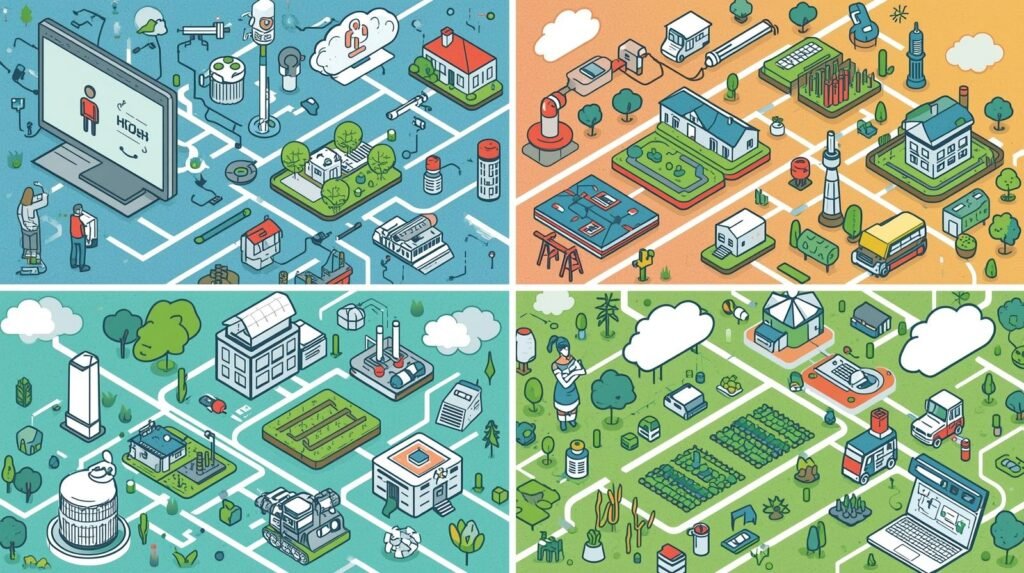
The variety of uses for IoT sensor applications stems from the fact that connected sensors help identify real-world problems (visibility, safety, efficiency, etc.) and support real-time, data-driven decisions rather than assumption-based ones. By placing smart sensors at the point of work and sending the data to an analytical tool, IoT sensor applications achieve these goals. IoT sensor applications can use smart sensors to measure temperature, vibration, motion, humidity, pressure, air quality, noise, and location.
The use of IoT sensor applications within manufacturing provides predictive maintenance and quality control through the placement of smart IoT sensors on motors, pumps and conveyor systems that monitor vibration and current usage to determine when excessive wear may occur, as well as through the use of smart IoT sensors placed along production lines to measure temperature and torque to help manufacturers to produce fewer defective products, and to decrease rework.
IoT Sensor Applications for Energy & Utility Sectors are used to monitor the condition of Grid Equipment, Pipelines, and Substations. Distributed sensing enables Utilities to see when their assets are overheating, experiencing a drop in pressure, or experiencing abnormal loads prior to an outage or loss of containment occurring.
IoT Sensor Applications for Buildings (Smart Buildings) are designed to increase occupant comfort while reducing cost. Building IoT Sensors enable optimized ventilation based on Occupancy and Carbon Dioxide levels, as well as improved HVAC control through measurement of Temperature and Humidity. The sensors will enable automated adjustments to minimize energy use while maintaining acceptable indoor air quality.
IoT Sensor Applications for Healthcare are being developed for Remote Patient Monitoring, Fall Detection, and Asset Tracking using Wearable devices and/or Room sensors. The wearable/room sensors will be able to detect changes in a patient’s movement and/or vital-sign patterns, enabling quicker response times and continued care.
IoT sensor applications in logistics and supply chain management offer many opportunities for data tracking and monitoring. Smart sensors can monitor temperature, shock, and shipment locations to protect cold-chain items, including vaccines and perishable foods. In addition, IoT Sensor Applications can monitor real-time vehicle health, driver behavior, and delivery conditions for fleet management.
IoT Sensor Applications for agricultural resource management have the ability to improve resource usage. By utilizing smart sensors to measure soil moisture, weather, and crop health, farmers can apply more precise irrigation and fertilization, reduce waste, and increase yield. IoT Sensor Applications utilized in environmental monitoring and smart city applications can monitor and report on air quality, noise pollution, traffic patterns, and water levels providing information for public safety and planning purposes.
The reliability and usability of IoT sensor data across these areas will be key to determining the success of IoT Sensor Applications. It is therefore critical to choose smart sensors suitable for the environment in which they will be installed; to develop a secure means of connecting them (and the device(s) they connect to); and to utilize analytics tools to provide alerts, forecasts, and workflow-triggering capabilities from sensor data. Successful use of IoT Sensor Applications provides measurable improvements in performance and resilience by converting routine measurements into actionable insights.
Smart Sensor Communication Protocol Comparison
| Protocol | Range | Power Use | Common Application |
|---|---|---|---|
| Wi-Fi | Short-medium | High | Smart homes |
| Bluetooth Low Energy | Short | Very low | Wearables |
| Zigbee | Medium | Low | Smart buildings |
| LoRaWAN | Long range | Very low | Agriculture |
| NB-IoT | Wide area | Low | Industrial IoT |
Sources: IEEE IoT Communication Standards, Cisco IoT Networking Guide
Beyond the Home: Fixing Problems Before They Happen with Smart Sensors
In addition to using “Sense, Decide, Act” logic in your home or vehicle, the same logic is being applied at massive scale to help prevent disasters and make the world more efficient through predictive maintenance.
Predictive maintenance is like when you hear a strange new noise coming from under the hood of your automobile; you take it to the mechanic so it doesn’t break down on you while you’re driving. Smart sensors in a variety of devices are acting as “super listeners,” detecting problems across a wide range of equipment, such as manufacturing machinery and city infrastructure.
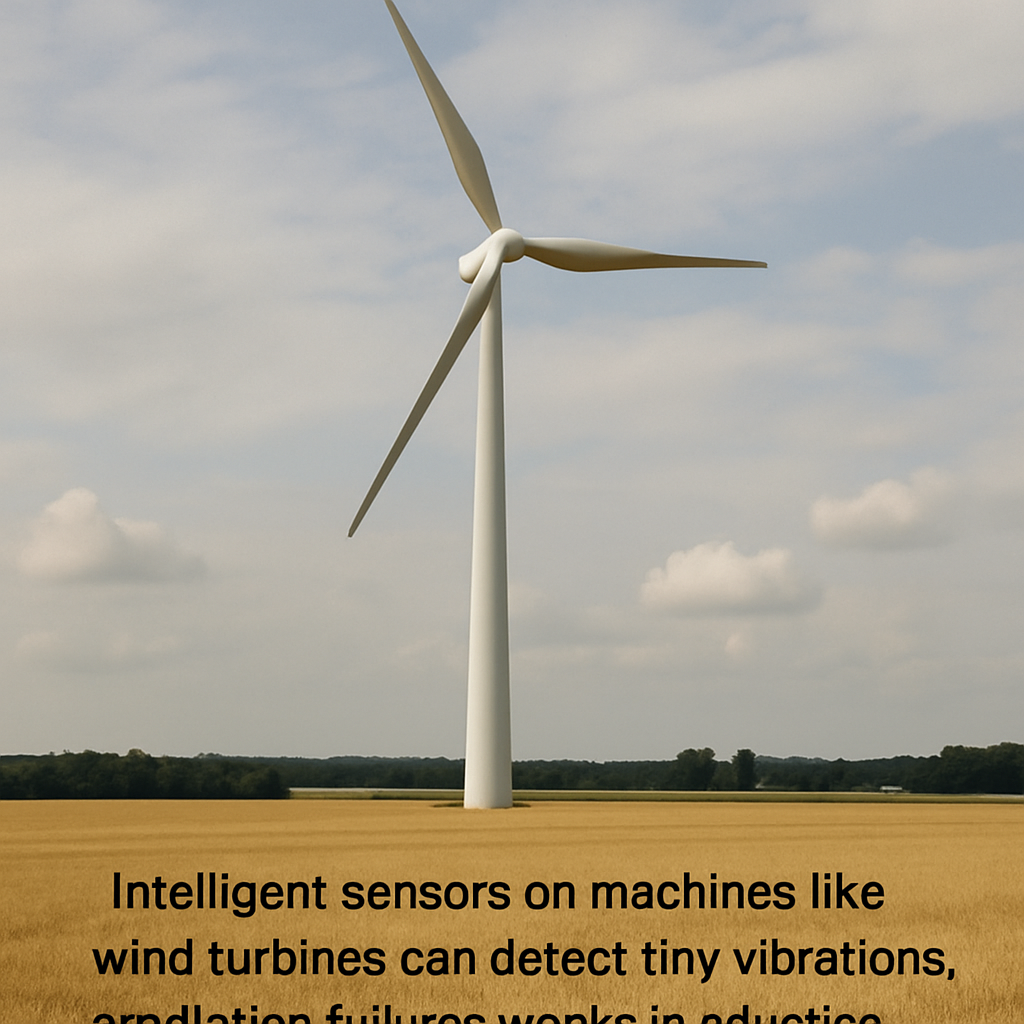
To illustrate, consider a large, remote wind turbine. A device within the turbine uses smart sensor technology for predictive maintenance. This device has been programmed to identify small, slight vibrations (undetectable by the naked eye) that are indicative of a potential failure in a bearing. Instead of sending a large amount of data, the device identifies this vibration pattern as an indicator of a potential failure and sends one message: “Bearing #7 needs an inspection”. This allows a service team to schedule the repair at a time when they are least busy, thus avoiding a catastrophic failure and unnecessary downtime.
Predictive maintenance has been applied in new and innovative ways through smart sensors in industrial automation. The use of smart sensors as intelligent soil sensors in agriculture is an example of how predictive maintenance will be utilized. These sensors can provide precise measurements of soil moisture and nutrient levels; therefore, irrigation systems can receive data on where water is required and exactly how much water is needed to maximize crop yield and conserve this valuable resource.
Intelligent sensors have been used in urban settings to monitor traffic flow and adjust traffic signal timing in real time. Intelligent sensing is being used in various applications, including the large turbines in remote locations and the kitchen in your home. The fundamental idea is the same regardless of location (urban or rural): utilizing intelligent sensing to make better, faster decisions.
How to Choose a Truly “Smart” Device for Your Home
Although there are numerous smart home devices available today, not all of them are created equal in terms of quality. In addition to being smart devices that can be controlled via an application on your smartphone, some of the products offered are designed to be intelligent problem solvers. The first question you need to ask yourself when shopping for a smart sensor or device is whether it truly qualifies as a “smart” device.
You don’t have to become a technical expert to understand why many people say that products labeled as “intelligent” are “hype.” All you need to do to get started is answer the next three easy-to-ask questions before you spend your money:
- Will this device become more intelligent as I use it, i.e., will it really “learn” over time rather than relying solely on predetermined rules? Intelligence would mean it learns; merely being connected would mean it doesn’t.
- Is this device solving a legitimate problem, or is it simply adding another “feature” to an existing product? An example of this would be an intelligent video doorbell which distinguishes between people, packages, and cars – eliminating false alarms – while a Wi-Fi-enabled egg tray that sends me notifications when I am running low on eggs is probably just a novelty.
- Can the manufacturer explain both what data they are collecting from me and how they intend to keep it secure? It is reasonable to expect the manufacturer to provide you with information about the types of data their products collect and why, as well as a clear explanation of their policies for protecting this data. Be extremely cautious if the privacy policy is either difficult to locate or understand.
These types of questions will help you see through the marketing to the true added value of having convenient, peaceful smart sensors in your home. What truly makes a sensor smart is not just how it uses technology to function, but how much it can improve your day-to-day routine. Using these types of questions will help you look beyond the marketing hype to determine whether there is actual benefit to owning and using convenient, stress-reducing smart sensors in your home. What truly makes a sensor “smart” isn’t simply how it utilizes technology to perform, but how much it improves your daily routine.
Your World is Getting Smarter: What This Means for You
What does it mean to “see” in a smart home? How did we get here? Probably, you thought that all of the “magic” behind your smart home was just magical. Now, I’m sure you can recognize that your smart home devices use IoT sensors to make real-time decisions. Your devices don’t just detect movement; they detect your face, packages, and your pet — essentially turning raw data into a single actionable piece of information. The step from observing to understanding is what makes them so powerful.
Next time your smartwatch buzzes, or your thermostat changes, notice the three components at play: what is the device sensing? What local decision is the device making? And what action results from that decision? In essence, those three simple steps (Sense, Decide, Act) are the keys to demystifying any new smart device you come across.
That is where the future of smart technology is headed. Quiet competence, not more notifications. That is the role of Edge AI – to move the intelligence of devices into the world around us and to create useful devices rather than noisy ones. You should now be able to witness this evolution happening before your eyes and see how devices with minimal features have become sophisticated systems that ultimately benefit our world.

Garikapati Bullivenkaiah is a seasoned entrepreneur with a rich multidisciplinary academic foundation—including LL.B., LL.M., M.A., and M.B.A. degrees—that uniquely blend legal insight, managerial acumen, and sociocultural understanding. Driven by vision and integrity, he leads his own enterprise with a strategic mindset informed by rigorous legal training and advanced business education. His strong analytical skills, honed through legal and management disciplines, empower him to navigate complex challenges, mitigate risks, and foster growth in diverse sectors. Committed to delivering value, Garikapati’s entrepreneurial journey is characterized by innovative approaches, ethical leadership, and the ability to convert cross-domain knowledge into practical, client-focused solutions.