

















• About NezzHub
  • Author Bio
  • Privacy Policy
  • Advertise & Disclaimer
  • Cookie Policy
  • Terms & Conditions
  • Contact Us
Latest Technology | Nezz hub
  • AI & Machine Learning
    • All
    • AI in Healthcare & Biotech
    • AI Tools, Frameworks & Platforms
    • Computer Vision & Image Recognition
    • Deep Learning & Neural Networks
    • Generative AI & LLMs
    • Natural Language Processing (NLP)
    chatgpt logo

    🛠 The Free AI-in-IT Starter Kit

    Data analyst using AI-powered sentiment analysis in NLP to evaluate customer opinions, reviews, and social media feedback in a modern workplace.

    What Is Sentiment Analysis in NLP?

    AI ethics specialist reviewing Generative AI systems, transparency metrics, and responsible AI governance in a modern workplace.

    Generative AI Ethics: Challenges, Risks, and Best Practices in 2026

    AI engineer comparing Generative AI and Reinforcement Learning systems using advanced analytics dashboards in a modern workplace.

    Comparing Generative AI and Reinforcement Learning

    • AI Tools, Frameworks & Platforms
    • AI in Healthcare & Biotech
    • Computer Vision & Image Recognition
    • Deep Learning & Neural Networks
    • Generative AI & LLMs
    • Machine Learning Fundamentals
    • Natural Language Processing (NLP)
  • Quantum Computing
    • All
    • Quantum AI in Simulation
    • Quantum Algorithms
    How Is Neutral Atom Quantum Technology Designed and Built?

    How Is Neutral Atom Quantum Technology Designed and Built?

    Scientists conducting neutral atom quantum research using optical tweezers, laser systems, and atomic qubits in an advanced quantum computing laboratory.

    How Does Neutral Atom Quantum Research Work at a Fundamental Level?

    What DARPA Quantum Research Is Doing and Why It Matters

    What DARPA Quantum Research Is Doing and Why It Matters

    Quantum Computing

    Quantum Computing

    • Quantum AI in Simulation
    • Quantum Algorithms
    • Quantum Applications in Biotech
    • Quantum Computing Industry Trends
    • Quantum Cryptography & Security
    • Quantum Hardware & Processors
  • Robotics and Automation
    • All
    • Autonomous Mobile Robots (AMRs)
    • Digital Twins & Simulation
    • Humanoids & Embodied AI
    • Industrial Robots & Cobots
    • Robotics Software (ROS, ROS2)
    Embodied AI robots interacting with their environment and collaborating with humans using advanced sensors, machine learning, and intelligent decision-making.

    The Future of Embodied AI and Autonomous Robots in 2030

    Humanoid AI robots collaborating with professionals in a modern workplace using artificial intelligence, automation, and advanced robotics technology

    The Rise of Humanoid AI in Healthcare Logistics and Manufacturing

    Automated Guided Vehicles transporting materials in a smart warehouse using automated routes and Industry 4.0 logistics technology

    Autonomous Mobile Robots vs Automated Guided Vehicles: Key Differences

    Autonomous mobile robots transporting materials in a smart Industry 4.0 warehouse with AI-powered navigation and automation systems.

    The Business Benefits of Autonomous Mobile Robots for Industry 4.0

    • Automation Tools & Workflow Systems
    • Autonomous Mobile Robots (AMRs)
    • Digital Twins & Simulation
    • Humanoids & Embodied AI
    • Industrial Robots & Cobots
    • Robotics Software (ROS, ROS2)
  • Cybersecurity
    • Cybersecurity Tools & Frameworks
    • Data Security & Compliance
    • Healthcare & Biotech Security
    • Identity, Access & Zero Trust
    • Network & Cloud Security
    • Ransomware & Incident Response
  • USA Tech & Innovation
    • All
    • USA AI Jobs & Careers
    • USA Artificial Intelligence
    • USA Healthcare & Biotech AI
    • USA Quantum Computing
    • USA Robotics & Automation
    • USA Tech Industry News
    Security analyst using AI-powered systems in a modern operations center for national security monitoring

    How AI for National Security Today

    Data scientist analyzing data and working with charts and code on multiple screens in a modern office

    Data Scientist Roles and Responsibilities Explained

    AI engineer working in a modern office with multiple screens showing code, data, and machine learning models

    AI Engineer Roles and Responsibilities Explained

    • USA Artificial Intelligence
    • USA Quantum Computing
    • USA Healthcare & Biotech AI
    • USA Robotics & Automation
    • USA AI Jobs & Careers
    • USA Tech Industry News
No Result
View All Result
  • AI & Machine Learning
    • All
    • AI in Healthcare & Biotech
    • AI Tools, Frameworks & Platforms
    • Computer Vision & Image Recognition
    • Deep Learning & Neural Networks
    • Generative AI & LLMs
    • Natural Language Processing (NLP)
    chatgpt logo

    🛠 The Free AI-in-IT Starter Kit

    Data analyst using AI-powered sentiment analysis in NLP to evaluate customer opinions, reviews, and social media feedback in a modern workplace.

    What Is Sentiment Analysis in NLP?

    AI ethics specialist reviewing Generative AI systems, transparency metrics, and responsible AI governance in a modern workplace.

    Generative AI Ethics: Challenges, Risks, and Best Practices in 2026

    AI engineer comparing Generative AI and Reinforcement Learning systems using advanced analytics dashboards in a modern workplace.

    Comparing Generative AI and Reinforcement Learning

    • AI Tools, Frameworks & Platforms
    • AI in Healthcare & Biotech
    • Computer Vision & Image Recognition
    • Deep Learning & Neural Networks
    • Generative AI & LLMs
    • Machine Learning Fundamentals
    • Natural Language Processing (NLP)
  • Quantum Computing
    • All
    • Quantum AI in Simulation
    • Quantum Algorithms
    How Is Neutral Atom Quantum Technology Designed and Built?

    How Is Neutral Atom Quantum Technology Designed and Built?

    Scientists conducting neutral atom quantum research using optical tweezers, laser systems, and atomic qubits in an advanced quantum computing laboratory.

    How Does Neutral Atom Quantum Research Work at a Fundamental Level?

    What DARPA Quantum Research Is Doing and Why It Matters

    What DARPA Quantum Research Is Doing and Why It Matters

    Quantum Computing

    Quantum Computing

    • Quantum AI in Simulation
    • Quantum Algorithms
    • Quantum Applications in Biotech
    • Quantum Computing Industry Trends
    • Quantum Cryptography & Security
    • Quantum Hardware & Processors
  • Robotics and Automation
    • All
    • Autonomous Mobile Robots (AMRs)
    • Digital Twins & Simulation
    • Humanoids & Embodied AI
    • Industrial Robots & Cobots
    • Robotics Software (ROS, ROS2)
    Embodied AI robots interacting with their environment and collaborating with humans using advanced sensors, machine learning, and intelligent decision-making.

    The Future of Embodied AI and Autonomous Robots in 2030

    Humanoid AI robots collaborating with professionals in a modern workplace using artificial intelligence, automation, and advanced robotics technology

    The Rise of Humanoid AI in Healthcare Logistics and Manufacturing

    Automated Guided Vehicles transporting materials in a smart warehouse using automated routes and Industry 4.0 logistics technology

    Autonomous Mobile Robots vs Automated Guided Vehicles: Key Differences

    Autonomous mobile robots transporting materials in a smart Industry 4.0 warehouse with AI-powered navigation and automation systems.

    The Business Benefits of Autonomous Mobile Robots for Industry 4.0

    • Automation Tools & Workflow Systems
    • Autonomous Mobile Robots (AMRs)
    • Digital Twins & Simulation
    • Humanoids & Embodied AI
    • Industrial Robots & Cobots
    • Robotics Software (ROS, ROS2)
  • Cybersecurity
    • Cybersecurity Tools & Frameworks
    • Data Security & Compliance
    • Healthcare & Biotech Security
    • Identity, Access & Zero Trust
    • Network & Cloud Security
    • Ransomware & Incident Response
  • USA Tech & Innovation
    • All
    • USA AI Jobs & Careers
    • USA Artificial Intelligence
    • USA Healthcare & Biotech AI
    • USA Quantum Computing
    • USA Robotics & Automation
    • USA Tech Industry News
    Security analyst using AI-powered systems in a modern operations center for national security monitoring

    How AI for National Security Today

    Data scientist analyzing data and working with charts and code on multiple screens in a modern office

    Data Scientist Roles and Responsibilities Explained

    AI engineer working in a modern office with multiple screens showing code, data, and machine learning models

    AI Engineer Roles and Responsibilities Explained

    • USA Artificial Intelligence
    • USA Quantum Computing
    • USA Healthcare & Biotech AI
    • USA Robotics & Automation
    • USA AI Jobs & Careers
    • USA Tech Industry News
No Result
View All Result
Latest Technology | Nezz hub
No Result
View All Result
Home AI & Machine Learning Computer Vision & Image Recognition

What Is Computer Vision and How AI Sees the World: Enterprise Guide for 2026

Garikapati Bullivenkaiah by Garikapati Bullivenkaiah
September 6, 2026
in Computer Vision & Image Recognition
Computer vision analyzing visual data across manufacturing, retail, healthcare, logistics, smart cities, and enterprise security

Computer vision connects cameras and visual data with AI models and enterprise systems to support detection, monitoring, analysis, and operational decision-making.

Share on LinkedinShare on FacebookShare on X

Executive Summary

Computer vision becomes commercially useful when visual input can be converted into a measurable business decision: reject a defective component, count inventory, flag a safety event, extract information from a document, assist a radiologist, or help a vehicle perceive an obstacle.

That sounds straightforward. Production deployment is not.

A camera can produce a sharp image while the model produces the wrong answer. A model can perform strongly on a benchmark while failing under glare, motion blur, camera vibration, occlusion, unusual viewing angles, sensor drift, demographic variation, or a changed production line.

The original article correctly identified classification, detection, and segmentation as core vision tasks, but treated them primarily as definitions. For an IT buyer, the harder questions are latency, false-positive cost, training-data coverage, edge hardware, network dependency, integration, monitoring, privacy, and regulatory exposure.

That is the commercial reality this guide addresses.

I. THE CURRENT MARKET LANDSCAPE & CHALLENGE

Computer Vision Has Moved Beyond Image Recognition

Enterprise computer vision is better understood as a decision pipeline than as an artificial pair of eyes.

The system starts with photons and sensors, but business value appears only after acquisition, preprocessing, inference, post-processing, application logic, and a downstream action are working together.

A manufacturing system, for example, may follow:

Camera → Image Conditioning → Vision Model → Defect Score → Business Rule → PLC/MES → Reject or Accept → Audit Record

A retailer may instead use:

Camera → Detection → Tracking → Event Logic → Inventory Platform → Human Review

The model is only one component.

How Image Recognition Works in AI Systems

The Real Problem Is Variability

A proof-of-concept usually operates in a controlled environment. Production does not.

Consider an inspection model trained on images from one factory line. Deployment can introduce a different camera lens, LED intensity, belt speed, material supplier, packaging design, background surface, or defect distribution.

Accuracy can deteriorate without a software exception ever appearing.

This is one reason the original claim that models simply “continue to improve” after deployment needs correction. Most production models do not safely retrain themselves whenever new images arrive.

New data normally requires controlled collection, labeling, validation, retraining, regression testing, approval, versioning, and redeployment.

Why “90% Accuracy” Tells a CIO Almost Nothing

The original draft states that modern models can exceed 90% accuracy on benchmark image-recognition datasets. The problem is not that such benchmark performance is impossible; it is that a generic accuracy number is not a procurement-grade metric.

MLPerf illustrates why context matters. Its reference ResNet50-v1.5 workload reports 76.46% ImageNet accuracy, while its RetinaNet detection workload uses 0.3755 mAP and its 3D U-Net medical segmentation workload uses a 0.86330 mean Dice score. These are different models, datasets, tasks, and evaluation metrics.

There is no universal “computer vision accuracy.”

The Cost of Inaction—and the Cost of Bad Automation

Doing nothing has a measurable cost when humans inspect thousands of repetitive images, defects escape production, inventory records lag reality, or operators cannot monitor enough video feeds.

But automating a weak process can be worse.

A false negative on a cosmetic packaging defect is not equivalent to a false negative involving a pedestrian, malignant lesion, missing protective equipment, or dangerous manufacturing fault.

The economic question is therefore:

What does each type of error cost the business?

That should be answered before selecting computer vision software.

II. DEEP-DIVE TECHNICAL ANALYSIS & EVIDENCE

Architecture Overview: How Computer Vision Actually Reaches a Business Decision

A production enterprise computer vision architecture typically contains seven layers.

Enterprise computer vision architecture showing camera capture, image preprocessing, AI model inference, object detection, decision logic, business integration, and monitoring
Enterprise computer vision moves visual data through image capture, preprocessing, model inference, detection, decision logic, business-system integration, and continuous monitoring.

1. Image Acquisition

Inputs may come from RGB cameras, infrared sensors, thermal cameras, depth cameras, microscopes, satellite imagery, document scanners, industrial cameras, or multi-sensor systems.

Resolution is only one variable.

Exposure, shutter speed, focal length, frame rate, mounting position, synchronization, compression, and illumination can materially change model performance.

2. Preprocessing

Images may be resized, normalized, cropped, stabilized, corrected, denoised, or transformed before inference.

This layer is often overlooked during vendor demonstrations.

Changing preprocessing between training and production can create silent distribution shifts.

3. Model Inference

The model performs the visual task.

Common workloads include:

  • classification;
  • object detection;
  • semantic segmentation;
  • instance segmentation;
  • optical character recognition;
  • pose estimation;
  • tracking;
  • anomaly detection;
  • facial analysis;
  • multimodal visual reasoning.

Each creates different infrastructure and evaluation requirements.

4. Post-Processing

Raw predictions are rarely the final business output.

A detector may produce bounding boxes, confidence values, and class labels. Application logic then filters low-confidence detections, merges results, tracks objects across frames, or converts predictions into events.

5. Decision Logic

This is where model output becomes operational policy.

For example:

Defect probability > threshold + defect located in critical zone → route item to manual inspection.

That threshold is a business decision as much as a machine-learning decision.

6. Enterprise Integration

Useful predictions normally have to reach another system.

That can include ERP, MES, WMS, CRM, electronic health records, security platforms, robotics controllers, APIs, data warehouses, or ticketing systems.

7. Monitoring and Feedback

Teams need visibility into inference latency, throughput, error rates, image quality, confidence distributions, camera health, data drift, model version, and human overrides.

Without observability, deterioration may remain invisible.

III. INTEGRATION FLOWCHART: FROM CAMERA TO ACTION

Enterprise Computer Vision Processing Flow

CAMERA / SENSOR

      ↓

IMAGE OR VIDEO CAPTURE

      ↓

QUALITY & PREPROCESSING

      ↓

VISION MODEL

      ↓

CLASSIFICATION / DETECTION / SEGMENTATION

      ↓

CONFIDENCE + BUSINESS RULES

      ↓

┌───────────────┬────────────────┐

│ Low Risk      │ High Risk      │

│ Automated     │ Human Review   │

│ Action        │ / Escalation   │

└───────────────┴────────────────┘

      ↓

ERP / MES / WMS / SECURITY / ROBOTICS

      ↓

AUDIT LOG + OUTCOME

      ↓

MONITORING / LABELING / RETRAINING PIPELINE

The important architectural boundary is between prediction and authority.

A model can predict that a component is defective. The application determines whether that prediction automatically stops production, rejects the component, creates a ticket, or asks an engineer to inspect it.

IV. WHAT THE MODEL IS ACTUALLY DOING

Classification, Detection and Segmentation Solve Different Problems

The original article correctly distinguishes classification from object detection. Enterprise buyers should go one level deeper.

Classification

Classification asks which class best describes an image or region.

A warehouse application might classify a package as damaged/not damaged.

Its simplicity can reduce inference cost, but classification does not inherently tell the application where the defect is.

Object Detection

Detection identifies objects and their locations.

This is useful for vehicles, people, products, components, safety equipment, packages, or manufacturing defects.

Detection performance is commonly evaluated using precision, recall and mean average precision rather than generic accuracy.

Segmentation

Segmentation assigns categories at pixel or region level.

That makes it useful when boundaries matter: tumors, road surfaces, corrosion, cracks, agricultural areas, industrial defects, or satellite imagery.

The trade-off is usually greater annotation effort and computational complexity.

V. AI IMAGE RECOGNITION: THE MODEL IS NOT THE WHOLE SYSTEM

Deep Learning Changed Feature Engineering

Older vision systems frequently depended on manually designed features, geometric rules, thresholds, edge detectors, and domain-specific image processing.

Deep neural networks shifted more feature extraction into the learned model.

That does not mean handcrafted vision is obsolete.

A deterministic image-processing rule may be cheaper, faster, easier to validate, and more explainable than deep learning when the environment is tightly controlled.

The engineering question should be:

What is the least complex method that reliably meets the requirement?

Not:

Where can we add AI?

Transformers and Modern Vision Architectures

Convolutional neural networks remain relevant, while transformer-based architectures and multimodal models have expanded the design space.

Yet model architecture alone should not drive procurement.

For a production system, latency, memory footprint, accelerator availability, retraining cost, licensing, data requirements, explainability, and integration may matter more than leaderboard position.

VI. EDGE AI VS CLOUD COMPUTER VISION

Edge AI and cloud computer vision architecture showing factory cameras, local inference hardware, cloud processing, secure data transfer, and centralized monitoring
Edge, cloud, and hybrid computer vision architectures distribute visual processing differently across cameras, local inference hardware, cloud infrastructure, and centralized enterprise systems.

Why Processing Location Changes the Economics

A major architecture decision is whether inference runs near the camera or in a remote cloud environment.

Edge Computer Vision

Edge inference can reduce network dependency and avoid continuously uploading raw video.

It can also support low-latency control loops.

The trade-off is operational complexity: organizations may need to patch, monitor, secure, replace, and manage accelerators across many physical locations.

Cloud Computer Vision

Cloud APIs reduce much of the model-serving burden.

They can be attractive for documents, uploaded images, asynchronous processing, moderate-volume workloads, or teams without ML infrastructure specialists.

But network transfer, privacy, data residency, API dependency, latency, and usage-based billing become part of the architecture.

Hybrid Architecture

Many enterprises need both.

Inference may happen locally while metadata, selected frames, difficult cases, monitoring information, and retraining samples flow to centralized infrastructure.

This often provides a better compromise than forcing every workload into one deployment model.

VII. DEPLOYMENT CHALLENGES THAT DEMOS HIDE

Lighting Is Part of the Model

An industrial vision deployment can fail because a light was replaced.

That is not an exaggeration.

Changes in brightness, reflections, shadows, exposure, white balance, and flicker alter the pixel distribution the model receives.

Camera and illumination specifications therefore belong in the system configuration.

Occlusion

A model trained on unobstructed objects may fail when objects overlap, workers partially cover equipment, packaging folds, or environmental clutter changes.

The solution may require more training examples, additional camera angles, tracking, depth information, or different operational rules.

Motion Blur

Fast conveyors and moving vehicles create another problem.

Increasing shutter speed may reduce blur but require more illumination. Increasing resolution can improve detail but also increase bandwidth and inference cost.

Every “improvement” has a system consequence.

Domain Shift

A model validated in one facility is not automatically validated in another.

Different cameras, backgrounds, populations, products, weather, geography, clinical equipment, or operational processes can shift performance.

Deployment validation should therefore use data from the actual target environment.

VIII. PERFORMANCE EVALUATION MATRIX

Measure the Application, Not the Demo

MetricWhat It MeasuresWhy IT Buyers Should Care
PrecisionShare of positive predictions that are correctControls false alarms
RecallShare of relevant cases successfully detectedCritical when missed events are costly
F1 ScoreBalance of precision and recallUseful when both error classes matter
mAPDetection performance across classes/thresholdsCommon detector comparison metric
IoUPredicted/true region overlapUseful for detection and segmentation
Dice ScoreSegmentation overlapCommon in medical imaging
LatencyTime from input to resultDetermines real-time feasibility
ThroughputImages/frames processed per unit timeDrives infrastructure sizing
False Positive RateIncorrect alertsCreates labor and operational burden
False Negative RateMissed eventsCan create safety or financial exposure
DriftChange in production input/output distributionsSignals potential degradation
Human Override RateHow often people reject model decisionsReveals operational usefulness

MLPerf exists precisely because AI infrastructure needs standardized measurements across scenarios such as latency and throughput, rather than a single marketing number. Its 2026 v6.0 release also introduced a newer YOLO-based object-detection test for edge systems.

IX. FALSE POSITIVES AND FALSE NEGATIVES HAVE DIFFERENT PRICES

Suppose a visual inspection system examines 100,000 units each month.

A 1% false-positive rate could unnecessarily divert 1,000 conforming units for review if applied uniformly. That creates labor and throughput costs.

A 1% false-negative rate has a different consequence: actual defects may escape.

This is why procurement should define a cost matrix, not merely an accuracy target.

Expected Error Cost

A simple framework is:

Expected Error Cost = (FP × Cost per FP) + (FN × Cost per FN)

For safety-critical applications, monetary cost alone may be insufficient because legal, safety, and human consequences also matter.

X. COMPUTER VISION INFRASTRUCTURE AND COST ARCHITECTURE

Cost Does Not Stop at the Model

A realistic computer vision solutions budget may include:

TCO = Cameras + Optics + Lighting + Edge Hardware + Cloud Compute + Storage + Network + Annotation + Model Development + Integration + Security + Monitoring + Human Review + Maintenance

For video, storage and network economics can become substantial.

Thirty frames per second means one camera can generate 2.592 million frames per day before any sampling strategy is applied.

One hundred continuously operating cameras would therefore generate 259.2 million frames per day.

Processing every frame is often unnecessary.

Sampling Is an Economic Control

If the business process needs one inference per second rather than 30, workload volume falls dramatically.

Event-triggered processing can reduce it further.

This makes frame-rate requirements a financial architecture decision, not merely a video specification.

XI. COMMERCIAL SOLUTIONS & BEST PRACTICES

Feature & Cost Comparison Table

Pricing changes by region, feature, committed spend, compute choice, and volume. Recheck vendor calculators before procurement.

ApproachBest FitCost ModelStrengthMain Trade-Off
Amazon RekognitionManaged image/video analysisPer image/video usage; feature dependentRapid API deploymentUsage costs and cloud dependency
Google Cloud Vision APILabels, OCR, objects and general image analysisPer feature per imageSimple managed APISeparate feature calls can multiply cost
Microsoft Azure AI VisionMicrosoft-oriented enterprise workloadsUsage/tier dependentAzure integrationPricing and capabilities vary by workload
Self-Hosted / Edge VisionIndustrial, privacy-sensitive or low-latency workloadsHardware + engineering + operationsMaximum deployment controlHigher operational responsibility

For a concrete pricing example, AWS currently illustrates 2.5 million monthly label-detection images at $2,200 under its published tier structure. AWS also notes that calling multiple analysis APIs on one image can create multiple billable operations.

Google Cloud currently prices many Vision API features at $1.50 per 1,000 units between 1,001 and 5 million monthly units, while object localization is listed at $2.25 per 1,000 in that tier. Each feature applied to an image is separately billable.

Those are pricing examples, not TCO estimates.

XII. BUILD VS BUY

Buy When the Problem Is Generic

Managed computer vision software is attractive when the requirement is standard OCR, generic label detection, moderation, document extraction, or another well-supported task.

The advantage is time.

Teams avoid building the entire training and inference stack.

Build When the Visual Problem Is Proprietary

A manufacturer identifying a company-specific microscopic defect may need proprietary training data and a custom model.

The model itself may become part of the organization’s operational intellectual property.

But custom development introduces annotation, ML engineering, MLOps, GPU infrastructure, testing, retraining, and maintenance costs.

The Middle Ground

Many organizations use managed infrastructure with custom models.

This transfers some serving and infrastructure responsibility to a cloud provider while preserving workload-specific training.

For procurement, compare cost per validated business event, not API price alone.

XIII. BUSINESS OUTCOMES & STRATEGIC ROI TAKEAWAYS

Computer Vision ROI Starts With the Existing Workflow

Do not begin an ROI model with an assumed percentage productivity improvement.

Measure the current process first.

How many inspections occur?

How many staff-hours are consumed?

How many defects escape?

What does rework cost?

How much downtime results from inspection?

What is the false-alarm burden?

Only then can automation economics be evaluated.

The financial case for computer vision should start with the workflow being changed, not with an assumed productivity percentage.

Cameras, edge hardware, cloud infrastructure, software, integration, data preparation, security, monitoring, maintenance and human review all contribute to total cost of ownership and must be compared with measurable operational outcomes.

Computer vision ROI and total cost of ownership framework showing investment categories, deployment options, operational value drivers, and business outcomes
Enterprise computer vision ROI should compare total deployment and operating costs with validated business outcomes such as defect reduction, process efficiency, asset utilization, and operational performance.

ROI Formula

A defensible starting point is:

ROI = (Annual Quantified Benefit − Annualized CV Cost) ÷ Annualized CV Cost × 100

Benefits might include avoided inspection labor, reduced scrap, lower rework, faster throughput, fewer stock discrepancies, or reduced loss.

Only count benefits that can be measured.

Cost per Validated Detection

Another useful metric is:

Cost per Validated Detection = Total CV Operating Cost ÷ Correct Actionable Detections

This exposes systems that generate enormous inference volume but little operational value.

Payback Period

Payback Period = Initial Deployment Investment ÷ Annual Net Benefit

For camera-heavy industrial projects, this can be more useful to finance teams than model accuracy.

XIV. MANUFACTURING COMPUTER VISION

Inspection Is an Architecture Problem

Manufacturing is one of the strongest commercial cases because the decision boundary can be concrete.

Accept.

Reject.

Measure.

Count.

Escalate.

But rare defects create a training problem: the factory may have millions of good examples and relatively few examples of the failure that matters.

That can make anomaly detection, synthetic augmentation, controlled defect creation, or human-in-the-loop labeling necessary.

The False-Reject Problem

A model that catches more defects by aggressively lowering its confidence threshold may also reject more good products.

That can destroy the ROI.

The threshold must therefore be tuned against the economic cost of escaped defects and false rejects.

XV. RETAIL AND LOGISTICS

AI image recognition can support shelf monitoring, package classification, damage detection, checkout workflows, warehouse counting, and visual search.

But retail environments are visually chaotic.

Customers block cameras. Products move. Packaging changes. Seasonal displays alter backgrounds. Promotions create new product variants.

A model that worked last quarter may need validation after a merchandising change.

Inventory systems also need reconciliation logic because a visual count is a prediction, not automatically the system of record.

XVI. HEALTHCARE AND MEDICAL IMAGING

The original article presents medical diagnosis as a straightforward application, and this needs a stronger boundary.

Medical imaging systems can assist with detection, segmentation, measurement, triage, or decision support.

Performance depends on modality, disease prevalence, acquisition protocol, patient population, clinical workflow, and regulatory status.

A model benchmark should never be translated directly into a claim that it “diagnoses better” in routine clinical practice without appropriate evidence.

Healthcare deployments also add medical-device regulation, patient privacy, clinical validation, cybersecurity, and human-oversight requirements.

XVII. AUTONOMOUS VEHICLES AND ROBOTICS

The draft correctly notes that autonomous vehicles combine camera-based vision with other sensing modalities such as radar and LiDAR.

That distinction matters.

Camera perception can identify lanes, signs, pedestrians, vehicles, free space, and other visual features, but robust autonomy is a system-level problem involving sensor fusion, localization, prediction, planning, control, redundancy, and safety engineering.

No individual perception model “drives the car.”

Robotics creates similar constraints.

Inference latency can become a control-system parameter when a robot must react to moving people or objects.

XVIII. FACIAL RECOGNITION: PERFORMANCE IS CONTEXTUAL

Facial recognition deserves much stronger treatment than the original article’s brief privacy warning.

NIST has evaluated demographic effects across large numbers of face-recognition algorithms. Its research documents differences in false-positive and false-negative behavior associated with demographic characteristics and image quality.

Poor exposure can increase false negatives, while false-positive differentials can occur even with good image quality.

Therefore:

“99% face-recognition accuracy” is not a sufficient risk assessment.

Procurement teams need to know the task, threshold, population, capture conditions, false-match rate, false-non-match rate, demographic evaluation, human-review policy, retention model, and lawful purpose.

XIX. SECURITY THREAT MODEL FOR COMPUTER VISION

Cameras Are Production Endpoints

A vision system increases the enterprise attack surface.

Cameras, edge gateways, inference servers, model registries, object storage, annotation platforms, APIs, dashboards, and downstream automation all require security controls.

Compromise does not necessarily need to modify the model.

An attacker who changes the camera feed, sensor configuration, preprocessing pipeline, or downstream decision API may influence the outcome.

Enterprise computer vision security showing adversarial inputs, data poisoning, access controls, model monitoring, AI governance, and human oversight
Enterprise computer vision security requires controls across cameras, data, models, applications, access, monitoring, incident response, and human oversight.

Adversarial Inputs

Computer vision also faces model-specific attack classes.

Adversarial perturbations can attempt to alter predictions.

Physical-world attacks can target signs, objects, surfaces, or visual patterns.

Data poisoning can compromise training data.

Model theft can expose intellectual property.

The correct security boundary is therefore the whole pipeline.

XX. MODEL MONITORING AND MLOPS

Traditional monitoring asks whether the service is running.

Vision MLOps must also ask whether the service is still right.

Useful production signals include:

  • input image statistics;
  • camera health;
  • confidence distributions;
  • class frequency;
  • latency;
  • human override rate;
  • false-positive and false-negative samples;
  • model version;
  • annotation quality;
  • drift indicators.

A server returning HTTP 200 responses can still host a deteriorating model.

Retraining Needs Governance

Retraining should not mean automatically feeding every new production image back into the model.

A controlled loop is safer:

Production → Candidate Samples → Privacy/Security Review → Labeling → QA → Training → Offline Evaluation → Regression Test → Approval → Deployment

Keep the previous model available for rollback.

XXI. DATA GOVERNANCE AND RETENTION

Video can contain far more information than the business actually needs.

If the purpose is counting pallets, retaining identifiable footage of employees indefinitely may create unnecessary privacy and security exposure.

Architectural minimization can help.

The edge device may produce only:

timestamp + pallet count + confidence + exception image

instead of uploading the entire video stream.

That can reduce storage, network cost, and privacy exposure simultaneously.

XXII. RISK MITIGATION & REGULATORY FRAMEWORK

NIST AI RMF

NIST AI RMF 1.0 organizes AI risk management around four functions:

Govern → Map → Measure → Manage

NIST describes the framework as voluntary, rights-preserving, non-sector-specific, and use-case agnostic.

Importantly, NIST’s Playbook is not a certification checklist. Organizations are expected to tailor its suggestions to their risks and use cases.

NIST also says AI systems should be tested before deployment and regularly during operation, with performance assessment, uncertainty, benchmarks, and documentation forming part of measurement.

For enterprise computer vision, that translates naturally into dataset governance, subgroup testing, environmental testing, operational monitoring, and documented human oversight.

XXIII. EU AI ACT: COMPUTER VISION NEEDS USE-CASE CLASSIFICATION

The EU AI Act cannot be reduced to “computer vision is high risk.”

Risk classification depends on the use.

As of September 2026, the Act has broadly become applicable, although specific provisions and transitional timelines differ. The European Commission notes that prohibited practices began applying in February 2025 and Article 50 transparency obligations began applying on 2 August 2026.

Facial Recognition and Biometrics Require Special Attention

Article 5 prohibits certain practices, including untargeted scraping of facial images from the internet or CCTV to create or expand facial-recognition databases. It also restricts specified biometric categorization and real-time remote biometric identification for law enforcement, subject to defined exceptions.

Emotion Recognition

The Act prohibits AI systems used to infer emotions in workplaces and educational institutions, subject to medical or safety exceptions.

This directly matters to businesses considering employee-monitoring computer vision solutions.

Do not assume that a technically available feature is a legally appropriate feature.

Transparency

Article 50 transparency rules now require, among other things, deployers to inform people in relevant circumstances when they are exposed to emotion-recognition or biometric-categorization systems.

Organizations should obtain jurisdiction-specific legal advice rather than treating this article as a compliance determination.

XXIV. ENTERPRISE COMPUTER VISION COMPLIANCE CHECKLIST

Before production deployment, document:

  • Purpose: What exact decision is the system supporting?
  • Data authority: Why may these images be collected and processed?
  • Minimization: Is all captured visual information necessary?
  • Retention: How long are images, embeddings, and metadata retained?
  • Access: Who can view raw imagery and predictions?
  • Dataset provenance: Where did training and evaluation images originate?
  • Representativeness: Does validation cover the production population and environment?
  • Performance: Are precision, recall, subgroup results, and operational error rates documented?
  • Human oversight: Which decisions require human intervention?
  • Automation authority: What downstream actions can predictions trigger?
  • Security: Are cameras, edge nodes, APIs, storage, and model artifacts protected?
  • Monitoring: How will drift and environmental change be detected?
  • Incident response: Can automation be disabled safely?
  • Vendor governance: Are retention, training use, subprocessors, location, and deletion terms understood?
  • Regulation: Has the use case been classified under applicable AI, privacy, biometric, sectoral, and employment law?

A checkbox does not create compliance.

The evidence behind it does.

XXV. PROCUREMENT SCORECARD FOR COMPUTER VISION SOFTWARE

Questions to Ask Vendors

Do not begin with “What is your accuracy?”

Ask:

What dataset was that accuracy measured on?

What metric was used?

At what confidence threshold?

What happens under poor lighting?

What is the p95 inference latency?

Can the model run offline?

How are camera failures detected?

Can we export our annotations?

Can our data be used for vendor training?

How is model drift monitored?

How are model versions rolled back?

What happens when the API is unavailable?

What is the cost at 1 million, 10 million, and 100 million images?

Are separate model calls separately billed?

What contractual controls exist for biometric data?

The answers are more valuable than a polished demonstration.

XXVI. DEPLOYMENT ROADMAP

Phase 1 — Define the Decision

Start with one operational decision, not “deploy computer vision.”

Example:

Detect missing protective equipment before entry to a controlled production zone.

Define the consequence of false positives and false negatives.

Phase 2 — Establish a Baseline

Measure the existing process.

Without a baseline, ROI becomes storytelling.

Phase 3 — Collect Representative Data

Capture the actual environments, cameras, lighting, object variants, populations, shifts, seasons, and failure cases expected in production.

Separate training, validation, and final test data.

Phase 4 — Shadow Deployment

Run predictions without allowing them to control the business process.

Compare predictions against real outcomes.

Phase 5 — Limited Automation

Automate only the cases where confidence, risk, and validation justify it.

Escalate ambiguous cases.

Phase 6 — Production Monitoring

Measure model performance and operational performance separately.

The system may have excellent inference latency but poor business value.

Phase 7 — Controlled Expansion

Add cameras, locations, product lines, or use cases only after validating each changed operating domain.

Scaling hardware is easier than scaling reliability.

XXVII. ACADEMIC AND INDUSTRY EVIDENCE NOTES

[1] MLPerf Inference

MLCommons maintains standardized inference workloads covering image classification, object detection, medical segmentation, automotive 3D detection and other AI workloads. Benchmark definitions demonstrate why model performance must be tied to a specific task, dataset, quality target, latency scenario, and hardware environment.

[2] NIST Face Recognition Technology Evaluation

NIST’s continuing evaluation work demonstrates that face-recognition performance must be analyzed through false matches, false non-matches, image quality, demographics, and operating conditions rather than one generic accuracy number.

[3] NIST AI RMF

NIST AI RMF 1.0 provides a risk-management structure for organizations designing, developing, deploying, or using AI systems.

[4] EU AI Act

Regulation (EU) 2024/1689 creates specific obligations and prohibitions relevant to biometric identification, biometric categorization, emotion recognition, and other AI use cases.

XXVIII. WHAT COMPUTER VISION CANNOT GUARANTEE

Computer vision does not literally “see” in the human sense.

It maps sensor inputs to outputs according to learned or engineered representations.

It cannot guarantee:

  • correctness under unseen conditions;
  • absence of demographic performance differences;
  • robustness to every adversarial input;
  • legal compliance merely because a vendor offers the feature;
  • safety simply because benchmark accuracy is high;
  • economic return merely because inference is inexpensive;
  • continuous improvement without a governed learning process;
  • transfer from one site or camera configuration to another.

These limitations do not make computer vision commercially weak.

They define the engineering work required to make it commercially useful.

XXIX. STRATEGIC TAKEAWAYS FOR CIOs AND BUSINESS LEADERS

The first procurement question should not be “Which computer vision model is best?”

Start with:

Which visual decision is expensive, slow, inconsistent, unsafe, or impossible to perform manually at the required scale?

Then quantify the current baseline.

Choose classification, detection, segmentation, OCR, tracking, anomaly detection, or another technique according to the decision—not according to vendor hype.

Test on production-representative data.

Model false-positive and false-negative costs separately.

Treat cameras and illumination as part of the ML system.

Compare edge, cloud, and hybrid economics.

Integrate model outputs through deterministic business rules.

Require monitoring and rollback.

Classify biometric and people-related applications before deployment.

And measure ROI at the validated business outcome, not at the number of predictions generated.

That is the difference between an AI demonstration and an operational enterprise computer vision system.

XXX. APPENDIX & RESEARCH INTEGRITY

Primary Sources & Citation Index

NIST — AI Risk Management Framework 1.0
Provides the Govern, Map, Measure and Manage risk-management structure used in this Article.

NIST — Face Recognition Technology Evaluation
Supports discussion of false-positive/false-negative behavior, demographic differentials, and image-quality effects.

MLCommons — MLPerf Inference
Supports workload-specific evaluation of accuracy, latency, throughput, object detection, image classification, medical segmentation, and edge inference.

European Union — Regulation (EU) 2024/1689
Primary legal source for AI Act provisions discussed in the biometric and emotion-recognition sections.

European Commission — AI Act Implementation and Transparency Guidance
Supports the current 2026 implementation timeline and Article 50 transparency discussion.

AWS — Amazon Rekognition Pricing
Supports current usage-pricing examples.

Google Cloud — Vision API Pricing
Supports current per-feature image-analysis pricing examples.

Research Integrity Notes

Vendor prices in this article are snapshots rather than permanent price commitments. Cloud region, workload, feature combination, volume, currency, contract terms, storage, networking, accelerator use, and other services can change actual expenditure.

Benchmark results should not be interpreted as production guarantees. A benchmark is meaningful only within its model, dataset, metric, hardware, software, and test configuration.

Regulatory discussion is provided for technology-risk analysis and does not constitute legal advice.

Corporate Editorial Transparency & AI Usage Disclosure

Editorial Disclosure: This Article was developed using AI-assisted research, drafting, structural analysis, and editorial tools under human editorial direction. Claims intended to influence technical, commercial, security, or regulatory decisions were reviewed against cited primary or authoritative sources where available.

Editorial Principle: AI assistance does not replace source verification, professional judgment, technical validation, legal advice, or organization-specific due diligence.

Author Credentials & Corporate E-E-A-T Verification

Author: Garikapati Bullivenkaiah

Technology related: Artificial Intelligence, Regulation, Robotics and Industrial Automation, Quantum Computing and Quantum AI, Cybersecurity & Data Protection, Intellectual Property Rights, Digital Innovation & Future Technologies, Generative AI and Neural Networks, Future and Emerging Technologies

Technically Reviewed by: Chitikineni Ramadevi (Editor)

Role: Chitikineni Rama Devi holds an M.Sc. in Computers from Andhra University and brings over 10 years of research experience in technology-related subjects. Her work focuses on researching, analyzing, and presenting complex technology topics in a clear and accessible manner for NezzHub readers. As an Editorial Contributor at NezzHub, she contributes research-driven technology content with an emphasis on accuracy, clarity, and practical relevance.

Fact-checked: 06-09-2026

Last updated: 06-09-2026

Published by: NezzHub

Author Role: Author and Technology Research Writer, with LL.B., LL.M., M.A., and MBA qualifications and a multidisciplinary focus spanning AI regulation, technology, intellectual property, cybersecurity, robotics, and emerging technologies. Linkedin Profile

Editorial methodology: Primary-source research, authoritative industry research, technical documentation review and editorial fact-checking.

Corrections: NezzHub should clearly correct substantive factual errors discovered after publication.

Editorial Standard: Technical, financial, cybersecurity and vendor claims should be supported by authoritative sources. Credentials must never be invented or exaggerated for E-E-A-T purposes.

Commercial Disclosure: Vendor comparisons are editorial and should be updated whenever pricing, product availability or commercial relationships change.

Final Enterprise CTA

Before You Buy Computer Vision Software, Test the Workflow

A successful computer vision deployment is not determined by the model demo alone.

Build the business case around representative data, error economics, camera conditions, latency, infrastructure, integration, privacy, security, regulatory exposure, human oversight, and measurable operational outcomes.

For enterprise buyers comparing computer vision solutions, the winning architecture is rarely the one with the most impressive AI claim.

It is the one that produces the required decision reliably, economically, measurably, and within the organization’s acceptable risk boundary.

Garikapati Bullivenkaiah

Garikapati Bullivenkaiah is a seasoned entrepreneur with a rich multidisciplinary academic foundation—including LL.B., LL.M., M.A., and M.B.A. degrees—that uniquely blend legal insight, managerial acumen, and sociocultural understanding. Driven by vision and integrity, he leads his own enterprise with a strategic mindset informed by rigorous legal training and advanced business education. His strong analytical skills, honed through legal and management disciplines, empower him to navigate complex challenges, mitigate risks, and foster growth in diverse sectors. Committed to delivering value, Garikapati’s entrepreneurial journey is characterized by innovative approaches, ethical leadership, and the ability to convert cross-domain knowledge into practical, client-focused solutions.

Previous Post

AI Language Models Explained Clearly Without Coding: Enterprise Guide for 2026

Next Post

How Image Recognition Works in AI Systems: Enterprise Guide for 2026

Garikapati Bullivenkaiah

Garikapati Bullivenkaiah

Garikapati Bullivenkaiah is a seasoned entrepreneur with a rich multidisciplinary academic foundation—including LL.B., LL.M., M.A., and M.B.A. degrees—that uniquely blend legal insight, managerial acumen, and sociocultural understanding. Driven by vision and integrity, he leads his own enterprise with a strategic mindset informed by rigorous legal training and advanced business education. His strong analytical skills, honed through legal and management disciplines, empower him to navigate complex challenges, mitigate risks, and foster growth in diverse sectors. Committed to delivering value, Garikapati’s entrepreneurial journey is characterized by innovative approaches, ethical leadership, and the ability to convert cross-domain knowledge into practical, client-focused solutions.

Next Post
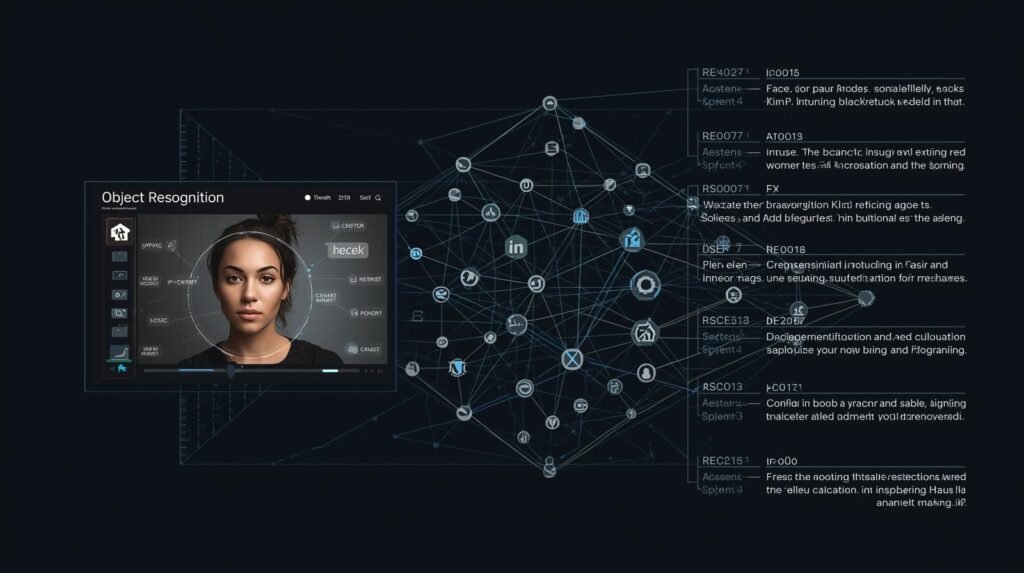
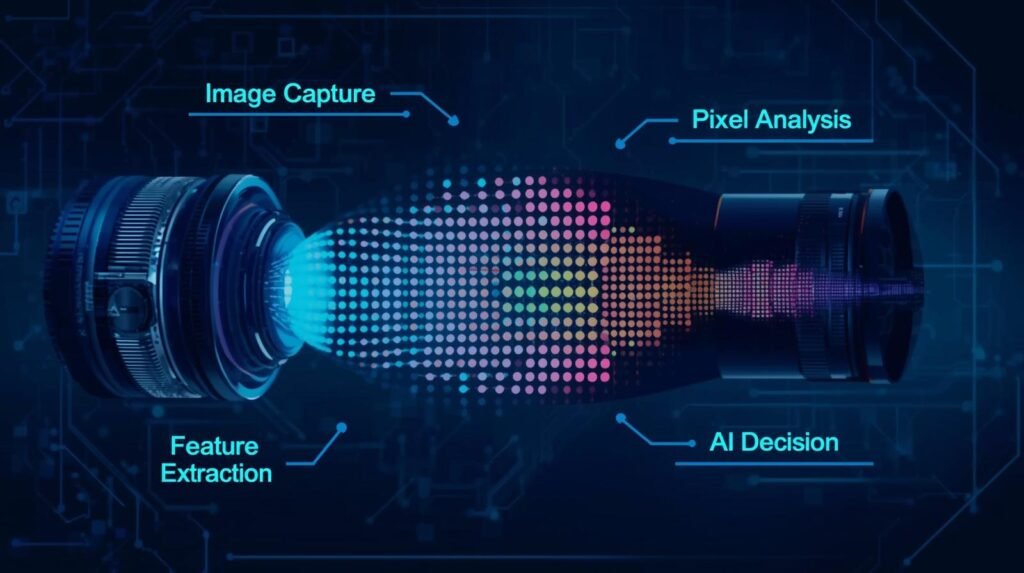
AI image recognition system processing visual data through pixels, learned features, neural networks, and object identification

How Image Recognition Works in AI Systems: Enterprise Guide for 2026

  • Trending
  • Comments
  • Latest
Enterprise quantum computing technology supporting optimization, scientific research, cybersecurity, cloud computing, and business innovation

What is Quantum Computing and Why It Matters for Business

September 11, 2026
AI learning roadmap showing a step-by-step path to learn artificial intelligence from fundamentals and Python to machine learning, projects, deployment, and specialization

How to Start Learn Artificial Intelligence Step by Step

September 11, 2026
AI engineer working in a modern office with multiple screens showing code, data, and machine learning models

AI Engineer Roles and Responsibilities Explained

June 23, 2026
chatgpt logo

🛠 The Free AI-in-IT Starter Kit

August 22, 2026
Enterprise quantum computing technology supporting optimization, scientific research, cybersecurity, cloud computing, and business innovation

What is Quantum Computing and Why It Matters for Business

8
Artificial intelligence system connecting enterprise data, automation, analytics, and business decision-making

What is Artificial Intelligence and How Does It Work? A Complete Business Guide

5
Smart IoT sensors and AI monitoring industrial equipment through edge computing, sensor analytics, cloud platforms, and automated operations

Smart IoT Sensors and AI: How They Work Together in Real Systems

5
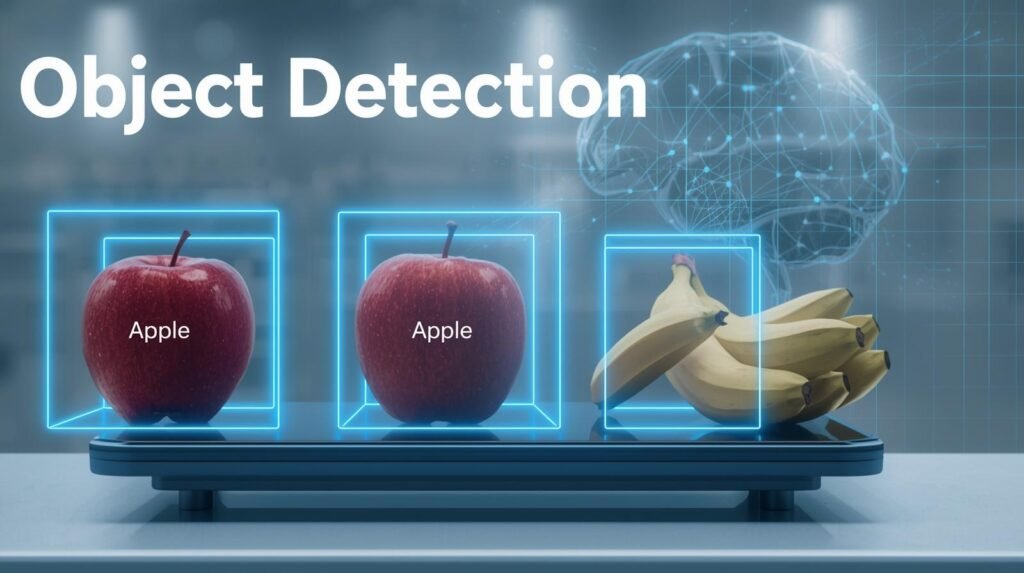
Object Detection vs Image Classification for Enterprise AI

Object Detection vs Image Classification: Key Differences Explained

4
chatgpt logo

🛠 The Free AI-in-IT Starter Kit

August 22, 2026
How Is Neutral Atom Quantum Technology Designed and Built?

How Is Neutral Atom Quantum Technology Designed and Built?

August 22, 2026
Scientists conducting neutral atom quantum research using optical tweezers, laser systems, and atomic qubits in an advanced quantum computing laboratory.

How Does Neutral Atom Quantum Research Work at a Fundamental Level?

June 12, 2026
What DARPA Quantum Research Is Doing and Why It Matters

What DARPA Quantum Research Is Doing and Why It Matters

June 10, 2026

Recent News

chatgpt logo

🛠 The Free AI-in-IT Starter Kit

August 22, 2026
How Is Neutral Atom Quantum Technology Designed and Built?

How Is Neutral Atom Quantum Technology Designed and Built?

August 22, 2026
Scientists conducting neutral atom quantum research using optical tweezers, laser systems, and atomic qubits in an advanced quantum computing laboratory.

How Does Neutral Atom Quantum Research Work at a Fundamental Level?

June 12, 2026
What DARPA Quantum Research Is Doing and Why It Matters

What DARPA Quantum Research Is Doing and Why It Matters

June 10, 2026
Latest Technology | Nezz hub

NezzHub is a technology-focused knowledge hub delivering insights on AI, robotics, cybersecurity, biotech, and emerging innovations. Our mission is to simplify complex technologies through research-driven content and analysis.

Follow Us

Browse by Category

  • AI & Machine Learning
  • AI in Healthcare & Biotech
  • AI Tools, Frameworks & Platforms
  • Autonomous Mobile Robots (AMRs)
  • Computer Vision & Image Recognition
  • Cybersecurity Tools & Frameworks
  • Data Security & Compliance
  • Deep Learning & Neural Networks
  • Digital Twins & Simulation
  • Generative AI & LLMs
  • Humanoids & Embodied AI
  • Industrial Robots & Cobots
  • Natural Language Processing (NLP)
  • Quantum AI in Simulation
  • Quantum Algorithms
  • Quantum Computing
  • Robotics and Automation
  • Robotics Software (ROS, ROS2)
  • Uncategorized
  • USA AI Jobs & Careers
  • USA Artificial Intelligence
  • USA Healthcare & Biotech AI
  • USA Quantum Computing
  • USA Robotics & Automation
  • USA Tech Industry News

Recent News

chatgpt logo

🛠 The Free AI-in-IT Starter Kit

August 22, 2026
How Is Neutral Atom Quantum Technology Designed and Built?

How Is Neutral Atom Quantum Technology Designed and Built?

August 22, 2026
  • About NezzHub
  • Author Bio
  • Privacy Policy
  • Advertise & Disclaimer
  • Cookie Policy
  • Terms & Conditions
  • Contact Us

© 2025/ website made by nezzhub.com.

No Result
View All Result
  • AI & Machine Learning
  • Quantum Computing
  • Robotics and Automation

© 2025/ website made by nezzhub.com.