














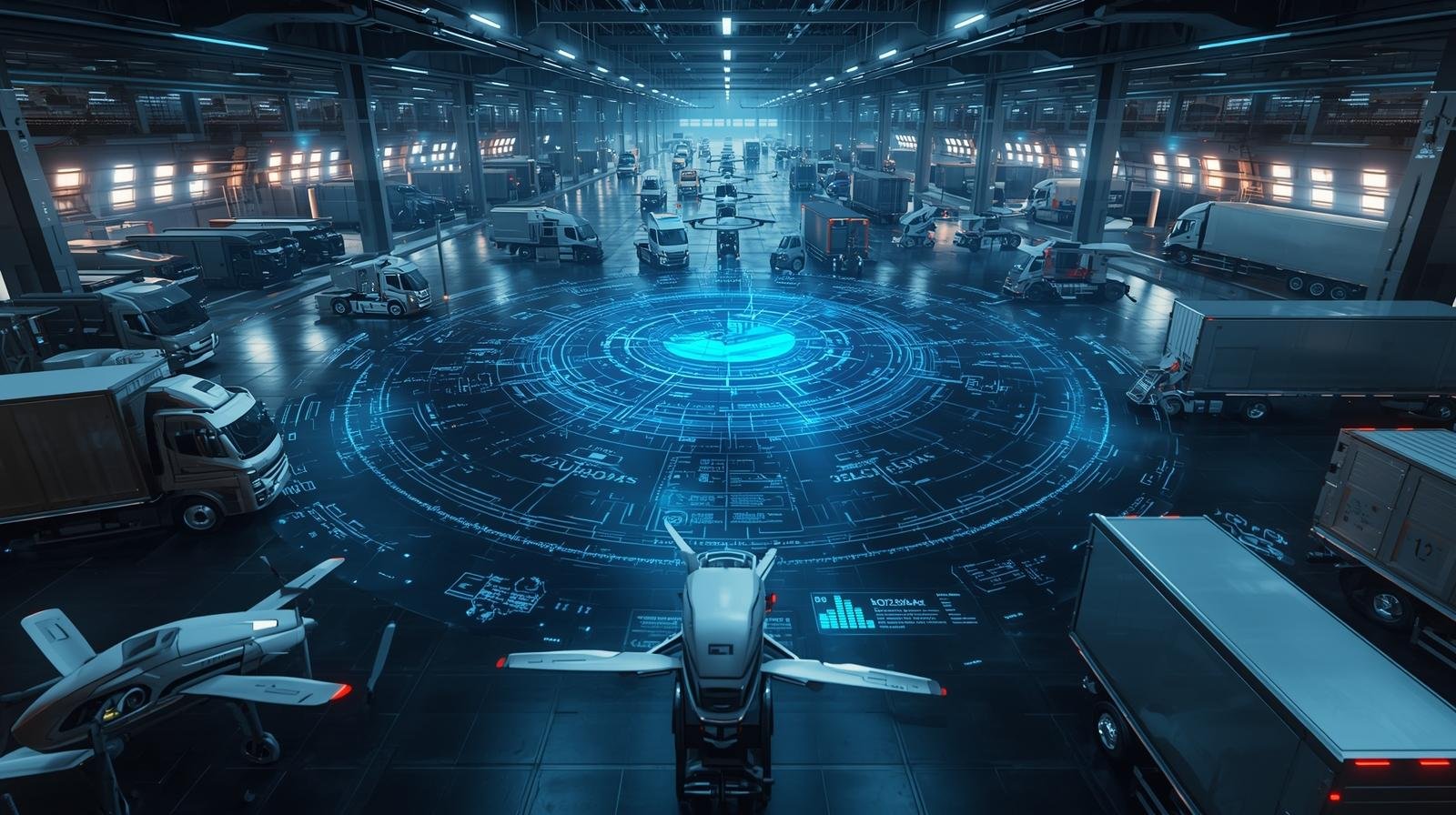

Artificial intelligence (AI) is changing how fleets are operated, providing improved efficiency and enabling innovative approaches in logistics and transportation.
Autonomous robotic fleets (ARFs) will be at the forefront of this technological shift due to their ability to operate with limited human oversight.
Artificial intelligence-assisted workflows (AAWs) can expand upon ARFs by using AI to find optimal routes for a vehicle, reduce fuel usage among an entire fleet, etc.
Artificial intelligence fleet management refers to the use of artificial intelligence to continuously monitor and manage a fleet of vehicles or robots in real time.
Smart fleet technology (SFT), which integrates AI, Internet of Things (IoT) sensors, and other technologies, enables vehicle health/vehicle performance monitoring throughout a fleet.
Automating your fleet with fleet automation software will improve your fleet’s efficiency. This includes a number of automated tasks, such as scheduling and assigning vehicles across your fleet.
AI Fleet Management includes features that automate routing, job/task assignment, predictive maintenance scheduling, and real-time safety decision-making to increase efficiency and reduce costs.
Real-time data is being evaluated using AI-driven logistics, enabling managers to make better decisions about how to utilize and manage their resources.
Predictive Maintenance, which uses AI-based technologies, provides proactive measures to minimize or prevent downtime associated with vehicle failures before they occur. It is also exciting to think about the future of fleet management in general; there will be many new opportunities to innovate in this and other areas as the capabilities of AI continue to evolve.
Global AI Fleet Management Statistics
| Metric | Value | Year | Source |
|---|---|---|---|
| Global AMR/AGV fleet management software market | $1.58 billion | 2025 | MarketsandMarkets |
| Expected Market Size | $5.23 billion | 2032 | MarketsandMarkets |
| Market growth rate (CAGR) | 18.7% | 2025-32 | MarketsandMarkets |
| Robot fleet management software market | $1.6 billion | 2024 | MarketIntelo |
| Expected market value | $9.8 billion | 2033 | MarketIntelo |
| Autonomous mobile robots market | $8.7 billion | 2028 | Fortune Business Insights |
Source: Fleet Management Software Market Share, Size, Trends and Industry Analysis 2032
#How AMRs Navigate Warehouses and Hospitals: A Smart Essential Guide
Understanding AI Robotic Fleet Management
AI robotic fleet management utilizes artificial intelligence (AI) to operate and optimize autonomous vehicle fleets in various sectors. Artificial Intelligence (AI) Robotic Fleet Management enables autonomous fleets to operate more efficiently and at reduced operating costs.
Optimizing the use of autonomous vehicles depends on how well their data is processed. Processing this large volume of data will improve autonomous vehicle function as well as autonomous vehicle fleet operation.
In addition, real-time data collection is necessary for effective autonomous fleet management. Autonomous vehicles can then adjust to changes in their environment in real time. After the autonomous vehicle collects data, an AI system will quickly analyze it and make decisions, enabling autonomous fleet operation that requires little or no operator interaction.
AI technology provides predictive insight. With AI identifying patterns, it can predict when you will have traffic congestion, when your vehicle will need service, etc. Predicting enables proactive action and prevents problems from arising, keeping fleets in top operating condition at all times.
Effective AI robotic fleet management requires:
- IoT (Internet of Things) Devices which provide constant vehicle information
- Advanced Sensors for Real-Time Vehicle Monitoring and Feedback
- Machine Learning Algorithms to Optimize Routes and Fuel Usage
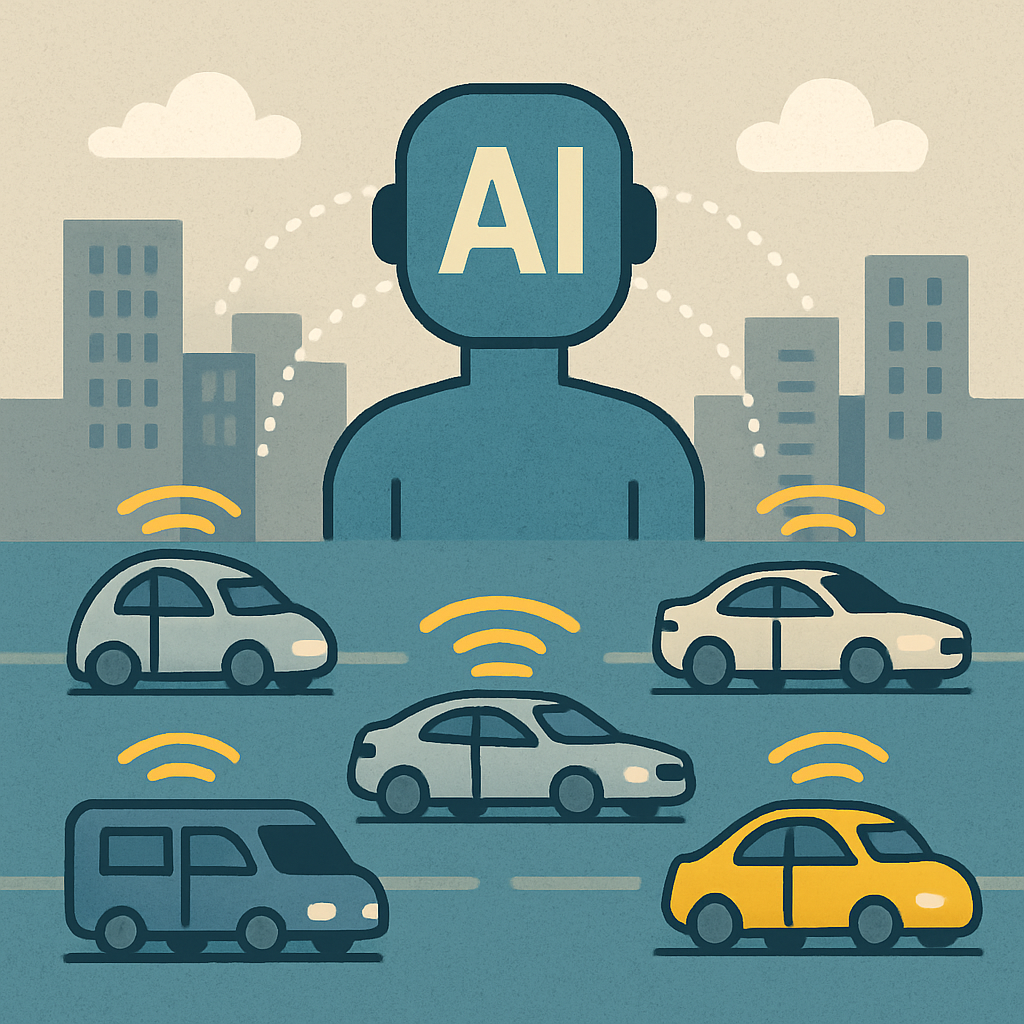
AI Fleet Management enables vehicles to communicate seamlessly with other components, and this communication is integrated across the entire fleet. This integration ensures all fleet-related functions are synchronized. As more fleets adopt AI, the overall efficiency of managing them will improve. Using AI for fleet management is no longer an emerging trend; it’s now a future state of fleet management.
The Evolution of Smart Fleet Technology
Smart fleet technologies have dramatically changed how we manage our fleets. They began as simple GPS tracking devices and have evolved into comprehensive AI-based systems that optimize fleet operations.
#Robot Fleet Management: A Smart Essential Guide in 5 Steps
As we continue to see advances in technology, many innovative solutions for fleets are becoming available to improve their overall performance. Some of the most recent technological advancements for fleets include AI, IoT (Internet of Things), and advanced analytical capabilities.
Smart Fleet Technology Has Improved Significantly Since Its Development
- Basic GPS systems used to track vehicle location and movement have been replaced by more sophisticated tracking systems that can now measure speed, time on the road, and other metrics.
- IoT Is Being Implemented Into Smart Fleets To Provide Real-Time Diagnostic Information About Vehicles.
- Artificial Intelligence (AI) is being used by smart fleets to enable predictive vehicle maintenance and optimize routes.
With the continued development of smart fleet technologies, the advantages of utilizing smart fleets have become apparent. Smart fleets have resulted in increased operational efficiency, reduced vehicle downtime, and lower fuel consumption. Additionally, smart fleets provide fleet managers with real-time data from all locations, enabling informed decision-making.
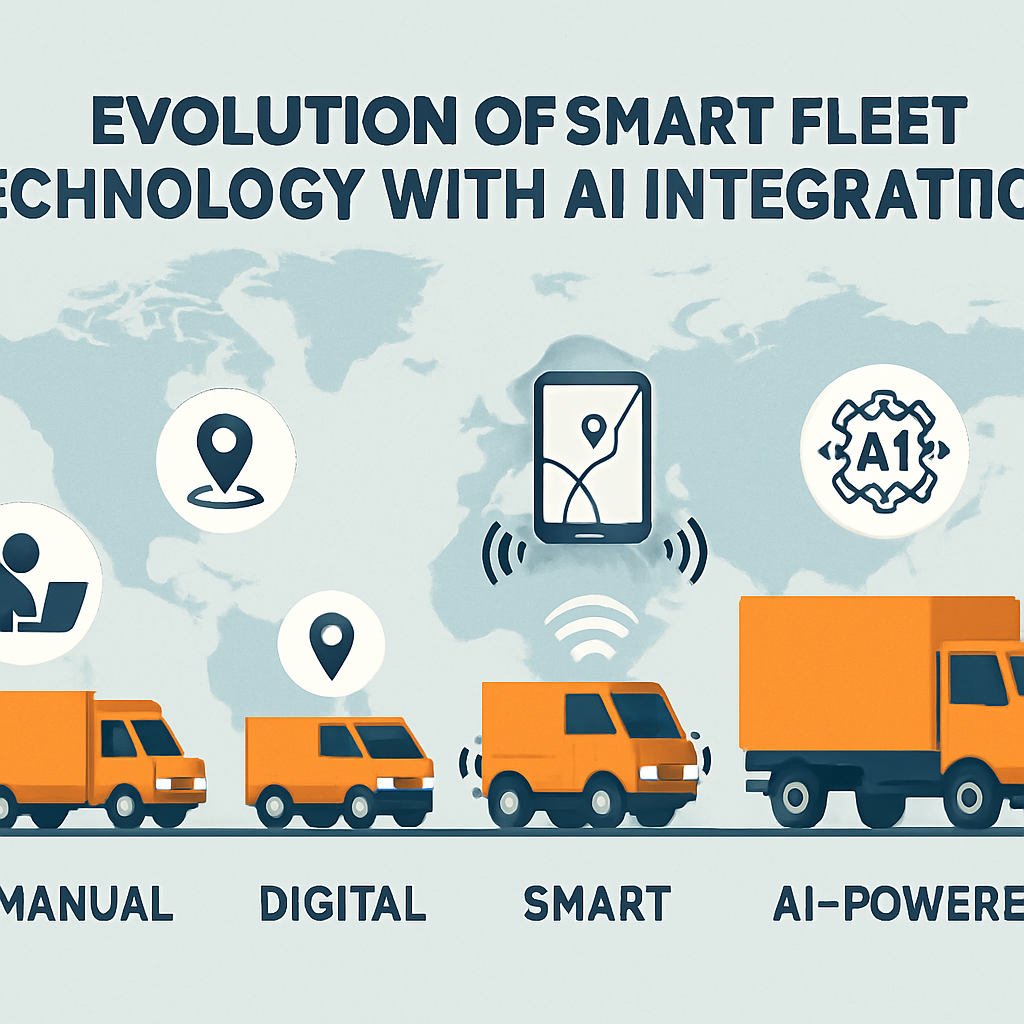
Many of today’s fleets have implemented AI into their daily fleet operations. Smart fleet technology will continue to provide the fleet manager with new methods to improve performance. Smart fleet technology continues to evolve, providing additional ways for a fleet manager to operate more efficiently and reduce costs.
AI Fleet Management Applications
| Industry | Robotic Fleet Application | Example Use |
|---|---|---|
| Warehousing | Autonomous mobile robots | Package picking and sorting |
| Manufacturing | Material handling robots | Assembly line logistics |
| Healthcare | Hospital delivery robots | Transporting medicines |
| Agriculture | Autonomous farm robots | Crop monitoring |
| Logistics | Delivery robots and drones | Last-mile delivery |
Source: Message from Vecna Robotics
Core Components of AI-Assisted Fleet Workflows
Key components to successful usage of the AI-assisted fleet workflows are as follows:
Data collection from vehicle sensors, collecting real-time data on all aspects of a vehicle (vehicle condition, route information, environmental conditions).
Data Analysis – Collecting data is one thing; analysis is another. AI can analyze collected data to provide insights into decision-making and operational strategy.
Communication System – Communication Systems allow for a fluid exchange of data between Fleet Vehicles and Management Systems. This includes real-time updates, automated alerts, etc.
Predictive analytics helps fleet managers plan ahead by allowing them to predict which parts of their vehicles will likely break down before they do; so they can avoid unplanned shutdowns. In addition, predictive analytics allows for better vehicle performance with fewer unplanned shutdowns.
The above four (4) components complement each other as follows:
- Sensors/Devices Collect Data from Vehicles and Other IoT Devices
- Collected Data is Analyzed through Advanced Data Analysis Methods to Identify Potential Problems
- Communication System Continuously Sends Alerts and Updates regarding any potential problems/issues/opportunities
- Prediction Models using Predictive Analytics help identify best practices for vehicle maintenance and optimization
The four components can function as a single, integrated process within a complete fleet management workflow. The four parts will work together as a system to provide more effective, less costly fleet management.

by Amsterdam City Archives (https://unsplash.com/@amsterdamcityarchives)
The combination of these elements is important for sustaining innovation and preparing fleets for future technological advancements. As the process continues to evolve with future advancements in artificial intelligence, there is potential for increased innovation and efficiency.
Example Autonomous Robot Fleet Systems
| Company | Technology | Use Case |
|---|---|---|
| Amazon Robotics | AI warehouse robots | Inventory transport |
| Fetch Robotics | Autonomous mobile robots | Logistics automation |
| Locus Robotics | Warehouse robots | Order fulfilment |
| Kuka Robotics | Industrial robot fleets | Manufacturing automation |
| Greek + Robotcs | Smart warehouse robots | Goods-to-person systems |
Amazon has deployed over one million robots across its warehouses, using AI systems to optimize navigation and coordination between robots.
Source: Subscribe to The Australian | Newspaper home delivery, website, iPad, iPhone & Android apps
AI Fleet Management: Key Benefits and Value Propositions
AI fleet management has the potential to be a game-changer in logistics operations and beyond. It offers more than just automation; it gives you better choices and, as such, will become the standard of operations for all logistics companies today.
One major benefit of using AI is route optimization, which lowers fuel costs and reduces operating expenses over time, saving money.
The second benefit of using AI in your fleet management is improved safety. AI systems offer the technology to assist your driver and prevent collisions, ultimately reducing the number of accidents occurring and improving overall fleet safety.
#What Is SLAM? Smart Essential Guide to How Robots Know Their Location
Real-time vehicle tracking is another benefit of AI. The continuous monitoring of all vehicles by AI enables immediate responses when a problem arises, ensuring reliability.
Predictive Maintenance is an additional way to increase the longevity of your vehicles. AI provides predictive capabilities for which mechanical issues are likely to occur in your fleet before they become severe; this results in less downtime and lower repair costs, both of which improve overall operating efficiency.
The areas that benefit from an AI fleet management system are as follows:
- Cost savings through optimized routing options.
- Safety improvements through the use of driver-assist technologies that help prevent accidents.
- Real-time monitoring of your fleet will enable faster emergency response times when issues arise.
- Use predictive maintenance to keep your equipment up and running, minimizing downtime.
When combined, these three areas create a new way for companies to operate and run their fleets. The companies can see improvements in productivity, safety, and sustainability. Companies investing in AI Fleet Management are a great choice.

by Diko OnTop (https://unsplash.com/@diko_ontop)
The use of AI to operate a fleet can give an organization an edge over its competitors; It shows that the organization is committed to being efficient, innovative, and sustainable. Therefore, AI-based logistics will be the standard of operations.
Autonomous Warehouse Robotics Adoption
| Metric | Value | Source |
|---|---|---|
| Warehouses using AMR robots | 19% | Coherent Market Insights |
| Warehouses using AGV robots | 11% | Coherent Market Insights |
| AI warehouse robotics market | $12.45 billion | 2024 |
| Expected market size | $100 billion | 2034 |
Source: Warehouse Robotics Market Size & Opportunities, 2025-2032
AI Logistics Management: Transforming Supply Chains
AI logistics management is creating new ways for organizations to run their supply chains. The technology can improve an organization’s operational performance and optimize many of its business processes.
One of the largest areas in which AI will affect logistics is by enhancing demand forecast accuracy. Enhanced forecasting capabilities enable an organization to better manage its inventory levels, avoiding overstocking or understocking. An organization can utilize resources at an optimal level with accurate forecasting.
Another major area in which AI is enhancing logistics is by enabling the rapid delivery of products to customers. Organizations can rapidly deliver products to customers by using automated route planning and scheduling systems. Rapid delivery to customers leads to customer satisfaction for quick, reliable service.
The last major area in which AI is enhancing logistics is by increasing transparency across all stages of the supply chain. AI enables organizations to view all data points in real time at each stage of the supply chain. Through increased transparency, organizations can quickly identify and correct supply chain bottlenecks or inefficiencies.
Artificial Intelligence (AI)- driven changes in logistics management are transforming how logistics is managed. Some of these transformations include:
• • Use of AI for improved forecasting of future demands and better inventory management.
• Use of AI to make optimal delivery scheduling to ensure that deliveries occur as scheduled.
• Use of AI to provide greater transparency and efficiency in supply chain operations.
These improvements reduce logistics complexity, and they convert from a traditional “reactive” approach to managing logistics to an “active”, proactive AI-based logistics management system which enhances the overall resiliency of the supply chain.
by Arno Senoner (https://unsplash.com/@arnosenoner)
Using AI to enhance logistics management and encourage greater innovation in logistics. Using AI for logistics management creates an adaptable and resilient supply network for companies. Companies using AI to manage their logistics can meet changing customer needs.
Key Features of AI Fleet Management Systems
| Feature | Description | Benefit |
|---|---|---|
| Task Allocation | Assigns tasks to robots automatically | Improves efficiency |
| Fleet Monitoring | Tracks robot locaton and performance | Real-time control |
| Path Optimization | Calculates best routes | Reduces delays |
| Collision Avoidance | Prevents robot accidents | Safe operations |
| Predictive Maintenance | Detects hardware issues early | Reduces downtime |
Fleet Automation Tools: Streamlining Operations
Automating fleet management has changed the way businesses operate by enabling fleet automation tools to perform repetitive tasks for employees, allowing them to focus on other tasks. Greater efficiency and accuracy in daily operations will be achieved through automated fleet management.
The most significant benefits will be in scheduling and dispatching. The use of automation will ensure the most efficient use of vehicles to complete required tasks. More frequent vehicle use will also lead to less downtime due to shorter wait times.
Preventive maintenance is another very valuable benefit. An automated system can notify you when your vehicle requires maintenance, helping minimize breakdowns and extend its overall lifespan.
Fleet Managers Will Have The Opportunity To Benefit From Data Analysis Using Fleet Automation Tools. Fleet automation tools collect data from a variety of sensors and provide fleet managers with insights into how to optimize their operations.
Some of the most important advantages of fleet automation tools are:
- Scheduling fleets and automatically sending them out on jobs
- Sending alerts for preventive maintenance
- Providing fleet managers with real-time data to aid in making decisions

by Leo_Visions (https://unsplash.com/@leo_visions_)
Automation enables fleets to lower costs and enhance performance and productivity by reducing operating time and improving vehicle operation. Rapid technological changes have made fleet automation software a necessity for all modern fleets.
Real-World Example: Amazon Warehouse Robot Fleet
| Feature | Example |
|---|---|
| Robots used | Mobile warehouses robots |
| Tasks performed | Transporting shelves, picking items |
| AI system | Centralized fleet management software |
| Efficiency improvement | 10% operational improvement |
| Fleet size | Over 1 million robots |
Amazon uses AI-based coordination models to optimize robot movement across large warehouses, increasing productivity and reducing energy consumption.
Real-Time Data, Predictive Analytics, and Decision-Making
The speed at which many businesses function today requires them to have access to timely information. Real-time data provides real-time views of their fleet’s operations, enabling them to make adjustments as needed and to direct their company strategically.
Real-time data is also used in predictive analytics to identify potential issues. Predictive analysis combines historical trends and current (real-time) data to provide companies with insight into what may be coming. Companies can eliminate or significantly minimize unforeseen interruptions and increase efficiency by utilizing this insight.
#Hybrid Cloud Edge Robotics – Smart Essential Guide
When companies rely on data to make business decisions, they tend to make smarter decisions than when they don’t. By using data, they can get a better understanding of where they currently stand and therefore will have the best opportunity to make well-informed decisions. For every company, it is critical to adapt to an ever-changing environment.
Real-time data combined with predictive modeling (predictive analytics) has the potential to benefit fleets in many ways, including:
• Maintenance scheduling at the best possible time
• Traffic pattern analysis
• Optimization of fleet resource usage
Artificial intelligence (AI)-based analytical models are improving how fleets are run and enabling better business decisions. As technology evolves, so too will AI-based analytical models’ ability to enhance strategic planning and optimize fleet operations.
Example AI Fleet Workflow
| Step | Process | AI Role |
|---|---|---|
| Task Assignment | The system assigns a delivery or transport task | AI scheduling |
| Route Planning | Robot calculates optimal path | AI pathfinding |
| Navigation | Robot moves autonomously | Sensor fusion |
| Fleet Coordination | Multiple robots avoid collisions | AI coordination |
| Monitoring | System tracks robot performance | Predictive analytics |
Case Studies: AI-Driven Logistics in Action
Many retail firms are at the front of the pack in developing and implementing AI technology to optimize logistics processes, offering practical examples of how AI will transform the way companies manage fleets.
Retail firm A used AI to analyze supply chain processes using predictive analytics, improving forecasting of customer needs. This process allowed them to effectively manage inventory and reduce waste by eliminating products/ inventory that were no longer needed.
Courier Service B utilizes AI in its routing optimization program. It uses real-time data to continuously adjust the delivery route and, as a direct result, Service B reports reductions in delivery time and operational costs.
Public Transportation System C has developed and implemented AI-based smart technologies to enhance the tracking and scheduling of buses and trains. Due to the development and implementation of these technologies, System C has experienced an increase in on-time arrivals and a decrease in waiting times.
These researchers identify several key learning areas for users.
- Demand Forecasting Accuracy has greatly increased with AI.
- Fuel Consumption has substantially decreased due to AI.
- Precision of Delivery and Customer Satisfaction have been improved through AI.

by GuerrillaBuzz (https://unsplash.com/@guerrillabuzz)

by Georgi Kalaydzhiev (https://unsplash.com/@jorok)
The use of AI to support logistics is also evident in the numerous examples discussed above. The research has clearly shown AI’s ability to reduce costs, increase efficiency, and improve Service Quality. As AI evolves, the growth of AI in Logistics is expected to continue.
Growth of Autonomous Robot Fleet Management Market
| Year | Market Size |
|---|---|
| 2024 | $1.6 Billion |
| 2026 | $2.5 Billion |
| 2028 | $4.2 Billion |
| 2030 | $6.8 Billion |
| 2033 | $9.8 Billion |
Source: MarketIntelo
Overcoming Challenges in Autonomous Robotic Fleet Management
Some challenges to the same benefits provided by AI-based logistics solutions can be identified to aid in the successful implementation of your AI logistics solution.
One of the biggest issues with Fleet Management Systems is maintaining the confidentiality of the data they collect. There is so much data being collected by these systems in today’s digital world that it is imperative that this data remain confidential and protected from cyberattacks.
Additionally, one of the biggest challenges to deploying autonomous robotic fleets is integrating them into existing infrastructure; many fleets use legacy systems that are either compatible with or incompatible with new technologies.
Lastly, the regulatory environment creates barriers to deploying autonomous robotic fleets because varying laws, regulations, and safety standards across regions affect deployment.
The largest obstacles to be cleared include:
- Data Protection (Cyber Security)
- Legacy System Integration with New Technologies.
- Legal Framework Issues.
However, there are solutions available. Solutions can be implemented for protecting data through cybersecurity measures. A smoother transition in legacy system integration to new technologies can occur by a gradual introduction of both systems. Collaboration with regulatory bodies and the development of clear compliance guidelines will help alleviate some of the burdens of the law. Once the obstacles have been removed, the potential of AI in fleet management will be realized.
The Future of AI Robotic Fleet Management
The future of robotics with AI is full of possibilities — Robotic Fleet Management can be an engine for continued innovation and increased efficiency in a fleet’s management process.
The speed at which advancements are being made with respect to Artificial Intelligence (AI), Machine Learning (ML), will continue to influence the future of AI Robotic Fleet Management. Therefore, the increased use of AI and ML will make fleets more autonomous and intelligent. As AI-driven Logistics continues to evolve, more sophisticated options are expected to become available beyond those currently used in fleet management. The predictive analytics and real-time data available from AI will enable fleet managers to make proactive decisions and revolutionize how they manage logistics.
by Jason Leung (https://unsplash.com/@ninjason)
Trends impacting the future of fleet management include:
These will be key factors in determining how well your organization will perform in the future of Fleet Management
- Predictive Maintenance: Using data from various sources to forecast when a machine or vehicle is likely to stop working due to an abnormality in its performance.
- Sensor technology will enable vehicles to send real-time operational data to the fleet manager, including condition and status.
- Collaboration between man and machine will become a vital component in increasing efficiency and productivity while enhancing an organization’s overall effectiveness.
Smarter Fleets: These are fleets that use advanced technologies to reduce operating expenses, increase safety, and improve environmental sustainability.
To be successful, fleet organizations will need to continually learn and innovate as new technologies emerge. Organizations that use AI in their fleet operations will realize its advantages.
Conclusion: Embracing AI for Smarter Fleets
Using AI in fleet management is now imperative for long-term success and continuous growth. Organizations that use AI to manage their logistics operations can optimize efficiency and improve productivity.
Companies that leverage AI to support workflows will be able to make intelligent, resource-based decisions, leading to increased operational efficiency and a competitive advantage. In addition to remaining at the forefront of fleet technology advancements, organizations that utilize AI within their fleets will also remain relevant to the advancement of AI-driven technologies.

Garikapati Bullivenkaiah is a seasoned entrepreneur with a rich multidisciplinary academic foundation—including LL.B., LL.M., M.A., and M.B.A. degrees—that uniquely blend legal insight, managerial acumen, and sociocultural understanding. Driven by vision and integrity, he leads his own enterprise with a strategic mindset informed by rigorous legal training and advanced business education. His strong analytical skills, honed through legal and management disciplines, empower him to navigate complex challenges, mitigate risks, and foster growth in diverse sectors. Committed to delivering value, Garikapati’s entrepreneurial journey is characterized by innovative approaches, ethical leadership, and the ability to convert cross-domain knowledge into practical, client-focused solutions.