


































Understanding Computer Vision
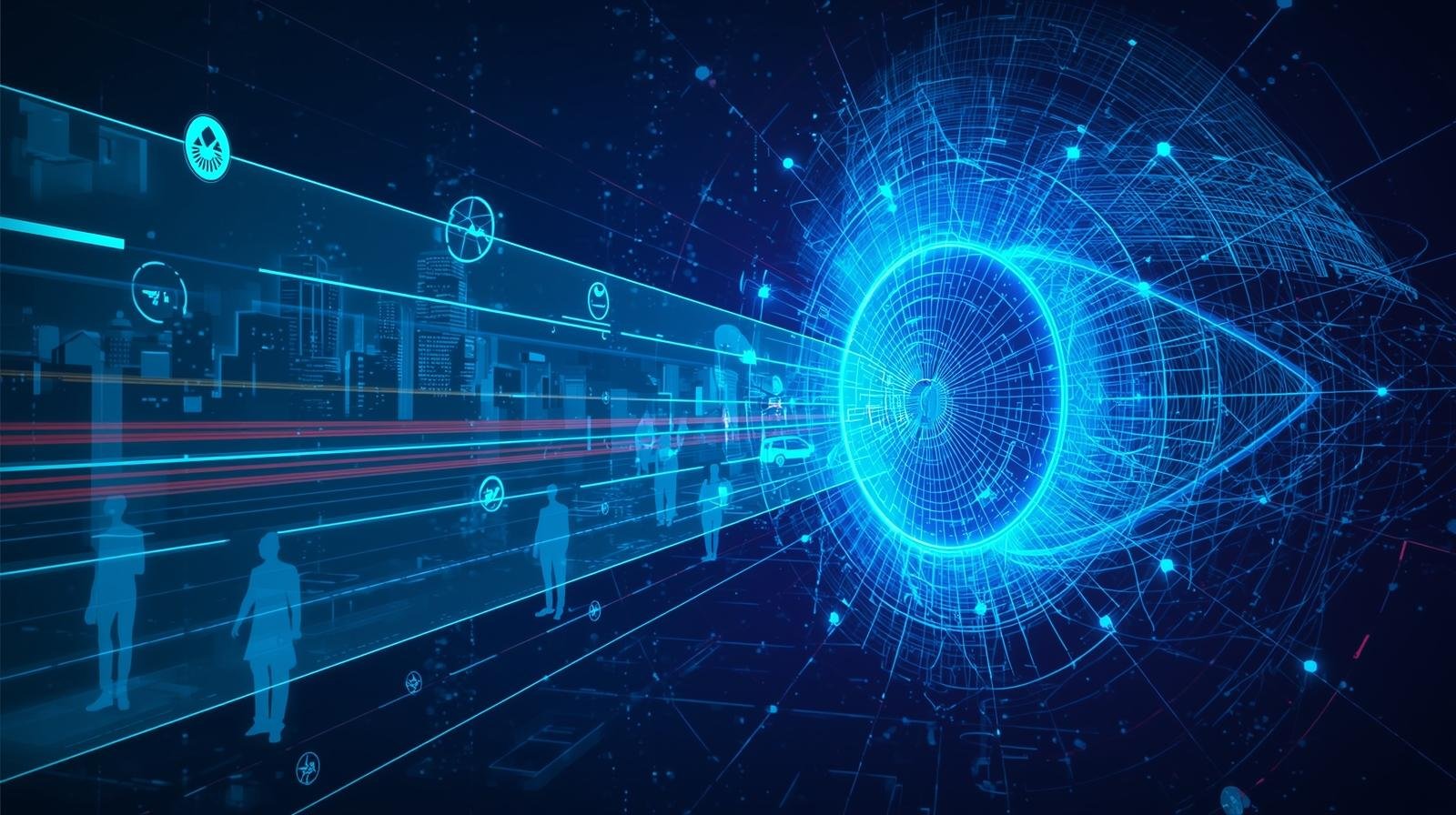
It is an area of Artificial Intelligence that is vital to machine vision processing, enabling machines to comprehend and interpret the vast amounts of visual information from our physical world. Just as we use our eyes and brains to recognize objects, movements, and scenes, machines can analyze images and video and make decisions about what they “see.”

This allows machines to visually identify faces, see objects, track movement, and comprehend complex visual environments. The application of CV is enabled by combining algorithms, Machine Learning Models, and large datasets to transform raw camera-captured data into actionable insights for businesses and others. As AI continues to gain acceptance, the ability of CV to perform tasks for businesses and organizations will expand, creating opportunities for automation, safety, and innovation in fields such as Healthcare, Automotive, Security, Manufacturing, Entertainment, etc.
The Basics of Computer Vision
Computer Vision uses algorithms and computational methods that mimic how humans see, enabling machines to recognize objects in video and still images. The first step in computer vision involves capturing video and still images via a variety of camera and/or sensor technologies. Following capture, the video or still image must be processed using mathematical/computational methods to define shape, color, texture, and relationships.
The main element of computer vision is the algorithm(s) used to identify and extract features from an image (e.g., edges, textures, object boundaries). Machine Learning is the primary tool in computer vision, enabling computers to learn from large databases of labeled images. As the computer learns to recognize and improve, its accuracy of recognition and adaptation will increase. Today, computer vision is used across multiple industries, including healthcare (medical image analysis), automotive (lane and obstacle detection), security (facial recognition/motion detection), and entertainment (augmented reality/visual effects).
Definition and Importance
It is very important to create a shared understanding of terms such as “advanced technology” (e.g., computer vision), as people define them differently. Defining terms similarly helps remove uncertainty around their meanings and provides a way for people to communicate with one another about computer vision-related topics. A clear definition of computer vision demonstrates how visual data can be used to make intelligent decisions.
Computer vision is critical in today’s world, as it plays a key role in the development of many emerging technologies that enhance user experience, improve safety, and increase productivity. With the rate at which we see an increase in visual data, there also needs to be a practical way to process its ever-increasing volume.
Everyday Applications in Technology
Visual intelligence, or computer vision, has been incorporated into an increasing number of people’s daily routines. For example, on smartphones, we can now use visual intelligence to lock/unlock our devices with facial recognition, automatically sort photos taken with the smartphone camera, and improve the overall functionality and capabilities of our smartphone cameras. Additionally, several navigation apps can generate maps using visual intelligence and traffic patterns. Many online platforms are also implementing computer vision systems so they can monitor the content they post, and aid in conducting searches based on images.
This has been utilized in retail through self-service checkout systems, and retailers have implemented real-time inventory tracking systems. Computer vision has been implemented in banking, where banks use systems to verify the identities of individuals making online transactions. In education and entertainment, computer vision systems are used to provide students with an exciting, interactive experience, enhance learning, and engage them with immersive visual elements. These examples highlight how visual intelligence makes many of these tasks much easier and more convenient to complete.
The Role of AI in Vision
The emergence of Artificial Intelligence (AI) has enabled computers to understand and analyze visual data much more effectively than before. In the past, preprogrammed algorithms were used to analyze visual data. With AI, however, computers can adapt as they learn and respond accordingly.
Artificial intelligence is being employed in hospitals to assist physicians in interpreting radiographic images (e.g., X-rays) and Magnetic Resonance Imaging (MRI) scans. It is also being applied to autonomous vehicles to enable them to make steering and braking decisions based on real-time visual input. AI is also being used to identify individuals using facial recognition and to detect unusual or suspicious activity on video surveillance systems across a variety of business sectors. This has caused video cameras, which historically were static and unresponsive, to become dynamic participants in the decision-making process.
Overview of AI Image Recognition
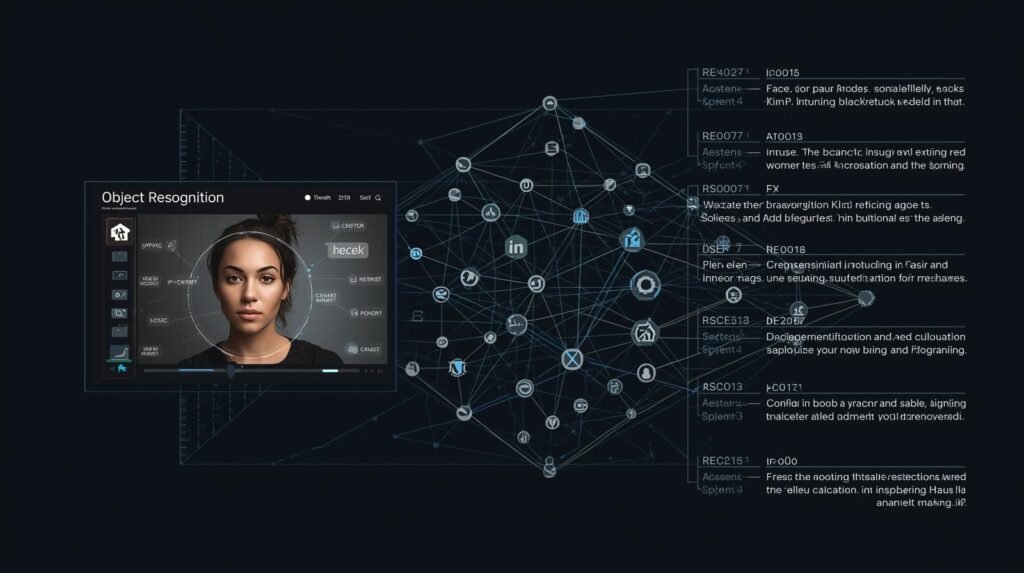
AI image recognition allows the identification of objects, people, scenes, and actions in images or videos using machine learning algorithms trained on large datasets that include image and video labels. The algorithms can then use this training to identify high-accuracy visual patterns.
#How Image Recognition Works: From Pixels to Intelligent AI Decisions
After the model has been trained, it can take in a new image and make a prediction about the content it contains. There are numerous applications of AI image recognition, including but not limited to: medical diagnosis (healthcare), product search (retail), surveillance (security), and tagging individuals in photos and videos (social media). As accuracy increases, AI image recognition will remain a key foundational technology in modern digital systems.
How AI Changes the Way Machines Perceive Visuals
Deep learning enables AI systems to recognize patterns in images and understand contextual elements through machine-learning-based object recognition across a variety of environments. Additionally, the system can continuously improve its performance as it learns from data it was not originally trained on.
One example of an ai system that has been successful with deep learning is an image-recognition program that has been trained using thousands of images. The program can be used to identify differences between very similar objects, such as different types of cars or trees, and adapt to variations in lighting or perspective.
These abilities have enabled advanced applications of visual perception, including autonomous navigation, emotion recognition, and real-time video analysis.
Key Tasks Performed by Computer Vision Systems
Source: Stanford Vision Lab – Computer Vision Overview
https://vision.stanford.edu
The Science Behind Computer Vision
Computer Vision utilizes Artificial Intelligence (A.I.), Machine Learning, and Image Processing to Analyze Visual Data Captured by A Camera or Sensor. The computer can utilize algorithms to extract features from visual data captured by a camera or sensor and recognize patterns.
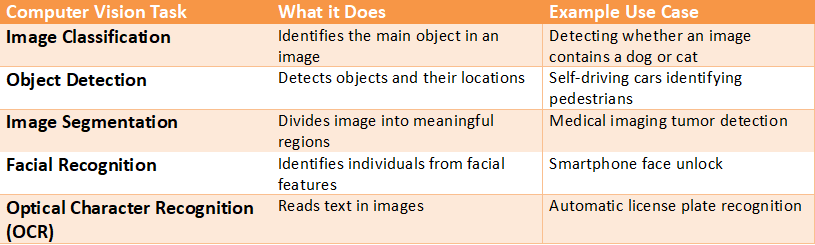
Computer Vision’s core concepts include: Image Classification, Object Detection, and Image Segmentation. Image Classification is when an image is assigned a label; Object Detection is when the location(s) of Objects within an Image are identified; and Segmentation is when a specific region of an image containing a certain feature is identified. These core concepts enable computer vision systems to understand images.
How Machines Process Images
When a camera converts light to a digital signal, image processing begins. A computer uses an algorithm to break down the digital signal into pixels (each a small unit that makes up a digital image).
A machine learning model can then analyze the pixel data to detect features such as lines, colors, shapes, and textures. A deep learning model uses a neural network to process large amounts of data from a variety of sources and recognize many different things.
The image has now undergone enough processing to be used for a variety of applications, including photo organization, medical diagnosis, and driverless cars.
Introduction to Visual Data Processing
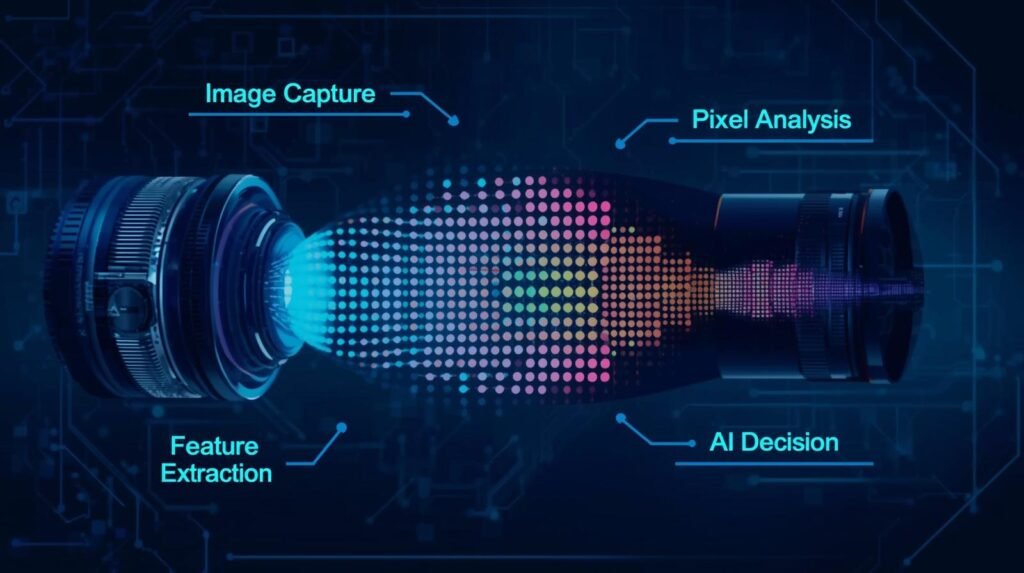
To take the raw visual data provided by cameras and use it to make decisions, various processes, referred to as algorithms, must be applied to transform the raw, unstructured data into a structured format for decision-making.
Applications include image recognition, video surveillance, medical imaging, virtual reality, and augmented reality. This area of research incorporates ideas from both computer science/engineering and cognitive science to create artificial representations and/or improve human perception of the environment using vision.
Breakdown of an Image into Pixels
Each “unit” (pixel) in digital images is assigned a specific color, and most commonly, those color values are represented using the colors red, green, and blue.
The level of detail in an image depends on how many pixels it contains. As long as you have a larger number of pixels in your image, the overall resolution of that image will be greater and will appear clearer. Conversely, if you have fewer pixels in an image, the overall resolution will be lower, and therefore the image will be less clear.
Knowing what a pixel is is very helpful when you want to use images in a variety of applications, including image analysis, photo editing, and computer vision.
Machine Learning in Vision
The idea behind Experience-Based Learning is that Computer Vision Systems will continue to improve at their tasks over time through Machine Learning. This is achieved through using an Algorithm to label images; the Algorithm will find Patterns in the Images and use them to develop a Model or Rule for the Algorithm to follow in its processing of New Images (Data)
This same concept applies to Healthcare, Automotive Systems, and Retail. For instance, Machine Learning could be applied to Medical Scan Images to determine if there are any Health Issues with a Patient. Additionally, Machine Learning may be used in Automotive Systems to Power Advanced Driver Assistance Technologies (ADAT), such as Lane Departure Warning Systems. Self-Checkout and Automated Inventory Management Systems may also utilize Machine Learning in Retail.
While Machine Learning is incredibly powerful, all Technologies have limitations based on the Quality of Data they receive in order to provide Meaningful Results. As well, care should be taken when Training Algorithms to avoid introducing Biases in the Algorithm, which could lead to Unreliable Results.
Traditional Computer Vision vs Deep Learning Vision Models
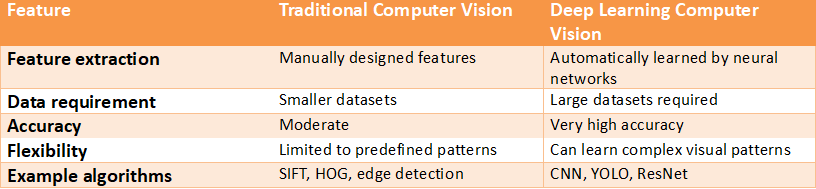
Example: Modern deep learning models can achieve over 90% accuracy on benchmark image recognition datasets.
Source: ImageNet Benchmark Study
https://www.image-net.org
The Learning Process for Computers
Beginning with the collection of raw data, learning occurs as the data is cleansed and labeled, then split into training and testing sets. Algorithms improve over time by being repeatedly tested on the training data set and then on a completely different segment of unseen data to assess their performance.
Finally, after multiple iterations of improvement using an extremely large amount of new data, a model is deployed to a real-world application and will continue to improve as it encounters new data.
Importance of Labeled Data and Algorithms
The foundation of machine learning is labeled data used to train a model to associate images with their labels.
The type of processing the model performs on labeled data (its algorithm) will determine the types of predictions it makes.
When high-quality data and appropriate algorithms are combined, a model can perform at a high level across many aspects of image recognition, object detection, and prediction in different business applications.
Object Detection Technology
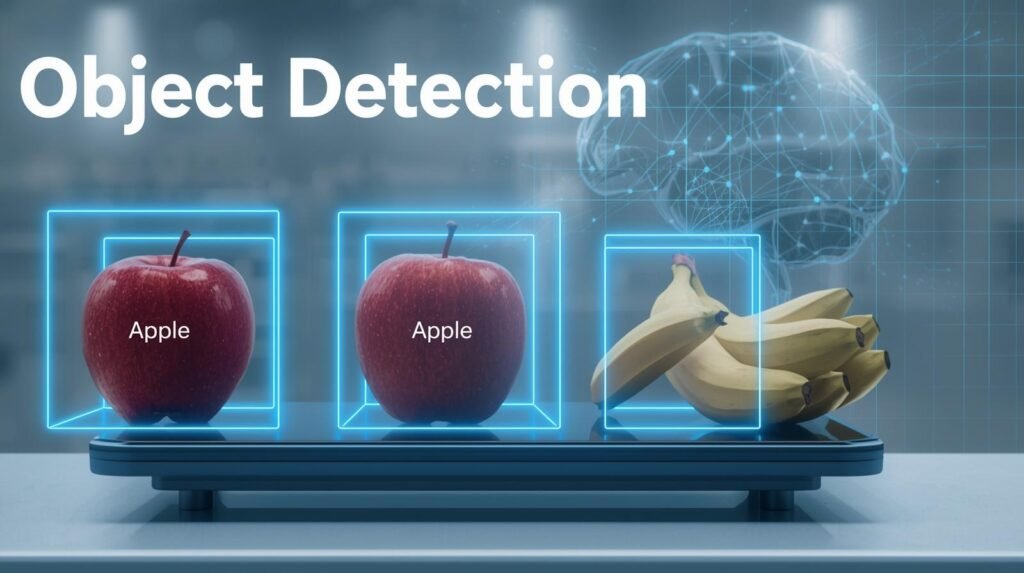
The use of image processing, machine learning, and deep learning are all examples of the technologies that will be utilized to obtain these capabilities. Image processing improves both image clarity and feature extraction. Machine learning allows for the detection of various patterns.
#Object Detection vs Image Classification – The Ultimate Easy Guide
Deep learning uses neural networks to detect complex patterns in visual data.
These technologies offer a wide range of applications. Facial recognition, autonomous vehicles, robots, medical diagnostics, and augmented reality are just a few of the many potential applications.
Difference Between Object Detection and Image Classification
Object Detection can identify one or more subjects and the position of each subject in the image; Image Classification identifies one (1) subject in a single image and designates that subject as the main subject.
“Classification” asks, “What is in the picture?” The detection question is, “Are there any objects in this picture? If so, where?”
Image Classification and Object Detection are both important parts of most computer vision applications.
Use Cases and Examples in Daily Life
Examples of how we use it every day are as follows: We can use facial recognition on your smartphone, use traffic cameras to monitor traffic (use detection) use a fitness tracking device that uses classification, and bank automation to classify/detect money transactions. These are just some examples of how computer vision can increase efficiency, safety, and convenience for each and every one of us.
Popular Deep Learning Algorithms Used in Computer Vision
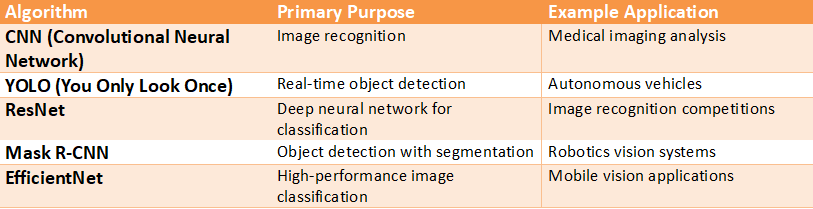
Source: MIT Deep Learning for Vision Research
https://www.mit.edu
Deep Learning Algorithms

Deep learning uses a variety of multi-layered artificial neural networks for complex data analysis. Because they can learn to analyze data on their own, deep learning-based algorithms are excellent choices for applications that need to recognize images or voices, perform NLP, and build self-driving cars and other autonomous systems.
The continued increases in both data and computing have enabled AI researchers and developers to make steady strides in deep learning-based AI.
Overview of Deep Learning Algorithms and Their Significance
Deep Learning Models Mimic Human Brain Structure Using Neural Networks to Process Large Amounts of Data to Discover Hidden Relationships within the Data
This represents a very important aspect of Artificial Intelligence (AI) due to its high level of accuracy across many vertical markets, including Healthcare, Financial Services, Transportation, and Digital Service Providers. Therefore, this represents one of the foundational elements of current AI Systems.
How Deep Learning Enhances Computer Vision Capabilities
Deep Learning can create its own feature detector; Deep Learning can solve very complex problems; Deep Learning can use knowledge from one domain (e.g., a self-driving car) to another (e.g., an autonomous warehouse).
Computer Vision has seen significant advancements through the application of Deep Learning to various industries. Some examples of these are as follows:
- Autonomous Vehicles
- Facial Recognition
- Medical Imaging (Diagnosis)
- Robotics
As these applications continue to expand, so will the need for Computer Vision to assist with each.
Applications of Computer Vision
Computer Vision has been successfully used in many sectors of business and industry. Additionally, computer vision is being applied to various types of tasks such as:
- Healthcare Diagnosing
- Retail Automation
- Monitoring Agriculture
- Surveillance Security
- Entertainment
The fact that computer vision can be utilized for numerous types of tasks and can grow (scale) makes computer vision a significant technology for automating and creating smart decision-making systems.
Real-World Use Cases
While practical applications have shown that computer vision can provide tangible benefits (faster medical diagnosis, improved transportation safety, better customer service, and more efficient resource use), the example above illustrates how it provides a tangible benefit to consumers.
Facial Recognition Technology
Facial Recognition Technology uses a variety of methods to identify or verify people based on their unique facial features. Examples include Security Systems, Smartphones, Social Media Platforms, and Attendance Tracking Systems.
However, as with all technology, there are both positives and negatives to using facial recognition. These negative aspects will require regulation and responsible use to address ethical and privacy concerns with facial recognition technology.
Self-Driving Cars and Their Visual Systems
Computer vision is employed in autonomous vehicles as an external sensor modality which can perceive the vehicle’s environment through multiple modalities, such as cameras, radar, and LiDAR; The AI model of the AV uses computer vision to interpret the images taken by its camera(s) and/or other sensors, identifying road lanes, traffic signs, pedestrians and any other object/ obstacle that are present and/or moving inside the line of sight of the AV.
The use of computer vision for continuous learning and improvement will provide safer, more efficient transportation methods.
Future of Computer Vision
Computer Vision will potentially be able to grow more intelligent over time; in that it will be able to analyze and process data in real-time, and ultimately integrate across a greater number of industries and applications (e.g., healthcare diagnostics, autonomous transportation, interactive technologies)
We are likely to see significant changes in how we interact with technology because Computer Vision is already being integrated into various devices and aspects of our day-to-day lives.
Real-World Applications of Computer Vision

Example: Computer vision is widely used in autonomous vehicles to detect road signs, pedestrians, and lane markings.
Source: NVIDIA Computer Vision Applications
https://developer.nvidia.com
Trends and Upcoming Advancements
Visual Intelligence’s Future – Developing New Technologies to Drive Responsible Use of Video Intelligence through Ethical Governance Systems, Edge-AI, Multimodal Machine Learning, Real-Time Video Analytics and Accountability, Privacy, Fairness, Consent, and Transparency.
Potential Ethical Concerns and Considerations
The Ethics Surrounding Visual Intelligence are Privacy, Fairness, Accountability, and Consent. Creating a Trust Environment requires Inclusion in Decision-Making Frameworks, Comprehensive and Enforceable Regulations, and Models for Video Intelligence.
Global Computer Vision Market Growth

Source: Grand View Research – Computer Vision Market
https://www.grandviewresearch.com/industry-analysis/computer-vision-market
Conclusion
Recap of Computer Vision’s Impact
Computer Vision has a significant impact on many different industries, as computer vision allows computers to “see” and therefore analyze images; it can be applied to many things, such as medical diagnosis, self-driving vehicles, and retail automation.
The Importance of Understanding This Evolving Technology
It will be important that we become aware of computer vision because of its increasing presence of visual data processing and intelligence within our lives. Becoming aware of computer vision will enable both people and organizations to continue using and developing new ways to use it, helping usbuild our futures.