



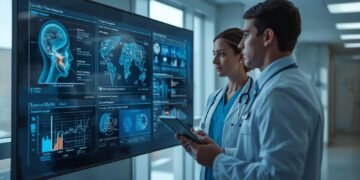



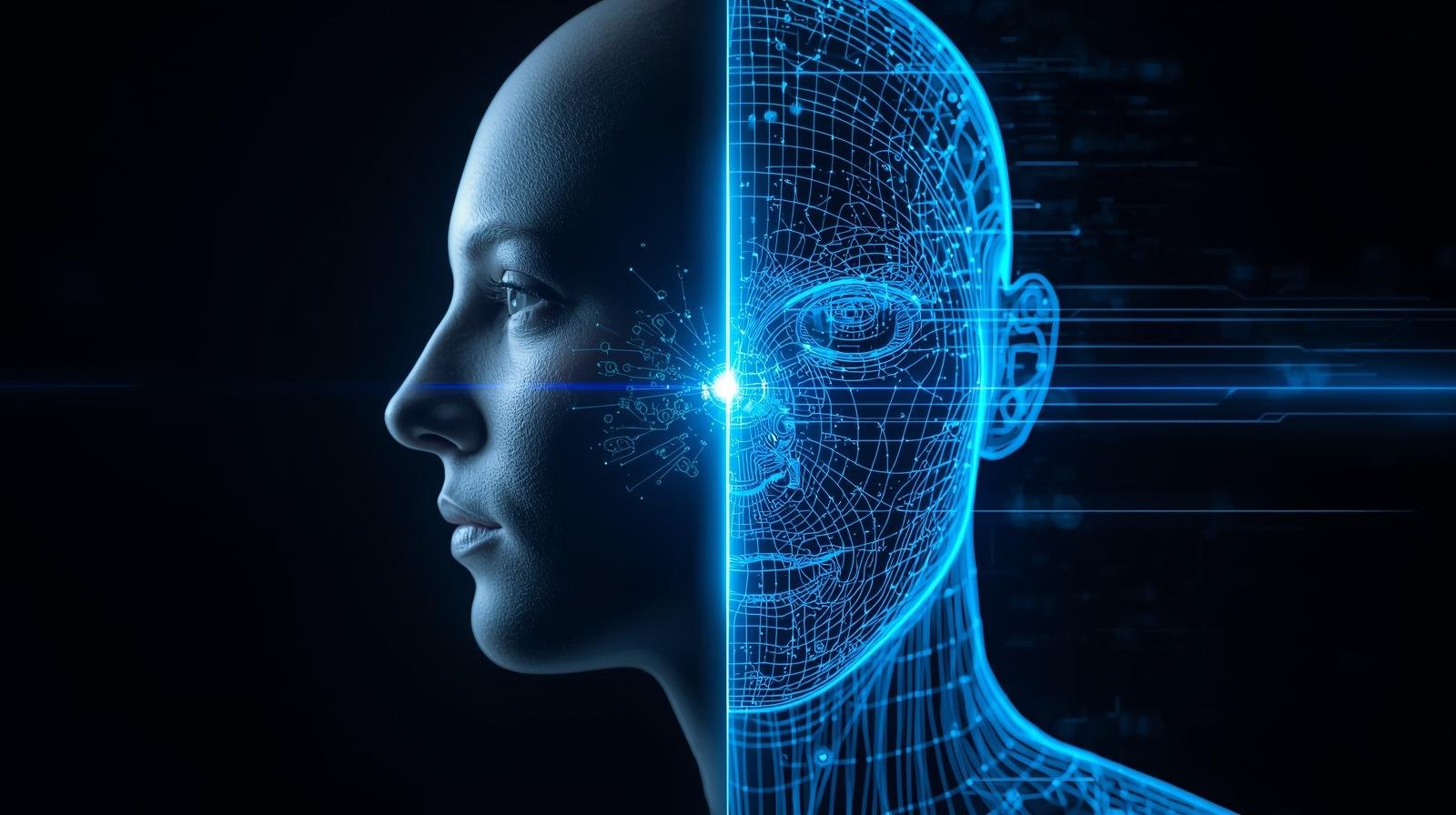
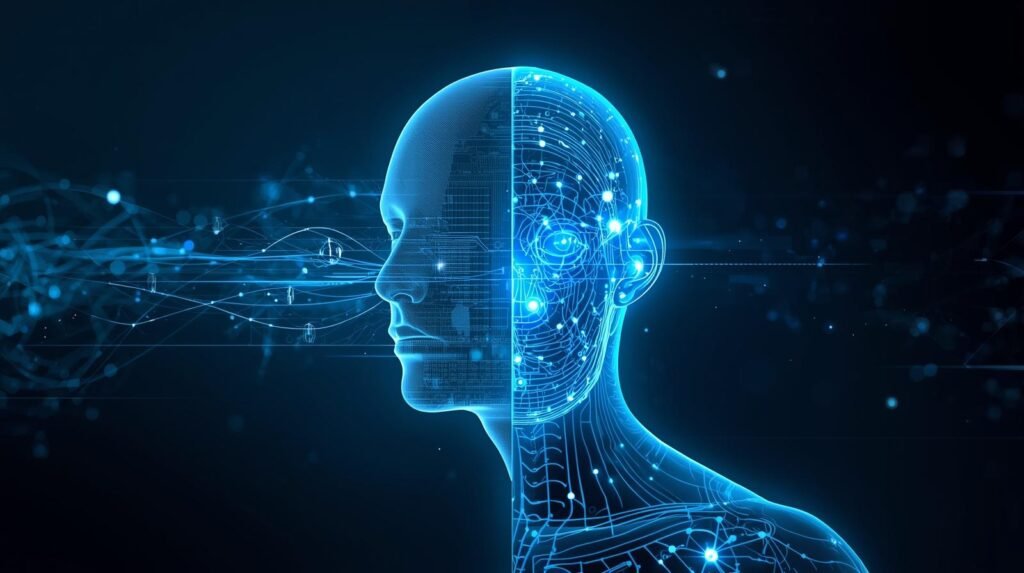
A digital twin (DT), as an example, can be a physical asset, a system, a process, or even a city, and is a virtual model that represents a real-world asset. Digital twins are continually updated with new information about their physical counterparts, enabling decision-making about those assets. Unlike traditional models, digital twins do not only represent the current state of a physical asset but also provide insight into the history of its operations. By continuously updating the model with sensor data, software logs, and operational records, digital twins allow users to gain insights into how things operate, why they operate in a certain manner, and what to expect when events occur.

#Digital Twin for Robots – Smart Essential Guide in 5 Steps
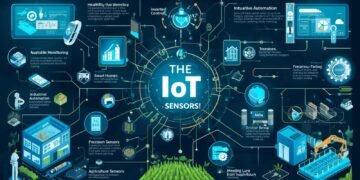
Ultimately, there are three key elements that make up a Digital Twin: (1) the physical asset; (2) the virtual representation of the asset; and (3) the connection that links the physical asset to its virtual representation. The connection between the physical and virtual representations of an asset may include Internet of Things (IoT) sensors, Supervisory Control and Data Acquisition (SCADA) systems, Enterprise Resource Planning (ERP) data, historical maintenance data, and possibly other factors such as weather and demand.
When the digital twin is created with this data linkage, it provides continuous monitoring and diagnostics, as well as “what if” testing, without disrupting current operational activities. This will enable the teams responsible for the continued management of the asset to simulate and test different options (e.g., new configuration, new material, etc.) prior to physically implementing these changes on the physical asset.
Companies are creating digital twins to improve their decision-making across the entire asset lifecycle: from design through build, operate, and maintain. For example, in engineering and manufacturing, a digital twin allows companies to validate designs, reduce defective products, and optimize product performance. In the development of facilities and infrastructure, a digital twin can help optimize energy management, track asset locations, and enhance asset reliability.
Also, in operationally intensive industries, a digital twin can aid in predictive maintenance by identifying degradation trends that could ultimately result in premature failure of the asset, thereby providing reductions in downtime and increases in the service life of the asset.
The strength of a digital twin stems from connecting engineering knowledge to business results. It enables the transformation of a physical system into an experimental model with measurable data, leading to cost reductions through reduced downtime, increased reliability, improved safety, and risk mitigation. Because companies are expanding their presence across many different areas and will collect similar data at each site, the digital twin becomes a single source of truth (or fact), enabling engineers, operators, and executives to make faster, better-informed decisions.
It is likely that you have already experienced a digital twin as you watched the icon representing your delivery driver move across a map on your smartphone. Even though you did not see the driver, you were seeing a digital replica of him/her, which was updated in real time. It would be very exciting if this type of technology could also be applied to follow something as complex as a jet engine in flight, the metropolitan power grid, or the human heart.
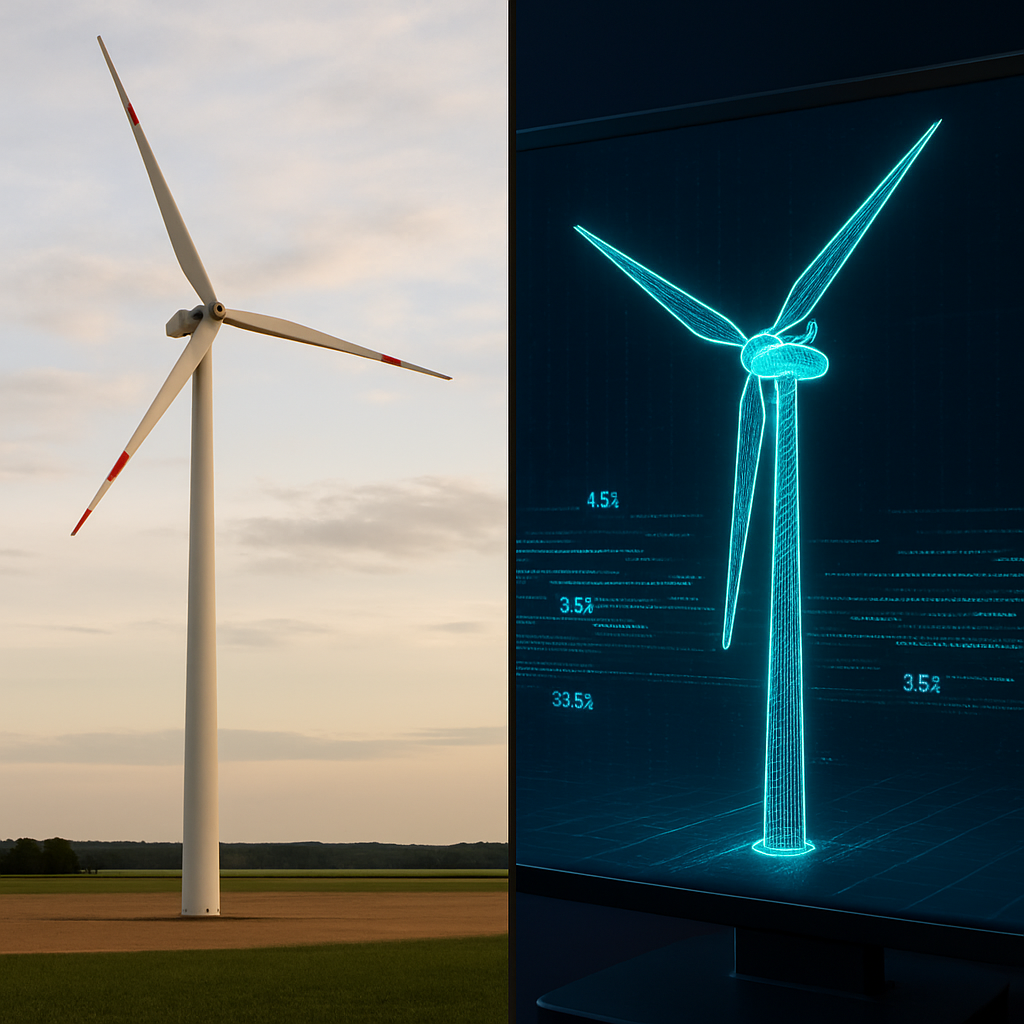
A digital twin is an ongoing, constantly changing replica of a real object or system. In contrast to a static 3-D drawing of an object, a digital twin is dynamically linked to its real-life object, with all changes made to the real-life object being reflected in the digital twin. Therefore, in this example, the digital model of the wind turbine was dynamic, mirroring the speed, stress, and power output of the real turbine in real time.
So how do digital twins function? They function through continuous data input. Sensors (the “nerves” of machines) attach to the physical object to collect data on its various characteristics, such as temperature and efficiency. The data from those sensors is sent to the digital twin and continuously updates the digital model. As a result, the digital twin is always up to date on the condition of the physical system.
In addition to being a major technological breakthrough, they are already transforming many types of businesses. For example, engineers can predict when failures may occur; cities can evaluate and experiment with traffic flow and other urban planning concepts without implementing them first; and doctors can test treatment plans without risking harm to patients. Overall, digital twins are allowing companies to create smarter products and systems while creating new business value in the physical world.
So, What Exactly IS a Digital Twin? The “Living Blueprint” Explained
To comprehend a Digital Twin, we need to start with something you likely know already — blueprints of buildings. Blueprints are essentially excellent, detailed drawings of how a building should be designed and constructed. They are static designs of the intended design and layout of the building; however, the actual building may differ in many ways from its original blueprint. A Digital Twin is a ‘Live Blueprint’ of an asset. When a real pipe in a building leaks, the digital twin shows a virtual leak. When the afternoon sun heats one room in a building, the virtual room in the digital twin will also be heated. It is a dynamic representation of the physical asset, reflecting its condition in real time.
This relationship to the physical is what differentiates a DT from merely being a 3D model or a simulation, such as a video game. Architectural renderings can provide visual images of how a building, including a skyscraper, will look. However, architectural renderings cannot indicate whether the actual elevator systems are functioning properly, which floor(s) have their lighting on, etc. A digital twin is able to do so. A digital twin is a data-rich counterpart to the physical asset. Through a continuous data feed, a digital twin can accurately represent the current condition and health of the physical asset in real time.
Therefore, a true digital twin system has three primary elements. These include the physical asset (in the real world, e.g., a wind turbine), its virtual counterpart (the digital model), and the continuous data flow that links the two. The strength of a digital twin is in this continuous link. This link allows a basic digital drawing to become a sophisticated, virtual replica and enables users to gain valuable insights.
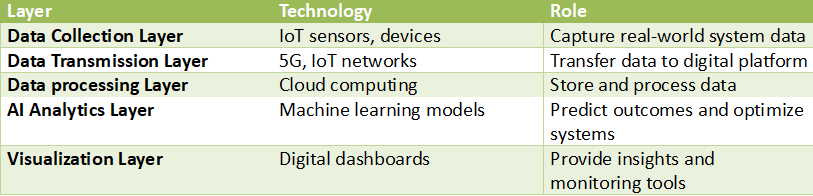
Digital Twin Data Flow Architecture
Example: Airbus uses digital twins to simulate aircraft performance and detect faults before flights.
Source: General Electric Digital Twin Research
https://www.ge.com/digital/applications/digital-twin
Virtual Representation: How Real-World Systems Become Digital
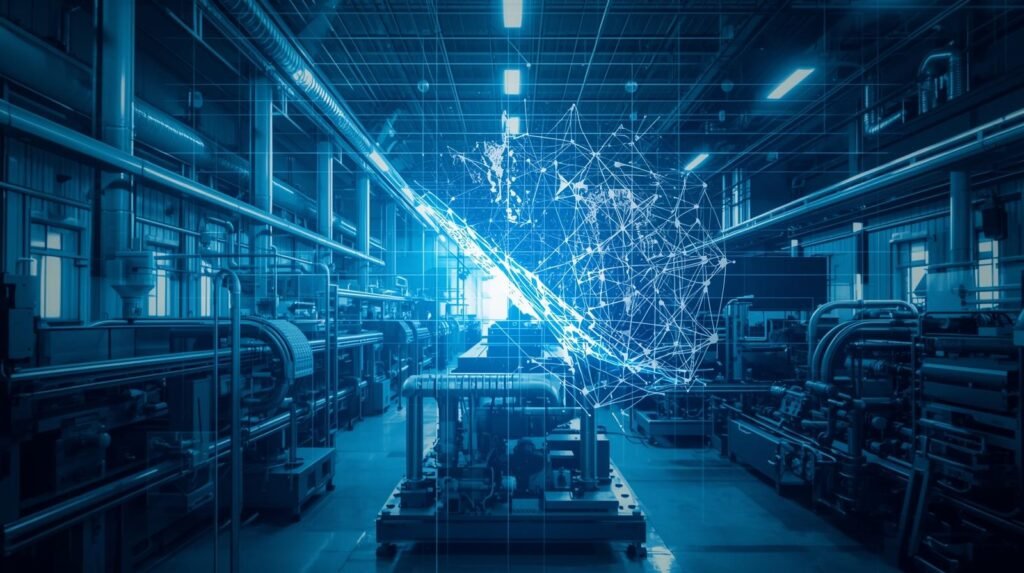
Virtual representations are digital versions of physical objects (i.e., a pump, building, production line, etc.) that have been captured in a format both humans and software can understand and use to support the virtual representation of the original system’s behavior, composition, and ability to change over time. Once the DT model is connected to an ongoing data feed and continuously updated, the virtual representation serves as its foundation.
#AI Fleet Management: AI-Assisted Workflows for Autonomous Robotic Fleets
Three major procedures occur when converting a real-world system into a digital model: capturing, structuring, and connecting. Capturing involves collecting information from the physical world. For example, by using BIM/CAD files, drawings, laser scanning, GIS mapping, and reading sensors and tags on equipment. The second procedure, structuring, takes the captured representations of reality and organizes them so that both computers and people can interpret them. Structuring also defines the relationships among components within the system. Finally, structuring includes developing rules governing how each component interacts.
An example would be identifying which valves feed which lines, and/or which rooms belong to what HVAC zones. Connecting refers to the virtual representation being linked to historical and/or current datasets, such as I/O sensor data, maintenance logs, work order history, and production performance metrics. This link to past and present data keeps the digital representation aligned with the physical system.
A combination of useful and adequate detail is required to develop a virtual representation of an asset or process and achieve success in using it to support organizational decision-making. If the level of detail in the model is too low, it would have little utility in supporting decision-making activities. Conversely, if the level of detail in the model is too high, the cost of developing, updating/maintaining the model could be prohibitive. Organizations often start by developing virtual representations of their most important assets and processes (e.g., high-risk, high-cost) and then expand the scope of the virtual representation as they realize the benefits of the program.
As more groups within an organization (e.g., engineering, operations, maintenance, energy management, compliance) use a virtual representation of their critical assets and processes, that representation can be used to deliver benefits to multiple groups. The distinction between a base model and a Digital Twin (DT) lies in how each uses data. A DT receives feedback from the physical asset/process. As the virtual representation is updated with actual data from the physical asset/process, anomalies in trend lines can be identified, various “what-if” simulations can be performed, and informed decisions can be made from the results of those simulations.
In essence, the virtual representation is simply a “map” of the system; however, the Digital Twin transforms this map into a decision-making tool that enables organizations to operate their assets more safely, efficiently, and reliably.
Core Components That Create a Digital Twin
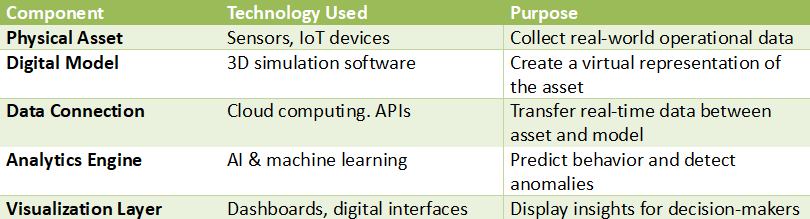
Example: A wind turbine digital twin receives real-time sensor data about vibration, temperature, and wind speed to predict maintenance needs.
Source: IBM Digital Twin Overview
https://www.ibm.com/topics/what-is-a-digital-twin
Virtual Replica: How Physical Systems Are Mirrored Digitally
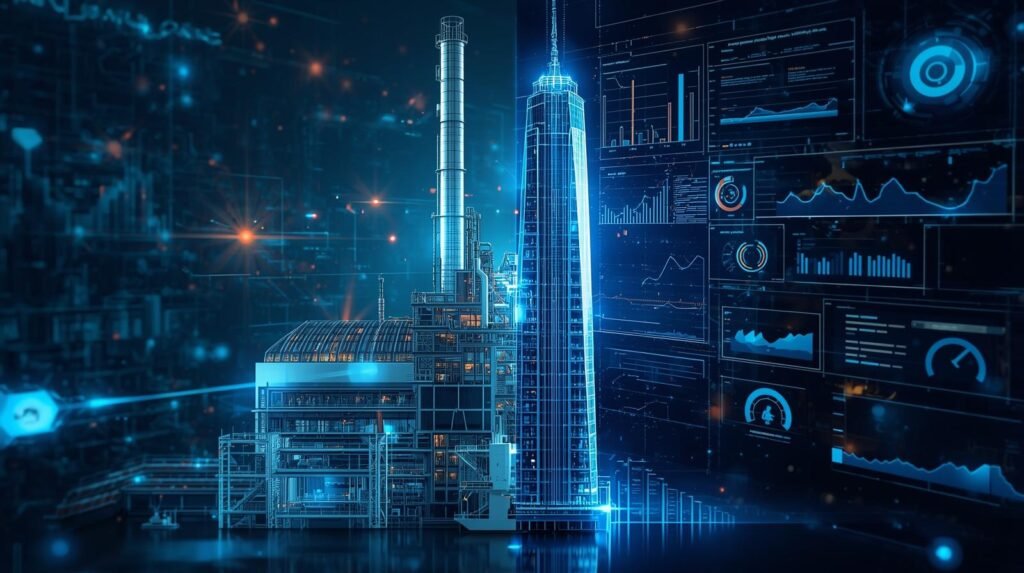
Beginning with a digital version of a physical item (car, house, factory, process sequence) the primary function of a virtual model is to understand the behavior of the real world and assist in improving performance of the physical assets using virtual modeling. If the virtual model continuously receives real-time data from the physical model and assists in ongoing decision-making, then this is a DT.
A digital version of a physical system consists of three components: geometry, context, and behavior. The geometry of a system is determined from CAD/BIM models, 3D scanning or drawings of the physical appearance and layout of the system. The context of a physical system determines how it is defined/identified, and how it relates to other physical systems. Attributes include asset tags, location, dependencies, and operating constraints.
Behavior is developed using physics-based rules, analytics, or machine learning, enabling an accurate representation of how the physical system will behave under different conditions. As soon as an active data stream feeds into the virtual model (sensors, control systems, maintenance logs, etc.), the model can be configured to show the current condition of the physical system, the most recent historical data collected, and trend information.
A “good enough” virtual replica does not need to model every single element at the start. Many teams will initially focus on critical, high-impact elements when building a “good enough” virtual replica, such as: (1) Failure-prone components; (2) Energy-consuming equipment; or (3) Bottlenecks that may lead to an outage. Most teams then tend to add additional sensor(s) and continue improving data quality with more complex logic, thereby increasing the accuracy and value of their Digital Twin (DT) over time.
One of the greatest benefits of a virtual replica is that it allows for safer, faster decision-making for operators, engineers, and maintenance teams. The virtual replica enables operators to monitor their assets’ performance, compare locations, and quickly identify anomalies. Engineers can run simulations before physically testing and applying changes in the field. Maintenance staff can utilize the virtual replica to develop repair plans and to minimize unplanned downtime. The virtual replica also enables maintenance staff to verify whether the repairs were completed successfully.
The Virtual Replica is the “view” into the organization’s daily operations. The Digital Twin takes that “view” and turns it into predictive information, providing the organization with actionable recommendations to improve reliability, efficiency, and total lifecycle cost.
Global Digital Twin Market Growth

Source: Fortune Business Insights – Digital Twin Market
https://www.fortunebusinessinsights.com/digital-twin-market-103403
The 3 Key Ingredients That Bring a Digital Twin to Life
A “Living” blueprint remains connected to the “Real World” through a simple 3-ingredient formula, with each ingredient playing a vital role in Digital Twins (DT) functionality. To create an operational Digital Twin, you need to have:
- The Physical Object (The “Real Thing”): The physical asset that exists in the “Real World”, such as the wind turbine that is operating in the field, the Formula One race car racing on the track, or the pump inside the water distribution system of a city, etc.
- The Sensors (the “Nerve Endings”): These are devices that are attached to the physical object. They will be the sense organs for the physical object. They will collect data and send it back to the physical object. Data can include, but is not limited to: Temperature, Vibration, Speed, and Location.
- The Virtual Model (the “Digital Copy”): This is the “Living Blueprint”. It receives sensor data and mirrors the physical object.
Beginning with the second element, this is also the location where the greatest value can be realized. Machine sensors are analogous to a machine’s nerve endings. Much like how your skin can sense temperature, a sensor on a car engine can “feel” or detect when an engine is running too hot. This relates to the Internet of Things (IoT) – Consider the IoT as a large number of extremely small journalists (sensors) which report their respective data to each other via the internet. The role of each journalist is to collect a specific piece of data and then send that data to a central hub – the digital twin.
The only way a it will continue to evolve and provide a truly dynamic view of its environment is through the ongoing flow of data from sensors and IoT devices. The connection between the physical and digital worlds arises from the flow of data. This allows the Digital Twin to perceive and understand (see/hear/feel) what its physical counterpart is doing in real time. Therefore, creating a simple model to a highly intelligent model. It is this continual, real-time data communication that distinguishes a true Digital Twin from a mere simulation.
Real-Time Modeling: Why Live Data Makes Digital Twins Powerful
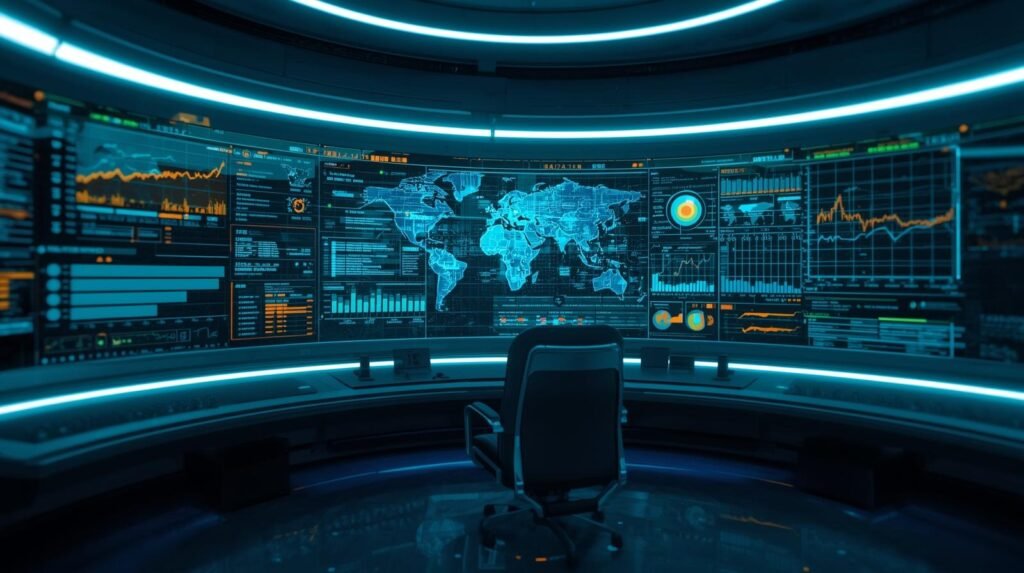
The key reason real-time modeling is required in Digital Twins is that it enables accurate modeling of the current state of the physical system. It does not model historical performance; rather, it models how the physical system would perform if it were operating at its best (i.e., as designed).
#Virtual Robot Testing: Smart & Powerful Ways to Save Time and Money
Real-time modeling uses data from sensors, software logs, and control systems to continuously update a virtual system model. It allows a team to know where they are at any point in time; to identify potential issues before they become an incident, an unplanned outage, or an unsafe condition; and to act to prevent those issues from occurring.
Real-time modeling is essentially taking the actual data inputs (e.g., temperature, vibration, pressure, energy use, speed, occupancy, throughput), and linking that data to a model that shows how the system should behave when operating in normal circumstances. When actual data differs from the expected normal behavior, the model will recognize this deviation as an anomaly. And based on the nature of the anomaly, the model can provide guidance on probable causes and suggested next steps.
“By using a Digital Twin (DT) as a model of how equipment is performing in real time, management can monitor how well it performs on an ongoing basis relative to its goal (efficiency, yield, service level) and make decisions based on factual information instead of speculation.
There are a few key ways that real-time modeling supports planning and rapid response. To keep operations running without unnecessary downtime, real-time modeling provides alerts and dashboards for operations teams. Real-time modeling transforms condition data into predictive signals, which allow maintenance teams to schedule “repair before fail” tasks.
Additionally, real-time modeling enables corporate leaders to identify where to focus reliability, energy, and quality improvement efforts by correlating asset performance with their company’s Key Performance Indicators (KPIs). Many organizations use a DT to determine the best equipment investments that minimize cost and risk.
In addition to enabling the evaluation and prioritization of resources for use in operations (as noted previously), real-time modeling also enables the creation and testing of various “what-if” scenarios. Real-time models allow teams to assess their present state relative to proposed alternatives or different configurations. Real-time models enable teams to test proposed “what ifs” virtually without negatively impacting ongoing operations, customer service, or production. As additional information is added to the digital twin, its accuracy will increase. Conversely, the accuracy of a real-time model will continue to increase as it learns to differentiate between typical operational fluctuations and actual problems.
Real-time modeling converts a digital twin from a static model to a dynamic decision-making platform. Real-time modeling reduces the time between an event and the time when the organization has sufficient information to react. By reducing this “response time,” organizations can make decisions faster, more safely, and at lower cost.
Real-Time Modeling: Why Live Data Makes Digital Twins Powerful
This will likely be mistaken with a Digital Model. As previously stated, a digital model is essentially a sophisticated simulation, i.e., a video game-style flight simulator. With that, you would be able to practice a takeoff, fly a plane through a storm, and even experience a crash; it has absolutely no effect on a real airplane in flight. A simulation is simply a self-contained digital environment where you can explore “what if” scenarios. A simulation is a very valuable resource for both training and design because it is completely separate from reality.
A DT is a replica of the real-time two-way data exchange (which we have talked about). A DT is therefore not a simulated sandbox; it is a real-time replica. Comparing a DT to an air traffic control tower helps you get a sense of what a dynamic map looks like. This map displays the real-time location, speed, and altitude of every aircraft currently in flight. Information is continually fed into the map from real-world data, so it shows current conditions.
The essence of digital twin technology is to replicate the real-time event.
However, the true strength of a it lies in its ability to use simulations. An air traffic controller viewing the DT of the airspace could see a real storm forming. The air traffic controller could then quickly run a simulation within the twin to test safe new flight paths before issuing a directive to the actual pilots. The simulation is an option, not the entire system. One of the greatest benefits of using a digital twin is the predictive capabilities, allowing us to inquire about our future.
Digital Twin vs Simulation: Why Real-Time Updates Change Everything
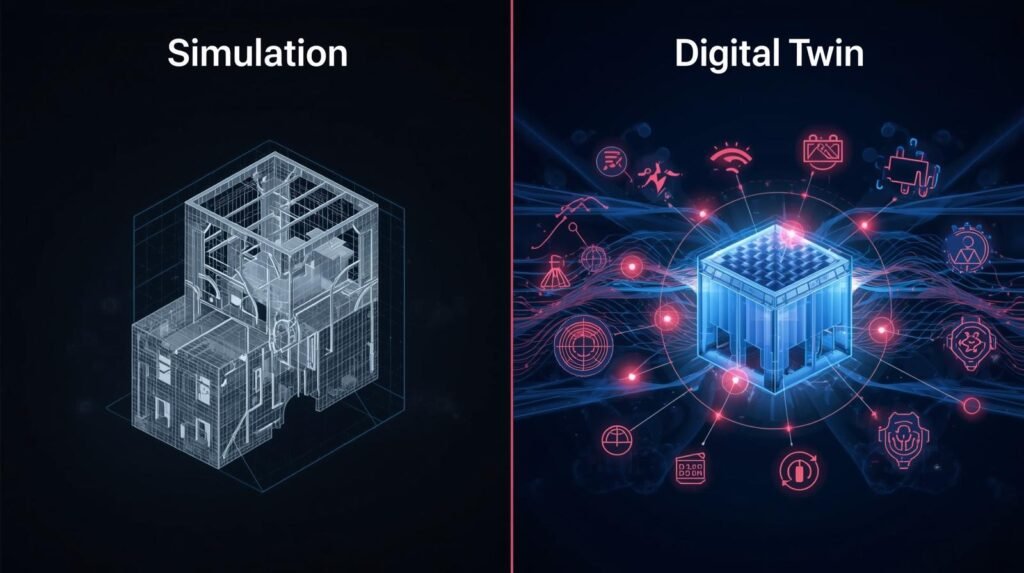
The greatest distinction between simulations and digital twins is “update”. As far as individuals considering digital twin vs. simulation are concerned, the primary difference regarding updates lies in the source of input for both models. In general, simulations will be constructed to determine an answer to a specific question (e.g., what occurs if demand increases by 100%? What occurs if this component fails?); conversely, the DT is designed to continue providing answers as the operating conditions of the “actual world” change.
When comparing simulations and digital twins with respect to the input process, the greatest difference lies in the type of input each model receives. For example, simulations receive static inputs (i.e. assumptions, averages based upon history, predetermined scenarios) and once the simulation has been run, the result(s) of that run are obtained.
Digital Twins enable continuous live updates and allow users to identify potential problems before they lead to downtime, product quality issues, or safety issues. Digital twins do not have the same delay requirements as simulations (e.g., weekly reports); therefore, users can view the current status and identify performance anomalies that may indicate a problem.
Two key benefits of a DT include its ability to provide rapid diagnostics to build confidence in taking action.
A further area where Digital Twins and Simulation differ is decision-making. Simulations are well-suited for planning and design purposes, i.e., testing different layouts, “stress”, and “what if” conditions. A DT is designed for daily operational needs, i.e., monitoring, alerting, predictive maintenance, etc., and continuous optimization. Therefore, a DT provides a single point of reference (a single source of truth) for all parties (engineering, operations, and leadership) to obtain a common understanding of their assets.
When deciding which of a Digital Twin (DT) or a simulation is best for you, consider this: Are there certain things you want to “try out” on paper before you build them? If so, a simulation may be your best bet. On the other hand, if you would like a dynamic model (i.e., one that will run and react similarly to the way your physical item runs/reacts), stay connected to it and continue to improve its performance over time, then a Digital Twin is likely your best option.
Ultimately, as far as Digital Twin vs. Simulation goes, a simulation can help you do powerful experiments, and a DT can serve as a companion to the physical item, since a DT can stay up-to-date in real-time and therefore be useful and beneficial to the physical item at all hours of the day.
Digital Twin vs Simulation Comparison
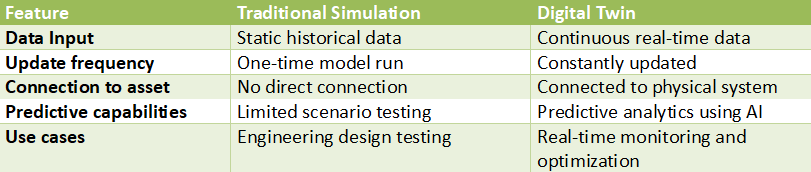
Example: A factory simulation predicts output before construction, while a digital twin Monitors live production performance
Source: Microsoft Digital Twin Guide
https://learn.microsoft.com/en-us/azure/digital-twins/overview
POWERFUL WAY #1: Predicting the Future to Prevent Breakdowns
All machines can fail mechanically, and for many people, those mechanical failures seem to occur at the most inconvenient times (e.g., on the morning of an important meeting or in the middle of a wash cycle). One of the primary ways digital twins address this issue is through predictive maintenance. Rather than waiting for a major mechanical failure, the digital twin of the machine continuously monitors the machinery and identifies early warning signs that could be missed by either an operator or a routine inspection.
In addition, because the digital twin has predictive capabilities, it allows a company to see what is likely to happen to a piece of equipment in the near future and, therefore, take preventive action to repair or replace it before it fails.
It also receives an unending stream of data on how the real-world wind turbine operates at the moment (e.g., temperature, blade speed, microvibrations). Over time, the DT will have learned how the wind turbine typically functions, and when the DT notices some small deviation from the norm (i.e., micro vibration) in one of the bearings, it will send an email notification to the engineers stating that that particular bearing is starting to deteriorate and may fail prematurely within a couple of weeks.
Therefore, companies can save enormous sums of money. Companies spend large sums of money and lose revenue when they have to shut down their entire systems during emergencies, then rush to make repairs. With a simple, low-maintenance program, these costs are greatly reduced. Therefore, the primary focus in creating a DT for predictive maintenance is to optimize business operations by shifting the focus from “what broke” to “what is going to break next.”
POWERFUL WAY #2: Safely Testing a Million “What Ifs” in a Virtual World
Designing problems out of products right away has changed with the development of digital twins, which serve as a cost-free creative laboratory for designing your products rather than monitoring their performance. An engineer wanting to come up with an entirely new idea for a car part would have spent tens of thousands of dollars just on materials to make a prototype, test it to failure, and, hopefully, recover the part, then start all over again.
Using a digital twin, the engineer would have been able to test and crash his part a thousand times in the time it would have taken him to do it one time in the physical world, and he would have spent zero money on materials, and no lives would have been lost. Virtual prototyping is changing how inventions are developed.
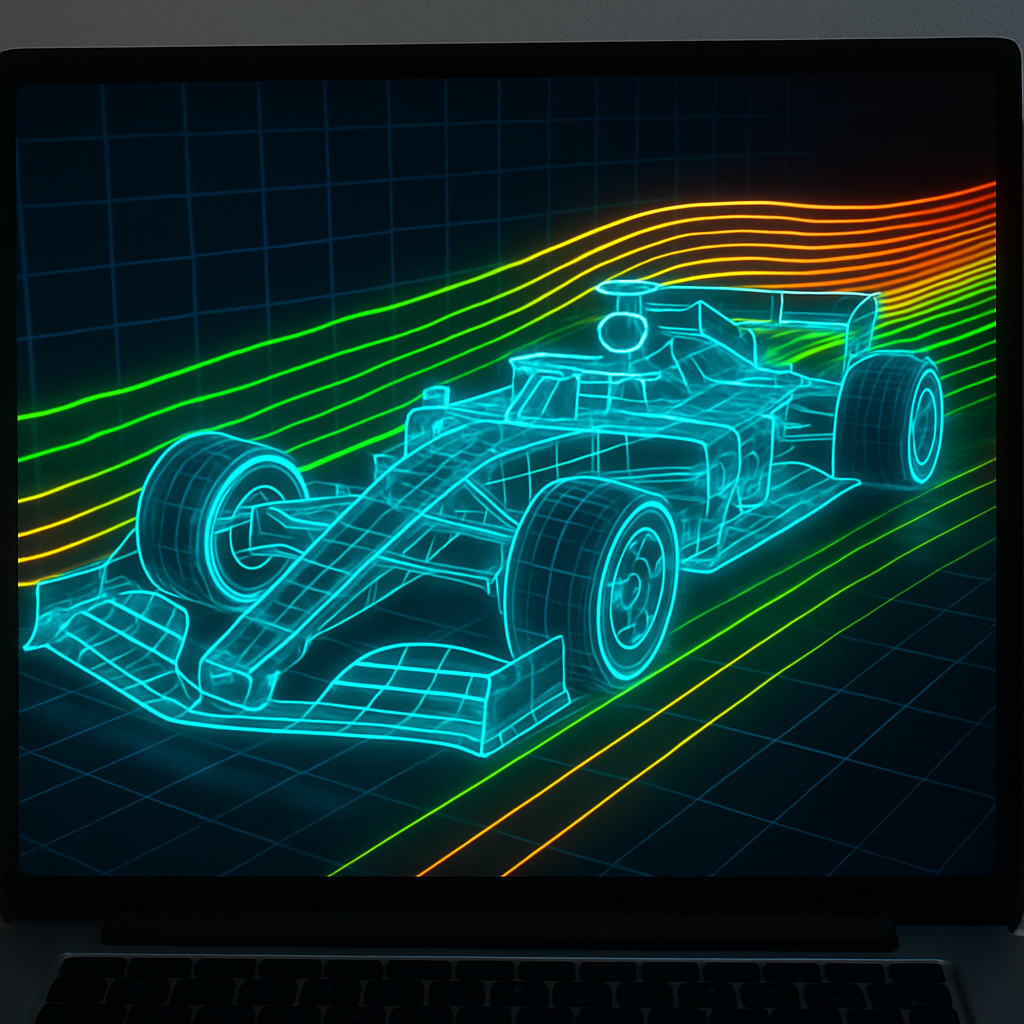
The virtual testing of a digital twin has never been more important than in the fast-paced environment of Formula 1 racing. Teams of F1 are always at the leading edge of what engineers can accomplish. The difference between winning and losing a race is often a matter of tenths of a second. Before every race, F1 teams produce a highly detailed Digital Twin of their race cars in manufacturing – NOT of the factory, but of the car.
They are using the digital twin to run numerous simulations to see what happens when you make a small adjustment to a wing’s design. The difference here is that the digital twin allows them to create a “live” model of their car and continuously update it with data from the car as it runs on the track. As a result, they can develop new versions of their car at a far faster rate than would have been possible with a traditional simulation.
There is no reason these advantages of rapid innovation cannot be applied to other areas of technology, such as designing more fuel-efficient jet engines, developing lighter, stronger building materials, and creating better-performing medical implants. AI also enables us to exceed human limitations. An example of this is an engineer evaluating 12 different design options for a product, and an AI evaluating hundreds of thousands of “what if” scenarios for the product over an overnight period (the digital twin), and ultimately allowing the engineer to select the best option based upon the requirements of a particular application.
The digital twin will serve an additional function once the engineers have developed the system to optimal performance. The digital twin will provide the system operator with unprecedented precision and control over the system.
POWERFUL WAY #3: Running Real-World Operations with Superhuman Insight
The Digital Twin’s transformation from a Design Tool to an Operational “Mission Control” happens when the System has completed its construction phase and is operational in the Physical World. With the Digital Twin now capable of providing a current Aerial View of All Activities Simultaneously, it will enable Failure Predictions, Hypothetical “What If” Testing, and many other applications. The Digital Twin will not be limited to a number-based Dashboard. It will be a Live, Visual Representation of the Entire System, processing Thousands of Real-Time Data Feeds. At this point, Managers will no longer have to react to Problems but will instead be Proactive in Achieving Success.
To illustrate the difference, think about your typical Traffic Map Application. While the Traffic Layer in such an Application may show you where the Road is Blocked (Reactive), a City-Wide Digital Twin will do Much More. Not only will it Show You Where the Traffic is Backing Up, it Will Also Analyze Data from Sources Such As Public Transportation Systems, Weather Stations, Event Calendars, etc. Using the Analysis of the DT Data, it Can Suggest or Automatically Adjust Solutions, such as changing the Timing of Traffic Lights to Alleviate Traffic Congestion.
That is basically how to Use it to Improve Efficiency of Operations: The Digital Twin can Provide You with Reporting of what is happening, but the Digital Twin can also Help You Write a New Version of the Story.
Managers can see their manufacturing facilities in a “superhuman” way with a Digital Twin. Think about trying to run a large manufacturing facility by simply walking around it. You can only see what’s happening in one place at a time. With a Digital Twin, you can see your entire facility from a single computer screen. And when there is a problem in one part of the facility, it may take an hour before it affects other areas. Digital Twins can even represent and include entire cities. The city of Singapore has created a virtual model of their city. They use this to plan and implement energy conservation initiatives and urban planning. Public safety is also monitored through their virtual model.
A digital twin also provides a central repository or common platform for all the data needed to identify the underlying relationships among different components of a system. The digital twin will enable all the teams working on a project to work from the same point of reference, allowing them to make quicker, better decisions. It will allow organizations to visualize and manage larger and/or more complex systems. The application of visualizing and managing complex systems can also be applied to smaller systems, including yourself.
POWERFUL WAY #4: Designing Products and Treatments Just For You
The creation of a digital representation of an individual person may be the most innovative aspect of this new technology. Models of airplane engines and factories are created digitally to improve their mechanical performance. Digital models of people are being created to enable a full-scale revolution in how health care is delivered on an individualized basis.
Perhaps one of the biggest problems with health-care delivery today is the “one size fits all” approach. Physicians will soon have the ability to develop a digital copy of their patients’ bodies (organs, metabolic processes, etc.), and by using these copies, they will be able to test the effects of various medications on a simulated version of a patient before administering it.
It is the future of personalized medicine. A physician can create a digital model of a patient’s heart using MRI images and the patient’s medical history. That physician could then use the digital images to simulate a virtual heart and determine how a particular blood pressure medication would affect that patient. Not only could digital twin (DT) technology help a physician avoid giving a patient a potentially toxic or ineffective dose of a medication, but DT technology also has the ability to determine the proper dosage of a medication for a specific patient, versus what may be the statistical average of what a group of similar patients requires.
These are not merely fictional concepts; businesses are using digital twin technology to develop virtual organs for surgical and therapeutic decision-making, making these processes safer and more accurate.
While, as stated, it technology has most notably been used in health care, it will be hyper-personalized in how people experience the everyday items and services they use. An example is a shoe production company that creates a digital model of each customer’s foot and gait, then uses it to 3-D print custom-made shoes tailored to the customer’s needs.
Another example is a car manufacturer that creates a digital model of each customer’s body so they can design a driver’s seat that provides optimal support during long periods of driving. The possibility of developing product models tailored to a single person’s needs represents a revolution in how humans interact with technology.
POWERFUL WAY #5: Digital Twin Services That Optimize Assets Using Live Data
Business value is realized through the integration of real-time sensor data into a Virtual Asset Model, enabling the organization to plan ahead for risk mitigation and make informed decisions based on a complete, accurate representation of its current state and future trends. The Return On Investment (ROI) will be derived from the reduction in the number of unexpected events requiring unplanned maintenance and/or repairs, improved operational efficiency, extended asset life, and enhanced regulatory compliance. Organizations can use real-time sensor data to identify early warning indicators (temperature drift, vibration changes, pressure drops, etc.), allowing them to perform routine maintenance at a time convenient for them rather than costly “replace everything” maintenance.
Examples of High-Cost Assets and Operations are typical use cases for Enterprise Digital Twin (DT) projects. An example of a DT project would be a manufacturer using DT to improve the performance of its production lines by correlating data collected from its machines with the quality outcomes of those products. In doing so, the manufacturer could reduce scrap rates, increase productivity, and thus increase profit. Additionally, Construction Companies could use digital twin technology in their construction programs to correlate BIM models with field data. This would enable the company to track the progress of its construction project, monitor equipment utilization, and manage building systems post-handover, allowing for quicker commissioning and reduced operating costs.
In addition to utility companies using digital twins to balance load, detect leaks, and minimize disruptions during planned outages, transportation logistics and fleet operations can create digital twins of their vehicles and routes to minimize fuel use, maximize on-time deliveries, and optimize routes.
Value is typically measured by Digital Twin Service Providers using clearly identified Key Performance Indicators (KPIs), including hours of downtime avoided, reductions in maintenance labor, energy savings, warranty claim reductions, and safety incident avoidance. Because the digital twin vs. simulation process allows for an ongoing flow of “always-on” data and feedback, the business case for digital twins will continue to grow as the model becomes more complex, decisions are made faster and more cost-effectively, and greater accuracy is achieved across the entire organization.
Digital Twin Services: Optimize Assets Using Live Data
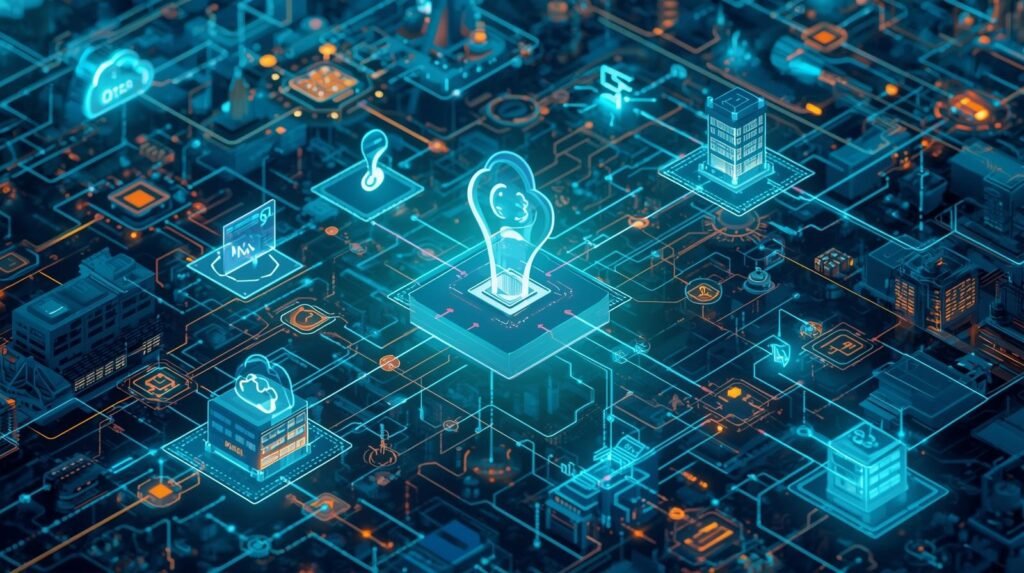
Digital Twin Services allow companies to develop business decisions and improve their performance, reliability, and costs through real-time conversion of real-time operational data. Unlike static drawings or periodic reports that are generated infrequently, Digital Twin Services dynamically represent assets (cooling towers, compressors, conveyor systems, etc.) and continuously update models as real-time signals are received.
The main advantage of using Digital Twin Services is quicker issue detection. By combining sensor data, control system output data, and historical maintenance data, Digital Twin Services can identify trends or abnormalities much sooner than they would otherwise be detected. For example, if vibration increases, temperature changes, pressure decreases, or energy use varies from its typical pattern, Digital Twin Services will notify your staff of a potential problem. Your staff can then take corrective action before the issue results in an outage. Additionally, the model developed by the Digital Twin Service provides insight into how components interact and, in many cases, helps you identify the root cause of issues rather than simply measuring individual elements.
It Services enable predictive maintenance and better planning. The approach teams take to perform regular equipment maintenance has shifted from “just in case” to condition-based servicing. This type of servicing produces less production downtime, fewer wasted parts, and longer-lasting equipment. The greater amount of information available allows the digital twin’s accuracy to increase.
Typically, in large-scale enterprise applications, Digital Twin Services are utilized across numerous sites and different asset types. With an overview of all company assets, users can compare plants, determine which is running most efficiently (and why), and decide how best to allocate capital to achieve the highest returns. Many organizations have also integrated Digital Twin Services into their work order systems, inventory management systems, and analytical platforms to allow for immediate action on insights generated by the digital twin.
The objective of Digital Twin Services is to optimize the use of company assets by leveraging real-time data to reduce costs, maximize uptime, and mitigate risks associated with asset operation. Properly implemented, a digital twin should be much more than a model; it should be an ongoing decision-making tool that promotes alignment among all parties who operate company assets and reduces potential disruption to these operations.
Worldwide Digital Twin Applications
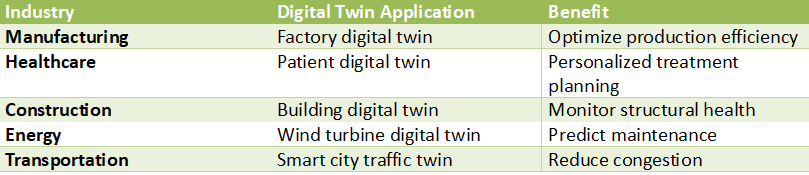
Example: Singapore created a digital twin of the entire city to simulate traffic flow and urban planning.
Source: Dassault Systems Digital Twin Case Study.
https://www.3ds.com/insights/digital-twin
Digital Twin in Construction: Planning, Monitoring, and Control in Real Time
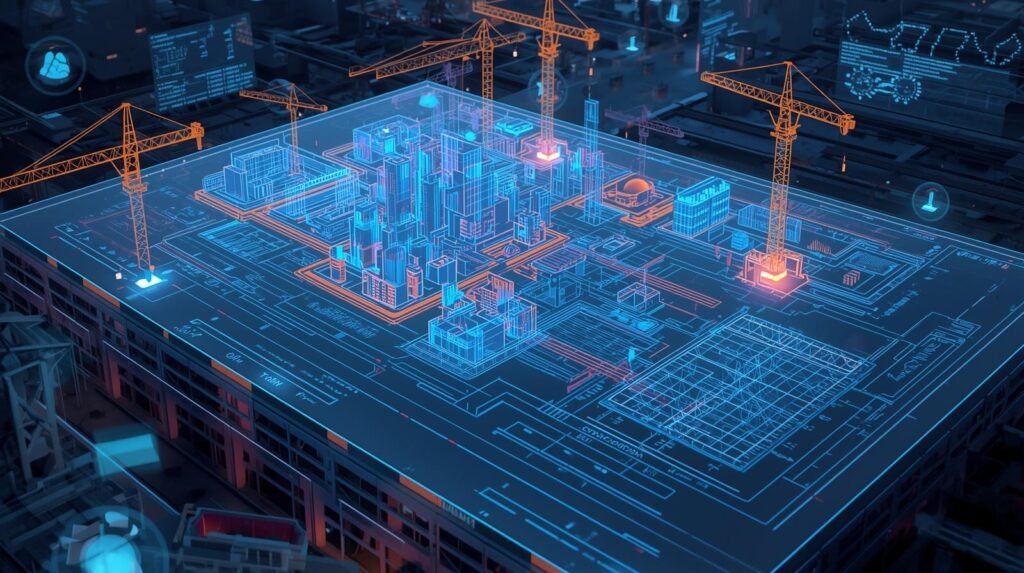
The live element of a Digital Twin in Construction allows construction teams to have a current, or “real-time,” view of their jobsite through a digitally connected model. The model would enable a much more informed approach to planning and quicker tracking of project progress. Ultimately, this model could help the construction team gain greater control over the project’s final outcome, reducing the risk of unexpected issues.
Static BIM files do not offer the same capabilities as Digital Twin in Construction. Instead of taking all of the information regarding your job, including the schedule, material quantities, equipment status, and site conditions, and connecting them into one digital model that continuously updates, Digital Twin in Construction provides a means to connect all of these types of information into one model that continues to update. Since it is possible to maintain a connection between the model and the project lifecycle, the Digital Twin in Construction can be viewed as an updated digital model that supports the construction team’s decision-making each day, rather than providing documentation related to design.
Digital Twin in Construction will enable construction teams to assess potential logistics and resource needs before commencing a project. Additionally, Digital Twin in Construction will create a model of the job site based on the project’s area, trades, and constraints. This model will assist in identifying and resolving conflicts across different project components. Finally, Digital Twin in Construction will also assist construction teams in improving the process of handing off tasks from one trade to another and in developing a realistic project timeline based on the time required to complete various tasks.
The Digital Twin in Construction will be used to monitor the project once it begins. By comparing the project’s actual performance with the performance based on the original plan, you may be able to identify problems or obstacles within the project. The Digital Twin in Construction Model can be updated by various means, including Mobile Inspections, Drone Aerial Photography, Laser Scanning, Equipment Tracking using GPS, and Materials Delivery updates. Because of its ability to compare planned-to-actual performance in real time, the Digital Twin in Construction has been identified as a useful tool to support the team’s day-to-day decisions.
The Digital Twin in Construction provides construction teams with a real-time representation of their job site (the “live” piece), which is then compared to a digital model of that job site. This enables a much more informed plan, faster tracking of progress, and ultimately greater control over project results with fewer surprises. A static BIM file does not offer the same functionality as the Digital Twin in Construction; Instead, the Digital Twin in Construction creates a single digital model that combines all of the information regarding your job (scheduling, quantities of materials required, status of equipment, physical condition of job site) and updates continuously.
A digital twin in construction that continues to exist throughout the entire lifecycle of a project can be used by the project team for their day-to-day decision-making, rather than merely providing design documentation.
A digital twin in construction allows construction teams to determine potential logistical and resource needs at a job site before they begin. The digital twin in construction also produces a model of the job site based on location, trades, and constraints, enabling conflicts among project components to be identified and resolved. Additionally, the digital twin in construction can enable construction teams to more effectively transfer tasks between trades and create a schedule based on the actual time each task will take. After the project begins, the digital twin in construction will enable the project team to monitor its progress.
The digital twin in construction will compare the project’s progress against the plan to help the project team identify potential problems that may arise during the project. The model of the digital twin in construction can be updated using several data sources, including mobile inspections, drone aerial photographs, laser scanning, GPS tracking of equipment, and updates on material deliveries. For this reason, the digital twin in construction is viewed as a beneficial tool to assist the project team with their day-to-day decision-making.
The “Brain” of the Twin: Where Does AI Fit In?
An example of how a Digital Twin uses Artificial Intelligence (AI) is that it collects information through sensors that are connected to a large variety of devices. When these sensors collect data, it is continuously transmitted to the digital twin. A human cannot review the continuous flow of data in real time; therefore, the digital twin must use AI to think for itself by collecting and reviewing the many types of data being sent to it and then quickly determining what the data means.
In addition, when a doctor conducts a patient examination, they don’t make their decision based on just one symptom. Rather, the doctor will review the patient’s past medical history, tests and general way of living to determine if the patient’s symptoms or patterns may be indicative of a health problem. Similarly, the AI analyzing data from a digital twin reviews hundreds of data points to assess the performance of the physical object it represents.
They are analyzed by AI to determine how they compare to their “normal” behavior. Additionally, the AI can detect small variations in the digital twin that could indicate future problems with the physical device. These two elements (the identification of differences and the detection of potential future issues) represent the core components of the analysis of the digital twin’s data.
In addition, It will serve as a wise advisor to the end user by analyzing information about the physical object’s current state. The digital twin provides the end user with an accurate image of the physical object and the decision support system represented by the intelligent AI brain, enabling the end user to understand what is occurring with the physical object at the moment and make informed decisions regarding the best course of action to take in order to achieve optimal performance. It would appear that while the idea of a digital twin with an intelligent AI brain may seem quite powerful and perhaps too complex, it provides great value to both the end user and the physical object.
Is Creating a Digital Twin Expensive and Difficult?
“Can I make money using digital twins? Well, that is a $1 Trillion question — and the answer is yes — but only if we define the scope correctly. Using digital twins is much like building with LEGOs. Creating a digital representation of a smart thermostat is a lot like building a simple, small LEGO car. But creating a digital twin for a jet engine, which contains tens of thousands of interacting parts that can function under extreme operating conditions, is about equivalent to trying to build that huge Death Star model with 1 million pieces. The cost of implementing digital twins varies with the size and complexity of the physical products/systems being digitized.
Large-scale projects, such as developing a digital twin of a jet engine, will be extremely expensive and likely require significant investment in the design and development of sensors and artificial intelligence (AI). Companies have spent millions of dollars to create their own digital twins because they believe the long-term cost savings could exceed billions. For instance, for a utility company, avoiding a single unplanned power outage can save hundreds of millions of dollars and prevent a whole city from going without electricity.
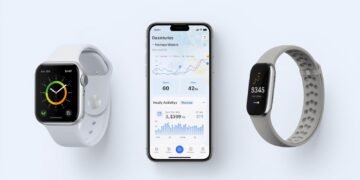
Additionally, for a Formula 1 racing team, saving just 0.1 seconds with digital twins can mean the difference between winning a world championship and going home empty-handed. You don’t need a multimillion-dollar digital twin of your toaster. The concept is already emerging at lower costs. An app that lets you track your pizza delivery guy is a simple, low-cost version of a digital twin. Your smartwatch, which provides information on how many steps you take per day and your heart rate, is a simple personal health companion.
Your World, Virtually Reimagined: What’s Next?
The “dot” that used to appear on a delivery app map has opened up countless possibilities. It also enables observation of the relationship between the physical and digital realms, allowing racing car designers to build faster race cars and urban planners to see the impact of new road designs before they are built. Before, you could imagine the static version of the object; now, you can also imagine the virtual, living version of the object, with data feeding it and running in the background.
With this technology, we will be able to predict results; test concepts that would be too costly or too dangerous to test in real-world settings; and make every device, including but not limited to wind turbines and large manufacturing plants, run more efficiently. When all of those problems are solved, digital twins will show us how to build a more intelligent, responsive and safe world.
However, that is just the beginning. One of the most significant scientific challenges scientists currently face is creating a digital twin of the Earth to study global warming and potential solutions. In time, we will likely also see a digital twin of our bodies, in which doctors can prescribe the perfect medication for each patient based on their own physiology. As the distance between our world and its virtual representation decreases, it creates a potential for a future that is interconnected and makes sense.












Comments 1