


































Your smartphone is a great example of engineering, but it could never simulate how a single caffeine molecule interacts with your brain. It’s not the ability to process information that’s causing the problem. Rather, it’s the way you’re talking. To truly explain the natural world, a computer has to be able to speak the language of the natural world — that is, it has to operate according to the laws of quantum physics.

Even the most powerful classical computer faces overwhelming complexity when trying to simulate larger numbers of particles. As the number of particles increases, the number of calculations required to solve the problem grows exponentially. For instance, adding one additional particle to the simulation increases the difficulty of solving the problem by a factor of 1,000,000. There is a limit to how far classical computers can go computationally, which limits the discovery of new medicines and the design of revolutionary batteries. That limit simply represents the size of the tool set at hand.
What would happen if, instead of using brute force with 1s and 0s to arrive at a solution, we were able to build a computer that functioned on the principles of quantum mechanics as nature does? A machine that thought as nature did.
#Understanding Quantum Computing: A Beginner’s Guide You Must Read
There is a new approach that uses artificial intelligence and quantum simulation to knock down the wall. This hybrid computational method could be thought of as a machine that thinks like nature, and it may provide the solution to seven “unsolvable” problems that can create change in the world. Additionally, this method could possibly address some of the most difficult and complex problems on Earth.
Summary
The article “Quantum AI Simulation: Solving 7 Breakthrough Problems That Classical Computers Can’t Model” shows how classical computers encounter a “complexity wall” as the number of particles/interactions increases – the computing resources needed to simulate the system grow exponentially.
A quantum computer simulates systems using qubits (quantum bits), which can represent multiple states simultaneously through a phenomenon called superposition. This enables exploring numerous possible solutions at once. However, the enormous search space of a quantum computer needs to be guided in its search by something – this is where Artificial Intelligence comes in: it acts as a guide by discovering patterns and pointing the quantum simulation towards possible solutions.
Seven problem areas in the article show the potential to use the combination of Quantum and AI to improve:
(1) The development of new drugs, at an accelerated rate compared to current practices, using quantum simulations of molecular-protein interactions at the atomic level;
(2) Development of improved battery materials to produce batteries with both higher capacity and faster charging rates.
(3) Development of Catalysts for Low-Energy Fertilizers Mimicking Enzyme Efficiency Found in Nature;
(4) Improvement of Financial Risk Models with the Ability to Capture Multiple Interconnected Variables;
(5) Development of Ultra-Selective Carbon-Capture Materials;
(6) Simulation of Folding Pathways of Proteins to Develop Methods to Prevent Diseases Caused by Misfolded Proteins;
(7) Optimization of Global Logistics Beyond Current Limitations of Classical Route Planning.
The article ends by explaining why this has yet to happen: Today’s qubits are too unstable and prone to error; therefore, a more stable and reliable qubit must be developed before there will be large scale application. The author, however, feels that we are entering the “Nature-Based Computing” era and expects these technologies to have significant positive impacts on many real-world problems.
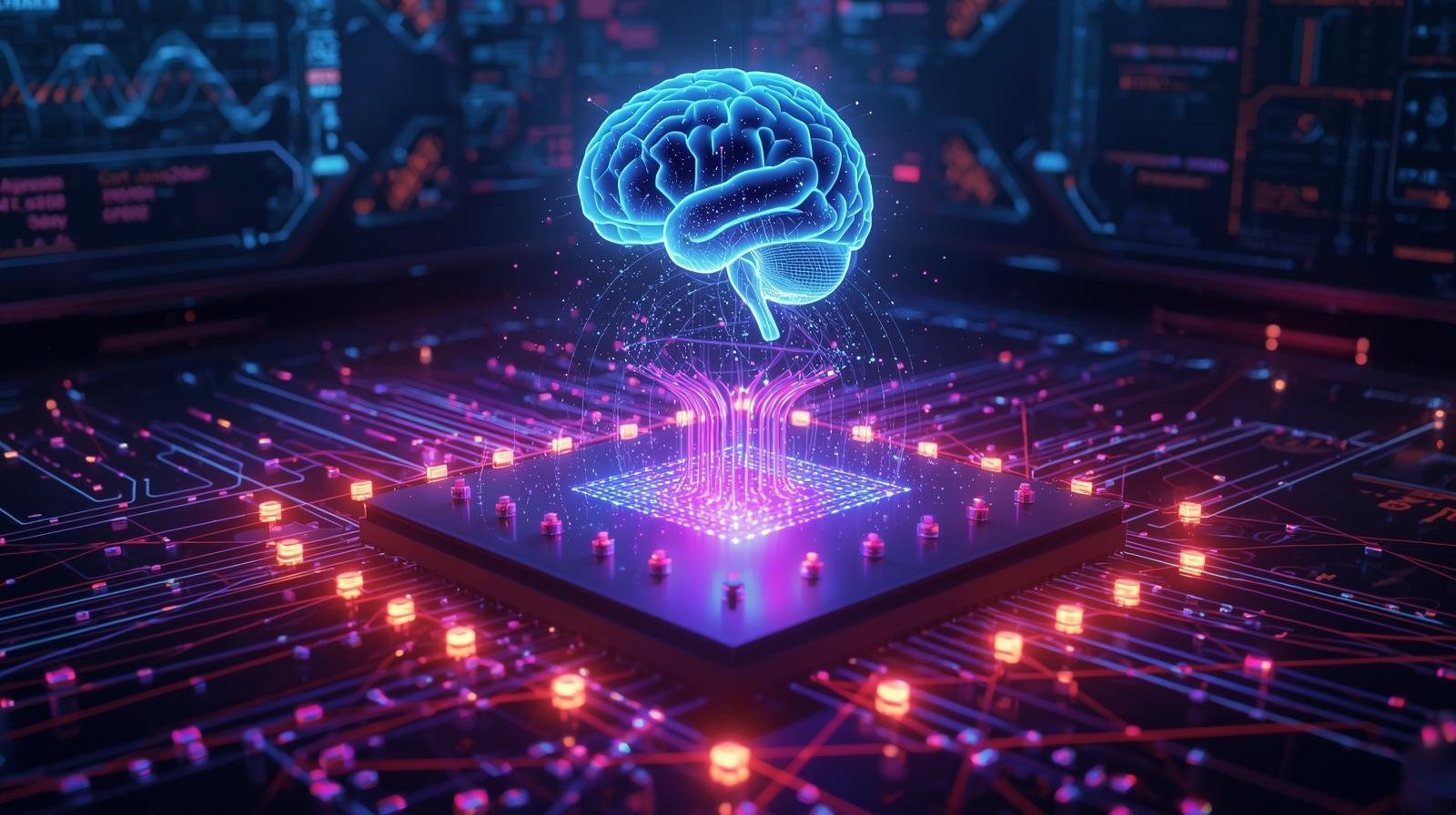
Quantum AI simulation: A visual showing glowing Qubits and Neural Networks modeling complex systems beyond Classical Computing
Quantum AI simulation is a new area of research that uses machine learning and quantum computers to model complex systems with thousands of particles. Traditional computational models become impractically large as the number of interacting particles increases exponentially (e.g., 100 particles require 100^2 = 10,000 “interaction” variables), so even the most advanced computer systems are forced to simplify their models. By using qubits (quantum bits) to represent all possible states of a particle system and quantum circuits to compute all possible interaction probabilities among particles, Quantum AI Simulation addresses the exponential growth in memory requirements for modeling complex systems with many interacting particles.
In practice, researchers do not often employ Quantum AI Simulation directly from a pure “quantum perspective”. Instead, researchers tend to develop hybrid simulation approaches in which the quantum processor generates random samples or computes estimates of the energy associated with each of the many possible system configurations. The resulting samples or estimates from the quantum processor are used by the AI models to “denoise” the results, determine the optimal parameters for the quantum circuit(s), and produce compact representations of the data.
One of the main advantages of using Quantum AI Simulation is to improve chemistry and materials design. The reaction pathways, battery performance, superconductivity, and catalysts all depend on how atoms behave quantum mechanically. Traditional computational methods cannot solve this type of problem when trying to achieve very high accuracy due to its complexity. Using both Variational Quantum Algorithms and Neural Networks, Quantum AI Simulation can efficiently search the space of possible molecular configurations for the lowest-energy states, compute the electronic wave function, and determine which of the numerous candidate molecules should be investigated experimentally.
Quantum AI Simulation can aid in optimizing problems that can be viewed as “energy landscapes,” such as logistics, portfolio balancing, and grid management. This is done by providing the AI with a good starting point or constraint for the problem and finding as many possible configurations in parallel using the quantum routine.
Even if there isn’t any quantum advantage now, Quantum AI Simulation provides a means to develop new heuristics to solve problems faster than manually adjusting a method.
Quantum AI Simulation also enables new scientific research. Both particle and condensed matter physics have difficulty simulating strong correlations in systems. Quantum AI Simulation allows physicists to simulate simple lattice models, study phase transitions, magnetism, and transport properties with fewer assumptions than other methods.
Quantum AI Simulation offers an opportunity to better address uncertainty. The outcomes of quantum measurement are inherently noisy and probabilistic. Due to its ability to use learning algorithms with noisy (or ‘dirty’) signals, AI can help reduce errors in the output of a simulation, can also provide a means to track drifts in the operation of the equipment and can help determine whether there are outlier results and what the range of confidence should be for the results obtained from multiple simulations run on different quantum computers at different times and with different calibrations.
Additionally, this will enable users to rely on the outputs of simulations run on different quantum computers using different configurations, with greater confidence than has been possible previously, and would not require significant changes to how these groups currently operate.
At present, the field is still developing; the primary reasons for limited adoption are the high levels of noise in most quantum computing hardware, the limited number of qubits currently available, and the need for error-correction methods. However, advances in these areas of research are being made rapidly through advancements in algorithm development, benchmarking, and tool development.
What If a Computer Could Explore Millions of Possibilities at Once?
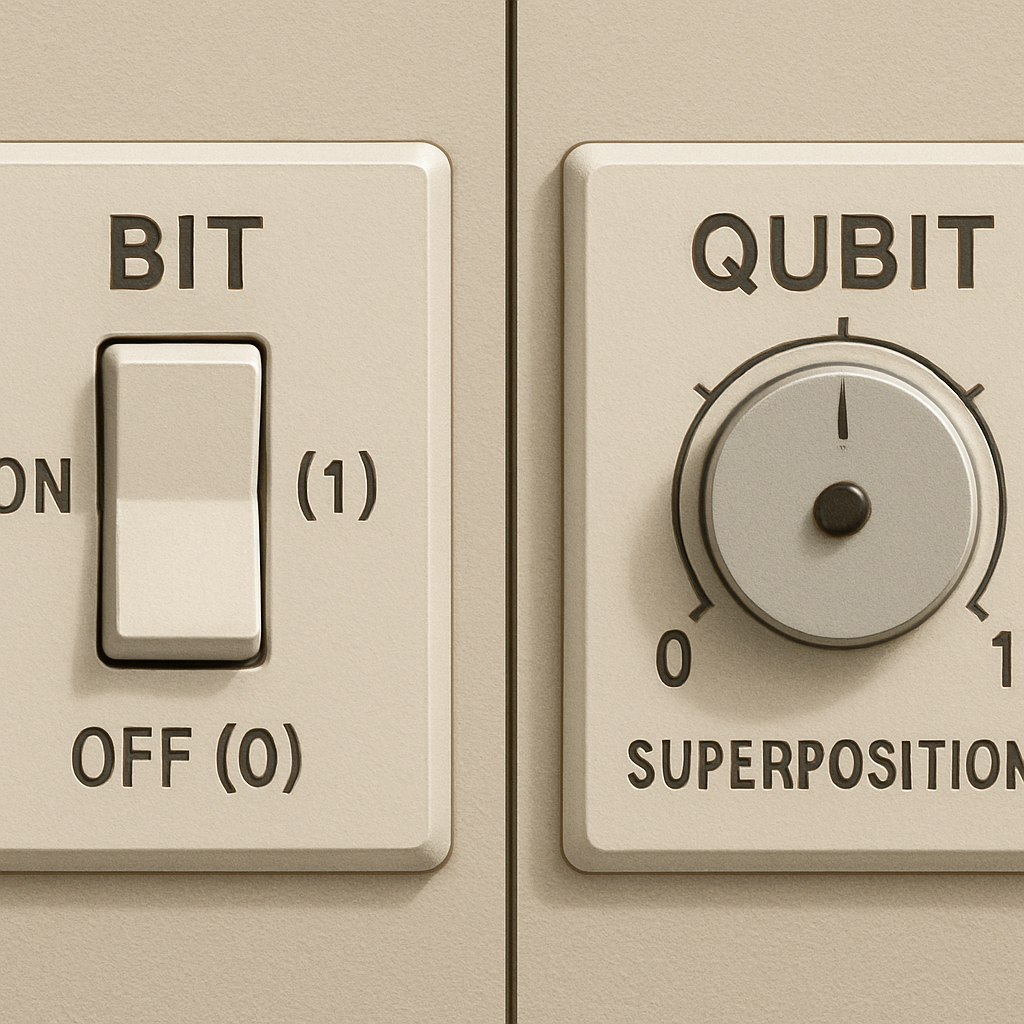
A new kind of computer will be required to break through the computational wall. This new computer would have to work with a whole new set of rules. All computers — including today’s largest supercomputers — use a binary system to process information. In other words, all computers use two absolute value representations for each “bit” of data. Each bit can either be ON (representing the value 1) or OFF (representing the value 0). This simple form of processing allows computers to rapidly test a wide variety of possible answers to very complex problems.
#Understanding Quantum Computing: A Beginner’s Guide You Must Read
Quantum computers operate using a basic component known as a “qubit”. Unlike light switches, which can only turn on or off (on = 1, off = 0) in terms of function, qubits act like a light dimmer switch. Qubits can be set to either “off” (state = 0) or “on” (state = 1), or to a superposition of both. The fact that qubits can exist in multiple states simultaneously is due to a characteristic of quantum systems known as “superposition.” Superposition is a key feature of quantum systems and is responsible for the high speed and capabilities of quantum computers.
Everything now begins to shift. Because quantum computers can exploit superposition, a large number of possibilities need not be tested sequentially. Instead, a few qubits will simultaneously evaluate an almost limitless number of possible solutions. To illustrate this concept, with 300 qubits working in tandem, there are far more possible combinations of results that can be tested than there are atoms in our observable universe.
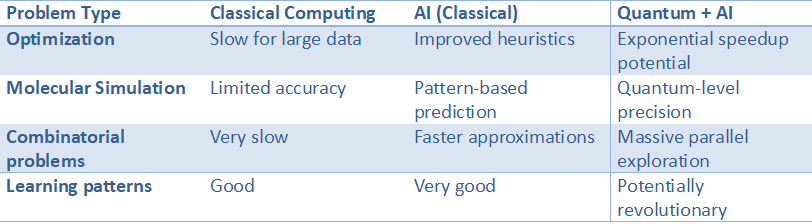
Classical vs Quantum + AI Capability Gap
Example: Quantum AI can explore millions of molecular combinations simultaneously.
Source: IBM Quantum Research
https://www.ibm.com/quantum
Finding the Needle in a Universe-Sized Haystack: The Role of AI
The ability to hold information in a single space where many more possibilities exist than all the atoms in the universe is a double-edged sword. While there will always be the right answer somewhere, finding it is the problem. In this sense, the quantity of information can be likened to a map of all routes that traverse a mountain range – a monumental collection of information. You do not require additional information; you need someone to know how to read the map.
This is exactly when AI (Artificial Intelligence) has the potential to evolve into the ultimate map reader, helping us navigate the realm of Quantum Physics. Rather than simply permitting the quantum computer to randomly search through its simulation, the AI can monitor the simulation, detect patterns in the data, and learn as it searches. The AI can then say to the quantum system, “I am seeing something interesting in that part of your simulation, let’s check that out”. This process can also be compared to identifying a large number of paths that could never lead anywhere and eliminating them without ever having taken any.
The quantum computer provides a vast, parallel “what if” engine, while the AI provides the strategic approach to effectively direct the search. Together, these tools transform the seemingly impossible task of finding a needle in the haystack of the universe into a simple, directed search for the needle. This dynamic combination is exactly what we need to begin solving problems once thought unsolvable.
Quantum Systems: Quantum systems represent reality through probabilities and interactions
Quantum systems are representations of reality that can be unfamiliar to most people’s experiences. They represent what could happen for every event, weighted by the probability of that event. Quantum systems have many differentiating characteristics compared to other systems including their ability to exhibit both wave like and particle like properties, the ability of particles to occupy multiple states at once (known as superposition), and the ability of particles to become entangled with each other (so that no matter where they are located the properties of two particles will continue to be correlated).
Unlike some systems (for example, dice rolling), quantum systems are not random. That is to say, quantum systems do not operate on pure chance. Quantum systems follow rules and are thus governed by a probabilistic understructure that is consistent with empirical evidence.
Another way quantum systems differ from other systems is in the mathematical representation of their interactions. Interactions in quantum systems are represented by state vectors (or wave functions) and evolve over time as they interact with other systems. A final aspect in which quantum systems differ from other systems is the effect that measurement has on a quantum system. When a measurement is made on a quantum system, the measurement process selects a specific outcome from the set of possible outcomes. Which outcome is selected depends entirely on how the measurement was made.
As the number of interacting quantum systems increases (e.g., electrons in solids, atoms in molecules, spins in magnets), so too does the number of possible configurations of those systems. This significantly increases the difficulty of accurately determining the behavior of those systems.
The interest in modeling large-scale quantum systems has led to an increasing interest in quantum artificial intelligence simulation. This type of simulation, which combines ideas from quantum computing and machine learning to analyze the behavior of complex quantum states, does not rely on classical or brute-force methods to examine their details. Instead, by training models to find patterns in quantum data (energy landscapes and correlations), the models are directed towards regions of a quantum system’s probability space where the most probable solutions are located.
Because of the strong correlation present in many types of quantum systems (i.e., components cannot be analyzed separately), hybrid quantum AI simulation techniques allow for a quantum processor to generate samples from a quantum circuit, while simultaneously generating improved parameters for the samples through analysis by an artificial intelligence model, removing noise as needed. Additionally, hybrid quantum AI simulation techniques offer significant advantages in reducing the complexity of describing quantum systems by leveraging neural networks to represent complex probability distributions more efficiently than traditional methods.
As we demonstrate in our research on quantum systems, reality at the atomic level does not have a single narrative; instead, it presents itself as a set of narratives that interact with one another. Therefore, as the field of quantum AI simulation continues to mature, we anticipate that this technique will evolve into a viable tool for simulating quantum systems in chemistry, materials science, and sensing applications. Ultimately, quantum AI simulation will allow researchers to predict how their quantum systems will behave under new operational conditions and to transform probability-based theoretical frameworks into useful, engineering-based predictions.
Quantum Models: Quantum models simulate environments that classical computers cannot replicate.

Quantum Models Representing Quantum Behavior in Real-World Environments Through Simplified Mathematical Representations. Unlike classical simulations, which follow definite states of systems (for example, the positions of the atoms), quantum models represent systems that exist in a state of superposition (multiple states at once) and exhibit interference and entanglement (the correlation of two or more particles) that can be much stronger than the classical behavior of molecules, materials, and light. Because the strength of these effects scales exponentially with system size, quantum models typically focus on regimes accessible to high-accuracy classical computer simulations.
Researchers use quantum models to predict chemical and material properties, including bonding, reaction pathways, conductivity, and magnetism, as well as electron sharing and energy transfer. However, researchers do so while maintaining the “quantum rules” that describe the statistical and correlational relationships among the particles in their models. These “rules” are important for predicting the behavior of strongly correlated materials (in which the behavior of one particle depends on the behavior of all other particles in the system) and catalytic reactions (where small changes in the energy difference of reactants and products can have significant effects on the outcome of the reaction).
Modern quantum hardware offers new ways to build quantum models by enabling us to encode the states of quantum systems as qubits. By creating configuration samples consistent with the quantum distribution of the simulated system, a quantum processor can serve as its own simulator. Therefore, a Quantum AI simulation has significant value here: it will allow experimenters to determine which experiments to run, identify optimal values for circuit parameters, and find compact representations of the quantum state that reduce computational cost.
Quantum AI Simulation includes three components: A quantum device to test (run) the quantum model(s) of interest; Classical Optimization methods (such as Genetic Algorithms, Gradient Descent, etc.) to determine Optimal Parameters; and Machine Learning to Denoise Results from Quantum Simulations and Identify Patterns in those Results.
Quantum AI Simulation allows researchers to run multiple quantum models simultaneously to compare how well each model fits the measured data and which physical phenomena must be included to accurately simulate the system’s behavior. Furthermore, it is possible to generate an Uncertainty Estimate of the accuracy of the simulations using a Quantum AI Simulation. This is particularly significant since both Hardware Noise and the Limited Number of Qubits will restrict the ability to obtain an unambiguous Signal.
As the technology of Quantum Computing continues to advance, Quantum Models will grow increasingly complex and predictive; not because they “simulate” Reality perfectly, but because they will capture all Important Interactions that lead to the Desired Outcome. As long as they are properly utilized and augmented with Quantum AI Simulation, Quantum Models have the potential to transform difficult-to-replicate experimental conditions into Controllable, Replicable Simulated Experiments; thereby providing a means to Accelerate Innovation in Areas such as Drug Development, Battery Technology, Sensor Development, and Next-Generation Computing Systems.
Quantum Algorithms: Quantum algorithms solve problems unreachable by classical algorithms

Quantum Algorithms are designed specifically to run on quantum computers. Quantum computers utilize qubits. Qubits can represent all possible values simultaneously. This enables Quantum Algorithms to explore many different parts of a potential solution space in an extremely efficient way compared to Classical Algorithms. Classical algorithms are particularly ill-suited to solving problems that involve multiple variables and have inherent probabilistic interactions.
More generally, Quantum Algorithms achieve improved efficiency in two ways. These two methods include Superposition, in which candidate solutions exist in a state where all possible values are simultaneously present. Secondly, through entanglement, candidate solutions become linked together as a singular entity. Through this construction, Quantum Algorithms improve the likelihood of finding the correct answer(s), while decreasing the likelihood of finding incorrect answers. The intention behind Quantum Algorithms is not to provide better performance in comparison to Classical Methods across all problem types. Instead, it is to provide a barrier that limits what problems Classical Methods can attempt to solve in a reasonable period of time.
There are several examples of significant quantum algorithms. There are numerous potential applications for each. Shor’s method for factoring large numbers is one of the best-known quantum algorithms. Shor’s method has demonstrated the ability to find a solution to a problem significantly faster than any Classical Method utilizing large-scale, error-corrected computing. Additionally, Grover’s search is another fundamental Quantum Algorithm. Grover’s search demonstrates a quadratic improvement over Classical Unstructured Search and serves as the basis for developing additional Quantum Algorithms. Finally, many quantum algorithms address linear algebra, sampling, and optimization.
One of the primary applications of Quantum AI Simulation is modeling natural phenomena. Many advancements in chemistry and materials science are based upon simulations of quantum systems; hence, Quantum AI Simulation is also applicable in this area. In the Quantum AI Simulation workflow, Machine Learning Algorithms are utilized to identify the appropriate circuit(s), the optimal parameter setting(s) of those circuits, and the acceptable level of ‘noise’ when executing a quantum algorithm. The data generated by a quantum algorithm simulates the principles of quantum mechanics.
Quantum AI Simulation uses the “engine” provided by the Quantum Algorithm (for example, Variational Methods such as VQE or Optimization Methods such as QAOA) for a particular problem and utilizes it in conjunction with the current and imperfect hardware available today.
Quantum AI Simulation allows scientists to run iterations of their experiment faster than they could without AI. AI Models can discover which settings cause the Quantum Algorithm to consistently converge, which measurements provide the most information about the modeled system, and which potential results may be incorrect due to hardware errors. Ultimately, Quantum AI Simulation can transform experimental output into actionable predictions.
To summarize, Quantum Algorithms create novel paths to solve certain types of problems computationally, and Quantum AI Simulation creates a path to translate Quantum Algorithms into practical tools (specifically for scientific simulation and complex decision-making) as the quality of quantum hardware improves.
Quantum vs Classical Algorithm Efficiency

Example: Quantum algorithms like shor’s algorithm can factor numbers exponentially faster.
Source: NIST Quantum Computing
https://www.nist.gov
Quantum Machine Learning: Quantum machine learning accelerates pattern discovery beyond classical limits
Quantum Machine Learning combines quantum computation and modern artificial intelligence to enhance pattern discovery of large data sets. Classical machine learning models must process more and more data points or detect slightly higher-dimensional relationships within the data set as their training time increases.
Quantum Machine Learning determines whether qubit- and quantum circuit-based representations of complex spatial patterns can enable the solution of certain learning problems with fewer resources. Both fields are also closely associated with the simulation of quantum artificial intelligence, since they both require quantum hardware to simulate complex probabilistic structures and then apply standard AI techniques to turn the results of simulation into something useful.
The general idea behind Quantum Machine Learning is to utilize quantum states as feature spaces. Classically, one represents the data as vectors and measures the distance between them; one then compares the vectors using a kernel function to determine their similarity. This method is replaced by encoding data into quantum amplitudes and measuring state similarity by exploiting interference and entanglement between quantum states.
In some cases, Quantum AI Simulation enables researchers to categorize data, discover relationships between variables, and identify irregularities that classical methods may miss. Once the researcher determines the feasibility of his/her ideas in an actual system, Quantum AI Simulation typically has the largest impact on selecting good circuit configurations for the system, on reducing device noise in the system, and determining if a specific quantum machine learning model actually learns the signal of interest or simply learns the characteristics of the device used to generate the signal.
Hybrid approaches are also currently being developed. In developing machine learning with Quantum Computers, a very small (quantum) circuit will act as a learnable model, and a classical optimization technique will use the measurement outputs of the quantum circuit to optimize its parameters. Quantum Machine Learning is very promising in today’s noisy computing environment, but like all machine learning techniques, there are many new challenges to overcome in addition to those already experienced by classical machine learning, including obtaining “stable” gradients of the loss function with respect to the quantum parameters, and avoiding “barren plateaus”, or regions of the parameter space where training will cease.
Quantum AI Simulation can aid in training machine learning models by identifying parameter combinations that could lead to successful training and by providing the best strategy for evaluating model outputs to achieve the highest accuracy.
In addition to commercial applications, Quantum Machine Learning is also becoming a tool for scientific research. For example, learning the internal structure of quantum states, identifying various phase transitions in matter, and reducing the size of the simulation data can all be classified as learning problems.
For this type of application, Quantum AI Simulation can be considered a pipeline: the quantum device produces samples from the physical model, and AI models are trained on the patterns in these samples to describe the system’s behavior across many simulations.
We need to be realistic about what Quantum Machine Learning can accomplish in terms of speeding up the execution of computational tasks at this point in time. That said, we have seen steady improvement in algorithms, benchmarks, and error correction in recent years.
Over time, as hardware improves, Quantum Machine Learning may be a useful partner to Classical AI, especially when combined with Quantum AI Simulation to convert noisy, random quantum measurements into deterministic, rich patterns.
Quantum AI: Quantum AI enhances intelligence using quantum computing principles
A number of hybrid approaches are currently being created. The method for developing machine learning on Quantum Computers will use a small (quantum) circuit as a learnable model and a classical optimizer to adjust the model’s parameters based on measured outcomes. Quantum Machine Learning has advantages over traditional machine learning due to its ability to operate in today’s noisy computing environment; however, it introduces new challenges, including obtaining “stable” gradients and preventing “barren plateaus,” areas of the parameter space where training will not proceed.
Quantum AI Simulation can assist in training machine learning models by identifying potentially successful parameter sets and selecting optimal measurement methods to generate the most accurate data. In addition to providing uncertainty estimates, Quantum AI Simulation may assist with other aspects of scientific research and development.
Additionally, Quantum Machine Learning is also being applied in a variety of scientific discovery applications. Examples include learning the structural properties of quantum states, classifying the many phases of matter, and minimizing simulation output sizes.
Quantum AI Simulation can serve as a pipeline for applications where it is desired to understand system behavior across multiple simulations. Samples are generated by the quantum device from the physical model, and then an AI model learns patterns from them.
At present, it would be unrealistic to assume that Quantum Machine Learning will demonstrate widespread, consistent speedup in classical computing tasks. Progress has been continually observed in algorithms, benchmarks, and error correction in Quantum Machine Learning in recent years.
Ultimately, continued improvements in computing hardware could make Quantum Machine Learning a useful complementary tool to Classical AI when used together with Quantum AI Simulation. When using Quantum AI Simulation to convert random, noisy quantum measurements into rich, determinate patterns, combining it with Quantum Machine Learning could yield significant advantages.
The primary focus of Quantum AI is on those problems that naturally exhibit a quantum aspect. This includes materials discovery, drug discovery, chemical reactions, and other areas where the quantum nature of the problem far exceeds the complexity of the exact classical solution. Using Quantum AI Simulation along with machine learning and variational quantum methods, researchers could predict energy levels, screen potential candidate molecules or structural configurations, and guide the allocation of computational resources to the best candidates. Quantum AI Simulation could also be used to quantify uncertainty, which is crucial when the output is stochastic and the hardware inherently produces noise.
Quantum AI, like other emerging technologies, has the potential to significantly increase the speed at which pattern discovery occurs by utilizing either quantum feature space(s) or quantum kernel(s), to identify patterns within large amounts of data. The use of Quantum AI simulations allows researchers to determine whether the patterns discovered by a system are representative of the underlying data structure or artifacts of the simulation. Therefore, this enables researchers to ensure their performance claims are legitimate until both the hardware and algorithms advance sufficiently.
In general terms, the best way to conceptualize how Quantum AI will work in the future is as a hybrid model. A hybrid model would utilize quantum processors for novel probabilistic computations, while using classical AI for training, evaluation, and decision-making. With ongoing advancements in tooling, Quantum AI Simulation will continue to serve as a bridge connecting the principles of quantum mechanics to tangible improvements in learning, modeling, and discovery.
Quantum AI Workflow
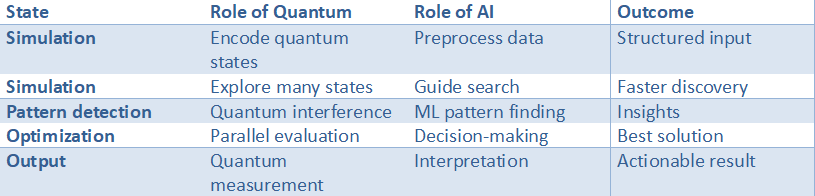
Example: AI guides quantum circuits to focus on promising solutions instead of random exploration.
Source: Google Quantum AI
https://quantumai.google
AI Simulation: AI simulation models complex systems safely and efficiently

AI Simulation provides a safe and efficient way to represent real-world events within a virtual environment, where you can experiment with “what if” scenarios rather than impacting real-world events. This type of modeling is especially useful when experimentation and testing of real items are limited by cost, speed, ethical considerations, or risk in planning for emergency responses, treatment plans, manufacturing safety, financial stress tests, etc.
The benefits of AI Simulation include learning from historical data and real-time signals, enabling it to model complex behavior that traditional mathematical equations cannot capture, such as human decision-making, rare events, feedback loops, and dynamic environments. This type of modeling also allows teams to input variables (weather, demand, policy, staff, dose, price, etc.) and view likely outcomes, including potential adverse effects and trade-offs. Through this type of modeling, teams can make well-informed decisions about resource allocation before committing resources and identify which potential failures may occur only under extreme conditions.
Quantum AI Simulation offers an additional application area that enhances AI Simulation’s efficiency. Because once you have a good working model, you can simulate tens of thousands of hours, automatically find the model’s optimal parameters, and identify high-risk regions. Furthermore, AI Simulation provides an opportunity for training. Training, for example: Pilots train on Flight Simulators; Hospital Staff train on Clinical Simulation; Factory Production trains using Digital Twins. Therefore, both humans and artificial intelligence can gain significant experience from simulation without putting real-world equipment at risk.
Furthermore, Quantum AI Simulation takes this idea to the next level by enabling researchers to study new areas of research and development where the underlying physics is too complex for accurate classical simulation. In essence, if you want to model the molecular structure or the properties of advanced materials, as well as the behavior of some types of quantum devices, you can’t do it classically because the complexity is too great. However, using Quantum AI Simulation allows researchers to couple quantum computing (or quantum-inspired methods) with machine learning to study behaviors far more realistic than classical simulations would allow, while keeping the problem computationally tractable.
Quantum AI Simulation is likely to be hybrid in the short term; AI will help select experiments and reduce data representations and noise, while Quantum-based methods will generate a wide variety of probability-based samples that reflect real quantum physics.
In addition, Quantum AI Simulation could eventually allow researchers to “screen” and test many potential new drug candidates, catalysts, and battery materials in silico before laboratory testing.
However, for an effective AI simulation, there are still guidelines to follow: you must explicitly define your assumptions, validate your results with great care, estimate your uncertainties, and continually evaluate your model to ensure it remains grounded in reality. Used correctly, AI simulations provide a safe environment to experiment with decision-making processes, while Quantum AI Simulation extends this environment to scientific and engineering fields that have been inaccessible.
Breakthrough #1: Designing Life-Saving Drugs in Months, Not Decades
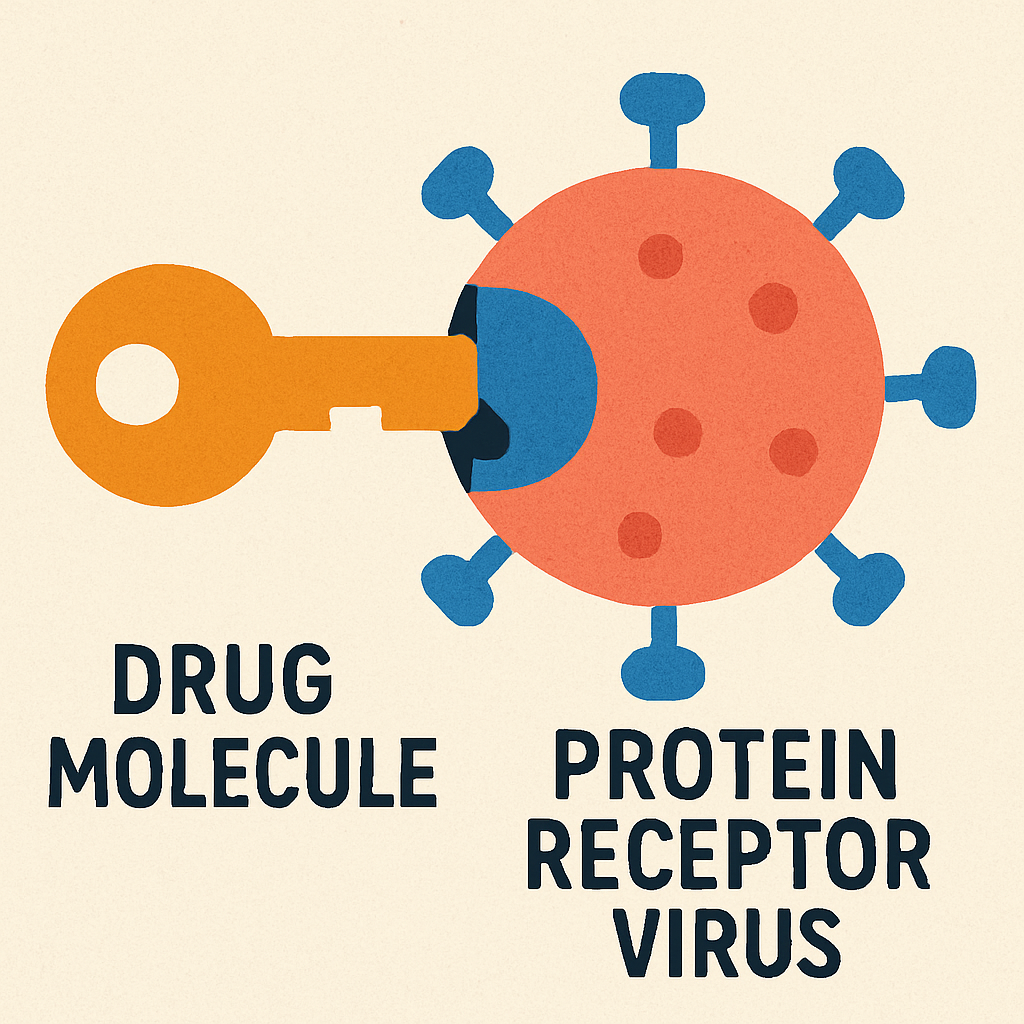
Today, drug discovery is like trying to find the single correct key that fits an extremely dynamic and adaptable locking mechanism in every type of disease-causing virus or diseased cell (the “lock”). There are many different proteins located on the outside of each of these locks that a drug developer would need to create a drug molecule (the “key”) to fit perfectly into.
Currently, computers try one key at a time, and this process can take 10 years and can also be very expensive.
The use of Quantum AI completely changes the drug discovery process by leveraging a quantum simulation to simultaneously analyze interactions between millions of potential keys and the protein lock.
This allows the AI to instantly identify the minute physical forces that indicate when the “key” fits perfectly with the lock, thus enabling it to design a brand-new drug molecule in response to the exact shape and fit required to bind to/inhibit the targeted structure.
Quantum AI may lead to a drug development revolution, because it has the potential to shrink the time frame for drug development from years/decades to months; provide a rapid means for responding to emerging pandemic threats; produce new antibiotic drugs to counteract “super bugs” that are resistant to all existing antibiotics; and provide a valid route for producing treatment options for debilitating diseases like Alzheimer’s.
Breakthrough #2: Creating a “Perfect” Battery for a Greener World
Quantum AI will be the best materials scientist there will ever be. Quantum AI will generate accurate models of how electrons interact with one another across millions of unknown materials. From that, Quantum AI will be able to create the “best recipe” for the interaction of atoms—i.e., a completely new material that will hold more charge, release it faster, and last longer than any material we have today.
The implications of this technology will be monumental. We could potentially see electric vehicles charged in just a few minutes and large-scale battery systems that would allow us to store electricity generated from wind and solar power for 24/7 use. However, design possibilities go far beyond batteries. Quantum AI will be a tool to produce much more efficient solar panels and environmentally friendly ways to manufacture fertilizer. The possibilities will be endless.
The revised version of the paragraph provided herein makes the writing style of the original paragraph more conversational and includes some general punctuation.
Note: The original paragraph was written by Dr. Marcus Weldon, Chief Technology Officer of Nokia Networks, during his TED Talk on May 31, 2016.
Breakthrough #3: Slashing Agriculture’s Carbon Footprint
To provide enough fertilizer to support the billions of people on Earth, we rely heavily on modern fertilizers; however, their production is also considered one of the biggest climate-related problems our planet faces. Most modern fertilizers are made using a highly inefficient manufacturing process (high heat and pressure), which consumes up to 2% of the world’s total energy and produces hundreds of millions of metric tons of carbon dioxide each year. It would appear that there is a significant environmental price tag attached to something society considers vital.
The answer to this problem lies in nature. Certain soil bacteria produce enzymes that can accomplish what modern fertilizers do; however, these enzymes work at ambient temperatures. Scientists have been trying to develop artificial enzymes or catalysts that mimic the performance of naturally occurring enzymes for more than 100 years. They have failed to do so because the way individual atoms move (the “dance”) in naturally occurring enzymes is far too complex and requires a very high level of quantum precision that cannot be achieved through classical computer simulation.
Quantum AI provides the perfect cheat sheet. By accurately simulating the naturally occurring enzymes, Quantum AI allows researchers to deconstruct the mechanisms that allow these enzymes to function efficiently. With this knowledge, researchers will be able to design and construct synthetic enzymes that replicate the performance of naturally occurring enzymes, thereby significantly reducing the energy required to manufacture fertilizer.
Breakthrough #4: Building Unbreakable Financial Models
All current financial models have a major weakness: they cannot anticipate what we do not know. All current financial models look backward in time (at the past), assume that the future will behave like the past, and therefore become invalid if something unforeseen happens. In addition to being able to analyze each individual “tree,” the current models do not always recognize when the danger is to the “forest” itself.
In stark contrast, Quantum AI Simulation creates a dynamic, real-time representation of the complete “economic forest.” It recognizes and examines all interrelationships among the various aspects of economics (e.g., supply chains, interest rates) simultaneously. As a result, it can recognize when a series of small, sequential events (chain reactions) is likely to lead to a major disaster, and when classical computers are unlikely to reliably detect that potential.
Quantum AI Simulation offers a predictive warning system for the global economy, which allows us to move from simply reacting to disasters to taking steps to prevent them. Additionally, the capability to develop new materials using the quantum computer’s ability to examine the basic building blocks of materials from the atomic level upward will allow us to develop materials with properties that are significantly different than those currently available.
Breakthrough #5: Designing Sponges to Soak Up Carbon Dioxide
One of the greatest challenges to global warming mitigation strategies is the removal of carbon dioxide from the atmosphere. Many carbon dioxide removal systems currently available use general filters that are expensive and require a great deal of energy. In order to create a very efficient removal system, a “molecular sponge” or material that can selectively capture CO2 while allowing all other gas species to pass through needs to be developed.
Quantum AI simulation is emerging as a tool to transform the development of “molecular sponges”. Unlike traditional methods of designing molecules through trial and error, Quantum AI simulations allow scientists to design every single atom of a new molecule. The Quantum AI simulator allows scientists to explore virtually unlimited possibilities for synthesizing new chemical compounds and determine which will most effectively remove carbon dioxide from the environment.
The Quantum AI simulator acts much like a master locksmith. It designs a “key” (a specially designed molecule) that fits only one specific “lock” (CO2), thus enabling the creation of the most efficient possible “designer catalyst” for capturing CO2.
While Quantum AI Simulations have the potential to increase the efficiency of existing carbon dioxide removal facilities, they could also spur the development of large-scale carbon capture facilities that remove CO2 from the air at a significantly lower cost than current facilities. Custom molecules created using Quantum AI Simulations will play a major role in the development of green technologies and provide insights into many of life’s mysteries.
Breakthrough #6: Solving the Protein Folding Puzzle to Fight Disease
Proteins are the small engines that run the biological functions of your body. However, they can only function effectively if they are folded correctly into their unique three-dimensional shape, known as the protein’s native conformation. Misfolded proteins may form toxic clumps that are the primary causes of the most devastating neurodegenerative diseases, such as Alzheimer’s and Parkinson’s. Therefore, determining how proteins fold and how to prevent them from misfolding remains perhaps the greatest challenge in contemporary molecular biology.
Supercomputers using artificial intelligence (AI) technology can successfully predict a protein’s native conformation. However, predicting a protein’s native conformation is like knowing where you are going on a road trip without knowing how to get there. Modeling the actual folding pathway of a protein is a much more difficult problem than simply predicting a protein’s native conformation. Protein folding is a highly dynamic process with an uncountable number of possible conformations and atomic movements that occur during folding. It would therefore be impossible for a classical computer to track every possible pathway a protein might take during its folding process.
Quantum computing simulations provide a potential solution to this long-standing challenge. Quantum computers use quantum language to describe the motion of the atoms involved in protein folding, thereby enabling scientists to simulate the folding process as a whole. By doing so, researchers will be able to identify the exact point in time during the protein-folding process when the protein first takes a wrong turn — allowing them to develop “guardrail”-type drugs that block incorrect protein folding.
Breakthrough #7: Optimizing Global Logistics to Eliminate Waste
Most of the products we purchase have traveled a great distance before arriving at our home or on our store shelves. As a direct consequence, there are several challenges for delivery companies in identifying the most effective route-planning strategies for their fleet vehicles that visit thousands of locations. No classical computer has been able to solve the “Traveling Salesperson Problem” optimally to date, as the number of potential routes is so large that it is impossible for classical computers to analyze each path individually.
The Traveling Salesperson Problem is a difficult optimization problem that even a supercomputer cannot solve. The Traveling Salesperson Problem illustrates how a Quantum AI model can simultaneously consider all possible routes throughout a network, and evaluate the vast solution space to determine the optimal solution; whereas a classical computer would need to evaluate every single path in the solution space at least as many times as the number of seconds since the age of the universe began to do so with complete accuracy.
Solving this problem will help build a global logistics/distribution system that uses less fuel, produces lower greenhouse gas emissions, and saves costs. These factors, in turn, will lead to faster delivery times, lower prices for consumers, and a more sustainable/eco-friendly economic model.
Breakthrough Applications Impact Table
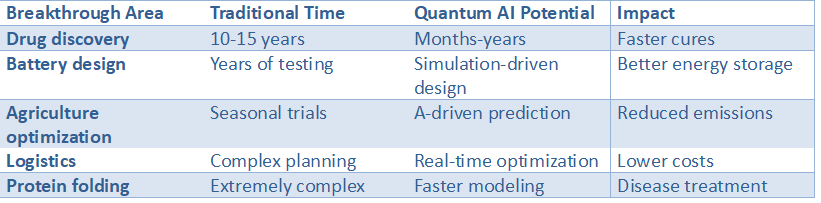
Statistic: Quantum simulation could reduce drug discovery timelines by up to 70-90%.
Source: Nature Quantum Computing
https://www.nature.com/subjects/quantum-computing
Why Don’t We Have This Now? The Challenges on the Quantum Frontier
The first thing to consider when thinking about why we’re not seeing quantum AI simulations everywhere right now is that the technology to create these machines is still in its infancy. We are entering an entirely new technological space with an entirely new area of research.
As for today’s quantum computers, they’re still in the very beginning. Today’s qubits are extremely “noisy” and difficult to control. Think of trying to perform brain surgery with your hands shaking. Any tiny vibration or temperature fluctuation could affect the qubit’s fragile quantum state, causing errors in the calculations. Researchers are now focusing on protecting qubits from long-term environmental noise.
This has created a worldwide competition in engineering (versus pure science). Now, researchers are developing new types of shielding and error-correcting techniques to help stabilize the systems. Therefore, while what we have discussed is probably 5-15 years from being commercially available, the path forward is clear. No one is questioning whether this can be done; the real question now is: How can you make it practical? How can you make it scalable?
Quantum AI Challenges

Statistic: Current quantum systems operate with 100-1000 qubits, for large-scale needs.
Source: MIT Technology Review – Quantum Computing
https://www.technologyreview.com
Beyond On and Off: Entering the Age of Nature-Based Computing
We are developing Natural Language Processing tools rather than trying to fit our biggest problems into a binary framework. There is great potential for elegant problem-solving with Quantum AI Models, as they enable the simulation of problems much more easily than brute-force methods.
The beginning of something exciting is here. All you have to do is be curious about where this technology will go next. For a simple and easy-to-understand overview of quantum supremacy and how it can be used in real life, follow these resources:
- Quanta Magazine has articles that explore the ideas of quantum mechanics in detail.
- University hubs for Quantum Computing, such as the Massachusetts Institute of Technology’s (MIT) Center for Quantum Engineering.
- Quantum computing blogs written by early adopters and researchers who were among the first to work in this area — for example, IBM & Google AI.
For the first time ever, we are using physical science to describe the large-scale problems that we face today — such as developing new medicines and creating new sustainable materials. And for the first time ever, we are developing tools to help us understand this branch of physical science. The development of quantum computing is not just about building faster computers; it’s about enabling humans to work with nature — not against it.
Conclusion
Quantum AI simulation is a new paradigm for tackling some of our biggest scientific and business problems. Classical computing is very fast for solving many types of problems; however, it falls apart when you have a system that is both very quantum and very entangled. As you add only a couple of extra particles, classical computers will be unable to solve those problems exactly due to computational complexity. The hybrid quantum/classical simulation model uses qubits to represent many states simultaneously, and the AI component guides the search process towards the most probable regions.
These seven key breakthroughs — (1) accelerated drug discovery, (2) next-gen batteries, (3) low-CO2 fertilizers, (4) increased resiliency to shock in financial models, (5) high-Efficiency CO2 capture materials, (6) better understanding of protein folding, and (7) optimized Global Logistics — all have one thing in common, they are all presently constrained, not by what can be imagined or created, but by the level of realism possible at the point in time that an outcome decision is being made. Simulating physical phenomena is about reducing the number of trial-and-error tests needed to develop a solution, increasing the speed of developing each iteration, and creating designs based on physics, rather than speculative assumptions.
This technology is still in its infancy. Qubits are extremely fragile; the current state of quantum computers produces significant noise; and developing scalable error-correction methods remains a major technical hurdle. However, the direction is clear, as quantum hardware continues to stabilize and AI-assisted control evolves, so does Quantum AI Simulation.
FAQs
- What is Quantum AI simulation (in simple terms)?
This method combines a quantum computer that searches through multiple potential answers at the same time (utilizing qubits) to find solutions to complex problems, with an artificial intelligence component that can help to limit the scope of the search and assist in eliminating noise from the results of the search to provide the best solution(s). - Why can’t classical computers model these problems accurately?
The number of quantum states increases dramatically (exponentially) as you increase both the number of particles and their interaction, so it is often difficult to simulate many-body systems exactly on high-performance computers such as supercomputers. - What kinds of breakthroughs could Quantum AI simulation enable?
Potential improvements could include, but are not limited to: faster discovery of new medicines, better materials for batteries and solar panels, lower energy consumption catalysts for fertilizers, more efficient carbon sequestration materials, more accurate simulations of protein folding, improved financial models for identifying and managing risks, and more efficient global logistics. - Do we need a large, perfect quantum computer for this to work?
Not all of these applications are available yet. However, many near-term approaches are considered “hybrid,” combining smaller, less stable or noisy quantum computers with classical AI and other tools and methods for error mitigation. As larger, more stable, and reliable quantum computers become available, there will be more opportunities for applications. - What’s the biggest barrier to making this mainstream today?
Currently, the primary engineering challenges to the widespread practical application of quantum computing are maintaining qubit stability and coherence for longer periods than currently achieved and developing effective large-scale error-correction mechanisms.















Comments 1