





















Artificial Intelligence is a branch of computer science in which a machine or group of computers can perform tasks that would typically require human intelligence. Examples of these types of jobs include problem-solving, learning, interpreting languages, and recognizing emotional expressions. AI may be viewed as the technology that enables a machine to replicate human actions and/or perform the same task as a person, but with greater speed and accuracy.

Defining Intelligence in Machines
Machines’ understanding of intelligence comes from their ability to take information and turn it into a successful outcome. Machine intelligence differs from the traditional programming approach, which provides specific directions for an action. Instead, machine intelligence is based on learning and adapting with experience. The act of learning for machines is to acquire knowledge, make decisions, and improve their performance as they continue to use what they have learned. With the development of this type of intelligence in machines, they can perform complex tasks that previously were only possible through human interaction.
Historical Context of AI
The concept of designing machines capable of thinking as much as people do has been around since ancient times; early philosophers and mathematicians envisioned devices capable of simulating or replicating human thought. It wasn’t until the middle of the 20th century that artificial intelligence (AI) became an established field of study. The early work of pioneers such as Alan Turing and John McCarthy laid the foundation for the research that led to the creation of the first AI programs and the term “Artificial Intelligence.”
Current State of AI Technology
AI has made significant progress and will continue to do so. The speed at which AI is improving is due to advances in computing capacity and access to vast amounts of data. AI is now capable of accomplishing a wide range of tasks, from simple automated functions to sophisticated problem-solving. Improvements in AI through machine learning and neural network technology are creating new possibilities for AI to address issues in areas of health care, financial services, and robotics. The uses of AI continue to develop, becoming more diverse and beneficial to society.
Types of Artificial Intelligence
There are essentially two categories of AI: Narrow AI and General AI.
Narrow AI: The Present Reality
Narrow AI (also known as Weak AI) is designed to do a few things very well. For example: Language Translation, Image Recognition, Chess, etc., Narrow AI performs these specific tasks well, but can’t be used for anything else that isn’t related to the original task. Narrow AI is used everywhere in our everyday lives, from Virtual Assistants like Siri to Search Engines like Google.
General AI: The Future Aspiration
While general artificial intelligence (strong artificial intelligence) is still essentially an idea and has yet to become a tangible thing, researchers are continuing to study this form of AI as a possible future for machines. A machine that can generalize its understanding, learning, and use of knowledge to many different areas of expertise; a machine that can do anything that humans can do cognitively would represent a significant step forward for AI. While technological advancements toward achieving General AI may eventually occur, there remain both technical and ethical issues that need to be resolved before it can.
Between Narrow and General: The Role of AGI
“General Artificial Intelligence,” or “AGI,” is a hypothetical position between “Narrow AI” and true “General Artificial Intelligence.” A system of AGI would be able to perform any intellectually demanding task and adapt to new challenges, as humans do. Even though AGI has not yet been achieved, the potential to achieve it is spurring innovation and discussion within the AI community. In order to achieve AGI, there will need to be significant advancements made toward our understanding of human cognitive functions, and then replicating those functions in machines.
How Does Artificial Intelligence Work?
AI uses algorithms to analyze data for patterns, then makes decisions based on those patterns. Algorithms are also the basis for how an AI system learns through data, and allow the machine to process information and create an outcome.
The Role of Algorithms in AI
The primary function of algorithms is to guide an AI system’s processing and decision-making processes. The algorithm will determine which data to analyze and process, and which pattern to identify. Multiple types of algorithms can be used to perform different functions within an AI system, such as a simple decision tree or a complex neural network. With each advancement in AI technology, there is an increased opportunity to develop more advanced algorithms and improve the overall capabilities of AI systems.
Machine Learning: Teaching Machines to Learn
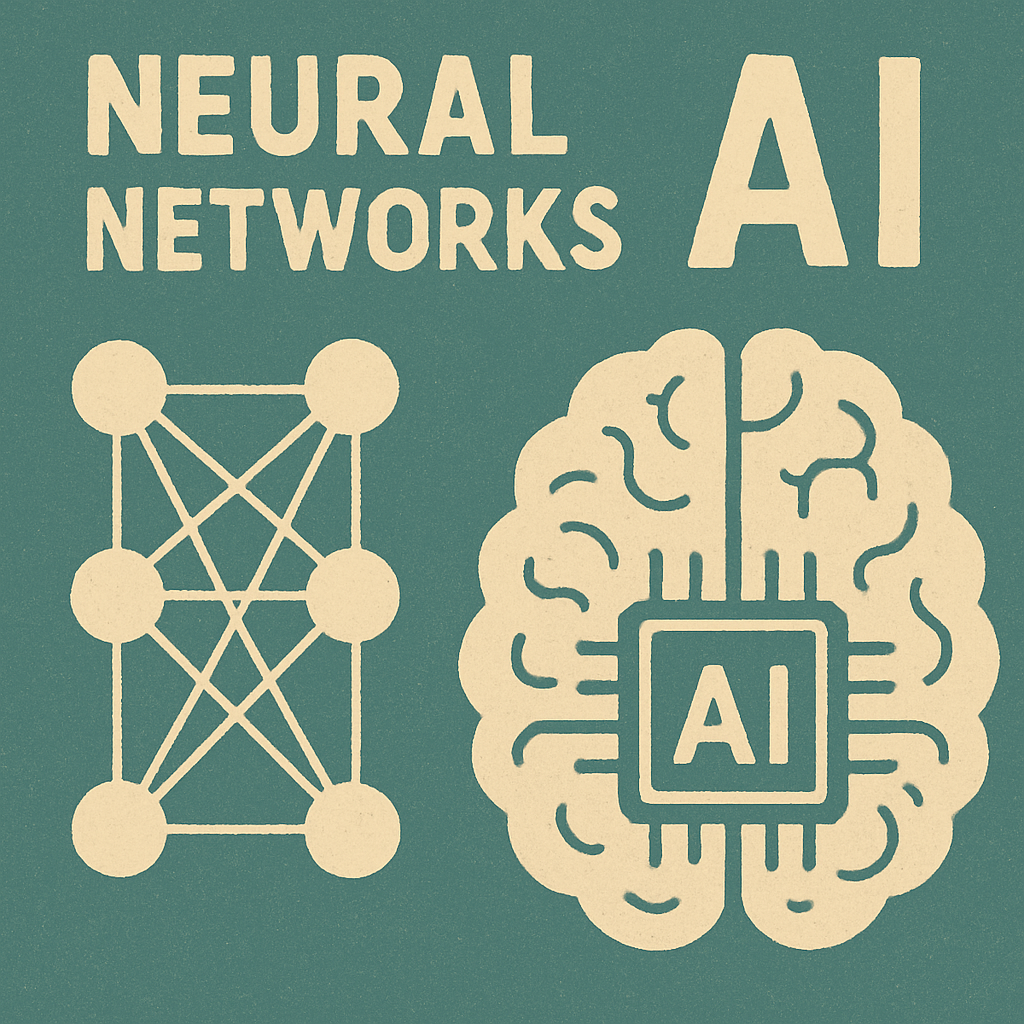
Machine Learning is an area of Artificial Intelligence (AI) that develops algorithms for computer systems to learn and predict by utilizing data. Machine learning enables systems to build analytical models automatically, allowing those models to improve their performance over time without requiring a programmer to program them explicitly. Common techniques for training machine learning models include supervised, unsupervised, and reinforcement learning; these methods enable models to be applied to a wide variety of problems. You want to know about me.
Deep Learning: Emulating Human Neural Processes
Deep Learning, a branch of Machine Learning, is based on the biological processes of the human brain. Deep Learning utilizes Artificial Neural Networks (ANNs) with many layers to process large amounts of information and analyze it, allowing ANNs to recognize complex patterns in images, audio, and text and, as a result, being very successful in applications such as Computer Vision and Natural Language Processing. A primary characteristic of Deep Learning models is their hierarchical representation and their ability to learn from data.
The Data-Driven Nature of AI
Large amounts of Data (commonly referred to as “Big Data”) are a key component for an AI system to operate successfully. The Data is used to train the AI Models, utilizing Large Datasets to analyze and identify Trends/Patterns that the AI System then uses to make decisions. As we continue to see an increase in the amount and complexity of Data, it will become even more critical for AI Systems to effectively utilize the Data available to support future growth and advancements.
Applications of Artificial Intelligence
There are many uses of artificial intelligence (AI) across a variety of areas that affect businesses and our daily lives. Some examples include the following.
Healthcare: Transforming Patient Care
Healthcare has been significantly impacted by AI, leading to improved diagnostic results and personalized treatments. Using advanced AI algorithms, medical images such as MRIs and X-rays can be interpreted more accurately than humans. AI is also being used to predict patients’ future outcomes, enabling more proactive and effective healthcare interventions.
Finance: Enhancing Financial Decision-Making
The financial sector uses Artificial Intelligence (AI) to detect fraud, develop optimal investment strategies, and automate trades. By processing large volumes of financial data, AI-based systems can generate valuable insights that help institutions manage risk exposure and improve the accuracy of economic forecasting. The integration of AI into the financial industry has significantly altered how institutions operate and provide services to their customers.
Transportation: Navigating the Future of Mobility
AI’s use in transportation is evident in self-driving cars, which use AI to perceive their environment, make intelligent decisions, and navigate complex environments. In addition to self-driving cars, AI is being used to improve traffic flow through better traffic control systems, increase the effectiveness of public transportation, and make logistics and supply chains operate at optimal levels.
Entertainment: Personalizing the User Experience
By using artificial intelligence (AI), streaming platforms can provide users with content recommendations that are based on their preferences and viewing history. The recommendation process uses data on how a user interacts with content and what types of content they consume to make show/movie suggestions that meet their individual tastes. Using AI-based content recommendations increases user engagement and satisfaction, thereby providing a more enhanced experience when watching entertainment.
Retail: Revolutionizing the Shopping Experience
Artificial Intelligence (AI) is changing retail by improving operational efficiency and creating personalized shopping experiences. Retailers utilize AI-based tools to improve inventory management, forecast consumer trends, and create virtual assistant applications to support customers. Improving operational efficiency through innovative tools has enabled retailers to create a seamless, customizable shopping experience for customers and enhance customer satisfaction and retention.
Why is Artificial Intelligence Important?
Artificial Intelligence has a lot of promise as far as creating change and improving the quality of life, creating jobs, and freeing up time from routine tasks for people to work on more complex issues. Additionally, Artificial Intelligence provides people with insights they may not have otherwise noticed.
Impact on Jobs: Shaping the Workforce of Tomorrow
Although Artificial Intelligence is changing how we do things and creating new challenges for us to consider, its impact on the workforce will likely have many facets. There will be the possibility of Artificial Intelligence replacing workers by automating jobs; however, there will also be opportunities for those who develop, maintain, and supervise Artificial Intelligence. The automation of routine tasks will create a need for workers with higher levels of creativity, emotional intelligence, and problem-solving skills than ever before.
Ethical Considerations: Navigating the Challenges
Ethical concerns regarding the increasing integration of AI into society are growing; privacy, security, and algorithmic bias all need to be addressed so we can use AI responsibly. Trust will develop when transparency in AI decision-making is established; this same transparency will create accountability for how AI systems function. Ethically based standards or regulations will be necessary to ensure the maximum benefit from AI while limiting its potential for harm.
Innovation and Global Competitiveness
Artificial Intelligence (AI) is driving an innovation trend across many industry sectors and is also a driver of global economic development and competition. The countries that invest most in AI research and development will be positioned as leaders in the evolving technological world. Through this innovation process, AI can help solve several critical issues facing our world today (such as climate change and access to healthcare), thereby improving the quality of life for everyone on earth.
Getting Started with AI

To gain an understanding of AI and continue to learn about it, you can take several initial steps:
Learn the Basics: Building a Strong Foundation
You can find multiple resources online to give you a good grounding in the basics of AI. The websites Coursera, edX, and Udacity provide many entry-level courses that explain the fundamental concepts of machine learning, data science, and neural networks. Learning the foundations of these subjects will enable you to build upon them as you begin to study more complex concepts of AI.
Experiment with AI Tools: Hands-On Learning
Learning through practical, hands-on experience with AI software and tools can help you better understand how AI works. In addition to hands-on experience, many of these tools and platforms are available for free (such as Google’s TensorFlow and IBM’s Watson), allowing users to build models, test them, and solve real-world problems. As a result, hands-on learning is an effective way to translate theory into practice and gain insight into the use of AI in the real world.
Stay Informed: Keeping Up with Advancements
The field of artificial intelligence (AI) continues to evolve at an incredible pace, with numerous new advancements and discoveries made daily. To stay informed about the latest trends and technological breakthroughs in AI, it’s essential to stay up to date on what’s happening today. There are many ways to do this, including subscribing to AI news sources, reading blogs written by individuals in the AI community, and listening to podcasts that cover AI and related technologies. The actions mentioned above will continue to educate you as you learn and adapt to the evolving world of AI.
Conclusion
AI is changing how we live and work as it is used in every aspect of life, from healthcare to entertainment, creating faster, smarter, and more efficient ways of doing things. Understanding what AI is and the opportunities it presents will give you an advantage in navigating your future, whether you are a student, an employee, or simply interested in technology. The future of AI looks bright, and the ability to continue learning and adapt will allow you to leverage its positive effects.
Q&A
Question: What is Artificial Intelligence (AI)?
Answer: AI is the ability of computers to complete work that requires human intellect (learning, language, etc). AI’s purpose is to make machines behave similarly to humans in order to accomplish tasks more quickly.
Question: What are the main types of AI?
Answer: Here are two forms of AI: Narrow AI and General AI. Narrow AI is explicitly designed for specific functions, e.g., language translation, image recognition, etc. Theoretical General AI is the idea that a machine will be able to learn, comprehend, and apply information across almost an unlimited number of areas, as humans do.
Question: How does machine learning differ from traditional programming?
Answer: Traditional Programming (i.e., coding) is when you tell your Computer what to do step-by-step for a particular job. Machine Learning enables Computers to use Data to develop their skills and improve their ability to perform that job better over time, without being told precisely how to do it.
Question: What are some typical applications of AI?
Answer: AI has been implemented in many industries. For example, in the medical field, it assists Doctors in making more accurate diagnoses. It assists Traders in optimizing trades and detecting potential Fraudulent activity within Finance. Additionally, AI is helping develop Self-Driving Vehicles in the Transportation Industry, Personalized Content Recommendations in Entertainment, and Shopping Experiences in Retail.
Question: Why is AI important for the future?
Answer: Artificial intelligence may be able to dramatically enhance the way we do business and make our lives better by taking care of many mundane tasks, helping us understand things that might otherwise go unnoticed, and making processes much more efficient; it could help solve some of today’s most pressing global issues and open up possibilities in many different areas
Question: How can beginners get started with learning AI?
Answer: Building an education for yourself in AI is easy to begin – take online courses, which can be found at Coursera or edX; working with AI tools; and keeping current on recent developments in this area are all important first steps to learning how AI works practically.














Comments 5