

- Home
- All
- AI & Machine Learning
- AI in Healthcare & Biotech
- Autonomous Mobile Robots (AMRs)
- Biomanufacturing Automation
- Biotechnology & Health Tech
- Cloud Infrastructure & Virtualization
- Computer Vision & Image Recognition
- Connectivity & Networking
- Digital Twins & Simulation
- Generative AI & LLMs
- Healthcare IoT (IoMT)
- Humanoids & Embodied AI
- Industrial Robots & Cobots
- Internet of Things (IoT)
- IoT Devices & Sensors
- Natural Language Processing (NLP)
- Quantum AI in Simulation
- Quantum Computing
- Robotics and Automation
- Robotics Software (ROS, ROS2)
- Uncategorized
- USA Artificial Intelligence
- USA Robotics & Automation
- USA Tech & Innovation
- AI & Machine Learning
- Quantum Computing
- Robotics and Automation
- Connectivity & Networking
- Internet of Things (IoT)
















- Home
- All
- AI & Machine Learning
- AI in Healthcare & Biotech
- Autonomous Mobile Robots (AMRs)
- Biomanufacturing Automation
- Biotechnology & Health Tech
- Cloud Infrastructure & Virtualization
- Computer Vision & Image Recognition
- Connectivity & Networking
- Digital Twins & Simulation
- Generative AI & LLMs
- Healthcare IoT (IoMT)
- Humanoids & Embodied AI
- Industrial Robots & Cobots
- Internet of Things (IoT)
- IoT Devices & Sensors
- Natural Language Processing (NLP)
- Quantum AI in Simulation
- Quantum Computing
- Robotics and Automation
- Robotics Software (ROS, ROS2)
- Uncategorized
- USA Artificial Intelligence
- USA Robotics & Automation
- USA Tech & Innovation
- AI & Machine Learning
- Quantum Computing
- Robotics and Automation
- Connectivity & Networking
- Internet of Things (IoT)
USA Tech & Innovation
USA Tech & Innovation
The smartphone in your pocket has more computing power than all of NASA had for the Apollo 11 moon landing, but that's not the biggest thing about it - it's how that technology came to be created through an entirely unique American system of innovation that many of us know nothing about, while using its products on a daily basis.
The history of this innovative engine didn't begin with a single company. It was born from a rare partnership. In decades past, universities such as Stanford would encourage their faculty and students (including the future founders of Hewlett-Packard) to convert research into business. At the same time, the U.S. government was providing funding for large-scale, ambitious projects, including ARPANET (a Defense Department network), which formed the basis for today’s Internet.
When you add a culture that supports taking big risks, you have the three key elements that are behind what Silicon Valley is so well known for. The combination of academic intellect, seed money from the federal government and entrepreneurial guts is the "blueprint" for the history of American technological innovation and is a story that is continuing to influence the world around us.
How "Shark Tank" for Tech Fuels Billion-Dollar Ideas
Venture Capital (VC) is based around the idea of a company trading equity (a part of ownership) for cash with a private investor. In other words, a venture capitalist gives money to a startup (young, untested company), believing its innovative product/idea has the ability to reach the $1B+ status in the future. Many startups rely on venture capital as the primary source of funding to achieve fast growth.
Unlike a bank, which typically requires a proven track record of sales prior to issuing a loan, a venture capitalist invests based upon the potential of a new, unproven business concept. The fact that most of a venture capitalists’ investments will ultimately fail, is exactly why they are willing to fund these ventures. The hope here, is that at least once out of multiple failures, there will be a huge success (i.e., the next Google/Airbnb), which will generate enough revenue to offset all previous losses and provide substantial returns.
The unique aspect of venture capital investing, when compared to traditional forms of financing, is the risk and willingness of the venture capitalist to support unproven and/or innovative business concepts. The role of venture capital in funding US-based startups is essential in converting a business plan written on a napkin into a company that fundamentally alters society. Venture capital is the driving force behind many of today's technology leaders and is expanding its presence in cities throughout America.
It’s Not Just California: Discover America’s Emerging Tech Hubs
Silicon Valley has been getting all the attention lately, but other emerging tech hubs around the United States are also receiving investment dollars through Venture Capital. These cities aren't trying to be "all things" to everyone; they're developing expertise in particular technologies, utilizing their regional strengths to develop world-changing products and services. By focusing on specialized technologies, these cities have developed and will continue to grow as powerful centers of innovation beyond the west coast.
The development of many of these emerging tech hubs is supported by the flow of knowledge from top university tech transfer programs into new business ventures. As each city develops its unique technological specialties, a diverse ecosystem of innovation has emerged:
- Austin, Texas: Hardware and Semiconductor Design—(the brains behind the devices we use)
- Raleigh-Durham, North Carolina: Biotech and Health Tech—addressing major issues in medical research and the life sciences.
- Boston, Massachusetts: Robotics & AI—building the intelligent machines of tomorrow.
As a result of this national explosion of innovation, the opportunities that American companies create through innovation are no longer confined to one coast. From Austin to Boston, this expansion is strengthening local economies and spreading the benefits of economic growth. Some of the innovations in the area of health tech are particularly promising and will likely positively impact our lives. Many of the new tools being developed today are already improving the way doctors work.
How AI Is Already Helping Your Doctor Find Problems Faster
Imagine the sheer number of medical images (X-rays, MRI’s, etc.) that a radiologist has to review. That is an enormous amount of material. An AI can be thought of as a never-ending helper to the radiologist reviewing thousands of images to identify subtle changes that may have been missed by the human eye. This is no longer sci-fi; it will be one of the main ways that AI will be used in the United States to help doctors find diseases at their earliest stages possible.
This technology does not replace the radiologist with AI. The AI provides a second look at the images like a super advanced spell check on medical scans, but ultimately, the decision of what was found is still left up to the radiologist. Most all of the new technologies developed from the U.S. National Laboratories were created to enhance the ability of the experts and not to replace the expert.
As the use of this type of technology grows in the U.S., so too must the efforts to ensure its safe use. Responsible AI is based on developing systems that provide fairness, accuracy and reliability in the data they produce. Ensuring that these tools benefit all users equally and do not contain hidden bias is perhaps the greatest challenge facing the U.S. tech industry today. Trust in these products must be built, just as well as the technology itself.
USA Artificial Intelligence
USA Artificial Intelligence is transforming American work, education, and healthcare delivery. AI technologies are now leaving laboratories and entering daily services; they improve efficiency and create a new wave of questions regarding trust. The research in USA Artificial Intelligence in universities and start-ups has led to advancements in large language models, robotics, and computer vision, funded by venture capital and federal programs.
The expansion of business applications in manufacturing, finance, and retail is accelerating, due to improved forecasting, quality control, and customer service through AI. However, it is important that artificial intelligence be deployed responsibly: transparent data practices, bias testing, and robust cybersecurity protect and provide benefit to the largest number of people possible. Communities can reap benefits from smart traffic systems and quicker disaster response times, however, workers will require retraining and clear guidelines to understand when humans should review high-stakes decisions to avoid making expensive errors. Policymakers are currently examining rules and regulations that include, but are not limited to, safety, privacy, and the use of AI in hiring and surveillance.
In the future, USA Artificial Intelligence will rely on talent pipelines, energy-efficient computing, and partnerships that take research and translate them into viable products. Strengthening the momentum behind USA Artificial Intelligence by linking it to USA Tech & Innovation priorities such as resilient chips, advanced networks, and clean energy will increase competitiveness. By establishing clear standards and holding organizations accountable to the public, USA Artificial Intelligence can produce economic growth and improved public services without eroding civil liberties.
USA Robotics & Automation
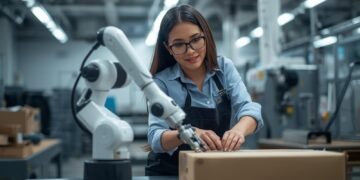
Across the nation, USA Robotics & Automation is revolutionizing how we operate factories, warehouses, hospitals and farms by developing new collaborative robotics working safely alongside employees who perform repetitive lifting, precision assembly and inspection to produce higher-quality products while reducing employee injury.
Logistics will be greatly improved through the use of autonomous mobile robots (AMRs) used to transport inventory and accelerate the shipping process. Additionally, logistics companies will utilize software automation to streamline scheduling, billing, and equipment maintenance processes.
Manufacturers, both large and small, are investing in vision systems, force sensors, and artificial intelligence (AI) controls to allow for safe completion of even more complex tasks.
In addition to its presence in logistics, USA Robotics & Automation is also expanding into the healthcare industry, where robotic-assisted surgery and rehabilitation technologies may increase precision in medical procedures and allow patients to regain their lost ability to move.
On construction sites, the use of drones and robotic surveying technologies will provide real time data which should improve the planning process and minimize costly project delays.
Agriculture has seen the development of automatic harvesting and smart spraying technologies, which have resulted in reduced waste and more sustainable agricultural practices.
However, in order to ensure this trend continues, it is essential to develop strong workforce pathways (i.e., apprenticeships, community college programs, on-the-job training and upskilling) to provide technicians and operators with the skills necessary to properly install, program, and maintain these technologies.
Additionally, safety guidelines, as well as cybersecurity measures to protect connected technology, along with establishing a clear understanding of liability in the event of an incident, are all important.
Pairing USA Robotics & Automation with USA Tech & Innovation initiatives such as advanced manufacturing, 5G connectivity, and resilient supply chains, will enhance our ability to drive productivity, competitive advantage, and high-skilled employment throughout the U.S.
USA Quantum Computing
Quantum Computing is beginning to emerge in the United States as a strategic front that could expand problem solving capabilities far beyond those of present-day computers. Researchers believe they will be able to simulate complex molecular systems; provide optimization for logistics; and improve financial risk assessment with increased speed and accuracy by employing qubits and leveraging quantum effects. National laboratories, Universities and private industry have numerous programs for USA Quantum Computing which are developing hardware approaches (superconducting circuits, trapped ions, photonics) and are making advancements in software (error correction techniques, quantum algorithm development, developer tools for simulating and testing quantum code on simulators and cloud-based accessible quantum systems). Although "practical" and "fault tolerant" quantum computing systems are a work in progress, hybrid workflows that use both quantum experiments and classical computing to explore the potential for early advantage in chemistry and materials sciences are available in the near term.
A major area of emphasis for USA Quantum Computing is security. If USA Quantum Computing becomes capable of breaking current encryption methods, it will be necessary for organizations and government agencies to begin preparing for post-quantum cryptography at this time. It will be important to build a strong talent pipeline of physicists, engineers and programmers, as well as establish supply chains for cryogenic systems, control electronics, and specialized fabrication.
The purpose of USA Tech & Innovation priorities, USA Quantum Computing is intended to enhance competitiveness, accelerate scientific discovery, and create the potential for significant breakthroughs in energy, health care, and manufacturing during the next decade.
USA Healthcare & Biotech AI
USA Healthcare & Biotech AI has been developing the ability to assist physicians with early detection of illness, individualized treatment plans, and reducing the administrative burdens that have become a major obstacle in the delivery of healthcare in the United States. USA Healthcare & Biotech AI has created models using medical imaging to identify potential strokes, cancers and fractures in patients, while the AI systems being developed by USA Healthcare & Biotech AI, are creating triage tools to identify patients who may need immediate medical attention.
In addition to assisting clinicians in their daily work as part of the healthcare delivery system, USA Healthcare & Biotech AI is helping accelerate the discovery process in the pharmaceutical industry through the development of AI systems that can identify new targets for drugs, design proteins that will interact with those targets and provide clinicians with information about which clinical trials may be appropriate for their patients.
However, for USA Healthcare & Biotech AI to truly deliver positive results, the quality of the data upon which these systems are trained must be representative of the diverse population that uses the U.S. healthcare system. Additionally, developers must continue to monitor the performance of these AI systems to avoid "data drift" (i.e., changes in how the system responds to new data) and audit them for potential sources of "bias" so that they continue to produce accurate results regardless of the region or demographic characteristics of the patients.
Federated learning and other privacy-preserving technologies can allow multiple organizations to collaborate and develop common AI systems without having to share sensitive patient data.
Regulatory bodies and developers of USA Healthcare & Biotech AI systems are beginning to focus on regulatory issues surrounding the development and deployment of AI systems in healthcare, including the creation of documentation, explainability and human-in-the-loop workflows that will permit clinicians to review and validate the output of AI systems and remain accountable for the decisions made based on that output. The cybersecurity risks associated with the use of AI in healthcare (e.g., model tampering, unauthorized access to data) must also be addressed if we are to establish public confidence in this emerging technology.
As part of USA Tech & Innovation, USA Healthcare & Biotech AI has the opportunity to contribute positively to the quality of care provided to all Americans, to increase access to care through virtual healthcare, and to provide much-needed support to an increasingly overwhelmed healthcare workforce. However, the ultimate success of USA Healthcare & Biotech AI will depend on whether or not the healthcare delivery systems that employ it invest sufficient resources in integrating these systems into their workflow, in providing adequate training to the personnel that will be utilizing these systems, and in establishing clear clinical protocols to guide the use of these systems in the care of patients.
Pilot studies, shared benchmarks and transparent reporting of the performance of USA Healthcare & Biotech AI systems will also be important in allowing purchasing organizations to evaluate the relative effectiveness of different USA Healthcare & Biotech AI systems and to ensure that the benefits of this technology are available to all Americans, particularly those living in rural and under-resourced areas of the country.
USA Tech Industry News
The focus of USA Tech Industry News is an area that is continuously changing due to a variety of factors such as continual releases of products using artificial intelligence (AI), updates related to semiconductor chips used in computers, cyber attacks against major corporations and increasing regulations surrounding the use of consumer information.
As the U.S. tech industry continues to experience growth at a record pace, one of the areas of focus for USA Tech Industry News is how quickly companies can innovate versus safely deploying their innovations to customers. For example, generative AI is being introduced to customer support services, software development, and educational services, which creates a need for companies to determine when they should deploy these innovative services.
Another frequent topic of discussion in USA Tech Industry News is the ongoing battle for computing power. Cloud-based providers continue to expand their number of data centers in order to meet the growing demand for computing power as well as energy, while major corporations continue to compete with each other for access to the most advanced semiconductors. At the same time, numerous startups are developing special-purpose tools in various industries such as healthcare, finance, and manufacturing, and large platforms are investing in strategic partnerships and acquiring smaller companies in order to remain competitive.
USA Tech Industry News also follows trends in the work force and culture of the U.S. tech industry, particularly the trend towards remote work, hiring practices, and the emphasis on attracting and retaining diverse technical talent. The regional ecosystems of major cities across the U.S., from Silicon Valley, California; Austin, Texas; Seattle, Washington; and emerging hubs, continue to attract investment and researchers, solidifying USA Tech & Innovation as a top national priority.
Ultimately, through tracking USA Tech Industry News, readers will be able to identify trends early in the process: which technologies are advancing and becoming more mature, which risks are growing, and which regulatory or market changes may influence the next round of American competitiveness in technology.
USA AI Jobs & Careers
USA AI Jobs & Careers are developing in tech, healthcare, finance, retail, and the federal government as companies are using generative and machine learning artificial intelligence. The jobs range from data scientist roles and machine learning engineer roles to product manager roles, prompt engineer roles, and roles focused on the development and implementation of AI policy. As such, many employers today anticipate potential job applicants to have some level of familiarity with the concepts of model evaluation, responsible artificial intelligence, and the basics of cloud-based services.
Hands-on work in the area of USA AI Jobs & Careers includes keeping systems running and operational; data engineers build pipelines that support training, deployment, and model validation and evaluation while MLOps engineers monitor the performance of deployed models and security professionals monitor and protect both the models and sensitive data used by those models. Specialists working in areas where regulations apply spend their time ensuring that all elements of an organization's AI-powered tools are compliant, properly documented, and tested for bias to ensure the tools are both safe and fair to users.
Typically, to pursue USA AI Jobs & Careers, job seekers will need to possess a combination of the core skills typically required for AI development (Python, statistics, and SQL) along with hands-on experience through participation in relevant projects, internships, or open-source collaborations. As AI is being applied in specific domains (e.g., supply chain management, clinical workflow management, customer operations), domain-specific knowledge is seen as a competitive advantage when creating AI-based solutions for specific industries. While short courses and certification programs may be beneficial, having a portfolio of work that demonstrates tangible results and measurable outcomes will continue to be a key factor in career advancement opportunities within USA AI Jobs & Careers.
As USA Tech & Innovation continues to grow as a platform, so too will the number of USA AI Jobs & Careers as tools become increasingly user-friendly and more teams and departments throughout the United States begin to incorporate "AI-enabled" processes into their daily operations. To remain successful over the long-term, USA AI Jobs & Careers candidates will require to develop a commitment to lifelong learning, effective communication, and ethically based decision-making.
Your Guide to the Future: How American Innovation Shapes Your World
The device you have in your hands, is much more than just a tool; it is the direct result of an un-seeable formula of USA Tech & Innovation that brings together University Research, Bold Funding, and Risk Taking Culture. Understanding how the combination of these elements creates the innovative products we see today will help you appreciate the innovation process behind each one of them.
The New Perspective also has a very practical Application. The Next Time your Navigation App saves you from being stuck in traffic, instead of seeing it just as a feature, you can see it as the culmination of the entire Innovation System. Being able to connect the dots like this, is a great way to start looking at the world with a new Lens.
As well as seeing the Screen in front of you, you are now able to see the Engine of Ingenuity that is behind it. This view point gives you a greater ability to understand what is going to happen in the future of Technology and how it is going to affect Society. As well as seeing Innovation happening all around you, every single day.
No Content Available












NezzHub is a technology-focused knowledge hub delivering insights on AI, robotics, cybersecurity, biotech, and emerging innovations. Our mission is to simplify complex technologies through research-driven content and analysis.