






















Picture yourself sitting in front of an endless conveyor belt for 8 hours, searching for a single misplaced stitch on a pair of jeans among a thousand pairs of jeans. That is a formula for errors. Inspection fatigue is a persistent challenge on the factory floor, where clothing, electronics, and vehicles are manufactured daily. The human brain cannot sustain prolonged repetition without severe consequences, creating one of the largest obstacles to quality control processes.

This is not purely speculative. Research from industry shows that even when individuals are highly focused, their ability to inspect products accurately declines dramatically after only a few hours of viewing them. In addition to human error, the subjectivity of manual inspections is a factor. What may be viewed as a non-harmful blemish on a soda can by one individual may be identified as a major flaw by another. As a result of this variability, it becomes almost impossible to ensure all products exiting the assembly line meet identical quality standards.
In addition to the inherent error potential of manual inspection, it creates a significant bottleneck in production; the production rate is effectively limited by the speed at which a human can visually inspect each product. Can a system exist that can view a product and understand what “perfection” is, 24/7, without fatigue? A new type of Smart AI is enabling this and has revolutionized the discussion of AI Quality Control versus Manual Inspection, making it possible to produce products of flawless quality at production rates previously unattainable.
Summary
Smart, revolutionary AI improves quality inspections in manufacturing facilities. It transforms a traditional manual process into a rapid, connected inspection system that uses computer vision and sensor data to detect defects as early as possible. This method also identifies variations that humans may not detect and provides a consistent standard of quality across shifts and work locations. In real time, this AI links quality results to process factors (machine parameters, tool condition, materials, and environment) so that the quality team can determine the root cause and remediate it before it becomes a larger problem.
This summary describes how smart factory technology and Industry 4.0 connectivity among machinery, inspection stations, and enterprise systems enable comprehensive traceability and automated workflows. Intelligent manufacturing systems use continuous data to generate actionable information, enabling manufacturers to make changes in the closed loop, improve their scheduling processes, and shorten machine changeover times. Predictive maintenance enhances quality by providing the manufacturer with information about potential equipment failures before they occur, thereby preventing most defects caused by equipment failure.
In conclusion, the article describes several “practical” benefits of using smart manufacturing systems including; less scrap and rework, fewer customer complaints/returns, improved compliance documentation, and more stable production levels while acknowledging that the success of these systems depend on the reliability of the data collected, the reliability of the sensors used, good cybersecurity practices, and well-defined operational workflows.
AI Improves Manufacturing Quality: detecting defects early, reducing errors, and ensuring consistent product standards through intelligent automation
AI IMPROVES MANUFACTURING QUALITY by detecting defects early, every time. In modern factories, AI Improves Manufacturing Quality not just at the end of the line but throughout the entire production cycle. Manufacturing defects often begin as small, hard-to-spot changes: a cutting tool starts to dull, a fixture shifts slightly, temperature or humidity drifts, or a new material lot behaves differently.
Traditional inspection methods—manual checks, periodic sampling, or end-of-line review—can miss these early signals. By the time a problem is visible, many parts may already be out of specification, creating scrap, rework, delays, and customer risk. This is precisely where AI Improves Manufacturing Quality by identifying subtle deviations before they escalate.
#Revolutionary and Reliable Predictive Maintenance in Automation: What It Is and Why It Matters
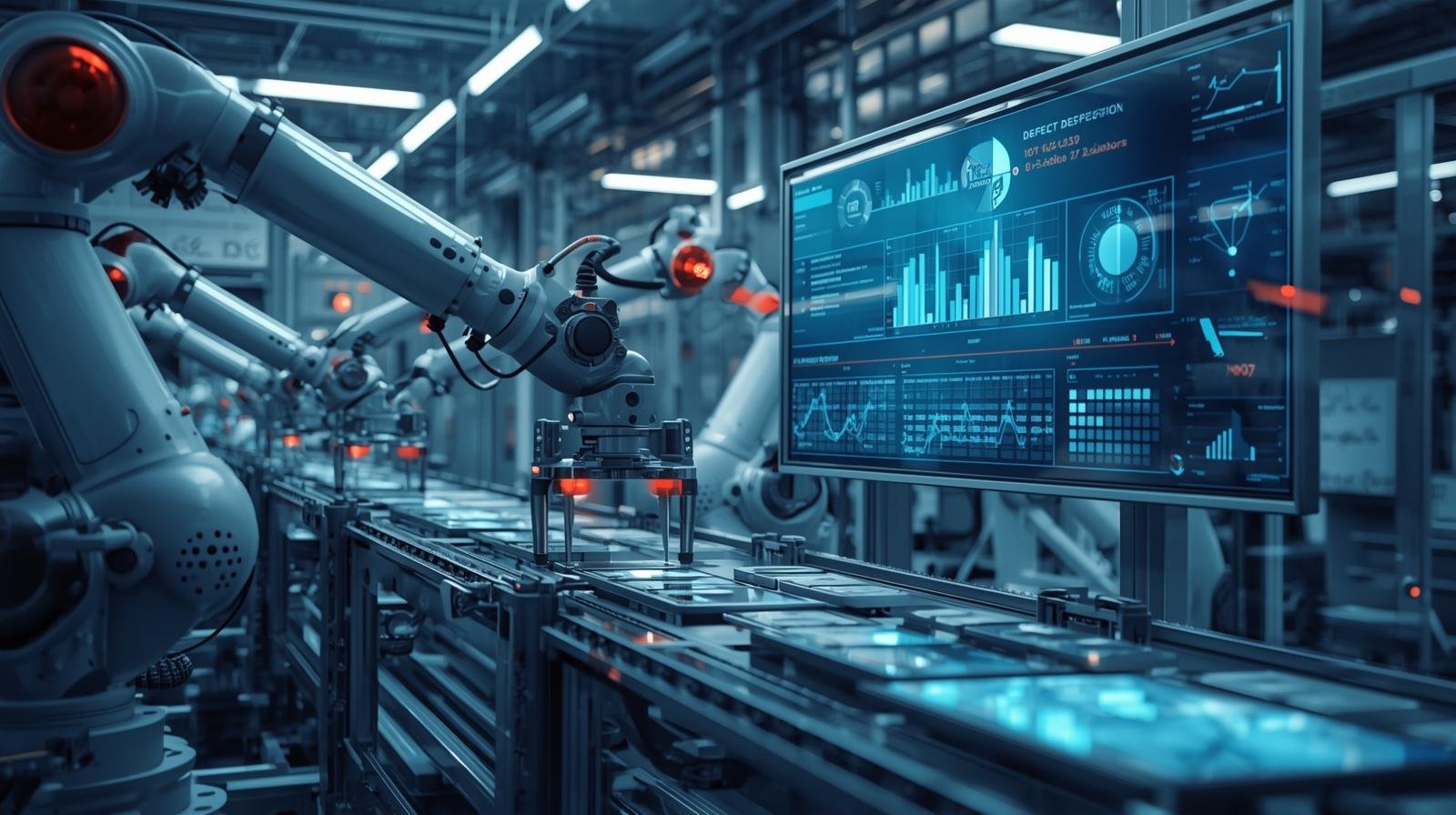
AI-powered quality systems address this by continuously and consistently inspecting. Computer vision models analyze images from line cameras to verify dimensions, alignment, surface finish, weld patterns, label placement, and assembly completeness. They can identify scratches, dents, contamination, missing components, incorrect orientation, and cosmetic flaws at production speed. Because AI can check every unit, it reduces the “gap” that sampling leaves—especially for intermittent defects that appear only under certain machine conditions. By inspecting 100% of output, AI Improves Manufacturing Quality at scale, ensuring fewer faulty products reach customers.
Consistency is another major advantage. Human inspection varies with fatigue, shift changes, lighting conditions, and interpretation of standards. AI applies the same evaluation criteria repeatedly, helping plants enforce uniform acceptance rules across lines, facilities, and suppliers. This standardized evaluation demonstrates how AI Improves Manufacturing Quality through repeatable and objective assessments.
Many systems also automatically capture evidence—annotated images, measurements, timestamps, station IDs, and pass/fail results—supporting traceability, audits, and customer reporting. With these digital records, AI Improves Manufacturing Quality by strengthening compliance and accountability.
The biggest impact comes when AI links inspection outcomes to process data. When a defect rate rises, the system can correlate it with upstream variables such as spindle speed, feed rate, torque curves, vibration patterns, oven temperature profiles, or specific material lots. This shortens root-cause analysis and enables earlier corrective action: adjust setpoints, recalibrate sensors, replace worn tooling, or trigger maintenance before defects spread. In these moments, AI Improves Manufacturing Quality not only by detecting issues but also by preventing their recurrence.
To make AI inspections reliable, manufacturers focus on strong fundamentals: stable lighting and camera positioning, clear definitions of acceptable variation, representative training data (including rare defect types), and ongoing monitoring to prevent performance drift as products evolve. When these elements are aligned, AI consistently improves manufacturing quality across product generations and production sites. Over time, the system becomes more sophisticated, adapting to new materials and configurations, further demonstrating how AI Improves Manufacturing Quality in dynamic manufacturing environments.
With these elements in place, AI transforms quality checks from a reactive gate into a proactive control system—reducing waste, improving customer satisfaction, and maintaining standards at scale. Ultimately, AI Improves Manufacturing Quality by transforming inspection from a final checkpoint into an intelligent, data-driven safeguard woven into every stage of production.
What If a Computer Could Learn to See? Introducing AI-Powered Inspection
The revolutionary idea behind AI-powered quality inspection is to enable a computer to perceive and understand the task at hand. This is one of the key ways AI Improves Manufacturing Quality by moving beyond simple automation into intelligent visual analysis. Forget simple robot arms that just move things from one place to another. This new approach combines two powerful elements: a high-resolution camera serving as the “eyes” and an advanced AI program acting as the “brain.” Together, they create a system that can visually analyze products at incredible speeds.
This powerful capability, known as computer vision, enables a machine to interpret the world from images and video. Instead of merely detecting whether an object is present, computer vision for manufacturing defects enables the system to recognize a misplaced label on a soda bottle, a faint scratch on a phone screen, or even an improperly sealed package—flaws that a simple sensor could never spot. By identifying these subtle imperfections instantly, AI Improves Manufacturing Quality with a level of precision that manual inspection cannot consistently achieve.
This is a huge leap from older, “dumb” automation. A traditional sensor on an assembly line might check if a cookie is in the tray, answering a simple “yes” or “no.” An AI inspection system, however, can make a judgment. It asks more complex questions: “Is this cookie perfectly round? Is it broken? Does it have the right number of chocolate chips?” This shift from simple detection to intelligent judgment is what makes modern quality control so effective.
The camera acts as the eyes, but the AI brain is where the real magic happens. This isn’t a system that follows a rigid list of pre-programmed rules. Instead, it’s a flexible intelligence that learns what “perfect” looks like and, more importantly, what a mistake looks like. But how exactly do you teach a machine to spot a flaw it has never seen before?
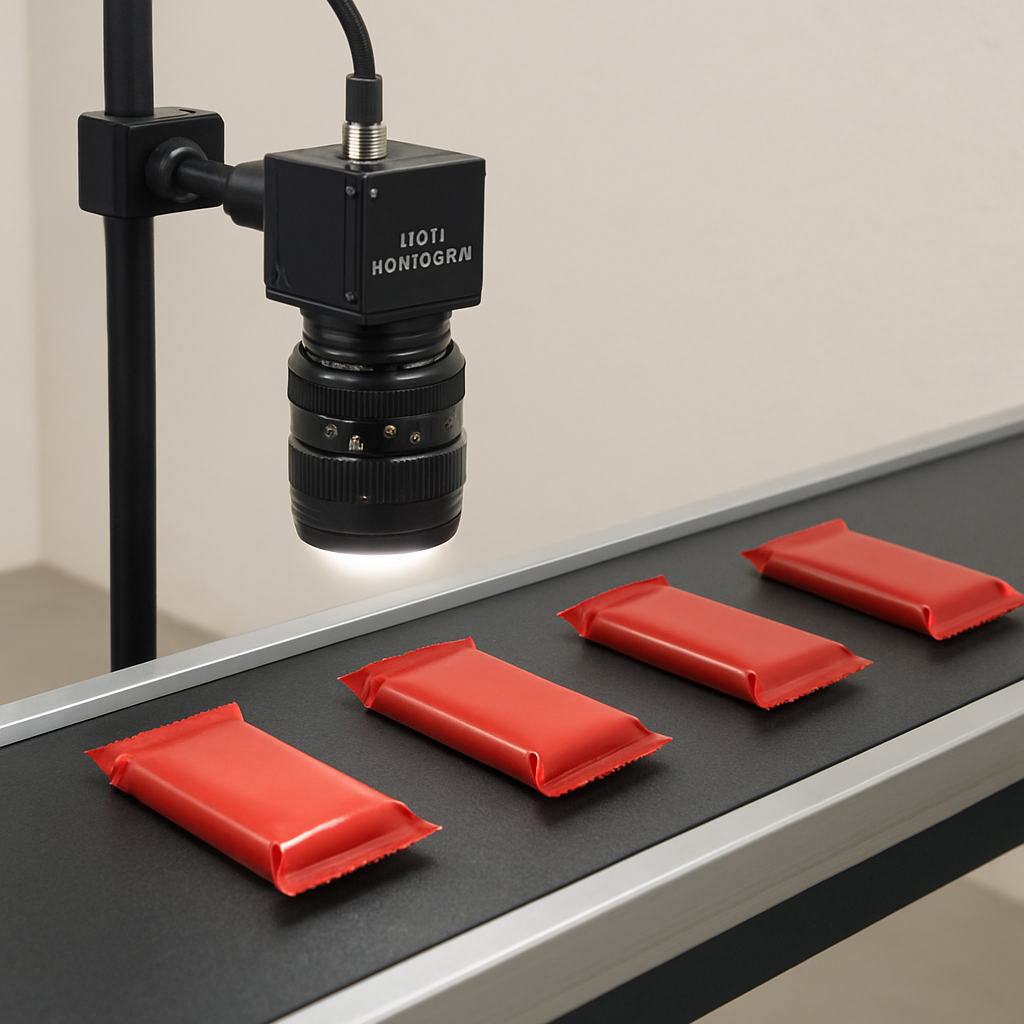
How We Teach an AI to Spot a Flaw: A ‘Digital Flashcard’ System
The answer is surprisingly familiar—you teach it much like you would a person, using a massive set of digital flashcards. This process, known as “training,” is the crucial step that transforms a general-purpose AI into a highly specialized quality expert. It’s not about writing millions of lines of complex code for every possible defect. Instead, it’s about showing the AI examples and letting it learn for itself. Through this learning process, AI Improves Manufacturing Quality by developing the ability to recognize even the smallest irregularities with precision.
For the AI, these flashcards are thousands upon thousands of labeled images. Engineers feed it pictures of perfect products, but also pictures of every imaginable flaw: a phone screen with a tiny scratch labeled “bad,” a perfectly aligned soda can label marked “good,” and a crooked one also marked “bad.” This curated library of examples is the training data. Powerful machine learning algorithms for quality control sift through this data, learning the subtle visual patterns that separate a flawless item from a faulty one.
After analyzing all this information, the AI internalizes these patterns. It builds its own understanding, creating what’s known as an AI model—a specialized digital brain that’s now an expert at one specific task. This model is the core of the AI software for product inspection, capable of making instant, accurate judgments on the real assembly line. Once deployed, AI Improves Manufacturing Quality by consistently applying what it has learned, helping factories deliver more reliable products to customers.
AI in Smart Manufacturing: AI enhances production accuracy through real-time data analysis
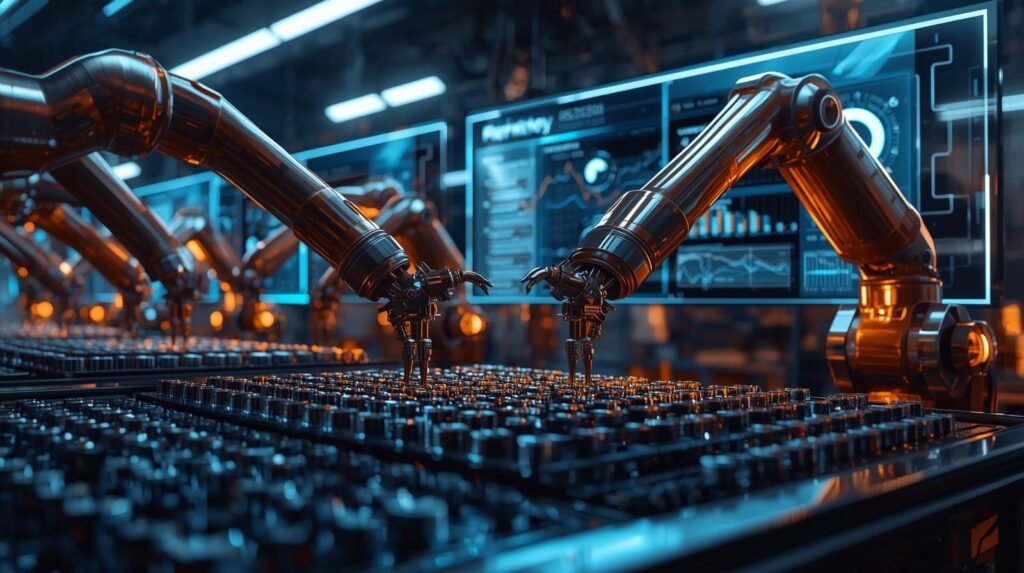
Manufacturing processes are becoming increasingly accurate in terms of both speed and consistency, and AI improves Manufacturing Quality by bringing intelligence directly into daily operations. The development of artificial intelligence (AI) has enabled continuous feedback across all phases of manufacturing. In modern factories, AI in Smart manufacturing connects data from across the production floor to drive measurable improvements.
#Advanced & Transformative Robotic Process Automation Explained – Digital Robots for Computer Tasks
The integration of multiple data types—machine, sensor, vision-system, and MES/ERP platforms—enables AI to make real-time decisions that improve production efficiency. Through this integration, AI improves Manufacturing Quality by turning raw data into immediate corrective action.
For example, rather than waiting for an end-of-shift report to identify problems, AI enables production teams to monitor issues as they develop throughout the day—such as tool wear, temperature deviations, vibration changes, misfeeds, or very small dimensional changes—so that those issues can be corrected before they result in scrap. This real-time visibility demonstrates how AI in Smart manufacturing prevents minor deviations from escalating into costly defects.
Three ways in which AI can be used to improve manufacturing productivity and produce products with greater consistency include:
1.) AI is able to quickly identify anomalies in manufacturing data. Using machine learning algorithms, AI learns the normal operating ranges for each piece of equipment or manufacturing process and flags trends that could lead to problems, even when individual readings appear normal. By identifying these hidden patterns early, AI improves Manufacturing Quality while reducing downtime and waste.
2.) AI supports closed-loop process control. Once a problem is identified by AI, it will recommend parameter adjustments or automatically fine-tune setpoints within safety limits. For example, if there is a trend toward increased spindle torque or a gradual increase in thickness, the AI will suggest changes to either the parameters or the setpoints. This is a key capability of AI in Smart manufacturing, where systems continuously optimize themselves within safe operating boundaries.
3.) AI can help operators make better decisions. With the aid of AI, operators receive timely, clearly defined, and prioritized notifications regarding problems and their probable causes (when the issue began and which upstream factors correlate). This eliminates much of the guesswork involved in troubleshooting and significantly accelerates corrective actions. In these scenarios, AI improves Manufacturing Quality by enhancing human decision-making rather than replacing it.
These improved manufacturing quality benefits are realized when AI is integrated into inline inspection systems, such as cameras, laser scanners, acoustic sensors, or checkweighers. The AI will continually inspect manufactured units against a learned standard and notify operators of defective units early in the process. Additionally, the AI will provide operators with explanations of the most probable causes of defects based on correlations between defects and processing conditions (e.g., a specific material lot, a misaligned fixture, a worn nozzle). This level of continuous monitoring underscores the power of AI in Smart manufacturing to maintain consistent quality while maintaining production speed.
Over time, a feedback loop is created in which the factory not only rejects defective parts but also takes steps to prevent their production. This proactive system shows how AI improves Manufacturing Quality by shifting quality control from reactive correction to preventive optimization.
Another way AI contributes to improving manufacturing quality is by enabling more efficient scheduling and materials flow. Using AI to predict cycle-time variability and potential bottlenecks in real time enables adjustments to the product sequence to maintain the stability of critical processes and reduce rushed setups that may result in errors. These dynamic adjustments are central to AI in Smart manufacturing, where scheduling decisions are informed by live operational data.
In assembly operations, AI can guide workers with visual instructions and computer vision to verify that all components are present and properly oriented and that the required torque patterns have been applied, ensuring consistent assembly. By standardizing assembly verification, AI improves Manufacturing Quality while reinforcing process discipline across shifts and facilities.
To obtain reliable results with AI, manufacturers should begin by focusing on data quality—consistent sensor calibration, synchronized timestamping, and a clear definition of “good” versus “bad” outcomes. With these elements in place, AI in Smart manufacturing can serve as a useful co-pilot, providing minute-by-minute precision and helping teams deliver high-quality output at scale.
Automation in Manufacturing: Automation streamlines workflows and improves product consistency
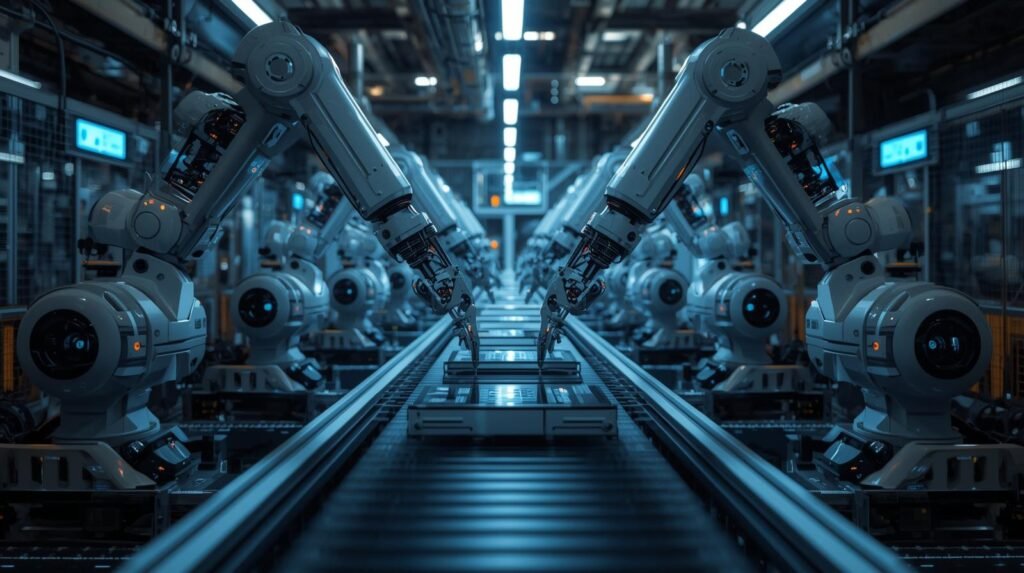
Using Automation in manufacturing enables a more consistent and faster workflow. Automation in Manufacturing helps to standardize production by replacing variable, manual steps with repeatable, measurable processes. Examples include robots, conveyors, PLC-controlled stations, automated fasteners, and pick-and-place systems that maintain steady cycle times and eliminate delays associated with handoffs, tool waits, or part searches. By converting tasks into coded instructions and precision fixtures, Automation in Manufacturing ensures the same operation is performed repeatedly, helping manufacturers meet takt time, minimize bottlenecks, and deliver consistent output across all shifts.
Consistent products result when automation eliminates variations at the source. Examples include automated dispensers that apply uniform bead size and pressure, servo presses that deliver identical force and travel distance, CNC and coordinated motion systems that maintain tighter tolerances, and error-proofing devices such as sensors, interlocks, and barcode checks that prevent incorrect component usage, skipped steps, or improper orientation. In addition to eliminating errors, torque tools verify fastening specifications and document results for each unit, providing full traceability.
When combined with AI in Smart Manufacturing, these automated systems become even more powerful by continuously analyzing performance data to detect subtle process drift.
AI in Smart Manufacturing enhances traditional automation by endowing production systems with intelligence. Instead of simply executing programmed instructions, AI monitors patterns in torque curves, vibration signals, cycle times, and inspection results to identify early warning signs of deviation. By learning what “normal” performance looks like, AI in Smart Manufacturing can flag emerging trends before they lead to defects, enabling proactive intervention by teams. This integration of intelligence with standardized systems ensures that automation does not merely repeat tasks but improves them over time.
When automation and AI work together, factories gain both stability and adaptability. Automation in Manufacturing provides the repeatability needed for consistency, while AI in Smart Manufacturing supplies the analytical insight required for continuous improvement. Together, they create production environments that are faster, more precise, and more resilient—ultimately enhancing product quality at scale.
The use of automated systems coupled with artificial intelligence (AI) can provide greater consistency. When Automation in Manufacturing is integrated with advanced analytics, production lines gain both speed and stability. Vision systems can inspect each item as it is produced and detect early drift before it becomes a larger issue. This capability is further strengthened by AI in Smart Manufacturing, which continuously analyzes inspection data to detect subtle variations that might otherwise go unnoticed.
The collected information can then be used to automatically adjust machine settings or quarantine defective parts from moving further down the line. Through this integration, Automation in Manufacturing not only executes tasks repeatedly but also adapts intelligently when deviations appear.
In addition to inspection, automated data collection enables rapid root cause analysis by correlating defect trends with machine parameters, material lots, or workstation locations. This is where AI in Smart Manufacturing plays a key role, linking quality outcomes with upstream variables to recommend updates in programming or maintenance schedules. By identifying these correlations early, Automation in Manufacturing helps prevent recurring defects and reduces the risk of widespread quality issues. The result is a production system that is both reactive and predictive.
Beyond quality consistency, Automation in Manufacturing improves workflow efficiency by reducing changeover time and optimizing materials handling. Automated guided vehicles and intelligent warehouse systems deliver the right components at the right time, minimizing downtime caused by line stoppages or part mix-ups. Supported by AI in Smart Manufacturing, these logistics systems can forecast bottlenecks and adjust routing dynamically to maintain production stability. This coordination ensures smoother transitions between product runs and supports higher throughput.
Successful implementation requires identifying production areas with high variability or safety risks, documenting current workflows, and defining quality-critical parameters. Organizations that leverage AI in Smart Manufacturing must also ensure robust data foundations, accurate calibration, and consistent monitoring to maintain system performance. At the same time, Automation in Manufacturing should be designed for maintainability, including easy service access, spare parts planning, and wear monitoring.
Even with intelligent systems in place, people remain essential. Teams validate exceptions flagged by AI in Smart Manufacturing, refine automation programming, and maintain equipment reliability. By combining skilled operators with well-designed Automation in Manufacturing, manufacturers create a balanced system where technology enhances human decision-making and delivers consistent, high-quality results at scale.
Smart Factory Technology: Smart factories connect machines for seamless, automated operations
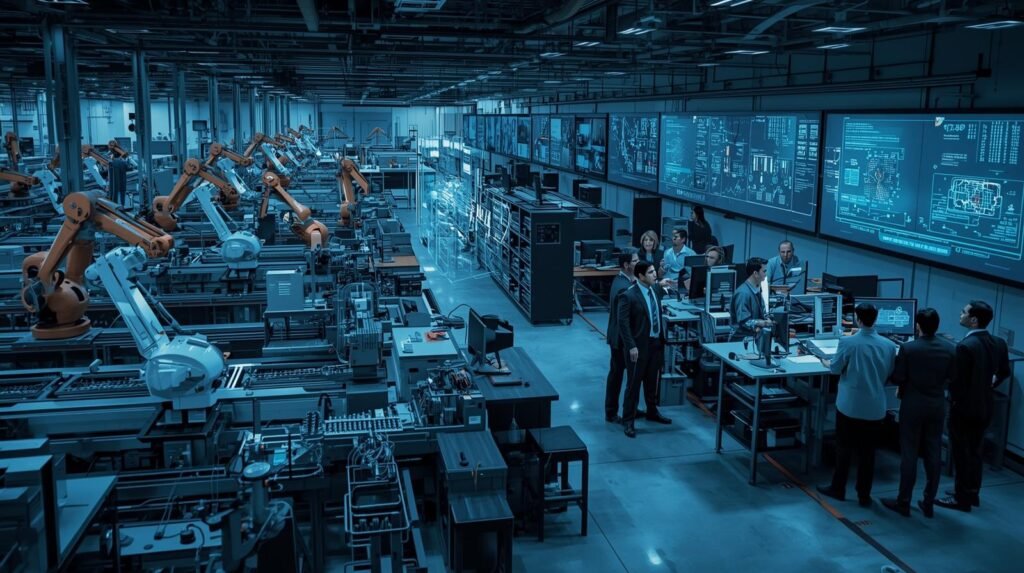
Smart Factor Technology enables a seamless workflow among machine processes and people. In modern facilities, Smart Factor Technology connects production assets so that data flows continuously between machines, systems, and operators. Smart manufacturing relies on connected machinery that shares information and makes decisions throughout the production process.
Rather than operating in isolation, machinery communicates via IIoT sensors and industrial networking protocols to transmit production data, including cycle times, temperatures, vibrations, power consumption, tool life, and quality metrics. Within this interconnected environment, AI improves Manufacturing Quality by analyzing real-time production data and identifying patterns that indicate emerging issues before they affect output.
Smart Factor Technology facilitates the automation of production workflows, enabling real-time balancing of production lines. Idle time is reduced, workloads are redistributed automatically, and minor disruptions are contained before they cascade into larger problems. By continuously evaluating process variables across multiple machines, AI improves Manufacturing Quality through faster root-cause identification and proactive correction. Instead of responding to defects after they occur, manufacturers can intervene during the early stages of drift, maintaining consistency across shifts and facilities.
Real-time monitoring becomes possible when machines, robots, and inspection stations are connected to enterprise resource planning (ERP) systems through a Manufacturing Execution System (MES). Within this architecture, Smart Factor Technology enables managers to track output, downtime, and scrap in real time. Engineers can compare current results with historical performance to detect deviations. When thresholds related to safety or quality are exceeded, edge computing systems can act immediately—shutting down a process or adjusting parameters before transmitting data to the cloud for deeper analysis.
This layered decision-making environment ensures that AI improves Manufacturing Quality not only through inspection but also through intelligent process control and operational visibility.
The automation process is streamlined through the use of a standard data format and end-to-end workflow orchestration. Within Smart Factor Technology, product changeovers trigger updated recipes and digital work instructions, which are automatically distributed to each station. Once scanned with a barcode or RFID reader, the correct part and process parameters are confirmed instantly. This structured coordination ensures process consistency, thereby improving manufacturing quality by reducing manual entry errors and mismatched configurations.
Maintenance systems also generate work orders automatically based on machine condition data, further demonstrating how Smart Factor Technology integrates predictive insights directly into operations. The scheduling of material replenishment in intralogistic operations prevents part starvation at assembly or packaging stations, maintaining flow and stability while AI improves Manufacturing Quality through proactive adjustments.
Because AI makes manufacturing quality better every day.
The use of connected factory data continues to enhance both quality and production efficiency when trends are identified early. In a Smart Factor Technology environment, systems monitor performance indicators and notify operators of emerging issues, recommend set-point adjustments, or route suspect parts for reinspection. These real-time interventions ensure that AI improves Manufacturing Quality by responding immediately to subtle deviations.
Digital twins further strengthen this approach by enabling “what-if” simulations before implementing changes on the live production line. By eliminating trial-and-error, these simulations protect throughput and maintain process reliability—another way AI improves Manufacturing Quality without disrupting production stability.
A successful smart factory program is built around interoperability, data governance, and cybersecurity. Smart Factor Technology relies on connecting legacy equipment to new systems, defining clear data ownership, and maintaining network segmentation with role-based access controls and monitoring. Equally important is change management—operators and technicians require proper training and intuitive dashboards to trust and effectively use the system.
When implemented correctly, connected machines and automated workflows create a responsive factory capable of maintaining stability under pressure and delivering consistent output at scale. In this cohesive ecosystem, AI improves Manufacturing Quality not only through inspection and analytics but through coordinated, secure, and intelligent operations.
Industry 4.0 AI: Industry 4.0 AI integrates digital intelligence across manufacturing systems
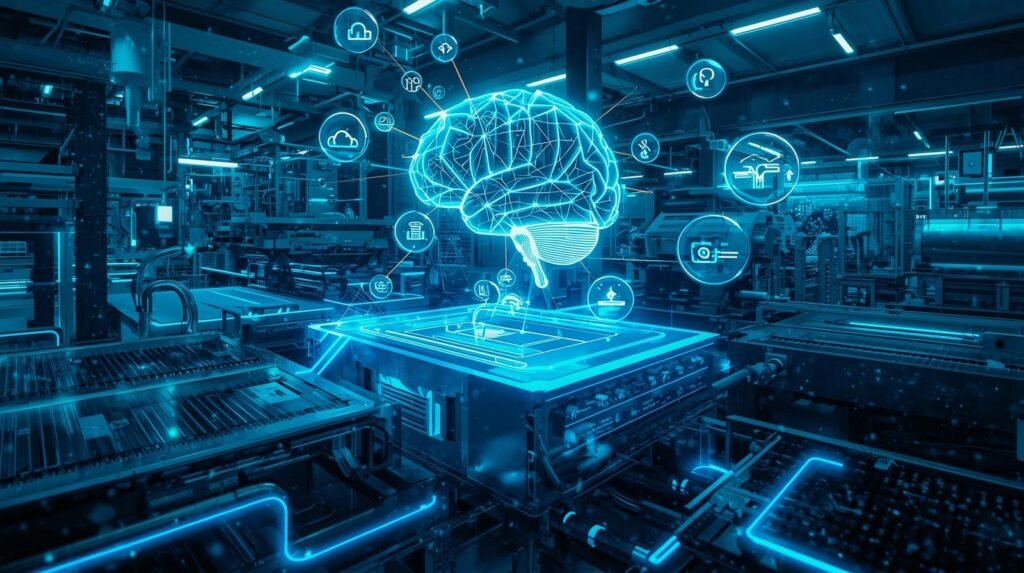
The principal benefit of Industry 4.0 AI is its integration of different systems across the entire factory ecosystem. Within an Industry 4.0 AI framework, quality issues are no longer viewed in isolation. Instead, the system reveals relationships between defects and other operational factors, including process parameters, operator actions, tool wear history, and specific material lots.
When scrap rates increase, Industry 4.0 AI can immediately identify related variables—such as elevated temperatures on a particular line, supplier material changes, or calibration drift at a measurement station. These connected insights enable teams to respond more quickly and effectively, ensuring that AI improves Manufacturing Quality through informed, data-driven decisions rather than guesswork.
By uncovering these correlations, AI improves Manufacturing Quality not just by detecting defects but by explaining why they occur. This deeper understanding enables faster root-cause analysis and supports consistent improvement across departments. Instead of relying solely on periodic reviews, the system continuously evaluates data patterns and flags emerging risks in real time. As a result, AI improves Manufacturing Quality by turning complex, multi-source information into actionable guidance for production teams.
At its core, Industry 4.0 AI integrates the factory’s physical and digital elements—data, equipment, and decision-making systems—thereby enhancing transparency, adaptability, and efficiency. By adding intelligent decision layers to interconnected physical and digital systems, Industry 4.0 AI enables the simultaneous analysis of inputs from equipment sensors, machine controllers, visual inspection systems, MES/ERP platforms, and supply chain data. This integration ensures that AI improves Manufacturing Quality by responding at precisely the right moment, whether adjusting process parameters, triggering alerts, or recommending maintenance actions.
Rather than forcing teams to rely on disconnected dashboards or manually analyze large volumes of information, Industry 4.0 AI provides a unified, real-time operational view. It shows what is happening now, what trends are developing, and what corrective actions should be taken. Through this comprehensive and intelligent coordination, AI improves Manufacturing Quality while increasing operational stability and enabling smarter, more proactive manufacturing environments.
In addition to enabling more intelligent and resilient ways of working, Industry 4.0 AI can predict bottlenecks, identify downtime risks, and recommend schedule adjustments based on real-time production capacity rather than static planning assumptions. Within an Industry 4.0 AI framework, machine data such as vibration signals, temperature readings, and power consumption patterns are continuously analyzed to detect early signs of wear.
This predictive capability enables proactive maintenance scheduling that aligns with production plans and minimizes unexpected disruptions. By anticipating issues before failure occurs, AI improves Manufacturing Quality by increasing operational stability and reducing process interruptions.
The use of artificial intelligence in manufacturing directly improves product quality. When embedded within an Industry 4.0 AI environment, production systems become interconnected and data-driven, enabling faster responses to subtle performance changes. Through this integration, AI improves Manufacturing Quality by reducing variability and enhancing process control across the plant floor.
By integrating artificial intelligence into the quality control process, manufacturers can produce more consistent products by identifying and correcting variations early. Inline inspection systems, combined with AI-based anomaly detection, prevent cascading defects—situations in which a small issue escalates into large volumes of scrap due to delayed detection. In these cases, AI improves Manufacturing Quality by triggering containment procedures, redirecting suspect parts for reinspection, and generating automated documentation for traceability and regulatory compliance.
Operating within an Industry 4.0 AI ecosystem, these systems connect inspection results with broader operational data, strengthening accountability and transparency.
This approach creates a continuous improvement cycle. Each quality issue is logged, analyzed, and incorporated into the learning database, enabling the system to better distinguish normal process variability from emerging risks over time. As the intelligence layer evolves, AI improves Manufacturing Quality not only through defect detection but also through long-term process refinement and predictive insight enabled by Industry 4.0 AI.
Intelligent Manufacturing Systems: Intelligent systems optimize processes using continuous data insights
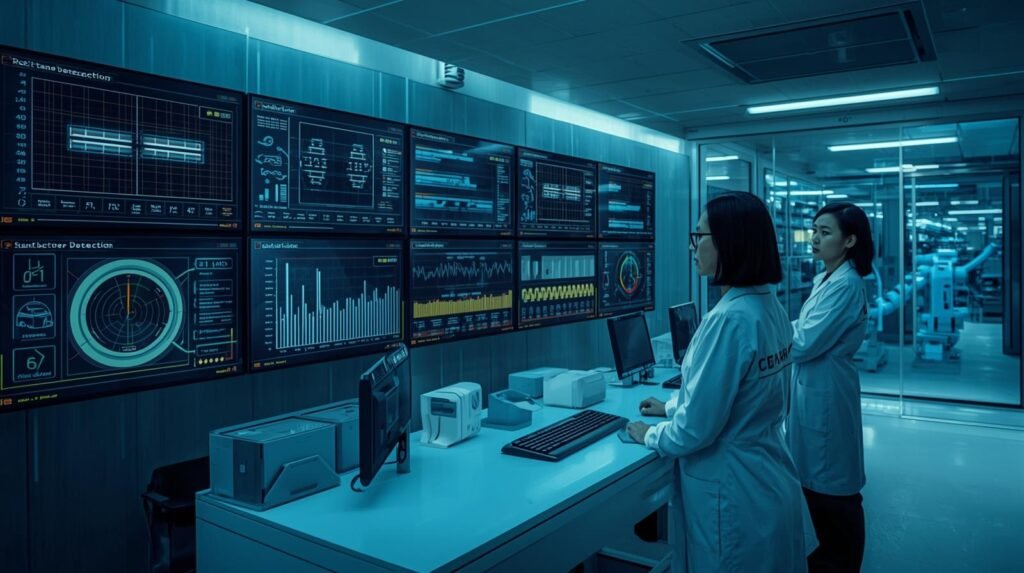
Smart Factory Systems are turning data into actions. At the core of this transformation are Intelligent Manufacturing Systems that connect machinery, analyze performance in real time, and automatically adapt processes. These systems allow manufacturing operations to continuously optimize production rather than react to problems after they occur.
By viewing the entire plant as a single integrated operation rather than as isolated departments, Intelligent Manufacturing Systems coordinate signals from machines, sensors, quality stations, and enterprise platforms such as MES and ERP. Through this coordinated intelligence, AI improves Manufacturing Quality by ensuring that every process adjustment is informed by live operational data.
Signals collected across the production environment—cycle times, temperatures, pressures, vibration levels, tool offsets, defect images, and operator input—are interpreted to recognize patterns and anticipate issues. Within Intelligent Manufacturing Systems, these data streams are not merely stored; they are continuously analyzed to detect deviations and recommend corrective actions. When patterns suggest potential instability, AI improves Manufacturing Quality by triggering alerts or automated responses that maintain process control and prevent defect escalation.
Continuous Data Insight is a critical advantage. Every production cycle generates valuable information, and Intelligent Manufacturing Systems transform this information into actionable guidance. For example, early signs of drift may indicate machine misalignment, increased scrap at a specific station, or rising cycle times due to component variation. Instead of waiting for weekly reviews, teams can act immediately. Adjusting a sensor, replacing a worn tool, modifying a set point, or resequencing work to relieve bottlenecks becomes a proactive process. Through these timely interventions, AI improves Manufacturing Quality by stabilizing operations before quality degradation spreads across the line.
By combining real-time monitoring with adaptive decision-making, Intelligent Manufacturing Systems create a manufacturing environment that responds dynamically to change. This integrated intelligence ensures that production remains balanced, downtime is minimized, and consistent quality is maintained. Ultimately, AI improves Manufacturing Quality by embedding continuous learning and optimization directly into everyday factory operations.
Intelligent Manufacturing Systems offer manufacturers faster, safer ways to optimize their production lines. By integrating real-time monitoring, adaptive controls, and data-driven analytics, Intelligent Manufacturing Systems create a closed-loop environment for continuous improvement. When an adjustment is made to the production line, performance is evaluated immediately, and the feedback is incorporated into the model to refine future recommendations.
This closed-loop structure allows AI improves Manufacturing Quality by reducing reliance on trial and error in complex manufacturing environments. Some organizations even develop digital twins—virtual replicas of production systems—to simulate changes prior to implementation, thereby protecting throughput and preventing unintended quality issues.
Improving quality is a primary function of Intelligent Manufacturing Systems. By linking inspection results directly with process conditions, manufacturers gain visibility into which variables most strongly influence defect formation.
This correlation-based analysis is one of the ways AI improves Manufacturing Quality by enabling tighter control over critical parameters. For example, if weld porosity correlates with humidity levels and gas flow rates, the system can automatically notify operators to adjust those conditions and confirm that they have returned to target ranges. Through these data-driven corrections, AI improves Manufacturing Quality by preventing recurring defects rather than simply detecting them after the fact.
The success of Intelligent Manufacturing Systems depends heavily on reliable data collection, clear definitions of “good” versus “bad,” and effective workflows on the shop floor. Dashboards must be intuitive, alerts must be actionable, and responsibilities must be clearly defined—who responds, how quickly, and how suspect parts are handled. When these foundational principles are in place, AI consistently and predictably improves Manufacturing Quality. In this environment, Intelligent Manufacturing Systems become engines of continuous improvement, increasing accuracy, reducing waste, and maintaining stable throughput at scale.
Predictive Maintenance AI: AI forecasts equipment issues to prevent unexpected downtime.

Predictive maintenance uses sensor data and machine learning algorithms to predict when an asset will fail, enabling proactive maintenance. Instead of strictly adhering to a fixed schedule, Predictive Maintenance AI provides a proactive approach by analyzing real-time operating condition data—answering questions such as “what is happening with my asset today?” and “how has that condition trended over time?” By anticipating equipment issues early, AI improves Manufacturing Quality by preventing sudden breakdowns that can disrupt production stability and create quality deviations.
Predictive Maintenance AI reduces downtime and maintenance costs by continuously evaluating sensor and control-system signals. These signals include vibration, temperature, acoustic noise, pressure, current draw, cycle counts, lubricant condition, and error codes. Over time, the AI system learns what “normal” looks like for each asset in its actual working environment.
When abnormal trends—such as misalignment, imbalance, lubrication failure, or electrical irregularities—appear, Predictive Maintenance AI flags the issue before failure occurs. Through early detection, AI improves Manufacturing Quality by keeping machines operating within optimal parameters and minimizing defects caused by disruptions.
Many manufacturing facilities rely on Predictive Maintenance AI to generate a risk score and an estimated time window for intervention. This allows maintenance teams to schedule repairs during planned downtime rather than during peak production hours. By reducing unplanned stoppages and maintaining consistent machine performance, AI improves Manufacturing Quality by ensuring that processes remain stable and repeatable across shifts.
The operational value is clear: fewer surprise failures, reduced overtime, improved spare parts planning, and higher Overall Equipment Effectiveness (OEE). In addition, Predictive Maintenance AI reduces unnecessary preventive maintenance and prevents the premature replacement of healthy components. Avoiding excessive disassembly lowers costs and reduces maintenance-induced defects. Ultimately, by protecting equipment reliability and preventing process instability, AI improves Manufacturing Quality while strengthening long-term operational efficiency.
Quality improvements extend beyond preventing catastrophic equipment failure. Subtle product defects often appear before a machine completely breaks down. For example, vibration from a worn bearing can introduce variations in surface finish, an actuator that drifts can cause dimensional inconsistencies, and clogged nozzles can alter the amount of material dispensed. By detecting these early warning signs, Predictive Maintenance AI helps plants intervene before defects spread across a batch or shift. In these situations, AI improves Manufacturing Quality by stabilizing process conditions before quality trends escalate.
Implementation of AI for quality begins by identifying critical equipment where downtime is costly or quality risks are high. Teams assess whether accurate data and sensors are available, then define how alerts will be used—whether to inspect, lubricate, recalibrate, replace components, or monitor trends more closely. When Predictive Maintenance AI is properly configured, it not only predicts potential failures but also provides actionable guidance. By preventing instability at its source, AI improves Manufacturing Quality and reduces the likelihood of cascading defects.
Successful implementations of Predictive Maintenance AI integrate predicted failures directly into maintenance workflows. The system can automatically generate work orders, provide visual evidence of alert triggers (such as trend charts, threshold breaches, or anomaly images), and track the effectiveness of corrective actions. This structured approach ensures that maintenance activities are data-driven and continuously refined. As models learn from each intervention, AI improves Manufacturing Quality by becoming more precise in identifying the right fix at the right time.
The greatest success occurs when predictive maintenance is combined with operational and quality data. When a system connects equipment health with scrap rates, rework levels, and inspection frequency, Predictive Maintenance AI gains deeper insight into how mechanical conditions influence product outcomes. This holistic perspective allows the system to recommend interventions that protect both uptime and quality. By aligning maintenance decisions with production performance, AI improves Manufacturing Quality while keeping operations running smoothly without unplanned interruptions.
How Smart AI Creates Smarter, Greener Factories
Beyond catching mistakes one by one, the AI becomes a weather forecast for the factory floor: it can predict defects in advance by analyzing thousands of images per minute and detecting subtle patterns that lead to them. This is the magic of prescriptive quality analytics: the system will issue a flag indicating that a Machine is drifting out of alignment, thereby preventing bad products from ever being made.
This proactive use of modern AI in quality management is also a key benefit for engineers seeking to identify root causes rather than merely symptoms. For example, if the AI notices that every 100th soda can has a faint scratch on it, it is capable of backtracking this pattern and pointing out exactly where the problem occurred, or more accurately, telling the human team that “the problem isn’t with the cans – it’s with the gripper on Machine #7 that needs adjusting.” This is a significant step forward from simply discarding scratched cans.
These online manufacturing quality control systems provide significant advantages for both the factory and the environment:
- Reducing Waste: Faulty components are detected early in the production process, thereby reducing material and energy use.
- Increasing Uptime: Production will run continuously, with no downtime due to human fatigue.
- Improving Repair Efforts: The system provides the maintenance team with information on which machine requires repair, enabling them to resolve issues promptly.
The possibility of creating an entirely flawless and automated factory with a “perfect” vision of every aspect of the production line may seem like a realistic possibility as soon as the machinery reaches these levels of intelligence; however, the possibilities of utilizing these types of machines are much more complicated than imagined. There are many issues related to intelligent automation (such as the role of people in the workplace) that must be addressed before its widespread adoption in industry.
Better Products for Everyone: What AI Quality Control Means for You
This highly skilled digital expert delivers real value from the products you purchase. Humans are very good at identifying obvious defects, but we get tired and can’t inspect everything we need to. The new AI was designed with perfect, untiring vision, and it is exceptionally good at detecting micro-defects; tiny defects such as a minuscule hairline fracture in a circuit board or a microscopic air bubble in car paint that a human probably wouldn’t have noticed.
Detecting these tiny defects provides significant benefits. A small blemish on a soda can is only an annoyance. A similar defect in a car’s airbag sensor could pose a serious safety hazard. By using AI to evaluate products, manufacturers can identify and remediate potential vulnerabilities before they become issues, delivering longer-lasting, more reliable products. One of the primary advantages of predictive quality analytics is the ability to prevent failures before they occur.
Achieving defect-free manufacturing with artificial intelligence is the ultimate goal of all production facilities. All real-time quality control is now in place; if a problem occurs during production, the system can quickly identify it and alert personnel before a large amount of defective product is produced.
By identifying every error, the production facility can eliminate waste of materials and energy used to produce goods that would otherwise be discarded or recycled, ultimately increasing its efficiency. The results do not end there; they begin with greener and smarter production facilities and the innovations they enable.
As such, the production facilities will not only deliver higher-quality, lower-cost products but also enable a cleaner, more efficient production process.
Is This an AI Takeover? The Real-World Hurdles for Smart Inspection
The concept of a self-correcting factory may seem straightforward, but achieving that goal is extremely difficult. One of the most significant barriers is simply obtaining sufficient amounts of data. AI learns through examples; therefore, engineers have to obtain (and label) tens of thousands — often millions — of images prior to the AI being able to inspect anything. Labeling images requires precision, such as labeling “This is a perfectly made product,” versus “That small defect is located right there.” A substantial amount of initial time and effort is required before the system begins inspecting its first item.
In addition to the massive amount of data needed, there is the cost. High-resolution cameras and advanced computer systems are required to run these systems and represent a significant financial burden. In addition, while AI performs very well in identifying clear, quantifiable defects (e.g., a scratch on a phone), it is much less effective when quality is subjective (e.g., determining whether a cookie is too brown or “just perfect”). Therefore, for items with expected variation from acceptable levels, teaching an AI to distinguish acceptable characteristics from defects is one of the most significant hurdles for manufacturers using AI to conduct quality-control inspections.
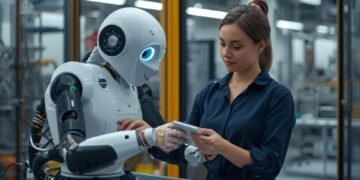
AI will ultimately not replace human inspectors on the factory floor; instead, it will create a need for a new type of inspector. The individual(s) who will initially train the AI, monitor the AI’s performance, and make the ultimate decision regarding complex issues identified by the AI will be the individuals responsible for managing the AI and for developing quality strategies based upon the AI’s output. Rather than repeating inspection tasks, the human workforce will be transformed into System Managers and Quality Strategists. Human inspectors will provide guidance to the AI to enhance its capabilities. Success will occur through a partnership, not replacement, model.
The Future of ‘Perfect’: Where Quality Control Goes From Here
As quality control moves beyond the traditional model of a single individual monitoring a product as it progresses along the production line, an emerging approach employs Artificial Intelligence (AI) to enhance quality control processes. A machine learning platform, like a college student studying digital flashcards, will be able to identify potential defects in a product in a unique way that has never been done before.
This ability represents a paradigm shift in the application of artificial intelligence to quality control. What was once a process of identifying issues after they occurred can now be used to prevent them altogether. In essence, AI will enable a manufacturer to implement a fully automated quality assurance process that monitors all aspects of production, including temperature, speed, and machine vibration, to identify when an error may be imminent and prevent it. The end result will be an AI-based zero-defect manufacturing process.
In this context, the transition to AI-based zero-defect manufacturing will create opportunities for improved job creation in the manufacturing industry. AI will free employees from routine inspection tasks, allowing them to focus on higher-level functions such as managing and training these digital inspectors, creating the complex environment necessary to manage the AI in quality management, and developing solutions to problems that require human ingenuity. In addition, the shift from repetitive labor to collaborative, strategic work will have positive effects across the workforce.
Together, humans and machines are developing an invisible partnership in achieving the highest levels of perfection through quality management and product development. As a result of this quiet revolution, today’s products are becoming better, more intelligent, and more sustainable than ever before, marking a new era of manufacturing excellence.
Conclusion
Manufacturing quality inspections are being transformed by AI; they are now conducted earlier, faster, and more consistently than ever before. The quality inspections no longer rely solely upon periodic sampling or end-of-line reviews. Real-time verification of every unit is possible using AI-powered vision and sensor analytics. Subtle defects are identified, and variations will be prevented from becoming large volumes of scrap. Equally important, the results of quality inspections will be linked to process data (e.g., tool condition, machine settings, raw material lots), enabling teams to transition from merely detecting defects to eliminating their root causes.
Quality inspection will become an integral component of the smart factory’s connected workflow when combined with connectivity to other smart factory technologies (i.e., Intelligent Manufacturing Systems) and Industry 4.0 best practices. Parts will be traceable; anomalies will be contained; and corrective actions will be automatically initiated with complete documentation for audit and compliance purposes. Another component of the smart factory, predictive maintenance, will provide additional layers of protection against equipment health issues that could lead to defects or unplanned downtime.
It is evident that manufacturers who invest in a robust data foundation, reliable sensors, and a secure workflow design can leverage AI to improve product consistency, reduce rework, and develop a continuous improvement process scalable across all production lines and facilities.
FAQs
1) What is “smart AI” in manufacturing quality checks?
AI is able to use machine learning algorithms and data from industrial sensors, along with image processing using cameras, to view the part being inspected to determine if there are any defects and if so, where, and also to monitor for changes in the manufacturing process that can be detected in real-time, usually on each and every product, not just samples.
2) How does AI catch defects earlier than traditional inspection?
AI monitors production continuously and alerts when any slight change is detected (shape, surface, alignment, torque, dimension), enabling timely action to contain the issue before it progresses further downstream in the manufacturing process.
3) Will AI replace human quality inspectors?
Generally not. AI performs repetitive inspections at high production volumes and identifies exceptions, whereas humans conduct Root Cause Analysis, Handle Edge Cases, Address Supplier Issues, and drive continuous improvement.
4) What data and equipment are needed to get started?
Most projects begin with good images or sensor signals, consistent lighting and fixturing, a set of labeled examples of “Good” and “Defective”, and a connection to the customers’ current systems (PLC/MES) to enable traceability and actions.
5) How does predictive maintenance support better quality?
Predictive Maintenance through monitoring early signs of equipment failure (temperature, vibration, changes in power consumption) can help prevent machine drift over time, which typically results in defective products before the machine fails.