



















Quantum molecular simulation is revolutionizing drug discovery. It provides an opportunity to better understand chemical and physical forces at the molecular level. Compared with conventional methods, this approach is far more accurate.
When we talk about “quantum,” we’re talking about levels of molecular interaction that are impossible to observe by using classical physics. The information generated by these simulations has become invaluable for drug design.
The incorporation of quantum chemistry in drug discovery is revolutionary. By providing better predictive models of how different molecules will behave, the probability of developing successful drug candidates increases dramatically.
Advancements such as quantum computing enable researchers to utilize these types of simulations. By enabling simulations to be completed faster and more efficiently, it also allows companies developing new medications to complete their research in less time and at lower development costs.
Molecular Dynamics (MD) Simulations play a significant role as well. MD simulations help elucidate how a drug molecule’s behavior changes over time. This provides drug efficacy predictions.
Investment by the Pharmaceutical Industry in Quantum Technologies has been considerable. There is potential for drug discovery that is both faster and more precise than current methods. This investment is leading to the development of new ideas.
Insights provided through Quantum Simulation into the electronic properties of molecules are critical to understanding drug efficacy and safety. Additionally, Quantum simulation can aid in developing drugs with fewer adverse reactions.
A combination of Quantum Computing and Molecular Modeling will create the future of drug discovery. This combined approach may completely alter the face of this field. There is potential for the development of personalized medicines and new therapeutic options.
Summary
There’s an evolving trend in drug discovery for quantum molecular simulation: shifting away from approximate molecular models toward more accurate representations of “real” electronic behavior. Quantum molecular simulation represents electron movement and interactions using quantum mechanics. This could enhance predictive capabilities for binding affinity, selectivity, and chemical reactivity – all critical determinants as to whether a drug candidate will work safely.
Advancements are emerging in three areas.
First, improvements in quantum computer hardware have included higher qubit quality, better error-reduction techniques, and early indications of fault-tolerant architectures.
Second, novel quantum algorithms and hybrid approaches have made earlier-generation systems useful. Classical computers simulate the entire biological system; quantum methods simulate only the difficult part (e.g., the binding site, a reactive moiety, or metal ion).
Third, advancements in artificial intelligence (AI) and machine learning (ML) are speeding the development of this area of research. ML/AI can learn from quantum simulations, guide where high-accuracy simulations would yield the most value, and reduce the computational cost of surrogate models.
Quantum Methods Provide Powerful Tools in Drug Development. The ability to use these techniques in practice will be revolutionary. With respect to actual drug development, Quantum-enabled methods have the potential to evaluate a drug candidate’s docking hits using more realistic Energy Estimates, Explain Why Related Analog drugs work or do not work, Model Mechanisms that Classical Force Fields cannot, such as Polarization, Charge Transfer, Proton Shifts, and metalloenzyme chemistry.
Combining Quantum Mechanics with Molecular Dynamics enables researchers to correlate the electronic Structure with the Accuracy of Protein Motion, which may provide better insight into stability, kinetics, and Off-Target Risks.
Although there are many Challenges, including scaling up the size of Biomolecules, Controlling Noise and Errors, developing ways to integrate new tools into current pipelines, and Validating Predictions with Experimental Data, the future direction appears clear. As all three areas (Quantum Computation, Hybrid Modeling, AI) continue to develop simultaneously, the area of Quantum Molecular Simulation is positioned to reduce Design Cycles, reduce Late Stage Failures, and enable more precise, mechanism-driven drug discovery.
Quantum AI Simulation: Solving 7 Breakthrough Problems Classical Computers Can’t Model
The Evolution of Drug Discovery: From Classical to Quantum Approaches
Drug discovery has undergone significant changes. At first, drug discovery depended largely on finding something that worked by accident (serendipity) or through trial-and-error. Scientists discovered active compounds nearly by accident; they were trying other things.
Later, scientists applied rational drug design as the second major approach. Rational drug design used knowledge of biological target sites to guide chemical synthesis. Although this was more organized than serendipity-based approaches, it too had its limits.
There have been many published studies that detail the shortcomings of traditional drug discovery. Traditional drug discovery can be time-consuming, expensive, and wasteful. A large number of potentially useful drugs fail in phase III clinical trials.
Entering into Quantum Simulations – Quantum Simulations provide a new way to see how molecules interact at the Quantum Level. Classical Methods cannot go into that much detail.
Improvements to the method using a Quantum approach are as follows:
- Precise: More detail on how molecules behave when compared to classical methods.
- Faster than Classical Methods: Both Time & Resources will be reduced by using Quantum Methods for Drug Development.
- New Insights: Using Quantum Methods will reveal many previously unknown details about drugs.
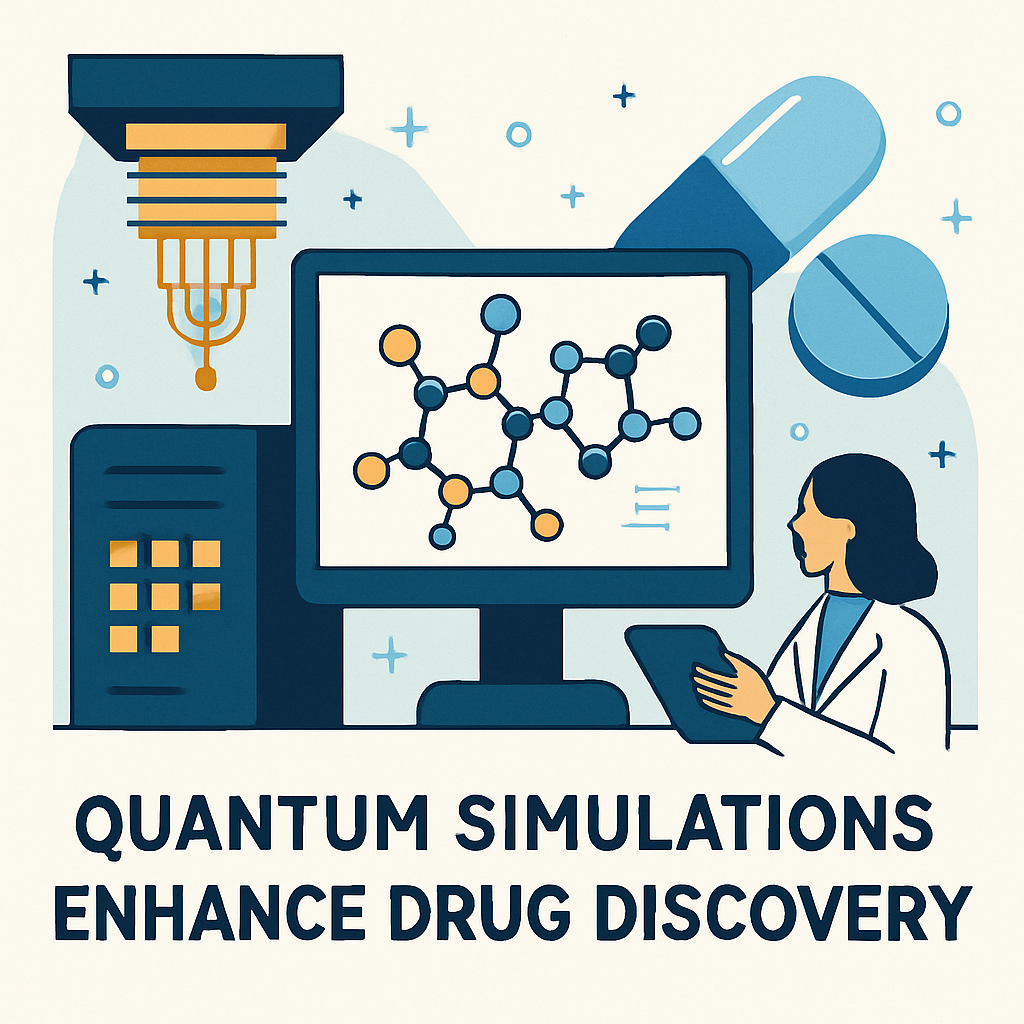
Quantum Chemistry has become an essential part of this transition. Quantum chemistry enables chemists to predict what will happen when a molecule interacts with its biological target. In turn, this increases the likelihood that effective drugs will be identified.
One of the most important tools used in drug design today is Molecular Modeling. Using the principles of quantum mechanics to model large biological systems (for example, protein-ligand complexes) offers a major advantage in both speed and accuracy. Therefore, the potential for molecular modeling in drug design continues to grow.
The current state of development of quantum computing technologies means they are accelerating quantum-based simulations of biological processes. The rapid processing of massive amounts of data makes these technologies highly capable and valuable.
In summary, the shift from classical to quantum-based methods is a fundamental paradigmatic change. This paradigmatic change alters our perception of the molecular basis of interaction. This change also signals the beginning of a new era in drug discovery, providing opportunities to develop new treatment modalities and ultimately new medicines.
Classical vs Quantum Drug Discovery
| Feature | Classical Methods | Quantum Approaches |
|---|---|---|
| Accuracy | Approximate | Highly precise |
| Speed | Slow (years) | Faster (potentially months) |
| Molecular Complexity | Limited | Handles complex systems |
| Cost | High (trial-heavy) | Reduced long-term |
| Simulation Type | Approximation models | Quantum-level modeling |
Insight: Quantum methods dramatically improve accuracy and efficiency in drug discovery.
Source:
- IBM Quantum
https://www.ibm.com/quantum - Nature Reviews Drug Discovery
https://www.nature.com
Quantum Molecular Simulation: Quantum molecular simulation enables scientists to model complex molecules with unprecedented accuracy for faster drug discovery

Quantum Molecular Simulation has become an increasingly practical approach in the earliest stages of drug discovery, as it can accurately model the behavior of electrons, chemical bonds, and possible reaction pathways where classical representations are often inadequate.
Using Quantum Molecular Simulation, researchers can estimate the energy associated with binding, proton transfer events, and subtle variations in charge that will determine whether a candidate compound is appropriately shaped to fit its intended target.
Classical screening methods commonly reduce millions of potential compounds to just thousands; however, Quantum Molecular Simulation provides additional accuracy to rank these top candidates based on their expected performance in the laboratory. By avoiding expensive synthesis and wet-lab testing of compounds identified through coarse models as potentially successful, research teams can improve the efficiency of their development process.
Quantum molecular simulation is enabling improved modeling of “difficult” systems, including metal-containing enzymes, excited states, and highly polarizable binding-site models. These are common in oncology (e.g., platinum-based drugs), antiviral research, and CNS therapies, but they represent areas where classical force-field performance has been limited.
When used to capture changes in electronic structure associated with ligand binding, QS may improve predictions of both potency and selectivity. Additionally, QS may identify potential liabilities such as reactive metabolites at an early stage in the discovery process.
One of the largest impacts that Quantum Molecular Simulation will have in the near term will be rapid access to knowledge. While full-scale quantum computing does not currently exist, hybrid methods using accelerators allow researchers to perform QS on those devices and then use the data from those calculations along with surrogate models generated through machine learning.
This closed-loop approach will ultimately result in reduced cycle times for drug design, increased experimental efficiency in determining which compounds are most relevant for further study, and greater confidence in the optimization process. The ultimate result is that Quantum Molecular Simulation allows chemists to model complex molecules with a level of detail previously unattainable, providing a faster route to new medicines and ultimately making computational tools more valuable for medicine design.
Example
To improve an HIV integrase inhibitor, a group identified the region of the enzyme where it binds to metals (the two Mg2+ ions and other important amino acids) and ran a quantum-mechanical simulation of this complex, while treating the rest of the protein classically. This classical/quantum-mechanical calculation compared three different ligands, providing evidence for why one of them stabilized a rarely observed charge-transfer state upon integration into the enzyme’s active site, thereby explaining its potency in cells.
With this information, the chemists added a fluorine atom to the molecule, preserving the electronic alignment but not increasing its hydrophobicity. In the next round of syntheses, they identified a lead compound with increased selectivity for non-human metalloenzymes.
Fundamentals of Quantum Molecular Simulation
Quantum Molecular Simulation (QMS) has revolutionized the field of computational chemistry. QMS uses quantum mechanics to study how molecules behave. The atomic-level detail obtained from this method provides a very detailed picture of what molecules do.
Quantum chemistry theory forms the basis of QMS. With it, researchers can determine the electronic structure of molecules. Understanding the electronic structure of molecules allows predictions about their interactions.
Molecular systems are modeled by QMS using an extremely accurate degree of quantum detail. All possible electron quantum states are considered when simulating molecular systems. Accurate modeling of quantum details increases the predictive precision of molecular properties.
Solving the complicated Schrödinger equation is central to QMS. The Schrödinger equation describes how quantum-mechanical systems behave. However, due to its complexity, researchers require sophisticated computational methods to solve it.
High-performance computing and advanced algorithmic techniques are critical to QMS. High-performance computers provide the processing power required to perform the large number of computations needed for realistic models.

Key elements of Quantum Mechanics (QMS) are:
- Quantum Chemistry: Supplies the basic theory.
- Fundamental Computational Methods: Manage data sets that have an enormous number of entries.
- Algorithms: Solve quantum equations using optimal methods.
The dynamic nature of Molecular Dynamics, as well as other aspects of QMS, is critical to understanding how molecules evolve over time. The ability to evaluate and understand molecular interactions through these evolving molecular structures is one of the most significant advantages of QMS.
Another advantage of QMS is its flexibility. There are many types of problems it can be used to address. Examples include drug discovery, material properties, and energy storage.
The capability to measure drug efficacy through QMS improves drug discovery. Additionally, it gives researchers predictive insight into how their drug will interact with its target. As such, researchers may be able to develop more efficient drugs with fewer negative consequences.
QMS technology continues to evolve. Researchers are continuing to develop new technologies that leverage advances in quantum computing. These advancements are contributing to research in drug discovery and hold potential for future discoveries.
Quantum Molecular Simulation establishes an excellent base of knowledge. Therefore, the combination of principles from quantum physics, computational capabilities, and the ability to create molecular dynamics models creates opportunities to develop an understanding of molecular design and functionality at the most basic levels.
Quantum Simulation Workflow
| Step | process | Technology |
|---|---|---|
| Problem Setup | Define molecule/system | Quantum algorithms |
| Encoding | Map molecule to qubits | Qubit systems |
| Simulation | Run quantum calculations | Quantum processors |
| Analysis | Interpret result | Hybrid computing |
| Optimization | Refine drug candidates | AI + sinulation |
Example: A molecule is encoded into qubits, simulated, and optimized for drug effectiveness.
Source:
- Google Quantum AI
https://quantumai.google - Microsoft Quantum
https://quantum.microsoft.com
Quantum Chemistry: Understanding quantum chemistry helps unlock precise molecular interactions for next-generation drug discovery.

Quantum Chemistry is the study of how electrons act within individual atoms and molecules; as such, it is the core of modern drug discovery. If a team has an understanding of Quantum Chemistry, then that team will be able to predict how the binding of a small molecule to a particular protein changes, even with the smallest changes in either its shape or charge.
The reason is that many drug candidates fail to advance due to very minor differences in chemical interactions (hydrogen bonds, polarity, etc.) between the candidate compound and the target enzyme/protein.
Quantum Chemistry allows researchers working on future generations of discovery to move from “acceptable” estimates based on limited datasets to fully predictive models of drug reactivity, stability, and selectivity.
An example of what Quantum Chemistry can accomplish is explaining why a compound is strongly bound to a specific protein/enzyme (the intended target) yet also binds to other proteins/enzymes (off-targets), thereby producing adverse side effects. Another example is identifying potential weak spots in metabolism where the enzymes responsible for metabolizing the drug could rapidly degrade the drug or produce unwanted byproducts.
Quantum Molecular Simulation (QMS) provides value in this area. QMS uses Quantum-Chemistry calculations on real-world drug-like systems, thereby converting theoretical ideas into predictive lead optimization. Within the traditional drug development pipeline, QMS enables the refinement of docking results, improved ranking of potential candidates based on their scores, and guidance for medicinal chemists on structural modifications that enhance an active compound’s potency while minimizing toxicological risk.
QMS also enables researchers to explore challenging target systems, including metal-containing enzymes, high-charge-density binding sites, and proton-transfer-based chemical reactions — all of which are extremely difficult to model classically.
As computational power continues to grow, it is increasingly common for researchers to combine Quantum Chemistry & QMS with machine learning approaches to accelerate calculations while maintaining accuracy. Ultimately, through Quantum Chemistry, researchers will be able to significantly reduce trial and error in drug discovery. By applying Quantum Molecular Simulation, researchers can prioritize laboratory efforts on the best candidate molecules and ultimately reduce overall cycle times in small-molecule drug design.
Example
In this case, during the development of a kinase compound, two heterocyclic compounds were synthesized, which exhibited different (assay) IC50 values for their interaction at the kinase target. Quantum chemistry was used by these chemists to predict the tautomeric population and pKa shift of each compound in aqueous solution and in a low-dielectric environment (a binding pocket).
Their quantum chemical predictions indicated that the “inactive” isomer existed almost entirely as the tautomer incapable of forming the required hinge-bonded H-bonded pair; whereas, the active isomer provided a better overall orientation to allow the formation of the donor-acceptor H-bonded pairs. These chemists designed a novel scaffold to impose an additional constraint on the desired tautomer, thereby reducing the entropic cost of its existence. This design led to a tenfold increase in potency and a cleaner SAR profile for all members of this series.
Understanding Quantum Computing: A Beginner’s Guide You Must Read
Molecular Modeling: Molecular modeling enables scientists to visualize and predict how drugs interact with biological targets

Molecular Modeling is a tool that allows researchers to visualize candidate drugs in three dimensions and predict how they will interact with biological targets. The use of Molecular Modeling allows research teams to examine potential binding sites for drug molecules, assess fit and shape complementarity, and evaluate hypotheses prior to synthesizing the drug candidate and/or running wet-lab experiments.
Today’s molecular modeling incorporates structural information (e.g., cryo-EM; X-ray crystallography) along with computer-based prediction techniques to estimate how well a compound binds to a target protein, its solubility, and key interactions, including hydrogen bonding and hydrophobic contacts.
The use of a Quantum Molecular Simulation to provide a detailed, electronic-level view of how electrons are distributed on a molecule may help identify how certain aspects (polarization, reaction-like events) contribute to a true chemical bond. Using Quantum Molecular Simulation in conjunction with Molecular Modeling will allow investigators to verify high-scoring compounds, assess challenging targets using improved scoring functions, and eliminate false positives that pass through the screening process.
Quantum Molecular Simulation is particularly beneficial when metal ions, unorthodox cofactors, or protonation states play significant roles in the binding mechanism. Improved resolution from the added detail provided by Quantum Molecular Simulation enables Molecular Modeling workflows to make educated decisions regarding selectivity, potential off-target activity, and the possibility of unintended chemistry.
Quantum Molecular Simulation (QMS) will increasingly become a routine component of computational modeling alongside classical methods to both decrease time-to-lead in the early stages of compound development and increase confidence that leads are optimized. QMS enables the scientist to quickly iterate on changes, predict them, and experimentally validate the “best” options.
This is achieved via an iterative process of proposing a change, predicting its outcome using Quantum Molecular Simulation, and then validating those predictions experimentally. A practical example of how this can be achieved effectively is via a multi-layered approach. First, use molecular modeling to rapidly evaluate large numbers of compounds; second, use Quantum Molecular Simulation to provide detailed information on specific structural elements at interfaces (e.g., protein-ligand binding sites).
Example
A drug discovery company had a target for which there was no X-ray quality structural information available; they built a homology model of the receptor G-protein coupled receptor (GPCR), embedded the model into a lipid bilayer using molecular modeling, relaxed the loop regions, and docked a small molecule fragment library onto the model. The model identified a new “hidden” subpocket that would open upon rotation of a conserved phenylalanine.
Chemists used this knowledge to create a longer substituent that could be placed within the newly defined subpocket. Later, Molecular Dynamics simulations validated the formation of the new subpocket and confirmed that the new substituent would have an induced-fit interaction. Several months after the initial modeling studies were completed, cryo-EM data for the full-length protein became available, revealing that the previously predicted subpocket was indeed present and that the substituent locations from the docking study aligned perfectly with those observed in the cryo-EM structures.
As a result of using computational methods, the company was able to avoid numerous “dead-end” series of compounds, advance toward a highly-selective and potent antagonist much faster than if traditional medicinal chemistry approaches had been followed, and provide guidance for additional mutagenesis studies to validate the presence of critical contact residues.
Quantum Chemistry and Molecular Modeling: The New Frontier
Quantum chemistry is at the center of what we know today about modern molecular modeling. It provides the basis for an in-depth understanding of highly complex chemical systems by explaining how atoms and electrons interact at the quantum level.
Using quantum-chemistry principles, molecular modeling provides insight into the electronic configuration of the molecule under study. The ability to accurately model a molecule’s configuration allows us to make precise predictions about its behavior.
The introduction of quantum simulation has revolutionized molecular modeling by establishing new paradigms. Previously, traditional methodologies were based upon approximations or empirical data. Quantum methodology offers both accuracy and predictive capabilities.

by ilgmyzin (https://unsplash.com/@ilgmyzin)
A few major developments have evolved within this area:
- Improved Reliability: The use of quantum techniques can lead to greater accuracy in model building.
- Study of Complex Systems: Allows researchers to evaluate the structural integrity of large systems (e.g., proteins, etc).
- Predictive Model Development: Provides precise predictive models on molecular interaction events.
This represents a new frontier created by combining quantum chemistry and molecular dynamics. A comprehensive understanding of molecular behavior can be developed using quantum molecular simulations. Both static and dynamic aspects of molecule behavior can be studied simultaneously. Furthermore, a single method is now available that connects theory and practice by developing accurate models that describe the actual behavior of biological molecules as they interact with drugs.
The application of Quantum Molecular Simulation can significantly aid in drug design. Through precise modeling of how a drug interacts with its target, drug candidates can be identified much faster and at lower cost than with traditional approaches.
Moreover, advances in quantum chemistry will help advance personalized medicine. Advanced drugs tailored to an individual’s unique genetic profile are possible with the development of highly accurate quantum-chemical models. This represents a major advancement in health care, enabling treatment options tailored to an individual patient’s specific needs.
However, there are still many challenges, particularly regarding computational resources. As the level of detail of a model increases, so too does its demand for computational resources. It is expected that quantum computers will provide the computational capabilities needed to continue advancing molecular modeling.
As such, Quantum Chemistry and Molecular Modeling are developing technologies to advance scientific study by exploring new ways to apply quantum principles. Researchers will be able to explore the molecular world in greater depth. The potential applications range from drug development to materials science.
Quantum Simulations: Quantum simulations provide unprecedented accuracy in analyzing complex molecular systems.

Quantum Simulations will alter the way researchers study large, complicated molecular systems by simulating matter down to the electron and quantum state. Many of the drug-relevant effects — polarization, charge transfer, tunneling, and other small-scale bonding changes — have inherent quantum properties; therefore, Quantum Simulations can model and predict their behavior much better than approximate classical simulations.
As an aid in drug design research, Quantum Simulations allow researchers to determine how closely a drug candidate interacts with its receptor (i.e., what drives strong binding), how protonation affects interactions within a receptor’s active site, and which specific interactions confer selectivity over off-target binding.
Practically, Quantum Molecular Simulation combines Quantum Simulations into workflow processes that include drug-like molecules, protein active sites, or smaller portions of larger biological systems. Using Quantum Simulations allows researchers to improve their docking accuracy by generating much more realistic potential energies and to reveal important electronic contributions to the binding process.
Additionally, researchers who apply Quantum Simulations to “difficult” targets such as metalloenzymes and high-charge-density sites may find they can simulate them more accurately than with force field-based approaches.
In addition to screening compounds for efficacy, Quantum Simulations predict the effects of modifying existing drug candidates by accounting for their electronic structure, thereby supporting lead optimization. Lead optimization also helps avoid unexpected issues (e.g., metabolic instability) in the late stages of drug development.
For example, future improvements in computing could allow classical methods to model the entire system and focus Quantum Molecular Simulation on the key part of the molecule that affects its biological activity. Hybrid approaches enable scientists to apply quantum mechanics at a lower cost than studying an entire molecule using quantum chemistry.
Quantum simulations combined with machine-learning-based surrogates and faster computers will likely increase both the size of systems studied via Quantum Molecular Simulation and the rate at which these studies are conducted. Overall, Quantum Molecular Simulations will provide scientists with a better understanding of how molecules behave, helping them develop safer, more efficient medicines through reduced trial and error.
Example
Phototoxicity was observed during pre-clinical testing of an antibiotic candidate. As a result, researchers conducted quantum simulations of the candidate chromophore to determine how much energy is required for the molecule to become excited (excited state) and to cross from one electronic state to another via a process called intersystem crossing. The results indicated that the chromophore’s electronic states would cause it to produce singlet oxygen upon light activation. To remove this potential pathway for oxidative stress (ROS), researchers virtually substituted modifications to the chromophore using their models.
A single substitution was identified, which reduced the spin-orbit interaction associated with the modification while maintaining its ability to bind. Upon addition of the cyanide functional group (CN-) to the chromophore, the modified candidate demonstrated significantly less ROS generation when exposed to UV radiation than the original candidate and maintained a comparable Minimum Inhibitory Concentration (MIC).
Molecular Dynamics: Molecular dynamics simulations help track real-time molecular behavior to gain better insights into drug performance

Molecular Dynamics is a method for simulating the behavior of molecules (atoms) over time; it creates a “film” or “video” of how the drug behaves with respect to its biological receptor under conditions that mimic real-life conditions. This is different from taking pictures of rigid structures. With molecular dynamics, you get flexibility in the proteins, the waters that surround them, and the shape(s) that a ligand (drug molecule) takes as it binds to an enzyme.
These flexible elements play a major role in determining where a drug binds, which explains why some compounds can be great docking candidates yet still perform poorly. Molecular Dynamics is used by teams to assess the likelihood that drugs remain bound long enough to exert a therapeutic effect. It’s helpful in understanding induced fit and kinetic influences on both potency and specificity.
Additionally, it can help illustrate allosteric interactions. Allosteric communication occurs when binding at one site of a protein changes movement at another site within the protein. Molecular dynamics can also simulate interactions with lipid bilayers and predict trends in membrane permeability. All these simulations add greater relevance and predictive power to the resulting performance data. As molecular dynamics runs at very short time scales, it is particularly useful for simulating the differences between closely related analogs during lead optimization
The Classical Force Field does not accurately depict the Electronic Changes involved in many significant events. This is an area where Quantum Molecular Simulation (QMS) will provide useful information.
Researchers may be able to use QMS to determine interaction energies within the region of highest importance (e.g., reactive warheads, metal centers, proton-transfer pathways) while preserving overall system complexity using molecular dynamics.
Additionally, Quantum Molecular Simulation can assist in validating interaction energy values determined from Molecular Dynamics simulations; identify ambiguous protonation states; and minimize uncertainties related to small electronic interactions that lead to large differences in biological activity.
Increasingly, users are developing workflows that layer Molecular Dynamics for fast sampling and quantum-mechanical simulation methods for precise evaluation of high-energy chemical reactions. Through this layered approach, scientists have improved confidence in their structural/activity evaluations, reduced trial and error, and gained better insight into how drugs perform before conducting expensive experiments.
Breakthrough Technologies Powering Quantum Simulations
Innovative technological advancements have dramatically altered the landscape of quantum simulations; they will continue to be instrumental in their development.
The most significant technological advancement currently driving the expansion of quantum simulator capabilities is quantum computing. Quantum computers provide unparalleled computational capability, enabling researchers to simulate complex molecular interactions that were previously impossible.
In addition, new developments in quantum algorithms will significantly improve both the speed and the precision of simulations by optimizing how calculations are performed.

by Mahdi Bafande (https://unsplash.com/@mahdibafande)
Key technological developments that support these advancements include:
- Quantum computers: which can process information faster than has been possible with classical systems.
- Further innovations in algorithms: Which have improved the accuracy of the simulations by a significant margin.
- Simulations utilizing high-performance computing equipment enable researchers to conduct larger-scale and more complex studies.
The hardware required to operate quantum computers is also being continually developed. The new hardware that will be developed or become available in the near future should provide more robust quantum computers that will become increasingly affordable. The development of new quantum hardware will foster greater use of quantum simulations in drug discovery research.
These are fostering new innovative approaches. Chemists, physicists, and computer scientists are working collaboratively to develop more advanced methods for using quantum simulations. As each area of expertise provides a different perspective, its collaborative efforts result in higher-quality tools and techniques.
Quantum computers can perform many types of calculations much faster than classical computers, but they require substantial memory and computational power to run simulations. Therefore, it has become common to pair a small number of quantum processors with large-scale supercomputers. This pairing provides “hybrid” approaches that significantly improve simulation performance. Additionally, this pairing enables the seamless execution of highly complex simulations using larger-scale computer systems and increased memory access.
Improved methods for quantum data processing offer additional opportunities to enhance simulation. Improved data processing methods lead to greater accuracy and better interpretation of simulated data. These improvements in data quality enable better-informed decisions in pharmaceutical research.
The introduction of quantum technology represents an exciting new opportunity for researchers to explore molecular systems at an unprecedented level of detail. Quantum-based technologies represent a revolutionary method for drug design. Quantum technology may potentially unlock novel therapeutic options.
There remain significant obstacles to overcome before the full potential of quantum simulations can be realized. Challenges include minimizing errors within quantum computations and developing compatible hardware. Overcoming these challenges will be critical to achieving the ultimate goal of using quantum-based simulations.
Ultimately, numerous breakthroughs continue to evolve and transform the field of molecular simulations. As a result of advances in quantum computing, sophisticated algorithms, and HPC, we are seeing a substantial paradigm shift in how simulations are conducted. The effect on drug discovery is significant as well; we have entered a new age of molecular research and innovation.
Drug Discovery: Quantum technologies are revolutionizing drug discovery by accelerating the identification of new therapeutic compounds

Drug discovery has been redefined through the use of quantum technology that models chemistry with far greater realism than many classical approximations. In a typical drug discovery program, compound teams will screen compounds quickly and use simple scoring systems to evaluate them early in their programs.
The candidate(s) they identify as lead candidates are likely to have failed later in the development phase because of subtle effects that were missed during the initial evaluation. Quantum-based predictions enable higher-quality, earlier predictions in the drug discovery process, leading to a more efficient and less expensive discovery process.
Quantum Molecular Simulation (QMS) enables calculation of molecular behavior at the electronic level. QMS can also reveal interactions that significantly impact both potency and specificity. As such, Quantum Molecular Simulation is very useful in supporting drug discovery by helping refine hit lists identified through docking studies, providing more accurate binding energy calculations, and defining how changes in charge distribution/polarization affect the “fit” within a target protein’s active site.
Quantum computational tools will enable drug discovery scientists to predict a compound’s reactivity, stability, and potential liabilities before it is synthesized. Scientists can test “what if” scenarios regarding chemical structures and modifications on computers using quantum simulations. This enables scientists to identify structural modifications that will increase efficacy while reducing off-target effects and associated toxicities.
Quantum molecular simulation can provide a scientific rationale for differences observed between two very similar drugs, thereby enabling evidence-based decision-making in drug development rather than trial and error. As we move into the short term, there will be increasing reliance on hybrid approaches. Classical methods are fast and provide a large amount of information, whereas quantum molecular simulation will be limited to the top candidate compounds identified through classical screening and/or the most mechanistically unclear processes.
In the long run, increased capabilities in both software and hardware will enable greater incorporation of quantum-accelerated elements into Drug Discovery processes. Ultimately, this will result in improved molecular understanding, faster drug development timelines, and the ability to find new therapies faster — ultimately resulting in better treatments reaching patients sooner.
Impact of Quantum Simulation on Drug Discovery
| Metric | Traditional Approach | With Quantum Simulation |
|---|---|---|
| Drug Development Time | 10-15 years | Potentially reduced |
| Cost per Drug | $2-3 Billion | Lower (future potential) |
| Success Rate | 10% | Expected improvement |
| Molecular Screening | Limited | Vast chemical space |
Key Insight: Quantum computing could significantly reduce time, cost, and failure rates.
Source:
- McKinsey Quantum Report
https://www.mckinsey.com - Deloitte Life Sciences
https://www2.deloitte.com
Drug Design: Advanced quantum simulations are transforming drug design with faster and more accurate compound optimization

Drug Design has entered an exciting new era with the rapid development of advanced quantum techniques. Advanced quantum techniques allow drug design researchers to develop increasingly accurate predictions for chemical properties based upon the behavior of electrons in a molecule.
While traditional drug design employs docking, QSAR (Quantitative Structure Activity Relationship), and molecular dynamics simulations to rapidly identify and prioritize potential drugs, these classical methodologies are limited in their ability to accurately predict many subtle electronic interactions within a complex biological system. By applying high-fidelity quantum-chemistry principles to drug design research, chemists will be able to make more informed decisions about the direction of future lead-compound optimization efforts.
One of the key capabilities of Quantum Chemistry in support of drug discovery is quantum molecular simulation. Quantum Molecular Simulation models molecules by providing detailed descriptions of electron density distributions, bond structures, and local electrostatic charge distributions.
The combination of higher-accuracy interaction energy calculations, clarification of hydrogen-bonding networks, and capture of polarization phenomena in active-site regions significantly increases the accuracy and utility of drug design. In cases where Drug Design involves reactive groups, protonation states, or metal-containing active sites, the results from Quantum Molecular Simulation can be critical, as they reflect the electronic structure, not just the shape.
The design process of drug optimization during Lead Optimization involves numerous minor choices: which substituent to replace, which ring to modify, where to alter the stereochemistry, and what pKa value to set.
Quantum molecular simulation can predict how these slight modifications will affect the affinity of compounds for their biological target and their reactivity, thereby reducing the number of rounds required to find successful combinations by trial and error. In practice, most companies have developed layered workflows for drug discovery, that is, fast classical screening (breadth) followed by quantum molecular simulation (depth), so drug designers stay productive while increasing the reliability of their final choice.
When results generated using quantum methods are combined with machine learning algorithms that incorporate knowledge from previous calculations and experiments, this can increase prediction speed without sacrificing precision, thereby allowing drug developers to iterate more rapidly across multiple chemical series.
As tools continue to improve, it appears that quantum molecular simulation will become an increasingly common component of routine drug design rather than being limited to specialized research applications. Ultimately, this will enable more rapid and reliable compound optimization efforts, leading to better candidate drugs entering preclinical trials with a lower risk of surprises during the remainder of drug development.
Example
In designing drugs for use in a fibrosis program, there are three important factors to be considered: potency of the drug, ability of the drug to be administered orally (oral bioavailability), and the potential toxicity/safety of the drug. From a starting point as a nanomolar inhibitor that was highly lipophilic and blocked hERG, through a series of steps using computer-based structure-based drug design, the researchers removed a hydrophobic tail, added a polar sulfonamide group, and used both docking methods and free-energy calculations to predict how well this new molecule would bind to its target.
They also simultaneously ran ADME models in parallel to identify areas where the molecule could have metabolic issues, such as a metabolically sensitive ether linkage, and replaced it with a difluoro linker. The iterative process described above is directed towards testing hypotheses generated during each step rather than generating multiple random analogs. This approach resulted in the delivery of an initial candidate compound within six weeks, with an acceptable hERG margin and excellent oral PK in rat studies. Subsequent tablet formulations enabled consistent daily exposure in dogs.
Breakthrough and Reliable Future of Quantum Error Correction for Scalable Quantum Machines
Transformative Advances in Drug Design and Development
Quantum Molecular Simulations Are Revolutionizing Drug Design and Development by Providing Unprecedented Precision for Modeling Molecules Interacting With Each Other.
Researchers can use quantum chemistry to accurately predict molecular behavior. By doing so, they can identify drug candidates with a higher likelihood of working efficiently.
The ability to use molecular dynamics simulations provides additional insight regarding time-dependent molecular motion. The information provided by molecular dynamics simulations will help researchers evaluate interactions between drugs and their target proteins over the timescale of these interactions.
by Logan Voss (https://unsplash.com/@loganvoss)
The most significant advantages of quantum simulation are reductions in both the time and money traditionally spent on drug development. Quantum computers speed up many parts of early-stage research; therefore, they allow researchers to advance from concept to prototype much quicker than was previously possible.
Quantum Simulation Advantages in the Field of Drug Discovery:
- Precise Predictions: Molecular interaction predictions are accurate.
- Economic Savings: Research costs are lower.
- Faster Identification: Candidate drugs are identified more quickly.
In addition to these changes, these new technologies will help to support personalized medicine. The ability to simulate an individual’s unique molecular profile allows researchers to design treatments tailored to their genetic makeup. Therefore, there should be greater success in treating patients.
Quantum simulations open up new possibilities for drug mechanisms. The interaction complexity that previously limited the simulation process is now being explored by researchers. This research provides an opportunity to discover new drug targets and new ways to treat diseases.
Molecular simulations using Quantum mechanics also contribute to understanding drug resistance. These detailed simulations provide insights into how genetic mutations may affect a drug’s effectiveness. In turn, this allows for the creation of new drugs capable of overcoming resistance.
Quantum molecular simulation is contributing to the rational design of drug delivery systems. The ability to predict drug absorption and metabolism using these simulations allows researchers to design delivery systems optimized to maximize therapeutic benefit.
However, despite their revolutionary potential, many issues remain regarding the implementation of these simulations on a wider scale. Among these are issues related to algorithm scalability and the need to integrate them with current platforms.
In summary, Quantum molecular simulations are transforming drug design and drug development. They have introduced transformative changes to drug design that have established new standards for precision, efficiency, and innovation. And as these technologies continue to develop, we can expect to see a new era of personalization and effectiveness in our medical treatments.
Quantum Molecular Simulation in Action: Case Studies and Success Stories
Quantum molecular simulations are no longer simply a curiosity of theory – they have now produced real-world results. Numerous case studies have documented how they can positively influence the discovery of new drugs.
The development of novel cancer therapeutics illustrates this point. Researchers used quantum simulations to gain insight into protein-ligand interactions. The researchers developed more effective drugs.

by Hassaan Here (https://unsplash.com/@hassaanhre)
Quantum simulation has also played an important role in the development of new antiviral drugs. By studying virus proteins as molecules using quantum physics to design highly specific inhibitors to combat viruses that are resistant to current treatments.
Successful Applications of Quantum Molecular Simulation:
- Cancer Treatment Development: A better understanding of how ligands interact with cancer proteins.
- Anti-Viral Drug Development: Designing inhibitor drugs that target resistant viruses.
- Enzyme Inhibition: Precise control over enzyme function.
Also, enzyme inhibitors for chronic disease have seen a new wave of innovation due to quantum simulation. The ability to precisely model how enzymes interact with their substrates has led to the development of inhibitors that can provide better disease management.
Quantum molecular simulations (QMMS) have had an equally important impact on our understanding of antibiotic resistance. The use of QMMS to simulate bacterial cell wall synthesis at the quantum-mechanical level yielded valuable insights into the design of novel antibiotics. There is great promise in using this method to develop strategies to circumvent bacterial resistance.
Furthermore, in addition to the study of antibiotic-resistant bacteria, QMMS offers new hope for researchers working on neurodegenerative diseases. It provides insight into the folding dynamics of proteins that are involved in these diseases. The information obtained from QMMS studies guides the rational design of small molecules to inhibit or prevent protein misfolding, a factor that contributes to disease progression.
Therefore, the examples cited above provide evidence of the great potential of quantum molecular simulations to make significant contributions to drug discovery. They illustrate that sophisticated computer models can overcome some of the major challenges in the drug discovery process. Therefore, there is now a reasonable expectation that personalized treatments and drugs developed through innovative means will become available.
The collaborative efforts of academia and industry were instrumental in achieving these successes. Through their shared resources and expertise, both partners made substantial progress in developing and advancing quantum simulation technologies. In essence, the partnership played a central role in advancing quantum simulation technologies.
In conclusion, the demonstrated success of real-world applications illustrates the vast potential of quantum molecular simulations. Thus, these applications are no longer purely theoretical; they are being used today to shape the future of drug discovery and development.
The Role of Artificial Intelligence and Machine Learning in Quantum Simulations
Quantum simulation is undergoing a revolutionary transformation with the introduction of artificial intelligence (AI) and machine learning (ML). The combination of these two disciplines has been shown to improve both the performance and efficiency of quantum simulations. AI and ML have improved the speed and precision of the very large and often complex calculations that are associated with many areas of research, including quantum simulation.
A primary advantage of AI is its ability to recognize patterns. This allows it to identify significant molecular behavior in what would otherwise be overwhelming amounts of data. As such, AI reduces the computational cost of a given quantum simulation.

by Shubham Dhage (https://unsplash.com/@theshubhamdhage)
Similarly, ML algorithms enable researchers to accurately predict molecular interactions by analyzing past results. By leveraging this predictive capability, the overall time required to discover new drugs is significantly reduced.
How AI and ML Support Research Using Quantum Simulations:
- Data analysis: efficiently analyze large amounts of molecular data.
- Predictive modeling: accurately predict how molecules interact or behave.
- Optimization: optimize (improve) the performance of quantum-based algorithms so that simulations can be performed quickly.
By using optimization techniques based on artificial intelligence (AI), we can refine our approaches to designing simulations. We can optimize the use of resources required by these quantum-based algorithms. This leads to faster calculations with fewer errors.
Also, machine learning (ML) models evolve. Over time, they become better at predicting what will happen when one molecule interacts with another. The ability of an ML model to continue learning from additional datasets is critical for investigating novel drug-molecule interactions.
The collaboration between AI/ML and quantum-based simulations has exciting potential. AI enhances both the predictive capability and the speed of simulations, enabling researchers to focus on developing new and innovative drugs.
AI’s advancements continue to be important. They drive scientific discoveries through new molecular knowledge. For this reason, AI plays an integral part in current drug discovery methodologies. As time passes, it is expected that the combination of AI, Machine Learning (ML), and Quantum Simulations may transform drug development.
Through further development, all three will have tremendous capabilities for developing therapeutic agents. Therefore, the ability of AI and machine learning, working in concert with quantum simulations, is anticipated to drive future success in the pharmaceutical industry.
AI + Quantum Integration
| Component | Role |
|---|---|
| Quantum Computing | High-precision simulation |
| AI/ML | Pattern recognition & prediction |
| Hybrid Systems | Combine speed + accuracy |
| Outcome | Faster drug discovery |
Example: AI identifies promising molecules, and quantum simulation validates them.
Source:
- IBM AI + Quantum Research
https://www.ibm.com - NVIDIA Healthcare AI
https://www.nvidia.com
Overcoming Challenges: Scalability, Accuracy, and Integration
Quantum molecular simulation faces many challenges. The first major problem is scaling: simulating large biological systems requires enormous computational power.
The second main challenge facing quantum molecular simulation is accuracy. Developing algorithms sophisticated enough to produce accurate data from simulations creates ongoing demand for advancing quantum chemical methods.

by BoliviaInteligente (https://unsplash.com/@boliviainteligente)
Another issue lies within technology compatibility. To effectively integrate quantum models into classical Molecular Dynamics (MD), there must be seamless communication between the two.
Quantum molecular simulation – major issues of quantum chemistry:
- Scalability (large-scale system simulations require extensive computing resources)
- Accuracy (reliability of results requires high-Precision in quantum chemistry).
- Integration (theoretical models that combine classical and quantum methods).
Scaling up with respect to computing resource requirements is achievable through utilizing supercomputers, and as researchers develop better quantum computers, their ability to process large-scale systems will improve. Hybrid methods that combine classical and quantum computing devices may offer opportunities to increase efficiency.
Increasing precision in quantum chemistry requires the development of improved quantum algorithms. Improvements in these algorithms enable more accurate predictions of electron behavior, which can be used to simulate molecular interactions more reliably.
Quantum Molecular Simulation (QMS) requires a number of sophisticated computer programs to integrate with each other. By creating interfaces between QMS and Classical Molecular Dynamics (CMD), data can be exchanged and used to develop an all-inclusive drug model with greater predictive power.
Additionally, working collaboratively as chemists, physicists, and computer scientists will help address the many technical problems involved in performing quantum calculations.
The more we address some of the above challenges and develop new technologies, the greater our opportunities to make significant advances in drug discovery. The marriage of advanced computer science and increasingly complex chemical models promises much.
In conclusion, many obstacles must be overcome before this goal can be reached. However, as researchers and developers continue to advance the state of the art in quantum molecular simulation, I believe the future of drug discovery is very promising.
Challenges in Quantum Molecular Simulation
| Challenges | Description | Impact |
|---|---|---|
| Qubit Stability | Fragile quantum states | Errors in results |
| Scalability | Limited qubit count | Complex simulations difficult |
| Cost | Expensive infrastructure | Limited access |
| Integration | Hybrid systems needed | Technical complexity |
| Talent Gap | Skilled experts scarce | Slower adoption |
Key Insight: Despite promise, quantum simulation faces significant technical and practical challenges.
Source:
- IBM Quantum Roadmap
https://www.ibm.com/quantum - Nature Quantum Information
https://www.nature.com
Future Directions: Personalized Medicine, Novel Therapies, and Beyond
The potential of Quantum Molecular Simulations in drug discovery is limitless. With advancing technology, new pathways to personalized medicine will emerge, providing patients with customized treatment options based on their unique needs.
The goal of personalization is to create optimal therapeutic options by combining genetic information with an individual’s specific life habits. Through quantum simulation, researchers can analyze large amounts of complex genetic data, thereby creating customized approaches to help each patient.
by Shubham Dhage (https://unsplash.com/@theshubhamdhage)
The future of health care will be centered on each individual’s needs. A patient can expect their diagnosis to be accurate and to receive a treatment plan tailored specifically to them. The potential side effects of treatments could also be minimized, thereby improving the overall treatment outcome.
Directions For Innovation In Quantum Molecular Simulation:
- Personalized Medicine – Utilizing genetics to create customized treatment plans.
- New Treatments – Uncovering new mechanisms of action in diseases.
- Precision Drug Design – Developing drugs that are highly specific for certain target molecules.
Quantum simulation of the novel treatments being developed is yet another area of exploration. Quantum simulation enables precise identification and characterization of drug targets. With a deeper understanding of how molecules interact, quantum simulation has opened up avenues for new treatment options.
Precision drug design is necessary for making better drugs. Researchers use computer simulations to predict side effects (adverse reactions) and improve drug selectivity, thereby creating better medications.
There’s a tremendous opportunity to tackle rare and complicated diseases with this technology. Because Quantum Simulation can identify the unique molecular signature of less common conditions, it enables researchers to develop new therapies or modify existing ones to target specific conditions or symptoms.
Going forward, cross-disciplinary collaborations will be necessary to achieve meaningful advancements. The intersection of genetic information, chemical research, and computational science will help bridge the gap between theoretical application and actual practice. Ultimately, these partnerships will also help reduce the time from an idea to the first patients benefiting from a new treatment.
Ultimately, the opportunities for drug discovery through quantum simulation are vast and exciting. As scientists continue to innovate and explore new ways of applying this technology, there is a real opportunity in the near future for treatments tailored to each patient rather than generic ones.
Research Findings
Recent research findings indicate that quantum molecular simulation is becoming a high-impact “precision layer” in drug discovery rather than a full replacement for classical modeling—at least in the near term. Across benchmarks and early industry pilots, the strongest gains appear when quantum methods focus on the chemically critical region (active site, metal center, reactive fragment) while the rest of the biomolecular system is handled with classical approaches.
Key findings reported in the literature include:
- Hybrid quantum–classical workflows are most practical now: Variational algorithms and quantum-inspired techniques can improve electronic-structure estimates for select targets under today’s hardware limits.
- Hard chemistry is the early win: Metalloenzymes, charge-transfer interactions, polarization, and protonation/tautomer shifts are repeatedly identified as areas where quantum-mechanical treatments can reduce modeling error relative to standard force fields.
- Error mitigation matters as much as hardware: Research consistently shows that noise-aware methods, better ansätze, and workflow-level calibration can materially change accuracy on near-term devices.
- AI accelerates adoption: Machine-learned surrogates trained on quantum calculations are emerging as a scalable way to extend quantum accuracy across larger chemical spaces.
- Validation and benchmarking are becoming standardized: The field is converging on shared datasets and protocol-driven comparisons to quantify when quantum simulations outperform classical baselines in drug-relevant tasks.
Conclusion: The Road Ahead for Quantum Molecular Simulation in Drug Discovery
Quantum Molecular Simulation has immense implications for drug discovery and represents an opportunity to profoundly alter health care. There will be tremendous advancements in treatment approaches as we move toward quantum simulation-based breakthroughs in the near future.
While many changes are taking place in the field of pharmaceutical development, the use of quantum simulations to study molecular interactions offers one of the most significant advantages: the precision of drug design enabled by the new information they can yield.
Key effects of Quantum Molecular Simulations have been:
- Precise drug designing has emerged through this modeling.
- The molecular mechanisms of diseases may be better understood.
- A shorter time frame for drug development could emerge.
The future advancement of Quantum Molecular Simulations will depend on how well researchers combine Quantum Computing and Artificial Intelligence (AI) technologies. The potential advantages of combining these technologies include greater efficiency in drug discovery and additional insights into the drug discovery process. Collaboration among all relevant disciplines will be necessary to realize the benefits of these combinations.
However, many challenges remain for Quantum Molecular Simulations, including scale-up and integration. When these obstacles are overcome, Quantum Molecular Simulations will greatly improve their capabilities. They will enable broader use by the pharmaceutical industry and lead to substantial improvements in healthcare.
Overall, the impact of Quantum Molecular Simulation represents a revolutionary new age for drug discovery. The ability to create personalized treatments and targeted therapies using Quantum Molecular Simulation is emerging. In addition, the future of the technology suggests it may not only provide patients with improved treatment options but also enable advancements in what modern medicine can accomplish.
FAQs
1) What is quantum molecular simulation in drug discovery?
Quantum molecular simulation uses quantum-mechanical descriptions of how electrons within a molecule interact to better describe their behavior as they bind to proteins, etc. Thus, it is generally expected to yield more accurate estimates of interaction energy, reactivity, and selectivity than many classical approximations.
2) Why is it considered transformative compared with classical molecular modeling?
A variety of classical methods are based on force fields derived from empirical relationships and do not account for all “electronic” contributions, such as polarizability, charge transfer, and proton migration. The inclusion of these “electronic” effects in quantum-based models will likely increase confidence in hit-ranking and lead-optimization decisions.
3) What drug discovery tasks benefit most right now?
The near-term value of this technology is greatest when applied to high-impact, well-defined problems, including re-ranking the top docking hits, simulating metalloenzymes, studying reaction mechanisms, determining tautomer/protonation states, and identifying potential liabilities associated with an electronic structure.
4) Do we need fully fault-tolerant quantum computers for real results?
No. There are many practical applications that currently utilize combinations of classical and quantum-based approaches and employ various error-reduction strategies available to researchers with current hardware. These methods apply quantum calculations to the most relevant portion of the system under study and treat the remainder as a classical representation.
5) What are the biggest barriers to widespread adoption?
However, several key barriers exist for widespread adoption, including: increasing computational efficiency for larger biomolecular systems, minimizing noise/errors associated with quantum simulations, integrating new quantum-based toolsets into established workflows/pipelines, developing standards for validation against experimental results, and assembling multidisciplinary teams consisting of chemists, computer scientists, and experts in quantum mechanics.

Garikapati Bullivenkaiah is a seasoned entrepreneur with a rich multidisciplinary academic foundation—including LL.B., LL.M., M.A., and M.B.A. degrees—that uniquely blend legal insight, managerial acumen, and sociocultural understanding. Driven by vision and integrity, he leads his own enterprise with a strategic mindset informed by rigorous legal training and advanced business education. His strong analytical skills, honed through legal and management disciplines, empower him to navigate complex challenges, mitigate risks, and foster growth in diverse sectors. Committed to delivering value, Garikapati’s entrepreneurial journey is characterized by innovative approaches, ethical leadership, and the ability to convert cross-domain knowledge into practical, client-focused solutions.