




































Artificial Intelligence (AI) will forever be changing how drugs are developed.
It has never been faster or cheaper than now.

Historical drug development processes have always taken a long time and cost money.
AI is promising to make this faster and less expensive.
Using massive amounts of data, AI can find new drug compounds much more quickly than historical ways of developing new medicines.
Machine learning-based AI can identify and forecast adverse drug reactions and drug-drug interactions early on. This means lower risk and better-quality products.
Additionally, AI-based systems help improve the effectiveness of clinical studies through optimal patient selection and real-time patient monitoring.
AI is helping pave the road to personalized medicine by allowing treatment options to be tailored to an individual’s specific medical needs.
While AI has many exciting applications in healthcare, some of these ideas are currently becoming a reality.
These cutting-edge technologies are going to revolutionize the practice of medicine.
The opportunities seem endless.
The Evolution of Drug Development: From Traditional to AI-Driven Approaches
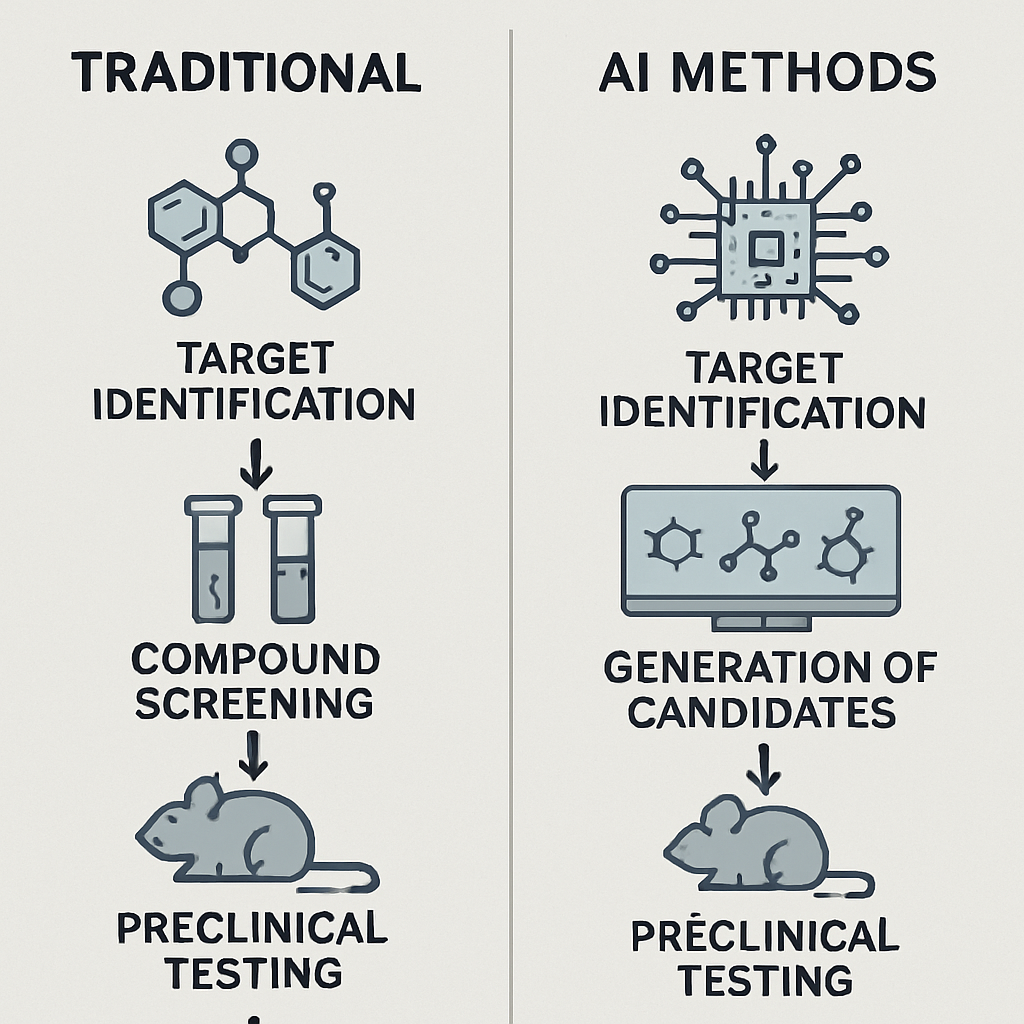
Historically, drug development has been an extremely time-consuming and expensive endeavor. Historically, it can take a decade or longer to get a drug to the marketplace. As well as high costs and complexity of clinical trials, this limits access to drugs and slows down the rate of innovation.
Drug development is undergoing a transformation with the advent of AI technology. It provides drug developers with the opportunity to rapidly search and analyze large amounts of data that would be impossible to process manually. Therefore, AI is allowing for rapid acceleration of the entire drug development process.
AI technology is developing key capabilities to drive this change. Machine learning algorithms are being used to improve target identification and optimization; natural language processing (NLP) is being utilized to quickly review scientific literature; predictive analytics are providing insights into potential future adverse events and risk factors associated with drug candidates.
Benefits of using AI in drug development include:
- A significant reduction in time and money spent on finding potential drug candidates.
- Significant improvement in identifying optimal drug candidates based upon improved accuracy.
- The ability to predict potential adverse effects related to drug candidates prior to initiating formal testing.
The advent of AI technology in drug development represents a major turning point in the history of medicine. There will likely be increased use of AI in drug development, leading to innovative, potentially less costly, and more timely healthcare solutions.
Summary
“AI in Drug Development — How Artificial Intelligence Is Revolutionizing Pharmaceuticals from Discovery Through Clinical Trials” describes how the development of drugs using artificial intelligence is transforming the future of medicine by changing the entire pipeline of drugs from discovery through clinical trials.
The article shows how large amounts of data (genomics, scientific publications, chemical library databases, and real-world evidence) are analyzed by artificial intelligence to select targets for new medications, determine which new compounds have promise, and help develop new treatments faster than before, with a lower risk of adverse reactions.
This article emphasizes the use of machine learning to develop new treatments more quickly and at lower cost, and to make more accurate choices when selecting candidates for expensive drug development testing by predicting how a new treatment will behave, interact, and produce potential side effects prior to extensive testing.
In addition to time savings, this article provides an example of how AI contributes to medical innovation, such as personalized and precision medicine, which treats patients based on their individual genetic or other biological characteristics.
While the benefits of using AI in drug development are many, there are also several significant obstacles, including ethical issues, biases, data security concerns, and a lack of regulations governing its use.
The authors emphasize the need for companies to operate transparently and be accountable for their actions when implementing AI in their business operations.
The authors conclude that, if used responsibly, AI can significantly reduce the time it takes to bring new medicines to market; reduce the number of failed treatments; and enable doctors and researchers to treat many additional types of illnesses and provide access to safer, more effective treatments.
AI in Drug Development: AI accelerates the creation of new medicines by improving research, testing, and decision-making through advanced data analysis

AI in Drug Discovery has changed the way we develop new drugs — it’s transformed the process from idea generation to drug development. By analyzing large amounts of data (e.g., genomic information, laboratory test data, radiographic data, publications, etc.) and electronic medical record data from real patients, AI can discover relationships or patterns that humans cannot find.
In AI in Drug Development, scientists are utilizing models to identify drug target candidates; predict how a molecule will behave when introduced into a living organism; and prioritize potential candidate compounds before performing extensive and costly experimental studies. This reduces the time required to complete the early stages of drug discovery and enables teams to allocate their limited resources to compounds with the greatest likelihood of success.
Additionally, testing is being performed at a much faster pace and with greater accuracy than ever before. The application of AI in Drug Development has enabled the virtual screening of compounds, the prediction of toxicity associated with compound formulations, and the optimization of formulations, all of which have contributed to reduced failure rates in late-stage clinical development.
Once a drug reaches the clinic, AI in Drug Development can assist in identifying eligible patients by matching electronic medical records against inclusion/exclusion criteria established in clinical study protocols, thereby accelerating enrollment and increasing the diversity of enrolled subjects.
Additionally, AI in Drug Development can continuously monitor clinical study data as it arrives for adverse events, protocol violations, and emerging efficacy trends, enabling expedited, informed decision-making during ongoing clinical studies.
Ultimately, AI in Drug Development will enable investigators to integrate evidence from multiple sources to make “go/no-go” decisions regarding product development programs; generate forecasts of manufacturing feasibility; and optimize dosing strategies for various patient subsets.
As such, the overall pipeline of drug development will be significantly enhanced through the utilization of AI in Drug Development — fewer dead ends, early identification of potential problems/risks, and improved prioritization throughout drug development.
While strong regulatory oversight remains essential (i.e., high-quality data; regular bias assessments; transparency and appropriate data protection), AI in Drug Development will continue to enhance efficiency and responsiveness in meeting unmet medical needs.
There are several practical applications of AI in Drug Development, including the use of generative models to design novel chemical structures, repurposing approved drugs by comparing underlying biological mechanisms across disease states, and automated literature reviews to ensure that practicing scientists remain current.
AI in Drug Discovery: AI accelerates the identification of new compounds and reduces time to market

The acceleration of new compound identification using AI in drug discovery has provided pharmaceutical companies with an additional method to shorten their timeline to market. The use of massive chemical libraries, biological datasets, and prior experimental results by AI in drug discovery enables rapid identification of molecules most likely to bind to a target and possess the desired properties. T
ime is crucial during this initial phase of research, as many potential drug discoveries often fail here due to the elimination of “dead-end” compounds through faster filtration. As such, AI in drug development will be able to start with more effective lead candidates and provide clearer objectives.
Practically speaking, AI in drug discovery uses machine-learning algorithms to predict both the activity and toxicity of a molecule before it is synthesized or evaluated in animal subjects. Virtual screening in AI-driven drug discovery enables the evaluation of hundreds of millions of molecular structures within days, whereas generative models can create entirely new molecular structures that meet specific criteria.
Additionally, AI in drug discovery enables researchers to integrate genetic, disease-pathway, and disease-mechanism information, thereby improving target selection and minimizing false starts. Once this information flows downstream, AI in drug development can begin its preclinical testing stage with greater knowledge and less uncertainty.
Additionally, AI in drug discovery can assist with drug repurposing by identifying shared mechanisms of action across diseases and highlighting those that may warrant further testing. Using AI in drug discovery, along with automation in laboratory settings, accelerates the “design-make-test-learn” cycle, creating tighter feedback loops and improving decision-making at each step.
This momentum continues in AI-driven drug development, where teams can develop more efficient experimental plans and focus their resources on areas of greatest strength based on the data collected.
Ultimately, combining the increased rate of candidate drug generation, earlier safety assessments, and greater confidence in target selection reduces overall timelines. With strong validation and high-quality data, AI in drug development becomes more predictable, and AI in drug discovery becomes a viable tool for delivering drugs to patients more rapidly.
How AI is Revolutionizing Drug Discovery
Artificial intelligence (AI) has had a highly significant positive impact on drug discovery by leveraging advanced machine learning methods to analyze vast amounts of complex biological data at unprecedented speed. The speed at which this type of information can be evaluated directly relates to the rapid identification of viable drug candidates for advancement through the drug development process.
Artificial intelligence plays an important role throughout all phases of drug discovery, including target selection, as AI models have been shown to effectively identify biological targets for novel drugs by analyzing large amounts of genetic, proteomic, and metabolic data.
Additionally, artificial intelligence has proven highly effective in the virtual screening of compounds for potential use as new drugs. Compared with traditional laboratory-based screenings, where hundreds of compounds were manually tested, AI models enable researchers to quickly test thousands of molecules against a specific biological target. This greatly accelerates the selection of potentially viable compounds and significantly reduces the need for costly, time-consuming manual compound testing.
Finally, artificial intelligence has been demonstrated to provide predictive modeling capabilities that will forecast likely adverse drug interactions or side effects prior to clinical testing. Therefore, using these predictive models in the early stages of drug development enables safer drug development and helps researchers formulate better drug candidates.
Key areas that Artificial Intelligence (AI) has been applied to within drug discovery are:
- Target Identification: Identifying a target for a drug to bind to and affect.
- Virtual Screening: Rapidly evaluating as many compounds as possible as drug candidates.
- Safety Profiling: Early detection of potential compound-drug interactions and adverse reactions.
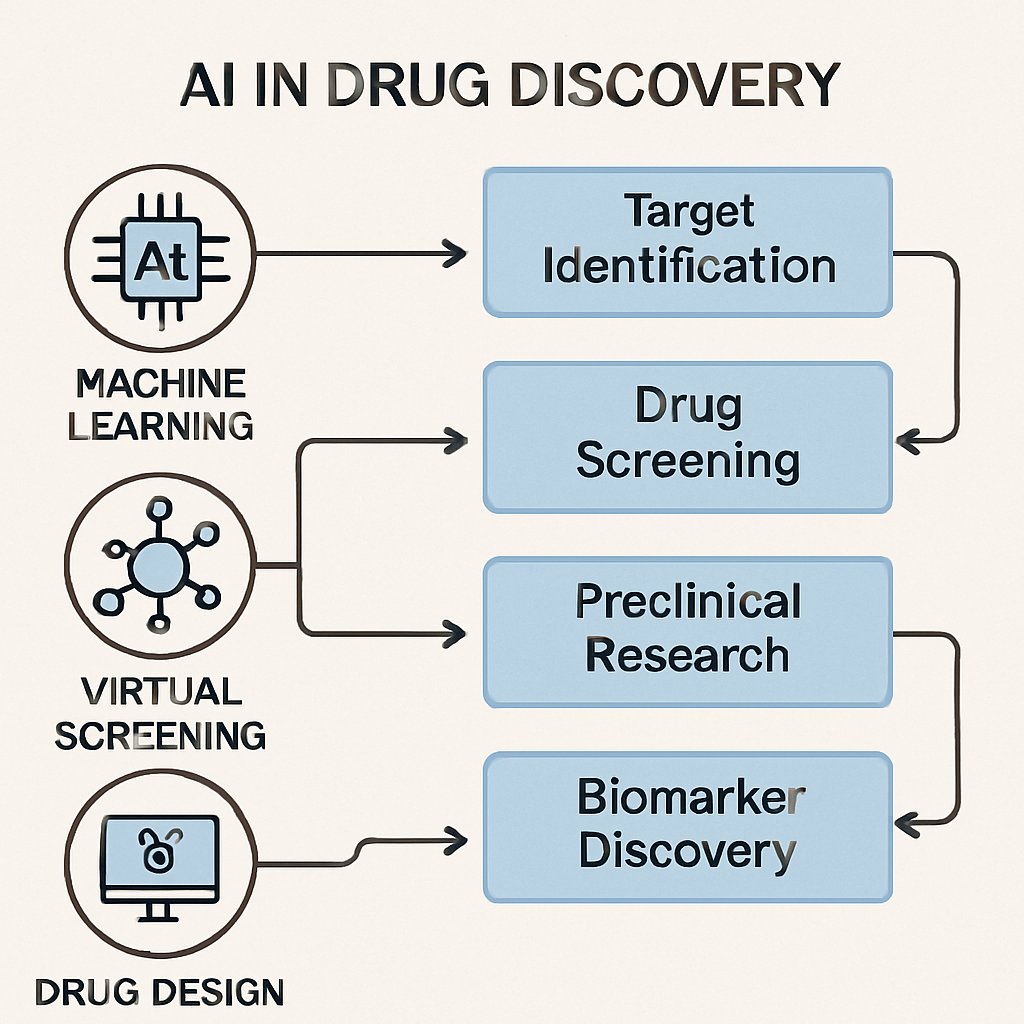
The large-scale data management and data interpretation capabilities of AI have enabled the discovery of drugs with new modes of action. Many of these uninvestigated chemical entities may potentially be used to treat orphan or difficult-to-treat diseases. The speed and accuracy of prediction, along with AI’s predictive capabilities, will continue to transform drug discovery, ultimately enabling the development of new forms of treatment. Additionally, AI will provide new avenues for therapeutic options by integrating into pharmaceutical research and development.
AI Impact Across Drug Development Stages

Source:
Nature AI Drug Discovery Insights
Drug Research with AI: AI helps analyze complex datasets to discover safer, more effective medicines.

Modern biomedical research has produced an enormous amount of data (genomics, proteomics, imaging, EHRs, and published literature) — and Drug Research with AI can find connections among all those data points much quicker than manual processes.
In addition, by integrating diverse data sources, Drug Research with AI enables researchers to identify potential new therapeutic targets more effectively and develop a clearer understanding of how diseases function at the molecular level. This will provide the basis for making better-informed decisions about where to take AI in Drug Development.
At the earliest stage, Drug Research with AI can predict whether certain biological targets are more likely to respond to therapy and which patients are the best candidates for treatment based on their genetic characteristics. Additionally, it can help researchers prioritize lead compounds using predictive modeling to evaluate their relative potency, specificity, and major safety features.
Since a significant portion of late-stage failures is due to toxicities or poor efficacy, Drug Research with AI focuses on candidate drugs with a lower risk/benefit ratio. And as researchers gather additional knowledge, they’ll establish a more rapid pathway from hypothesis to preclinical validation using AI in Drug Development.
After discovery, Drug Research with AI can support the safety aspects of the process by predicting potential adverse reactions, drug-drug interactions, and off-target effects prior to initiating large clinical trials. Additionally, Drug Research with AI can use past trial results and real-world experience to predict when a program may face challenges and what outcomes are reasonable.
Using Drug Research with AI can facilitate the translation of laboratory data into practical development activities, including identifying relevant biomarkers and establishing optimal dosing strategies. All this can eliminate some of the ambiguity associated with developing a medicine and enable AI in Drug Development to remain focused on measurable outcomes.
Drug Research with AI is also useful for continuous improvement. When new studies become available or more patient data is generated, models used in Drug Research with AI can be updated to improve predictive accuracy and suggest directions for future experimental design.
The strength of Drug Research with AI will depend upon strong governance (Quality Control/Bias Checks/Transparency/Privacy Protection). Under such conditions, Drug Research with AI will serve as a trusted decision-making partner rather than simply a “black box”. At its core, Drug Research with AI will transform massive amounts of data into action-able intelligence.
Machine Learning in Pharmaceuticals: Accelerating Research and Reducing Costs

Machine learning is helping reduce the time and cost of drug discovery for pharmaceutical companies. Machine learning algorithms can sift through large datasets and produce relevant information quickly. Therefore, they can significantly reduce the amount of lab-based work traditionally required to develop drugs.
Data is a key component of the pharmaceutical industry, and machine learning is enhancing how this data is utilized. The predictive capabilities of machine learning enable researchers to create highly accurate predictions of what will happen when a particular compound or combination of compounds is administered to an individual. These types of predictions greatly reduce the need for “trial and error” in laboratory environments and the number of hours spent in labs before finding something that works.
Optimizing chemical synthesis represents another significant example of the utility of machine learning. By using machine learning, chemists can model and predict which reactions will succeed and how the chemical synthesis process should proceed. In doing so, chemists can significantly improve their efficiency, thereby reducing the time and expense associated with developing new compounds.
Finally, machine learning also has the potential to aid in designing clinical trials. By using machine learning, researchers can identify the most appropriate patient population for each study and apply the same algorithms to predict outcomes. As such, clinical trials can now be designed to ensure success while providing substantial cost savings.
Machine learning has a number of advantages for the pharmaceutical industry, including:
- Data Analysis: The ability to get insight into large amounts of data that would be too time-consuming or difficult to analyze by hand.
- Predictive Modeling: More accurate predictions about how different drugs will behave.
- Process Optimization: Lowering costs associated with the development of new drugs (synthesis) and clinical trials (trial design).
Machine Learning plays an important role not just in the drug development process but also in scaling the production of those drugs. Advances in machine learning have enabled the pharmaceutical industry to meet its goals of delivering safer, more effective drugs to patients as quickly as possible. In addition to reducing the cost burden on both pharmaceutical companies and healthcare systems, advances in machine learning are transforming patient care worldwide.
Machine learning in Pharmaceuticals: It enhances predictive modeling and improves drug effectiveness
The use of machine learning in pharmaceuticals is helping researchers make better predictions about how drugs will behave and develop new treatments more quickly. This happens because machine learning uses large amounts of data (such as chemical structures, assay results, genomic information, and clinical outcomes) to create predictive models of a drug candidate’s efficacy and safety before expensive lab cycles begin. As machine learning improves predictive capability, there is less reliance on the random selection of compounds, allowing research teams to achieve more successful programs.
One of the major benefits of using machine learning in pharmaceuticals is its ability to predict pharmacokinetic and toxicological behaviors. Machine learning models can predict potential interactions between a compound and a specific biological target; identify potential side effects associated with an active ingredient; and estimate absorption and metabolism rates.
Additionally, machine learning models can predict desirable physical/chemical properties, such as potency, stability, and solubility, prior to costly lab experiments. The ability to make such predictions enables more informed decisions regarding compound selection and “go/no go” decisions in AI-driven drug development.
Machine learning in pharmaceuticals also offers opportunities to improve drug efficacy through greater personalization. By using machine learning to analyze patient characteristics and biomarkers, companies can identify populations most likely to respond favorably to a particular therapy. In addition, machine learning can assist in identifying optimal dosing regimens based on the identified population’s sensitivity and tolerance.
Furthermore, machine learning can enhance the planning process for clinical trials by estimating enrollment success rates, identifying suitable recruitment sites, and monitoring early indicators of efficacy or adverse events. All of these capabilities strengthen AI in drug development by making clinical trials more efficient and providing greater confidence that the results from those trials will be meaningful.
However, for machine learning in pharmaceuticals to reach its full potential, it requires access to high-quality, properly labeled data for training and validating models. In addition, governance plays a critical role. Bias detection, model transparency, and protection of individual subject information need to be addressed.
While machine learning in pharmaceuticals has significant growth opportunities ahead as it continues to become an integral component of research and development processes, AI in drug development will become faster, more analytical, and capable of developing products that are more effective at treating larger numbers of patients.
Breakthrough Scaling Strategies for Biomanufacturing Success
AI Tools in Drug Development: Key Technologies and Applications
The use of AI technology in drug development has led to a paradigm shift in research methodology. The inclusion of these AI-based solutions has added both efficiency and innovative elements to the overall drug discovery process.
These AI-based systems can analyze large amounts of biological data at incredible speed and with high accuracy. With this capability, AI can quickly identify viable drug candidates, thereby reducing the time researchers traditionally spend on conventional drug development.
High-throughput screening uses an AI system to screen thousands or millions of chemical compounds. Additionally, advanced imaging analysis and pattern recognition capabilities allow researchers to immediately focus their efforts on those that show the greatest promise as viable drug candidates.
Furthermore, AI enables researchers to predict how drugs may interact and potentially cause adverse reactions. This type of predictive modeling is critical in identifying and mitigating potential risks associated with new drug therapies before they enter clinical testing.
AI-based systems for drug discovery have been developed through the use of:
- Data Mining: The ability to identify useful patterns or information within large data sets.
- Predictive Models/Analytics: Predictive models that can forecast how a drug may react with other drugs and possible side effects.
- Automated Systems: Automated systems for conducting high-throughput screening.
by Growtika (https://unsplash.com/@growtika)
The flexibility of these tools is an important factor in generating additional research opportunities. For example, researchers are currently investigating new chemical entities (NCE’s) and new ways to deliver medications. In addition, researchers are using AI tools to develop treatments tailored specifically for individual patients based on their unique characteristics.
As such, this evolving process represents a significant advancement in the treatment options available for patients. Further, it also demonstrates the major influence AI tools will have in developing new types of therapy and enhancing overall patient health and well-being.
Key AI Technologies in Drug Development

Source:
AI tools in drug development: AI tools in drug development automate research processes and enable faster data-driven decisions

AI technology has changed how drug companies conduct their research and development (R&D) through automated processes and faster, data-driven decision-making. Each program in drug development generates an incredible amount of data, including laboratory results, “omics” data, images, literature references, and clinical trial data.
Through organization, analysis, and decision-making based on this large volume of data, AI technologies enable researchers to take full advantage of the data generated during drug development. As a result of decreasing manual analysis and repetitive tasks, AI technologies have improved the efficiency and consistency of the process from hypothesis to experimental design.
In addition, because they eliminate many laborious tasks associated with drug development, AI technologies increase the efficiency and consistency of the early work that is critical to the successful operation of AI in drug development.
AI technologies in drug development aid in the identification of targets; virtual screening of compounds; prediction of compound properties; ranking of compounds; estimation of activity; prediction of toxic risk prior to expensive experiments; integration with robotics and high-throughput screening; and acceleration of “design-make-test-learn” workflows. These capabilities enable AI in drug development to allocate limited resources to candidate drugs most likely to be beneficial once properly validated.
Additionally, AI technologies in drug development can also enhance the speed of clinical drug development.
For example, they can rapidly review electronic health records to identify patients who meet eligibility criteria for participation in a study; optimize site selection; identify trends in clinical trial data that may necessitate rapid intervention; and develop plans for adaptive trials that will allow investigators to make changes to ongoing studies based on real-time data without compromising the integrity of the study protocols.
All of these applications reduce delays and improve the effectiveness of AI-driven decisions in drug development.
Finally, AI technologies in drug development can facilitate other regulatory and operational activities, such as summarizing evidence for approval or marketing purposes, monitoring safety signal reports, and forecasting manufacturing and supply chain risks. However, success ultimately relies on responsible use.
Data quality/governance, transparency, elimination of bias in models and datasets used for model training, security/cybersecurity, and clearly defined human oversight requirements all need to be addressed to ensure the safe and reliable implementation and use of AI technologies for drug development.
When implemented responsibly, AI technologies for drug development transform large volumes of complex data into actionable intelligence, providing decision-makers with greater confidence and enabling them to move forward with greater velocity. Ultimately, responsible implementation and use of AI technologies for drug development lead to a more efficient pipeline for bringing safe and effective medications to patients.
AI in Drug Design: AI enables faster, more precise development of effective medicines by analyzing molecular structures and predicting outcomes.

Artificial intelligence (AI) in drug development is enabling scientists to develop drugs at an accelerated pace and in a more targeted fashion than was previously possible by analyzing molecular structures and their likely behavior.
The primary difference between AI in drug development and traditional drug discovery is that AI relies upon the use of pre-trained models that have been trained on both the structural biology and the chemical and physical properties of compounds, as well as the results of various types of experimental work, to generate a list of compounds that would meet certain criteria.
Thus, the use of AI in drug development allows researchers to rapidly scan a much larger design space; however, it does so while simultaneously narrowing the field of candidate molecules to those supported by more robust evidence. Therefore, AI in drug development can begin drug development with a superior set of lead candidates and a better understanding of where to focus efforts.
One of the greatest advantages of using AI in drug design is the ability to predict how a particular compound will behave when interacting with a specific biological target. By analyzing binding affinity, selectivity, and other relevant physicochemical characteristics, AI in drug design can reduce the number of compounds that must be chemically synthesized and experimentally evaluated.
Additionally, AI in drug design facilitates optimization by providing recommendations on alterations that could enhance a compound’s effectiveness and stability while reducing its potential toxicity. Once these predictions have been incorporated into AI in drug development, they can further reduce the time spent on iterative rounds of experimentation and testing and may ultimately minimize the likelihood of a late-stage failure.
In addition to prediction, AI in drug design has advanced de novo synthesis. Generative models enable the design of completely novel structures specifically optimized for interaction with a particular target profile, which are then ranked according to predicted efficacy and safety.
Simultaneously, AI in drug design enables the identification of “drug-like” candidates for difficult-to-treat disease states by leveraging knowledge generated from analyses of large amounts of protein structure data and signaling pathway data. Ultimately, the inclusion of such predictive capabilities in AI for drug development increases the likelihood that initial candidates will be converted into meaningful therapeutic agents.
For AI in drug design to achieve reliability, the available training datasets must be of sufficient quality, and model performance must be continuously verified against laboratory-based test results. Furthermore, transparency should be maintained throughout all phases of model development to detect/limit potential biases or overconfidence.
While human experts remain vital for determining strategy, interpreting output, and planning confirmation studies, responsible use of AI in drug design converts molecular data into actionable predictions, thereby enabling increased speed, reduced costs, and enhanced precision in the delivery of new medicines.
AI in Clinical Trials: Enhancing Efficiency and Patient Outcomes

Traditional clinical trials have long been plagued by high costs and time-consuming enrollment. As technology continues to evolve, the use of Artificial Intelligence (AI) in clinical trials will provide a new and improved method for conducting the traditional clinical trial.
One area where AI can greatly improve the conduct of clinical trials is participant recruitment. The use of AI to identify appropriate participants from large amounts of data will significantly reduce the time required to find the most suitable participants and increase the diversity of the pool of potential participants.
Another way AI will be beneficial in conducting clinical trials is through real-time monitoring of patient data. Allowing researchers to monitor their data in real time will enable them to make changes to the protocol as needed.
The benefits of using AI in clinical trials do not stop there. AI also helps reduce participant dropout rates by enhancing patient engagement. The personalized digital interfaces and reminders provided by AI help ensure that participants adhere to all aspects of the study protocol.
AI in Clinical Trials has made several key changes.
- Recruitment: Patients are recruited faster and more efficiently than before.
- Monitoring: Data is being collected and analyzed continuously to optimize the trial.
- Education/Engagement: Communication to patients, as well as compliance/adherence, is improved.
The use of AI will improve the safety of clinical trials (and increase efficiency), which will result in higher-quality data, thereby improving health care outcomes. Improvements in the conduct of clinical trials through the use of AI will continue to be an important component of future healthcare innovations.
AI in Healthcare Innovation: Toward Personalized and Precision Medicine
AI in Healthcare is creating a new path toward customized and precise medical care through the use of “Personalized Medicine” or “Precision Medicine.” In Personalized/Precision Medicine, treatment is tailored to each patient’s individual genetic makeup and/or medical history.
To provide the information needed to deliver personalized and prescription medicines, AI systems analyze large datasets from various sources, such as genomic data, electronic health record (EHR) systems, and wearable device data. Once trained, these AI systems can predict which medical treatments are likely to work best for an individual patient.
AI also enables physicians to identify disease patterns that may lead to more severe illnesses if left untreated. Additionally, using machine learning algorithms and other forms of AI, physicians can now anticipate when certain diseases may develop and therefore intervene sooner rather than later.
Several key elements within the healthcare field are experiencing an advancement due to AI innovation:
- Genetic analysis to find disease-linked genetic markers.
- Predictive diagnostics to forecast future health issues.
- Treatment optimization to customize treatment options based on each patient’s unique needs.
by Zach M (https://unsplash.com/@zachmmalin)
AI-based diagnostic solutions enable clinicians to deliver more accurate diagnoses and improve treatment options. Improved patient outcomes result from these new clinical innovations. With continued advancements in AI technology, the role AI plays in personalized medicine will continue to grow. Patient-centered healthcare continues to evolve through an increased focus on developing innovative, customized treatments.
AI in Drug Development Growth

Source:
AI in Healthcare innovation: AI is transforming diagnostics, treatment, and drug development strategies

Healthcare innovation with artificial intelligence (AI) is revolutionizing how diagnostics and treatment strategies are developed by rapidly turning large volumes of medical data into faster decisions.
Diagnostics — AI in Healthcare innovation helps improve disease detection using medical images, lab results, and patient history, and identifies patterns that indicate disease earlier than traditional workflows. This supports quicker intervention and provides clinicians with the right next steps. As this insight feeds into research pipelines, AI in Drug Development benefits from a better understanding of disease and more clearly defined patient groups.
Treatment — AI in Healthcare innovation facilitates personalized care through modeling predictions of which therapies may be most effective for specific patients based upon biomarkers, genetics, and real-world outcomes. AI in Healthcare innovation also drives the development of clinical decision support tools that help providers reduce errors, monitor risk, and adjust care plans over time. These advances directly connect to AI in Drug Development, where personalized insights can guide endpoint selection, dosing strategies, and companion diagnostic design.
From a research perspective, AI in Healthcare innovation accelerates the gathering and use of evidence. It can search scientific literature, analyze real-world data, and identify unmet needs that deserve new therapies. AI-driven healthcare innovation improves clinical trial operations by matching patients to studies and monitoring safety signals more efficiently. This strengthens AI in Drug Development by reducing delays, improving trial quality, and increasing the likelihood that successful results translate into real-world patient outcomes.
Overall, across the pipeline, AI in Drug Development relies on trustworthy data and responsible governance. AI in Healthcare innovation must be designed with transparency, bias checks, privacy protection, and strong human oversight. When these standards are met, AI in Healthcare innovation enables Healthcare systems to move from reactive care to proactive, patient-centered care; additionally, it makes AI in Drug Development faster, more accurate, and better aligned to real-world needs
Healthcare AI Tools: Transforming Hospital Operations
Overcoming Challenges: Ethical, Regulatory, and Technical Considerations
Drug development using artificial intelligence (AI) introduces new ethical issues that must be addressed. Ethical concerns in this area involve data protection and the potential for algorithms to introduce prejudice. To build high levels of public trust in how AI operates, it is important that AI systems are both fair and transparent.
Additionally, as regulatory frameworks lag behind developments in AI technology, they may not account for all the new complexities arising from the use of AI tools. Therefore, an update to the current regulatory guidelines will be required to protect safety and efficacy while allowing for innovative uses of AI.
In addition to addressing ethical and regulatory issues related to the use of AI in drug development, there will be technical issues that will require significant efforts from multiple stakeholders. The integration of new technologies (such as AI) with legacy systems is often difficult and requires a robust IT infrastructure and solid cybersecurity.
The key issues to be addressed are:
- Data privacy (the protection of patients’ data).
- Algorithmic bias (to make sure the results generated by an artificial intelligence system do not contain any prejudice or bias).
- Regulatory compliance (to adapt existing regulatory requirements to AI-driven systems).
It is crucial to overcome the challenges mentioned if we want to successfully integrate artificial intelligence into the drug development process. In this way, it will also be possible to utilize the full potential of AI while adhering to established ethical and technical standards. Only with a balance of both sides will AI-based innovation contribute positively to the advancement of health care.
Challenge vs Solution Table

Source:
Real-World Success Stories: AI-Driven Breakthroughs in Drug Research
AI-enabled innovation has shown significant success in drug development. A good example of that is baricitinib, identified as an effective drug against COVID-19 through AI processing large amounts of data. The use of AI has greatly accelerated the drug development process, particularly compared with traditional methods.
The second major area in which AI-enabled innovation has shown promise is cancer treatment. In cancer treatment, AI has identified targeted treatments based on genetic mutations specific to each cancer type. This method allows clinicians to quickly identify a specific drug candidate that best fits an individual patient’s profile.
These real-world examples show how AI can revolutionize many areas in Pharmaceuticals:
- Fast drug repurposing (finding a different use for an already approved drug).
- Personalized cancer therapy (matching the best therapy based on your genetic profile).
- Finding new antibiotics that will help fight antibiotic resistance.
In addition to these, AI has helped expedite vaccine development. It can examine molecules in great detail to rapidly predict whether a given vaccine will be effective.

by 8machine _ (https://unsplash.com/@8machine_)
Real-world Example: AI Drug Discovery Success

Source:
The Future of AI in Drug Development: Trends and Predictions
AI can bring about significant changes in how drugs are developed. New methods and opportunities for development are emerging from innovations such as quantum computing, which can accelerate AI capabilities and solve complex problems more quickly than current methods. Therefore, it will be possible to develop new drug compound(s) using an efficient process.
Data analysis (predictive) generated by AI will provide key information for forecasting potential future disease outbreaks. The ability to predict when an outbreak may occur enables strategic resource allocation and expedited drug development. Integration of data from many different sources using data integration technologies will enable these trends to continue and allow for the creation of comprehensive analyses and resulting insights.
The most significant developments and projections are as follows:
- Quantum computing integration with AI – This trend will increase the speed of AI process capabilities.
- Prediction modeling using AI to predict disease epidemics and future pharmaceutical demand.
- Merging disparate forms of data using AI for enhanced insight into data.
AI is also likely to transform how patients are recruited for clinical trials and improve their engagement and compliance. Using patient data and applying AI algorithms optimized for precision, dropout rates in clinical trials can be significantly reduced while enhancing overall efficiency.
by Growtika (https://unsplash.com/@growtika)
Conclusion: Embracing the AI Revolution in Medicine
AI has changed drug development; it can speed up and improve treatment options. There are many obstacles to this new technology; however, I believe the opportunities outweigh the risks.
The medical community is at an all-time high of innovation as a result of AI advancements. All parties involved should collaborate to use AI ethically to ultimately improve health care outcomes. With the continued growth and evolution of AI, we will need to adopt and implement new technologies to develop medicine into a more specific and individualized practice. Our ability to commit to adapting to and implementing AI-based innovation will directly impact the future of medicine.
FAQs
- What does AI do in drug development?
AI uses large amounts of data (genomics, chemical library databases, clinical trial data, literature, etc.) to assist researchers in finding drug targets, predicting how molecules will behave, identifying potential safety issues before they become problems, and helping research groups quickly pick the best candidate. - How does AI speed up drug discovery?
AI enables virtual screening of millions of compound combinations; identifies which ones are most likely to be effective; and suggests new molecular structures – both of which reduce the amount of “trial and error” laboratory work and shorten the duration of early research studies. - How is AI used in clinical trials?
AI supports research by locating potential study participants faster; selecting optimal sites to conduct trials; monitoring trial-related data in near real time; and identifying potential safety/efficacy issues sooner – all of which provide an opportunity to make quicker, better-informed decisions. - Does AI replace scientists and clinicians?
While AI can support researchers by analyzing large amounts of data and making better predictions than humans, it will never replace the need for researchers to be involved in the research process. - What are the biggest risks or challenges of using AI in drug development?
Research is made up of many components. The most important part is the actual study design (what questions are we asking? How do we answer those questions?). Research also requires that researchers validate their results. Ethics is another huge component. Researchers have to decide whether a particular type of research should be conducted. And researchers always have the final say on which studies are approved.