



















Have you ever had a flight delayed due to “unforeseen mechanical issues” or received a large car repair bill and wondered how it happened? It can be very frustrating when the machinery we rely on breaks down without warning.
We have historically taken a reactive approach, waiting until the equipment notifies us that it has broken down. The first method of performing reactive maintenance was to fix the item after it had stopped working (also known as “run to failure”). For example, if your automobile begins to emit black smoke from under the hood while you are driving, there will come a time when you must correct the problem, but the cost, time, and risk associated with this type of reactive maintenance can be considerable.
To avoid emergency situations such as these, industries moved to implement Preventive Maintenance – repairing items at a fixed time interval. This is the “just in case” type of maintenance; just as you are required to replace the engine oil in your automobile every 5,000 miles, regardless of whether your automobile requires it. Although this is probably safer than reactive maintenance, it is extremely wasteful and replaces perfectly good parts based on an abundance of caution.
Thus, we are faced with a difficult decision – Do we risk costly downtime, or do we waste money on unnecessary repairs? The debate between reactive and preventive maintenance will continue to determine how industries operate for the next 100 years. However, a new smart approach to maintenance is emerging, which will shape the future of maintenance and offer a much better option.
Summary
Predictive Maintenance is changing how industries perform equipment maintenance by transitioning away from a “fix it when it fails” (reactive maintenance) and “fix it based on a schedule” (preventative maintenance) approach to “fix it exactly when you have to”. Predictive Maintenance uses an array of automated systems and numerous types of sensors to track “vital signs” of equipment, such as vibration, temperature, and sound, and then evaluates the data for early warning signs of possible failure before a total system failure occurs.
The article illustrates the use of predictive maintenance in three simple steps: first, the sensor(s) record the “health signals”; second, the sophisticated analytical tools (i.e. artificial intelligence, etc.) evaluate the recorded data for patterns that are either difficult or impossible for a human to recognize; third, the evaluation of the recorded data is used to send a notification to maintenance personnel regarding the maintenance to be performed at the most optimal time.
This technology performs the role of a very specialized digital maintenance technician – trained on extensive historical data about the equipment’s operational history and performance, and detects the “signature” of an impending failure via pattern recognition, and other techniques.
In addition to the manufacturing plant, predictive maintenance offers several benefits, including fewer service disruptions (e.g., delayed flights due to an airline engine failure), consistent production processes, higher-quality products, and safer working conditions by preventing hazardous mechanical incidents. Furthermore, predictive maintenance offers cost savings to organizations by reducing unplanned downtime and waste, replacing components only when necessary, thereby reducing energy usage and environmental impact.
#Advanced & Transformative Robotic Process Automation Explained – Digital Robots for Computer Tasks
A Smarter Approach: What Is Predictive Maintenance, Really?
Predictive Maintenance is far superior to Just-In-Case (Preventive) Maintenance in terms of efficiency. Sensors and advanced data analysis allow a manufacturer to precisely predict when a repair is needed; therefore, you can repair when needed and avoid repairing prematurely or after the repair is no longer needed.
In general, manufacturing facilities contain multiple pieces of equipment. Therefore, a manufacturer can install sensors on each piece of equipment to provide continuous monitoring. A technician can be alerted as soon as a problem with the equipment is detected. The problem could be minor and become severe quickly if left unrepaired, or it could be significant but remain undetected until the equipment fails.
An example of how predictive maintenance works is as follows: At a large bottle-cap manufacturing facility, a single machine can produce over 1000 bottles per hour. Rather than shutting down the machine monthly for maintenance, a vibration and temperature sensor can be attached to the motor that produces the caps. The sensor will continuously monitor the motor for patterns of wear. If a pattern is detected, an alert will be sent to the technician responsible for replacing the failing motor. The technician can then replace the motor during a low-demand period before it fails and halts production.
Predictive Maintenance enables manufacturers to act proactively rather than reactively. It allows manufacturers to ensure that all aspects of their business operate at maximum efficiency.
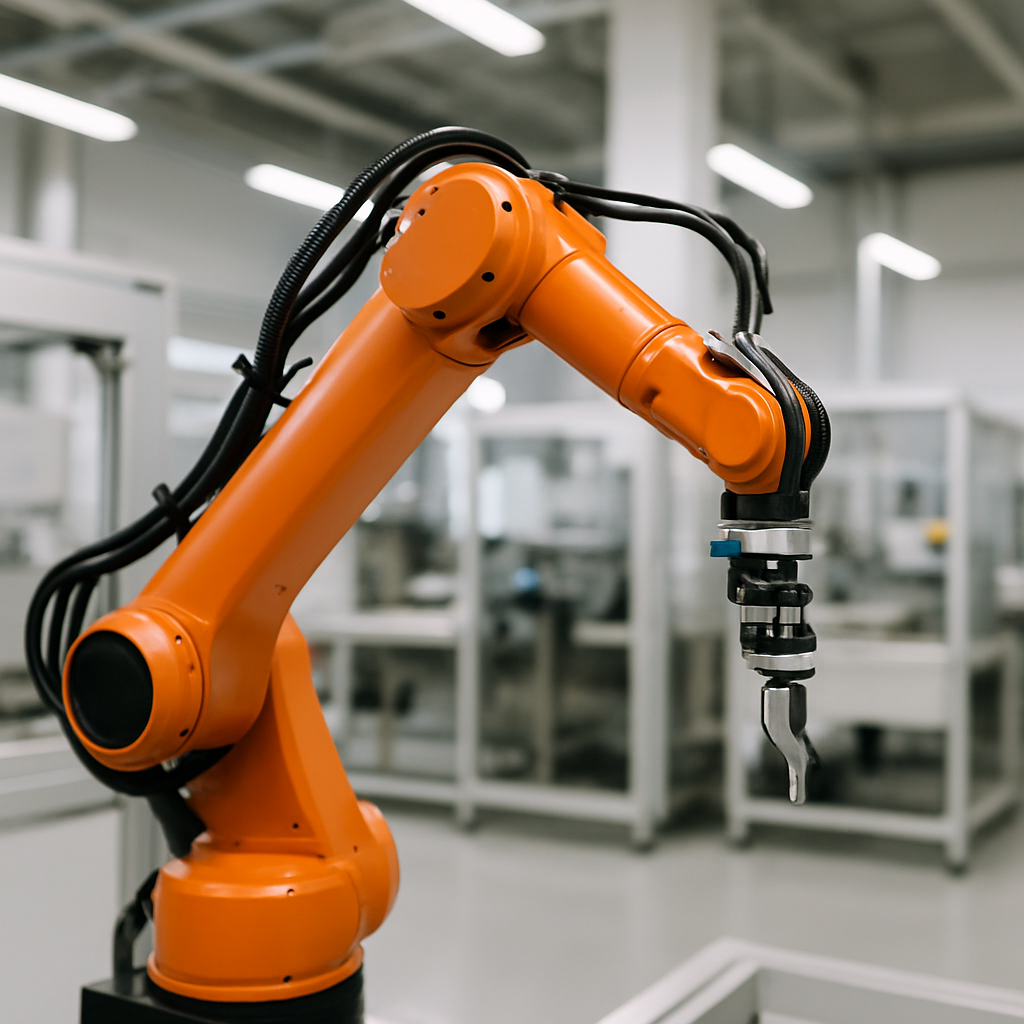
Predictive vs Preventive vs Reactive Maintenance
| Maintenance Type | Approach | Cost | Downtime | Efficiency |
|---|---|---|---|---|
| Reactive | Fix after failure | High | High | Low |
| Preventive | Scheduled Maintenance | Medium | Medium | Moderate |
| predictive | Data-driven (AI/IoT) | Lower long-term | Minimal | High |
Insight: Predictive maintenance reduces unnecessary servicing while preventing failures.
Source:
- IBM Maintenance Strategies
https://www.ibm.com - Deloitte Smart Factory
https://www2.deloitte.com
Predictive Maintenance in Automation: AI predicts equipment failures before costly downtime occurs

Predictive Maintenance, in the context of automation, represents an example of artificial intelligence. It can detect indicators of potential mechanical issues in automated equipment, enabling proactive maintenance by plant personnel. Traditional methods of equipment maintenance have included waiting until equipment fails or replacing parts based on a pre-determined schedule.
Predictive Maintenance in automation uses real-time readings of actual operating parameters (temperature, vibration, current draw, pressure, etc.) to establish what constitutes normal operation. Once normal operating parameters have been established, Predictive Maintenance in automation can compare actual readings against those parameters to determine when operation falls outside normal limits.
The base model of Predictive Maintenance in automation involves integrating sensors into the automation system. Data collected from these sensors is transmitted via a data transmission system to a connected control system, where machine learning algorithms are trained on historical data on equipment failures and on data generated during current production activities. These machine learning algorithms can identify trends and patterns in data that may go unnoticed by humans. Examples include: very slight increases in motor vibration; slight variations in torque; new harmonic frequencies in acoustic signals.
Predictive Maintenance in the automation process enables the estimation of the remaining useful life of equipment components, the identification of anomalous operation, and recommendations for inspecting/ replacing worn-out components. In addition to being both measurable and practical, predictive maintenance in automation offers several advantages for manufacturing plants. For example, plants that use predictive maintenance in their automation operations run at full capacity, experience fewer unplanned stoppages, and produce higher-quality products.
This occurs because predictive maintenance shifts unplanned work into planned work. Additionally, utilizing predictive maintenance in automation creates safer environments for employees. As a result of this practice, there will be fewer potential catastrophic failures and fewer emergency repairs.
In addition to the positive effects mentioned earlier, predictive maintenance for automation can allow maintenance departments to determine the most effective levels of spare-parts inventory, extend asset service life, and enable technicians to concentrate on the highest-priority machines rather than checking the same number of machines.
To start developing predictive maintenance for automation, first evaluate which critical assets will experience the greatest financial loss when they go out of commission. These typically consist of compressors, pumps, conveyors, robots, CNC spindles, and gearboxes. Second, validate that the sensor data collected is reliable. Third, collect baseline data on past failures in the monitored systems to develop an understanding of what normal operating conditions look like. Lastly, integrate alert predictive maintenance technology with existing tools used by the current team (CMMS, SCADA, etc.) to generate maintenance tickets.
Lastly, it is important to understand that predictive maintenance for automation should be viewed as a continuous improvement process. Therefore, predictive maintenance technology should be used to validate alerts, learn from false positives, refine thresholds, and update predictive models as the equipment, load, and/or process changes over time. AI properly applied does not displace the knowledge of the maintenance department. Rather, it scales up the maintenance department’s expertise and translates the signals generated by predictive maintenance technology into actionable steps before downtime.
Example
The predictive maintenance software for this automated packaging plant monitors the robotic arm’s performance. It does so by tracking: (1) the amount of “torque” on each of its joints; (2) the amount of pressure at the end of the arm to help keep items attached; and (3) how long it takes to complete each cycle. Over the past couple of weeks, the AI has been tracking an increase in torque readings at one of the arm’s joints (Joint #4), as well as a slight increase in the number of times the arm misses picking up items when it is humid outside.
This indicates to the maintenance team that the grease on Joint #4 is breaking down and that the vacuum cups at the end of the arm are wearing out. The predictive maintenance software will therefore schedule a brief “micro-stop” in the plant’s automated process during its regular sanitation time frame. In addition, the software will create a pre-populated CMMS work order (parts and labor included)for the maintenance staff.
Predictive Maintenance: AI predicts failures before equipment breaks down

Predictive Maintenance uses Artificial Intelligence (AI) to analyze patterns in your data to predict when something could fail, so you can fix it before it breaks down. Instead of reacting after an unplanned stop, the team has collected data from sensors on every machine, including Vibration, Temperature, Motor Current, Pressure & Cycle Time, and compared it to what would be considered the normal, healthy condition for each machine. When the pattern indicates a problem with the machine, the system sends warning messages about an impending issue that could take days to weeks to manifest before the machine actually fails.
The implementation of Predictive Maintenance takes raw sensor data streams and creates actionable, risk-based insights and very clear action items. The Predictive Maintenance Models are created by training them on both historical data and common production behaviors to show the small changes that may be hard to see when manually reviewing the data.
Many facilities have integrated Predictive Maintenance into their SCADA, PLC, and CMMS Systems. The Predictive Maintenance System automatically generates Work Orders as soon as an alert is sent. This allows maintenance planners to schedule maintenance activities during planned changeover times. Benefits include reduced response time to potential failures and improved maintenance scheduling.
Predictive Maintenance allows you to focus your maintenance activities on the areas of your operation that require the most attention. This means directing your maintenance activities toward machines that are trending toward failure, while allowing other machinery to continue running without unnecessary maintenance.
With the implementation of Predictive Maintenance in your automation operations, you will see fewer unnecessary part replacements, reduced overtime, and enhanced employee safety through fewer emergency repair situations. Additionally, Predictive Maintenance in Automation will help you optimize your spare parts inventory, increase the overall lifespan of your equipment, and improve the consistency of your product quality by reducing performance degradation that leads to defects.
Using Predictive Maintenance in Automation, you will begin to realize immediate benefits by identifying critical assets with significant downtime (compressors, conveyors, robots, spindles, and high-cycle actuators). Once identified, ensure that the sensors are properly positioned for the application and that the data collected is of sufficient quality.
Then confirm the alarm conditions with technicians so the system can learn what is important to your production process. The Predictive Maintenance process functions best as a closed-loop process: confirm the failures; determine the root cause of the failures; modify the threshold limits; and retrain the model based upon changes to the process or load.
With consistent execution, Predictive Maintenance in Automation will provide you with an early warning system that will help you maintain uptime, stay within budget, and meet delivery obligations.
Example
A regional water utility has ten high-lift pumps supplying a hilltop reservoir. The utilities’ predictive maintenance team is monitoring motor current, bearing vibration, and discharge pressure, and streaming this data into an anomaly model using historical information from previous seal failure events. One of these high-lift pumps began to show a very slight increase in vibration within a particular rpm range, as well as slightly elevated current readings at startup.
The predictive model indicates that a probable bearing defect will occur in twenty-one (21) days and provides the recommended time for inspection during a planned night-rate power outage. The technicians can replace the bearing and seal kits in approximately three (3) hours, which helps them avoid a potential weekend rupture, an after-hours emergency call-out, and a subsequent service outage.
Industrial Automation: Automated systems improving manufacturing reliability and efficiency
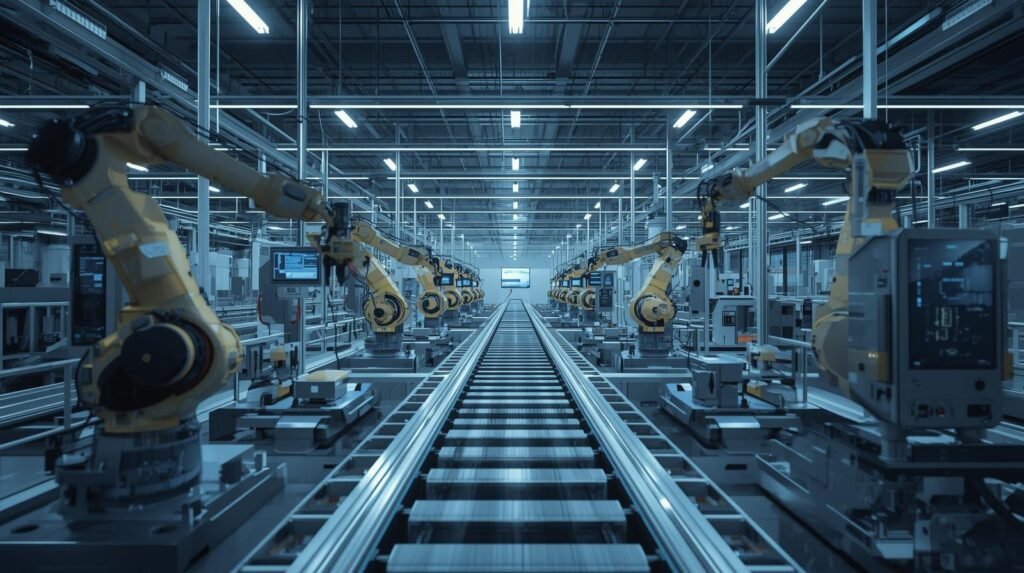
Industrial Automation enables producers to fully automate their machinery, industrial control systems, and software, thereby operating with higher consistency and speed. Industrial Automation offers producers the opportunity to eliminate the variability inherent in manual production processes.
This results in tighter specs, consistent cycle time, and quicker response to changes in customer orders. Industrial Automation, as used in manufacturing today, can include lines and cells with programmable logic controllers (PLCs), robotic cells, supervisory control and data acquisition (SCADA) systems, and advanced motion control — all of which create a connected system where all equipment and personnel are working together to produce product flow through the plant.
One of the largest advantages of using Industrial Automation is reliability. Industrial automation can deliver a very high level of performance on a continuous basis by performing repetitive tasks and, in real time, monitoring the operating conditions of the machine it controls (for example, temperature, vibration, pressure, current, and speed) using sensors. Additionally, with real-time visibility into the machines’ operating conditions, the team can identify potential problems early, reducing the likelihood of defective products or unexpected equipment failures.
That is why predictive maintenance in automation is so valuable. Predictive maintenance uses sensor streams to provide analysis and AI-based solutions to determine when wear and tear on a part, misalignment of parts, lubrication problems, or premature failure of individual parts occur before a machine goes down.
The use of automated manufacturing can increase efficiency by maximizing equipment utilization and reducing bottlenecks within the factory. Automated inspections can help identify quality control issues early in the production cycle, robots can perform repetitive and/or dangerous tasks, and automated controls can enable an even distribution of work throughout the factory.
Predictive maintenance and automation will be used together to transition industrial facilities from “reactive” repair schedules to “proactive” intervention based on anticipated asset failure. In addition to providing predictive failure notifications, the predictive maintenance function in an automation system will estimate the remaining useful life of all assets. This allows the maintenance staff to prioritize which asset is most likely to fail next, thereby avoiding unplanned downtime and maintaining plant production levels (i.e., plant throughput).
As previously stated, to obtain the maximum benefit from Industrial Automation, it is essential to set clear objectives of what you wish to accomplish: e.g., increase Overall Equipment Effectiveness (OEE), minimize waste/scrap, improve safety, etc., and/or reduce change over time. Implement Industrial Automation in your facility, starting with the most critical production areas. Establish a standard data-collection procedure to ensure operators can take action based on information from the Industrial Automation system.
Successful implementation of Predictive Maintenance in an Automation System requires that the system’s notifications be incorporated into your current operational workflows, including CMMS ticket generation and maintenance scheduling. With the right foundation in place, Industrial Automation can grow beyond simply faster machines to become a data-driven production system that protects your plant’s uptime, enhances product quality, and creates a competitive advantage.
Example
A medium-sized plastic products manufacturing company has a PLC-based automated additive doser, an automated blending unit, and an inline vision check. The former method involved manual measurement of additives, which introduced potential for batch-to-batch variation. The new recipe is locked into the machines’ control systems.
Feeders will be able to automatically correct (real-time) based on weight cell signals. The blender runs at a constant speed as specified in its operating parameters. Parts that fail the visual test (short shot) are rejected prior to packaging, and OEE (Overall Equipment Effectiveness) data for each line are displayed on SCADA dashboards. Through this automation, changeover times have decreased to 12 min. vs. 35 min. while the percentage of scrap has dropped 18%. As a result of centrally located, repeatable alarms and quality checks, one production supervisor can now oversee two production lines.
IoT Maintenance: IoT sensors track equipment health continuously

IoT Maintenance continuously monitors your assets with connected sensors to track their health. IoT Maintenance makes your equipment an asset by creating a constant flow of continuous, real-time condition data. Sensors are attached to equipment such as motors, pumps, compressors, conveyor belts, and gearboxes to measure signals (vibration, temperature, pressure, humidity, power usage, running time). Often, multiple signal changes occur before a failure.
Unlike a traditional periodic equipment maintenance model, IoT Maintenance provides a continuous feed of condition data, allowing the team to detect early warnings of potential equipment failures and act quickly.
Tracking a facility’s condition data continuously across all parts of the facility is another advantage of using IoT Maintenance. Condition data from sensors is transmitted through a gateway or a cloud-based platform, where dashboards analyze data trends to determine whether threshold levels are being reached or if an anomaly is present. Used properly, IoT Maintenance enables maintenance teams to see the context behind their alarms.
This includes how quickly an asset’s condition is deteriorating, whether the condition has been a problem before, and whether operating conditions have worsened the situation. With the ability to continuously monitor and track an asset’s condition, troubleshooting will be faster, and less time will be wasted searching for the root cause.
When used together, IoT Maintenance and Predictive Maintenance in Automation can greatly enhance each other. Predictive maintenance in automation utilizes artificial intelligence (AI) and analytics to forecast when equipment failures are likely to occur by analyzing sensor data. IoT Maintenance provides raw condition-monitoring data for predictive maintenance in automation, converting it into actionable risk assessments, useful life estimates, and suggested actions.
Predictive maintenance in automation can identify small changes – such as slight increases in vibration harmonic frequency or slight increases in temperature — that may not exceed the threshold for an alarm but are indicating that a problem is beginning to develop.
Both IoT Maintenance and Predictive Maintenance in Automation enable plant operations to move away from a “fix-it-as-you-go” or “reactive repair” approach and toward a “planned work” or “maintenance-focused” approach. They also enable a more stable production environment through better scheduling, reduced unplanned downtime, and improved worker safety. Additionally, IoT Maintenance can eliminate unnecessary preventive maintenance by identifying which equipment is operating within normal parameters and which requires immediate action.
When Predictive Maintenance in Automation is integrated into a Computerized Maintenance Management System (CMMS) it enables automatic creation of work orders, automatic assignment of priority levels for the tasks, documentation of the completed work and continuous improvement of Predictive Maintenance in Automation.
To start, identify key assets and ensure that sensors are properly attached and calibrated. Define how you will determine whether an asset is operating at a “normal” level, validate alert criteria with technicians, and continuously improve your predictive algorithm and model as the process changes. Together, the use of Predictive Maintenance in Automation and IoT Maintenance will provide proactive insight and ongoing awareness.
Example
The cold storage facility has installed Wi-Fi-enabled sensors on both the evaporator fans and the compressor skid. The sensor data is transmitted via IoT maintenance for each asset to continuously report temperatures, vibrations, and running time (every minute), regardless of location (including those at high ceilings). An intermittent vibration spike from one of the evaporator fans was found to be directly related to the unit’s defrost cycle.
As such, the system identified this as an anomaly and alerted the Technician by mobile device prior to the fan seizing, which would have caused a local temperature increase. The Technician cleared the drain line, adjusted the defrost timing, and replaced the worn-out fan mount. The use of IoT-based maintenance prevented spoilage-related inventory loss, reduced overtime call-outs, and eliminated the need for emergency refrigerated rental units.
Machine Learning Maintenance: Machine learning models detecting early equipment wear

The main focus of Machine Learning Maintenance is to use a model-based approach to identify equipment degradation and potential failure events before actual equipment failure, leveraging sensor data. Machine Learning Maintenance does this by comparing what has been learned from previous failures with the typical operating characteristics of each piece of equipment to determine whether it is operating as it should.
Machine Learning Maintenance identifies abnormal operational patterns by analyzing signals from a wide variety of sensors (e.g., vibration, temperature, acoustic signatures, motor current, pressure). It enables the identification of subtle changes indicating abnormal operation, such as bearing wear, shaft misalignment, lubricant thinning, and belt slippage.
Machine Learning Maintenance is generally implemented alongside other automation and condition-monitoring technologies. Data is generated from sensors, PLCs, historians, and SCADA and transmitted to an analytics platform. The analytics platform uses machine learning algorithms to compare data against baseline criteria to determine whether the equipment’s operating conditions are “healthy” or “unhealthy,” and to estimate how much time remains before a failure event occurs.
Machine Learning Maintenance in Automation can also benefit from predictive maintenance at this stage of implementation: it provides the data needed to enable earlier, more effective interventions based on the output of machine learning algorithms. In contrast to traditional rule-based approaches, which often fail to detect gradual deterioration, Machine Learning Maintenance continuously identifies small yet significant deviations in equipment operation that are critical to maintaining reliability.
Machine learning (ML) maintenance has many benefits for industrial manufacturing companies. One key benefit is the ability to prioritize asset inspections: instead of conducting equal inspections on all assets, ML maintenance identifies those with the highest probability of failure and/or the largest potential production loss. Using this information enables maintenance personnel to perform predictive maintenance directly through automated scheduling systems. In addition to reducing unplanned downtime, ML maintenance eliminates or minimizes the need to replace components not required for repair.
Regardless of the method used to develop the ML maintenance model, whether a supervised, unsupervised, or hybrid model, validation of the model in the field will increase the effectiveness of predictive maintenance in automation. Validation is accomplished by having technicians confirm findings recorded during field validation, document the root causes of failures, and update the model as equipment, load, and operating conditions change.
A successful implementation of machine-learning-based maintenance requires identifying the most important assets in the operation and collecting high-quality data. High-quality data includes consistently located sensors, consistent sampling rates, and good data governance.
Additionally, establishing a feedback loop involves tracking false positives, measuring the time from the detection of a potential failure to its actual occurrence, and linking the insights generated to the customer maintenance management system (CMMS). A well-executed process will make machine learning maintenance a reliable early-warning system and predictive maintenance in automation a repeatable process that maintains uptime, product quality, and maintenance costs.
The “Digital Expert” in the Machine: How AI Makes This All Possible
Artificial Intelligence (AI) serves as the middle link in revealing those hidden patterns. Predictive maintenance is based on a form of AI called a “digital expert”. A “digital expert” would be a medical doctor who has treated hundreds of thousands of people with the exact same issue. That “digital expert”, because they have seen everything before, recognizes early warning signs of a possible issue sooner than anybody else does.
The development of a “digital expert”, like a doctor, comes from developing their knowledge base. Their knowledge base is developed by analyzing large amounts of historical data and comparing a perfectly working machine with machines that exhibit slight changes in vibration that indicate an upcoming failure. As the “digital expert” compares the two, the AI develops a “digital fingerprint” of the issue, often identifying it well before it becomes a major problem. Due to the sheer volume of data, no individual can analyze it to identify these anomalies in the time and effort required.
In conclusion, the AI’s main purpose is to perform one very important task, and it does so efficiently. There are many things that a human technician cannot do at the same time, nor can they review millions of data points every second. But an AI can do both things forever without getting tired or distracted. When you combine the AI’s ability to process vast amounts of information quickly with the human technician’s experience and judgment, predictive maintenance becomes revolutionary, delivering safer and more reliable products and services.
How Do Machines See the Future? A Simple 3-Step Recipe
Predictive maintenance isn’t some crystal-ball-type thing. Predictive maintenance is a three-step process with a clearly defined logic flow, similar to a doctor conducting a routine checkup on a patient. The goal of predictive maintenance is for the machine (equipment) to monitor its own health continually so that an issue can be identified before it becomes a problem.
The overall formula for predictive maintenance can be simply described as follows:
- Beginning with the sensors: Sensors are placed around each Machine part to act as the Machine’s senses. These sensors collect the Machine’s performance information – i.e. tiny temperature changes, extremely minor vibrations, and almost undetectable sounds. Like a Doctor taking your pulse and blood pressure, the sensors collect raw data to help diagnose the Machine.
- Processing collected data (AI analysis): Once the sensor data is collected, it is sent through a sophisticated AI program. The AI program processes the data in a way that simulates an experienced Mechanic processing the same amount of data over a long period. The AI program will continue to look for inconsistencies or patterns in the data that could signal an issue with the machine. It is here that the AI program “makes the connections” and recognizes that a slight increase in vibration indicates bearing wear.
- Alerting technicians of impending problems (actionable alerts): Finally, once the AI program detects a problem or potential issue with the machine, it will send an actionable alert to a Human Maintenance Technician. Instead of sending a non-descriptive warning like “Check Engine Light”, the AI program sends a diagnostic report to the technician. For example: “Robot #4 has had excessive stress on its cooling fan and has a greater than 85% chance of failure in the next 30 days. Replace fan.”
The data that would normally overwhelm technicians is translated into a single, clear message that tells them exactly which part to replace at the most opportune time.
How Predictive Maintenance Works
| Step | What Happens | Technology Used |
|---|---|---|
| Data Collection | Sensors gather real-time machine data | IoT Sensors |
| Analysis | AI models detect patterns & anomalies | Machine Learning |
| Prediction | System forecasts potential failures | Predictive Analytics |
Example: A vibration sensor detects abnormal patterns – AI predicts bearing failure before breakdown.
Source:
- Siemens Predictive Maintenance
https://www.siemens.com - GE Digital
https://www.ge.com/digital
Maintenance Optimization: Optimizing maintenance schedules using intelligent data insights

Maintenance optimization uses “smart” data to optimize maintenance timing. The ultimate objective is to decrease downtime and total cost while increasing equipment lifespan. Maintenance optimization will go beyond traditional (calendar) based maintenance intervals and use other types of information, such as current operating conditions, criticality of the asset, and risk of failure, to make decisions about whether or not immediate maintenance is necessary, if maintenance can be delayed, and/or if maintenance can be avoided entirely.
The primary source of information that drives Maintenance Optimization is Condition Data from sensors and control systems. Examples of Condition Data include: vibration, temperature, pressure, motor current, lubricant condition, and trended performance.
Condition Data is analyzed continuously by maintenance teams to detect potential problems before they become actual problems. Predictive Maintenance in Automation is the means to analyze Condition Data for Maintenance Planning. Predictive Maintenance in Automation uses analytics and artificial intelligence to forecast when equipment will fail and how many days remain before failure. This provides planners with a reasonable time frame to schedule repairs during planned shutdowns, rather than unplanned emergency repairs.
The main benefit of Maintenance Optimization — besides better decision-making regarding resource utilization — is enhanced resource utilization. Technicians will be able to perform fewer low-value routine checks and spend more time on assets with the greatest potential to negatively affect plant production.
Predictive Maintenance in Automation will provide predictive analytics to identify when an asset is at risk of failure and send alerts that enable Maintenance Optimization to automatically initiate inspections, order replacement parts, and create job plans. This reduces downtime waiting for inspection and repair and reduces the number of repeated failures.
Predictive Maintenance in Automation also provides benefits by supporting Maintenance Optimization to achieve its goals of increasing uptime, safety, and quality, and reducing costs. One way to achieve these competing objectives is to eliminate unnecessary exchanges of preventive parts. If you exchange a part unnecessarily, it causes additional downtime. However, if you don’t replace the part when it needs to be replaced, you may have to shut down the machine to prevent a catastrophic failure.
Predictive Maintenance in Automation helps identify which equipment is likely to fail, so you can plan maintenance windows based on empirical evidence rather than assumptions.
To get started implementing Maintenance Optimization, begin with your highest-priority assets. Establish measurable goals (e.g., reduce unplanned downtime, reduce expedited parts, improve Overall Equipment Effectiveness). Make sure your asset hierarchy is accurate and consistent, failure codes are standardized, and sensor data is reliable. Once you have established these criteria, use Predictive Maintenance in Automation to validate your predictions against what actually happens, track and address false alarms, and continue to enhance your models and thresholds as needed.
Example
With multiple important mechanical components, such as conveyors, gearboxes, and crusher equipment, on site, however, only a few maintenance personnel are available for these numerous pieces of equipment. The maintenance optimization tool will allow the planner to group the criticalness of each piece of equipment based on its parts availability or parts delivery time, along with condition indicator results (oil analysis, vibration monitoring, and thermal imaging), to develop a weekly schedule. The tool will rank all task assignments by their production risk and bundle the same type of task together by location.
For example, if an oil sample indicates high silica levels in one of the gearbox’s seals, the scheduler can adjust the schedule accordingly. The seal replacement is moved up in priority, and the two lower-priority inspection tasks are postponed. By utilizing the Maintenance Optimization tool, the mechanical department eliminated backlog, stabilized the scope of work during planned shutdowns, and reduced the number of expedited part orders placed.
Smart Maintenance: Smart maintenance reduces downtime and operational costs

Smart Maintenance improves equipment reliability by leveraging data from connected equipment, analytics, and workflow improvements to reduce both equipment downtime and operational costs. In contrast to viewing maintenance as a cost associated with unforeseen failures, smart maintenance enables a managed, measurable process that supports production goals, safety, and quality.
One of the primary concepts of smart maintenance is the use of actual equipment signals (e.g., vibration, temperature, pressure, motor current, speed, and alarms) to continuously assess your equipment’s health. The ongoing collection and analysis of these real-time signals are used in smart maintenance to detect early warning signs of performance degradation before they lead to failure. This is also one area where predictive maintenance in automation has the most impact.
Predictive maintenance in automation uses artificial intelligence (AI) and advanced analytics to detect trends (wear, misalignment, lubrication, etc.) that may indicate potential failure, providing more timely and reliable warnings than basic threshold-based alarm systems.
The first advantage of smart maintenance is reduced maintenance downtime. Smart maintenance removes maintenance activities from unplanned (emergency) and places them in planned intervention (planned). Therefore, teams implementing predictive maintenance in automation can perform routine maintenance during changeovers or downtime, reducing lost production hours and improving delivery times.
Smart Maintenance provides two major advantages: lower maintenance costs through reduced secondary damage, and reduced reliance on repetitive maintenance and premature part replacement. Predictive Maintenance in Automation will provide these advantages by estimating the remaining useful life of an asset and identifying which assets are at the highest risk, enabling planners and technicians to take action to maintain or increase production levels.
The third advantage of Smart Maintenance is better-informed decisions. Smart Maintenance enables a CMMS to transform Smart Maintenance Alerts into Work Orders that include recommended repair actions, lists of needed parts, and urgency levels. Predictive Maintenance in Automation adds value to this capability by converting sensor data into risk scores for planners and technicians to use as they begin their daily/weekly routines.
Ultimately, Smart Maintenance will establish a Continuous Improvement Loop in which technicians validate findings generated by Smart Maintenance, identify and document root causes, and continually update detection models and rules.
If you are interested in implementing Smart Maintenance for your organization, there are several important factors to consider as you begin your efforts. The first factor is to begin with your High-Value/Critical Equipment. The second factor is to foster an environment that establishes a Culture of Data Quality.
The third factor is to clearly define the ownership and response procedures. The fourth factor is to expand Predictive Maintenance in Automation to additional Lines as trust has been established and measurable results have been achieved. If implemented properly, Smart Maintenance can become a repeatable, effective, and practical method for protecting uptime, controlling costs, and establishing a stable operating environment with fewer surprises.
Business Impact Statistics
| Metric | Improvement with Predictive Maintenance |
|---|---|
| Downtime Reduction | 30-50% |
| Maintenance Costs | -20-30% |
| Equipment Lifespan | +20-40% |
| Productivity | +10-25% |
| Breakdown Reducation | Up to 70% |
Key Insight: Predictive maintenance directly boosts both profitability and reliability.
Source:
- McKinsey Predictive Maintenance Study
https://www.mckinsey.com - PwC Industry 4.0 Report
https://www.pwc.com
The Payoff: Why This Tech Means Fewer Delays and Better Products for You
How do you think all these advanced monitors and data analysts will affect you? In short, we will live in a world where things run much more efficiently. Have you ever sat in a plane waiting for takeoff after hearing the announcer say that your flight has been delayed due to some unknown mechanical failure? The airlines are a good example of how this technology will work.
With predictive maintenance, an airline receives a warning that a specific component in a specific engine is wearing out faster than normal. It then schedules the repair as part of its regular overnight maintenance, so it will not delay your flight’s departure and you will be able to fly to your destination on time.
Predictive maintenance is not limited to airports. Using analytics to predict when machinery will break down will also benefit people who purchase items such as cars and washing machines. When factories produce cars and home appliances, the benefits of predictive maintenance are directly passed on to consumers. For example, a factory that uses analytics to minimize downtime will maintain consistent output. By performing consistently, a robot that welds car frames will do so with precision.
The same is true for other parts made by the factory. The goal is to stop problems before they happen and cause a ripple effect of reliability. While companies save money by anticipating and preventing equipment failures, customers experience reliable services and better-built products.

Real-World Example (Before vs After AI Maintenance)
| Metric | Before Predictive Maintenance | After Predictive Maintenance |
|---|---|---|
| Equipment Failures | Frequent | Rare |
| Downtime | 12% | 4% |
| Maintenance Type | Reactive | Predictive |
| Production Output | Inconsistent | Stable |
| Repair Costs | High | Reduced |
Example:
A manufacturing plant reduced downtime by over 60% after implementing AI-based monitoring.
Source:
- Deloitte Case Studies
https://www2.deloitte.com - IBM Maximo Reports
https://www.ibm.com
Beyond Efficiency: How Smart Maintenance Creates Safer Workplaces
Predictive Maintenance is one of the most effective methods to protect against accidents by continuously monitoring all the equipment on your premises and predicting when it will fail. The primary advantage of predictive maintenance is the potential to avoid accidents. Every day, heavy presses, conveyor systems, and heavy equipment are being run through the entire manufacturing process. All of these pieces of equipment have multiple moving components that wear down over time without warning. A fractured shaft (hairline fracture) from a spinning shaft or a motor that is overheated can be catastrophic if nothing is done.
The sensors associated with predictive maintenance send alerts to operators when problems develop. A hydraulic press has a sensor that measures vibration. When the vibration of the hydraulic press changes, the sensor sends a signal to the operator. The operator then turns off the hydraulic press and checks it for signs of impending failure. The preventive maintenance was not only a means of preventing a breakdown but also of preventing a severe accident.
Ultimately, predictive maintenance serves as a 24/7 Security Guard for both the equipment and employees at your plant. Predictive Maintenance helps employees stay one step ahead of potential problems and does not replace human expertise. It increases employee preparation and awareness for potential accidents. Ultimately, by changing what could have been a major disaster into a simple repair, predictive maintenance creates a more efficient and safer workplace.
A Win-Win: How It Saves Money and Helps the Planet
In addition to safety, the economic implications of predictive maintenance are enormous. For example, a bottle manufacturing facility loses thousands of dollars per hour when it shuts down for a day due to an unexpected machine failure. However, the major return on investment (ROI) of predictive maintenance comes from avoiding such expensive, unplanned outages. Predictive maintenance results in a significant decrease in machine downtime. As a result, businesses can use the substantial savings from this method for other purposes, such as expanding their businesses, developing new products, or adding employees.
The environmentally friendly aspects of predictive maintenance were not anticipated. Prior to the use of predictive maintenance, manufacturers replaced parts on a “just in case” schedule; therefore, they discarded parts that still had significant useful life remaining. The result was a mountain of unnecessary industrial scrap. Today, with the implementation of predictive maintenance, parts are replaced only when they are near the end of their useful life; therefore, less industrial scrap is generated.
This simple way of operating ensures that all components receive the maximum possible usage. Healthy machines are efficient machines. When a machine is working properly and not struggling with worn bearings, it requires less energy to perform the same task. Therefore, the smart systems utilized in predictive maintenance reduce a factory’s energy consumption and carbon footprint.

Environmental & Safety Impact Table
| Area | Impact |
|---|---|
| Energy Usage | Reduced due to optimized operations |
| Waste | Lower from fewer failures |
| Emissions | Decreased |
| Worker Safety | Fewer accidents |
| Resource Efficiency | Improved |
Insight: Predictive maintenance benefits not just the business, but also sustainability and safety.
Source:
- World Economic Forum (Smart Industry)
https://www.weforum.org - Accenture Industrial Sustainability
https://www.accenture.com
The Future is Listening: What’s Next for Smart Machines?
Before, an “unforeseen mechanical issue” was a typical occurrence when working with equipment. Now, you may view an unforeseen mechanical issue as something that could have been anticipated. What has changed since then is that you do not simply react to equipment failures. Rather, you listen to what your equipment is telling you. You diagnose potential problems before failure and fix them at the appropriate times.
This shift from simply reacting to anticipating equipment failures is changing the way we work at the grassroots level. Predictive Maintenance in Automation is no longer limited to large-scale manufacturing. As sensor prices continue to decrease and the sophistication of artificial intelligence (AI) and machine learning technologies grows, the ability to predict and prevent equipment failures through predictive maintenance will continue to evolve. Predictive Maintenance in Automation in the near future will apply to items such as elevators, municipal water pumps, and household appliances that require regular maintenance checks to prevent failure.
Companies are no longer looking for repair services but rather for the best predictive maintenance solutions to enable continuous operation and maximum efficiency. The next time a plane is delayed, or you see an “intelligent” appliance, you will look at it differently. You will begin to realize that a quiet revolution is taking place. That quiet revolution is moving us toward a world that anticipates itself.
My Main Findings
- Predictive maintenance resolves the long-standing tradeoff between reactive maintenance (costly breakdowns) and preventive maintenance (wasteful scheduled part replacements) by servicing equipment only when condition data shows it’s actually needed.
- The approach works through a clear, repeatable three-step flow: sensors capture machine “vital signs” (e.g., vibration and temperature), analytics identify abnormal patterns, and the system issues specific, actionable alerts for technicians.
- AI’s key contribution is pattern recognition at scale: it learns what “normal” looks like and detects subtle deviations-often weeks or months before failure-far beyond what human monitoring can reasonably do across many assets.
- The benefits extend beyond factories to everyday reliability: fewer unexpected mechanical issues translate into fewer service disruptions (such as delays), steadier production, and more consistent product quality.
- Safety is a major outcome, not just efficiency: early detection enables controlled shutdowns and planned fixes that can prevent hazardous mechanical failures in high-power automated environments.
- Financial ROI primarily comes from reducing unplanned downtime and converting emergency repairs into planned maintenance, improving budgeting and operational stability.
- Predictive maintenance also supports sustainability goals by reducing unnecessary part disposal and improving energy efficiency, since healthy machines typically consume less power to perform the same work.
- As sensors and analytics become cheaper and more accessible, predictive maintenance is expected to expand from large plants into broader infrastructure and consumer-facing systems.
Conclusion
Predictive maintenance is no longer optional for advanced factories — it is the only way to maintain automated systems’ reliability, safety & economic performance
Reactive repairs and waste-driven, schedule-based services are being replaced by predictive maintenance that uses sensors and intelligent analysis to determine the exact time to act on a developing problem, rather than waiting until it has escalated to a system shutdown. This results in fewer production disruptions and less output variability. In other words, equipment will operate at peak levels every day.
The true revolutionary aspect of this shift is the combination of human expertise with machine-scale listening capabilities. A.i. Does not replace technicians; rather, it provides technicians with early indications of potential problems, a clearer picture of those problems, and extensive data to support highly specific, actionable recommendations. The indications provided protect workers from potentially hazardous equipment failures, improve planning, and reduce the ripple effects of downtime (customer delays, shortages, poor product quality).
Predictive maintenance also enables smarter, more responsible operational practices. Replacing parts only when needed eliminates unnecessary waste. Additionally, well-maintained equipment typically requires less energy to perform the same job. As sensor costs decrease and access to analytics increases, the “listen first, repair precisely” model will spread far beyond large manufacturing facilities, creating an environment in which fewer problems are “unexpected” and reliability is incorporated into all the systems relied upon.
FAQs
1) What is predictive maintenance in automation?
Predictive Maintenance uses sensors and data analysis (typically AI) to detect early signs of equipment deterioration and predict potential failures, preventing unplanned downtime. This way, maintenance can be performed at your organization’s convenience.
2) How is predictive maintenance different from preventive maintenance?
Preventive maintenance is typically based on a schedule (time or hours), while predictive maintenance is based on condition. Therefore, a predictive maintenance system will trigger an event only after data indicate a genuine risk of equipment failure, thereby preventing both unexpected equipment failures and unnecessary part replacements.
3) What data do predictive maintenance systems monitor?
Examples of common signals that are monitored include vibration, temperature, noise and acoustics, motor current, pressure, speed, and cycle-time performance – essentially the “vital signs” of the machine.
4) Do you need AI and machine learning for predictive maintenance?
No. While simple predictive systems may use threshold- and rule-based logic, AI/Machine Learning improves predictive capabilities by identifying subtle patterns and trends that static thresholds and limits often miss.
5) What are the biggest benefits of predictive maintenance?
The benefits of using predictive maintenance include reduced unplanned downtime, improved workplace safety, enhanced production and process consistency, lower total maintenance costs, extended asset service life, and potentially lower waste and energy consumption by maintaining healthy operating conditions.

Garikapati Bullivenkaiah is a seasoned entrepreneur with a rich multidisciplinary academic foundation—including LL.B., LL.M., M.A., and M.B.A. degrees—that uniquely blend legal insight, managerial acumen, and sociocultural understanding. Driven by vision and integrity, he leads his own enterprise with a strategic mindset informed by rigorous legal training and advanced business education. His strong analytical skills, honed through legal and management disciplines, empower him to navigate complex challenges, mitigate risks, and foster growth in diverse sectors. Committed to delivering value, Garikapati’s entrepreneurial journey is characterized by innovative approaches, ethical leadership, and the ability to convert cross-domain knowledge into practical, client-focused solutions.