



















You’re probably aware of how smartphones try to anticipate what word will be typed immediately after the last word in a text message. This experience is similar to one of today’s leading technologies. As you see that similarity, the perception of artificial intelligence as a complex, ominous “black box” quickly transforms into something you’ve used before and therefore know how to use.
These machines appear to think; however, they’re simply playing an extremely large version of a sophisticated form of a “fill-in-the-blank.” A Generative Pretrained Transformer (GPT) is the technical term for a system designed to recognize patterns in human language by training on virtually all written content. A GPT does not have a conscious digital brain, nor does it comprehend meaning as humans do. It uses statistical probabilities to determine the most likely next word based on previous words, making it sound helpful.
Generative text tools are transforming many aspects of people’s daily routine. They excel at identifying structure and format so users can essentially use them as a literal, brilliant executive assistant to complete their busywork. Professionals and parents alike use them to write awkward work emails almost instantaneously; create a quick and organized grocery list of ingredients scattered throughout recipes; or summarize long meeting notes into brief highlights.
Recognizing the fundamental differences between human reasoning and machine pattern matching fundamentally alters how you interact with generative AI. Recognizing those boundaries allows you to use the technology with confidence rather than confusion. Using the technology with confidence involves learning how GPT models interpret requests, which enables you to phrase your requests accurately, avoid common pitfalls, and ultimately unlock a whole new level of productivity in your daily life.
Summary
GPT Models are generative artificial intelligence systems that produce human-like text by predicting the next most likely word. Therefore, they can be used in many ways, such as writing, summarizing, and assisting individuals with their day-to-day activities. This article shows how transformer “attention” helps the model understand the entire sentence, thereby improving its ability to provide coherent, fluid responses during extended conversations.
Additionally, this article explains both pre-training and fine-tuning methods used on the GPT Model, showing why it can seem so knowledgeable and highlighting that it does not “think” as humans do, instead matching patterns learned from large amounts of training data.
Additionally, you will gain a practical framework for creating GPT prompts (context, task, format), along with techniques for role-playing when working with your GPT Model to obtain clear and valuable output. Furthermore, there is an important section on hallucinations – confident yet incorrect responses – and recommendations for simple verification practices (such as asking for references and verifying statements).
The article continues to explain tokens and context window sizes. Explaining why extended conversations can result in the model forgetting previously given directions, and providing examples for managing that issue using summaries.
For developers and advanced users, this article includes comparisons of different versions of GPT Models available via the GPT API and presents an overview of multimodal capabilities (text, image, voice) when interacting with the GPT Model. Lastly, the article discusses AI bias and privacy issues and offers protective measures such as refraining from inputting sensitive information or modifying the history/training parameters. The final section outlines an action plan for integrating GPT into one’s professional responsibilities in a responsible manner.
GPT Models: Advanced AI systems that generate human-like text, enabling smart conversations, content creation, and automation.

The purpose of GPT models is to enable organizations to develop sophisticated artificial intelligence (AI) systems by training them to predict the correct response (i.e., the “next word”) based on vast amounts of pre-existing text data. The simplicity of this task enables developers to create an extensive array of applications utilizing GPT technology, including but not limited to: conversational AI; intelligent documentation and/or communication tools (e.g., email drafting); automated translation services; software development assistance (including coding); and tone/voice adaptation within specific applications.
In essence, all GPT models use machine learning algorithms to identify patterns in grammar, facticity, style, and reasoning in the training data and apply them to produce responses to user input. A few examples of potential uses of GPT models include: answering user questions; creating summaries of larger bodies of text; generating email drafts; translating text; writing code; adapting the tone/voice of output based upon the guidance provided by users through clear instructions/examples.
GPT models are versatile enough to be embedded into various types of products as “language engines.” Customer service departments may use GPT models in chatbot applications to assist customers in resolving routine or recurring issues. Additionally, GPT models can assist customer service agents in escalating edge cases while maintaining a consistent corporate voice.
Similarly, in knowledge-worker applications, GPT models can help workers extract key information from lengthy reports. GPT models can also assist workers in drafting meeting minutes and assist users in searching company-wide databases via natural language searches. Finally, GPT models can significantly accelerate creative tasks such as brainstorming, outlining, rewriting, and proofreading. However, ultimately, it is human decision-making that will determine the direction of any given project, as well as whether or not any given product meets quality standards.
Ultimately, the reliability of GPT model performance will depend on the effectiveness of the prompt provided, the degree to which the GPT model is grounded in reliable source(s), and the implementation of effective safeguard measures. Effective implementations have included retrieval mechanisms to ensure that any answers generated by the GPT Model are directly related to the intended research scope.
Users should also implement validation rules to assess whether a given response is reasonable, monitor for hallucinations, and provide sufficient oversight to ensure that humans remain accountable for making high-stakes decisions. Ultimately, the collection and management of personally identifiable information (PII) also pose significant privacy/security concerns and thus should be minimized in the context of prompting. Users should also consider logging all interactions between users and the GPT Model and establishing appropriate access controls commensurate with the organization’s risk tolerance.
Therefore, to leverage GPT Models effectively, teams should view them as powerful assistants rather than infallible authorities. When utilized with clear input and evaluation, along with thoughtful implementation strategies (i.e., control measures), they can provide a means to rapidly deliver scalable language intelligence solutions that will increase organizational productivity and facilitate new user experiences.
Teams should test the GPT Models with actual user-generated prompts, evaluate the accuracy/tone of the responses, and designate alternative/fallback responses in scenarios where confidence levels are low. Teams should begin with a controlled pilot environment; iteratively build out their solution over time; and document applicable policies/guidelines so that all team members understand what types of functionality the GPT Models can and cannot perform in operational environments.
GPT Models Adoption Statistics
| Metric | Data | Example |
|---|---|---|
| Business Adoption | 80% by 2026 | AI chatbots in customer support |
| Use Case | Automation | Content creation & assistants |
| Benefit | Faster responses | Instant replies to users |
| Industry Use | Customer service | AI support agents |
| Trend | Rapid growth | Increasing AI integration |
Source: Gartner
Example
A small real estate company creates a “listing coach” in its CRM that utilizes GPT models. An agent enters bullet points with information about the property, including neighborhood, upgrades, school district, and open house times. Three listings are generated based on luxury, family-friendly, or investment properties. In addition, a single line of text is used as the title for the MLS entry.
Additionally, a brief message is prepared to send to potential buyers after they view your listing. Finally, the system develops five questions for you to ask potential homebuyers at the showing so you can better understand what they may be looking for in a home. The agent uses these suggestions to quickly verify factual inaccuracies regarding the property, such as square footage and zoning. This greatly reduces the time it takes to create a listing, from an hour to approximately 10 minutes.
AI language models: Core keyword directly related to GPT models and search intent

AI language model systems are developed using large datasets to understand how to interpret and create text. In addition to powering the functions that make up daily tasks, such as auto-complete, translation, summarizing, and chat assistant capabilities, AI language model systems learn and adapt based on user input.
When searching for AI language models, users generally want information about what they are, how they work, and which types will provide the best results for their needs.
The GPT Models are a well-known subset of the larger family of AI language models. Like other subsets of AI language model families, GPT Models predict the next token in a given sequence, enabling them to produce coherent writing, answer questions, and participate in dialogue. The greatest benefit of modern AI language models is their flexibility: depending on the prompt, a single GPT model may produce structured outputs (e.g., tables), draft an email, explain a concept, or perform a number of other similar tasks.
AI language models have been used in numerous areas, including customer service chats, company-wide document searches, content drafting assistance, coding support, and data extraction from reports. Some teams utilize GPT Models to improve response times to customer inquiries, assist with creating initial drafts, and support repeatable writing processes. Nevertheless, the effective implementation of AI language models relies heavily on successfully mitigating the risks associated with their use.
As AI language models can produce statements that appear confident even when incorrect, it is common for teams to implement additional methods to assess potential errors (e.g., by retrieving data from trustworthy sources), limit output parameters, and/or require human oversight. Moreover, GPT Models can be directed using a variety of techniques, including providing system instructions or examples to ensure consistent application and minimize error rates.
To effectively evaluate and compare different AI language models (including GPT), some of the most important factors to consider include accuracy for your specific domain, speed/latency, cost, level of control over privacy, and ease of integration via an API. Although many individuals are accessing GPT Models through an API for chat or text generation purposes (similar to all other AI language model systems), there is no difference in methodology for testing AI language model systems — i.e., test with actual prompts you will be using, determine the quality, and iterate accordingly.
AI Language Models Explained Clearly Without Coding
With careful consideration and thoughtful application of AI language models, users can experience both accelerated communication and scalable automation.
Example
A university library will deploy an artificial intelligence (AI) language model that will assist students at its helpdesk. The language model can distinguish between a student asking for citation help (“How do I cite a podcast in APA?”) and one seeking research help (“Where can I locate peer-reviewed articles on microplastics?”). Once the language model identifies the type of assistance the student needs, it will provide the student with guidance and step-by-step instructions on how to complete their task.
When the student’s inquiry cannot be completed using language models and a librarian is required, the language model will escalate the issue and summarize the student’s request. Because the language models are based on the university’s official policy documentation, the responses provided by the language models will always align with the institution’s policies while also providing students with helpful, conversationally presented directions.
Natural language processing: Fundamental technology behind GPT—high SEO value

Natural language processing is an area of artificial intelligence (AI) that helps computers understand human language in order to perform various functions. This includes how machines read text, interpret meaning, track contexts, and produce clear responses- all of which help modern assistants feel conversational rather than robotic.
The practical applications of natural language processing include search, sentiment analysis, translation, summarization, question answering, and many other uses.
GPT Models were made possible through advances in natural language processing, specifically transformer-based neural networks that learn patterns at scale. Through training on large amounts of text, GPT Models learned to predict what comes next and, as such, developed fluent generation and strong contextual awareness.
Because natural language processing involves ambiguity, tone, and intent, the rich representations of words and relationships help GPT Models generate relevant output.
Business uses for natural language processing include chatbots, email routing, document classification, and knowledge bases. GPT Models extended these capabilities by generating replies to users’ input, drafting content, and converting text into structured formats (such as bullet lists or tables). Many companies have combined retrieval from their own trusted documents with natural language processing, enabling GPT Models to use company-specific information to provide accurate answers and reduce errors.
Evaluating solutions, the quality of natural language processing will show up in accuracy, consistency, and safety. While GPT Models are very powerful, they still require guardrails (clear prompts, grounding, validation checks, and human review when used in high-stakes situations). With the right controls in place, natural language processing can take messy language and turn it into actionable signals, and GPT Models will deliver scalable writing support automation and smarter user experiences built on reliable language understanding.
NLP: Powerful ways of Effectively Teaching Machines
Natural Language Processing (NLP) Market Growth
| Metric | Data | Example |
|---|---|---|
| Market Size | $80+ Billion by 2030 | NLP tools in apps |
| Technology Use | Language understanding | Translation tools |
| Application | Sentiment analysis | Review analysis |
| Growth Rate | High CAGR | Expanding AI demand |
| Industry Impact | Global adoption | Business intelligence tools |
Source: Grand View Research
https://www.grandviewresearch.com
Example
The hospital uses natural language processing to extract clinical notes from clinicians, which are then converted into structured data. doctors write in their own words (free form) such as “patient has reported a 2-day history of chest tightness that worsens with activity; denies having a fever; has a family history of coronary artery disease”.
The NLP processes unstructured clinical notes, extracting symptoms, their durations, negations (“denies fever”), and other factors, which are then mapped to standardized medical codes. The NLP identifies potential high-risk combinations and directs the patient’s record for expedited review without modifying the clinicians’ original wording. Additionally, natural language processing enables searching of clinical notes for specific terms or phrases, allowing staff to quickly identify all patients with “increasing exertional angina” regardless of how each physician documented this symptom.
Machine learning models: Broad but important supporting keyword

Algorithms (Machine learning models) learn patterns from data to make predictions without being explicitly programmed for every rule.
These are widely used across business and product development to classify text, detect fraud, forecast demand, recommend content, and automate routine analysis tasks.
GPT Models within the AI writing & chat space are a well-known family of systems trained to generate and interpret language using deep learning.
GPT Models are large-scale statistical Machine learning models that identify relationships between words, sentences, concepts, etc.
Training Machine learning models requires high-quality datasets, strong evaluation metrics, and careful optimization so the model can generalize beyond examples it has seen.
General-purpose systems often get adapted to specific use cases through fine-tuning and instruction design.
When you customize GPT Models, you’re essentially steering powerful Machine learning models toward your domain vocabulary, preferred tone, and required output formats.
Customizing GPT Models helps improve consistency across support reply generation, knowledge-base answer generation, and structured content generation while introducing testing & guardrail needs.
Real deployments have many workflows that have a “decision layer” powered by Machine learning models. GPT Models handle the language layer: drafting, summarizing, explaining, and conversing.
GPT Models provide speed and flexibility but still need grounding, validation rules, and human review for sensitive topics.
To be able to deploy GPT Models responsibly, monitor Machine learning models in production for accuracy drift, bias, privacy risk, failure modes, and design fallback paths when confidence is low.
When used thoughtfully, Machine learning models provide scalable intelligence, and GPT Models translate that intelligence into clear, usable language to help teams move faster.
AI Productivity Impact
| Metric | Data | Example |
|---|---|---|
| Productivity Increase | Up to 40% | AI writing tools |
| Task Automation | High | Content & coding |
| Time Saving | Significant | Faster workflows |
| Business Impact | Efficiency boost | Reduced manual work |
| Adoption | Growing rapidly | AI in daily tasks |
Source: McKinsey & Company
Example
An e-commerce company is utilizing machine learning algorithms to decrease the number of returned products. The first algorithm is an “order history” based algorithm that determines the likelihood a customer will return an item based on the customer’s historical orders.
The second is a clustering algorithm that takes in free-form return comments such as “too small” or “color did not match picture.” If there is a high risk of return, the algorithm may provide a sizing assistant at checkout or suggest a different product during checkout. In addition, after a product has been delivered to the customer, the system will automatically send care instructions for items that are typically damaged during washing.
The ‘Attention’ Mechanism: How AI Understands Your Meaning Without ‘Thinking’
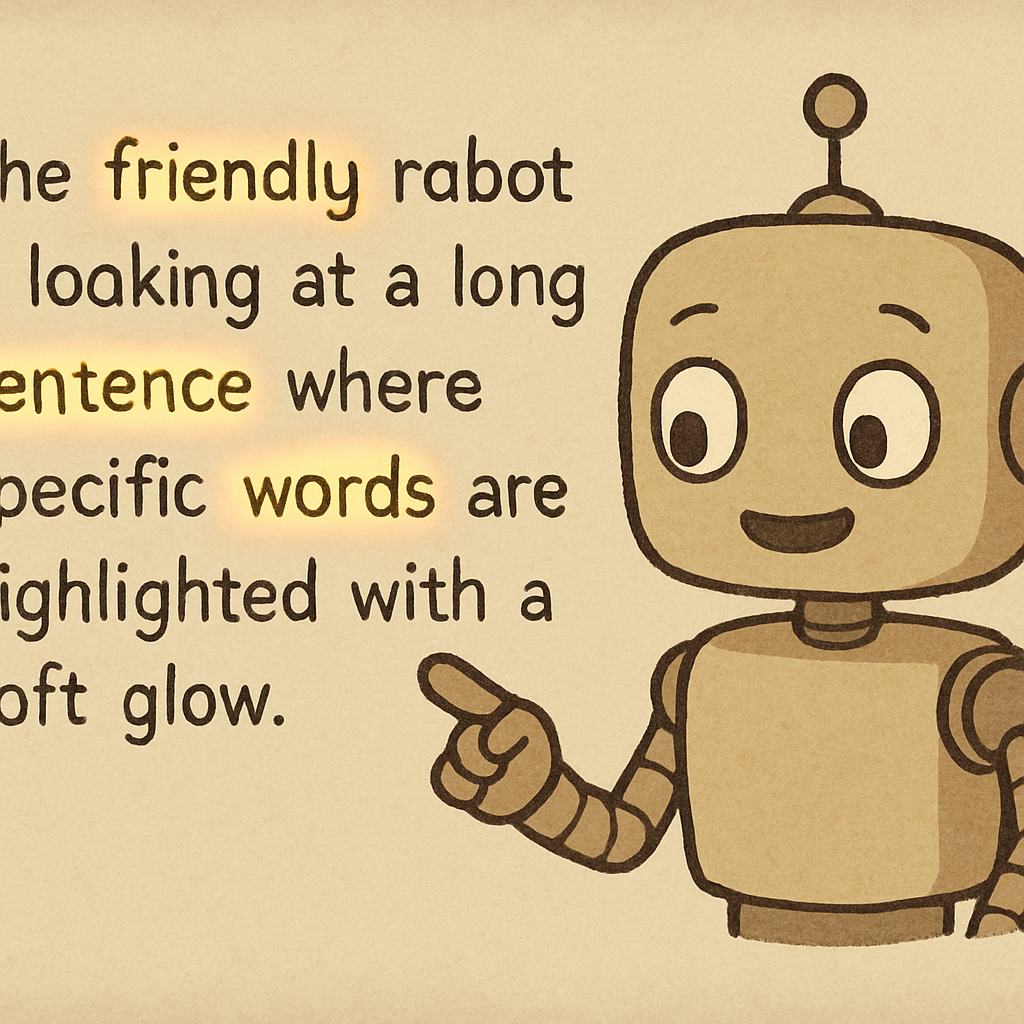
Predicting the next word is an interesting trick; however, human language is complex and contains many examples of double meanings. In other words, how does the AI know whether it is going to predict a sentence about a dog (the animal), or a tree when it sees the word “bark”? Modern models use natural language processing to enable computers to understand human-written and spoken language. Natural Language Processing uses an attention mechanism that allows the computer to look at every word in your sentence all at once and assign each word a different level of importance based upon your input, so the model can determine the context of your question.
The old style of writing AI programs involved processing sentences one word at a time. As soon as the program reached the last word of the sentence, it lost the thread of where you were trying to go with your question. That is why some people refer to transformer neural networks as “the new generation” of AI engines. Transformer Neural Networks provide both of these functions simultaneously through utilizing a context window in deep learning; basically, how much text the AI can remember while having a conversation with someone.
Since the model can associate information from anywhere in your input, including earlier in the document, it makes your experience feel extremely conversational. Since the model can link together information across large documents or conversations, it produces extremely high-quality responses as opposed to the previous disconnected, random guessing.
Building Your Digital Brain: Why Data Training Makes GPT So Knowledgeable
The pre-training, or the P in GPT, that allows ChatGPT to write poetry and bake sourdough bread, is due to the extremely large amount of information the developers have provided to the model. This pre-training process does not occur when programmers input individual pieces of factual information into the AI, as they would when building a basic knowledge base.
Rather, during the development phase, the engineers allow the AI to scan and consume hundreds of millions of pages of content, including but not limited to millions of books, news articles, blogs, and websites. While the AI does not memorize this information as a college student might cram for an exam, it uses this vast pool of information to develop its understanding of patterns in natural human language use and how words combine to create meaningful ideas.
When looking back at OpenAI’s development process, several steps must be taken for it to produce a truly useful product. There are really only three steps required to move from raw data to a completed assistant:
1. Massive reading (pre-training). The AI consumes the Internet to learn grammar, factual information, and conversational patterns.
2. Organizing the patterns found (weights). The AI figures out which words are most likely to follow one another in logical combinations.
3. Tuning the task (fine-tuning). Developers will adjust the AI’s internal dials using fine-tuning techniques (which is just a technical term) to ensure the system responds like a respectful, helpful assistant rather than a completely random word generator.
Because this artificial brain has spent time developing its understanding of how language operates, once you sign in, the AI can begin assisting you immediately. The AI doesn’t “know” the correct answer because it uses its developed skills to predict the best possible response based on your direction. As long as you provide adequate direction for the AI to activate the appropriate pattern, you should receive a quality response. Developing strong prompting strategies will help you achieve the best possible results.
Conversational AI: Matches real-world use (chatbots, assistants)

Conversational AI is the term used to describe AI systems that can process and respond to a user’s input through an interactive conversation. Conversational AI enables chatbots, virtual assistants, and automated service representatives who can answer consumer inquiries, perform specific tasks, and assist consumers throughout their journey. When implemented properly, conversational AI reduces time spent waiting for assistance by improving self-service capabilities and creating a seamless user experience, regardless of whether the user accesses your organization via your website, mobile app, or messaging channel.
The majority of modern-day Conversational AI platforms utilize GPT models to generate responses due to their ability to produce coherent, context-aware responses across a variety of formats and tones. Examples of how conversational AI may be utilized within organizations include, but are not limited to: providing answers to frequently asked questions (FAQs), troubleshooting common problems, and routing complex issues to human representatives.
Similarly, in sales environments, conversational AI may be utilized to pre-qualify potential customers, schedule appointments, and recommend products. In addition to these uses, conversational AI may be used internally to provide employees with access to company-wide policies, assist them in summarizing documentation, and provide automated communication services.
To build trust in conversational AI solutions, many companies use a combination of GPT models and protective measures. One popular method is grounding. Grounding involves the conversational AI solution retrieving information from one or more designated knowledge bases. Once the requested information has been retrieved from the knowledge base, the conversational AI will use it to generate responses using approved content.
There are several other methods that companies implement in conjunction with grounding, including intent detection, using “tool calls” to execute specific actions, such as resetting passwords, and clearly establishing boundaries for the conversational AI regarding what actions they may take and what they cannot. Monitoring conversational AI solutions is equally important, as they do not always indicate when incorrect or misleading information is provided. This is why it is necessary for companies implementing conversational AI to have both quality control and human oversight for reviewing conversations generated by the conversational AI solution.
In summary, conversational AI is most effective when developed and implemented with consideration given to actual customer journeys, measurable results, and continuous improvement. As long as proper care is taken during implementation, GPT models enable developers to build conversational AI experiences that are natural, helpful, and scalable while maintaining brand identity integrity and safety.
Conversational AI Efficiency
| Metric | Data | Example |
|---|---|---|
| Query Handling | 70-80% automated | Chatbots handling FAQs |
| Response Time | Instant | 24/7 support systems |
| Cost Reduction | Significant | Reduced human workload |
| Industry Use | E-commerce | Order tracking bots |
| User Experience | Improved | Faster customer service |
Source: IBM
Text generation tools: Strong intent keyword (users looking for applications)

Text generation tools are AI-based applications that create written content from user input, such as prompts, outlines, or other materials. Users search for Text Generation Tools in order to find solutions to their need for quick creation of drafts, assistance with overcoming writer’s block, or automation of repetitive writing tasks. Examples of common usage of Text Generation Tools include Marketing Copy, Product Descriptions, Emails, Social Posts, Reports, and Help Center Articles.
The most commonly used models powering many Text Generation Tools are GPT Models. This is because GPT Models can produce fluent language, follow user-generated prompts and style requests, and provide multiple iterations of a single piece of content based on a provided prompt. GPT Models can also take bullet points and turn them into paragraphs and even rewrite existing content to improve its clarity.
Beyond the capabilities of GPT Models alone, Text Generation Tools may also offer additional functionality that provides greater value to the end user. These may include prebuilt template options, tone selectors, branding guidelines, plagiarism-detection services, and team collaboration tools.
Professional teams using Text Generation Tools will see increased productivity within their organizations. However, it should be noted that quality ultimately depends on how well the team uses the processes associated with these tools. In general, teams will establish standards for factual accuracy, voice, and regulatory compliance before a human reviews and approves a draft created by a GPT Model. In addition, certain Text Generation Tools available today allow GPT Models to tap into trusted data sources. This will enable more reliable responses to questions and reduce the model’s opportunity for “hallucination”.
Ultimately, when choosing a Text Generation Tool(s) for your organization’s needs, you should evaluate the quality of output produced by the application specifically for your needs; ease of editability for the final output; control over private data collected by the application; and what types of integrations do the tools support (i.e., CMS, Support Desk, etc.). It would also be advisable to determine if the selected tool offers structured output formats, citation references, or version history — all of which will assist teams in managing risk as a large-scale effort.
Example
A Communications Manager at a nonprofit uses Text Generation Tools to create content for a “limited” staffed donation drive. The manager uploads her organization’s Impact Report for last year, along with a list of their active Programs, and requests that the tool generate: an email soliciting donations; a 30-second Fundraising Script; two different Captions for Instagram posts; and a template for Thank-You Notes.
The tool produces draft versions of these pieces in the Nonprofit Organization’s style, includes placeholders for numerical information, and recommends a basic A/B Test comparing the Subject Line options. The Manager reviews each version for accuracy, replaces all of the dummy data with actual statistics, and finally approves them. As the manager can use Text Generation tools to produce initial drafts and variations, she can spend her time telling stories about her work and ensuring compliance with applicable laws rather than creating everything from scratch.
The Art of the Prompt: 3 Strategies to Get Perfect AI Results Every Time
The reason you receive a robotic, inhuman reply after asking an AI to compose an email is that many people treat conversational AIs much like they would treat a search engine. They type in short words (like keywords) rather than providing clear direction. The AI can be thought of as an extremely literal yet very intelligent executive assistant. If all you provide the AI with is the instruction “Write an email to my boss about Friday,” then you are going to receive a generic, general-idea answer.
It’s possible to transform lackluster replies into useful output by developing a process – essentially a recipe – to follow. This process can be broken into three parts and will help you quickly develop your own skills in writing high-quality prompts for an AI. You can dramatically reduce (up to 80%) the number of responses you get back from the AI that don’t meet your needs by including the three components below every time you enter something into the chat interface:
- Context: Provide context — who is the AI interacting with? What are the circumstances surrounding the current problem or issue?
- Task: Clearly define what task the AI must perform — such as creating a grocery shopping list, composing a text message or making a reservation at a restaurant.
- Format: Clearly define what format the final product should take — should the final product contain bullet points, should there be a brief introduction followed by a detailed explanation?
You can also improve upon this basic model using a technique referred to as Role Playing. Rather than simply requesting a beginning workout routine, ask the AI to “act as an encouraging personal trainer.” When you instruct the AI to act in a certain way or assume a specific role, it uses its existing knowledge base to respond accordingly. Using role-playing is likely to yield the best results, given one of the biggest advantages of Natural Language Processing — the ability of computers to recognize and replicate the way humans communicate.

Saving Money and Time: Understanding Tokens and Context Windows
When an AI drops its train-of-thought (cutting off) in the middle of a particularly lengthy response, it is due to how systems process text. Text processing occurs in blocks called “tokens” – they’re like little puzzle pieces that combine into words. Each time you input a prompt or retrieve an answer, you use one piece of those puzzle pieces. As such, processing each of those puzzle pieces is extremely energy-consuming. Therefore, understanding your token limit on AI systems will be key to ensuring your daily work is both fast AND economical – even if you have to pay for access to some of these services.
Think of your short-term memory as a physical desk – much like what experts refer to as a “context window” in deep learning. Think about all the instructions, background information, and replies you’ve placed on the desk from the initial conversation. Now imagine when that desk is completely full of paper. The old papers are then pushed off the edge to allow for new ones. It is exactly this limited desk space that could explain why the system may suddenly remove a specific rule you first mentioned at the very beginning of a long conversation.
An awareness of the limited desk space is also important for highlighting one of the primary differences between LLMs and traditional search engines: search engines retrieve only separate, independent web pages, whereas language models store ALL of your continuous conversation in their active memory. One way to help maintain focus during prolonged conversations with the system is to periodically summarize your main objective to ensure critical information stays on the table. There is a fine line between optimal performance speed and optimal working memory — finding that sweet spot depends on using the correct tool and/or API model.
GPT API models: High-value keyword for developers and technical audience

GPT API models allow developers to develop their own programs using programmable languages. They are called by application developers who need to generate text, classify content, extract structured data from unstructured text, and create interactive conversations. Developers looking for GPT API models are generally seeking implementation guidance. This includes how to access them, how to format the prompt they will receive, how to limit the response output, and how to create a stable product built on top of an AI.
There are many examples of products utilizing GPT API models. Many companies utilize GPT Models to create chatbots and writing tools, and to automate customer support and document workflows. The way GPT Models respond to a user’s input is determined by the instructions and context provided by the developer. To obtain consistent results, developers often create a system-wide instruction, require all outputs to conform to a predetermined schema (such as JSON), and restrict the tone, length, and action of the response.
Developers also use GPT API models in conjunction with other tools or APIs so that, once a question has been asked of the model, it can perform additional tasks such as searching, executing a database query, etc. Rather than relying solely upon the model’s ability to guess.
Reliability is one of the most critical issues when using GPT API models. There are several common ways to address this issue, including creating a retrieval-augmented generation (RAG) process that allows the model to generate answers directly from your documentation, requiring the model to cite the sources it uses to determine an answer, and creating validation processes that reject any unsafe or improperly formatted responses.
In addition, some organizations place their GPT Models in front of a human reviewer, implement rate limiting of the number of requests made to the model per unit time, and implement alternative flows when the model indicates low confidence in its determination.
When evaluating GPT API models from a technical perspective, there are four key factors to consider. First, latency -how long does it take for the model to produce an output? Second, token limits -what is the maximum amount of information that may be sent to the model at one time? Third, cost -how much will each request cost? Fourth, regional availability -is the model available in multiple regions?
Finally, be sure to monitor your model(s) during production by analyzing logs and running automated tests with real user prompts. As user prompts evolve over time, your GPT Model(s) can drift in terms of behavior. If properly utilized, GPT API models enable developers to rapidly deploy language functionality while providing the flexibility to instruct and contextualize their GPT Model to produce readable, useful text
Choosing the Right Tool: A Simple Guide to GPT API Models and Versions
Thinking about an AI application is similar to thinking about a digital storage unit, such as a virtual garage. Just as one would not take their heavy-duty moving truck to get a gallon of milk, there are many times when you do not need to use the highest level of complexity to complete the job. Software developers typically create multiple versions of their applications (usually accessible behind the scenes via APIs, as with GPT models) to accommodate user choices and flexibility.
When you want your AI application to handle advanced logic (such as creating a full travel itinerary), it is usually smart to upgrade to a higher-end version. However, if you only need to quickly generate ideas and format short documents (quickly format some text), it is generally wise to continue using either your free version of the software or an older version. In addition to processing text, newer releases also include AI multimodal capabilities.
This essentially means the AI can process multiple types of information (for example, images, videos, and audio). For example, imagine taking a picture of what is inside your open refrigerator and then asking the AI system to suggest a recipe based solely upon the items shown in the picture. Because today’s AI systems can listen to spoken questions and interpret visual inputs, they are rapidly evolving away from basic text-generating machines toward interactive, conversational assistants that will eventually better understand your day-to-day environment.
Ultimately, choosing which version of an AI application to use is primarily a matter of striking the appropriate trade-off among speed, price, and intelligence. Below is a simplified chart to assist in selecting the correct tool(s) for your specific purposes:
- GPT-3.5: the fast & eager assistant. Affordable and extremely fast. Ideal for creating quick summaries and drafting simple emails.
- GPT-4: the thoughtful expert. Costs more and takes slightly longer to respond; however, GPT -4 is far better suited for advanced problem-solving (e.g., creating a multi-stop travel itinerary).
- GPT-4o (Omni): the versatile all-rounder. Blends the speed of older tools with high intelligence and fully supports new voice/image capabilities.
- GPT-5.4 (flagship): the flagship model for complex reasoning, coding, and professional workflows. Includes text/image input, a 1M-token context window, and high-intelligence outputs.
- GPT-5.4 Pro: designed for the most advanced reasoning tasks, research, and high-stakes scenarios. Uses more computational resources than GPT-5.4 to provide better accuracy.
- o3 / o3-Mini (Reasoning Models): the “o” series is optimized for STEM (science, technology, engineering, math), complex logic, and programming. Often performs better than GPT-4o in logical benchmarks due to the ability to “think before responding.”
- GPT-5.4 Mini: a fast/cost-efficient version of GPT-5.4. Intended to be used as a “workhorse” for most reasoning tasks by balancing intelligence with speed and cost.
- GPT-5.4 nano: the cheapest and fastest GPT-5.4-class model. Best suited for high-volume tasks such as classification or simple document summarization.
- GPT-4.1 Mini: a fast/cost-efficient general-purpose model that provides a good balance between performance and non-reasoning tasks.
- GPT-4o (“Omni”): native multimodal model. Designated for real-time speech/audio and visual inputs. Excels at low-latency interactions.
- GPT-audio-1.5 / GPT-audio-Mini: models specifically optimized for conversational audio-in/audio-out workflows.
- GPT image 1.5: state-of-the-art model for image generation and editing. Succeeds dall·e 3.
- Sora 2: OpenAI’s flagship video generation model with synchronized audio.
- Whisper: specialized model for speech-to-text transcription and translation.
Selecting the optimal tool greatly enhances the management of routine activities; however, when users share private images or submit complex questions to these systems, they risk compromising their data security and introducing AI-based bias into their decision-making.
Fact-Checking the Machine: How to Handle AI Hallucinations and Lies
Beginning with the same behavior as a storyteller who can invent details midway through the narrative so as not to reveal that he or she has forgotten them, A.I. models will at times demonstrate similar behavior. The very same cause and effect explain why AI models hallucinate; i.e., when the A.I. generates false or invented information. Since the A.I. is merely an advanced version of autocomplete, it will predict the most likely next word based on patterns and thus will prefer to appear helpful rather than provide factual accuracy.
As such, relying on the predictable pattern matching used by these applications poses a risk across all large language model applications. Additionally, these risks are especially evident when seeking medical advice or legal citations.
For example, if you were to request a prescription from the application, it may “confidently” provide one for a non-existent medication simply because the professional terms (e.g., medication name) typically exist together in the online world. Although researchers are continually developing methods to reduce bias in machine learning, thereby improving the safety and accuracy of these systems’ output, the current state of affairs should prompt you to consider the system a brainstorming partner rather than a perfect encyclopedia.
Therefore, to prevent yourself from falling victim to the “confident lies,” it is imperative to implement a two-step verification process for evaluating claims made by the application. First, require the A.I. to identify a real-world source or link that supports the claim made, then take that core claim and paste it into your favorite search engine to see if the claim actually exists. By establishing this verification routine, you will obtain the creative benefit of the application while avoiding the potential pitfalls associated with its factual blindness. Understanding token limits and memory capacity will also help you interact more efficiently with these applications.

Staying Safe Online: The Real Story on AI Bias and Data Privacy
Generative AIs are primarily designed to create content based on user input. Therefore, many of these systems have created a culture that assumes the physician (or other type) is male. The reason for this lies in their use of Natural Language Processing (NLP), which enables computer systems to recognize and produce human language. These systems “learn” through consuming large volumes of Internet-based text. And unfortunately, we know all too well that the Internet reflects our human flaws – including biases and stereotypes.
The developers of Generative AIs are aware that their AIs may continue to repeat such biases as long as the programming allows. Developers can begin training Generative AIs to reduce their propensity to exhibit bias by creating human “coaches” and using Reinforcement Learning From Human Feedback. Essentially, one could compare RLHF to training an extremely intelligent puppy. When the Generative AI produces a response that is both helpful and unbiased, the coach rewards the AI with digital treats.
Conversely, if the Generative AI produces a response that is toxic or biased, the coach corrects it. It is through continuous human coaching of Generative AI that the most effective way to teach it to prioritize fairness and safety over the predictive likelihood of the next word.
In addition to developers’ efforts to refine their products, consumers need to educate themselves on methods to maintain their own Data Privacy when interacting with these systems. Users can establish a high level of protection for themselves by developing three easy-to-adopt habits: treat each Chat Box as a Public Bulletin Board, do not upload any sensitive financial or health information to a Chat System, and actively deactivate the “Chat History & Training” option in your Account Menu.
By establishing appropriate levels of privacy protections and developing a working knowledge of how the system functions, users will be able to successfully integrate Generative AIs into their lives.
Your AI Action Plan: How to Integrate GPT into Your Life Starting Today
You no longer need to think of GPT models as either magical digital brains or completely infallible “magic tricks.” Instead, you can confidently consider GPT models as high-quality assistants. Once you realize that generative AI work is based on trying to predict the next most logical word in the sentence (rather than knowing facts), you’ve transitioned from an uninformed bystander to a well-informed user. With this new mindset, you’re prepared to go from simply hoping for the right answer to instead directing the process.
The first step in using text-generation tools as part of your regular routine is to treat them as actual helpers. Over the next 24 hours, begin using this AI mastery checklist to put this into action:
- Audit your tasks: Determine which writing/brainstorming tasks you repeat often enough to pass them along to the tool.
- Create a Prompt Library: Collect all the prompts you’ve used consistently that consistently produce good results.
- Verify Output: ALWAYS double-check facts for accuracy, since the AI’s primary goal is to sound helpful, not necessarily to be accurate.
- Check Token Usage: Keep tabs on how many words you have left per session in order to ensure the tool stays up and running.
- Stay Current: Try out any new features that become available. These types of tools constantly improve themselves.
Each time you use the ability to delegate, you’ll grow more confident in telling the output exactly what you want it to look like, rather than just taking it at face value. The real potential of AI lies not in what the computer itself can accomplish alone; it’s about the impact you experience by collaborating with it. Move forward into this new world with the excitement of having a tireless helper waiting to assist you in creating.
My Perspective
The best perspective for this article is “GPT as a powerful, literal assistant—not a thinking authority.” Frame GPT Models as systems that excel at language patterning and fast drafting, but that require direction, grounding, and verification to be truly reliable. This perspective keeps the reader both optimistic and realistic: they can unlock major productivity gains, yet they must stay accountable for facts, privacy, and outcomes.
From this angle, the reader learns to collaborate with GPT Models the way they would with a talented junior teammate: give clear context, define the task, specify the format, and review the work. It also naturally supports the article’s key lessons—attention and context windows explain why long chats drift, tokens explain cost and cutoffs, and hallucinations explain why confident answers still need checking. For developers, the same perspective leads to practical engineering choices: select the right GPT API model for the job, add retrieval from trusted sources, validate outputs, and monitor performance over time.
Overall, this perspective positions GPT Models as dependable when well-designed and used—powerful tools that amplify human judgment rather than replace it.
Conclusion
GPT Models are not magical thinking or factual perfection; they are strong systems based on patterns of data that can write, summarize, classify, and speak with you as long as you tell them what to do. When you have the basic concepts down (the way attention works, how it uses its training space, tokenization, and limits), then you can use this tool with much greater authority and much less aggravation.
The most significant paradigm change will be seeing the Model as an able but literal assistant: tell the assistant where he/she/it needs to look for information, what he/she/it needs to accomplish, in what form you want him/her/it to present the information to you, and allow him/her/it to go back and forth with you until both parties agree on the solution.
While “powerful” does not necessarily equate with “dependable”, there are three other issues to consider when using GPT Models. These issues include hallucinations, bias, and privacy issues. Therefore, the most intelligent strategy would be to balance the verification of critical facts, the grounding of answers in credible sources, and human oversight in high-risk decision-making. If you plan on developing with GPT API models, select the correct version for your project’s requirements and implement common-sense protective measures such as retrieval, validation rules, and monitoring.
As long as GPT Models are used properly, they may reduce friction associated with many tasks involved in daily operations, accelerate communication, and create new products. Begin by working on a small scale, building a library of prompts, and developing a process — because the best outcomes result from collaboration between your judgment and the ability of the model to move quickly.
FAQs
What are GPT Models, in simple terms?
GPT Models are AI systems that generate text by predicting the next most likely word (or token) based on your prompt and the context they can “see.” They can draft, summarize, explain, and hold conversations, but they don’t think or understand the way humans do.
Why do GPT Models sometimes “hallucinate” facts?
GPT Models prioritize producing a plausible-sounding continuation of text. If the prompt lacks clear context or the model doesn’t have reliable grounding, it may confidently generate incorrect details instead of saying “I don’t know.”
How can I get better results with prompts?
Use a simple structure: Context (background + role), Task (exact output you want), and Format (bullets, table, length, tone). Adding examples and constraints (what to include/exclude) also improves consistency.
What are tokens and context windows, and why do they matter?
Tokens are chunks of text the model processes, and the context window is the maximum amount it can consider at once. If a conversation gets too long, older details can drop out, causing the model to forget earlier instructions or constraints.
How do I choose between different GPT API models or versions?
Pick based on the job: lighter/faster models for simple drafting and summarizing, stronger models for complex reasoning or sensitive workflows. Also consider cost, latency, and whether you need multimodal inputs (text + images/voice), and then add safeguards such as retrieval from trusted docs and output validation.

Garikapati Bullivenkaiah is a seasoned entrepreneur with a rich multidisciplinary academic foundation—including LL.B., LL.M., M.A., and M.B.A. degrees—that uniquely blend legal insight, managerial acumen, and sociocultural understanding. Driven by vision and integrity, he leads his own enterprise with a strategic mindset informed by rigorous legal training and advanced business education. His strong analytical skills, honed through legal and management disciplines, empower him to navigate complex challenges, mitigate risks, and foster growth in diverse sectors. Committed to delivering value, Garikapati’s entrepreneurial journey is characterized by innovative approaches, ethical leadership, and the ability to convert cross-domain knowledge into practical, client-focused solutions.