










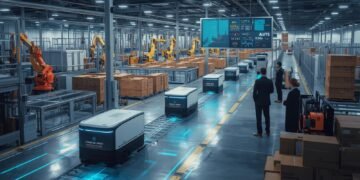
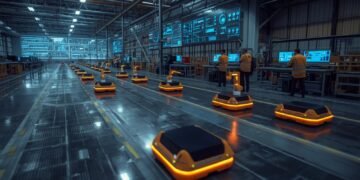





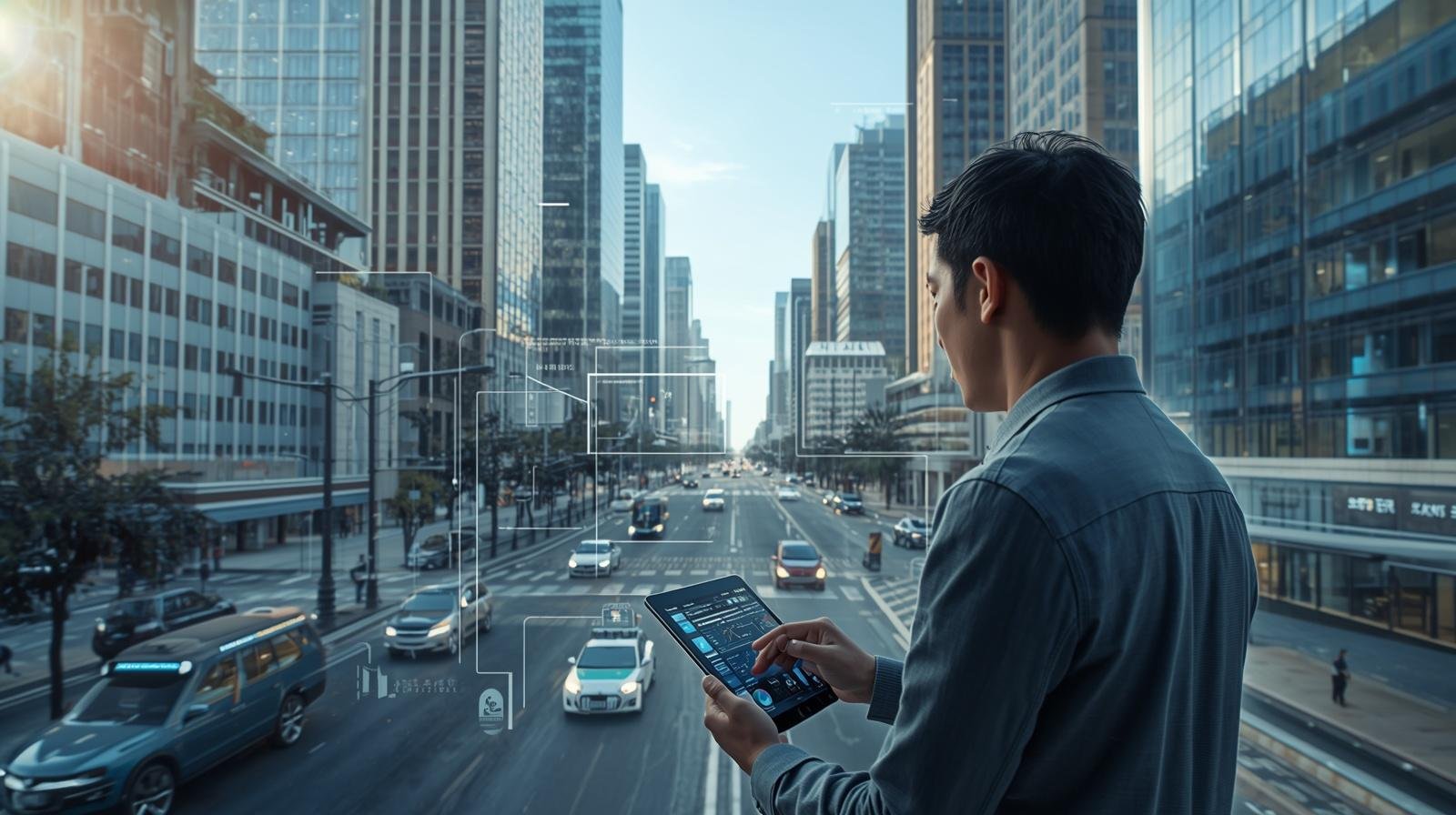

Imagine rising up in an ever-changing urban center. The city you live in is constantly adapting, learning, and responding to you on the fly. Your daily trip to work is effortless, fresh air surrounds you, and all public services function without interruption. While this may be something you would imagine seeing in a sci-fi film, it is actually becoming a reality as new smart cities begin construction today. Welcome to “The Ultimate Smart City Handbook”, exploring the future of smart cities using AI, IoT, and Robotics.
Urban planning has always had its fair share of problems, but as more people move to larger cities, the field’s complexity has grown exponentially. To tackle some of the biggest issues facing large metropolitan areas, urban planners have been exploring innovative technologies. These include the use of artificial intelligence, the Internet of Things, and robots. Together, they are working to turn the old static urban jungles into alive, thriving, and interconnected urban ecosystems.
This handbook will give readers insight into the new technology being used to transform their urban environment. How does this new technology support sustainable living and mobility, and what types of cities will we see emerge in the near future?

Summary
“Smart cities are transitioning from siloed, reactive models to fully connected systems of sensing, deciding, and responding in real-time. The report “Ultimate Guide to Smart Cities: AI + IoT + Robots for a Better Future” describes these new technologies as follows: artificial intelligence (AI), including agentic AI for autonomous decision-making. Also, it includes Internet of Things (IoT) sensor networks and low-latency edge computing. Additionally, it includes next-generation wireless communication technology (i.e., 5G/6G) to enable continuous communication among various forms of urban infrastructure and mobility.
The report also provides information on digital twins and secure data spaces. A digital twin is an exact replica of a city’s physical structure that allows planners to test possible changes (e.g., new bus routes or potential disaster scenarios). Secure data space refers to the ability to store and manage large volumes of data securely. This enables planners to test possible solutions before implementing them in the real world.
In terms of sustainability, the report focuses on four key areas of sustainability. These include smart grids and energy management systems that can both reduce energy consumption costs and greenhouse gas emissions. Additionally, the report discusses the use of water-monitoring systems and data-driven waste-collection systems. Both can help make cities more sustainable by reducing the costs of waste collection and treatment and by providing communities with clean drinking water. Urban farming can increase food security in cities and reduce CO2 emissions from transportation.
The report also discusses autonomous public transit systems and robotic delivery systems. Autonomous public transit systems can reduce traffic congestion and travel times. Robotic delivery systems can also help reduce traffic congestion and improve customer service response times.
Finally, the report discusses ways to address privacy and cybersecurity concerns associated with the development of smart cities.
Example
A “Quiet Streets” initiative will be implemented by a Coastal City, integrating Noise Sensors, Traffic Signals, and Citizen Input. The city’s systems will automatically modify Delivery Schedules, move Heavy Trucks out of neighborhoods when noise exceeds established late-night levels, and increase Public Transit Frequency (i.e., bus service) to discourage driving at those times.
Street Lights will turn on only when pedestrians are detected walking through an area. In addition, nearby Parks will have Mist Stations activated to help cool the air during Heat Spikes. Residents will view the changes made in the City App, along with details on what Data was collected and how long it has been stored. The City saw a decrease in Noise Complaints and an improvement in residents’ Perceptions of Safety at Night within Six Months.
The Paradigm Shift: Smart Cities vs Traditional Urban Planning
To fully grasp the significance of the urban revolution, it is necessary to recognize the differences between smart cities and traditional urban planning. Historically, urban planning has been reactive and departmentalized. If traffic congestion becomes intolerable, planners will at some point widen an existing roadway. If a neighborhood experiences frequent power outages, engineers will gradually replace or upgrade the local transformers. Urban decision-making has historically relied on historical data and manual surveys, and communication between municipal departments has typically been disjointed.
Urban smart city technology reverses earlier models; today’s smart cities are proactively integrated and data-driven. Smart cities utilize a vast network of connected sensors, devices, and algorithms to collect continuous streams of data. Rather than waiting for problems to develop, smart cities can identify potential disruptions before they affect residents’ daily lives.
Key differences include:
- Data Collection: Traditional cities rely on annual censuses and periodic surveys; smart cities utilize continuous, real-time data streams.
- Infrastructure: Traditional infrastructure is static; smart infrastructure is adaptable and responsive.
- Citizen Engagement: Traditional models offer limited, bureaucratic feedback loops, while smart cities provide residents with instant, app-based interactions with their local government.

Smart Cities vs Traditional Cities
| Aspect | Traditional Cities | Smart Cities |
|---|---|---|
| Infrastructure | Static | Connected & adaptive |
| Data Usage | Limited | Real-time analytics |
| Energy | Inefficient | Optimized via smart grids |
| Transport | Manual systems | Autonomous & AI-driven |
| Governance | Reactive | Predictive & data-driven |
Source: McKinsey & Company
https://www.mckinsey.com
The Core Technologies Powering Hyper-Connected Urban Ecosystems
The core technology behind today’s smart cities relies on a number of connected emerging technologies. By combining each of these new and exciting tools, we have created hyper-urban intelligent systems where everything from streetlights, cars, buildings, and even pedestrians will be able to communicate with one another in perfect synchronization.
1. Artificial Intelligence and Agentic AI
Artificial Intelligence (AI) is the “brain” for all future smart cities. However, while AI has evolved significantly in recent years to become far more than just machine learning-based, it is rapidly evolving into agential AI, capable of achieving numerous objectives and executing autonomous actions at its own discretion.
A question many people have asked is: How does AI improve traffic flow in a city? Historically, traditional traffic control devices such as traffic signals operated on predetermined timers designed to allow a certain amount of time between green lights, giving drivers sufficient time to pass through intersections; however, this led to enormous fuel waste and congestion due to excessive braking and acceleration. In contrast, AI-driven smart traffic systems continuously monitor video feeds and sensor data in real time, allowing them to intelligently adjust traffic signal timing to prioritize emergency services and/or direct traffic away from accident scenes.
Additionally, there are many applications of artificial intelligence in sustainable architecture. Additionally, we see artificial intelligence applications in which AI algorithms create building layouts to maximize available daylight, optimize heating/cooling requirements, and enable dynamic adjustment of a building’s energy use based on forecasted weather conditions and current occupancy levels.
2. The Internet of Things (IoT) and Edge Computing
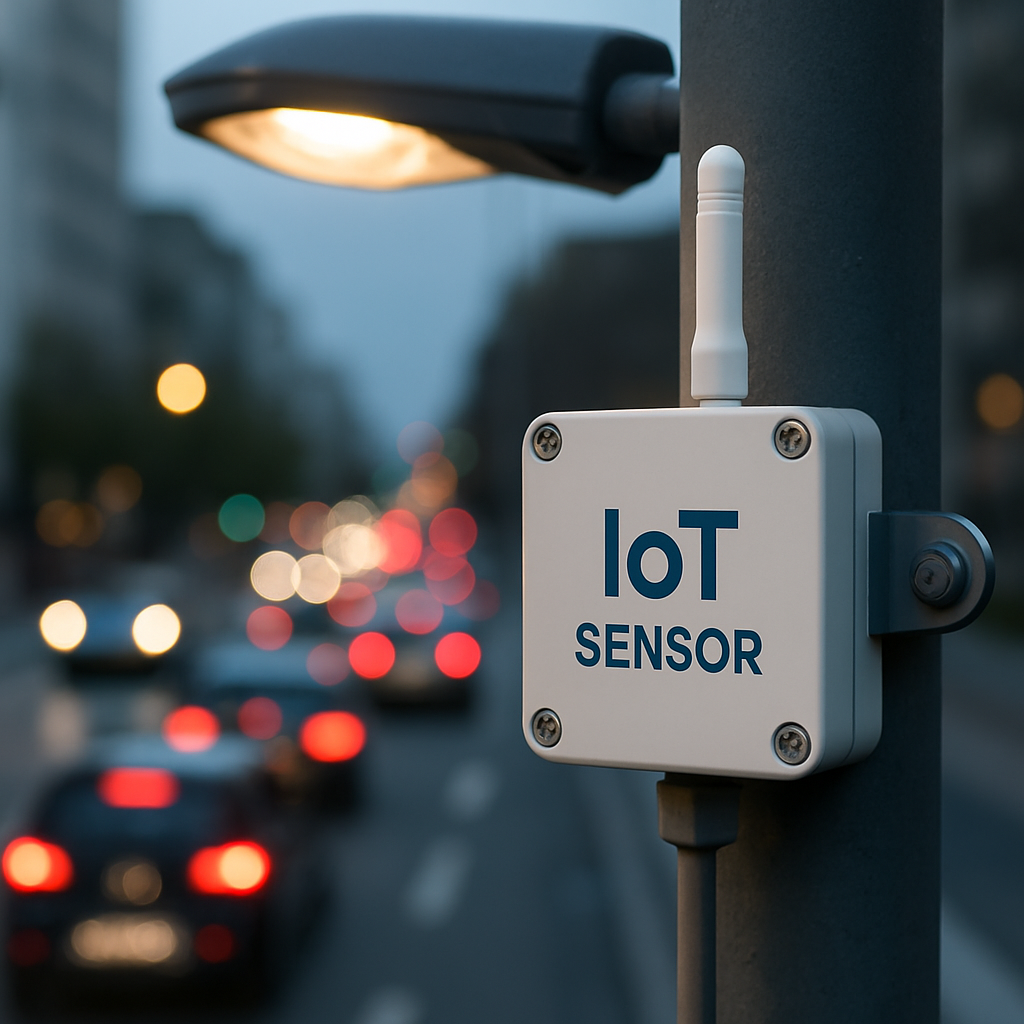
The “brain” of AI; the “nervous system” of IoT is made up of millions of sensors embedded across a city, capable of measuring air quality, the structural integrity of buildings, and pedestrian flow.
Cities also need to invest in edge computing within their urban infrastructure to avoid bottlenecks in the data being sent by thousands of sensors. Edge computing allows processing large amounts of raw data at the location where it was captured, rather than sending all this information to a central cloud-based server (which incurs both cost and bandwidth overhead). The benefits of edge computing include low-latency processing, which is necessary for many applications, such as real-time monitoring of public safety issues, where seconds count when making life-or-death decisions in an emergency.
3. Next-Generation Connectivity: 5G and 6G
None of these innovations is possible without robust telecommunications. The rollout of 5G has been a game-changer, particularly in enhancing urban mobility through its connectivity. Vehicles can now communicate with each other (V2V) and with city infrastructure (V2I) in real time.
Looking ahead, the leap toward 5G and 6G connectivity will unlock even higher bandwidth and near-zero latency, enabling holographic communications, more complex robotics, and fully autonomous city grids that never experience dropped signals.
4. Digital Twins and Data Spaces
The “brain” of AI; the “nervous system” of IoT is made up of millions of sensors embedded across a city, capable of measuring air quality, the structural integrity of buildings, and pedestrian flow.
Cities also need to invest in edge computing within their urban infrastructure to avoid bottlenecks in the data being sent by thousands of sensors. Edge computing allows processing large amounts of raw data at the location where it was captured, rather than sending all this information to a central cloud-based server (which incurs both cost and bandwidth overhead). The benefits of edge computing include low-latency processing, which is necessary for many applications, such as real-time monitoring of public safety issues, where seconds count when making life-or-death decisions in an emergency.
Core Technology Stack Table
| Technology | Role in Smart Cities | Example |
|---|---|---|
| AI | Decision-making | Traffic prediction |
| IoT | Data collection | Smart sensors |
| 5G/6G | Connectivity | Real-time communication |
| Digital Twins | Simulation | Urban palnning |
| Cloud Computing | Data storage | City dashboards |
Source: IBM
https://www.ibm.com/topics/smart-cities
5G and 6G connectivity: 5G and 6G connectivity power real-time communication and smart infrastructure in modern cities.

Smart cities rely heavily on data; however, a city’s ability to collect, process, and utilize its own data is directly dependent on the speed, reliability, and real-time nature of data transmission. Therefore, Smart City applications are emerging as the backbone of 5G and 6G connectivity solutions, providing real-time connections among all users (people), vehicles, sensors, and municipal services. The newer generation of wireless technologies offers higher bandwidth and lower latency while also supporting thousands of simultaneous device connections.
In addition, 5G and 6G connectivity will provide transportation-related benefits through vehicle-to-everything communications, enabling driver alerts, adaptive traffic signal control, and real-time travel-time information in transit operations that adjust to traffic conditions, incidents, and weather. Additionally, during emergencies, 5G/6G connectivity will enable streaming of high-definition video captured by wearable cameras and drones to dispatchers at connected intersections, helping coordinate emergency responders.
Lastly, infrastructure connectivity, including bridges, water pipes, and electrical equipment, will continuously transmit vibration, pressure, and temperature readings to maintenance personnel, enabling repairs before an outage.
Smart Cities can leverage the technologies offered by 5G and 6G Connectivity to create new ways to improve urban living. For example, cities may deploy IoT sensors and devices as part of their smart lighting and waste management systems. These devices generate millions of messages per second, which have to be processed in an instant. This creates more efficient business processes by using augmented reality (AR) to assist with on-site inspections and remotely controlling equipment. And it provides residents with access to faster digital services and real-time updates on the status of neighborhood activities around the clock.
Cities are likely to become more intelligent in the future thanks to the development of edge computing and network slicing. Edge Computing brings processing closer to where data is created. Therefore, there is less delay for time-sensitive applications, such as self-driving shuttle buses or robotic inspections, that need to leverage this capability. Network Slicing creates reserved bandwidth for critical infrastructure, including utilities and emergency medical facilities. So these systems remain operational during large-scale events.
Ultimately, 6G development will further enhance the capabilities described above for 5G and 6G Connectivity. As such, 5G and 6G connectivity will provide more accurate locationing, combined sensing (i.e., combining multiple types of sensor information), and AI-based optimization within the network. The benefits of utilizing this type of technology will include improved grid balancing, reduced traffic congestion, and increased resilience in public services. Thus, 5G and 6G connectivity enable the coordination of connected technologies to help cities create safer, cleaner environments for their citizens, while also improving the quality of life for those who live in them.
5G Deployment Technology: Breakthrough & Reliable Strategies Transforming Next-Gen Connectivity
Example
When an event is held in a stadium area, the city temporarily creates a new network slice for transportation and emergency services. The buses are sending out how many people are on them and when they can leave, so the bus system can have “green,” or clear, corridors for shuttle vehicles. At the same time, drones will send live video to help control crowds moving through the streets at intersections. As paramedics transport their patients to the hospital, they can make face-to-face contact via high-definition video using telemedicine.
When a bridge or tunnel is under stress due to increased numbers of people traveling because of the event, the slices can also send instant updates about changes to detour routes. As the number of users increases during an event, processing occurs on the edge node nearest the stadium. This way, when a large amount of information is being sent (as occurs during the event), it does not delay communication and allows emergency services to continue communicating effectively even if all other public networks become saturated.
Agentic AI: Agentic AI enables autonomous decision-making systems that enhance smart city operations

Smart City applications require Agentic AI for decision-making, as Smart City systems are dynamic, rapidly changing, and connected; therefore, Smart Cities must make decisions within seconds of an event occurring rather than minutes/hours. Agentic AI will be used to integrate real-time data, policy-based rule sets, and ongoing learning techniques to improve consistency and efficiency in delivering city services.
Agentic AI will be applied to Transportation by coordinating traffic signal control across corridors (real-time), identifying incident conditions using sensor inputs (real-time), and adjusting time-of-day traffic signal timing based on incident detection to minimize congestion. Additionally, Agentic AI can prioritize emergency responders by creating “Green Waves” and/or routing transit vehicles around congested areas to keep passengers moving.
Additionally, Agentic AI will be applied to Infrastructure through monitoring of bridges, tunnels, and water network systems, detecting early warning signs, and opening work orders for maintenance personnel prior to system failure.
The city’s ability to effectively manage emergencies and public safety could significantly benefit from agentic artificial intelligence that integrates camera video feeds, environmental sensor data, and dispatch records to provide near-real-time action recommendations. During extreme weather, agentic AI can automatically activate protocols to control flooding; coordinate road closures with traffic control centers; and optimize shelter space and resources for response personnel.
Through smart utility management, agentic AI may help maintain a balance of energy supply and demand; coordinate renewable energy sources (solar/wind) and battery storage; and minimize peak load while maintaining the availability of critical services.
Agentic AI can be used by Smart Cities ethically if appropriate governing principles are developed. Those principles must clearly articulate the parameters of the system regarding what the system can do, what will require approval from a human, and how the decision-making process will be documented and audited. Privacy protection and cybersecurity measures must be embedded throughout the development of agentic AI systems, as these systems rely on a continuous flow of data to operate and can become high-value targets for malicious actors.
When properly implemented, agentic AI enables cities that use smart technology to transition from a reactive operational model to a proactive, adaptable service model. The use of agentic AI enables smart cities to make decisions at previously unattainable speeds, enabling coordinated responses across departmental boundaries and ultimately leading to improved performance, reduced waste, and a safer, more efficient living environment for their citizens.
Example
A local municipal solid waste management agency is utilizing an agentic AI to optimize its real-time waste collection operations. The agent continuously collects data from trash bin sensor systems to determine potential overflow risks based on both short-term weather forecasts and long-term events such as festivals. When a driver of one of the trucks calls into the system to report a technical problem with their vehicle, the agent automatically reroutes each truck currently operating.
If the agent determines that trash cans in a particular neighborhood are being filled at a rate exceeding predictions, the agent dispatches a small electric truck to alleviate overflow before customer complaints arise. In addition to the other features, this agent negotiates work schedules at the depot, reserves time slots for charging, and allocates personnel. Finally, the agent logs all decisions made by the system, including which policy-based rules were used to make them. Managers have access to a single screen that allows them to accept, reject, or limit these types of decisions.
Digital twins: Digital twins help smart cities simulate real-world systems for better planning and efficiency.

The Digital Twin is essentially a virtual replica of your actual physical asset(s) (roads, buildings, utility systems, etc.) and/or systems (a city), that uses “live” data to continuously update itself. In a Smart Cities environment, the Digital Twin provides a means to test concepts before investing resources (money, traffic disruption, or modifications to critical infrastructure). Maps, 3D models, sensor data, and Historical Records are combined with the Digital Twin to enable Planners to observe how their city operates today and how it may operate under various scenarios.
Using Traffic Simulation/Construction Detour/Simulation of Bus Lanes/New Signal Timing, Digital Twins can forecast potential congestion and travel-time impacts for Transportation Planning purposes. Additionally, Digital Twins can be used by Public Safety agencies to simulate Evacuation Routes/Flood Zones/Wildfire Smoke Movement/Heat Islands to support quicker, more informed decision-making. Utilities can also use Digital Twins to analyze Power Grid loads, identify Weak Points in Water Networks, and prioritize Upgrades based on Risk/Cost/Service Criticality.
Digital Twins help with daily processes, too. When a Digital Twin is tied into IoT and other operating systems, it will identify anything unusual (such as an abnormally high reading on the amount of power used by a pump or an unusual reading from a bridge’s vibration sensors) so that those responsible for the system can review it before something goes wrong. It will help identify potential issues with your equipment and predict when you may need planned repairs, thus reducing unexpected downtime.
This means there will be fewer disruptions to traffic flow and mobility in Smart Cities, along with improved customer satisfaction due to more reliable services.
Another major benefit of using Digital Twins is collaboration. A digital model of a city creates a single “source of truth” where all stakeholders (city planners/engineers/transit agencies/sustainability departments/emergency management departments, etc.) can access and use the same information simultaneously. This allows all parties to compare different options/visualize trade-offs/document why a particular option was selected. The ability to share the information can also aid in providing clear communication about a project to its citizens.
As cities continue to add more connections and higher-quality data through their Smart Cities initiatives, Digital Twins will provide more accurate representations of how a city should run, enabling cities to plan better, operate more efficiently, and respond more confidently to disruptions.
Example
Prior to redesigning an area with a history of flooding, a mid-sized municipality develops virtual representations (digital twins) of its stormwater system and its central business district. Engineers create 3 alternative designs for the flooding intersection. Larger drains, permeable pavers, and a small retention plaza are considered. Live rain forecast data, terrain data, and water-level sensor readings are fed into the digital twin, which models the performance of each potential design under extreme conditions (e.g., a 50-year rain event).
Ultimately, the digital twin predicts that the plaza will yield the greatest reduction in flooding at this location and will cool the adjacent building(s) during hot weather events. The City tests the plaza concept at this single location, using sensor technology to compare actual performance with predictions from the digital twin. This allows the City to make adjustments before applying the same concept at other locations.
Energy management system: Energy management systems optimize energy use and enhance sustainability in smart cities.

An Energy Management System serves as a central command for Smart Cities to track, forecast, and reduce energy consumption by buildings, roads, and public agencies. As part of the Smart City framework, the Energy management system integrates data collected from smart meters, building automation systems, photovoltaic arrays and battery banks, EV charging stations, and the electrical grid to visually display how much energy is being used, which areas are consuming excess amounts of energy, and the most efficient ways to optimize energy usage at off-peak hours.
As part of its building-based functions, an Energy management system can automatically adjust schedules for heating, ventilation, air conditioning (HVAC), lighting, and other equipment in response to occupancy levels or weather forecasts to maintain occupant comfort while minimizing non-productive energy use.
At the neighborhood level, an EMS can manage Distributed Energy Resources (DERs), such as rooftop solar installations and community energy storage, so that local renewable energy production is utilized locally when possible and stored when appropriate. This will improve neighborhood resiliency during peak electricity demand and support sustainability goals without compromising reliability.
Utilities gain a clearer understanding of current grid operating conditions through an Energy Management System. Energy Management System can then activate Demand Response Programs, reduce load on non-essential equipment/devices, and provide priority service to critical services such as hospitals, mass transit systems, and drinking water treatment plants during periods of high demand. The EMS may help utility customers experience fewer power outages, maintain stable pricing, and better understand how their behavior affects their energy usage.
Transportation is just one of many components involved in a Smart Cities. Electric Vehicles will be at the forefront of increased pressure on transportation infrastructure. A city’s Energy management system could coordinate EV charging times, prevent local transformers from being overloaded, and align EV charging with available renewable energy generation. Additionally, a city’s Energy management system can use data from smart street lighting and other connected infrastructure, turning off lights when no one is present on a street and turning them up when traffic increases.
Ultimately, a Smart Cities using an Energy management system can collect analytical data to help determine when to make upgrades, where to retrofit buildings, and measure progress towards greenhouse gas reduction goals. Combining automation, weather forecasting, and real-time monitoring capabilities, a city utilizing an Energy management system can consume less energy and waste fewer resources than before.
Example
Beginning of Text. The municipal Energy Management System will manage a public library, a school, and a fire station, all linked to rooftop solar panels and a shared battery. In addition to energy management, on extremely hot days, the system will “pre-cool” (lower the temperature) buildings before most people are home from work or school; this will occur when the solar panels are producing at maximum output. At the same time, HVAC loads in those buildings will be minimized by turning off heating/cooling units when possible, saving money by reducing usage during peak hours.
Additionally, electric vehicle (EV) chargers at the public library will automatically reduce their charging rate when the transformer temperature increases. However, the fire station will always have priority access to uninterruptible power. During an extreme heat event, the system will keep the public library cooler than usual, allowing it to serve as a community cooling center. Additionally, the system will send alerts to notify residents that they can use the library’s air-conditioned space, use the electric vehicle charging stations, and seek refuge in the building.
Lastly, the monthly report will track financial benefits (cost savings), environmental benefits (reduced greenhouse gas emissions), and other measures of comfort (air quality, indoor temperature, etc.).
Sustainability: Building Net Zero Carbon Cities
Urban areas generate the vast majority of global greenhouse gas emissions, making climate change the most urgent problem we face today. Today’s aim for urban designers is to create net-zero-carbon cities that absorb as much carbon as they produce.
Smart Grids and Energy Management
The base of all sustainable urban planning will be an efficient energy management system. Existing power systems have proven to be very inefficient, wasting excess generated electricity. Cities can balance their energy generation (production) and consumption (use), by using smart power grids to reduce their carbon footprint. Smart power grids enable neighborhoods to shift surplus daytime solar-generated electricity produced from one area to another to charge an electric bus or store in large-scale community batteries for evening use.
Water Conservation and Waste Management
Resource management technology has evolved. Water-conservation smart systems using acoustic sensors on underground pipes can detect leaks before they cause sinkholes or large amounts of wasted fresh water. The smart systems save tens of millions of gallons of fresh water each year.
Municipal waste management has also been transformed by IoT (Internet of Things) sensors. Smart trash bins are now monitoring how full they are. As soon as the bin is full, it compacts the trash. Once compacted, the trash bin sends its data to a dispatch center. This allows the sanitation truck to create an optimal route by stopping only at full bins, greatly reducing fuel consumption and air pollution.
The Rise of Urban Farming
By reducing transportation-related carbon footprints associated with food, smart cities are now beginning to incorporate urban agriculture as a key component of their designs. This is done using vertically stacked hydroponics that utilize Internet of Things (IoT) based climate control systems to grow large amounts of high-yielding, pesticide-free produce directly within the urban environment. As such, they enhance the community’s food security while also decreasing greenhouse gas emissions.

Sustainability Impact
| Initiative | Impact (%) |
|---|---|
| Smart grids | Reduce energy waste by 30% |
| Smart buildings | Lower emissions by 20-40% |
| Electric mobility | Cut transport emissions by 25% |
| AI optimization | Improve efficiency by 15-25% |
Source: International Energy Agency
https://www.iea.org
Net-zero carbon cities aim to reduce emissions and create a cleaner, more sustainable urban future
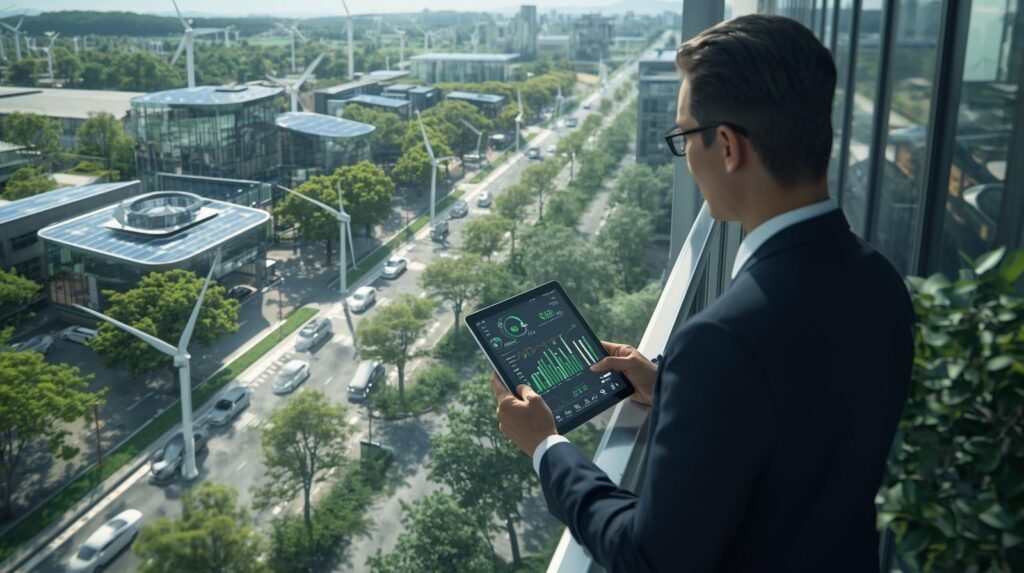
Smart City Net Zero Carbon Cities – Net zero carbon cities are designed to achieve the maximum reduction of greenhouse gases emitted in their operational area (to be balanced by the generation of “clean” or carbon-neutral energy) using a combination of efficiency and credible carbon removal. While there is certainly an environmental benefit to reducing air pollution in urban areas, this strategy also improves public health and enhances resilience, thereby supporting the continued growth of cities while avoiding the lock-in of infrastructure with high emission potential.
To realize the goals of smart cities and reach net-zero carbon status, cities will need to combine technology, policy, and community engagement to measure their carbon footprint and identify where reductions should occur. Most cities’ carbon footprints result from three major sources: 1) building operations, 2) transportation, and 3) energy production. Net-zero carbon cities address each of these sources differently. Building Performance – Through retrofitting existing structures, improving HVAC control systems, enhancing building insulation, and increasing appliance efficiency, net-zero carbon cities have established higher performance standards for new construction.
Electricity Generation – With a focus on shifting toward renewable energy and adding battery storage, smart grid enhancements, and demand response capabilities to ensure the reliability of clean energy during periods of peak usage. Transportation – Net-zero carbon cities have expanded their public transportation options and increased their fleet of electric buses/municipal vehicles. Also, they continue to promote pedestrian/cycling activity by providing safe bicycle/pedestrian pathways.
Smart Cities leverage data from connected sensors, analytics, and smart city digital platforms to measure their performance and direct investment. By using real-time information, cities can identify areas that suffer most from an “energy burden,” congested traffic patterns, and the cost-benefit of emission reductions. In addition, better measurement allows planners to ensure that Smart City initiatives are equitable; i.e., the benefits of cleaner air, less noise pollution, and lower energy bills are available to everyone in the community.
Net Zero Carbon cities, on the other hand, have been designed to mitigate or adapt to the existing climate impacts. Examples include implementing cooling techniques, green roofs and urban tree planting, flood protection measures such as levees and sea walls, and new building codes requiring buildings to be resistant to extreme temperatures. Also important are net-zero waste and water management systems: developing methane capture technologies, increasing recycling rates through improved recycling and composting programs, and reducing water system leakage all contribute to reduced greenhouse gas emissions and increased community resiliency.
In summary, Net Zero Carbon cities require a long-term commitment to clearly defined goals (targets), accurate and timely reporting on progress toward meeting those goals, and consistent, continuous implementation over many years. When Smart Cities develop comprehensive plans that integrate clean technology into their infrastructure, they provide communities with tangible benefits, including cleaner air, lower operational costs, and a healthier, more sustainable future.
Urban Mobility: Autonomous Systems and Robotics
The time for congested, polluting car travel will soon end. Smart cities mobility systems will be clean, autonomous, and far more efficient than today’s.
Autonomous Public Transportation
For residents to give up using their private automobiles to get where they need to go, public transportation has to be perfect. Autonomous, self-driving public transportation systems are being rapidly deployed. Self-driving electric buses and autonomous, AI-guided light rail systems operate according to real-time schedules. During peak hours (rush hour), more vehicles are automatically dispatched to busier routes so that no one is stuck in the rain waiting for a ride.
Robotic Delivery Systems
E-commerce has severely congested city streets with delivery vans. To combat this, municipalities are turning to the sky and the sidewalks.
So, what are the benefits of robotic delivery drones and sidewalk rovers?
- Reduced Traffic: Moving deliveries to the air or to specialized micro-mobility lanes takes large, polluting vans off the road.
- Lower Carbon Footprint: Most delivery robots are fully electric and highly energy-efficient.
- Faster Delivery Times: Drones can bypass traffic entirely, delivering crucial goods—such as medical supplies and defibrillators—in a fraction of the time it would take a traditional ambulance.
Wi-Fi 7 Router: The Ultimate Breakthrough for Faster and Reliable Connectivity
Singapore’s smart city technology showcases advanced AI, IoT, and automation in urban living.

Singapore Smart City Technology is one of the few examples that demonstrate what national-scale improvements to daily life through data, connectivity, and automation look like. The integration of Artificial Intelligence (AI) with Internet of Things (IoT) sensors and Digital Public Services has created an ecosystem that enables Agencies to be more responsive, better able to plan for the future, and provide residents with a more seamless user experience. Worldwide, the primary takeaway for cities pursuing a “smart” path will be that technology is most effective when integrated across government departments and clearly linked to defined public goals/outcomes.
One core component of Singapore Smart City Technology Infrastructure is its extensive network of sensors and associated data-collection capabilities. Traffic flow monitoring, public transportation condition sensing, environmental quality assessments, and infrastructure condition assessments are just a few of the many areas these sensors monitor.
These measurements enable the creation of a continuous assessment system for the entire city. AI is then used to identify trends in this data, such as high-traffic/congested areas, potential crowd-control issues, etc., which enable quicker operational decision-making. By using this proactive approach, Smart Cities can transition from simply providing reactive solutions to creating proactive plans.
Singapore smart city technology also excels in terms of mobility. Data-driven traffic management and real-time transit information enhance the efficient use of roads while improving commuter reliability. Additionally, automation enhances municipal efficiency and effectiveness, for instance, through coordinated street-maintenance efforts and automated scheduling of public services based on demand.
The positive urban-planning impacts are clear as well. In addition to all the advantages listed above, advanced digital tools will allow planners to simulate policy alternatives, assess the effects of alternative land uses, and evaluate how the development of new infrastructure might affect transportation, energy consumption, and neighborhood needs. As long as there is a link to digital identities and improved online, citizen-centric government services (e.g., reduced administrative burden; greater transparency), citizens will gain easier access to government services.
Moreover, Singapore smart city technology illustrates the importance of governance, particularly in creating regulations on data-sharing practices, cybersecurity, and “responsible” artificial intelligence. Establishing such regulations and guidelines provides confidence to both the developers and users of this technology. Confidence is key because a Smart City, by definition, relies heavily on pervasive sensors and automated decision-making processes.
Overall, Singapore smart city technology demonstrates the potential of using AI, IoT, and automation to increase mobility, to enhance planning capabilities, and to improve citizen service delivery — while demonstrating that the successful implementation of Smart Cities depends on the collaboration among stakeholders, necessary safeguards against abuse, and an emphasis on tangible benefits to society.
Top Examples of Global Smart City Initiatives
To see this technology in action, we can look at the leading examples of global smart city initiatives.
1. Singapore: The Global Benchmark
When we talk about urban innovation, we can view it through the lens of Singapore Smart City Technology. The “Smart Nation” initiative in Singapore is likely the most developed smart city project globally. They have implemented a full-scale national digital ID program; they use a vast array of sensors across all aspects of their environment (e.g., air quality monitoring, water usage) and also use those sensors for public safety.
They also have a very accurate and sophisticated digital representation (a “digital twin”) of the entire island nation. Their smart traffic management uses Artificial Intelligence (“AI”) to monitor and dynamically price roads based on current conditions (real-time), thereby removing gridlocks.
2. Zurich: The Sustainable Pioneer
European Cities are very Human-Centric. Globally, Zurich has consistently ranked number 1 in the Smart City Rating for this reason. Zurich has achieved an incredible level of synergy between Technology & Quality of Life. This is due to their high-quality smart public transportation system, advanced waste management program, and intelligent streetlights that automatically dim when there are no people around to reduce energy consumption, all while protecting citizens’ personal information.
Looking Ahead: The Best Smart Cities 2026
As we move forward into the next few years, the Best Smart Cities 2026 will most likely be those that have been developing new cities of the future through new hubs, primarily located in the Middle East (such as NEOM in Saudi Arabia), and large-scale, rapid development of existing megacities in Asia, primarily in South Korea (Seoul) and Japan (Tokyo). These cities are currently constructing their infrastructure from the ground up or retrofitting existing infrastructure to enable the hosting of 6G Networks, Widespread Autonomous Fleets, and Net-Zero Energy Grids.

Real-World Smart City Examples
| City | Key Technology | Result |
|---|---|---|
| Singapore | AI + IoT | Efficient traffic & governance |
| Barcelona | Smart sensors | Reduced water waste |
| Dubai | Blockchain + AI | Faster public services |
| Copenhagen | Green tech | Carbon-neutral goals |
Source: World Economic Forum
https://www.weforum.org
Best Smart Cities 2026: Discover the best smart cities in 2026, leading innovation in technology and sustainability.

Best Smart Cities 2026 will be judged not only on how well they deploy technology, but also on actual results: cleaner air, reliable mobility, resilient infrastructure, and equitable access to services. The best not only won’t deploy sensors and apps but will also use the data generated to improve planning, speed up routine operations, cut emissions, and protect privacy and security. For Smart Cities, success in 2026 means being more transparent, demonstrating measurable sustainability gains, and scaling individually honed solutions citywide.
A common thread for all of the Best Smart Cities 2026 is integrated mobility. The cities topping the list are expected to ramp up electrified public transit, improve coordination of multimodal planning, and apply real-time traffic management to reduce both traffic jams and travel time. Digital platforms that integrate transit, payments, and service alerts will help residents select better, faster routes, and connected infrastructure will save lives at dangerous intersections and along high-risk corridors.
Energy and climate resilience will be another differentiator. The best smart cities in 2026 will invest in smart grids, demand response, and improved building efficiency, and use predictive analytics to shave peak loads and accelerate the adoption of renewables. Many will pair this with efforts to cool urban areas—such as planting trees, using reflective surfaces, and installing green roofs—to reduce heat stress and improve public health. For smart cities in extreme weather, early-warning alerts and coordinated emergency response will go mainstream, supported by citywide sensor networks and predictive models.
Data governance will help to carve out the leaders from the followers. The best smart cities in 2026, when they are created, will actually publish their smart city policies; they’ll embed strong cybersecurity and prioritize responsible AI, audits, and human oversight. They’ll target equity too, upgrading systems in neighborhoods that desperately need them, and monitoring closely that the real estate isn’t just enjoyed by the wealthy.
Ultimately, the best smart cities in 2026 will show us that innovation isn’t a magic thing but a web of coordinated efforts toward sustainability, operational excellence, and quality of life. As smart cities take root, so too do the lucky ones, all turn capability into delivery.
Navigating the Challenges: Privacy and Security
While the benefits are immense, the transition to hyper-connected urban living is not without its hurdles.
The most serious issue with the growing number of data-driven smart cities is privacy. With cameras, microphones, and location-tracking systems at nearly every intersection, the distinction between public safety and widespread government monitoring has become blurred. Smart city residents expect to be able to rely on their local government when their personal information is used ethically.
Successful smart cities have taken steps to mitigate this fear by using advanced data anonymizing procedures. Instead of identifying individual citizens, aggregated data allows AI to track trends and patterns in crowds. Additionally, creating a decentralized digital space for each citizen creates an environment in which no single company or government agency will ever control a citizen’s digital footprint.
Decentralized AI-based security measures are also required. As we move toward digitally connected urban infrastructure, we open ourselves to cyberattacks. Cyber attacks against a city’s traffic light system or water supply system can cause major disruption in the metropolitan area. Thus, smart cities require continued investment in AI-driven cybersecurity and edge computing technologies to create secure, reliable environments for citizens.
Actionable Takeaways for Urban Leaders and Citizens
If you are a city planner, tech enthusiast, or simply a concerned citizen, here is how you can engage with the smart city revolution:
- Advocate for Open Data: Encourage local governments to create transparent data spaces that allow local startups and researchers to build apps that improve city life.
- Embrace Micro-Mobility: Support initiatives for e-bikes, autonomous shuttles, and drone delivery zones to alleviate street-level congestion.
- Prioritize Sustainability: Push for integrating IoT sensors into your local waste and water management systems to reduce municipal waste and lower taxpayer costs.
- Demand Privacy Protections: Ensure that new smart city initiatives include clear, legally binding frameworks that prevent the sale of citizens’ data to third parties.
ROI & Economic Benefits
| Benefit | Estimated Impact |
|---|---|
| Reduced energy costs | 20-30% savings |
| Traffic efficiency | 15-25% improvement |
| Public safety | 30-40% faster response |
| Economic growth | Billions in GDP boost |
Source: PwC
https://www.pwc.com
Practical Observation
Real-world experience with smart city implementations shows that deploying technology has practical implications when linked to operational aspects and clearly defined budgetary and service objectives. The greatest immediate returns in cities come from “invisibility”- type optimization strategies such as adaptive traffic signal management, smart lighting, water system leak detection, and waste routing. These approaches have a direct positive impact on cost savings and service reliability, but do not require changes in how residents interact with their city.
The quality of available data is much more important than model sophistication: the three largest barriers to implementation (based on city staff) are sensor inconsistencies, inaccurate/missing asset inventory information, and separate departmental databases. As soon as city staff begin using edge computing and reliable connection to support the transition from dashboard views to real time command and control functions (traffic signals, utility systems, public safety) these technologies will be an absolute necessity.
The digital twin concept works best when it is kept up to date and used for very specific decision-making processes (e.g., construction staging, emergency response planning) rather than presented as a single-use case model. Robotics and automation are successful when the route(s), curb space, and maintenance workflow design are optimized for their use; otherwise, they create additional operational challenges.
Operationalizing privacy and trust through simple policy development (minimal data collection; anonymous data collection; auditing of all automated decision-making) reduces backlash against new technologies and accelerates adoption. Vendor lock-in is another significant barrier to long-term success.
Using open standards and creating shared data spaces can help mitigate this risk. Lastly, the strongest city-based programs for deploying smart city technologies focus first on equity: targeting improvements in areas with the highest rates of outages, heat-related health risks, and lack of access to transportation alternatives. This provides measurable and broad-based benefits to residents.
Conclusion
Smart Cities of Tomorrow – Empowering Greener, Healthier, More Connected Lives
The transition to smart and sustainable cities is not an option — It’s imperative to ensure the future of humanity and the world’s growing population.
Cities powered by technologies such as AI, IoT, and Robotics will be safer, more efficient, and much friendlier to the environment.
Net Zero Carbon Cities, developed with refined technology platforms, will have a single mission: to create communities that improve the quality of life for humans. Smart Cities of the Future will serve not only as homes but also as empowering tools for individuals to live better, greener, and more connected lives.
FAQs
- What makes a city “smart”?
A smart city uses connected sensors, data platforms, and automation to monitor conditions in real time and proactively improve services such as mobility, energy, safety, and maintenance. - How do AI and agentic AI improve city operations?
AI analyzes city data to predict issues and optimize decisions (like traffic timing). Agentic AI can go further by taking goal-driven actions—within set rules—such as triggering alerts, coordinating responses, or scheduling maintenance. - Why are IoT and edge computing important?
IoT devices collect data across the city (air quality, traffic, utilities). Edge computing processes data close to where it’s generated, reducing delays for time-sensitive needs like public safety and traffic control. - What role do 5G/6G networks play in smart cities?
Next-generation connectivity enables low-latency, high-capacity communication between vehicles, infrastructure, and services—supporting real-time control, autonomous systems, and more reliable citywide coordination. - What are the biggest risks of smart city technology?
Key risks include privacy concerns, cybersecurity threats, and unclear accountability for automated decisions. Successful cities address this with strong governance, data minimization/anonymization, and ongoing security monitoring.

Garikapati Bullivenkaiah is a seasoned entrepreneur with a rich multidisciplinary academic foundation—including LL.B., LL.M., M.A., and M.B.A. degrees—that uniquely blend legal insight, managerial acumen, and sociocultural understanding. Driven by vision and integrity, he leads his own enterprise with a strategic mindset informed by rigorous legal training and advanced business education. His strong analytical skills, honed through legal and management disciplines, empower him to navigate complex challenges, mitigate risks, and foster growth in diverse sectors. Committed to delivering value, Garikapati’s entrepreneurial journey is characterized by innovative approaches, ethical leadership, and the ability to convert cross-domain knowledge into practical, client-focused solutions.