



















Machine Learning is part of Artificial Intelligence (AI), which includes a machine, or multiple machines, performing a task that requires human intelligence. A few examples of human intelligence include problem-solving, learning, interpreting language, and identifying facial emotions. Artificial Intelligence is the technology that enables a machine to mimic human activity or perform tasks similar to those a human would, but faster and with greater accuracy.
Defining Intelligence in Machines
A machine’s understanding of its own “intelligence” comes from its ability to process input and generate output that produces a positive result. Machine intelligence differs from traditional programming, in which the programmer tells the machine exactly what to do. Instead, machine intelligence uses learning and improving based on experiences. For a machine to learn, it acquires new knowledge, makes decisions, and improves upon what it has learned by continuing to use it. As machines develop this type of intelligence, they can now complete a wide variety of complex tasks that, prior to machine intelligence, could only be performed by humans interacting with one another.
#Artificial Intelligence: Learn Step by Step with Best Practices for Beginners
Historical Context of AI
Thinking Machines have existed since the dawn of time, with Philosophers and Mathematicians envisioning Devices that could think like humans by simulating or Replicating Human Thought. The middle of the 20th Century saw the emergence of Artificial Intelligence (AI). Early Pioneers, such as Alan Turing and John McCarthy, provided foundational research that led to the First AI Programs and the Term “Artificial Intelligence”.
Current State of AI Technology
The advancements of AI are rapid and will continue to be so. This advancement is due to Advances in Computing Capacity and Access to Vast Amounts of Data. Today, AI can accomplish a multitude of tasks, ranging from Simple Automated Functions to Sophisticated Problem-Solving. The Advancements of AI through Machine Learning and Neural Network Technology are opening doors to New Possibilities for AI to help Solve Issues in Healthcare, Financial Services, and Robotics. The Applications of AI will continue to diversify and Benefit Society.
According to Statista Market data, the Artificial Intelligence market is projected to reach US$347.05bn in 2026.
See the Market Size of Artificial Intelligence is Changing:
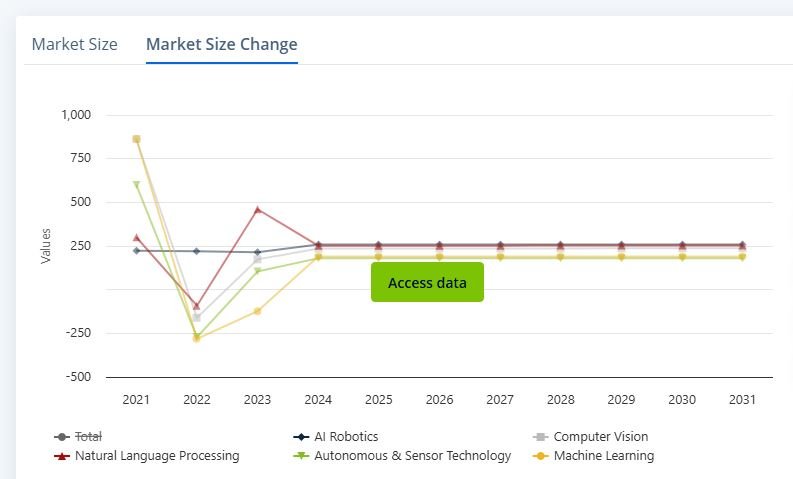
Source: Statista Market Data
Types of Artificial Intelligence
There are essentially two categories of AI: Narrow AI and General AI.
Narrow AI: The Present Reality
Narrow AI (or Weak AI), is developed to perform a small number of tasks at a high level. For example: image recognition, language translation, chess, etc. Narrow AI is good at performing those few specific functions and does nothing else. Narrow AI is all around us every day, from virtual assistants (Siri) to search engines (Google).
General AI: The Future Aspiration
Although researchers have studied what general artificial intelligence (strong artificial intelligence) will look like, it has not yet been implemented or become a tangible reality. The ultimate goal of creating a machine that could generalize its knowledge, learning, and cognitive abilities across many forms of expertise, a machine that can perform any cognitive function that a human can, would represent a large leap forward for AI. There are many technical and ethical challenges that must be overcome before we can even begin to achieve general AI.
Between Narrow and General: The Role of AGI
“General Artificial Intelligence” (or “AGI”) is a theoretical point on the spectrum between “Narrow AI” and true “General Artificial Intelligence.” An AGI system would be able to complete even the most mentally demanding tasks and adapt to new situations, much like the human mind. Although an AGI has not yet been created, the possibility of achieving one is creating new ideas and discussions for the AI community. In order to create an AGI, we will need to make several advances in how we understand human cognitive capabilities, and then replicate those cognitive capabilities into machine form.
How Does Artificial Intelligence Work?
AI systems utilize algorithms to locate patterns in the data they’ve been given and make decisions based on those patterns. Like an AI system’s ability to learn from data using the same type of algorithms, this is how AI machines can process the data provided and provide an output or answer.
The Role of Algorithms in AI
Algorithms are primarily used by AI systems to guide processing and decision-making. An algorithm provides the means to determine which data should be analyzed, processed, and/or identified; multiple algorithms may be required to produce the desired results within an AI system (e.g., decision trees or neural networks). As AI technology advances, opportunities to develop increasingly sophisticated algorithms exist. These advancements can increase the capabilities of AI systems.
Machine Learning: Teaching Machines to Learn
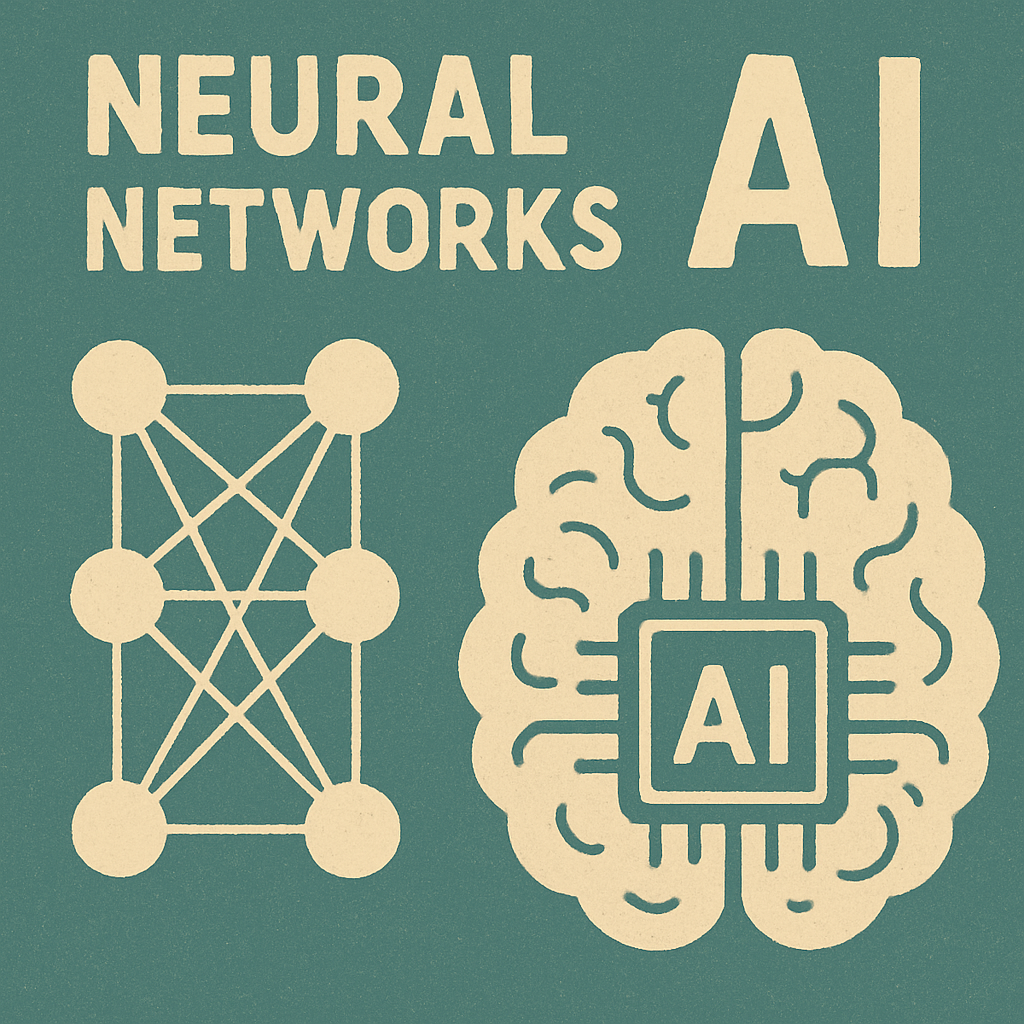
Machine Learning is an area of Artificial Intelligence (AI) that provides algorithms for learning and prediction in computer systems using data. Machine learning technology enables the automatic development of analytical models, and these models can be continually improved as they use data to perform tasks, without requiring a programmer to write explicit code for the system.
Training of machine learning models may occur through supervised, unsupervised, or reinforcement learning, enabling the model to be applied to a variety of problem types.
#AI Language Models Explained Clearly Without Coding
Deep Learning: Emulating Human Neural Processes
Deep Learning is a sub-branch of Machine Learning, and it is derived from the processes of the human brain. Deep Learning uses artificial neural networks (ANNs) with multiple processing layers to process large volumes of data and ultimately analyze it. Because of their ability to process large amounts of data, ANNs can identify complex patterns in images, audio, and text. Consequently, ANNs have been utilized successfully in various applications, including Computer Vision and Natural Language Processing.
A primary characteristic of Deep Learning models is their use of hierarchical representations of data and their ability to learn from them.
The Data-Driven Nature of AI
Big Data, which refers to large amounts of Data, is one of the major factors necessary for an AI system to function properly. The Data is used to train the AI Model and to analyze Large Datasets to identify Trends/Patients, which the AI Model then uses to determine its course of action. As we experience increases in both the volume and complexity of Data, it will be increasingly important for AI Systems to use the Data available to them effectively to enable future growth and advancement.
Market size of Artificial Intelligence:
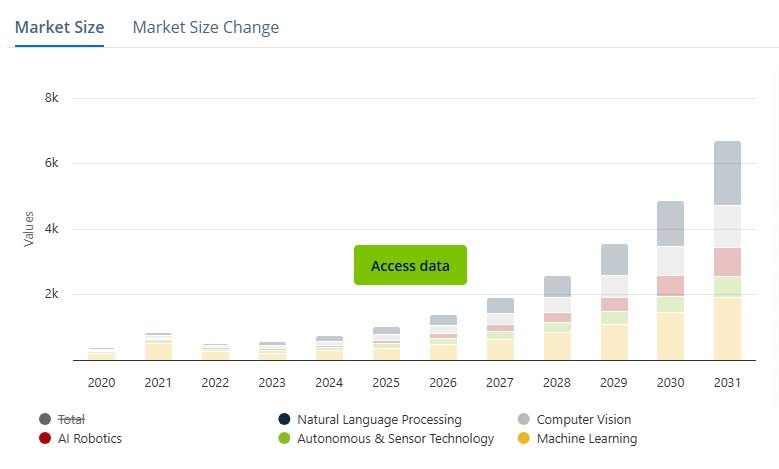
Source: Statista Market Data
Applications of Artificial Intelligence
Artificial Intelligence (AI) is being used across a wide range of industries and applications, affecting both businesses and our daily lives. A few of those examples are listed below.
Healthcare: Transforming Patient Care
The application of Artificial Intelligence (AI) has had a significant impact on Healthcare by improving diagnostic accuracy and providing Personalized Treatments. Advanced AI Algorithms can interpret medical images, such as MRIs and X-rays, better than humans can. In addition to interpreting images, AI can predict patients’ future outcomes, enabling more Proactive and Effective Healthcare Interventions.
Finance: Enhancing Financial Decision-Making
The financial sector employs Artificial Intelligence for a variety of purposes, including identifying fraudulent activity, developing optimal investment strategies, and facilitating automated trading. By processing vast amounts of financial information, AI-enabled applications provide insights into potential risk exposures and may enhance the accuracy of economic forecasts.
Transportation: Navigating the Future of Mobility
Additionally, AI’s presence in the transportation industry is exemplified by autonomous vehicles that use AI to assess their surroundings, make intelligent decisions, and navigate complex environments. Furthermore, AI is being used to improve traffic flow through enhanced traffic management systems, enhance the efficiency of public transportation, and optimize logistics and supply chain operations.
Entertainment: Personalizing the User Experience
By using artificial intelligence (AI), streaming services can use a user’s preference information and viewing history to make content recommendations. Recommendation systems utilize data on how users engage with content and which type(s) of content users watch in order to recommend shows/movies that align with an individual’s preferences. Increasingly, using AI to generate content recommendations has increased both user engagement and satisfaction for streaming services and has improved the overall user experience.
Retail: Revolutionizing the Shopping Experience
Retail has changed due to artificial intelligence (AI), leading to more efficient operations and more personalized retail experiences for consumers. Retailers have been using AI-powered tools to optimize inventory levels, predict future consumer behavior, and create virtual assistant applications to assist consumers. The use of more efficient processes enabled by new tools has allowed retailers to deliver a seamless, more customized shopping experience for consumers while increasing customer satisfaction and loyalty.
Why is Artificial Intelligence Important?
The potential of artificial intelligence to drive positive changes in society, improve the quality of life, spur job growth, and free up time for people to work on more complex problems is vast.
In addition, artificial intelligence will enable people to see patterns that may not have been apparent without an AI system.
Impact on Jobs: Shaping the Workforce of Tomorrow
However, like all other technological innovations, artificial intelligence will present new challenges and change how we perform our daily functions. The effect of artificial intelligence on the workforce is likely to have many dimensions. For example, artificial intelligence could replace some workers due to its ability to automate certain types of jobs; however, it could also create new job opportunities for people who design, implement, monitor, and maintain artificial intelligence systems. Additionally, the automation of routine tasks will create a demand for people with advanced creativity, emotional intelligence, and problem-solving abilities than at anytime in history.
Ethical Considerations: Navigating the Challenges
Ethics around Artificial Intelligence (AI) will become a bigger issue with each passing day. As more of our lives revolve around AI, three primary areas of ethics will need to be addressed: Privacy, Security, and Algorithmic Bias. To use AI responsibly, trust in AI’s ability to make ethical decisions must be developed through transparent AI decision-making. Transparency will create accountability within the AI system itself. To limit the potential for damage to individuals and society, ethically based standards or regulations will be needed to maximize the benefits of AI.
Innovation and Global Competitiveness
Artificial Intelligence (AI) is leading an innovative technological trend across numerous industries worldwide. Furthermore, AI is helping drive the global economy and competition for developing and implementing new technologies. The nations that invest the most time and money in developing their own AI capabilities will be at the forefront of the emerging technological landscape. By doing so, AI will help address many of the serious problems currently affecting our planet (climate change, access to healthcare, etc.) and improve the overall quality of life for every individual on earth.
Getting Started with AI

To gain an understanding of AI and continue to learn about it, you can take several initial steps:
Learn the Basics: Building a Strong Foundation
The basic principles of Artificial Intelligence can be found on several websites, including Coursera, edX, and Udacity. These sites offer introductory courses that cover the core concepts of machine learning, data science, and neural networks. Once you learn the fundamentals of machine learning, data science, and neural networks, you will have the foundation to continue building your knowledge as you progress to more complex concepts related to AI.
Experiment with AI Tools: Hands-On Learning
In addition to having a solid theoretical background in AI, gaining hands-on experience using AI software and tools can also assist you in understanding how AI functions. Many of the AI software and tool platforms are free (for example, Google’s TensorFlow and IBM’s Watson) and allow users to create models, test them, and solve real-world problems. Therefore, using AI software and tools is an efficient way to translate AI theory into practice and gain insight into its application in the real world.
Stay Informed: Keeping Up with Advancements
Artificial Intelligence (AI) is one of the most rapidly advancing fields today, with new developments and innovations being made daily. To remain current on AI trends and technological breakthroughs, you should be aware of current events in AI. This can be done through several methods, including but not limited to subscribing to AI news services, reading blog posts by AI community members, and listening to podcasts on AI and related technologies. As you implement these activities and continue to grow and adapt to the ever-changing world of AI, you will continue to gain education.
Conclusion
Artificial Intelligence (AI) is changing the way we live and work, and its use is present in all aspects of our lives. Healthcare, entertainment, and much more have evolved into faster, smarter, and more efficient processes due to AI. Having knowledge of AI and the advantages it provides will help you navigate your future as either a student, employee, or just someone who has an interest in technology. With AI’s positive growth, your ability to continue learning and adapting will enable you to leverage its benefits.
Q&A
Question: What is Artificial Intelligence (AI)?
Answer: Artificial Intelligence (AI) is the ability of computers to perform human intellect-based work (e.g., learning, understanding language, etc.). AI has one goal: to enable machines to act like humans so they can accomplish tasks faster than humans.
Question: What are the main types of AI?
Answer: There are two types of artificial intelligence: Narrow AI and General AI. Narrow AI is specifically programmed to accomplish a specific task or function (e.g., image recognition, language translation), whereas theoretical General AI is the concept of a machine that can think, understand, and utilize knowledge in virtually all conceivable subjects as humans do.
Question: How does machine learning differ from traditional programming?
Answer: You can think of traditional programming as telling your computer exactly what steps to take to complete a specific task. With machine learning, computers can analyze data to learn and improve their performance on the same tasks over time, without being told how to complete them.
Question: What are some typical applications of AI?
Answer: AI is already utilized in many different areas of industry. In healthcare, AI helps doctors diagnose patients. In finance, AI helps traders optimize their trades and detect possible fraudulent transactions. AI is also developing self-driving vehicles in the transportation sector, providing personalized content recommendations in entertainment, and shopping experiences in retail.
Question: Why is AI important for the future?
Answer: Artificial Intelligence has the potential to significantly improve the manner in which we conduct business and our daily lives through completing a multitude of routine tasks, pointing out things that may have gone unnoticed, and enhancing the efficiency of operations; it may also provide solutions to many of today’s major global problems as well as create new opportunities in numerous other areas.
Question: How can beginners get started with learning AI?
Answer: The initial step to building your own education in AI is simple – you can start by using free or low-cost online courses such as those provided on Coursera or edX; working with AI tools; and staying informed about what is currently happening in the field of AI.

Garikapati Bullivenkaiah is a seasoned entrepreneur with a rich multidisciplinary academic foundation—including LL.B., LL.M., M.A., and M.B.A. degrees—that uniquely blend legal insight, managerial acumen, and sociocultural understanding. Driven by vision and integrity, he leads his own enterprise with a strategic mindset informed by rigorous legal training and advanced business education. His strong analytical skills, honed through legal and management disciplines, empower him to navigate complex challenges, mitigate risks, and foster growth in diverse sectors. Committed to delivering value, Garikapati’s entrepreneurial journey is characterized by innovative approaches, ethical leadership, and the ability to convert cross-domain knowledge into practical, client-focused solutions.