

















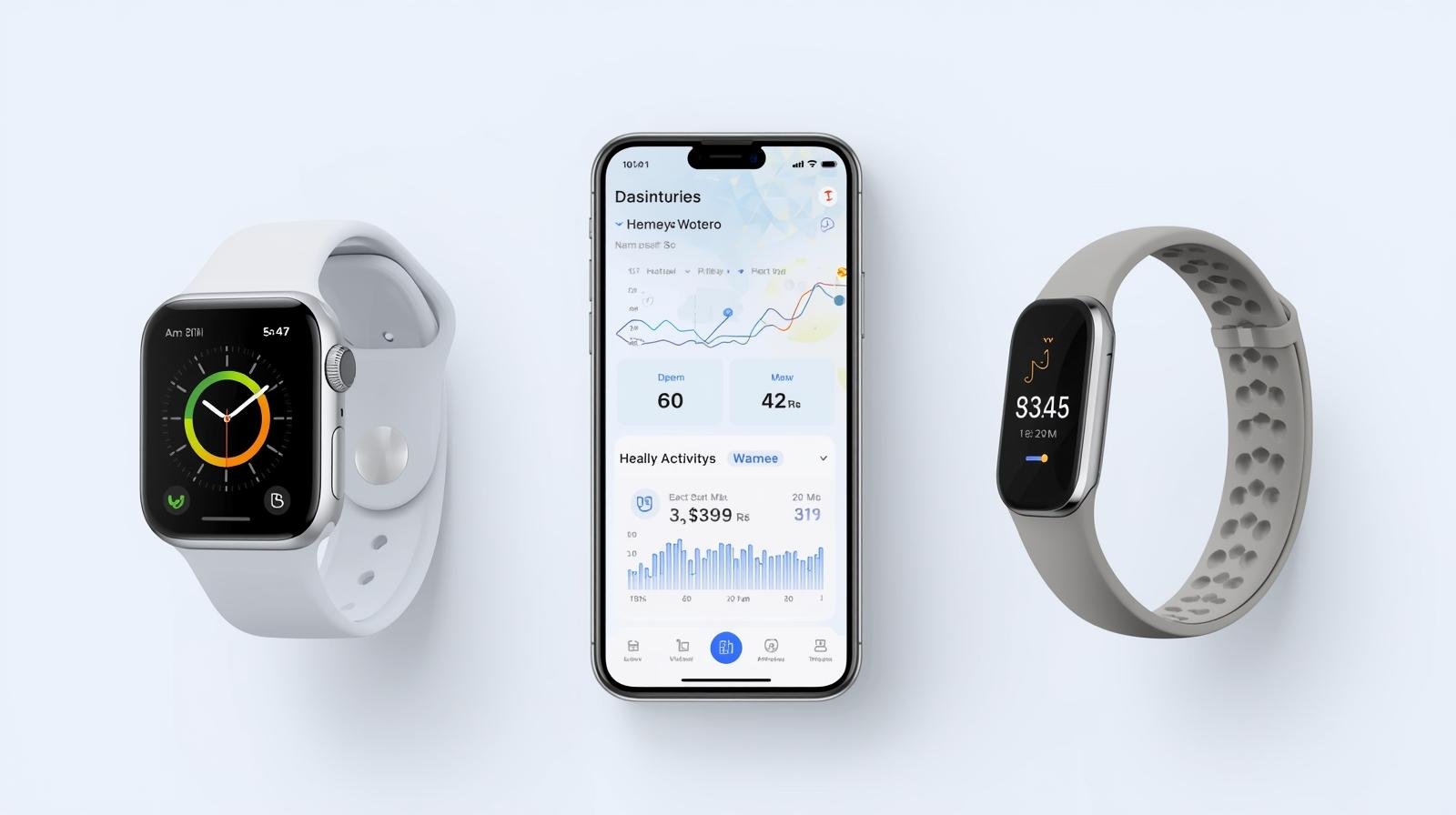
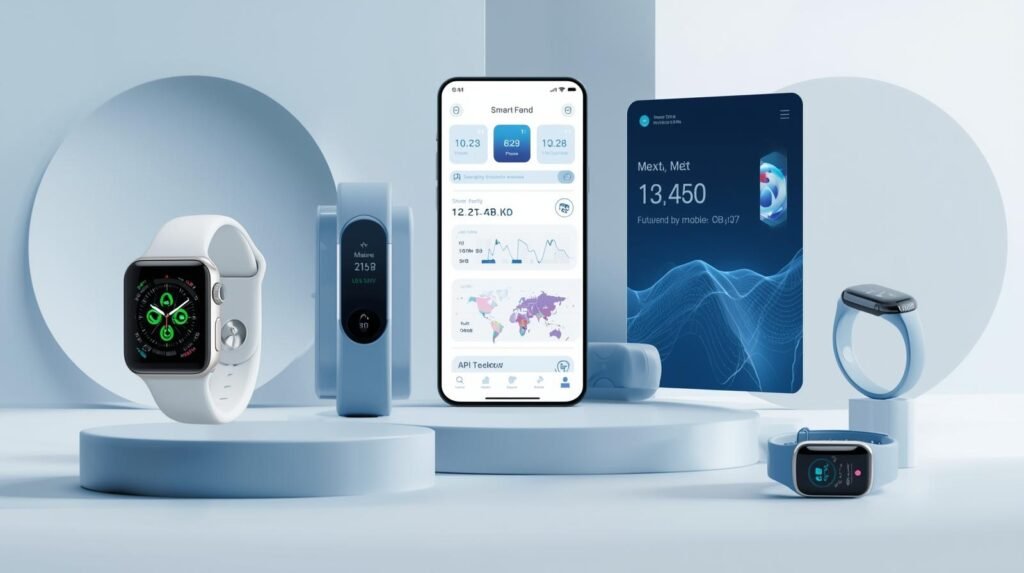
Smart Wearables are small, networked devices (e.g., a smartwatch, fitness tracker, or ring) that monitor physiological responses to help you easily understand information about yourself that you can use in your daily life. Unlike physiological response tracking methods that measure a single physiological response at a single point in time (e.g., resting heart rate), physiological responses can also be tracked by Smart Wearables for extended periods of time (i.e., multiple measurements); therefore, Smart Wearables provide insight into how physiological responses (e.g., sleep, physical activity, stress, recovery) are interrelated.
Smart Wearable Devices typically use sensors (such as PPG (Optical Heart-Rate Monitor), accelerometers, gyroscopes, skin temperature sensors, and SpO2 (Blood-Oxygen)) to collect data from which software cleanses and analyzes the data prior to using the data to estimate the wearer’s physiological parameters (e.g., resting heart rate, sleep stage, workout intensity).
The main goal of using a smart wearable device is generally to provide “directionally useful” feedback on trends, changes, and routines that affect how you feel.
The AI will be helpful as the data from your body is inherently “noisy”. Movement, a poorly fitting sensor, cold skin, or sweating may all contribute to the device’s inaccurate reading of your body’s signals. The algorithms in the device will remove errors (noise) from the signal, create patterns, and set a baseline for each person so that their numbers represent them, not the aggregate of all others measured.
#AI-Native Networks: The Essential Guide to Intelligent, Self-Driving Networks
Smart wearables can become familiar with when you usually go to sleep as well as how restless nights look; if you have a bad night of sleep, the smart wearable can remind you; and if you normally walk at a normal pace but are now walking at a quicker pace than normal, the smart wearable will notify you that your heart rate has increased.
The majority of smart wearable devices are best suited to help users remember to move by sending reminders, provide workout coaching, and/or remind users to prepare for bedtime, thereby assisting users in making behavioral changes. In addition to tracking overall user progress on the dashboard, many users also use their dashboards to monitor how various daily behaviors (i.e., consuming caffeine later in the day, drinking alcohol, working out intensely, working extended hours) negatively impact physiological responses (e.g., poor sleep quality, an increased resting heart rate, decreased readiness).
“Unless a wearable has a function specifically approved by the Food and Drug Administration (FDA) for medical use, treat wearables as tools to promote overall wellness. When a wearable notifies you that “you had an irregular heartbeat,” this may be a timely reminder to talk to a healthcare provider; however, it does not substitute for a professional diagnosis or assessment.
Wearables are an effective way to make tracking your health easier and more convenient by providing insights into emerging patterns in your activity, testing small changes to see how they affect you, and building healthy habits that increase your energy, enhance your fitness, and improve your recovery over time.
Do you ever find yourself waking up from a full night’s sleep — 8 hours — feeling tired and sluggish, or do you find that your energy levels drop dramatically at random times during the day with no apparent reason? You are not alone. It can be very frustrating when you cannot relate to what your body is trying to communicate to you. What if you had a translator for those subtle messages your body sends out, something that would allow you to translate those “whispers” to a clear and understandable language?
What’s exciting about wearable technology is that it can do much more than track steps – today’s devices can serve as your personal translator of your body’s rhythms and the quality of your rest, telling a story of your overall wellness.
Think of it as your own personal dashboard for your body. However, what does it really mean when your watch tracks your “sleep stages” or states that your “stress” levels are too high? This guide will help you understand the top metrics from your wearable and how your device determines your sleep quality and when you’re ready to wake up. As such, you’ll be able to utilize this data to increase your energy, decrease your daily stress, and have better control over your health.
Example
- Everyday smartwatch: Tracks steps, workouts, sleep, and heart rate; notifies users of notifications; helps users spot patterns like low sleep leading to higher stress.
- Smart ring: Focuses on comfort and 24/7 wear; measures HRV, skin temperature trends, and sleep stages to guide recovery and readiness.
- Smart glasses or earbuds: Adds hands-free coaching; can deliver pace cues, posture reminders, or hearing-based wellness features while logging activity context through companion apps.
How Wearables Interpret Daily Activity Levels
| Daily Steps | Activity Level | Health Meaning | Recommended Action |
|---|---|---|---|
| <5,000 | Sedentary | Higher risk of cardiovascular disease | Increase daily walking |
| 5,000-7,499 | Low activity | Slight improvement, but still inactive | Add light exercise |
| 7,500-9,999 | Moderately active | Supports general health | Maintain routine |
| 10,000-12,500 | Active | Good cardiovascular fitness | Continue consistent activity |
| >12,500 | Highly active | Optimal fitness and calorie balance | Maintain with recovery |
Source: Harvard Medical School – Physical Activity Research
https://www.health.harvard.edu/staying-healthy/10000-steps-a-day
Wearable Health Tech – Advanced Technology Enabling Continuous Health Monitoring
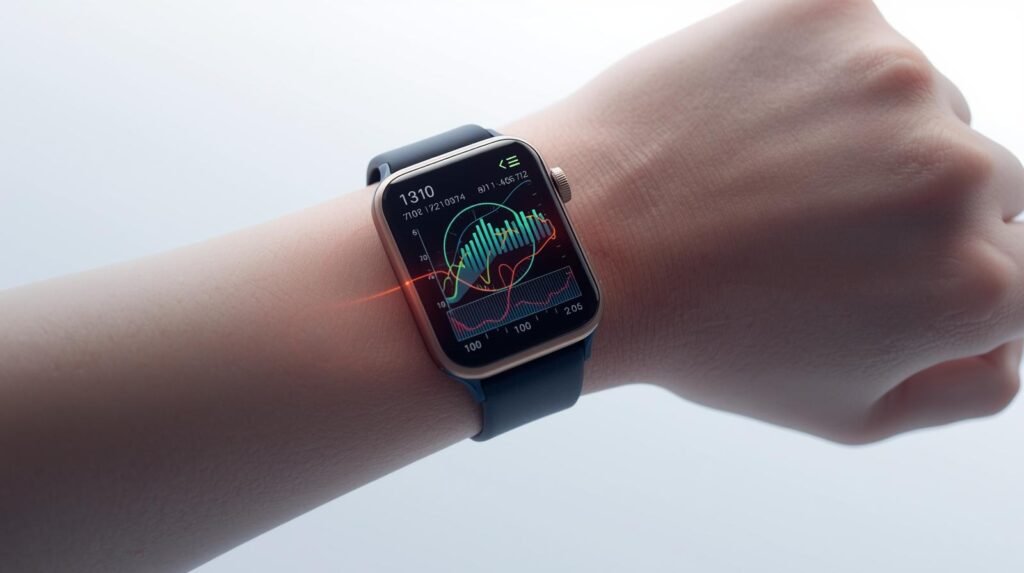
Wearable Health Tech has transitioned (moved) health tracking from an occasional checkup to an ongoing, daily form of insight. Rather than relying solely on how you feel or what you remember, Wearable Health Tech collects and records real-time signals such as your heart rate, activity level, sleep patterns, and sometimes your blood oxygen levels throughout each day and night. The constant flow of data enables users to recognize trends in their behavior and make small adjustments that collectively lead to positive lifestyle changes over time.
The most common forms of Wearable Health Tech include smart wearables such as smart watches, fitness bands, rings, and sensor patches. Smart wearable devices combine miniaturized sensors with wireless connectivity, enabling consumers to collect data with minimal input. When smart wearable devices are used and maintained consistently, they can establish a baseline of the wearer’s typical behavior and provide alerts or other indicators when deviations occur.
Wearable health tech can provide much more specific details about how active you are and how you recover from workouts than the number of steps taken per day.
Wearable health tech devices use a range of sensors, including accelerometers, gyroscopes, and optical sensors, to estimate workout intensity, resting heart rate, total hours slept, and the consistency of your sleep habits. A large number of these devices also provide easy-to-understand graphical summaries to help users understand what they should do to improve their overall health, such as moving more, resting longer, or adjusting their bedtimes.
One reason wearable health tech is improving is its ability to provide better analytics and personalization. Wearable health tech uses algorithms to filter out noise from signals (such as motion or poor skin contact) and interpret the data in the context of the user’s history. An example would be an increase in resting heart rate combined with poor-quality sleep and stress, which could indicate under-recovery or illness. Smart wearables will also support clinical conversations by providing long-term trends instead of just single point-in-time measures.
Wearable health technology can encourage preventive behaviors by providing users with reminders and training/education on maintaining a healthy lifestyle. Prompts from your “smart” devices to stand up, take deep breaths, relax before bed, etc., will help you develop healthy habits that are easier to follow. Smart wearables have many advantages; they provide a way for consumers to establish measurable, repetitive behaviors from their vague goal(s).
However, there are several significant issues with Wearable Health Technology, including data accuracy, privacy, and response to alerts. Wearable Health Technology should be considered a guide in identifying trends and making educated decisions on your own behalf; NOT a replacement for medical professionals. As wearable technology evolves, it will allow for continuous, personalized health monitoring.
Fitness Wearables – Wearables Supporting Activity and Wellness Goals

Fitness Wearable’s purpose is to help keep you physically active and develop a healthy routine of activities while measuring how well you’ve progressed toward your individual objectives. Fitness wearables are designed to track your activity and workout habits, unlike general-purpose devices, which focus on your daily habits or wellness.
Fitness wearables are often used first to monitor steps, calories burned, and workouts to determine realistic targets based on trends in past data. In addition, because fitness wearables are worn throughout the day, they can also demonstrate the positive impact that small decisions, such as taking walking breaks or going to sleep earlier, may have on your overall energy and workout performance.
Most fitness trackers can measure the intensity of a run, ride, or trip to the gym using either optical heart rate or motion-sensor technology. In addition to tracking your intensity while working out with GPS, guided workouts, and interval timers, many smart wearable devices provide real-time heart rate zone information, so you don’t have to guess how to pace yourself.
In addition to providing your active minutes and VO2max estimates, most smart fitness wearables also provide your training readiness relative to your current workload. Unlike tracking your workouts via a mobile app, where you would need to log each one individually, fitness trackers collect data continuously, helping you identify trends that might be hard to see when logging them manually.
#How IoT Works in Hospitals: IoMT is Revolutionary & Lifesaving
Fitness Wearables track a variety of wellness areas beyond physical fitness. Whether tracking sleep to assess your ability to recover, providing stress and breathing tools to encourage short breaks throughout the day, or simply reminding you to stand up, stretch, drink water, or relax before bedtime, all Fitness Wearables will help you build habits and adopt healthier behaviors. When choosing a Fitness Wearable, consider what matters to you regarding your activity level (i.e., your lifestyle).
For example, if you are looking for simplicity and don’t need advanced features like mapping or app functions, a Fitness Wearable that tracks basic movement data and offers long battery life might be perfect for you. On the other hand, if you are an athlete who wants to use your Fitness Wearable as a coach, there are many options available with advanced training tools.
Once you have selected your Fitness Wearable, view your data as feedback rather than a scorecard, and look at trends over several weeks rather than individual daily values. By making small changes based upon this feedback and using your Fitness Wearable consistently, you can develop healthy habits and make managing your overall health and wellness a much less intimidating process.
Example
- GPS running watch: Records pace, elevation, heart-rate zones, and training load; suggests workouts and rest based on recent performance.
- Chest-strap heart-rate monitor: Provides higher-accuracy heart-rate data during intervals; pairs with watches/apps for zone training and lactate-threshold estimates.
- Cycling power meter + head unit: Measures watts, cadence, and efficiency; helps athletes pace climbs, structure intervals, and track progress over a season with clear benchmarks.
Health Tracking Wearables – Devices Tracking Vital Health Metrics Daily
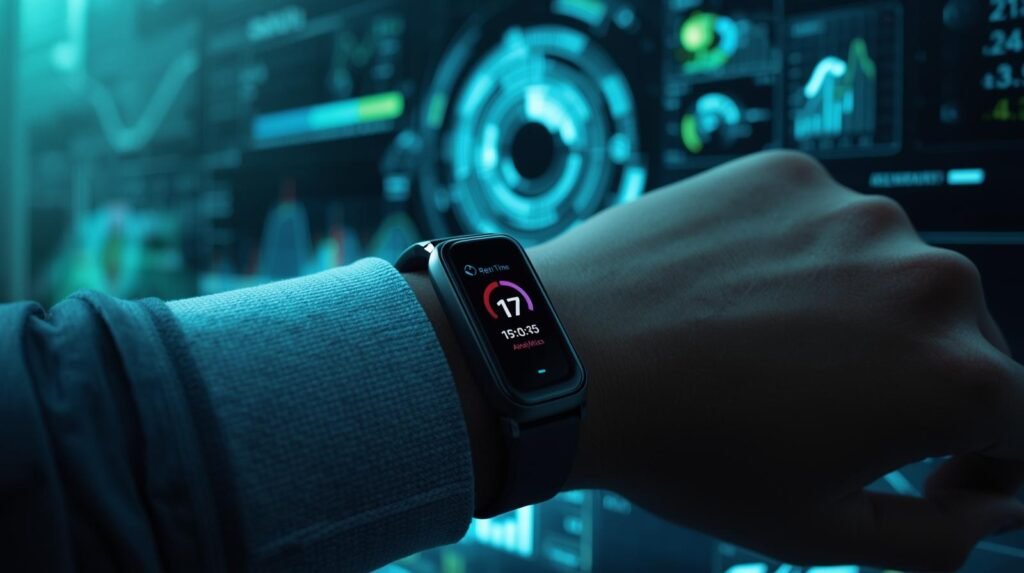
Some wearable devices are designed for health tracking, so they help you monitor your body’s responses to each day’s sleep, stress, physical activity, and illness by continuously recording many important health measures rather than just taking them at set intervals. Users often purchase Health Tracking Wearables to be better-informed about themselves, establish healthier habits, and provide clearer trends to a medical provider when needed.
Most Health Tracking Wearables use an optical sensor to continuously track your heart rate and measure your daily movement and sleep via accelerometers. In addition, many Health Tracking Wearables will also estimate your respiratory rate, skin temperature trend, and blood oxygen (SpO₂) levels.
By using Health Tracking Wearables consistently, users will be able to create their own baseline, so that if they experience any unusual variations (e.g., a high resting heart rate for several days in a row; a disruption in sleep pattern due to a long week at work), they will be more easily able to recognize those variations.
In addition, one of the most significant advantages of Health Tracking Wearables is the trend-based insights they provide. While daily measurements can vary for many normal reasons, Health Tracking Wearables allow analysis of weekly and monthly trends and patterns.
For example, a user’s smart wearable device may display how late-evening screen time affects sleep quality or how intense workouts impact a user’s recovery ratings the following day. Health-tracking wearables also usually translate complex signals into simple terms — readiness, stress, or recovery — so the user can determine whether they should rest, do a light workout, or complete the workout as originally planned.
Health-tracking wearable devices often come equipped with additional capabilities, including heart rate variability (HRV) and/or ECG snapshots, irregular heartbeat alerts, or even fall detection (depending on the device model/region).
While these tools can serve as useful triggers, health-tracking wearable devices do not replace clinical diagnoses. In addition to identifying possible areas of concern through data collection, the user’s observations and symptoms should be reviewed by a healthcare provider.
Realizing the benefits of Health tracking wearable devices will require using them to monitor progress in small ways: Try changing one habit at a time and observe how it affects your trends. With good judgment, health-tracking wearable devices provide an efficient and effective way to collect and review your personal health trends, turning data into better decisions over time.
What Health Metrics Modern Wearables Can Monitor
| Health Metric | Technology Used | Example Devices |
|---|---|---|
| Heart rhythm | ECG sensor | Apple Watch, Fitbit Sense |
| Blood Oxygen | SpO2 optical sensor | Samsung Galaxy Watch |
| Stress level | HRV monitoring | WHOOP Strap |
| Activity & calories | Accelerometer + AI | Garmin watches |
| Skin temperature | Infrared sensor | Oura Ring |
Statistic: Over 1.1 billion wearable devices are expected to be in use globally by 2026.
Source: IDC Wearables Market Forecast
https://www.idc.com
Smart Health Monitors – Intelligent Devices Measuring Real-Time Body Data

Smart Health monitors are wearable devices that collect your real-time body data and transform it into useful, actionable feedback, rather than collecting data only at occasional check-ups. Smart Health Monitors assist individuals with ongoing health awareness — helping them identify trends, respond quickly to change, and create positive healthy habits.
Examples of common smart health monitors include smartwatches, fitness bands, rings, chest straps, and sensor patches. Most smart wearables fall into this category, as they integrate the three components (sensors, connectivity, analytics) into a single device worn continuously throughout the day.
Most Smart Health Monitors record an individual’s heart rate, activities, and sleep, and convert these signals into information about their recovery, stress levels, and readiness to engage in physical activities. Smart Health Monitors use optical sensors to estimate heart rate and, in many cases, SpO₂ (blood oxygen saturation). Smart Health Monitors use motion sensors to track activity, workouts, and sleep disturbances. In addition, some smart wearables have integrated temperature sensors, respiratory trends, and on-demand ECG capabilities.
Data collection is not the only objective of Smart Health Monitors; They provide practical decision-making information from the collected data — including slowing down, resting, or changing a workout.
The most important advantage of Smart Health Monitors is that the metrics are more relevant because you are comparing them against your average (or “baseline”) values. In other words, Smart health monitors can identify which measurements are out of the ordinary for you based on the fact that you are using the monitor; for example, higher resting heart rates, less consistent sleep patterns, etc., and so forth. Smart Health Monitors can also alert users with prompts to move, breathe correctly, go to bed earlier, and so forth, all without requiring extreme lifestyle changes.
Additionally, the Smart Health Monitor can give doctors the same information about patient health they would receive if measuring it manually by providing trend analysis of sleep, activity, and heart rate over weeks. However, it is essential to recognize that Smart Health Monitors cannot replace doctors’ evaluations, that alerts and estimates can be incorrect, and that symptoms should always be taken seriously regardless of what the monitor says.
To utilize the capabilities of Smart Health Monitors, use data collected over weeks rather than days, and view trends and data from Smart Wearable devices to get feedback. Track consistently, make one change per week, and use feedback from Smart Wearable devices to make informed decisions about your lifestyle. Overall, the thoughtful use of Smart Health Monitors can make it much easier to understand and act on real-time body data.
Example
- ECG-capable smartwatch: Takes on-demand ECGs and can flag irregular rhythm patterns; useful for sharing trends with a clinician (not a diagnosis).
- Continuous glucose monitor (CGM): Worn on the arm; shows glucose trends in real time and how meals, sleep, and workouts affect levels.
- Blood-pressure wearable cuff (or cuffless validated device): Tracks BP at home and stores readings over time, supporting better medication discussions and lifestyle adjustments with long-term data.
Smart Fitness Devices – AI-Powered Devices Enhancing Fitness Performance

High-tech smart fitness devices utilize artificial intelligence (AI) to help consumers achieve training, recovery, and performance goals by increasing accuracy and reducing guesswork across all aspects of daily activity. There is a wide variety of smart fitness devices available; most are designed for use at the gym and are also wearable as smartwatches, wristbands, and rings. Some devices offer a connected strap to monitor your heart rate, and others offer apps that provide specific recommendations based on sensors that collect data from your body.
Smart fitness devices collect real-time data and compare it to the user’s baseline, allowing the user to create customized workout plans based on measurable activity rather than relying solely on unmeasurable physical activity.
Smart fitness devices can sometimes be very similar to smart health monitors; however, determining your physical fitness performance requires more than speed or strength alone. Smart health monitors measure physiological signals, including heart rate, movement, sleep, and recovery, and use artificial intelligence to estimate an individual’s total training load and readiness for the next workout.
In other words, if your Smart Health Monitor determines that your resting heart rate has been elevated or that you did not have a good night’s sleep (i.e., poor quality sleep) and therefore are not ready for a high-intensity workout session, then it will recommend either a low intensity workout session or a longer warm-up period before starting your workout or possibly an additional day off from your workouts. This is where smart wearables truly come alive, as they collect consistent data both inside and outside the gym, allowing users to make informed training decisions based on their overall activity for the day, rather than relying solely on a single workout session.
#Breakthrough Guide to Genomic Data and Why AI Needs It
During physical activity, Smart Health Monitors help you pace based on heart rate zones, provide cadence cues, and notify you when your pace exceeds your intended exercise zone. Smart Health Monitors also give you immediate feedback while you’re working out and track trends in daily sleep quality and total strain post-exercise to help evaluate recovery.
Later, Smart Health Monitors will tell you if your fitness has improved (i.e., you’ve been able to improve your recovery abilities), or if you’re showing symptoms of overtraining (i.e., you’ve reduced your readiness for future workouts and/or are getting more tired). Regardless of your experience level, using wearable technology provides an efficient, easy-to-use feedback loop by eliminating the need for manual tracking.
Smart health monitors can enhance the coaching capabilities of smart fitness devices. Smart health monitors will evaluate your previous training data to offer incremental, progressive goals, set new weekly targets for you, and identify possible inconsistencies in your training that may be causing you to plateau.
With smart wearable technology, you can make minor changes to your daily habits (e.g., add a couple of short walks per day; move your workout to an earlier time; change up your post-workout recovery routine) and then see whether those changes affect your overall performance trends.
If you are going to get the most out of smart fitness devices, you should focus on your data trends rather than trying to reach perfect numbers. Use your smart wearable consistently throughout the week and review the weekly summary report it provides. Also, do not take the suggestions from your smart health monitors as formal medical advice. Smart wearables combined with smart health monitors, when used appropriately, are an extremely efficient method of training: Measure, Learn, Adjust, Improve.
Sleep Tracking Insights from Wearable Devices
| Sleep Stage | Typical Percentage Night | Purpose |
|---|---|---|
| Light sleep | 45-55% | Body relaxation and transition stage |
| Deep sleep | 13-23% | Physical recovery and immune repair |
| REM sleep | 20-25% | Memory processing and brain recovery |
| Awake periods | 5-10% | Normal sleep interruptions |
Statistic: Adults require 7-9 hours of sleep for optimal health.
Source: Sleep Foundation
https://www.sleepfoundation.org/how-sleep-works/sleep-stages
Wearable Health Solutions – Connected Tools Improving Personalized Healthcare Outcomes

Smart wearables (such as smartwatches, fitness bands, smart rings, and smart patches) form the core of wearable health solutions; the continuous collection of data from these devices, which is then transmitted to an application or platform, enables the generation of insights.
The consistent use of smart wearables creates a personal baseline for each user, enabling clinicians to identify significant changes in health metrics, such as disruptions in sleep patterns and increases in resting heart rate. The health metrics provided by wearable health solutions create a common basis for discussion between clinicians and patients about a patient’s health status.
Wearable health solutions, therefore, provide more effective and personalized healthcare by using wearable technologies that collect and analyze real-time data between clinician visits. In contrast to data collected solely during clinician visits, wearable technologies can assist clinicians in identifying trends in patient-generated device data (e.g., sleep, activity level, heart rate, and recovery) over periods of days and/or weeks.
By providing a more complete understanding of a patient’s health status, wearable health solutions have the potential to facilitate earlier interventions, improve the effectiveness of patient coaching, and enhance clinician decision-making when used in conjunction with clinical guidance.
A third significant advantage of wearable health solutions is improved patient participation in patient-centered health programs. Most people have difficulty developing new behaviors and continuing these behaviors because they cannot view a constant measure of their advancement; however, as discussed previously, all wearable health solutions report on one or more forms of data measurement (i.e., the number of steps you have taken per day, etc.) so that the user may monitor his/her own progress.
Therefore, wearable health solutions can promote behavior through reminder messages, goal tracking, and very simple visualizations (i.e., a dashboard), which will assist the user in achieving his/her daily objectives (i.e., take a walking break, maintain a consistent bedtime routine, and reduce their stress level through physical activity).
For managing chronic diseases, wearable health solutions can help users establish consistent routines for taking medications, monitoring symptoms, and participating in remote consultations, thereby providing continuous contact with their care team outside a clinical environment. Ultimately, wearable health solutions can improve the consistency and minimize the reactivity in patient care.
Wearable health solutions can also deliver scalable personalization of care. By using algorithms, wearable health solutions can produce customized reminders and goals based on an individual’s past rather than the average of a non-specific population.
Examples include that wearable health solutions will show you which specific workout routines negatively affect your recovery; when you consume coffee in the afternoon, it will affect your sleep; and over time, wearable health solutions can show you which workouts or food choices work best for your body so that you can develop routine habits that you can maintain.
Like all health-related technologies, wearable health solutions need to be used responsibly. The biggest concern is the accuracy of data collection and the sensitivity of the data collected by wearable devices. Users can get the most out of their wearable health solution by focusing on tracking trends in their data rather than a single reading, and if they have a health concern, they should see a healthcare professional.
By thoughtfully using wearable health solutions and smart wearables, users can leverage these tools to link their daily activities to their long-term outcomes, thereby enhancing personalized care.
More Than Just a Number: What Your Daily Steps Actually Mean for Your Health
We have heard repeatedly about the “magic number” of 10,000 steps. The idea behind a pedometer or fitness tracker is to encourage you to be active by reaching a certain number of steps. However, the true benefit of using a pedometer or fitness tracker is to combat the other major threat to our health: prolonged periods of inactivity, which has been proven to have a negative effect on how we feel physically (i.e., stiffness) and mentally (i.e., fatigue), even if you do eventually get up and move.
The biggest advantage of your fitness tracker is that it lets you see your movement in detail, not just your total. That little vibration on your wrist that says “Move” can be thought of as an opportunity to take a “movement snack.” Humans were not designed to spend their lives folded into chairs.
Taking short breaks (a short walk to get water or some quick desk stretches) is one of the most effective ways to boost your energy and fight fatigue. These short breaks can also help keep your metabolism steady while making a big impact on how you feel at the end of every day.
So here is an easy and effective way to increase your physical activity throughout the day. For each hour you spend sitting, attempt to get up and walk for 3-5 minutes. You don’t need a gym to stop sitting. You just need to stop sitting. As you become more consistent with your movement, you will see many other positive changes in your health data. Most people first notice these changes in their hearts’ behavior.
Your Heart’s Secret Language: What Resting Heart Rate Reveals About Your Fitness and Recovery
Beyond how active you are, your wearable device monitors one of the most important indicators your body sends you—your heart rate. More specifically, it measures your resting heart rate (RHR), the number of times your heart beats per minute when you are completely at rest. A well-maintained vehicle will not require its engine to rev higher than necessary, and similarly, your heart rate should be low as well.
When your resting heart rate (RHR) is low, this usually indicates that your cardiovascular system is functioning well. In addition, as your fitness level improves over time, you should expect to see a decline in your RHR, reflected in weekly or monthly trend changes. This is fantastic news—your heart is now stronger and can pump more blood with less force, reducing its workload and lowering its demand to work as hard. Many users report that tracking the decline in their RHR is even more satisfying than reaching daily step goals for them because it provides evidence that they are continuously progressing towards better health.
An increase in your resting heart rate (RHR) without a clear cause could indicate that your body is experiencing undue stress from one or more factors, including poor-quality sleep, excessive demands at work, or an impending illness. Data from your wearable will support the idea that slowing down and allowing yourself to recover would be beneficial.
Rather than looking at short-term changes in your RHR, look at your RHR trends over time (weekly). It is important to focus on your recovery, and the greatest benefit of your wearable device is likely its ability to help you analyze your sleep patterns.
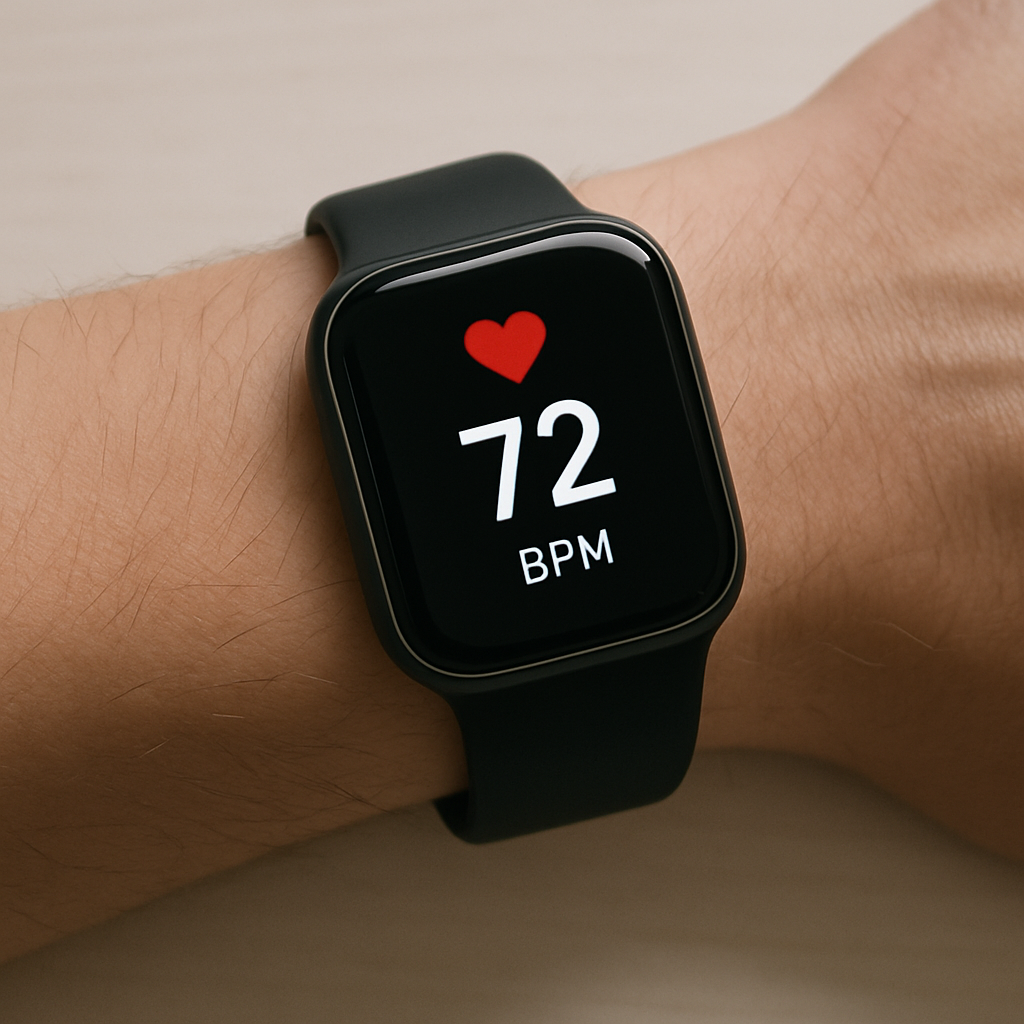
Resting Heart Rate Ranges and What They Reveal About Fitness
| Resting Heart Rate (BPM) | Fitness Level | Interpretation |
|---|---|---|
| 80-100 BPM | Low Fitness | Possible stress, poor cardiovascular fitness |
| 70-79 BPM | Average | Typical adult resting heart rate |
| 60-69 BPM | Good Fitness | Healthy cardiovasular function |
| 50-59 BPM | Very fit | Often seen in athletes |
| <50 BPM | Elite Fitness (sometimes) | Can indicate strong heart efficiency |
Statistic: The average adult resting heart rate is 60-100 BPM
Source: American Heart Association
https://www.heart.org/en/healthy-living/fitness/fitness-basics/target-heart-rates
The Blueprint for Better Energy: How Wearables Decode Your Nightly Sleep
“Ever wake up from eight hours of restful sleep but still feel tired and feel like you got no sleep at all? While the total amount of sleep time provides some information about the quantity of time you spent sleeping, it does not account for the quality of that sleep time. This is where wearable devices come in, adding another layer of information by showing how long you have been asleep and the quality of that sleep based on your sleep stages. In doing so, wearable devices allow users to break down their sleep into three or four distinct “sleep stages” and gain a complete understanding of their sleep quality.
As such, most individuals experience three to four distinct phases (or “teams”) during a night’s sleep that help organize their body’s functions while they are resting.
- Deep sleep: the repair crew – the body’s team of specialists that fix damaged muscle & tissue.
- REM sleep: the memory organizers – the brain’s team that files away important events and information from the previous day.
- Light sleep: this transitional phase of sleep is still restful to some degree.
Your overall sleep data (time spent in each of the above stages, heart rate, restlessness), combined with wearable devices provide one number to represent your “sleep score” – what makes the use of a wearable device so valuable.
For example, if you are extremely tired, it could indicate low levels of deep sleep, which may contribute to increased food consumption or screen time before bed.
In addition, if you feel mentally foggy, it could be due to low levels of REM sleep, which also contributes to these symptoms.
Using your sleep scores to identify areas for improvement will help you make the necessary adjustments to boost your energy levels throughout the day.
Your Body’s Stress Gauge: What Heart Rate Variability (HRV) Really Means
Using the data provided by the wearable during sleep, another excellent means of evaluating your body’s ability to deal with the pressures of your life through Heart Rate Variability (HRV) can be found. While also providing an excellent measure of how prepared and resilient you are, HRV offers a completely different perspective from Resting Heart Rate (RHR). RHR measures the extremely small, millisecond differences between heartbeats. On the other hand, HRV is a measure of how well rested and healthy your heart is.
A well-rested and healthy heart beats like a metronome, while one that is tired and sick beats erratically. These erratic beats indicate the presence of both of the body’s opposing control mechanisms: The “fight or flight” mechanism which increases the metabolic demand of the body and makes for a less variable heartbeat; and the “rest and digest” mechanism which reduces the metabolic demand of the body and allows for more variation in the time between each heartbeat, indicating a higher HRV.
Therefore, if you have a high HRV, then you are likely to be resilient and capable of adapting to potential challenges. However, if you have a low HRV, your body is indicating it has a “low battery” and is unable to recover from the physical/mental/emotional stresses that result from poor sleep, excessive training, or too much mental stress.
To better understand your trends, rather than simply looking at a single day’s results, look at your HRV scores over multiple days. If your HRV scores are declining over several days, you will probably want to reduce the intensity of your activities, improve your sleep patterns, or identify and eliminate the causes of low energy. This ultimately converts the vague feeling of burnout into a clearly defined signal to practice self-care.
Advanced Alerts: What Do SpO2 and ECG on Your Watch Actually Do?
The majority of data provides information regarding long-term trends. Sensor readings, however, provide insight into the current environment. This includes, but is not limited to, blood oxygen saturation (SpO2) and electrocardiogram (ECG). When evaluating any sensor reading, the primary consideration is how it will enable you to monitor your health and use the data responsibly.
The most frequently utilized component of sensor readings is the SpO2 measurement of oxygen levels in your red blood cells. Healthy individuals typically maintain their SpO2 readings consistently over the course of a typical day (usually greater than 95%) and less frequently experience drops below 90%. Keep in mind that this reading is intended for awareness purposes and is not a diagnostic tool. If you have any concerns or questions regarding your respiratory function, please consult with your physician.
The next step up from basic fitness-tracking wearables is on-demand ECG (electrocardiogram) monitoring. An on-demand ECG will provide a snapshot of your heart rhythm at any moment. On-demand ECGs were primarily designed to help identify AFIB (atrial fibrillation) or other forms of irregular heartbeats. When the wearable alerts you to schedule an appointment to get your heart checked, don’t assume you have a problem. What your wearable has done is pick out abnormal ECG patterns that your doctor needs to evaluate.
Think about the alert you receive from your wearable, like the “check engine” light in your car. Your wearable is providing information indicating you should be evaluated further; use it to prompt a conversation with your healthcare provider, but do not base your entire care plan on the wearable information.
Okay, I Have the Data. Now What? A Simple 3-Step Plan to Take Action
The sheer amount of statistical information can be almost overwhelming, leaving one feeling inundated with data. There are many statistics that you could review every day. This is not to say you want to be a daily statistician, however, but rather a statistician for your health and wellness. A single poor night of sleep adds “noise” to the metrics from which you will derive your conclusions; a full week of poor sleeping adds a signal.
Looking at trends helps you see the changes in your metrics over time. Rather than seeing individual numbers as statistics, you should use them to develop meaningful actions. To do this, you can use a three-step cycle.
Step 1: Determine the Trend: Take a look at the weekly or monthly average of a particular statistic (e.g., your sleep score) and determine if the average is always lower than what you would like to be. Once you’ve determined this, that’s your starting point.
Step 2: Connecting the Dots: After determining the low point in your data collection, ask yourself, “What caused me to reach this point?” In other words, after seeing your stress level increase on Tuesday, did you have a large meeting/presentation that day? If so, by connecting the dots, you are relating the data to your actual life experiences.
Step 3: Make Only One Small Adjustment: It doesn’t require a total overhaul of your life. Based on your previous week’s trends, find one thing you can do differently. For instance, if you found out that a cup of coffee in the afternoon lowered your sleep score significantly, try drinking tea instead and see how it impacts your sleep score the next week.
The ultimate advantage of tracking data is not just being able to see the number; it also gives you the opportunity to create a new, better routine based on the information collected. Additionally, this interactive process will help you determine which metrics you want to track and, therefore, which type of device you should purchase.
How AI Converts Wearable Data Into Health Insights
| AI Function | Heart rate data | Health Insight Generated |
|---|---|---|
| Pattern recognition | Heart rate data | Detect abnormal rhythms |
| Sleep analysis | Motion + HRV | Identify sleep quality trends |
| Stress prediction | HRV + activity data | Detect burnout risk |
| Recovery scoring | Sleep + heart rate | Recommend rest or exercise |
| Personalized fitness guidance | Activity histroy | Suggest workouts |
Example: AI-based wearable analysis has been shown to detect early signs of illness (such as COVID-19) up to 2-3 days before symptoms appear.
Source: Nature Biomedical Engineering
https://www.nature.com/articles/s41551-020-00640-6
Choosing Your Health Partner: Fitness Tracker vs. Smartwatch
Fitness trackers tend to be less complex than smartwatches. Fitness trackers are usually designed for one specific purpose (i.e., tracking activity). Therefore, they will generally last longer on a charge—some devices can last up to one week or longer. Therefore, they are best suited for people who want to track their sleep, steps, and heart rate without worrying about daily charging.
Smartwatches act as an extension of your mobile phone by allowing a large variety of apps, notifications, and a high-quality display. The downside is that you will have to charge your smartwatch frequently.
Some watches offer peace of mind, especially for seniors or individuals living alone. If you are looking for a watch for a senior or someone living alone, consider models with automatic fall detection. Automatic fall detection will send a notification to your emergency contact(s), when the wearer has experienced a significant impact. In essence, this feature takes the wearable from a health monitor to a possible lifeline. Also, bright, readable displays are important when selecting a watch.
Whether you choose a smartwatch or a fitness tracker, you must realize that each will collect your private data. Before making a purchase, always review the privacy policy of the company that provides the product. Although the device itself is just a tool, the true value of a wearable comes from using the collected data to develop healthy habits and become more aware of how your body operates.
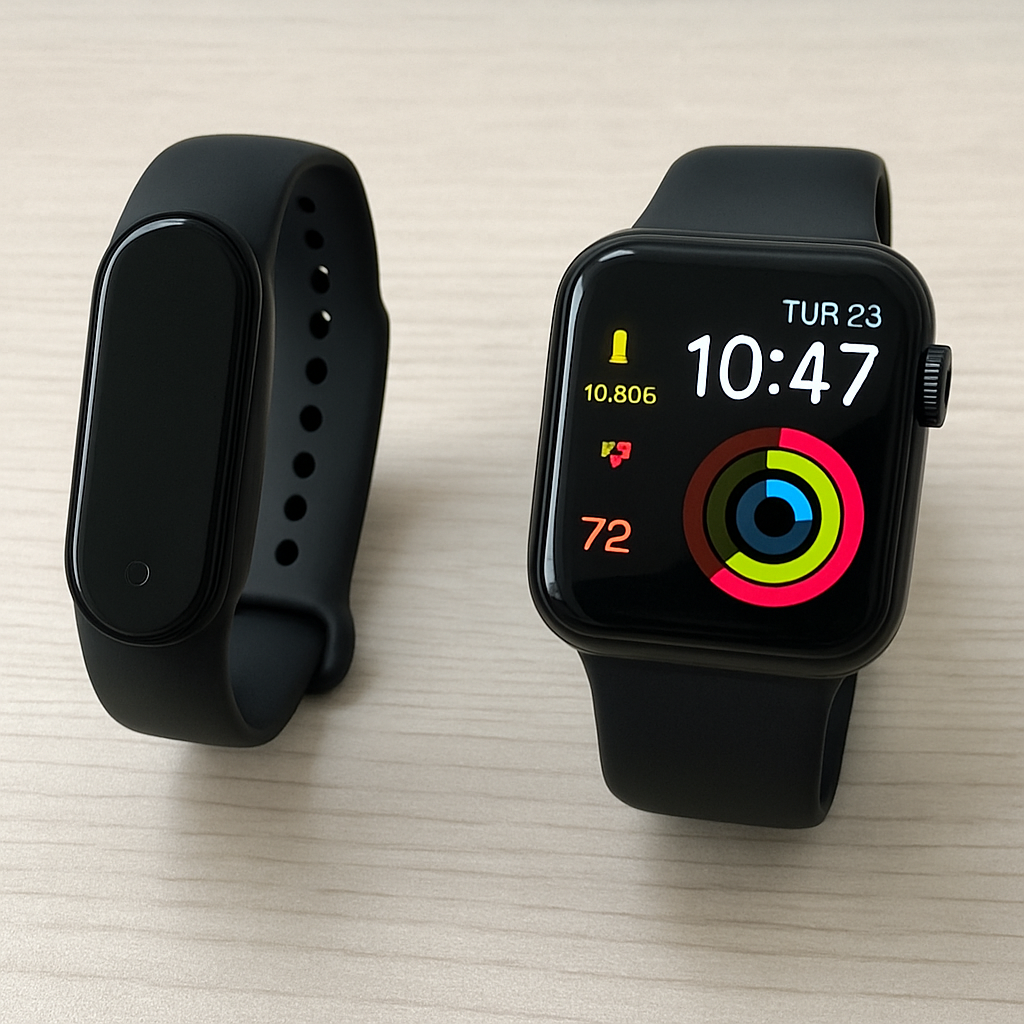
From Data to Daily Energy: Your Wearable Is Just the First Step
The majority of individuals looking at a smartwatch or fitness tracker consider two things when deciding on an activity-tracking device: what functional features they require and how easy the device needs to be to use.
There are dedicated fitness trackers that specialize in being as lightweight as possible, with extended battery life (often one week or longer), and allow users to “set it and forget it” track their activities, such as sleep, steps, and heart rate. Smartwatches, however, are essentially an extension of your smartphone and allow you to access your applications, receive notifications, and view a color display; however, these features typically mean you need to charge your smartwatch every day.
In addition to the previously mentioned factors, specialized features on a watch may provide additional comfort for its user. If you are looking for a watch for someone who lives alone (for example, a senior), look for one with special features, such as automatic fall detection. The automatic fall detection will send a notification to the emergency contact services if the wearer falls and hits their head or back, which could help prevent a possible serious problem from happening sooner rather than later.
You should also consider the size and brightness of the watch face when reading it. Some people find a larger, brighter watch face is easier to see than a smaller one.
Finally, whether you choose a fitness tracker or a smartwatch, remember that both types of devices collect personal information about you. Therefore, always make sure to read the privacy policy of the company you plan to purchase the product from. Once you have purchased the product, the ultimate goal should be to use all the information collected to form new healthy habits and become more aware of your own body.
My Observation
There is an alternative approach to the “A Smart Wearable and Artificial Intelligence to Monitor Health” — write the article as a “Personal Health Operating System” that operates on patterns rather than numbers, and introduce the Digital Health Twin.
Rather than explain each measure individually (number of steps, number of hours slept, Heart Rate Variability [HRV]), demonstrate how AI may combine these measures to create an evolving model of what constitutes normalcy. The narrative: your wearable device does not simply record data about you; it learns your baseline, identifies “Micro-Deviation Patterns” (slight deviations from your norm that occur weeks before you feel ill, burned out, or overtrained), and recommends the fewest behavioral changes needed to achieve maximum results.
To make this idea applicable to readers’ lives, include a 7-day test. Readers are asked to select a single objective (e.g., energy levels, stress levels, recovery time). For those objectives selected, the AI utilizes 3 measurable signals (regularity of sleeping, resting heart rate, and HRV) to produce a daily “Readiness Forecast”, similar to a weather forecast for your body.
When the Readiness Forecast indicates that you have deviated from your normal state of being, the AI will recommend a small action plan (i.e., take a 10-minute walk, go to bed 30 minutes earlier tonight, do a light weight training session tomorrow instead of today’s heavier weight training session) to help restore balance. The AI will track whether your actions restored you to normal.
Finally, provide assurance regarding privacy settings, accuracy limitations, and how using AI-generated insights can assist in communicating with clinicians — but should never be used as a substitute.

Garikapati Bullivenkaiah is a seasoned entrepreneur with a rich multidisciplinary academic foundation—including LL.B., LL.M., M.A., and M.B.A. degrees—that uniquely blend legal insight, managerial acumen, and sociocultural understanding. Driven by vision and integrity, he leads his own enterprise with a strategic mindset informed by rigorous legal training and advanced business education. His strong analytical skills, honed through legal and management disciplines, empower him to navigate complex challenges, mitigate risks, and foster growth in diverse sectors. Committed to delivering value, Garikapati’s entrepreneurial journey is characterized by innovative approaches, ethical leadership, and the ability to convert cross-domain knowledge into practical, client-focused solutions.