










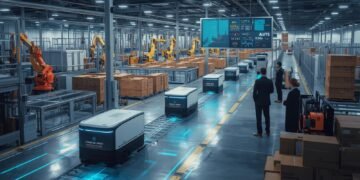






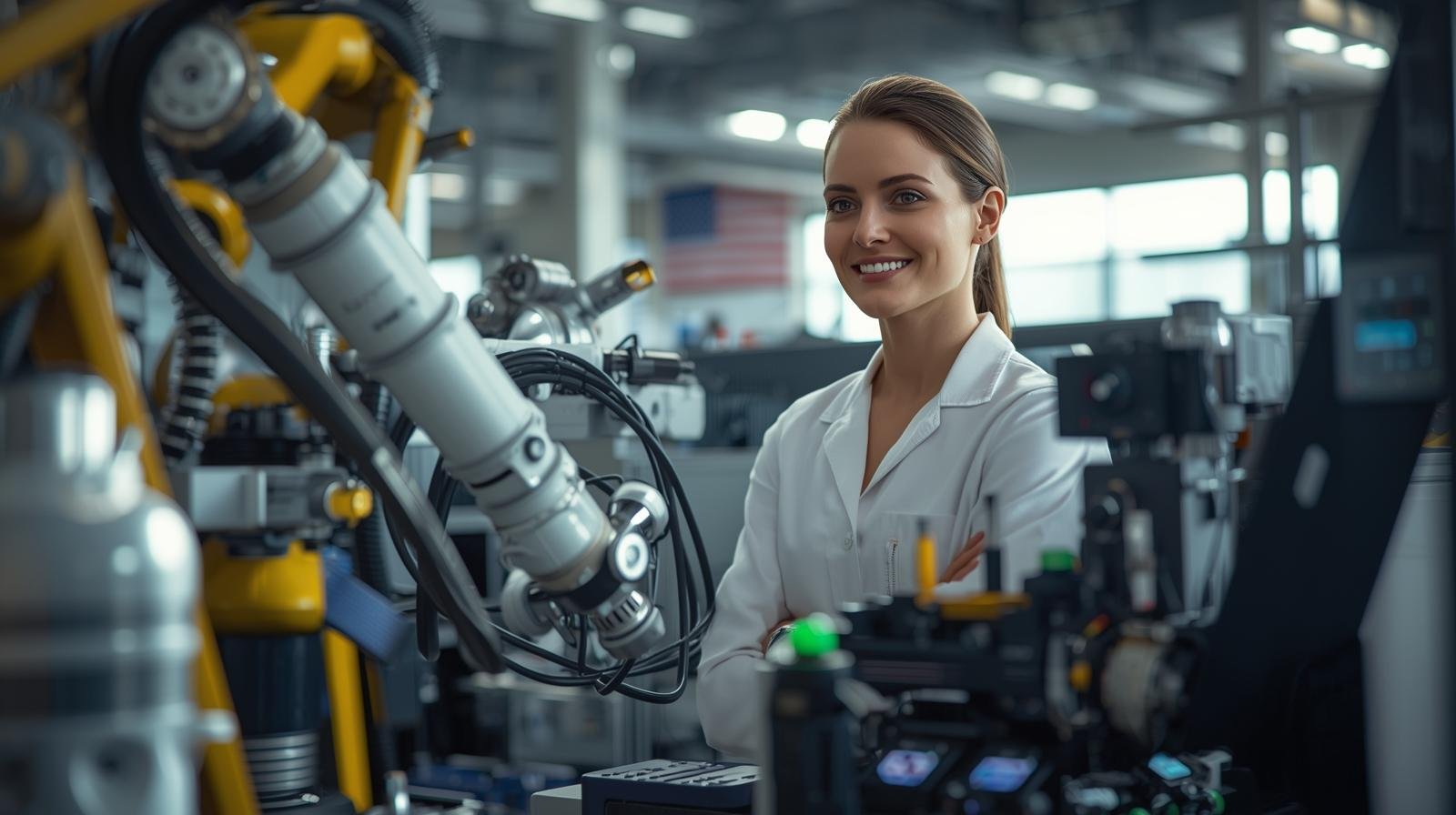

You may have already seen the videos; robotic dogs crawl around on four legs, open doors, or inspect a construction site. While these devices may seem like they came straight from science fiction, robots can also be very practical. The most important robot you’ve probably never even thought about is the robot that got your latest online order to your front door within two days.
There is no such thing as an “unseen” force behind the modern world, as there is with the U.S. Robotics Industry. They are both ideas for the future and real-world problem-solving solutions. For example, microsurgery now allows surgeons to operate with precision, while cars are being designed to take us where we want to go. The available data on the robotics industry suggests that developing a sorting robot capable of handling billions of packages is much harder than developing a robot to work alongside people in a manufacturing environment.
This robotics guide provides insight into some of America’s top robotics innovation companies by way of the tasks their creations perform. We will not examine the engineering complexities involved. Rather, we will illustrate the interesting problems they solve and how they continue to shape our lives, task by task.
#Complete Guide: Success & Powerful Best AI Tools for Business in USA
Summary
“Leading & Innovative Top Robotics Companies in the USA: Complete Guide” states that most U.S. robotics companies focus more on developing practical solutions to real-world industry challenges than on creating the “cool” robots depicted in movies. They begin by describing the industrial robot arm—a powerful, stationary “workhorse” used in almost every manufacturing process—that performs tasks such as welding, painting, and precision assembly at high speeds.
Next, they describe how warehouses use mobile robots to help fulfill orders faster. They compare older AGVs (Automated Guided Vehicles) that must follow set paths to newer AMRs (Autonomous Mobile Robots) that can map their environment and move around freely, avoiding obstacles, to deliver products to workers and save them both time and money.
Then they explain how Collaborative Robots (Cobots) are being developed to work alongside people safely, without enclosures. Cobots provide a “third hand” by using sensors to stop on contact, allowing humans to concentrate on problem-solving and quality while cobots handle repetitive or heavy work.
They go on to explain how robot-assisted surgery has greatly improved surgical procedures. Systems, such as those provided by Intuitive Surgical’s da Vinci system, allow surgeons to perform minimally invasive surgeries by translating their movements into steady, highly precise actions, thereby reducing pain, scarring, and recovery times for patients.
They also describe why some robots need legs. Boston Dynamics creates legged platforms for inspection in hazardous or uneven areas; Agility Robotics builds humanoid-style robots to assist with physical work in areas designed for people. They conclude by highlighting the growing area of Agricultural and Field Robotics (such as laser weeding) and the rapidly growing number of AI Robotics Platforms (such as NVIDIA Isaac) that will make it easier for startups to develop.
In summary, this provides readers with an understanding of what to look for when searching for the Top Robotics Companies in the USA, why there are so many different types of robots, and how the innovations coming from the Top Robotics Companies in the USA are making their way outside of the factory floor—putting the Top Robotics Companies in the USA at the center of today’s economic growth.
Example
A Detroit-based manufacturer of automotive parts is evaluating the most advanced robotic suppliers in the U.S. to update its welding process. Following a trial run, it will implement vision-guided robotic arm systems with inline quality control and torque sensors on three production lines. When the sheet metal being welded varies in thickness, the system’s real-time parameter adjustments reduce waste and rework.
In addition to the speed of adjusting to different products (operators can switch out end effectors for new models in under five minutes), an operator’s role has shifted toward maintenance and oversight. The cloud-based reporting tool also tracks and reports cycle times, energy consumption, and provides advance notice for predictive maintenance. Six months after implementing the robotic solutions, the company increased output by 18%, reduced accidents, and met all their tighter delivery schedules without increasing overtime. It also received approval from its union committee to continue expanding this project because many positions were transitioning to supervisory or troubleshooting roles.
Leading robotics companies: Discover the leading robotics companies driving innovation across industries

The Top robotics companies in the USA – With the growth of robotics in manufacturing, logistics, healthcare, and consumer technology, these companies have developed and implemented sensor technologies, artificial intelligence (AI), and safe hardware to enable true worldwide automation. The top robotics companies in the USA develop systems that can “see”, “plan”, and “act” quickly and accurately to produce fewer defects on factory floors, faster and more efficient warehouse operations, and better patient outcomes in hospitals.
Consumers who are looking for the top robotics companies in the USA generally would like to know if there has been successful implementation, what kind of quality engineering exists at each company, and whether or not their products can be produced through prototype development to high volume production.
In an industrial environment, the top robotics companies in the USA are producing robotic arms, computer-vision-based pick-and-place systems, and collaborative robots that will work alongside employees. For logistics applications, the top robotics companies in the USA are developing mobile robots and automated sorting solutions that improve delivery times and order-fulfillment accuracy. In the healthcare industry, both surgical and rehabilitation robots clearly demonstrate how top robotics companies in the USA can enhance clinicians’ ability to perform consistently using a data-driven approach.
The top robotics companies in the USA – as robotics expands through manufacturing, logistics, healthcare, and consumer tech, the top robotics companies in the USA are creating real-world automation using advanced sensors, artificial intelligence (AI), and better hardware. The top robotics companies are designing systems that can see, plan, and act on information so rapidly and accurately that they significantly lower defect rates in factories, make warehouse operations more efficient, and improve clinical outcomes in hospitals.
When consumers search for the top robotics companies in the USA, they generally seek evidence of successful applications of their products, the expertise of their engineering staff, and an effective way to scale up their prototypes to high-volume manufacturing.
In industrial settings, the top robotics companies in the USA develop robotic arms, computer vision-based pick-and-place systems, and cooperative robots that operate alongside workers. In logistics, the top robotics companies in the USA are developing mobile robots and order sorters designed to speed delivery time while ensuring accuracy.
Example
Example: Robotics suppliers in California supply cobot systems for packing and handling delicate fruits and vegetables. Cobots are designed to use soft gripper arms with force limitations and three-dimensional (3-D) cameras to determine whether the product is ripe, then gently place it into the designated tray. Additionally, when labels or sizes change during the production process, employees can easily update recipes using an employee tablet, rather than rewriting programming.
The cobot system will also share performance metrics with the company’s Manufacturing Execution System (MES), which will alert personnel to potential jamming issues and contamination threats. As cobots operate alongside humans, they allow personnel to concentrate on quality-control inspections and sanitizing processes. During labor shortages and increased volume during peak seasonal periods, output levels remain consistent. A payback of less than two weeks is achieved through reduced product bruising and faster changeover times.
Global Robotics Market Growth
| Year | Market Size (USD) |
|---|---|
| 2020 | $45 Billion |
| 2023 | $70 Billion |
| 2026 | $120 Billion |
| 2030 | $260 Billion |
Key Insight: The robotics industry is growing rapidly, driven by demand for automation.
Source:
- Statista Robotics Market
https://www.statista.com - MarketsandMarkets
https://www.marketsandmarkets.com
Robotics industry leaders: Explore the robotics industry leaders shaping the future of automation and AI.

The way AI and automation are used across many types of operations has changed dramatically for leaders in the robotics industry – i.e., factories/warehouses, hospitals, etc. With emerging technologies like advanced machine vision, edge computing, and safe actuators, robotics leaders have created robots that can sense their environment and quickly and reliably decide what to do.
When people look at the top robotics companies in the USA, they want to see how those companies can take advancements made in artificial intelligence and turn them into systems that work at scale.
Robotics industry leaders are creating and improving Collaborative Robots (Cobots), High Precision Arms, and AI-Driven inspection in manufacturing. Cobots enable humans to safely interact with robots, helping them complete a range of manufacturing tasks, including assembly, material handling, and welding. In addition to cobots, high-precision arms offer greater accuracy than typical robotic arms when handling delicate or sensitive materials. And lastly, AI-driven inspection reduces waste and improves product quality by detecting defects early in the manufacturing process.
The majority of the top robotics companies in the USA are also involved in the area of flexible automation – robots capable of performing various tasks, learning new workflow processes, and integrating with existing manufacturing lines. As product design cycles continue to shorten and customers demand custom products, flexible automation will become increasingly critical.
Companies like Amazon Robotics, Fetch Robotics, Vecna Robotics, Locus Robotics, and RightHand Robotics are at the forefront of the Logistics and Retail Fulfillment Robotics Industry in Autonomous Mobile Robots, Smart Sorting, and Warehouse Orchestration Software. These top robotics companies in the USA help clients implement navigation, fleet coordination, and safety systems in busy environments where humans and robots coexist, improving peak-season performance, increasing throughput, and reducing errors.
The top robotics companies in the USA will also be expanding into the healthcare and life sciences sectors. Some examples of the many types of products being developed include surgical assistant robots, laboratory automation systems, and rehabilitation equipment. Many of these new products are being developed to increase the precision of medical professionals performing specific tasks, eliminate repetitive work, and create actionable data for them.
In addition to providing many advantages as an industry leader through robotics technology, companies in this industry can successfully design and deliver their robotic solutions. This means that they develop strong testing protocols for their systems, build effective hardware designs for those systems, and release regular software updates that improve overall system performance after deployment.
When examining the top robotics companies in the USA, what determines their “success” is how reliable and durable their products have proven themselves to be, the level of quality of support they provide for these products, and how easily these products can be incorporated into their customers’ work environments and create a genuine ROI.
Execution, of course, is an extremely important part of being successful. However, so too are many other aspects of success, such as finding like-minded partners who share your vision for robotics, establishing and nurturing your developer community, offering appropriate training programs for both your employees and customers, and making all relevant documentation available to your customers. Ultimately, the implementation of new technologies – which includes the development and deployment of technology from leaders in the robotics industry – is dependent upon the individual(s) who implement them.
The pace at which we move towards more intelligent, adaptive, and safe forms of automation will be greatly accelerated through advances made in AI-based models and the decreased cost of sensors. Over the next decade, the top robotics companies in the USA will be positioned to guide the robotics industry toward delivering commercially viable robots that can learn and adapt to their surroundings, interact with people and/or other robots, and complete assigned tasks autonomously or require minimal human interaction.
Example
This illustrates how a local hospital is working with several leading robotics firms to transform its peri-operative processes. Sterile surgical equipment (kits) are moved by autonomous carts from Central Supply to the ORs, and elevator interfaces and RFID checkpoints ensure the kits do not get lost during transport. In addition, in-surgery robotic systems provide surgeons with precise, tremor-free motions and an enhanced view of the operative site for minimally invasive surgeries. Postoperatively, a rehabilitation robot guides patients through repetitive motion exercises and records their Range of Motion (ROM) for clinical review.
Each device provides data to a secure Analytics Layer, which can be used to track device usage, case delay times, and maintenance needs. Overall, the hospital has achieved reductions in case delay times, improvements in surgical instrument availability, and shorter average lengths of stay for targeted cases without adding to nurses’ workload.
Top robotics firms: Learn about the top robotics firms delivering cutting-edge technology solutions.

Top robotics companies in the USA have created new intelligent, connected technologies that go beyond traditional device automation. These companies are using innovations such as AI planning, computer vision, precision motion control, and advanced sensing to improve business efficiency, quality, and safety. For many people who purchase from top robotics companies in the USA, it is important to be able to quickly implement proven solutions and obtain long-term support, not just show what the company can do.
Leading robotics companies in manufacturing provide robotic arms (as opposed to C-arms), cobots, and AI-based inspection tools that enable customers to produce defect-free products. Additionally, most of the top robotics companies in the USA offer software that enables users to integrate their robots into a wide range of enterprise-wide applications, including MES/ERP systems, Safety Systems, and Real-Time Data Analysis. This allows manufacturers to automate operations on a multi-line basis and/or at multiple facilities.
Companies that are the top robotics companies in the USA for logistics/e-commerce utilize the latest technology for modern fulfillment, including autonomous mobile robots, smart conveyor systems, and vision-guided picking systems. The top robotics companies in the USA have expertise in Fleet Management, Dynamic Routing, and Safety Features, enabling seamless robot operation in close proximity to humans.
Healthcare and life sciences are benefiting from top robotics firms through the development of assistive surgical technologies, rehabilitation equipment, and automated laboratory systems, thereby enabling more repeatable processes and reducing manual labor.
The top robotics companies in the USA are investing heavily in compliance, reliability testing, and cybersecurity – all of which are important factors when robots collect sensitive information and handle workflow processes.
Top robotics firms are developing solutions to many field robotics problems, including those posed by difficult terrain, adverse weather conditions, and limited connectivity. In agriculture, construction, energy, and public infrastructure, the top robotics companies in the USA demonstrate they can create rugged hardware that delivers reliable autonomous operation and remote monitoring. Examples such as these have proven that advanced robotics is not solely based on AI but also includes engineering a robust system capable of operating within the “real world.”
When searching for top robotics firms, you should evaluate the success of their products/services (uptime, maintenance requirements, training provided, and ease of adapting the product to perform new tasks). The top robotics companies in the USA have developed strong service networks, clearly defined road maps for deploying their systems, and data tools to continue improving their performance after implementation.
In conclusion, leading robotics firms are driving the next generation of innovation by using robotics as a practical means to address industry-wide challenges. As advancements in AI and components become more available, the top robotics companies in the USA will continually raise the bar for implementing safe, scalable, and impactful automation.
Example
A commercial construction company partners with leading robotics companies to speed up high-rise layouts. The robotic unit is mounted on a tripod and will scan the Building Information Model (BIM), then display the exact locations on each floor for drilling, anchoring, and wall placement. After completion of the structural frame, a quadruped inspection robot will walk the areas with rebar to capture thermal and visual information of potential voids, leaks, or hazardous edges prior to placing concrete.
The daily report is then uploaded into the Superintendent’s schedule and identifies areas of potential rework risk and current material shortfalls. As such, crews can reduce the time spent measuring and focus more on building. Ultimately, through this process, there was a 30% reduction in punch-list items and the crew was able to deliver each floor sooner than previously experienced, resulting in improved cash-flow; additionally, they were able to generate an automatic Digital As-Built Record.
Best robotics firms: Find the best robotics firms known for quality, performance, and advanced automation.

The most successful robotics companies provide more than just prototypes. They create dependable, day-to-day automation.
The best robotics companies also provide superior design with their well-engineered products. Their product is tested extensively and comes with thoughtful software, which makes it easy for customers to implement, check on, and expand their use of robots.
Decision makers will often look at a robotics company’s history of success and reliability as well as the quality of service provided over time, particularly in a production environment.
The top robotics companies produce high-quality robotic arms, collaborative robots, and AI-based inspection systems for manufacturing. These devices increase output while reducing defects. The Top Robotics Companies in the USA also offer robust integration capabilities, enabling robots to be easily connected to existing lines, sensors, and other business systems. This creates a consistent, measurable process.
Many of the Top robotics companies in the USA differentiate themselves through the management of fleets (as well as other types of robotic operations), the integration with humans to prevent injury, and the use of analytics to identify inefficiencies so that they may expand the organization’s use of automation with increased reliability and no compromise to the safety of workers — which is one of the benefits of using services from the Best Robotics Companies.
Best robotics companies also provide an added layer of regulatory compliance and data security for applications within the Healthcare and Life Sciences. Examples include developing and building surgical assist, laboratory automation, and rehabilitation platforms designed for precision and repeatable performance. As a result, most Top Robotics companies in the USA have invested considerable resources in validating, securing, and maintaining serviceability processes to ensure reliability in High Risk Environments — a common trait among Best Robotics companies.
Field robotics provides an opportunity to test both the durability and the intelligence of a robotic device. To achieve success in field robotics across the agricultural, construction, and energy industries, the best robotics companies have combined robust hardware, reliable navigation systems, and remote diagnostics to maintain device uptime in harsh operating environments. In addition to product selection, many of the Top Robotics Companies in the USA offer training and support to help their customers’ teams transition to automated processes to minimize downtime.
When evaluating potential Best Robotics Company options for your business, evidence supporting each element above should be considered. When researching Top Robotics Companies in the USA, it is beneficial to evaluate Uptime, Safety Certifications, Maintenance Requirements, and References relevant to your Industry or Application Area.
Typically, the Top Robotics Companies in the USA will also include Strong Implementation Guidance, Clear Measurements of Return on Investment (ROI), and ongoing software updates, demonstrating a long-term commitment to providing value to their customers. Therefore, the best robotics companies build and maintain trust through innovative automation demonstrated by proven, real-world performance.
Robotics manufacturers USA: Connect with robotics manufacturers in the USA to power modern industrial growth.

The leading U.S. based robotics manufacturers are responsible for driving today’s growth in the U.S. industry by providing automation solutions to increase a company’s efficiency, quality of its product(s), and employee safety. Many U.S.-based robotics manufacturers develop the most advanced technology available today, including state-of-the-art robotic arms, autonomous mobile robots (AMRs), and smart vision systems. The use of these technologies will allow companies to update their operations processes without affecting reliability.
U.S.-based robotics manufacturers offer a wide range of equipment for various aspects of the manufacturing process, such as welding, assembly, packaging, and inspection, along with the necessary software to operate and monitor these processes and make changes as needed. In addition, most of the top U.S.-based robotics manufacturers specialize in flexible automation and offer scalable, adaptable systems to fit the needs of automotive, electronics, and consumer goods companies that need to rapidly adapt to new products or changing production schedules.
USA Robotics Manufacturers Have Been Increasingly Rapidly Expanding Fulfillment Across Warehouse and Logistics Environments by Way of Autonomous Navigation Systems, Smart Sorting Systems and Fleet Coordination Systems; In addition to these technologies, The Top Robotics Companies in the USA have been developing autonomous navigation systems designed for Safe Human-Robot Collaboration, Traffic Management and Analytics To Reduce Congestion And Downtime.
As warehouses and logistics operations grow more complex, The Top Robotics Companies in the USA are continuing to develop the Technology Infrastructure That Will Enable Goods to Move Efficiently Through Distribution Channels.
While there may be differences among the Top Robotics Companies in the USA with regard to their Testing, Customer Service, and Documentation (all of which are Important Factors within a Hospital or Pharmaceutical Company environment Where Robots Are Being Used to Process Information regarding Sensitive Workflows), the USA. Robotics Manufacturers will need to prove that they can deliver reliable performance, not just innovative technologies, when compared to the Top Robotics Companies in the USA.
When it comes time to find a robotics manufacturer in USA from which you will purchase your robots, there are several methods.
The first is to evaluate each of the possible robotics manufacturers based on “cost of ownership” — including how much they charge for replacement parts; second, look at whether the robotics manufacturer has the ability to deliver replacement parts to your facility in a timely manner; third, compare the cost of training employees on using the robots purchased from the different robotics manufacturers; and fourth, look at how quickly a particular robotics manufacturing company is able to respond to technical questions or problems you may have.
Many of the top robotics companies in the USA also offer support services related to an organization’s implementation of a robotic system. They will often help with integrating your robot system, as well as continuing to update the software used to run your robot systems so that an organization is constantly improving its own robot system.
In addition to assisting with the implementation of robot systems, many of the top robotics companies in the USA also provide organizations with data tools to be used to monitor their robot system’s performance, and to perform preventative maintenance on their robot system — both of these features make having a robot system very attractive.
Top robotics companies in the USA are beginning to create a new model for competitive businesses that wish to implement automation in their processes but want to do so in a way that makes it easy to scale up and measure their success. By working with one of the top robotics companies in the USA to implement your business’s automation, you can complete the process more quickly than if you were trying to accomplish this on your own.
Example
This is an example of how an electronic components manufacturer in Ohio (USA) has partnered with US robotics manufacturers to automate their PCB processing lines. They have used a small SCARA robot to pick up PCBs from a pallet and load them onto fixtures. They then route the printed circuit board assemblies (PCBAs) through a gantry system to stations for solder quality inspection and functional testing. Prior to being routed to the test area, vision systems check each PCB to ensure all the components are oriented correctly. If any errors occur at the test station, the defective PCBA can be routed directly to a rework station, and a bar code tag can track its history, allowing it to be traced back to the original shipment.
In addition, the manufacturer provides replacement parts, on-site support, and documentation for safety validation for auditing purposes. Since the manufacturing cells are completely modular, when the company added a second production line due to demand for a new product, they were able to do so without rebuilding the conveyor systems. As a result of this automation effort, defects have been reduced, customer delivery lead time has decreased, and domestic manufacturing capacity has increased. Many operators have transitioned from assembly lines to maintenance work, a shift made possible by operator training.
Robotics companies list: Browse a comprehensive robotics companies list to find top innovators in the field.

A good list of robotics companies can allow you to quickly find out who makes what types of robots and where you’ll see the most innovation in the area of robotics. There may be no single “best” robotics company; however, a well-designed list of robotics companies can organize them by application (factory automation, warehouse automation, healthcare systems, field robots, etc.) and by the software required for autonomous operation.
Using categories to identify the Top robotics companies in the USA is beneficial because it recognizes that the leaders of a robotics company depend on the task the robot must perform and the environment in which the robot operates.
For example, a common robotics company listing for factory automation would include manufacturers of industrial arms, cobots, machine vision, and end-of-line packaging solutions. In addition, many of the top robotics companies in the USA in this category distinguish themselves from other competitors through precision, safety features, and integration assistance. This allows the integration team to connect their robots to existing equipment, quality systems, and production software.
Therefore, if your objective is consistent production output and fewer defective products, using a list of robotics companies will help you narrow down the number of vendors that have successfully implemented their technology in your industry.
Warehouse automation companies, such as those offering autonomous mobile robots, goods-to-person solutions, and orchestration software, would be most emphasized when looking at a list of robotics companies for logistics and fulfillment.
Many of the top robotics companies in the USA provide specialized capabilities related to fleet management, traffic control, and data analytics that help increase robot uptime and reduce bottlenecks. Organizing a list of robotics companies by workflow type (picking, sorting, moving, or inventory counting) will help you quickly identify which vendors’ technologies meet your specific operational requirements.
Given the need for higher levels of quality and reliability in the medical field and other areas of the life sciences, a reliable list of robotics companies should include surgical robotics, rehabilitation equipment, lab automation, etc. Additionally, this list should contain information regarding validation service coverage and cybersecurity. The vast majority of the top robotics companies in the USA establish credibility by combining accurate hardware documentation with long-term support, both of which are essential to creating an atmosphere of confidence in any environment.
The robotics company list offers a great deal of value to field and inspection robotics through the separation of rugged mobile platforms (robots) from humanoid/legged robots (humanoid robots) and/or robots that are designed to operate in built environments. The majority of the top robotics companies in the USA focus on mobility, sensing, remote monitoring, safety/reliability, and as such, allow robots to execute tasks within hazardous/unpredictable environments.
To effectively utilize a robotics company list, it is recommended to evaluate measurable factors, including uptime, integration effort, safety certifications, service response time, and total cost of ownership, along with simply listing the name(s) of the companies. This will provide you with a valuable resource for identifying the top robotics companies in the USA to support your specific application/use case and/or identify which robotics companies will be at the forefront in shaping future capabilities of robotics.
Top Robotics Companies in the USA
| Company | Specialization | Key Product |
|---|---|---|
| Boston Dynamics | Mobile robots | Spot, Atlas |
| iRobot | Consumer robotics | Roomba |
| ABB Robotics | Industrial automation | Robot arms |
| FANUC America | Manufacturing robots | CNC robots |
| Agility Robotics | Humanoid robots | Digit |
Insight: Different companies dominate different niches – industrial, consumer, and humanoid robotics.
Source:
- IFR Robotics Industry Report
https://ifr.org - Company Websites (ABB, FANUC, Boston Dynamics)
Meet the ‘Workhorses’: How Robotic Arms Build Almost Everything You Own
Industrial robot arms are like the super-efficient “workhorse” that drives many modern factories. These arms are mounted on the floor and can perform repetitive tasks such as welding, painting doors, or placing parts into another product thousands of times per day without stopping.
Robot arms are generally found within a large safety fence to keep workers on the manufacturing floor away from their incredible force and speed. However, these arms are far from clumsy. The safety fences surrounding them serve the same purpose as guardrails on dangerous equipment, such as a saw. This type of protection is required for all high-force/high-speed machinery.
In addition to being utilized in the assembly of consumer goods, the same industrial robot arm technology has also been applied in packing food for distribution. However, since these arms can perform functions at a single point in space, how will the next generation of mobile robots be able to perform the function of traveling through a facility?
This question has spawned a new class of mobile robots that have already revolutionized shipping package warehouses. 1.2. Robot Arms. These arms were originally developed for the manufacturing environment. Their primary function was to deliver high performance efficiency by enabling repetitive motion at a high rate of speed.
How Do Your Packages Arrive So Fast? Meet the Robots of the Warehouse
Have you ever wondered how it is that when you order merchandise online, you get the merchandise the following day? It is not simply because of speedier delivery by trucks. There are many smart robotic machines inside the fulfillment facility that enable companies to offer this level of service. The robots are the “hidden heroes” behind the scenes of today’s e-commerce world.
Warehouse robots exist in two basic types: the first generation. Similar to trains on railroads, the first generation of warehouse robots followed predefined paths using either magnetic strips or painted lines on the floor as “Automated Guided Vehicles.” As with the previous description, these vehicles performed well within their defined area of responsibility; however, they had one major shortcoming. If an item was placed in their path (for example, a box fell from a shelf onto the floor in front of an AGV), the entire warehouse process would need to be halted until the item was removed. Therefore, even though they performed well, they were not intelligent.
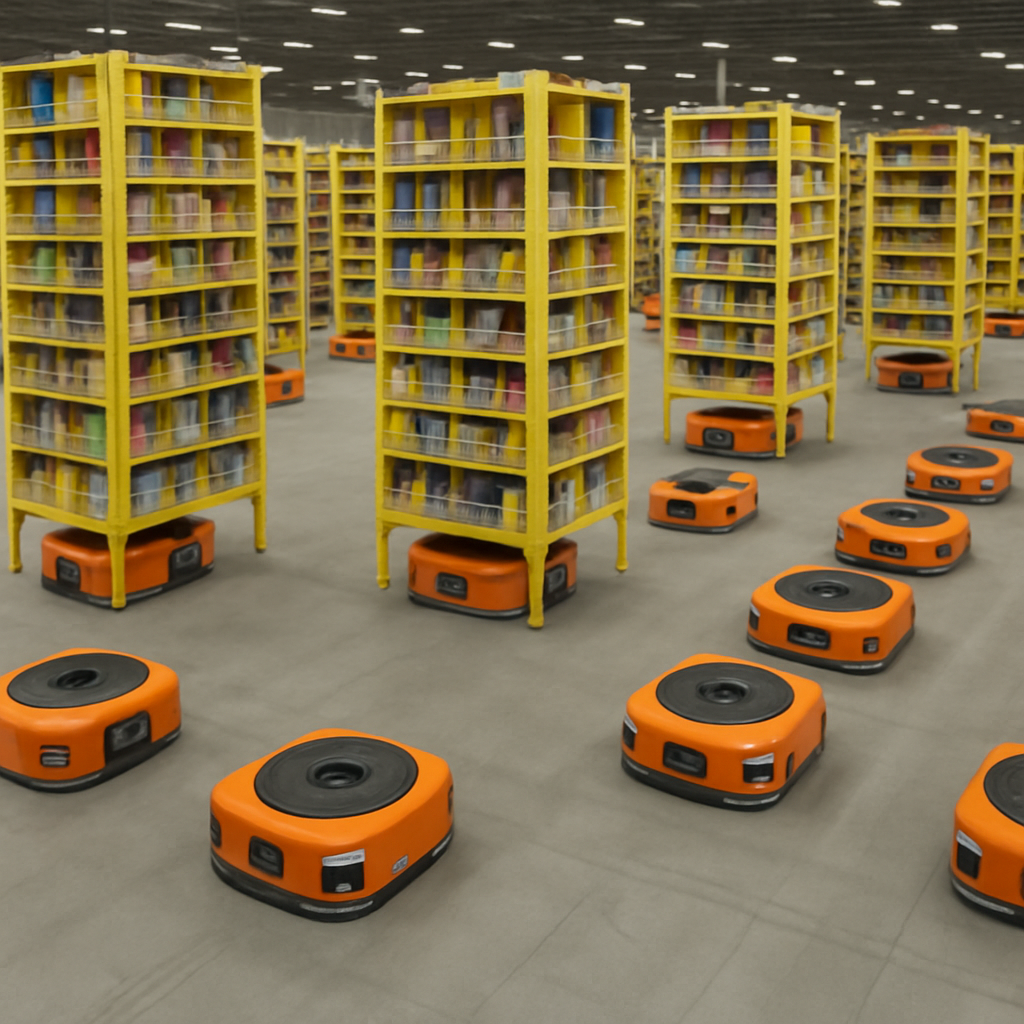
Second-Generation Warehouse Robots – A new era in robotics had begun. Companies at the forefront of this technological revolution include Amazon Robotics, which acquired Kiva Systems and developed the Autonomous Mobile Robot (AMR). While an AMR can be just another ‘mindless train’, it’s actually a highly intelligent, very small, self-driving vehicle designed solely for use in a warehouse. Using sophisticated sensor systems and artificial intelligence, the AMR can develop its own map of its environment, operate autonomously, and even avoid obstacles—whether they are objects or other robots.
Results from warehouse applications of AMRs have been incredibly impressive. No longer do workers have to spend their days walking 10 miles to find items throughout aisles and aisles of inventory. In fact, the AMRs can pick up and transport entire shelving units to the packaging areas.
What was previously known as a paradigm shift — where the product would come to the worker rather than the worker having to go to the product — is the primary reason modern logistics companies can deliver products to customers at unprecedented speed. The robots handle all the physically demanding aspects of travel, so what happens if a robot doesn’t just need to accomplish a task for a human but also needs to interact with one?
Warehouse Robotics Efficiency Stats
| Metric | Impact of Robotics |
|---|---|
| order Processing Speed | + 2-3x faster |
| Picking Accuracy | 99%+ |
| Labor Cost Reduction | 20-40% |
| Fulfilment Time | Reduced Significantly |
| Warehouse Productivity | +30-50% |
Example: Amazon warehouses use robots to move shelves, cutting order times dramatically.
Source:
- McKinsey Warehouse Automation
https://www.mckinsey.com - Amazon Robotics Insights
https://www.aboutamazon.com
The ‘Helpful Third Hand’: Why Collaborative Robots Are a Manufacturer’s Best Friend
Collaborative robots (cobots) that work with and around people represent a brand-new wave of machinery. Cobots can provide a “third hand” when performing a variety of manufacturing tasks, assisting the person performing them. A cobot is designed to complete one manufacturing operation while a person completes an adjacent operation, such as holding a large piece of equipment or positioning it for inspection.
For a cobot to operate next to a worker without causing harm, there must be a protection mechanism to shield the worker from the cobot’s power. Cobots do not need cage-like enclosures to protect the worker, unlike many larger industrial robots. Instead, cobots use a variety of sensors to detect the location of objects and other obstructions in their environment.
These sensors allow the robot to quickly detect whether an object or human is in front of it (such as a hand) and, for this reason, can immediately halt all arm movement to avoid causing harm. Because of sensors located within cobots, humans and machines can now work side by side safely, combining their unique abilities to create top-of-the-line products.
Cobots can assist humans with jobs that require repetition, physical effort, and/or pose ergonomic issues, freeing up time for humans to concentrate on problem-solving, flexibility, and product quality checks. With companies like Universal Robots creating cobots that are user-friendly and versatile enough for a variety of job settings, we see many examples of successful human-cobot collaboration. One of the most sensitive and life-altering collaborations between a human and a cobot has been demonstrated in the operating room.
Industrial Robots vs Cobots
| Feature | Industrial Robots | Collaborative Robots |
|---|---|---|
| Safety | Requires cages | Safe with humans |
| Speed | Very high | Moderate |
| Flexibility | Low | High |
| Cost | High | Lower |
| Use Case | Mass production | Small-scale tasks |
Insight: Cobots are ideal for flexible, human-friendly automation, especially for SMEs.
Source:
- Universal Robots
https://www.universal-robots.com - IFR Robotics Data
https://ifr.org
Smaller Incisions, Faster Recovery: The Rise of Robot-Assisted Surgery
A machine-human connection will likely become one of the most important connections in the operating room. I do not envision an environment in which a single robot performs surgery alone; rather, I see it as a “super-powered” extension of a surgeon’s hands.
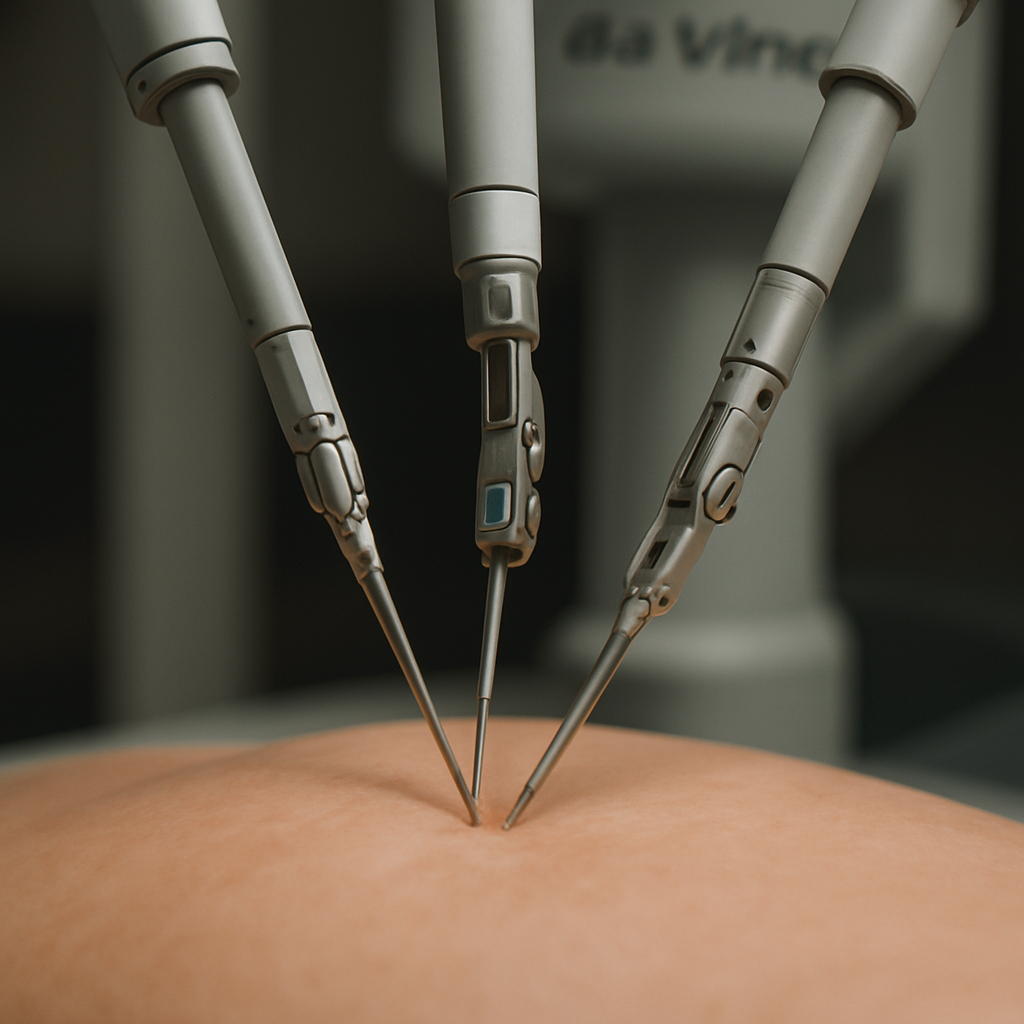
Robotically assisted surgery is a technique in which surgeons operate one or more thin robotic arms from a control station (often located just a few feet away from their patients) with very high precision, while eliminating natural hand movement, including hand tremors associated with surgical procedures.
The major benefit of this technology is its ability to enable surgeons to perform minimally invasive procedures. Instead of making large incisions to reach areas of the body requiring treatment, these robotic arms utilize instruments that may be inserted into the patient through incisions no larger than a dime.
In many ways, patients have benefited greatly from these surgical systems. First, there is a reduction in post-surgical pain for the patients. Second, the amount of scarring that occurs is also reduced. Third, the overall time required for recovery is significantly shorter than that of the traditional open surgical method.
Consequently, most patients can resume their preoperative level of activity very soon after undergoing this type of surgery, thereby reducing the time required to resume a preoperative quality of life severalfold. As such, the use of this technology has transformed what was once considered an extremely traumatic experience into a relatively routine event.
Why Build a Robot That Walks? The Real Mission of Boston Dynamics and Agility Robotics
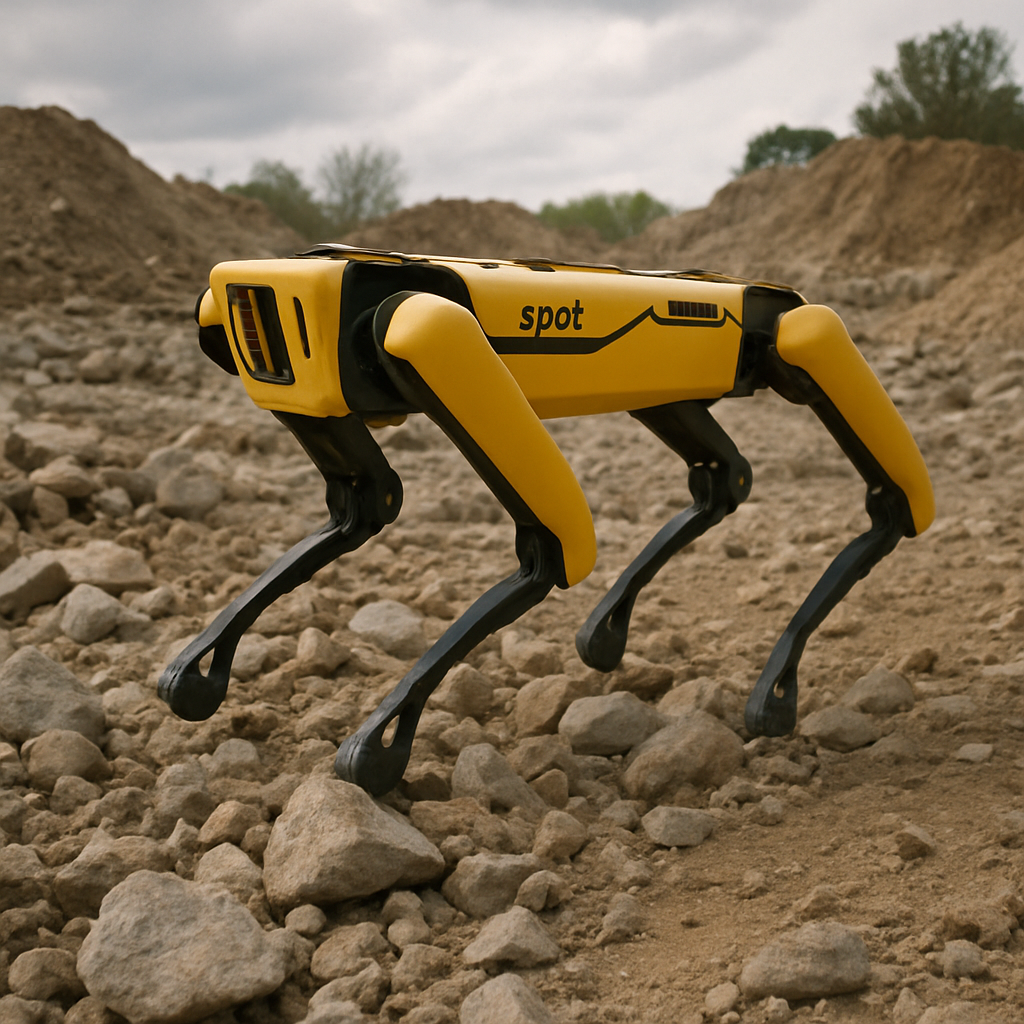
The need for a robot to be legged comes from our being located in a non-planar (flat) world. In addition to performing well in hospital hallways with no debris or on factory floor surfaces that are very flat and smooth, wheeled robots will not work in situations involving stairs, uneven ground, or unstructured disaster-site scenarios.
Legged robots have been designed to navigate the complexities of man-made environments, step around obstacles, and maintain their balance when moving into nearly every location a human can reach. This ability to navigate the complexity of the “real world” opens up a whole new realm of possibilities for robotics and automation.
Boston Dynamics has put out many videos. As you might remember, their famous Spot robot is a rugged, portable, data-gathering unit on legs. Companies use this type of equipment to carry cameras and sensor units into hazardous areas such as construction sites or nuclear power plants, where people would be at risk if they conducted inspections. Rather than looking at Spot as a robotic dog, think of it as a general-purpose mobile device for scanning and mapping difficult-to-access areas.
The reason for this is that when a robot can both perceive and react to data gathered by seeing a robotic object as described above, a humanoid robot such as Digit from Agility Robotics becomes an important factor. As soon as Digit was equipped with a torso and arms, it could perform physical actions rather than merely move around. Digit is intended to be placed within human-created workflows, for example, in a warehouse picking totes, and therefore, no new facility would need to be built to house the robot. Ultimately, Digit’s ability to operate in a humanoid form will allow it to use space and, consequently, facilities originally designed for people.
Boston Dynamics’ development of a highly versatile platform for viewing the world and their approach to developing a unique worker to interact with the environment represent two different views in the pursuit of creating the first humanoid robot. Whether on the factory floor or in unstructured environments, each of these types of robots is learning to understand and control our world. Robots are also becoming increasingly common in agriculture and food production.
Beyond the Factory Floor: How New Robots Are Tackling Farming and More
Innovation in humanoid robots is often discussed, but most advancements in robotics are happening in sectors people rarely associate with robotics. Agriculture is now a major sector in which robotics is making huge strides, as the shortage of agricultural laborers increases and demand for sustainable agricultural practices grows. One example of this trend is Carbon Robotics’ laser weed-killer machine.
The laser weed killer uses thermal energy to destroy unwanted weeds by distinguishing them from crop plants. This gives farmers greater control over what they can manage while minimizing their use of chemical fertilizer, providing another example of how robots can help resolve many tangible issues that have existed for decades.
A lot of the current growth in robotics innovation is due to one factor alone: the AI robotics platform. A robotics platform using AI technology is very similar to an operating system on computers (i.e., Windows or macOS); however, instead of designing the entire “brain” of a robotic device from scratch, companies are now able to utilize a top-of-the-line AI, navigation, and simulation software offered within an AI robotics platform such as NVIDIA’s Isaac.
The use of an AI robotics platform enables small businesses/Start-Up companies to focus on the design and capabilities of the physical robot rather than on designing, building, and testing the multiple AI (Artificial Intelligence), Navigation, and Simulation software required to enable the Robot to perform its task. Thus, utilizing an AI robotics platform greatly increases the speed at which new robotic systems are developed. As such, this increased speed will allow more individuals with innovative ideas to enter the Robotics market.
The rapid development of new robotic systems enabled by the AI robotics platform has led to an explosion in the number of highly specialized robots being created within the U.S. robotics industry. In addition to the manufacturing sector, there is also an increasing number of start-ups in virtually every economic sector working to develop solutions to various problems through robotics.
The Future of Robotics Will Be an Ecosystem:
Agricultural: Robotic weeding and harvesting.
Commercial Kitchen (Food): Robotic chefs in commercial kitchens.
Construction: Brick laying robots and robotic site surveyors.
Delivery: The sidewalk robot that delivers a package right to your door.
There are many reasons why the future will be so vibrant and open with endless opportunities for new entrepreneurs.
Robotics Beyond Manufacturing
| Industry | Robot Use Case | Benefit |
|---|---|---|
| Agriculture | Crop monitoring | Higher yield |
| Healthcare | Surgical robots | Precision |
| Logistics | Autonomous delivery | faster delivery |
| Construction | Bricklaying robots | Efficiency |
| defense | Surveillance robots | Safety |

Example: Agricultural robots use AI to monitor crops and reduce pesticide usage.
Source:
- World Economic Forum Robotics
https://www.weforum.org - Deloitte Robotics Insights
https://www2.deloitte.com
How Can You Participate in the Robotics Revolution?
The robotics industry is not simply one very large robot manufacturer on a factory floor or in the operating room. Rather, it is an ecosystem of several types of specialized robotic tool manufacturers — each developing their own tools for their respective jobs.
When thinking about connecting with these early innovators, many people ask themselves: How can I access these companies? The majority of the most well-known robotics companies, including Intuitive Surgical and NVIDIA, have publicly traded stock; therefore, they can be purchased and sold by anyone interested in investing. There are, however, private companies that do not have public stock offerings and/are wholly owned by another company.
For those who want to pursue the investment side of robotics, a good first step is to learn before investing. A good place to begin learning is to research the term “Robotics ETF” and related terms to get a feel for the overall space. In doing so, you will have developed your ability to follow industry news, identify the major players, and appreciate both the technology being developed in the robotics space and the dynamic nature of the industry shaping our future.
My Key Findings
- The U.S. robotics landscape is best understood by “jobs to be done,” not by one universal robot category—different companies lead in factory arms, warehouse mobility, cobots, surgical systems, legged platforms, and field robots.
- Industrial robot arms remain the backbone of mass production, delivering extreme speed and repeatability, which is why they’re typically fenced for safety due to high force and fast motion.
- Warehouse automation has shifted from fixed-route AGVs to sensor- and AI-driven AMRs that navigate dynamically, avoid obstacles, and bring inventory to workers—one of the biggest drivers of fast e-commerce fulfillment.
- Collaborative robots (cobots) represent a practical leap in human-robot teamwork, using sensing and safety limits to operate alongside people and perform repetitive or ergonomically difficult tasks.
- Robot-assisted surgery is a prime example of robotics augmenting—not replacing—human skill, enabling minimally invasive procedures with higher precision and steadier control.
- Legged and humanoid robots exist because real environments aren’t flat; they’re optimized for stairs, uneven terrain, and human-built spaces, supporting inspection and material handling use cases.
- Agricultural and other “beyond-the-factory” robots are growing quickly, addressing labor constraints and sustainability through targeted automation (for example, precision weeding).
- AI robotics platforms and simulation tools (e.g., NVIDIA Isaac) are accelerating innovation by enabling more teams to build capable robots without having to build the full autonomy stack from scratch.
Conclusion
The robotics industry is not simply one very large robot manufacturer on a factory floor or in the operating room. Rather, it is an ecosystem of several types of specialized robotic tool manufacturers — each developing their own tools for their respective jobs.
When thinking about connecting with these early innovators, many people ask themselves: How can I access these companies? The majority of the most well-known robotics companies, including Intuitive Surgical and NVIDIA, have publicly traded stock; therefore, they can be purchased and sold by anyone interested in investing. There are, however, private companies that do not have public stock offerings and/are wholly owned by another company.
For those who want to pursue the investment side of robotics, a good first step is to learn before investing. A good place to begin learning is to research the term “Robotics ETF” and related terms to get a feel for the overall space. In doing so, you will have developed your ability to follow industry news, identify the major players, and appreciate both the technology being developed in the robotics space and the dynamic nature of the industry shaping our future.
The above advancements have been accomplished through an ever-increasing collaboration of robust engineering and smart software, but the true barrier to entry for innovative companies will be eliminated by the growing availability of both AI/robotics platforms and simulation tools, and thus provide these same companies the ability to quickly design and test new products and services, and ultimately implement them at large scales.
Therefore, identifying the top Robotics Companies in the USA is not just about the company with the biggest and/or coolest demo; it is about reliability, safety, integration, support/service, and a demonstrated, quantifiable impact.
As usage increases, there is potential for the top Robotics companies in the USA to make robot implementation simpler to understand, more reliable, and easier to modify as operational requirements evolve. Are you a manufacturer, logistics provider, health care organization, or just interested in learning more about the current state of the robotics industry? Developing your awareness of the present-day status of robotics is the initial step towards working with the top robotics companies in the USA, and being part of the future wave of automation.
FAQs
1) What types of robots are most common in the U.S. industry today?
Industrial robot arms for manufacturing; warehouse robots (AGVs and AMRs) for fulfillment; collaborative robots (cobots) that assist with tasks by working alongside humans; and customized systems for healthcare, agriculture, and inspection.
2) What’s the difference between AGVs and AMRs in warehouses?
AGVs move along predetermined paths (e.g., lines on a floor, tape, etc.) and will stop if something obstructs their path. AMRs have sensors and AI that allow them to build maps of their surroundings, create routes, avoid obstacles, and adapt more easily to changes in their environment.
3) Are cobots safe to work next to without cages?
Yes, as long as it is done in accordance with the design specifications. Cobots incorporate safety features and use force/torque sensing to limit exposure to potential injury, and they will automatically stop if contact is detected while working in a shared workspace.
4) Do surgical robots operate on patients by themselves?
No. Systems such as the da Vinci system are controlled by the surgeon. These robotic systems translate the surgeon’s hand movements into highly precise, consistent movements while supporting minimally invasive surgical techniques.
5) Why build legged or humanoid robots instead of using wheels?
Legs enable climbing stairs and traversing uneven or cluttered terrain and floors, and can operate in settings where wheeled robots would struggle. In addition, humanoid-style robots can fit into spaces and workflows designed for humans, eliminating the need to alter existing space to accommodate robotic functionality.

Garikapati Bullivenkaiah is a seasoned entrepreneur with a rich multidisciplinary academic foundation—including LL.B., LL.M., M.A., and M.B.A. degrees—that uniquely blend legal insight, managerial acumen, and sociocultural understanding. Driven by vision and integrity, he leads his own enterprise with a strategic mindset informed by rigorous legal training and advanced business education. His strong analytical skills, honed through legal and management disciplines, empower him to navigate complex challenges, mitigate risks, and foster growth in diverse sectors. Committed to delivering value, Garikapati’s entrepreneurial journey is characterized by innovative approaches, ethical leadership, and the ability to convert cross-domain knowledge into practical, client-focused solutions.