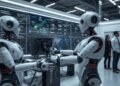




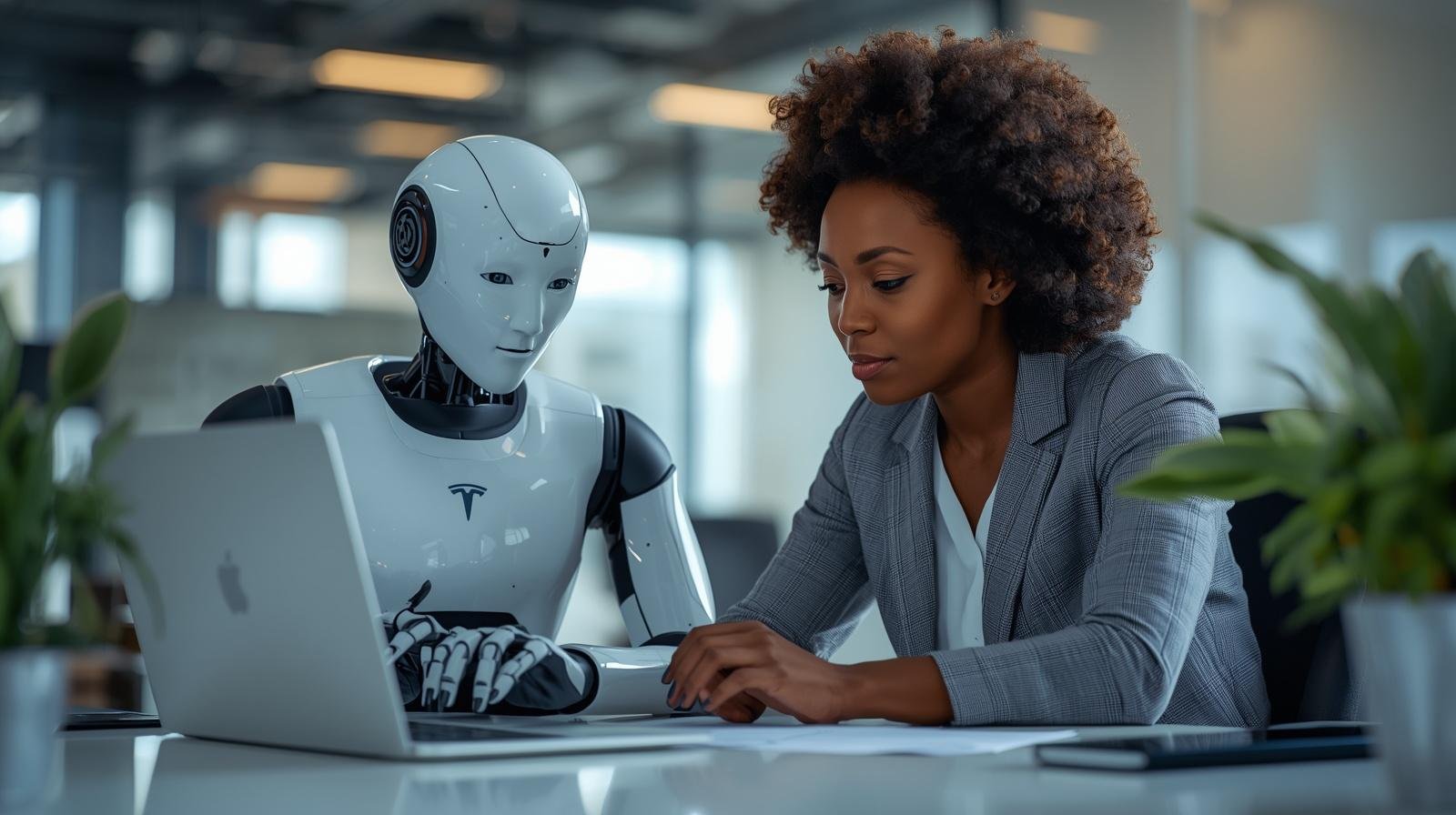
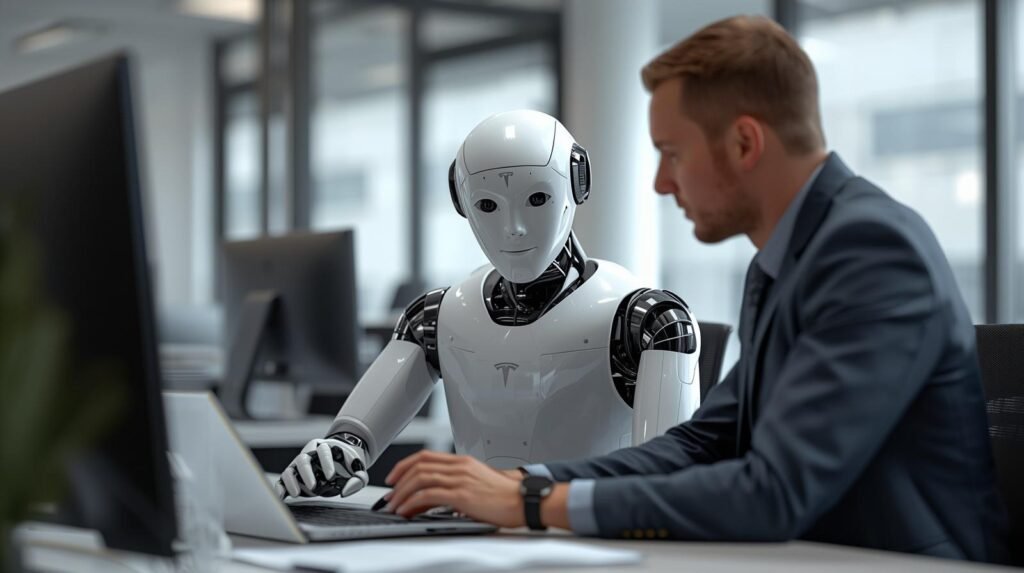
The name “Tesla” evokes groundbreaking innovation and next-generation technology. Now, Tesla is expanding into an entirely new area of innovation: robotics. As part of its most recent robotic development, Tesla created the Optimus robot. As a result, this futuristic robot will undoubtedly revolutionize our perception of robots and our interaction with them. Below, I have outlined the key advantages of the Tesla Optimus robot that you should be aware of.
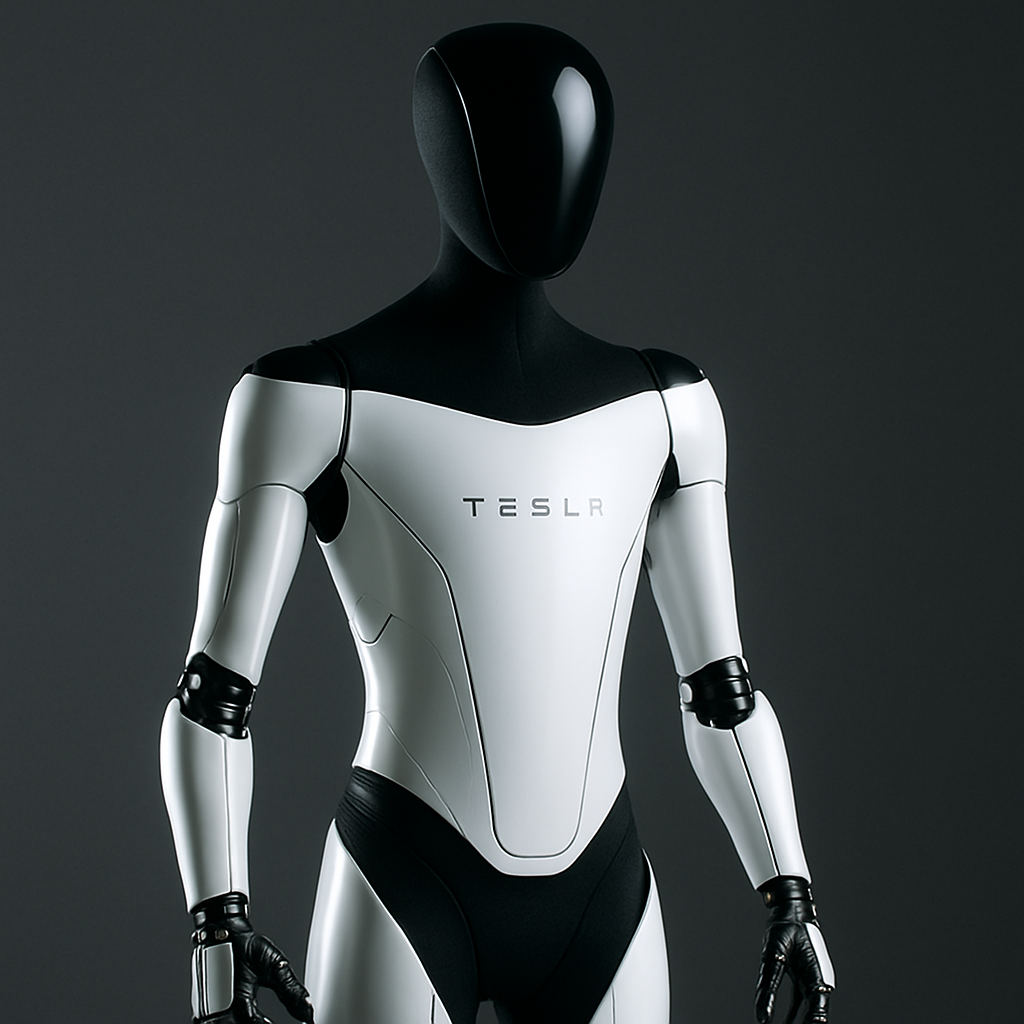
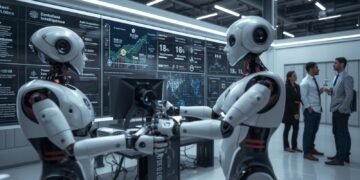
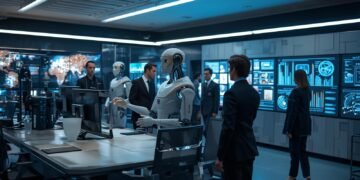
The Optimus robot is a humanoid robot designed to handle tasks that humans find too monotonous, dangerous, or unnecessary. To improve productivity and enhance safety in homes and workplaces (factories), Optimus was built using advanced artificial intelligence and machine learning technologies.
The Vision Behind Tesla Optimus
The origins of Tesla Optimus trace back to Tesla’s long-standing pursuit of technological innovation. As part of his vision for a future in which people can do things they find boring or harmful to humans, Elon Musk wanted to use robots to enhance human abilities. He wanted to build a robot capable of helping humans with their daily lives while still allowing for human contribution.
Development and Design
The design philosophy behind Tesla’s Optimus robot was deeply rooted in the concept of creating a machine that would personify human attributes. Design engineers strove to give it a human-like appearance and perspective. Tesla engineers worked long hours integrating sensors and actuators to give the robot the hands and motions of a person. A simple interface would make it user-friendly to the tech-savvy and the not-so-savvy alike.
Technological Foundation
The brains of Tesla Optimus consist of a supercharged AI that’ll run on neural networks and machine learning. This ability lets the bot learn from everything it sees to sharpen its act, using mountains of data to guide its brainpower and become more useful in all manner of scenarios.
Complete Guide: Leading & Innovative Best Robotics Companies in USA
Summary
Tesla’s Humanoid Program—commonly referred to as Tesla Optimus or Tesla Bot—aims to create an AI-powered assistance system that can help people in their workplaces and, eventually, in their homes. The purpose of this document is to provide information on how Tesla plans to develop its bot to assist humans in the workplace by leveraging advanced perception, planning, and precise motion control to perform repetitive, dangerous physical labor.
The key advantages of using a bot like Tesla Optimus include improving worker safety, providing predictable production output, and developing flexible automation systems that use existing equipment while remaining compatible with current factory layouts.
Additionally, this guide provides a review of the potential advancements of each generation of robots. In particular, the second generation of Tesla Optimus Robots (Gen 2), is described as having superior balance capabilities, increased efficiencies; and, improved AI to support more reliable walking and lifting capabilities.
More specifically, it was stated that the third generation of Tesla Robots (Tesla Robot Gen 3) would provide faster operating speeds; greater dexterity; and higher levels of autonomous operations — all of which would improve the bot’s ability to operate effectively in a disorganized workspace, with varying lighting conditions, and “edge case” situations, without requiring significant human intervention.
Lastly, the document addresses the significance of the Tesla Robot’s price: its cost-effectiveness and total cost of ownership. As such, the author states that if Tesla makes an affordable robot, the technology may become viable for companies and accessible to homeowners. Additionally, the authors emphasize the need for safety, maintenance, data protection/privacy, and the responsible development/deployment of these types of robots.
Finally, the author concludes that the success of the Tesla Robot will be determined by its dependability at scale and not by its hype. The author also identifies probable applications for this type of robot (i.e., warehousing; manufacturing; and, home assistance); and, the need for accountability and education/training for both employees and consumers.
Tesla Optimus is a next-generation humanoid robot designed to transform everyday life with AI-powered efficiency
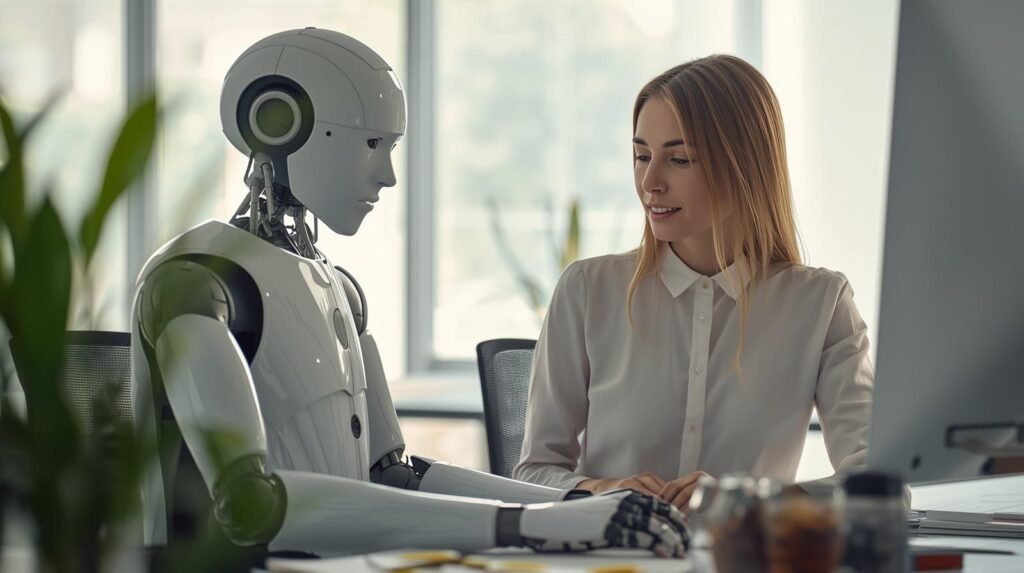
Tesla has developed an advanced AI-powered humanoid robot called Optimus, which will make everyday life easier. It is being built to assist people across all their personal spaces and to perform many repetitive and/or dangerous tasks, so they can focus on tasks that require judgment, creativity, or care.
The core function of Tesla Optimus is to provide advanced sensing, real-time decision-making, and accurate motion planning, enabling it to move safely through homes, businesses, and public areas. The robot uses AI to understand its environment, identify what is within it, and adjust its path in response to environmental changes. This ability to adapt allows Tesla Optimus to succeed where most robots fail because of the messiness of real life (rooms are cluttered, equipment moves, and people often do not know exactly how a task should be accomplished).
In practical terms, Tesla Optimus may assist individuals with a variety of everyday activities, including grocery shopping, sorting items, moving boxes, and completing some simple housekeeping tasks. Businesses may also use Tesla Optimus to improve material handling, warehouse picking, and stocking, and potentially reduce employee fatigue associated with these tasks. Additionally, with future software upgrades, Tesla Optimus will be able to learn new tasks quickly and perform them accurately.
One major benefit of Tesla Optimus is that it makes industrial robotics more affordable. Rather than creating high-priced, custom-built machinery for each specific task, a humanoid robot like Tesla Optimus can easily adapt to using standard tools and working within existing infrastructure. When used properly, this technology has the potential to enhance worker safety by removing employees from hazardous duties, assist older adults with lighter forms of support, and address labor shortages in industries struggling with productivity challenges.
Overall, Tesla Optimus is one step closer to achieving a practical integration of AI-enabled helping systems into our daily lives.
Example
A medium-sized grocery retailer uses Tesla Optimus in the evening. It will scan empty aisles, identify misplaced products, and place them on their appropriate shelf using the store’s map of how everything should be laid out. Additionally, it retrieves all the online pickup orders for tomorrow, places the cold products into clearly marked containers, and takes a photo of the temperature check. If a box is so severely damaged that it can’t be stocked, it sends an alert to management and logs the photo as documentation for inventory claims.
The next morning, when the employees arrive, they have a clean starting point with accurate product counts. Although Tesla Optimus does not replace employees, it eliminates many of the mundane “end-of-day” duties (such as closing) from employees’ responsibilities. Over time, Tesla Optimus has learned the individual characteristics of each aisle and understands how the store’s layout will change seasonally.
Tesla Bot is Elon Musk’s vision of a smart, helpful robot built to assist with daily and industrial tasks
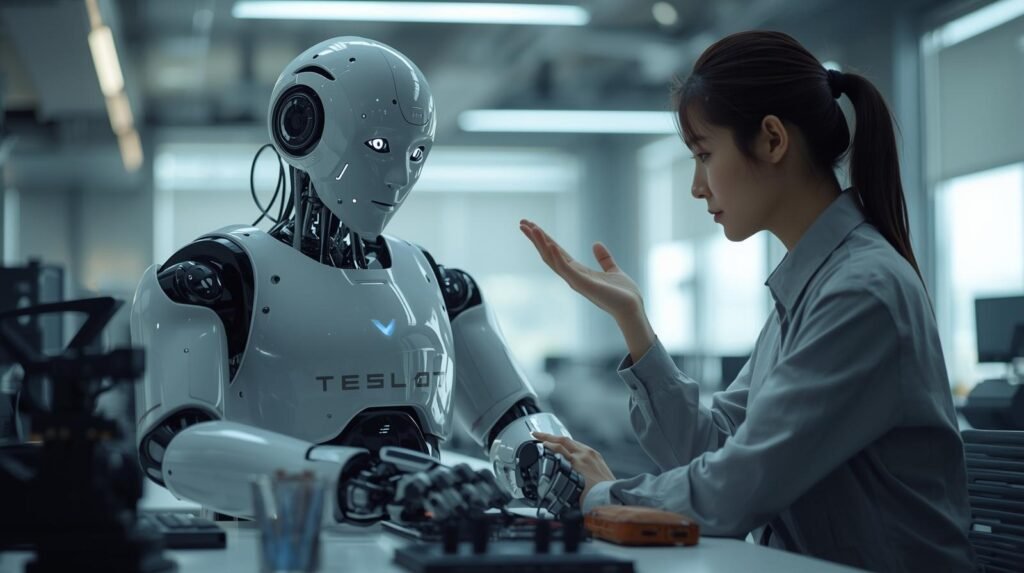
Tesla Bot is Musk’s dream of a helpful, smart robot that can do things for us in day-to-day life, as well as in industrial and factory settings. The idea is simple: a human-looking superhuman who works in places designed for people, grips hand tools, and takes on boring, time-consuming jobs that unnecessarily wear down the body. While early demos concentrate on vital arm agility and manipulation, software is the real long-term value—AI that senses and makes sense of a shifting world, plans safe motions, then gets better over time with updates.
Tesla Bot could do some material handling, putting parts and gadgets up on shelves, packing boxes, and patrolling for basics in warehouses and factories, taking pressure off accident-prone workers and helping ease labor shortages. Or, in less shop-floor-y terms, maybe a Tesla Bot could help carry groceries from the car to the kitchen, stack shelves, move some boxes, and even strip down the oven for a quick cleaning, particularly if you’re a busy modern person or an elderly friend. You’ve probably heard the term; even some people at Tesla, when explaining the Tesla Bot concept to others, will call it Tesla Optimus, which is the name used for their humanoid roadmap discussion.
So, for everyone in corporate-land, it’s the promise of a fleet that offers reliable performance at scale, with a nose-to-tail closed-loop deployment workflow in which they can keep an eye on everything going out there and do the data work it learns from. For the human of the house, it’s the inviting notion that he likely doesn’t have to go around customizing and writing special automation for all his rooms.
To put it slightly more crudely, we have to do safety right—sensible release policy and a robot that users can perhaps see just traipsing around a sunny garden patio as a nuisance, as a neighbor, as an electronic pet—can we talk about getting these things “out there”, now? Will it be a few more years until it gets in there?)
Teams will need clear planned policies around data handling, and maintenance while they’re out there skipping among the daisies, and accountable utility after things go wrong if they do – so training makers, cleaning the robots up, and realigning the expectation-setting while helping everyone focus on what the robot can’t do will be as, for Tesla Optimus to be successful, as all the glorious exciting things it can.
Outlining clearly what the mechanics of failure actually are. So whenever word of this robot reaches us, we know the process is more than ‘word on the street’ hype, but rather a measurable capability, set against a strict yardstick. How well can the robot grunt and gripe, do its lifting bumbles, navigate clutter, follow instructions, and cope with those edge cases?
Fair news: this Tesla Bot is truly meeting these benchmarks, so Tesla Optimus becomes a super-smart cybernetic human with an agent role going forward.
Example
A small metalworking business used Tesla Bot as an example of “runners” that would travel from station to station in the workshop. As soon as one machinist finished a run, Tesla Bot would pick up the new tooling package, deliver raw materials (blanks), and transport finished products to the quality control area. The product had a small QR code affixed to each bin, which the bot could read for identification. Then, after scanning the QR code, Tesla Bot would update the production board. If there were any issues with a part being outside weight tolerance, the Tesla Bot would alert the technician to the errors.
In addition, during breaks or when a worker needed assistance, Tesla Bot would sweep up the chips and put them into a chip disposal cart, then stock gloves and coolants. Success for this owner was measured by the amount of time his machines sat idle; he did not measure success by what he called “flashy tricks.” At the end of the third month of using Tesla Bot in this fashion, he decided to assign it night duty to prepare for work.
The Tesla Optimus robot combines advanced AI and engineering to perform real-world tasks like a human
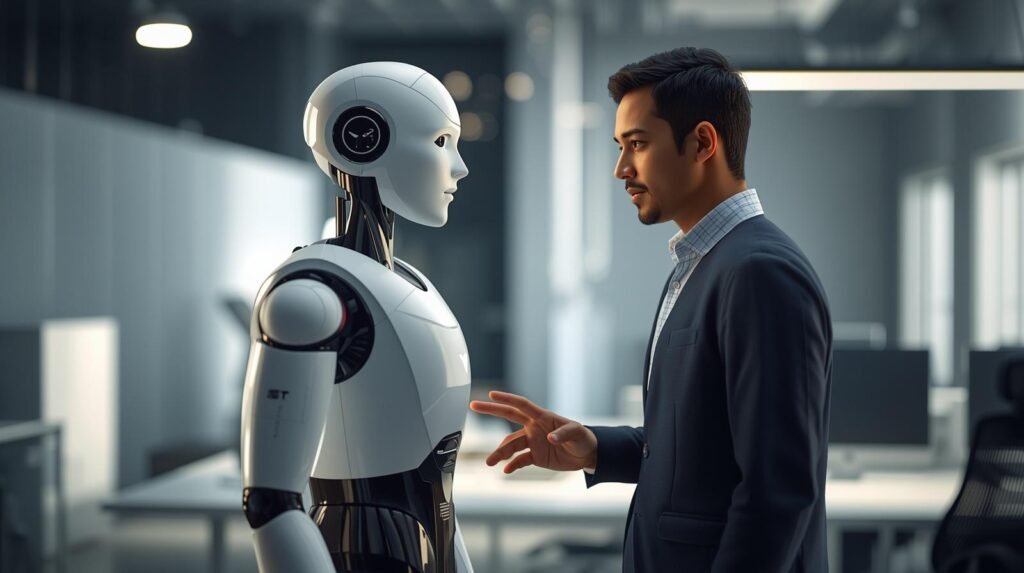
The Tesla Optimus Robot represents a convergence of artificial intelligence (AI) and mechanical engineering capabilities, enabling it to perform tasks in a human environment much like humans. Using cameras and sensors to view its surroundings, the Optimus Robot recognizes objects, judges distance, and responds to changing environmental conditions, rather than simply executing pre-programmed responses.
The reason this is so interesting is the combination of physical capability and software intelligence. AI will allow the robot to interpret what it “sees”, decide what actions to take, and modify its movement in real time, whether the task involves picking something up, carrying something, or going around obstacles. Because Tesla has developed Optimus as a platform for ongoing iterative improvements to both hardware components and software, we should consider it more than just a conceptual idea – rather, a functional development platform.
As a practical example of how the Tesla Optimus Robot might be used, the robot is often described in terms of repetitive tasks that can be tiresome, hazardous, or wasteful for humans to perform. Examples include moving boxes, sorting parts, transporting materials, or conducting routine inventory processes in warehouses. Additionally, the Optimus Robot could assist with daily household chores, including lifting items, retrieving items from storage, and organizing cluttered areas — all of which would greatly benefit from reliable, consistent assistance.
While AI is an important aspect of the Tesla Optimus Robot, the actual engineering is equally important. For example, the ability to maintain balance, precise joint control, and hand dexterity is critical when interacting with objects/tools that may cause harm if damaged. Other significant considerations include power consumption and reliability, because ultimately, true value comes from achieving extended hours of operation while maintaining predictable performance.
If/when the Tesla Optimus Robot achieves dependable large-scale deployments, its greatest advantage would be flexibility: a single humanoid body type that can be easily redeployed to multiple jobs as operational requirements evolve. As the Optimus Robot continues to operate and learn, there will likely be three primary evaluation metrics: whether the robot operates safely around humans, how well it handles unusual conditions (“edge cases”), and how rapidly it adapts to learning new functions/tasks.
Top AI Jobs in the USA: Careers, Salaries, and Future Opportunities
Example
A Tesla Optimus Robot in a hospital supply room can be seen picking up linens and personal protective equipment (PPE) by navigating narrow hallways, yielding to employees, and checking off every cart of linen or PPE to verify the proper quantity. When a nurse says “Two Medium Gowns & One Face Shield”, the Tesla Optimus Robot will get items, scan the expiration date barcode from each item, and bring them to their corresponding ward door.
If the order cannot be fulfilled, the robot offers another option and places that specific product order. With its speed and accuracy during a long shift, the nurses are able to focus on patients. The robot disinfected itself after each delivery to reduce the risk of exposure.
Key Features of Tesla Optimus
Advanced AI and Machine Learning
The state-of-the-art AI technology on board the Tesla Optimus allows for rapid learning and adaptation. Therefore, the robot has the potential to serve as a functional, efficient tool for a wide range of applications across virtually all industries.
Self-Learning Abilities
In addition to learning, the Optimus uses self-learning and will continue to improve task execution with minimal human input. By using collected data and continuously analyzing the data, Optimus will optimize performance by adjusting actions. As a result, Optimus’s ability to “learn” from experience is beneficial in dynamic, rapidly changing environments.
Task Optimization
The smart AI in Optimus doesn’t just learn on the fly; it’s also smart enough to optimize as it is learning. With its understanding of how things are done and its ability to predict what will happen next, Optimus can learn to do things more quickly and better, which translates to less time spent on the boring stuff, whether it’s on the assembly line or in the house.
Interaction with Humans
Optimus’s AI has been tuned to humans; the more natural language and human emotion it consumes, the better it becomes at following verbal commands and reading body language. Such a human-centric approach to robot training would make Optimus the world’s hardest-working robot worker.
Human-like Dexterity
One of the main reasons Tesla Optimus is so unique is its human-like movement capabilities. The combination of Tesla’s advanced sensor system and high-precision actuation allows Tesla to mimic many aspects of human movement. Therefore, Tesla can pick up an object and subsequently use both hands to perform a task similar to what humans do, while also being precise enough to accomplish each task.
Precision Handling
Tesla Optimus’s dexterity is further defined by its ability to delicately manipulate small objects with precision. Tesla’s sensors provide instant feedback on the environment. As a result, if necessary, Tesla’s actuators are capable of adjusting the way Tesla grips objects as well as the manner in which Tesla moves. It is this feature alone that enables Tesla to complete tasks (such as picking up a fragile item) that require a light touch.
Versatile Movement
With a wide range of movements, from simple gestures to complex actions, Optimus has been designed to be versatile. Because of its ability to mimic human muscles (with an actuator), the robot will be able to perform the basic functions of walking, bending, and lifting. As such, it would be suited for a number of applications, including use as an assistant at home and for completing industrial-type jobs.
Safety and Reliability
Safety was one of the key elements of the design of Optimus. It has numerous safety features that help prevent damage/accidents while also ensuring that the device operates safely. Many sensors are used to detect objects/movements that could cause collisions or mishandling, thereby reducing the likelihood of accidents.
Feature Comparison Table
| Feature | Tesla Optimus Gen 1 | Tesla Optimus Gen 2 | Expected Gen 3 |
|---|---|---|---|
| Weight | 73 Kg | Lighter Design | Further Optimized |
| Speed | Moderate | Improved walking speed | Faster & more agile |
| Dexterity | Basic grip | Improved finger control | Near-human precision |
| AI Capability | Basic Automation | Advanced AI learning | Autonomous decision-making |
| Balance | Limited | Enhanced stability | Dynamic balance system |
Source: Tesla AI Day presentations
https://www.tesla.com/AI
Tesla Optimus Gen 2 brings improved balance, efficiency, and smarter AI capabilities
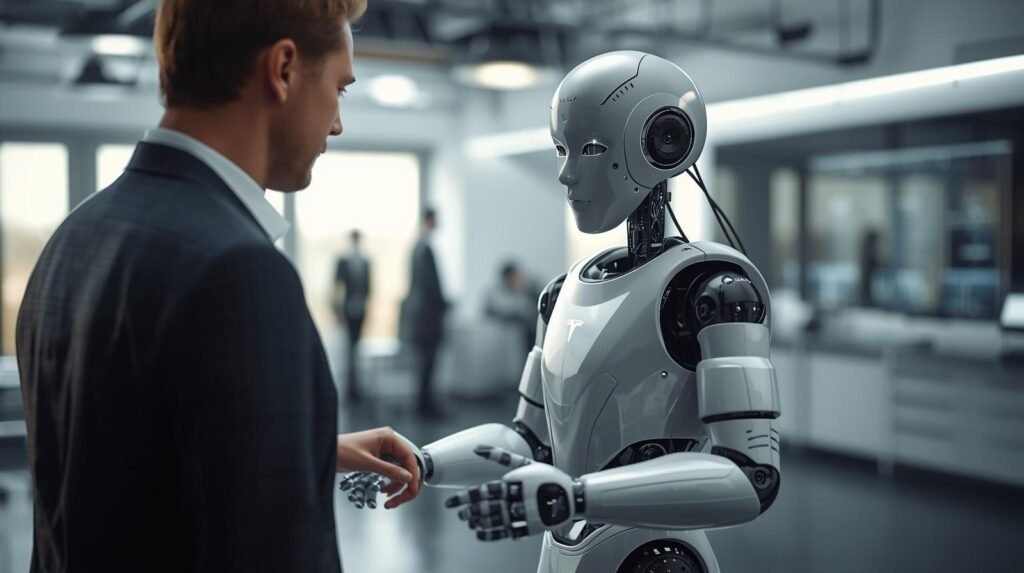
The Tesla Optimus Gen 2 will advance the practicality of Tesla’s humanoid-robot development. It has been designed to focus on practical advancements, including steady movement (with respect to balance), better energy use, and more intelligent on-board intelligence. Overall, Tesla Optimus Gen 2 is intended to do more productive work over longer periods, with fewer instances of stumbling or failure, which represents a key operational requirement for all robots operating in proximity to humans.
The ability to improve balance is one of the most obvious advances. As such, the tightness of motion control and the refinement of walking dynamics should enable the Tesla Optimus Gen 2 to perform well in start/stop maneuvers, turns, and uneven-surface walking. This is an advantage in actual working conditions (factory floors and warehouse environments), where common features include obstacles, narrow passageways, and changing load conditions. Improved stability also increases the capability to safely lift and/or carry items, since a humanoid robot must manage both the load in each hand and the forces generated by motion in its lower extremities.
Improving efficiency was equally important. The Tesla Optimus Gen 2 will likely leverage more efficient actuator systems, more advanced control software, and improved power management, resulting in a smoother motion profile and reduced energy waste. More efficient motion may also contribute to cooler operation and increased runtime, both of which are necessary for the successful completion of repetitive daily tasks.
More intelligent AI capabilities enable the integration of these new features. Improvements in perception and decision-making provide the basis for improved interpretation of the environment surrounding the Tesla Optimus, the selection of safer motion profiles, and adaptation to unexpected changes during task execution. The Tesla Optimus Gen 2 appears to be developed with reliable real-world performance in mind: object recognition, planned hand-off actions, recovery from small errors, etc., and without continued human intervention.
When successful implementation occurs from demonstration to field application, the Tesla Optimus Gen 2 could have greater applicability for repetitive manual handling/sorting applications as well as assistive-type applications, types of jobs requiring consistency, safety, and reliability.
Example
The new pallet-to-shelf replenishment function of the Tesla Optimus Gen 2 at the distribution center improves the robot’s ability to place itself on an anti-fatigue mat to better position itself for lifting odd-shaped boxes. The Gen 2 Optimus can view the labels on the shelves and gently and consistently replace items with minimal packaging crushing.
The Gen 2 will also send a message to safety personnel if it encounters a spill or has an obstruction in its path, so it may take another route. Since this unit runs more efficiently than earlier models, it can run longer blocks (replenishment) before needing a battery replacement, which reduces the time spent waiting for other humans or robots to complete a task. After each task cycle, the supervisor reviews the Gen 2’s task log to improve routing efficiency and reduce travel time.
Tesla Robot Gen 3 promises major upgrades in speed, intelligence, and real-world usability
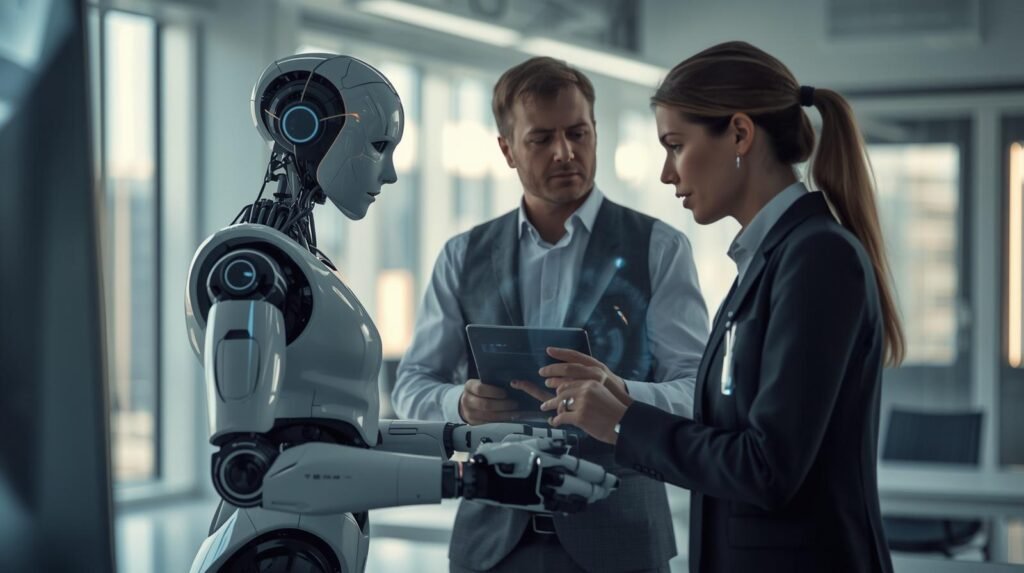
In terms of what the user expects in terms of “real world” usability, speed, intelligence, and safety all have to come together. If Tesla Robot Gen 3 achieves greater speeds than its predecessor (and I’m thinking in terms of walking and hand movement), along with a smoother transition between different tasks, then it has the potential to assist in more time-sensitive jobs, such as sorting, packaging, and delivering parts more efficiently and with fewer delays.
While speed is important, I believe very few robots can offer it without some degree of instability. So, another area where I expect an improvement over the previous version of the robot is stability/balance control when carrying items or operating in tighter spaces, and the ability to stop quickly/safely around people. On the intelligent side, I expect the Tesla Robot Gen 3’s vision capabilities to greatly improve.
I believe that one of the greatest challenges robots face today is perceiving and understanding disorganized or chaotic environments. Examples may include cluttered shelving, reflective surfaces, and changes in light intensity. This type of smartness will enable the robot to select safer grasping points, avoid accidents, and possibly even recover from minor errors without needing constant resets from humans.
The level of autonomy required for usability in almost every workplace/household environment cannot be accomplished through design alone. In addition to smartness, usability also depends on the system’s reliability and efficiency.
Therefore, the overall performance of Tesla Robot Gen 3 will be determined by how much it operates during a given shift, how quickly it can be serviced, and how consistently it completes tasks in accordance with predetermined standards. Improvements in the robotic “hand,” increased joint strength and precision, along with software refinements controlling the robot, could increase the number of tasks that Tesla Robot Gen 3 can complete using common tools.
For many individuals, the term “Tesla Optimus” represents not just the current humanoid robot but rather a broader framework encompassing future generations of Tesla’s humanoid robotics development. Thus, should Tesla Robot Gen 3 demonstrate significant improvements in both speed and safe decision-making, it could provide a basis for greater practicality as an industrial assistant and/or for providing helpful everyday assistance.
Tesla Optimus Gen 3 is expected to deliver groundbreaking performance with advanced AI and human-like movements
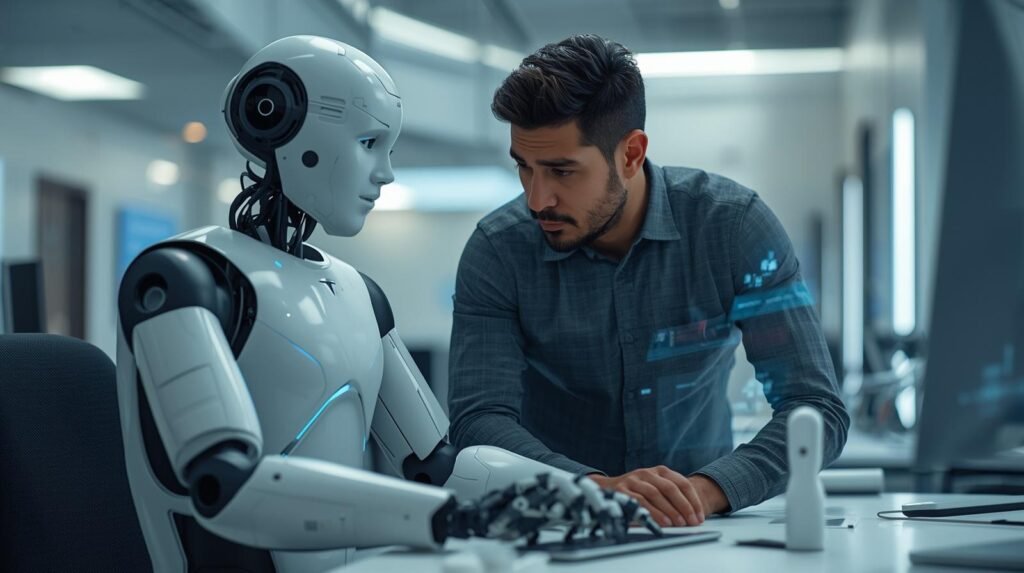
In terms of what the user expects in terms of “real world” usability, speed, intelligence, and safety all have to come together. If Tesla Robot Gen 3 achieves greater speeds than its predecessor (and I’m thinking in terms of walking and hand movement), along with a smoother transition between different tasks, then it has the potential to assist in more time-sensitive jobs, such as sorting, packaging, and delivering parts more efficiently and with fewer delays.
While speed is important, I believe very few robots can offer it without some degree of instability. So, another area where I expect an improvement over the previous version of the robot is stability/balance control when carrying items or operating in tighter spaces, and the ability to stop quickly/safely around people. On the intelligent side, I expect the Tesla Robot Gen 3’s vision capabilities to greatly improve.
I believe that one of the greatest challenges robots face today is perceiving and understanding disorganized or chaotic environments. Examples may include cluttered shelving, reflective surfaces, and changes in light intensity. This type of smartness will enable the robot to select safer grasping points, avoid accidents, and possibly even recover from minor errors without needing constant resets from humans.
The level of autonomy required for usability in almost every workplace/household environment cannot be accomplished through design alone. In addition to smartness, usability also depends on the system’s reliability and efficiency.
Therefore, the overall performance of Tesla Robot Gen 3 will be determined by how much it operates during a given shift, how quickly it can be serviced, and how consistently it completes tasks in accordance with predetermined standards. Improvements in the robotic “hand,” increased joint strength and precision, along with software refinements controlling the robot, could increase the number of tasks that Tesla Robot Gen 3 can complete using common tools.
For many individuals, the term “Tesla Optimus” represents not just the current humanoid robot but rather a broader framework encompassing future generations of Tesla’s humanoid robotics development. Thus, should Tesla Robot Gen 3 demonstrate significant improvements in both speed and safe decision-making, it could provide a basis for greater practicality as an industrial assistant and/or for providing helpful everyday assistance.
Boston Dynamics Robots: Revolutionary Innovation in Intelligent Automation
Example
A construction company prototypes Tesla Optimus Gen3 for interior finishing support. It carries drywall panels in tight hallways, coordinating with a worker via voice prompts: “hold,” “rotate,” “raise,” then steadies the load while screws are placed. Tesla Optimus Gen3 uses faster planning to avoid cords, ladders, and uneven subfloors, and its smarter hands can manage buckets, rollers, and lightweight power tools.
If it senses excessive vibration or a slip, it pauses and requests assistance. The foreman tracks fewer strains and quicker room turnovers, especially on repetitive jobs. At day’s end, it uploads photos and material counts to the dashboard.
Amazing Benefits of Tesla Optimus
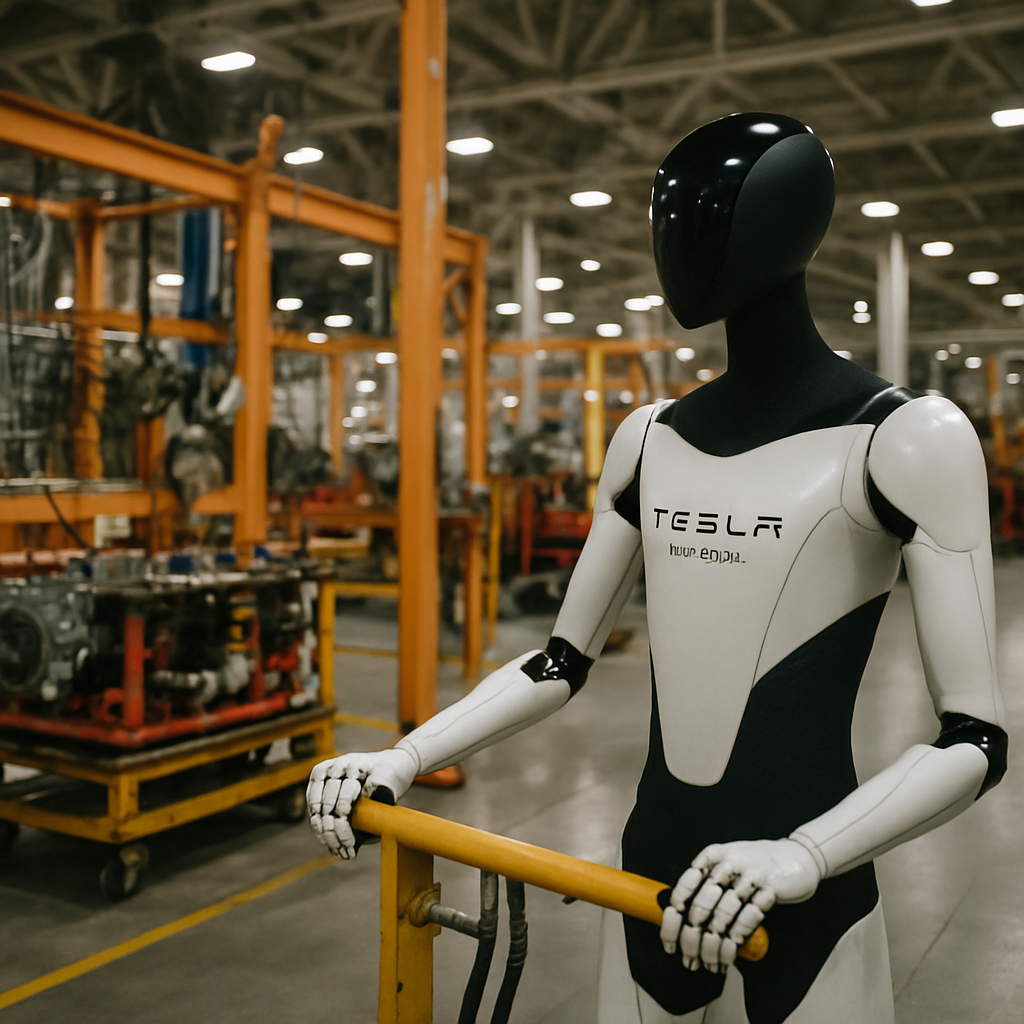
Enhancing Workplace Productivity
Working without fatigue, Tesla Optimus can execute routine/monotonous tasks for long periods. Thus, the repetitive task will be removed from human workers’ responsibilities. As a result, human workers will have a greater opportunity to concentrate on more advanced, creative-type assignments that are far less laborious than repetitive tasks. The overall outcome is increased productivity and improved efficiency.
Automating Repetitive Tasks
Monotonous and time-consuming tasks commonly suppress employees’ ability to think creatively. Tesla Optimus eliminates the need for employees to perform these tasks, as they can now be completed by an automated device. Employees can now spend their energy on strategic thinking and greater innovation. By doing so, not only will it increase productivity within the company, but employees will experience greater job satisfaction and happiness.
Increasing Efficiency
Optimus greatly enhances operational efficiency by reducing the time and effort required for repetitive tasks. Because Optimus can operate without stopping, it ensures continuous production, minimizing downtime and maximizing overall output. Thus, Optimus will increase employee productivity and improve business results.
Encouraging Innovation
By having Optimus perform routine tasks, employees are free to pursue other, innovative ideas/projects which could enhance their company’s performance. In this manner, companies may create an atmosphere where employees feel encouraged to develop new products/services/ideas/solutions.
Improving Safety
Tesla Optimus was designed for use in hazardous operating environments (e.g., construction sites, chemical plants) to enable the completion of high-risk operations that could endanger people. The design and operational protocols of Optimus were created to support safe operations in hazardous conditions.”
Hazardous Task Management
Optimus is capable of performing all task types that pose potential dangers to the person working on the job. These include using large equipment; processing or handling chemicals, etc. As a result, the worker will be able to avoid the danger posed by the task type. Safety regulations are generally much stricter in some work industries than others. Therefore, Optimus’s ability to complete high-hazard jobs allows companies to comply with safety regulations while also providing protection against death or injury.
Reducing Workplace Accidents
Optimus also helps reduce workplace accidents through his willingness to accept risk. Through his precision and adherence to established safety policies, he minimizes opportunities for error and, in turn, reduces the likelihood of accidents. Fewer workplace accidents result in a safer work environment and ultimately lower employer liability premiums.
Emergency Response
Additionally, Optimus can be trained to perform emergency response functions. In an emergency situation, such as a chemical spill or during an emergency evacuation, Optimus’s rapid response time and adaptability make him a highly effective tool. This increased emergency preparedness results in a greater sense of security among all employees.
Reducing Operational Costs
By using automation technology to manage processes previously handled by humans, Optimus will enable companies to reduce labor costs and human error. Thus, when combined, these two elements create an excellent way for businesses to achieve long-term financial savings.
Labor Cost Reduction
The first advantage of using Optimus in a commercial environment is reduced labor costs. The company can better utilize its workforce and allocate resources more effectively by reducing labor requirements through the automation of tasks that would have required several employees.
Minimizing Human Error
Human error is inevitable when performing manual work and can lead to inefficiency and financial loss. Since Optimus offers precise, consistent performance, it will enable your organization to eliminate human error in task completion, ultimately allowing you to complete tasks more quickly and effectively. Because Optimus performs consistently, this also provides you with reliable cost savings and quality control.
Long-term Financial Benefits
Although there is a large upfront investment required to purchase Optimus, you will experience a large amount of financial gains as a result of using Optimus. As previously stated, labor cost reductions, combined with increased efficiency and fewer errors, yield significant long-term savings. The cost savings from purchasing and using Optimus will yield a significant Return on Investment (ROI) for organizations seeking to improve their operational efficiency.
Enhancing Home Automation

by Lianhao Qu (https://unsplash.com/@lianhao)
Tesla Optimus is not limited to industrial use. Optimus will be useful in smart homes for many day-to-day housekeeping duties (cleaning, cooking, etc.), giving homeowners additional free time to pursue leisure activities.
Household Chore Management
Optimus’s capabilities as a home automation device are centered on automating the mundane tasks that eat up your time and energy. As a programmable, task-oriented device, Optimus can vacuum, dust, organize, and more, allowing the homeowner to spend their time on things they want to do rather than on these boring, routine jobs. Thus, Optimus makes home automation more convenient and efficient.
Personalized Assistance
Optimus is designed to deliver personalized service based upon each homeowner’s unique requirements and preferences. As such, through smart home integration, Optimus learns each homeowner’s routine and adjusts its tasks to fit their lifestyle, delivering a highly customizable experience. In this way, Optimus enables the full potential of “home automation” to deliver a smoother, more enjoyable daily life.
Leisure and Convenience
As Optimus takes care of mundane household chores, it frees up homeowners’ time for relaxation and other pursuits that bring them joy. Beyond improving convenience, this shift in responsibilities ultimately improves homeowners’ overall quality of life. By using Optimus, homeowners can improve their work-life balance by focusing on what really matters.
Environmental Impact
Tesla’s focus on sustainability continues with Tesla Optimus. Optimus will be an energy-efficient robot – minimizing its carbon footprint and promoting a sustainable environment.
Energy Efficiency
The engineers at Tesla designed Optimus to be as energy efficient as possible. Utilizing cutting-edge technology to minimize power consumption, Optimus was designed to have the least possible negative impact on the environment. Therefore, Optimus will support Tesla’s mission of sustainable innovation. Optimus will operate efficiently to promote a green environment and support global efforts to combat climate change.
Sustainable Materials
Optimus employs an environmentally conscious construction process, using green products that significantly reduce environmental impact. With this emphasis on sustainability in mind, Tesla has committed to meeting the highest possible environmental standards in the creation and operation of Optimus. As a result of its commitment to sustainability, Optimus provides a new level of responsibility in technological advancements.
Reducing Carbon Footprint
Optimus minimizes the negative effects of traditional automated systems (such as increased carbon emissions) through its efficient design and by utilizing sustainable building materials. By purchasing Optimus, both commercial businesses and residential consumers will help preserve our planet for future generations.
Tesla Optimus in Different Industries
Manufacturing
Manufacturing can be simplified by streamlining with Tesla’s Optimus. With its ability to perform many manufacturing-related functions, including, but not limited to, assembly, quality inspections, and packaging. It will be a valuable resource for manufacturers looking to improve their manufacturing lines.
Assembly Line Efficiency
Time is money in manufacturing. Optimus will increase manufacturing efficiency by completing various assembly-line tasks. Additionally, with Optimus’ accuracy, you can ensure that all components are assembled correctly, reducing the chance of errors or defects. This increased efficiency will also reduce overall production time, thereby improving manufacturing processes.
Quality Control
Optimus is the perfect tool for quality control thanks to its built-in sensors and artificial intelligence (AI). Optimus could use these features to review all the company’s products and check whether they are defective or have any issues. If there are problems with the product, it will not go to customers until the problem is fixed. Optimus’s ability to pay close attention to detail helps build a positive brand image and satisfy its customers.
Packaging and Logistics
While Optimus can be used to assemble products and check their quality, it also has many other uses. For example, Optimus could easily pack the products and manage the company’s inventory. All of the different ways that Optimus can assist with the company’s operations will increase productivity and reduce bottlenecks throughout the company. As such, Optimus is a great addition to many manufacturers.
Healthcare
Tesla’s Optimus can help deliver care to healthcare consumers; it may lift and transport them, freeing healthcare providers to devote their time to quality medical services. Additionally, it could be used to manage logistics and inventory needs within hospitals.
Patient Care Assistance
Optimus is designed to support health care providers by handling physically demanding and precision-requiring activities typically associated with patient care. The robot will handle all aspects of patient lifting and movement, reducing the workload on healthcare professionals’ backs so they can devote their time to delivering quality medical care.
Hospital Logistics
Optimus has the capacity for managing logistics at hospitals. For example, the robot could be used to manage inventory, deliver or move medical supplies, and optimize all aspects of hospital operations. The benefits of having a robot perform these functions include providing healthcare personnel with the necessary items to provide timely, quality care to their patients.
Enhancing Patient Experience
By freeing healthcare professionals from routine tasks, Optimus gives them more time to focus on individualized patient care. The extra time each professional spends caring for each patient creates a better experience for the patient. Therefore, patients are generally more satisfied with the treatment they receive and are likely to experience better health outcomes as a result of this type of care.
Retail
Retailers will be able to take advantage of Tesla’s Optimus by using its features to manage their inventory, replenish shelves, and assist customer service. Engaging with customers will enhance the shopping experience, potentially increasing customer satisfaction.
Inventory Management
Optimus’ feature simplifies inventory management, enabling retailers to track stock levels and organize inventory effectively. As a result of Optimus’s real-time data analysis, inventory levels are always up to date, reducing the likelihood of stockouts or overstocking.
Customer Assistance
Optimus is a great resource for customer service because of its interactive capabilities. It can provide customers with product knowledge, answer their questions, and help guide them through the store to find what they need. Overall, this helps create a positive and customized shopping experience, which will result in increased customer loyalty and ultimately increase sales.
Streamlining Operations
In addition to managing inventory and customer service, Optimus can handle all operational aspects of running a successful retail business. By helping with tasks such as stocking shelves and managing warehouse and backroom logistics, Optimus creates a smooth-running retail environment, resulting in higher productivity and profits for retailers.
Real-World Use Case
| Industry | Use Case | Impact |
|---|---|---|
| Manufacturing | Assembly line tasks | Reduces labor costs |
| Healthcare | Assisting elderly | Improves patient care |
| Logistics | Warehouse automation | Faster operations |
| Retial | Stock management | Increased efficiency |
| Home | Household chores | Saves time |
Source: McKinsey Robotics Report
https://www.mckinsey.com
The Tesla robot price is expected to be affordable, making advanced robotics accessible to businesses and homes
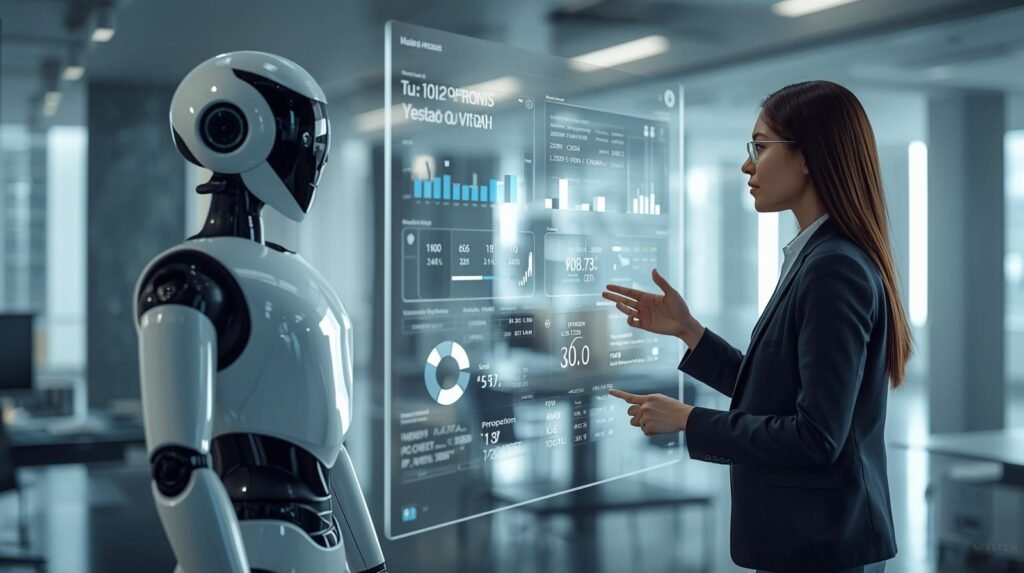
Tesla Robot’s Price will likely be affordable, making advanced robotics available to both business and personal owners. If Tesla can mass-produce and use previously tested components in its Optimus Robots, a reduced Tesla robot price could help transition humanoid robots from pilot status to common tools. The most significant advantage for businesses is having predictable labor (for tasks such as material movement, material inspection, sorting, and restocking) without the risk of injury associated with performing the same physical tasks manually.
In addition to being “affordable” (i.e., a reasonable purchase price), a realistic Tesla Robot Price needs to have low operational costs (efficient energy use, low downtime, etc.) and be maintainable/repairable without requiring a specialized team. Future software upgrades that increase the robot’s capabilities are additional ways to create value. This model views Tesla Optimus as an asset similar to an employee (output/hour) and a piece of equipment (total cost of ownership).
An affordable Tesla Robot Price could open up new opportunities for households, particularly by supporting people who age in place and providing time-saving assistance. Some examples of household tasks that Tesla Optimus may assist with include grocery shopping, moving heavy items, and cleaning/tidying. As a household appliance, it would need to be designed with safe constraints (e.g., avoiding collisions with children/pets/breakables), simple user interfaces, and consistent performance across different environments.
A homeowner will consider the robot’s ability to perform tasks (raw capability) equally important to considerations related to the robot itself, including: noise level, private space requirements, maintenance issues, etc.
While there are many reasons initial models of the Tesla Optimus may not meet their full potential, one is that high costs may initially limit the number of units produced and sold. However, the ultimate driver of how fast this technology is adopted by customers (businesses and households) will be the price. Businesses will invest only if they see a positive ROI (return on investment). Customers will only purchase if they believe the product provides them with benefits/value for what they pay, and the vendor has established sufficient trust to deliver what they advertise.
If Tesla Optimus can successfully demonstrate its practical utility at a reasonable price point (the Tesla Robot Price), then humanoid robots could become a new mainstream category.
Cost Comparison
| Solution | Estimated Cost | Long-term Cost | Efficiency |
|---|---|---|---|
| Human Worker (Yearly) | $30,000-$60.000 | High | Variable |
| Industrial Robots | $50,000+ | Medium | High |
| Tesla Optimus (Expected) | $20,000-$30,000 | Low | Very HIgh |
Source: Industry estimates + Elon Musk statements (AI Day)
https://www.tesla.com
Challenges and Considerations
In addition to the many advantages of using Tesla Optimus, there will be some disadvantages and considerations. The most important ones include:
Ethical Concerns
There are ethical issues around the use of robots and their potential to displace jobs, as well as privacy issues as they become part of our daily lives.
Job Displacement
Optimus will perform the jobs traditionally done by people. So, one issue with this will be job loss and what it may mean for unemployment levels. Therefore, we need to think carefully about how we can balance the amount of work technology provides and ensure that new technologies create new jobs rather than replace existing ones.
Privacy Implications
Concerns about privacy have also emerged with robots like Optimus as they collect and process large amounts of data. Therefore, it is important to develop and implement appropriate data privacy measures to establish trust and protect private information in both industrial and residential settings.
Ethical AI Use
Ensuring that ethical standards are followed when using AI technologies in robotics, such as Optimus, will help prevent misuse and other unintended negative effects. Developing and establishing rules and laws governing the development and deployment of AI-based technology will help alleviate many potential ethical issues related to responsible AI.
Technical Limitations
Although Tesla Optimus has considerable capability, it may still have technical limitations when operating in difficult-to-predict or highly complex environments.
Environmental Adaptability
Optimus is intended to function in a variety of environments; however, there will be instances where unpredictable elements make it difficult for Optimus to operate as planned. Further R&D will likely be required to improve Optimus’s ability to adapt to a changing environment, thereby enabling it to perform tasks across multiple environments.
Maintenance and Upkeep
Maintaining Optimus’s advanced technologies will require constant updates to its systems so that it performs at an optimal level. As such, businesses and consumers need to budget for the ongoing support required to keep the robot operating optimally. If maintenance is not performed, it can result in production losses, lower productivity, and/or decreased efficiency.
Integration Challenges
In addition to requiring regular upgrades, integrating Optimus into current operations and systems may pose technical challenges, especially in business sectors with established processes. Therefore, in order for the integration process to occur smoothly (i.e., without creating undue disruption to the day-to-day activities of both employees and customers), careful planning, coordination, and communication will be needed among developers of the robotic system and the end users; ultimately, so that they may effectively integrate the robotic system to meet their unique operational requirements.
Cost of Implementation
The large amount of money initially invested in Tesla Optimus, as well as the evaluation of the return on investment (ROI) before adoption.
Initial Investment
Implementing and acquiring Optimus will likely impose a considerable cost on some organizations, including small businesses and individuals. It is important to determine whether the ROI and future benefits are sufficient for an organization’s overall operational goals and financial capacity.
ROI Assessment
Businesses must therefore conduct a thorough evaluation of their expected return on investment before justifying the implementation costs. As part of this process, they must analyze the cost savings from increased efficiency and reduced labor costs, and demonstrate that the investment in Optimus has produced tangible results.
Scalability Considerations
The ability of a business to scale Optimus across its entire operation is one of the most important factors to consider when adopting it. To maximize the benefits of an Optimus robot and achieve sustainable expansion through its use, the company needs confidence that it can keep pace with the robot’s technological advances.
Benefits vs Challenges
| Benefits | Challenges |
|---|---|
| Increased productivity | High initial development cost |
| 24/7 operation | Safety concerns |
| Reduced labor shortages | Ethical issues |
| Scalability | Technical limitations |
| Cost savings over time | Regulation & compliance |
Source: World Economic Forum – Robotics & AI
https://www.weforum.org
The Future of Robotics with Tesla Optimus
The Tesla Optimus represents an advancement in robots that has been decades in the making. As technology advances, we will see further improvements to Optimus. The possibilities of what these improved robots may look like and how they could be used are limitless.
Evolving Capabilities
Future advancements in robotics will enable subsequent generations of Optimus to incorporate advances in areas such as Artificial Intelligence (AI), Machine Learning (ML), and Sensors, allowing each generation to perform ever-increasing levels of complexity with greater speed and accuracy.
Integration with Emerging Technologies
To continue developing Tesla Optimus, it is essential to integrate this technology with current and future technologies, such as IoT (Internet of Things), 5G (fifth-generation wireless network), and Blockchain. By integrating these technologies, Optimus can be more connected and secure, and process data faster than before, opening new avenues for innovation and automation.
Societal Impact
Robots similar to Optimus have the ability to alter societal paradigms by transforming many different industries and redefine what we consider “work.” As robots become a major component of our society, we will need to adopt new ways of thinking about the economy and workforce structure. We will also need to accept the benefits and drawbacks of continued advancements in robotics and other automated systems.
Future Projection
| Year | Expected Development | Impact |
|---|---|---|
| 2025 | Limited commercial use | Early adoption |
| 2027 | Wider industrial deployment | Workforce shift |
| 2030 | Household integration | Mass adoption |
| 2035 | Fully autonomous robots | Major economic impact |
Source: PwC AI & Robotics Forecast
https://www.pwc.com
My Final Thoughts
Tesla’s humanoid robot effort is compelling because it targets a simple gap: many daily and industrial tasks remain repetitive, physically taxing, and difficult to automate with fixed-purpose machines. If Tesla Optimus can reliably walk, lift, grasp, and navigate the same spaces people do, it could become a flexible layer of “physical AI” that improves safety, reduces strain, and helps teams keep operations moving during labor shortages or peak demand.
Still, the real benefits will depend on execution. Consistent performance in messy environments, safe behavior around people, dependable uptime, and easy maintenance will matter more than headline demos. Just as important are responsible guardrails—clear operating limits, privacy protections, and accountability when something goes wrong.
The most practical way to view Tesla Optimus is as an evolving platform: each generation should bring measurable gains in balance, dexterity, speed, and decision-making, expanding the range of tasks it can handle with fewer human interventions. If affordability and total cost of ownership reach realistic targets, Tesla Optimus could move from a fascinating prototype to a widely useful tool—one that supports workers and households by taking on the chores people would gladly hand off.
Conclusion
The Tesla Optimus represents much more than a simple robot. It also serves as an example of what the future may hold for technology and innovation. The many capabilities of the Tesla Optimus offer several advantages that can positively affect all aspects of society.
Further exploration of the Tesla Optimus reveals its limitless potential. With such broad applicability of the Tesla Optimus, from the workplace to homes and virtually every industry, the Tesla Optimus has the opportunity to make a lasting impact. Once again, Tesla demonstrates their leadership role in advancing technology.
Embracing Innovation
Through innovative products like the Tesla Optimus, companies provide a model for how technology can expand people’s capabilities. When organizations and individuals take advantage of these innovations, they have the opportunity to create new ways to grow, to increase efficiency, and to promote sustainable practices.
Preparing for Change
The emergence of technologies such as Tesla Optimus and other forms of automation will certainly create a need to prepare for these advancements. Understanding both the positive and negative aspects of this type of technology allows us to make adjustments that could enable our society to not only survive but also grow and prosper amid increasing levels of automation.
A New Era of Robotics
The introduction of Tesla Optimus marks a new generation of robotic innovation, bringing a future where robots and humans work side by side to reach levels never before thought possible. This combined future can improve our standard of living, create new economic opportunities, and change how the world operates now and in the future.
1) What is Tesla Optimus?
Tesla Optimus is Tesla’s humanoid robot concept, designed to operate in human environments and assist with repetitive, physically demanding tasks through AI-driven perception and motion control.
2) What are the biggest benefits of the Tesla robot?
Potential benefits include improved workplace safety (handling risky or heavy tasks), consistent productivity, and flexible automation that can operate in spaces built for people without requiring an entire facility redesign.
3) What can Tesla Optimus do today vs. in the future?
Public demos have shown early capabilities like walking, balancing, and basic object handling. Over time, Tesla Optimus is expected to expand into more reliable real-world tasks such as carrying items, sorting, and simple warehouse workflows as hardware and software improve.
4) What’s the difference between Optimus Gen 2 and Optimus Gen 3?
Gen 2 is generally discussed in terms of better balance and efficiency. Optimus Gen 3 is expected to focus on larger leaps in speed, intelligence, dexterity, and overall usability—though final specs depend on Tesla’s releases.
5) How much will Tesla Optimus cost?
Tesla has discussed ambitions to offer an affordable price, but the price of the Tesla robot has not been confirmed. Total cost will also depend on maintenance, uptime, software updates, and support—especially for business use.

Garikapati Bullivenkaiah is a seasoned entrepreneur with a rich multidisciplinary academic foundation—including LL.B., LL.M., M.A., and M.B.A. degrees—that uniquely blend legal insight, managerial acumen, and sociocultural understanding. Driven by vision and integrity, he leads his own enterprise with a strategic mindset informed by rigorous legal training and advanced business education. His strong analytical skills, honed through legal and management disciplines, empower him to navigate complex challenges, mitigate risks, and foster growth in diverse sectors. Committed to delivering value, Garikapati’s entrepreneurial journey is characterized by innovative approaches, ethical leadership, and the ability to convert cross-domain knowledge into practical, client-focused solutions.