




ADVERTISEMENT
  • About NezzHub
  • Author Bio
  • Privacy Policy
  • Advertise & Disclaimer
  • Cookie Policy
  • Terms & Conditions
  • Contact Us
Latest Technology | Nezz hub
Advertisement
  • Home
    • All
    • AI & Machine Learning
    • AI in Healthcare & Biotech
    • AI Tools, Frameworks & Platforms
    • Autonomous Mobile Robots (AMRs)
    • Computer Vision & Image Recognition
    • Cybersecurity
    • Cybersecurity Tools & Frameworks
    • Data Security & Compliance
    • Digital Twins & Simulation
    • Generative AI & LLMs
    • Humanoids & Embodied AI
    • Industrial Robots & Cobots
    • Natural Language Processing (NLP)
    • Quantum AI in Simulation
    • Quantum Algorithms
    • Quantum Computing
    • Robotics and Automation
    • Robotics Software (ROS, ROS2)
    • Uncategorized
    • USA AI Jobs & Careers
    • USA Artificial Intelligence
    • USA Healthcare & Biotech AI
    • USA Quantum Computing
    • USA Robotics & Automation
    • USA Tech & Innovation
    • USA Tech Industry News
    Scientists conducting neutral atom quantum research using optical tweezers, laser systems, and atomic qubits in an advanced quantum computing laboratory.

    How Does Neutral Atom Quantum Research Work at a Fundamental Level?

    What DARPA Quantum Research Is Doing and Why It Matters

    What DARPA Quantum Research Is Doing and Why It Matters

    Embodied AI robots interacting with their environment and collaborating with humans using advanced sensors, machine learning, and intelligent decision-making.

    The Future of Embodied AI and Autonomous Robots in 2030

    Humanoid AI robots collaborating with professionals in a modern workplace using artificial intelligence, automation, and advanced robotics technology

    The Rise of Humanoid AI in Healthcare Logistics and Manufacturing

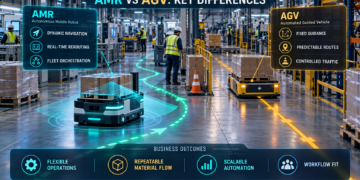
    Automated Guided Vehicles transporting materials in a smart warehouse using automated routes and Industry 4.0 logistics technology

    Autonomous Mobile Robots vs Automated Guided Vehicles: Key Differences

    Autonomous mobile robots transporting materials in a smart Industry 4.0 warehouse with AI-powered navigation and automation systems.

    The Business Benefits of Autonomous Mobile Robots for Industry 4.0

  • AI & Machine Learning
    • All
    • AI in Healthcare & Biotech
    • AI Tools, Frameworks & Platforms
    • Computer Vision & Image Recognition
    • Generative AI & LLMs
    • Natural Language Processing (NLP)
    Data analyst using AI-powered sentiment analysis in NLP to evaluate customer opinions, reviews, and social media feedback in a modern workplace.

    What Is Sentiment Analysis in NLP?

    AI ethics specialist reviewing Generative AI systems, transparency metrics, and responsible AI governance in a modern workplace.

    Generative AI Ethics: Challenges, Risks, and Best Practices in 2026

    AI engineer comparing Generative AI and Reinforcement Learning systems using advanced analytics dashboards in a modern workplace.

    Comparing Generative AI and Reinforcement Learning

    Entrepreneur using AI SEO tools and analytics dashboards in a modern digital marketing workspace.

    Top AI SEO Tools for Entrepreneurs and Better Search Accuracy

    Modern small business workplace using AI-powered tools, automation software, and digital analytics technology.

    Recommended AI tools for small businesses for students in 2026

    AI engineer working on machine learning models in a modern office with data visualizations and neural network diagrams on multiple screens.

    AI & Machine Learning

    • AI Tools, Frameworks & Platforms
    • AI in Healthcare & Biotech
    • Computer Vision & Image Recognition
    • Deep Learning & Neural Networks
    • Generative AI & LLMs
    • Machine Learning Fundamentals
    • Natural Language Processing (NLP)
  • Quantum Computing
    • All
    • Quantum AI in Simulation
    • Quantum Algorithms
    Scientists conducting neutral atom quantum research using optical tweezers, laser systems, and atomic qubits in an advanced quantum computing laboratory.

    How Does Neutral Atom Quantum Research Work at a Fundamental Level?

    What DARPA Quantum Research Is Doing and Why It Matters

    What DARPA Quantum Research Is Doing and Why It Matters

    Quantum Computing

    Quantum Computing

    Scientist analyzing quantum molecular simulation in a modern lab with holographic molecule visualization and advanced computing tools

    How Quantum Molecular Simulation Helps Drug Discovery

    • Quantum AI in Simulation
    • Quantum Algorithms
    • Quantum Applications in Biotech
    • Quantum Computing Industry Trends
    • Quantum Cryptography & Security
    • Quantum Hardware & Processors
  • Robotics and Automation
    • All
    • Autonomous Mobile Robots (AMRs)
    • Digital Twins & Simulation
    • Humanoids & Embodied AI
    • Industrial Robots & Cobots
    • Robotics Software (ROS, ROS2)
    Embodied AI robots interacting with their environment and collaborating with humans using advanced sensors, machine learning, and intelligent decision-making.

    The Future of Embodied AI and Autonomous Robots in 2030

    Humanoid AI robots collaborating with professionals in a modern workplace using artificial intelligence, automation, and advanced robotics technology

    The Rise of Humanoid AI in Healthcare Logistics and Manufacturing

    Automated Guided Vehicles transporting materials in a smart warehouse using automated routes and Industry 4.0 logistics technology

    Autonomous Mobile Robots vs Automated Guided Vehicles: Key Differences

    Autonomous mobile robots transporting materials in a smart Industry 4.0 warehouse with AI-powered navigation and automation systems.

    The Business Benefits of Autonomous Mobile Robots for Industry 4.0

    Engineer working alongside an industrial robotic arm in a smart factory, demonstrating modern robotics & automation in manufacturing.

    Robotics and Automation

    Digital robot automating computer tasks on multiple screens, representing robotic process automation in modern office workflows.

    What Is Robotic Process Automation and How It Works

    • Automation Tools & Workflow Systems
    • Autonomous Mobile Robots (AMRs)
    • Digital Twins & Simulation
    • Humanoids & Embodied AI
    • Industrial Robots & Cobots
    • Robotics Software (ROS, ROS2)
  • Cybersecurity
    • All
    • Cybersecurity Tools & Frameworks
    • Data Security & Compliance
    Cybersecurity professional monitoring compliance dashboards and data protection systems in a modern business workplace

    Cybersecurity Compliance Trends Businesses Should Know

    Cybersecurity analyst monitoring identity and access management tools and authentication dashboards in a modern enterprise security operations center.

    Identity and Access Management Tools Explained

    Cybersecurity compliance analyst reviewing a SOC 2 compliance checklist and data protection dashboards in a modern U.S. corporate IT security office.

    SOC2 Compliance Checklist for Data Security

    • Cybersecurity Tools & Frameworks
    • Data Security & Compliance
    • Healthcare & Biotech Security
    • Identity, Access & Zero Trust
    • Network & Cloud Security
    • Ransomware & Incident Response
  • USA Tech & Innovation
    • All
    • USA AI Jobs & Careers
    • USA Artificial Intelligence
    • USA Healthcare & Biotech AI
    • USA Quantum Computing
    • USA Robotics & Automation
    • USA Tech Industry News
    Security analyst using AI-powered systems in a modern operations center for national security monitoring

    How AI for National Security Today

    Data scientist analyzing data and working with charts and code on multiple screens in a modern office

    Data Scientist Roles and Responsibilities Explained

    AI engineer working in a modern office with multiple screens showing code, data, and machine learning models

    AI Engineer Roles and Responsibilities Explained

    Tesla Optimus humanoid robot working with a human in a modern office workplace environment

    What Tesla Optimus Can Do and Why It Matters

    Professional interacting with an advanced robotic dog in a modern workplace representing Boston Dynamics robotics innovation

    Boston Dynamics Robots: What They Can Do Today

    Healthcare cybersecurity specialist monitoring HIPAA compliance and patient data protection systems in a modern U.S. hospital IT security center.

    HIPAA Cybersecurity Requirements for Healthcare Organizations

    • USA Artificial Intelligence
    • USA Quantum Computing
    • USA Healthcare & Biotech AI
    • USA Robotics & Automation
    • USA AI Jobs & Careers
    • USA Tech Industry News
No Result
View All Result
  • Home
    • All
    • AI & Machine Learning
    • AI in Healthcare & Biotech
    • AI Tools, Frameworks & Platforms
    • Autonomous Mobile Robots (AMRs)
    • Computer Vision & Image Recognition
    • Cybersecurity
    • Cybersecurity Tools & Frameworks
    • Data Security & Compliance
    • Digital Twins & Simulation
    • Generative AI & LLMs
    • Humanoids & Embodied AI
    • Industrial Robots & Cobots
    • Natural Language Processing (NLP)
    • Quantum AI in Simulation
    • Quantum Algorithms
    • Quantum Computing
    • Robotics and Automation
    • Robotics Software (ROS, ROS2)
    • Uncategorized
    • USA AI Jobs & Careers
    • USA Artificial Intelligence
    • USA Healthcare & Biotech AI
    • USA Quantum Computing
    • USA Robotics & Automation
    • USA Tech & Innovation
    • USA Tech Industry News
    Scientists conducting neutral atom quantum research using optical tweezers, laser systems, and atomic qubits in an advanced quantum computing laboratory.

    How Does Neutral Atom Quantum Research Work at a Fundamental Level?

    What DARPA Quantum Research Is Doing and Why It Matters

    What DARPA Quantum Research Is Doing and Why It Matters

    Embodied AI robots interacting with their environment and collaborating with humans using advanced sensors, machine learning, and intelligent decision-making.

    The Future of Embodied AI and Autonomous Robots in 2030

    Humanoid AI robots collaborating with professionals in a modern workplace using artificial intelligence, automation, and advanced robotics technology

    The Rise of Humanoid AI in Healthcare Logistics and Manufacturing

    Automated Guided Vehicles transporting materials in a smart warehouse using automated routes and Industry 4.0 logistics technology

    Autonomous Mobile Robots vs Automated Guided Vehicles: Key Differences

    Autonomous mobile robots transporting materials in a smart Industry 4.0 warehouse with AI-powered navigation and automation systems.

    The Business Benefits of Autonomous Mobile Robots for Industry 4.0

  • AI & Machine Learning
    • All
    • AI in Healthcare & Biotech
    • AI Tools, Frameworks & Platforms
    • Computer Vision & Image Recognition
    • Generative AI & LLMs
    • Natural Language Processing (NLP)
    Data analyst using AI-powered sentiment analysis in NLP to evaluate customer opinions, reviews, and social media feedback in a modern workplace.

    What Is Sentiment Analysis in NLP?

    AI ethics specialist reviewing Generative AI systems, transparency metrics, and responsible AI governance in a modern workplace.

    Generative AI Ethics: Challenges, Risks, and Best Practices in 2026

    AI engineer comparing Generative AI and Reinforcement Learning systems using advanced analytics dashboards in a modern workplace.

    Comparing Generative AI and Reinforcement Learning

    Entrepreneur using AI SEO tools and analytics dashboards in a modern digital marketing workspace.

    Top AI SEO Tools for Entrepreneurs and Better Search Accuracy

    Modern small business workplace using AI-powered tools, automation software, and digital analytics technology.

    Recommended AI tools for small businesses for students in 2026

    AI engineer working on machine learning models in a modern office with data visualizations and neural network diagrams on multiple screens.

    AI & Machine Learning

    • AI Tools, Frameworks & Platforms
    • AI in Healthcare & Biotech
    • Computer Vision & Image Recognition
    • Deep Learning & Neural Networks
    • Generative AI & LLMs
    • Machine Learning Fundamentals
    • Natural Language Processing (NLP)
  • Quantum Computing
    • All
    • Quantum AI in Simulation
    • Quantum Algorithms
    Scientists conducting neutral atom quantum research using optical tweezers, laser systems, and atomic qubits in an advanced quantum computing laboratory.

    How Does Neutral Atom Quantum Research Work at a Fundamental Level?

    What DARPA Quantum Research Is Doing and Why It Matters

    What DARPA Quantum Research Is Doing and Why It Matters

    Quantum Computing

    Quantum Computing

    Scientist analyzing quantum molecular simulation in a modern lab with holographic molecule visualization and advanced computing tools

    How Quantum Molecular Simulation Helps Drug Discovery

    • Quantum AI in Simulation
    • Quantum Algorithms
    • Quantum Applications in Biotech
    • Quantum Computing Industry Trends
    • Quantum Cryptography & Security
    • Quantum Hardware & Processors
  • Robotics and Automation
    • All
    • Autonomous Mobile Robots (AMRs)
    • Digital Twins & Simulation
    • Humanoids & Embodied AI
    • Industrial Robots & Cobots
    • Robotics Software (ROS, ROS2)
    Embodied AI robots interacting with their environment and collaborating with humans using advanced sensors, machine learning, and intelligent decision-making.

    The Future of Embodied AI and Autonomous Robots in 2030

    Humanoid AI robots collaborating with professionals in a modern workplace using artificial intelligence, automation, and advanced robotics technology

    The Rise of Humanoid AI in Healthcare Logistics and Manufacturing

    Automated Guided Vehicles transporting materials in a smart warehouse using automated routes and Industry 4.0 logistics technology

    Autonomous Mobile Robots vs Automated Guided Vehicles: Key Differences

    Autonomous mobile robots transporting materials in a smart Industry 4.0 warehouse with AI-powered navigation and automation systems.

    The Business Benefits of Autonomous Mobile Robots for Industry 4.0

    Engineer working alongside an industrial robotic arm in a smart factory, demonstrating modern robotics & automation in manufacturing.

    Robotics and Automation

    Digital robot automating computer tasks on multiple screens, representing robotic process automation in modern office workflows.

    What Is Robotic Process Automation and How It Works

    • Automation Tools & Workflow Systems
    • Autonomous Mobile Robots (AMRs)
    • Digital Twins & Simulation
    • Humanoids & Embodied AI
    • Industrial Robots & Cobots
    • Robotics Software (ROS, ROS2)
  • Cybersecurity
    • All
    • Cybersecurity Tools & Frameworks
    • Data Security & Compliance
    Cybersecurity professional monitoring compliance dashboards and data protection systems in a modern business workplace

    Cybersecurity Compliance Trends Businesses Should Know

    Cybersecurity analyst monitoring identity and access management tools and authentication dashboards in a modern enterprise security operations center.

    Identity and Access Management Tools Explained

    Cybersecurity compliance analyst reviewing a SOC 2 compliance checklist and data protection dashboards in a modern U.S. corporate IT security office.

    SOC2 Compliance Checklist for Data Security

    • Cybersecurity Tools & Frameworks
    • Data Security & Compliance
    • Healthcare & Biotech Security
    • Identity, Access & Zero Trust
    • Network & Cloud Security
    • Ransomware & Incident Response
  • USA Tech & Innovation
    • All
    • USA AI Jobs & Careers
    • USA Artificial Intelligence
    • USA Healthcare & Biotech AI
    • USA Quantum Computing
    • USA Robotics & Automation
    • USA Tech Industry News
    Security analyst using AI-powered systems in a modern operations center for national security monitoring

    How AI for National Security Today

    Data scientist analyzing data and working with charts and code on multiple screens in a modern office

    Data Scientist Roles and Responsibilities Explained

    AI engineer working in a modern office with multiple screens showing code, data, and machine learning models

    AI Engineer Roles and Responsibilities Explained

    Tesla Optimus humanoid robot working with a human in a modern office workplace environment

    What Tesla Optimus Can Do and Why It Matters

    Professional interacting with an advanced robotic dog in a modern workplace representing Boston Dynamics robotics innovation

    Boston Dynamics Robots: What They Can Do Today

    Healthcare cybersecurity specialist monitoring HIPAA compliance and patient data protection systems in a modern U.S. hospital IT security center.

    HIPAA Cybersecurity Requirements for Healthcare Organizations

    • USA Artificial Intelligence
    • USA Quantum Computing
    • USA Healthcare & Biotech AI
    • USA Robotics & Automation
    • USA AI Jobs & Careers
    • USA Tech Industry News
No Result
View All Result
Latest Technology | Nezz hub
No Result
View All Result
Home Robotics and Automation Autonomous Mobile Robots (AMRs)

The Business Benefits of Autonomous Mobile Robots for Industry 4.0

Garikapati Bullivenkaiah by Garikapati Bullivenkaiah
June 5, 2026
in Autonomous Mobile Robots (AMRs)
0
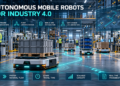
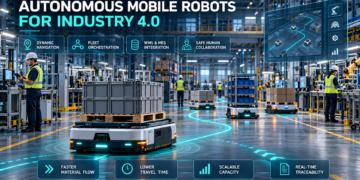
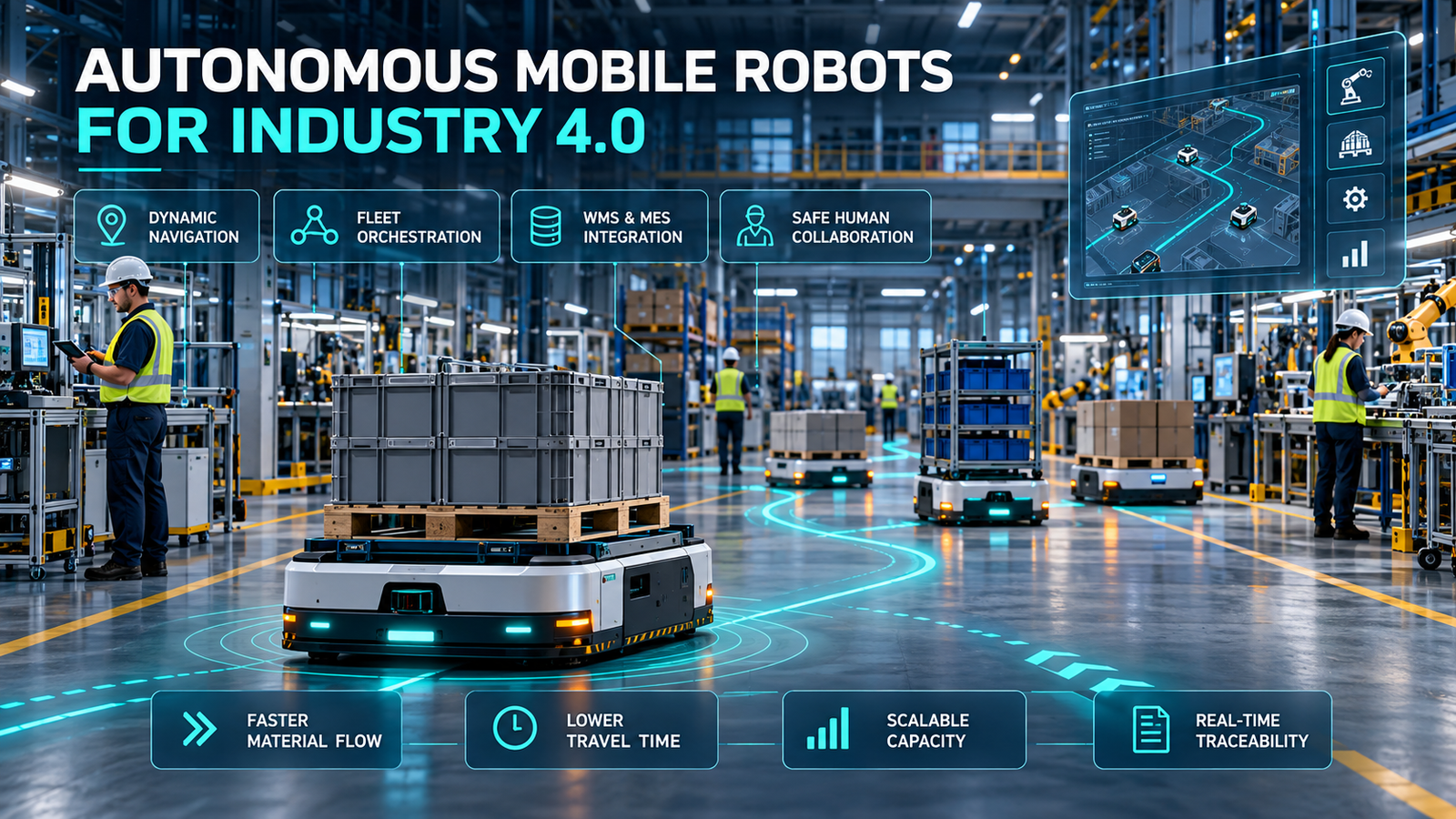
Autonomous mobile robots transporting materials in a smart Industry 4.0 warehouse with AI-powered navigation and automation systems.
Share on LinkedinShare on FacebookShare on X
Autonomous mobile robots transporting materials in a smart Industry 4.0 warehouse with AI-powered navigation and automation systems.

Smart autonomous mobile robots are bringing significant changes across many industries. The widespread adoption of autonomous robots has been described as being central to the development of “Industry 4.0,” which has opened up new opportunities.

They can easily navigate complex work environments. This ability is due to their use of sophisticated sensors that feed data into an artificial intelligence (AI) algorithm, enabling them to make decisions without human intervention or control.

Many businesses have adopted these robot systems because of the advantages they offer. These include improved business efficiency and substantially reduced operating expenses.

Robot automation is creating a major change in how all industries operate. Autonomous robots enable businesses to make decisions in real time and to respond to changing circumstances quickly.

In addition, autonomous robots improve workplace safety by performing dangerous tasks. Autonomous robots allow human employees to concentrate on taking on increasingly complex roles.

Furthermore, mobile robotics is enabling businesses to adopt sustainable practices. Autonomous robots can reduce energy consumption and minimize waste, helping create a greener future.

Adopting autonomous robots in your business’s operations can be done seamlessly. However, it does require thorough planning and adequate technical support.

As businesses continue to evolve, so too will the number of roles that autonomous robots play. Autonomous robots are crucial if you wish your company to remain competitive in this rapidly evolving environment.

Summary

Industry 4.0 benefits from the business value of Autonomous Mobile Robots (AMRs), as they offer improved speed, adaptability, and a data-rich environment for logistics. The advantages of AMRs are that they can be deployed in a dynamic environment; they use both sensors and artificial intelligence (AI) to locate their position and move around, which allows companies to adjust the layout of their facility, adjust to fluctuations in customer demand, or produce different products than what was originally planned, all without requiring large-scale investments into the physical structure of the building.

The increased flexibility provided by an autonomous robot means there is less capital at risk for an organization, and it decreases the amount of time required to realize a return on investment from a deployment of robots, because deployments can begin with one or two robots and continue to add additional robots to the system and optimize how each robot operates within the system.

Autonomous Mobile Robots provide significant improvements in productivity by minimizing walking and/or forklift travel required to accomplish tasks, by providing workers with a constant supply of materials, by managing material movement in real time, and by improving material flow.

In addition to these process-related advantages, autonomous mobile robots provide several information technology-related advantages, including greater accuracy, greater visibility and transparency, better task confirmation, more reliable barcode and RFID workflow processes, and automatic recording of events that may occur during the course of a day that can then automatically be fed back into the enterprise’s warehouse and/or manufacturing systems.

From a workforce perspective, autonomous mobile robots assist organizations that have difficulty attracting and retaining qualified staff due to high employee turnover rates; improve working conditions for employees; enable employees to focus on activities of higher value to the organization; and provide safety features that allow employees to safely work together with robots in mixed operation.

In addition to moving about autonomously, autonomous mobile robots can be connected directly to Warehouse Management Systems (WMS)/Manufacturing Execution Systems (MES) and analytics platforms. Once connected to these systems, autonomous mobile robots function as mobile nodes that collect data on the location of goods/materials/products throughout the production/distribution process.

Organizations utilizing autonomous mobile robots can identify and remove bottlenecks in the production/distribution process; create continuous improvement initiatives based upon data collected during normal operating hours; monitor their robots remotely to prevent downtime; perform predictive maintenance on their robots; update the software running on their robots; and ensure their robots remain up-and-running continuously thereby supporting the goal of creating resilient, scalable operations as defined in Industry 4.0.

How AMRs Navigate Warehouses and Hospitals

Autonomous mobile robots transporting materials across a smart factory floor while robotic arms automate manufacturing processes in an Industry 4.0 environment.

Understanding Autonomous Mobile Robots in Industry 4.0

AMRs represent a confluence of new technologies with traditional manufacturing processes that support Industry 4.0.

AMRs can be flexible and adaptable in their navigation and use in both simple and complex working areas without the need for human involvement.

The unique advantage of an AMR is that it represents more than simply mechanical movement. It represents artificial intelligence capable of learning through experience. The AMR will continue to improve as long as it continues to “learn” through its environment.

Key characteristics of AMRs in Industry 4.0 include:

  • Autonomous navigation
  • Real-time data processing
  • Dynamic adaptability
  • Collaborative operation

The applications of Autonomous Mobile Robots (AMRs) extend well beyond the manufacturing sector, as they can greatly enhance an organization’s productivity.

The ability of an AMR to repeat the same process over and over without deviation has generated considerable interest in using them to perform very labor-intensive tasks.

The fact that AMRs can communicate effectively with other smart technologies and systems also enables a much greater level of coordination than would be possible through manual operation.

In the future, as organizations look to digitally transform their business models, many will increasingly rely on autonomous mobile robots to improve operational efficiency and responsiveness.

Autonomous Mobile Robots vs Traditional Material Handling

FeatureAutonomous Mobile Robots (AMRs)Traditional Material Handling
NavigationDynamic AI-based routingFixed routes
FlexibilityHighLow
Infrastructure ChangesMinimalSignificant
ScalabilityEasyDifficult
Human InterventionLowModerate
Real-Time AdaptationYesNo

Example

A warehouse can deploy AMRs without installing physical guide tracks, reducing implementation complexity.

Source:

  • https://www.dhl.com/global-en/home/insights-and-innovation/insights/robotics-in-logistics.html
  • https://www.interactanalysis.com
Diagram showing autonomous mobile robots (AMRs) connected to cloud computing, cyber-physical systems, smart factories, and industrial networks in Industry 4.0.

Autonomous Mobile Robots: Autonomous mobile robots navigate and perform tasks independently using sensors, AI, and real-time data

Autonomous mobile robots transporting materials in a smart Industry 4.0 warehouse with AI-powered navigation and automation systems.

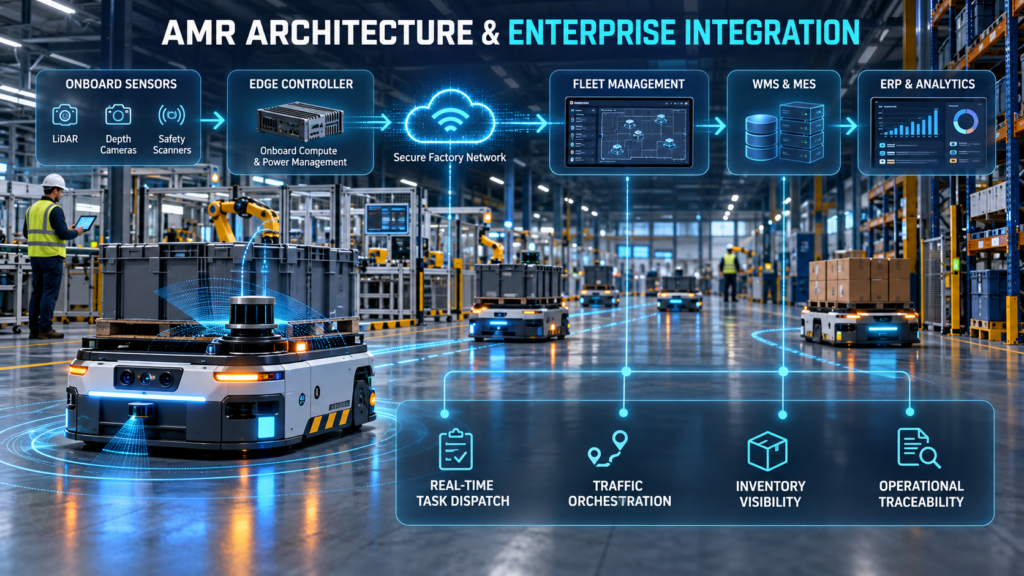
Autonomous mobile robots are intelligent, self-motivated vehicles that navigate dynamic environments along unplanned routes. Autonomous Mobile Robots utilize multiple sensors, including LiDAR, cameras, ultrasonic sensors, and wheel encoders. The data from these sensors is processed using artificial intelligence and real-time maps to enable autonomous decision-making.

AMRs operate in warehouses and industrial environments. There they are used to assist with transporting materials, feeding lines, building kits, and supporting pick orders while interfacing with enterprise-level warehouse management systems (WMS) / manufacturing execution systems (MES).

The communication of real-time information via wireless connectivity (Wi-Fi/5G) along with integration with fleet management solutions enables Autonomous Mobile Robots to optimize vehicle traffic flow, distribute workload effectively, and minimize unnecessary travel.

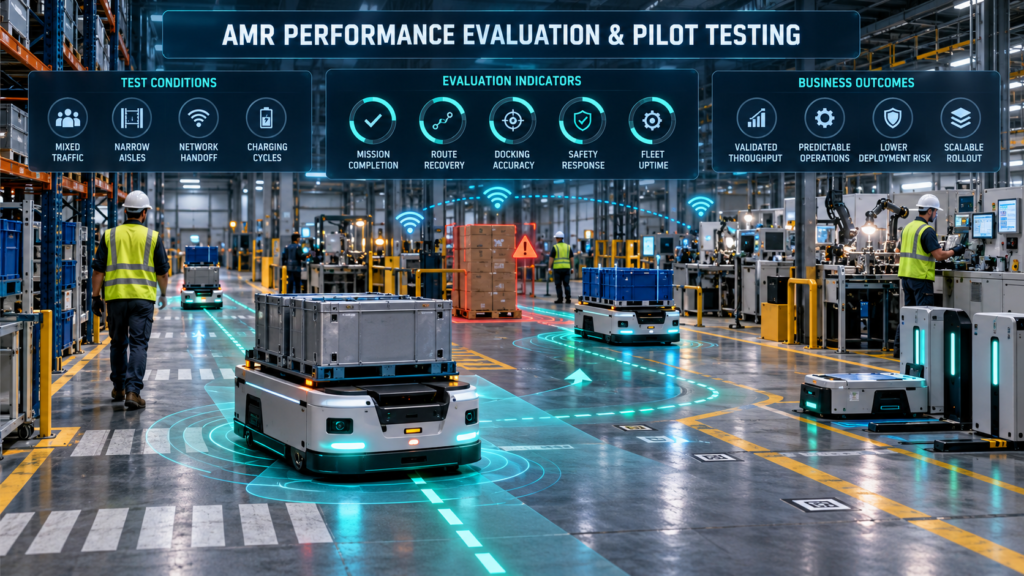
Because Autonomous Mobile Robots can operate independently of other equipment, such as forklifts and pedestrian operators, they can “mix” with existing personnel. In addition to slowing down, stopping, or yielding per defined safety protocols, this capability provides increased operational flexibility.

From an operational standpoint, Autonomous Mobile Robots increase productivity by ensuring consistent delivery of supplies to workstations, thereby reducing idle time at those stations. Additionally, they increase accuracy by using barcodes/RFIDs to track inventory movement and by confirming completed tasks. Finally, Autonomous Mobile Robots generate automated event documentation via log files.

From a strategic perspective, Autonomous Mobile Robots offer rapid scalability; adding capacity typically involves simply adding units rather than redesigning conveyor systems. Also, Autonomous Mobile Robots can continually monitor performance by generating movement-related metrics (movement/dwell/congestion), which can be analyzed to identify opportunities for improvement.

Example

A medium-sized food distribution center (DC) can adjust the layout of its receiving/fulfillment area every quarter due to the seasonal nature of many SKUs. To avoid rebuilding each of their conveyor systems as often as they would have if they were not using AMRs for this purpose, the company has deployed AMRs for “milk-runs” from reserve storage, through the picking face, and into packaging.

As an AMR travels along the milk route, it will automatically adjust course based on pallet drop-offs and other traffic jams. Once the AMR reaches a designated door with a sensor that determines which AMR should enter first, it will wait for its turn in accordance with the established right-of-way protocols. When an AMR completes a trip, it will post back to the warehouse management system (WMS), both the date/time of completion and the specific tote number being moved.

This allows DC managers to view the most up-to-date information related to replenishment activity. In short order, the pack stations are no longer forced to wait for products; travel times decrease, and overtime during promotional periods has decreased.

Mobile Robotics: Mobile robotics focuses on intelligent robots that move, navigate, and interact within dynamic environments

Mobile robotics systems operating autonomously in a smart warehouse using AI, sensors, and real-time navigation technology

The primary focus of Mobile Robotics is the development of smart devices that can navigate the physical world, interpret their surroundings, and operate safely in dynamic environments. The foundation of Mobile Robotics includes locomotion (wheels, tracks, legs), sensors (cameras, lidar, radar), and decision-making (planning & control) to enable mobile robots to safely navigate around people, other equipment, and unforeseen obstacles.

Mobile Robotics emphasizes two fundamental elements – Localization and Mapping. Robots utilize Simultaneous Localization and Mapping (SLAM) to determine their position in space relative to a known location on a map. Additionally, robots use all available data from each sensor to create a cohesive map of their operating area. As environmental conditions change, robots continually update their routes based on this data.

Another element emphasized by modern Mobile Robotics is Interaction. For example, robots need to communicate their intentions; operate according to established safety protocols; and work in conjunction with human workflows instead of requiring the robot to force the human workflow to fit into an unyielding structure. To facilitate interaction, many Mobile Robotics Systems are integrated with facility software to assign tasks, communicate status, and generate operational data that provide a clear audit trail.

One major result of the development of Mobile Robotics is Flexible Automation. Organizations do not have to design and build large-scale, fixed conveyor systems or hard-code all movement paths before deploying mobile robotics. With mobile robotics, organizations can deploy multiple units that adjust movement paths in response to changes in warehouse layouts, the introduction of new Stock Keeping Units (SKUs), and varying demand.

Flexible Automation is being utilized today in Warehouse settings. For example, Mobile Robotics is used to support Goods-To-Person Movements, Line Feeding, and Cart Towing, and to reduce Non-Value-Added Walking. Furthermore, in Manufacturing Settings, Mobile Robotics supports synchronizing Materials and Production Schedules through Real-Time Analytics and Integration with the Manufacturing Execution System/Warehouse Management System (MES/WMS).

Furthermore, Autonomous Mobile Robots are enabling Mobile Robotics to transition towards greater Autonomy through Fleet Coordination, Traffic Management, and Data-Driven Optimization. Examples of such applications include Hospitals utilizing Secure Delivery of Linens, Medications, and Lab Samples to free Human Staff to focus on Patient Care.

Going forward, Mobile Robotics will continue to leverage Edge AI, 5G Connectivity, and Enhanced Cybersecurity Controls to make Autonomous Mobile Robots safer, more collaborative, and more scalable across Industry 4.0 Operations.

Example

The expansion of the hospital’s new wing was connected via separate hallways and elevator areas. The hospital began using mobile robotics for its in-building logistics. Robots would retrieve sealed linen carts, food carts, and lab specimen containers.

After retrieving these items, they would move among people and follow predetermined schedules to gain access to areas. Once inside an area, the robots could use a secured system to call an elevator. Upon exiting the elevator, the robot would stop at a nurse station to verify the transfer of items. Then it would travel to a designated area where it would clean all its contact points.

When visitor numbers are high during those hours, the robotic fleet will shift from the main corridor to secondary corridors and slow down. This allows staff to focus on other tasks rather than traveling between departments or buildings. Specimen delivery is now more predictable, and supply room inventory levels remain steady.

AI Robots: AI robots use artificial intelligence to learn, adapt, and make decisions without constant human control

AI robots working alongside humans in a smart workplace using artificial intelligence, automation, and real-time analytics.

AI Robots use artificial intelligence to perceive their environment, learn from data, and develop decision-making processes without being constantly controlled by humans. They differ significantly from traditional robotic systems, which operate according to predetermined, rigidly programmed sequences of actions.

Instead, AI Robots can adapt to variable situations (e.g., different items, changing light conditions, varying priority levels, and unexpected obstacles) by integrating sensor inputs into models used for recognition, predictive modeling, and planning. Therefore, AI Robots are an ideal solution for fast-paced and flexible Industry 4.0 production lines.

An average AI Robot’s workflow consists of sensing (via cameras, lidar, and force sensors), interpreting (using computer vision and sensor fusion), and taking action (through motion control and task execution). Furthermore, many AI Robots continue to enhance their capabilities by utilizing continuous learning techniques and operational data feedback to continually refine aspects such as picking accuracy, defect detection, and routing optimization.

Additionally, because AI Robots can interface directly with enterprise software solutions (such as Warehouse Management System (WMS), Manufacturing Execution Systems (MES), and Enterprise Resource Planning (ERP)), they can be provided with new work assignments, verify the completion of assigned tasks, and provide analytics and traceability-related data.

Intralogistics applications of autonomous mobile robots represent a practical implementation of the concept of AI Robots. Autonomous mobile robots can navigate through areas occupied by both humans and equipment, divert course if necessary due to aisle blockages, and operate autonomously within groups of multiple units to minimize traffic congestion and idleness. Integration of real-time dispatching functions enables autonomous mobile robots to ensure the timely arrival of components at designated locations — ultimately enhancing throughput and predictability.

As previously mentioned, the utility of AI Robots is not limited to logistics applications. The capability of AI Robots to perform intelligent inspection, defect detection, and collaborative assembly assistance enables them to support a range of other manufacturing applications. Similarly, AI Robots may be utilized in healthcare settings to assist with the delivery of products and services, sanitation and hygiene activities, and monitoring functions.

As the functionality and sophistication of AI-based models and edge computing technologies continue to grow, future generations of AI Robots are expected to operate effectively in unstructured environments while maintaining regulatory compliance and adhering to stringent safety standards.

Success in implementing AI Robots in production environments depends heavily on establishing clear use-case definitions, developing a solid foundation for data-driven decision-making, and defining governance procedures to ensure the safety and security of these systems. Upon successful integration and the definition of performance criteria for measuring success, AI Robots are expected to deliver tangible increases in productivity, product quality, and overall operational resilience.

Example

A Contract Manufacturer produces a variety of small-batch electronic products that undergo constant design changes. It has installed AI robots in one of its final inspection cells. These cameras take images of each product’s board at various angles. Once the image(s) have been captured by the camera(s), the AI uses computer vision to detect any missing parts, solder bridges, or misaligned connectors.

If the AI is unsure, it will route the product board to a human for review. At this point, the AI will learn from the human’s decision. This means that the system can be adapted to new designs as they occur. In addition, the robot will identify which upstream line settings are most likely to lead to defects; therefore, it can trigger proactive corrections in those upstream processes. The end result is quicker inspection times and reduced defect escapes.

Smart Robots: Smart robots use sensors, machine learning, and AI to perform tasks intelligently and adapt to new situations

Smart robots using AI, sensors, and machine learning to automate tasks in a modern Industry 4.0 workplace.

Smart robots are advanced systems that combine sensors with artificial intelligence (AI) or machine learning (ML) to understand what is happening around them, make decisions based on those inputs, and improve their overall performance over time. Smart robots are different from traditional automation because they can account for variations in a process — due to changes in the products being made, changes to the layout of a production facility, or unexpected events — by using information collected in “real-time” to determine how they should behave.

Sensing and interpreting the environment is at the core of Smart Robots. For instance, cameras and lidar can provide Smart Robots with continuous understanding of their surroundings. Additionally, force/torque sensors and proximity sensors can provide Smart Robots with immediate feedback regarding their interactions with the world. These sensors, combined with AI models, allow Smart Robots to interpret objects, identify abnormalities, and predict safe actions.

Therefore, it enables Smart Robots to perform various functions, including inspecting, picking, and sorting items, as well as collaborating with humans on assembly processes. Some Smart Robots utilize digital connections to integrate with manufacturing execution systems (MES), warehouse management systems (WMS), and enterprise resource planning (ERP) systems to obtain instructions for tasks to be performed, verify when tasks are completed, and create logs that track task history for purposes of tracking quality and regulatory compliance.

For example, Autonomous Mobile Robots (AMRs) are one of many ways the principles behind Smart Robots can be applied to robotics to move items and manage logistics. AMRs move dynamically and can change their routes if congestion is present. In addition, AMRs can collaborate within a fleet to continue moving inventory even if individual robots encounter problems.

By continuing to collect data from their operations, Smart Robots can continually update optimal routes, minimize downtime while waiting for a specific task to start, and notify maintenance personnel before equipment failure. As a result, Smart Robots can support higher levels of system uptime and more predictable output rates – two key areas that manufacturers strive for under Industry 4.0 initiatives.

Another important area for Smart Robots relates to safety and reliability. Smart Robots continually assess their speed, distance from humans, and proximity to other equipment or components and provide rule-based and AI-based protections to prevent employee injuries. Furthermore, some Smart Robots can be easily updated via software changes, so new workflow configurations do not require significant investment in physical reconfigurations of existing equipment — reducing barriers to expanding automation applications.

Eventually, Smart Robots will become capable of combining mobility, manipulation and perception — linking Autonomous Mobile Robots with robotic arms, machine vision and analytics. At that point, manufacturers will benefit from automation systems that not only operate at high speeds but also are flexible, produce large volumes of operational data, and respond rapidly to changing operational environments — thereby increasing productivity while preserving flexibility.

Example

A recycling center utilizes smart robots on a sorting line. The robots use hyperspectral cameras and an artificial intelligence (AI) classification process to recognize the type of material being sorted within milliseconds, including PET, HDPE, aluminum, and contaminants. The robot adjusts its grip pressure and picking angle depending on the size/shape of the materials being picked up and on how fast they are traveling down the conveyor.

As the composition of materials entering the recycling center changes over time, the smart robots can also adjust which types of materials they prioritize picking first to meet specific bale quality standards. In addition to these features, the smart sorting technology at this recycling center continuously tracks all missed picks by the robots and uses labeled samples taken from the recycling center to retrain its AI models each week. If the robots detect a spike in contaminants, operators receive immediate notification so they can educate suppliers before contamination becomes too severe.

Autonomous Robots: Autonomous robots operate independently, completing tasks and responding to changing environments automatically

Autonomous robots independently performing industrial tasks in a smart factory using AI, sensors, and real-time navigation systems.

Autonomous robots use sensors to interact with an environment. To perform a task in this environment, autonomous robots must be able to sense (perceive) their environment; plan how to accomplish a specific goal; and then act (control) based on what they perceive. The main difference between autonomous and non-autonomous robots is that autonomous robots do not require human intervention. They can independently decide when something needs to happen.

One key characteristic of autonomous robots is their ability to adapt as conditions change. If a sudden obstacle appears in front of them, if the route they are using changes, or if one priority shifts relative to another, autonomous robots can adapt by altering their plans without stopping to have a human manually reset them.

Many types of autonomous robots employ machine learning algorithms. These algorithms allow the robot to continuously learn from its experiences, improve its recognition of objects it encounters, optimize its movements and paths through space, and detect abnormalities that may affect the quality or safety of the process in which the robot is involved.

Additionally, many autonomous robots can communicate back to the larger organization where they are being utilized, providing information about their current location and condition. This provides managers and operators with a way to track how efficiently each autonomous robot performs its assigned tasks, enabling continuous improvement.

The most common type of autonomous robot in logistics and manufacturing is the autonomous mobile robot (AMR). AMRs are designed specifically to move materials around facilities.

Examples of materials moved by AMRs include component parts, totes, and carts. While moving materials within facilities, AMRs use a variety of sensor technologies, including cameras, lidar, and radar, along with inertial measurement units (IMUs), to dynamically avoid collisions with humans and other equipment. One benefit of using multiple AMRs in a facility is the ease of scaling your operation. Rather than building fixed infrastructure such as conveyor lines, you can simply add more AMRs.

Example

A mining company has used autonomous robots to perform nightly surveys in mined tunnels. After the night shift is finished, a robot enters the mapped corridors via preprogrammed routes and takes high-resolution scans of the walls and ceiling using lidar technology. The robot then compares the scanned geometry with prior runs to identify geometric changes.  If there are differences greater than a certain (threshold) amount, the robot records those locations, creates an automatic Hazard Report, and excludes that area from future navigation.  

Once complete, the robot will make its way back to a designated ‘Safe Bay’ where it can be charged and have the collected data downloaded.  Engineers no longer need to wait for manual measurements as they receive a daily 3D heatmap of the tunnel system.  By automating the identification of potential hazards, engineers can reduce their exposure to hazardous areas while increasing the speed of safety-related decision-making.

Autonomous Systems: Autonomous systems use AI and automation technologies to perform complex operations with minimal human intervention

Autonomous systems coordinating robots, machines, and AI-driven processes in a smart Industry 4.0 workplace.

Technology-driven autonomous systems use artificial intelligence (AI) and automation to perform advanced tasks and complete complex processes independently. Autonomous Systems observe their environment and make decisions about actions based on what they see; however, unlike traditional scripted processes, they do not have to follow predetermined instructions for every possible condition.

Because Autonomous Systems perceive their environment in real time, they can respond effectively to rapidly changing conditions. Therefore, Autonomous Systems are particularly useful in environments where supply/demand may fluctuate; layouts may vary; or decisions need to be made quickly.

The most common architecture of Autonomous Systems includes sensory inputs (e.g., vision, lidar, telemetry); data processing (i.e., edge computing and/or cloud-based analytics); and control functions (including planning, motion control, and/or task scheduling).

Machine learning can also be used within many Autonomous Systems to continually enhance their accuracy, predict potential outcomes, and increase operational efficiency over time. Within Industry 4.0 settings, Autonomous Systems are commonly integrated into MES/WMS/ERP platforms to receive work orders, manage available resources, and track all events through dashboards and/or event logs.

Autonomous mobile robots (AMRs) in warehouse/intralogistics applications illustrate the capabilities of Autonomous Systems. AMRs transport materials throughout a warehouse/factory as they adapt to changing traffic patterns, obstacles, and priority levels. When AMRs operate as part of a fleet, they improve overall productivity by managing traffic flow, dynamically assigning tasks to individual vehicles, and balancing workloads. These capabilities demonstrate how Autonomous Systems can transform routine transportation into an optimized, data-driven process.

Beyond robotics, Autonomous Systems enable predictive maintenance, quality inspections, smart energy management, and security monitoring. Using a combination of sensor technologies, algorithms, and connectivity, Autonomous Systems can identify anomalies, initiate automated responses, and escalate issues requiring human intervention. As a result, Autonomous Systems reduce downtime, promote consistent results, and allow companies to increase production capacity without increasing personnel costs associated with manually overseeing processes.

Effective Autonomous Systems must also build trust with users. Trust building within Autonomous Systems is achieved by incorporating safety features, providing cybersecurity protections, and establishing clear procedures that allow users to manually intervene when necessary.

As AI and connectivity continue to evolve, Autonomous Systems will become increasingly compatible – connecting Autonomous Mobile Robots with intelligent equipment, sensors and digital twins. Ultimately, this will produce automation capable of responding reliably, being measured consistently, and adapting readily to evolving industrial operating environments – enabling faster decision-making, increased operational efficiency, and improved responsiveness to changing needs.

Example

A bottler installs an autonomous system to control energy use, maintenance needs, and production schedules. This system receives real-time data on electricity prices, compressor performance, and production volume.

The autonomous system automatically shifts non-critical tasks (such as air tank recharging) to lower-cost times; predicts where in-line lubrication is needed based on sensor readings and routes production orders to the lines with the highest predicted Overall Equipment Effectiveness (OEE). When a filler begins to show rising vibration levels, the autonomous system will generate a parts pick list and assign a service window for a technician to correct the issue at the least impactful time for customers.

Robotic Systems: Robotic systems combine hardware, software, and AI to automate tasks across industries and environments

Advanced robotic systems integrating AI, automation, sensors, and industrial robots in a smart Industry 4.0 workplace

Robotic Systems represent a union of the mechanics of robotics systems, electronic hardware, and computer programming to enable automated processes in manufacturing, supply chain management, and health care, among other sectors. However, rather than simply being an “automated system,” many modern Robotic Systems contain embedded electronic systems (e.g., sensors, controller units, networking protocols) and application logic to achieve consistent, reliable results in real-world settings. The ability to perceive, learn, and act on perceptions enables Robotic Systems to operate in ways superior to traditional forms of automation.

The basic configuration of most Robotic System stacks is composed of physical components (motors, actuators, grippers, etc.) and safety features (scanners and emergency stops). These layers are followed by control software that manages movement, balance/stability, and coordination of robotic functions, while artificial intelligence (AI) components manage image-based object identification, anomaly detection, and dynamic route planning.

Many types of Robotic Systems also interact directly with commercial enterprise platforms (e.g., MES/WMS/ERP) to allow seamless communication of workflow information (e.g., order entry/inventory tracking/performance metrics) throughout multiple levels of production. Thus, Robotic Systems become quantifiable resources whose efficiency may be improved via analysis of their usage and output.

Warehouse and factory applications have seen significant adoption of Autonomous Mobile Robots (AMRs)—a type of robotic system designed specifically for material transportation. AMRs use both laser-based scanning technology and cameras to navigate through facilities. Once inside a warehouse/factory environment, AMRs can dynamically adjust their travel paths based on current traffic patterns.

Additionally, when used as part of a larger fleet of AMRs, they can dynamically optimize routes to minimize bottlenecks caused by traffic congestion and idle time. Due to the modular nature of AMRs, they often offer a quicker, less capital-intensive approach to implementing automation solutions than installing fixed conveyor systems or modifying existing floor plans.

In addition to mobility-related Robotic Systems designs, there are several other categories, including collaborative robotic arms for assembly/machine tending applications, inspection robots utilizing machine vision for quality assurance testing and/or verification purposes, and delivery/service robots designed to perform specific services such as delivering items or performing cleaning/disinfectant duties.

Regardless of design, these systems deliver value through reliability, safety, and scalability. Additionally, well-designed Robotic Systems should facilitate remote monitoring, predictive maintenance schedules, and over-the-air firmware upgrades, thereby enabling organizations to enhance uptime and extend the useful lives of their equipment.

As Industry 4.0 continues to evolve and expand, we anticipate that Robotic Systems will increasingly function as interconnected systems—linking autonomous mobile robots with various sensor technologies, digital models/simulations (digital twins), and AI-powered scheduling algorithms. Through this interconnectivity of devices and systems, organizations will be able to implement flexible and adaptable automation strategies that respond rapidly to changes in product offerings, shifts in consumer demand, and variations in worker availability/demand.

Example

An automotive component supplier uses an engine bracket assembly robotic system that includes a collaborative arm, a smart torque tool, a camera with vision capabilities, a sensor array to detect part presence, and a programmable logic controller (PLC) that coordinates the entire sequence. A camera with vision capabilities is used to verify that the correct engine bracket variant has been positioned on the cell. Next, the arm positions the correct bracket variant for tightening the bolts. At this point, the smart torque tool is used to tighten the bolts and create a log file of the torque curve for traceability.

If there are variations in the torque signature, the system will pause and prompt for a tool calibration routine. By swapping gripper fingers and loading a new recipe, the same cell can support multiple bracket models. Overall results include scrap reduction and automatic documentation audit.

Key Technologies Powering Autonomous Mobile Robots

Autonomous Mobile Robots (AMRs) utilize cutting-edge technology to accomplish tasks efficiently. The use of these technologies enables an AMR to complete tasks independently and efficiently.

Artificial Intelligence (AI) is the backbone of an Autonomous Mobile Robot’s functionality. With the ability to process large amounts of data and make real-time decisions, an AI can enable an Autonomous Mobile Robot to quickly adapt to changes in its environment.

In addition to Artificial Intelligence (AI), Advanced Sensor Technologies are also critical to the operation of an Autonomous Mobile Robot. Technologies such as LIDAR and cameras enable the robot to see and understand its surroundings, allowing it to navigate a space accurately or execute a given task.

Key technologies include:

  • Artificial Intelligence: Facilitates decision-making
  • Machine Learning: Enables continuous improvement
  • Sensor Technologies: Provide environmental awareness
  • IoT Connectivity: Ensures seamless communication

The enhanced capabilities of AMRs through machine learning allow robots to continue improving their performance on a job based on their prior experience.

IoT connectivity also plays an important role in connecting AMRs to systems, enabling them to communicate effectively with one another in real time and function within broader networks.

Key Technologies Behind Autonomous Mobile Robots

TechnologyFunction
LiDARObstacle detection and mapping
SLAMSimultaneous localization and mapping
AI & Machine LeaningDecision-making and optimization
Computer VisionObject recognition
IoT SensorsReal-time monitoring
Cloud ComputingFleet coordination and analytics

Example

SLAM technology enables AMRs to build and update maps while navigating dynamic environments.

Source:

  • https://www.nvidia.com/en-us/autonomous-machines/
  • https://www.microsoft.com/en-us/industry/blog

Robot Automation: Robot automation improves efficiency, productivity, and accuracy by automating repetitive and time-consuming tasks

Robot automation systems improving manufacturing efficiency through AI-powered robotics and smart factory technologies in an Industry 4.0 workplace.

Robot Automation utilizes both hardware (robots) and intelligent software controls to automate repetitive, time-consuming, and/or error-prone processes. The use of standardized robot-controlled procedures increases efficiency, productivity, and reliability in manufacturing settings, warehouse distribution centers, laboratory testing environments, and hospital care units. As a result of providing consistent task completion, employees can be redirected to higher-value work areas, including process development/analysis, quality control, and support functions (customer service).

Consistency is one of the primary benefits of utilizing Robot Automation. A robot can consistently perform identical motions, inspections, or part-handling tasks at a constant rate, thereby eliminating variations that may lead to defective products or rework. Additionally, Robot Automation provides improved safety by performing hazardous or physically strenuous tasks (heavy lifting, chemical exposure, etc.), monitoring safe working conditions (speed limits, etc.), and controlling access to specific work cells.

Robots also provide enhanced tracing abilities. Many robotic systems can log information for each step of a procedure, along with all scan data and exception reporting, resulting in detailed data that helps identify operational bottlenecks and support continued improvement efforts.

Material handling is another area where Autonomous Mobile Robots deliver quick returns on investment in Robot Automation technology. Autonomous mobile robots transport raw materials, semi-finished goods, and finished products throughout the facility, reducing employee travel time and increasing overall production flow and order-fulfillment capability. Autonomous mobile robots can be managed as a fleet to dynamically manage workload, prevent traffic jams, and adjust response based upon changing priorities in real time, which are key aspects of modern Industry 4.0 operations.

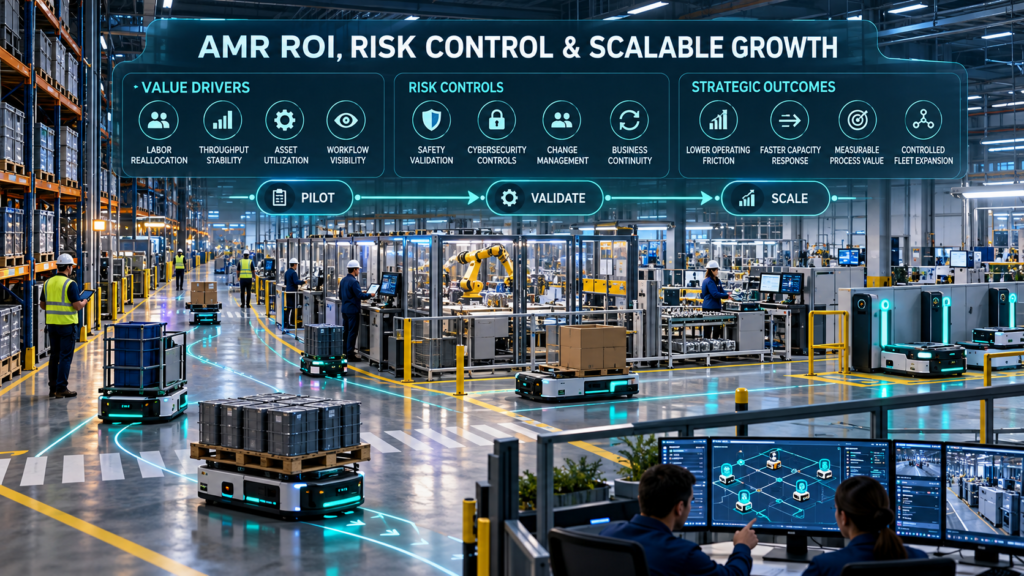
From a financial standpoint, Robot Automation can reduce per-unit production costs through increased throughput, fewer errors, reduced downtime, and the elimination of wasted resources. Robot Automation also allows for scaling up production without having to invest large amounts of capital into building additional fixed infrastructure. Most successful robot automation projects begin with well-defined use cases, clearly documented processes, and metrics-based Key Performance Indicators (KPIs), including cycle time, picking accuracy, and on-time delivery.

The maturation of robotics technologies has provided greater flexibility in implementing robot automation through advancements in artificial intelligence (AI), improved sensor capabilities, and the ability to integrate robotics more seamlessly with Warehouse Management Systems (WMS)/Manufacturing Execution Systems (MES). These improvements enable autonomous mobile robots and other robotic solutions to rapidly adapt to changes in layout configurations, new product offerings, or shifting customer demand while continuing to operate reliably.

Example

The pharmacy warehouse is experiencing problems with repeatedly relabeling cases staged on pallets. The warehouse then implements robotic automation, utilizing a palletizing robot and an automatic print-and-apply station. Cases arrive in random order and are scanned into the system to capture the shipment ID. Then the robotic palletizer will stack the cases according to their respective store routes and temperature classes, as indicated by the printed label. If verification of a printed label fails, the system will divert the case to a rework lane and document the incident.

This automated process will continue throughout both breaks and shift changes, thus ensuring dock doors remain open. As a result, this new operation has improved the overall accuracy of shipping products, reduced the number of manual lifting injuries sustained by employees, and shortened the time it takes to turn over trailers at the end of each month due to increased volume during those months.

Core Business Benefits of Autonomous Mobile Robots

AMRs offer several business-related advantages that will enhance the performance of various industries through their applications in Industry 4.0.

The first advantage is improved operational efficiency. By automating repetitive tasks and minimizing opportunities for human error, AMRs enable workers to focus on more complex responsibilities.

A second advantage is cost reduction. Optimizing resources through the effective deployment of AMRs delivers a quick return on investment and lower operating costs.

An additional advantage is improved safety for the workforce. The ability to have robots perform hazardous tasks reduces exposure for human employees and improves the effectiveness of overall safety policies.

Another major advantage is scalability. As AMRs can adapt to changing production needs and surges in customer demand, they can be used in a variety of industrial applications.

Finally, AMRs support sustainability objectives. By optimizing energy use and reducing waste, AMRs enable organizations to maintain environmentally conscious operations.

Key benefits of AMRs include:

  • Enhanced Efficiency: Reducing task time
  • Cost Savings: Minimizing resource usage
  • Safety Improvements: Managing dangerous tasks
  • Scalability: Adapting to demand changes
  • Sustainability: Lowering environmental impact

Ultimately, businesses gain a competitive edge by leveraging these versatile robotic solutions.

Enhanced Operational Efficiency and Productivity

Automated Mobile Robots (AMRs) are now transforming how companies conduct business by automating labor-intensive tasks that were previously performed manually, greatly increasing company-wide productivity.

They perform repetitive tasks with high precision and accuracy, reducing the likelihood of human error, increasing consistency in task completion, and shortening task completion time.

In addition to performing tasks at an extremely fast rate, they can work continuously around the clock, enabling maximum production without interruptions or downtime.

Their adaptability enables them to optimize flow within a facility. As a result, businesses benefit greatly from using AMRs in their operations.

Key enhancements include:

  • Automated Tasks: Freeing up human labor
  • Round-the-Clock Operation: Maximizing uptime
  • Consistent Output: Reducing errors
  • Smart Navigation: Improving workflows

The ultimate result is a more agile and responsive operation capable of meeting modern demands efficiently.

Cost Reduction and ROI Acceleration

AMRs can dramatically reduce business operational costs. The cost reduction comes in several ways.

Firstly, they save on labor. By doing routine work, they enable their human workforce to be an asset rather than an expense.

Secondly, by being extremely accurate, they also help conserve resources and reduce waste, both of which have economic benefits.

Lastly, AMRs help improve energy efficiency. As such, it will directly result in lower energy bills and thus less money spent on utilities.

Additionally, return on investment (ROI) increases when AMRs are deployed. The increased efficiency and productivity lead to faster returns.

Cost reduction factors include:

  • Labor Savings: Automating routine tasks
  • Waste Minimization: Enhancing precision
  • Energy Efficiency: Reducing utility costs
  • Accelerated ROI: Gaining financial returns quickly

Through these strategic advantages, businesses can maintain fiscal health and competitive positioning.

Improved Workplace Safety and Ergonomics

Autonomous Mobile Robots (AMRs) enhance workplace safety by performing hazardous tasks that could pose a risk to Human Workers.

The ability to perform dangerous jobs reduces the likelihood of a worker being injured on the job, which reduces employee medical and workers’ compensation claims.

Also, AMRS increases ergonomic efficiency. Heavy objects are lifted and transported, reducing the physical labor burden on the employees.

Workplace safety improvements include:

  • Hazardous Task Management: Reducing risk
  • Accident Prevention: Lowering injury rates
  • Ergonomic Assistance: Easing physical burdens

In summary, AMRs create safer and healthier work environments, benefiting all stakeholders.

Scalability and Flexibility in Operations

The scalability of Automated Mobile Robots (AMRs) gives businesses many options for their operational processes.

The ability of an AMR system to be flexible in its operations is important in rapidly changing business environments.

AMR systems are easily integrated with other systems. Their modular nature allows for quick integration at various levels as production volume increases.

The flexibility in deploying AMR systems within a facility will enable easier adjustments to workflows as markets and/or production lines evolve.

Operational flexibility benefits include:

  • Easy Integration: Adapting to existing infrastructure
  • Modular Scaling: Expanding operations smoothly
  • Adaptability: Responding to market changes

With AMRs, companies can pivot as needed, ensuring resilience and a competitive advantage.

Sustainability and Environmental Impact

Sustainable development is supported by autonomous mobile robots, as they optimize resource use and minimize waste, aligning with the objectives of green initiatives.

Autonomous Mobile Robots (AMRs) are energy-efficient and help reduce environmental footprint and operating costs for utilities. In addition, AMRs have high accuracy and therefore help reduce material waste that could otherwise be used elsewhere in industry, preserving our natural resources.

The contributions of both energy efficiency and reduced waste support a broader effort toward environmental sustainability while maintaining increased operational productivity.

Sustainability impacts include:

  • Energy Efficiency: Reducing power use
  • Waste Reduction: Conserving resources
  • Eco-Friendly Operations: Aligning with green goals

Overall, through these contributions, Autonomous Mobile Robots will play a significant role in helping create a more sustainable manufacturing environment.

Industry 4.0 Benefits and ROI Statistics

BenefitPotential Improvement
ProductivityUp to 30% increase
Operational EfficiencyUp to 25% improvement
Labor Cost ReductionUp to 20%
Error ReductionUp to 40%
Workplace SafetySignificant improvement

Key Statistic

Manufacturers adopting advanced automation technologies often report substantial productivity and operational gains.

Source:

  • https://www.mckinsey.com/capabilities/operations/our-insights
  • https://www.weforum.org/reports

Real-World Applications Across Industries

Autonomous Mobile Robots (AMRs) have made significant advancements in numerous industrial sectors. As evidence of this, AMRs can be seen being utilized by many different types of businesses across these areas, including Manufacturing, Warehousing/Logistics, Healthcare, and Retail. Within each area, manufacturers leverage the specific advantages of AMRs to improve business operations and increase efficiency.

Manufacturing has benefited greatly from the use of AMRs, as they provide an efficient method for moving products along the assembly line, reduce labor associated with material handling, and support process improvements throughout production. By enabling them to perform repetitive tasks accurately and efficiently, the error rate is reduced, and consistency is achieved across all manufacturing-related activities.

Warehousing and Logistics have also been positively affected by the implementation of AMRs into their daily operations. The primary advantage for companies using AMRs is the ability to manage inventory levels more efficiently and fulfill orders more quickly, thereby improving overall supply chain efficiency.

Healthcare facilities utilize AMRs to transport medical supplies and samples. By doing so, it takes some of the workload off employees previously responsible for transporting supplies and/or samples, ultimately improving both patient care and facility operational efficiency.

Retail and e-commerce companies use AMRs for inventory checks and customer service. In doing so, it provides customers with an enhanced shopping experience by increasing transaction processing speed and accuracy.

Industries leveraging AMR capabilities include:

  • Manufacturing: Enhancing production lines
  • Warehousing: Improving logistics
  • Healthcare: Supporting patient care

Retail: Optimizing customer interactions

Manufacturing

Automated Manufacturing Robots (AMRs) are transforming the way manufacturing is done. The high degree of automation that they provide enables them to carry out their tasks with a much higher level of precision than humans can. As such, it provides manufacturers an opportunity to eliminate waste and reduce errors.

In addition, the continuous operation of AMRs allows manufacturers to increase their production volume while maintaining product quality. Increased productivity from the use of AMRs also improves the manufacturer’s overall efficiency.

Warehousing and Logistics

The introduction of Automated Manufacturing Robots has transformed the way warehouses are managed. They optimize storage solutions and improve inventory management. Improved speed and accuracy in picking, packaging, and shipping products are also important benefits of these robots.

Also, AMRs have made it easier to navigate a warehouse layout. Warehouses with fewer bottlenecks and better traffic flow result in faster product delivery times.

Healthcare

Automated Mobile Robots (AMRs) are used extensively throughout healthcare, contributing greatly to overall operational efficiency. The robots enable medical personnel to transport medications, samples, and equipment. This allows medical providers to focus on their patients, rather than transporting items around the hospital or clinic.

The use of AMRs will reduce employees’ workload and help prevent errors. Reducing employee stress and errors will positively affect both patient care and the overall operations of hospitals and clinics.

Retail and E-Commerce

In retail and e-commerce environments, Automated Mobile Robots provide an additional means of performing inventory management functions such as checking inventory quantities and locating products. These robots can quickly locate and pick up products, accelerating inventory fulfillment and reducing inventory discrepancies.

Additionally, the use of AMRs helps maintain accurate inventory levels by enabling employees to easily replenish stock as needed. Therefore, using AMRs increases the overall efficiency of your company’s supply chain.

Autonomous Mobile Robot Applications by Industry

IndustryCommon AMR Applications
ManufacturingMaterial transport, assembly support
WarehousingOrder picking, inventory movement
HealthcareMedication and supply delivery
RetailInventory management
E-commerceFulfillment automation
LogisticsPackage sorting and transport

Example

Hospitals use AMRs to transport medications, reducing staff workload and improving operational efficiency.

Source:

  • https://www.forbes.com/sites/forbestechcouncil/
  • https://www.dhl.com/global-en/home/insights-and-innovation.html

Challenges and Considerations for Implementation

Autonomous mobile robots present many challenges to businesses as they look to implement them. Businesses need to ensure their infrastructure is compatible with robotic systems and that the facility is properly set up for the system(s) to operate. Most of the time, this means changing out some space or adding a network (e.g., Wi-Fi).

Another important aspect of implementing an Autonomous Mobile Robot (AMR) is training your employees. When employees have to start working alongside robots, they will need to know how to operate them safely and what limits exist on what the robot can do. An employee’s ability to adapt quickly to working with robots requires a well-structured, effective training program.

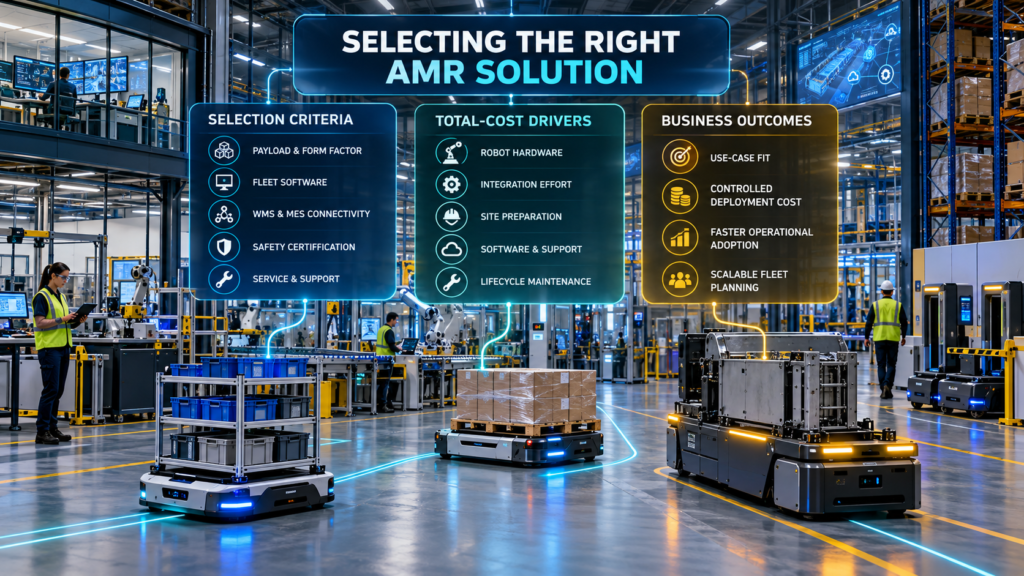
The cost of purchasing an Autonomous Mobile Robot is also a major challenge. The initial investment in purchasing an AMR can be high; therefore, you should develop a financing plan. While there may be significant upfront costs associated with purchasing an Autonomous Mobile Robot, the efficiency benefits could far outweigh those costs over time.

Finally, integrating an Autonomous Mobile Robot into a business’s existing systems can create additional barriers to adoption, especially in legacy environments. To successfully integrate an Autonomous Mobile Robot, companies need to find compatible software and establish robust technical support to minimize disruption to daily operations.

Key considerations for implementation include:

  • Infrastructure readiness
  • Workforce training
  • Cost and ROI analysis
  • Integration with legacy systems

Autonomous Mobile Robot Implementation Roadmap

PhaseAction
1Assess operational needs
2Identify automation opportunities
3Select AMR solution
4Pilot deployment
5Integrate with existing systems
6Train employees
7Scale deployment
8Monitor and optimize performance

Example

Many organizations begin with a single warehouse pilot before expanding AMRs across multiple facilities.

Source:

  • https://www.gartner.com/en
  • https://www.ibm.com/topics/automation

The Future of Autonomous Mobile Robots in Industry 4.0

The prospects for autonomous mobile robots (AMRs) in Industry 4.0 look promising. Improvements in both Artificial Intelligence (AI) and sensor technologies are increasing the sophistication of AMRs. Advancements in robotics and sensor development are enabling more flexible and productive manufacturing processes.

Future technological improvements will further enable the interconnectivity of robots and IoT systems. Improved communication and data exchange will enable better business decision-making. As a result of this increased interconnectedness, businesses will improve their ability to quickly adjust to changes in market conditions through greater operational flexibility and responsiveness.

Looking ahead, we can expect:

  • Greater collaboration between AI and robots
  • Enhanced connectivity with IoT
  • Expansion into new industries

The increasing need for new and innovative ways of doing things will lead to innovations that continue to push the boundaries of what future AMRs can do. Ultimately, the use of AMRs will help drive new paradigms in operational design by improving productivity and reducing costs.

Conclusion: Gaining a Competitive Edge with Autonomous Mobile Robots

The use of Autonomous Mobile Robots (AMRs) in an organization provides a significant competitive advantage. Efficiency, cost savings, and worker safety are all enhanced by the addition of AMRs in an organization. In addition, scalability and flexibility are achieved through AMRs, enabling organizations to adapt quickly to changing markets.

For organizations to remain at the forefront of Industry 4.0, they must adopt AMRs, as they enable innovation and improved organizational performance. Organizations that strategically adopt AMRs will not only meet their current needs but will be prepared for the future of Industrial Automation.

FAQs

  1. What are Autonomous Mobile Robots (AMRs)?
    AMRs are self-navigating robots that use sensors and AI to move materials and perform intralogistics tasks without fixed routes, adapting in real time to people, obstacles, and layout changes.
  2. How do AMRs support Industry 4.0 initiatives?
    AMRs connect with WMS/MES systems and generate operational data (moves, dwell time, exceptions). This improves visibility, enables analytics-driven optimization, and supports more responsive, automated workflows.
  3. What business benefits do AMRs deliver most quickly?
    Common fast wins include reduced travel time for workers, smoother material flow to production/packing stations, improved on-time output, fewer handling errors, and better space utilization.
  4. Are AMRs safe to run alongside people and forklifts?
    Yes—when properly deployed and configured. AMRs use obstacle detection, speed control, geofencing, and safety behaviors (slow, stop, reroute) to operate in mixed environments under defined safety policies.
  5. How do companies typically start an AMR deployment?
    Most begin with a focused use case (e.g., point-to-point transport), map key routes, integrate with WMS/MES as needed, run a pilot to measure KPIs, then scale by adding robots and expanding workflows.
Previous Post

What Is Sentiment Analysis in NLP?

Next Post

Autonomous Mobile Robots vs Automated Guided Vehicles: Key Differences

Garikapati Bullivenkaiah

Garikapati Bullivenkaiah

Garikapati Bullivenkaiah is a seasoned entrepreneur with a rich multidisciplinary academic foundation—including LL.B., LL.M., M.A., and M.B.A. degrees—that uniquely blend legal insight, managerial acumen, and sociocultural understanding. Driven by vision and integrity, he leads his own enterprise with a strategic mindset informed by rigorous legal training and advanced business education. His strong analytical skills, honed through legal and management disciplines, empower him to navigate complex challenges, mitigate risks, and foster growth in diverse sectors. Committed to delivering value, Garikapati’s entrepreneurial journey is characterized by innovative approaches, ethical leadership, and the ability to convert cross-domain knowledge into practical, client-focused solutions.

Next Post
Automated Guided Vehicles transporting materials in a smart warehouse using automated routes and Industry 4.0 logistics technology

Autonomous Mobile Robots vs Automated Guided Vehicles: Key Differences

Leave a Reply Cancel reply

Your email address will not be published. Required fields are marked *

  • Trending
  • Comments
  • Latest
Quantum computing concept illustrating qubits and advanced computational processing

What is Quantum Computing and Why It Matters

May 1, 2026
A visual AI learning roadmap showing a beginner progressing step by step through artificial intelligence skills from basics to advanced projects

How to Start Learning Artificial Intelligence Step by Step

May 1, 2026
Digital robot automating computer tasks on multiple screens, representing robotic process automation in modern office workflows.

What Is Robotic Process Automation and How It Works

May 23, 2026
Key Machine Learning Advancements You Should Know Today

Key Machine Learning Advancements You Should Know Today

May 1, 2026
Quantum computing concept illustrating qubits and advanced computational processing

What is Quantum Computing and Why It Matters

8
What is Artificial Intelligence and How Does It Work?

What is Artificial Intelligence and How Does It Work?

5
smart IoT sensors collecting and transmitting data for intelligent AI-driven systems

How Smart IoT Sensors and AI Work Together in Real Systems

5
Side-by-side comparison of image classification and object detection: the left shows a single label identifying a dog, while the right shows multiple objects in the same scene marked with bounding boxes

Object Detection vs Image Classification: Key Differences Explained

4
Scientists conducting neutral atom quantum research using optical tweezers, laser systems, and atomic qubits in an advanced quantum computing laboratory.

How Does Neutral Atom Quantum Research Work at a Fundamental Level?

June 12, 2026
What DARPA Quantum Research Is Doing and Why It Matters

What DARPA Quantum Research Is Doing and Why It Matters

June 10, 2026
Embodied AI robots interacting with their environment and collaborating with humans using advanced sensors, machine learning, and intelligent decision-making.

The Future of Embodied AI and Autonomous Robots in 2030

June 9, 2026
Humanoid AI robots collaborating with professionals in a modern workplace using artificial intelligence, automation, and advanced robotics technology

The Rise of Humanoid AI in Healthcare Logistics and Manufacturing

June 8, 2026

Recent News

Scientists conducting neutral atom quantum research using optical tweezers, laser systems, and atomic qubits in an advanced quantum computing laboratory.

How Does Neutral Atom Quantum Research Work at a Fundamental Level?

June 12, 2026
What DARPA Quantum Research Is Doing and Why It Matters

What DARPA Quantum Research Is Doing and Why It Matters

June 10, 2026
Embodied AI robots interacting with their environment and collaborating with humans using advanced sensors, machine learning, and intelligent decision-making.

The Future of Embodied AI and Autonomous Robots in 2030

June 9, 2026
Humanoid AI robots collaborating with professionals in a modern workplace using artificial intelligence, automation, and advanced robotics technology

The Rise of Humanoid AI in Healthcare Logistics and Manufacturing

June 8, 2026
Latest Technology | Nezz hub

NezzHub is a technology-focused knowledge hub delivering insights on AI, robotics, cybersecurity, biotech, and emerging innovations. Our mission is to simplify complex technologies through research-driven content and analysis.

Follow Us

Browse by Category

  • AI & Machine Learning
  • AI in Healthcare & Biotech
  • AI Tools, Frameworks & Platforms
  • Autonomous Mobile Robots (AMRs)
  • Computer Vision & Image Recognition
  • Cybersecurity Tools & Frameworks
  • Data Security & Compliance
  • Digital Twins & Simulation
  • Generative AI & LLMs
  • Humanoids & Embodied AI
  • Industrial Robots & Cobots
  • Natural Language Processing (NLP)
  • Quantum AI in Simulation
  • Quantum Algorithms
  • Quantum Computing
  • Robotics and Automation
  • Robotics Software (ROS, ROS2)
  • Uncategorized
  • USA AI Jobs & Careers
  • USA Artificial Intelligence
  • USA Healthcare & Biotech AI
  • USA Quantum Computing
  • USA Robotics & Automation
  • USA Tech Industry News

Recent News

Scientists conducting neutral atom quantum research using optical tweezers, laser systems, and atomic qubits in an advanced quantum computing laboratory.

How Does Neutral Atom Quantum Research Work at a Fundamental Level?

June 12, 2026
What DARPA Quantum Research Is Doing and Why It Matters

What DARPA Quantum Research Is Doing and Why It Matters

June 10, 2026
  • About NezzHub
  • Author Bio
  • Privacy Policy
  • Advertise & Disclaimer
  • Cookie Policy
  • Terms & Conditions
  • Contact Us

© 2025/ website made by nezzhub.com.

No Result
View All Result
  • AI & Machine Learning
  • Quantum Computing
  • Robotics and Automation

© 2025/ website made by nezzhub.com.