



















Research on neutral atoms in Quantum Mechanics is an exciting area of study. Using neutral atoms, researchers examine fundamental aspects of Quantum Mechanics to better understand how to use these atoms as “qubits” to build quantum computers.
There are several advantages to using neutral-atom qubits. Coherence times are much longer than those of other qubit types and lend themselves well to scalability, making them excellent candidates for quantum computing.
Optical tweezers form an integral part of this research. Optical tweezers allow researchers to precisely trap and manipulate the position and motion of the neutral atoms. The ability to control where each atom sits allows researchers to create a variety of different quantum circuitry configurations.
Superposition is one of the most important concepts in Quantum Mechanics. Superposition is when an atom exists in more than one state simultaneously. To be able to perform the calculations necessary to run a quantum computer, it will be necessary to place a qubit into a superposition of all of the states (0 and 1) at the same time.
Another very important concept in Quantum Mechanics is Entanglement. Entangled qubits are connected so that if something happens to one qubit, it instantly affects the other. Because the information in an entangled pair of qubits is shared instantaneously across space, entangling two or more qubits is a key component for being able to perform many of the complex calculations required for a quantum computer.
A Rydberg atom is a very excited atom. There has been significant interest in recent years regarding the potential for using Rydberg atoms in neutral-atom quantum computing. One reason for this interest is the strong interactions between atoms in a Rydberg state, which could potentially enhance certain quantum operations.
The field of neutral-atom quantum research is advancing quickly. It has great potential for changing the way we compute. The better our understanding of the foundational aspects of neutral-atom quantum research, the greater the potential to develop innovative technologies based on it.
Summary
Researchers in neutral-atom quantum studies use the principles of Quantum Mechanics to determine whether it is possible to control and manipulate groups of neutral atoms to perform computations. This article explains how researchers use a single atom as a qubit, the advantages of a stable atom with long coherence time, and why they are interested in using such atoms for scalable quantum computing.
This article explains the steps researchers take to cool and position individual atoms into an arrangement that functions as atomic qubits and to use optical tweezers to trap and position them, enabling programmable layouts for quantum circuitry.
The summary highlights the two main quantum mechanical properties that provide the potential for this platform to work effectively: superposition (the ability of an atom to exist in many different states simultaneously), and entanglement (when atoms interact in such a way that the state of one atom becomes dependent on the state of another); and it explains how scientists use highly excited Rydberg states to produce strong and controllable interaction between atoms, thereby allowing for rapid entanglement and long range connectivity.
In addition to explaining how scientists implement quantum logic gates with lasers and the importance of achieving scalability and developing error-correction methods, the article discusses various areas where neutral atom-based systems could have significant early applications (e.g., simulation, optimization, cryptography, sensing, and quantum communication networks).
Finally, the article concludes by identifying several key challenges (noise, decoherence, fidelity, and controlling large numbers of atoms) that must be overcome before neutral atom platforms can reliably operate as the next generation of quantum computers and identifies areas of active research that are focused on developing ways to overcome each of these challenges.
Neutral Atom Quantum Research: Exploring atom-based quantum systems for next-generation computing breakthroughs

The use of neutral atoms as qubits is becoming an increasingly important area of research as scientists seek ways to develop large-scale, reliable, and efficient quantum computers. One major way scientists are doing this is through Neutral Atom Quantum Research. Scientists cool the atoms to microkelvin temperatures, trap them in “optical tweezers” (a laser beam that holds the atoms like tiny tweezers), and create a very precise arrangement so that they are all spaced nearly the same distance apart. Each atom is essentially its own independent quantum computer.
Each atom’s internal energy level can store information about the quantum state. When scientists want to induce interaction among these quantum states, they do so through a process called “Rydberg Excitation.” Scientists temporarily promote one or more of the atoms to what is referred to as a “highly excited” Rydberg state. Once promoted to the Rydberg state, these atoms will begin to exert powerful attractive force fields toward other atoms that have been similarly promoted.
These field forces allow scientists to quickly create two-qubit gates and entangle many atoms. Since scientists can “block” nearby atoms from being excited simultaneously due to the “Rydberg Blockade,” they can determine when certain interactions occur in a completely predictable manner.
One of the main advantages of Neutral Atom Quantum Research is its modularity. Researchers can move their optical traps, thereby replacing faulty spots and mapping out new circuit patterns across different geometric configurations. Because scientists have access to countless identical atoms, fabricated in nature, creating hundreds to thousands of qubits might require fewer manufacturing steps than for most solid-state devices.
Another benefit of Neutral Atom Quantum Research is the numerous opportunities for high connectivity, as interactions mediated by Rydberg states can span several micrometers, enabling non-nearest-neighbor gates.
However, researchers still face challenges such as reducing laser-induced noise, increasing the accuracy of detecting each atom’s state, and developing error-correction methods fast enough for fault-tolerant operation. Nonetheless, Neutral Atom Quantum Research is currently providing engineers with an opportunity to translate laboratory-based control into functional engineering platforms by combining precisely controlled atomic physics with quantum algorithms.
It is likely that future versions of Neutral Atom Quantum Research will deliver breakthroughs in fields that are currently solved inefficiently by classical computers, such as chemistry, materials discovery, optimization, and secure communication.
Short-term implementations of Neutral Atom Quantum Research may be developed as quantum simulators and mimic magnetic behavior and/or exotic phases in matter. Additionally, better vacuum quality, improved optics, and advanced calibration software are helping improve uptime and repeatability of experiments. Therefore, Neutral Atom Quantum Research provides a realistic pathway from experimental demonstrations to actual industrial applications that demonstrate quantum advantage.
What DARPA Quantum Research Is Doing and Why It Matters
Example
A university laboratory developed an experimental tabletop setup to evaluate new ideas regarding quantum error-correcting techniques utilizing neutral atoms. In this setup, dozens of rubidium atoms were first cooled down and held together in a 2D lattice by optical tweezers.
The team did not run through complete algorithmic sequences but instead repeated the preparation of numerous body states, introduced controlled “noise” into those prepared states, and applied custom-designed laser pulse sequences to correct the “noisy” states back to the originally prepared states. By comparing measured states before and after applying the corrective sequence, the team identified which types of errors could be corrected by this technique.
What Are Neutral Atom Qubits?
The majority of current quantum computing research centers around “neutral atom” (or “neutral atom”) qubits. A “qubit”, or a unit of quantum information, refers to any two-state system that can be used to store or manipulate quantum information. The primary difference between neutral atom qubits and charged ion qubits lies with their sensitivity to electrical fields; neutral atom qubits are less sensitive to external electric fields than charged ions.
There are several advantages to using neutral atom qubits. First, because of their relatively low sensitivity to electromagnetic radiation, neutral atom qubits have very long coherence times. Therefore, the states of neutral atom qubits are generally much longer-lived than those of charged ion qubits. Additionally, it is possible to scale up the number of neutral-atom qubits available to researchers. Scalability is critical to creating large-scale quantum systems capable of solving real-world problems that classical computers cannot solve.
Neutral atom qubits function via changes to atomic energy levels. Using lasers to control these energy-level transitions, researchers can create quantum gates that allow them to encode and manipulate quantum information.
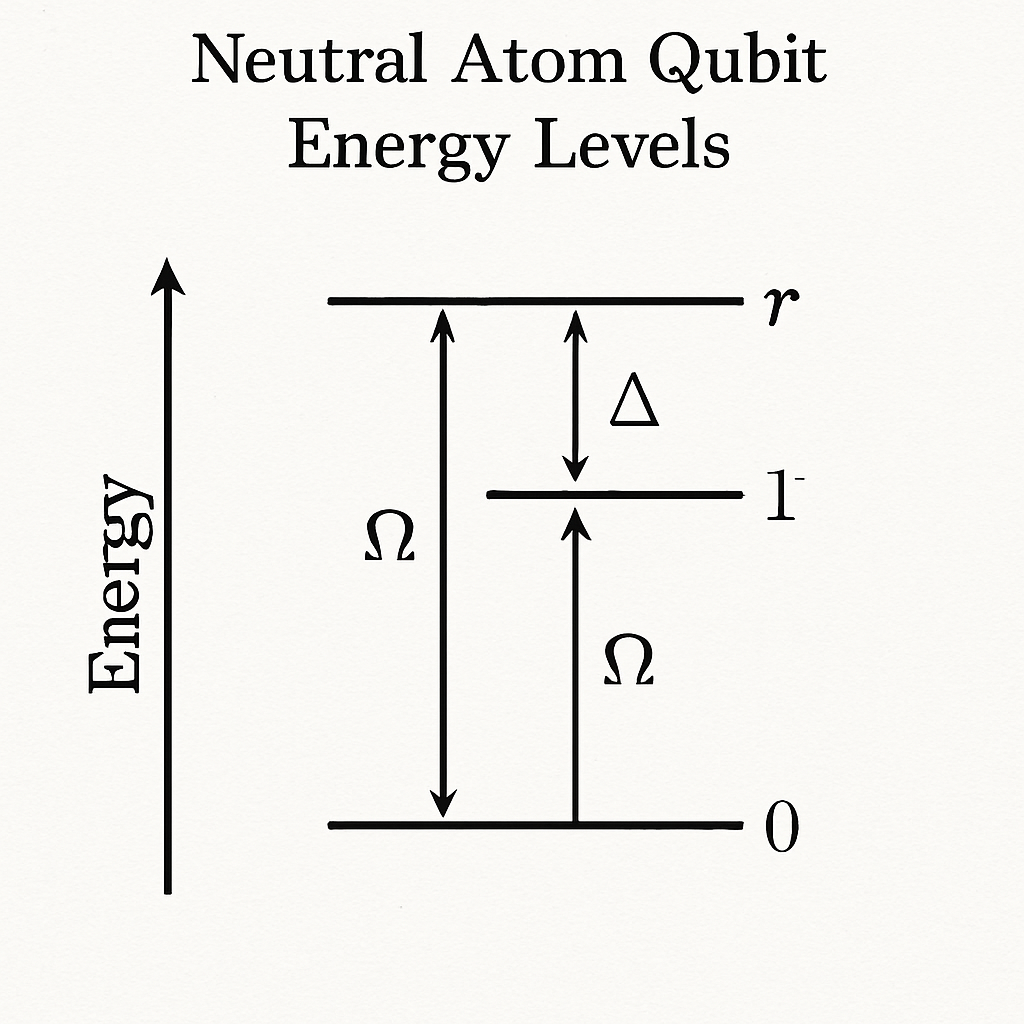
To better understand, consider these key aspects:
- Stability: Neutral atom qubits are less susceptible to environmental disturbances.
- Scalability: Easily scalable systems enable bigger quantum computers.
- Control: Lasers precisely manipulate atomic states for data processing.
Overall, neutral-atom qubits may provide a route for scientists to develop quantum computers that surpass the capabilities of classical computers in certain areas.
Neutral Atom Quantum Computing vs Other Quantum Platforms
| Feature | Neutral Atoms | Superconducting Qubits | Trapped Ions |
|---|---|---|---|
| Qubit Type | Individual neutral atoms | Superconducting circuits | Charged ions |
| Operating Temperature | Near room temperature/laser cooling | Millikelvin cryogenic temperatures | Ultra-high vacuum |
| Scalability | Very high | Moderate | Moderate |
| Connectivity | Flexible, reconfigurable | Fixed architecture | High |
| Coherence Time | Long | Moderate | Very long |
| Leading Companies | QuEra, Pasqal, Atom Computing | IBM, Google | IonQ, Quantinuum |
Key Insight
Neutral atom platforms offer one of the most promising paths toward large-scale quantum computers due to their scalability and reconfigurable architectures.
Source:
Neutral Atom Qubits: Using individual atoms as stable qubits for quantum information processing

Neutral Atom Qubits are composed of a single electrically neutral atom used to carry the fundamental quantum information. The atoms (rubidium, cesium, strontium, etc.) are cooled down to very low temperatures by lasers. Then they are “trapped” using tightly focused laser beams to create independent qubit registers. Compared to many other types of solid-state qubits, Neutral Atom Qubits have uniform energy levels due to being naturally identical. Therefore, device-to-device variability is much lower than in many other qubit technologies, which is why Neutral Atom Qubits are prominent in Neutral Atom Quantum Research.
In optical tweezer arrays, Neutral Atom Qubits can be arranged in a wide range of geometric configurations, including 1-dimensional, 2-dimensional, and 3-dimensional arrangements. Additionally, these arrays can be dynamically rearranged to form different circuit structures. Typically, Neutral Atom Qubits store their quantum information in long-lived hyperfine “clock” states.
This means that Neutral Atom Qubits exhibit good intrinsic stability and relatively long coherence times when subjected to precisely controlled magnetic and optical fields. Single-qubit operations on Neutral Atom Qubits can be performed with high fidelity using either laser-driven or microwave-driven pulses. Two-qubit gates are generally implemented through the use of Rydberg excitation. A short-duration laser pulse is applied to an atom, exciting it to a highly excited state.
These highly excited atoms then experience significant interaction forces that allow for efficient entanglement operations. The Rydberg-mediated operation is one of the primary tools used across all Neutral Atom Quantum Research.
The ability to scale Neutral Atom Qubits up into larger numbers of atoms is facilitated by performing simultaneous operations on many individual traps, high connectivity due to the tunability of Rydberg interactions, and the ability to “repair” gaps in arrays by moving individual atoms into them. Important engineering challenges include controlling fluctuations in laser phase and intensity, improving both the quality and speed of state preparation and measurement, and implementing low-overhead error correction.
Improved technology in vacuum systems, optical systems, and calibration software will continue to enhance the overall performance of Neutral Atom Qubits, making them among the best candidate architectures for practical quantum processor development and application-driven quantum advantage in Neutral Atom Quantum Research.
Example
A start-up has developed a prototype of a 64-qubit computer based entirely on neutral atom qubits for a chemical simulation project. It was demonstrated to have two possible qubit encoding methods as well as microwave pulses for single-qubit gates. In addition, it was shown to perform high-accuracy chemical calculations (simulating the ground-state energy of a small catalytic molecule) using fewer computational steps than the high-precision classical algorithms used for comparison. This demonstration convinced investors that developing this type of architecture could make quantum chemistry simulations commercially viable.
The Science Behind Atomic Qubit Systems
To understand how quantum computers work, scientists have been developing atomic qubit systems. In these systems, atoms are used as the basic building blocks for both storing and manipulating data. A very useful aspect of atomic qubit systems is that they enable high precision and adaptability.
Scientists have developed a number of methods for constructing atomic qubit systems. Laser cooling can be employed to cool the atoms involved in the system. Cooling atoms with lasers reduces atomic motion, enabling scientists to manipulate single atoms effectively.
Depending upon the type of quantum operation being performed, scientists can arrange atomic qubit systems in many different configurations. By optimizing these arrangements based on the type of quantum operation it will perform, scientists can optimize computations.
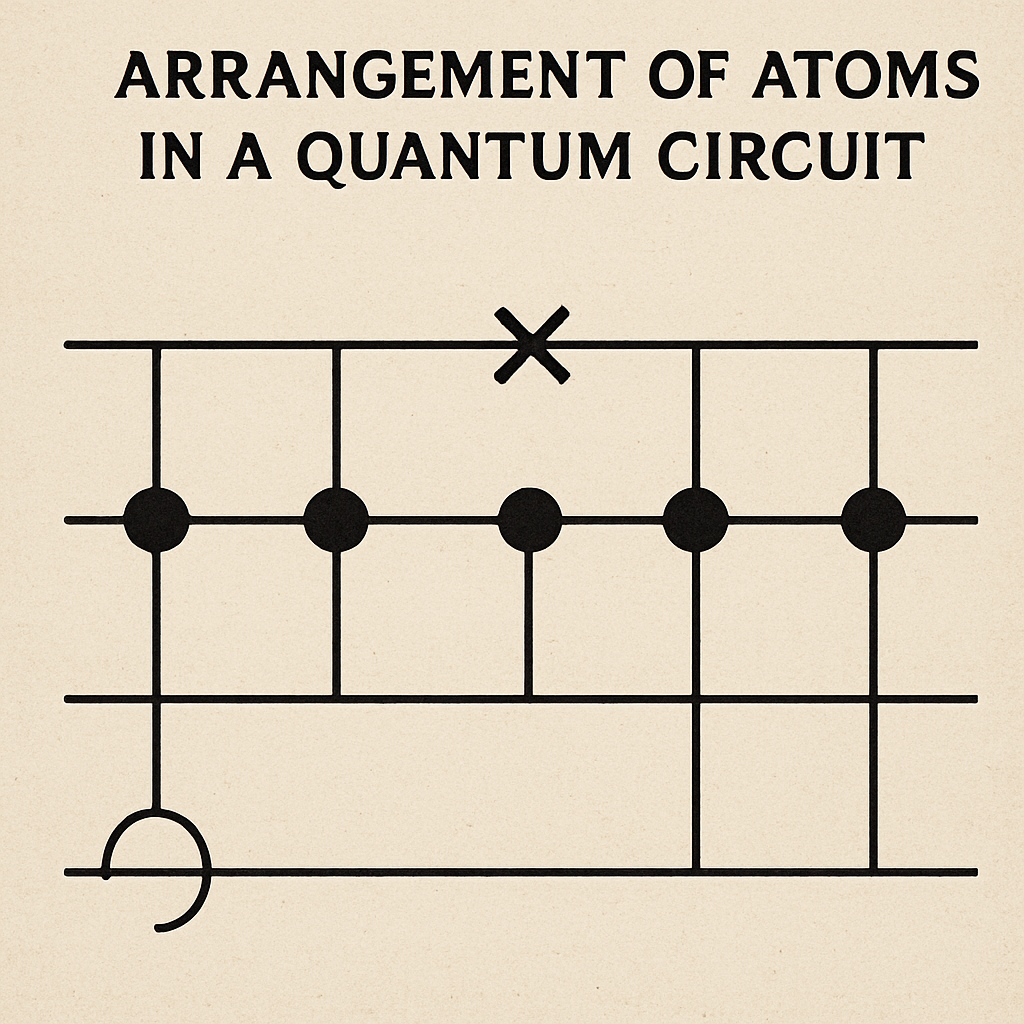
Here are some key points about atomic qubit systems:
- Precision: Laser cooling enhances control over atomic positions.
- Versatility: Different configurations suit different quantum tasks.
- Integration: Atomic systems can combine with other quantum techs.
For example, scientists are currently using atomic qubit systems to study quantum entanglement and superposition. Quantum entanglement and superposition are two of the most important aspects of quantum mechanics and play critical roles in quantum computation.
The continued development of atomic qubit systems has significant implications for the advancement of quantum computing. Scientists continually uncover new applications as research continues. Additionally, because of the precise nature of atomic qubit systems, scientists believe that they may eventually provide the foundation for future breakthroughs in computing technology that could ultimately transform the way humans process and compute information.
Atomic Qubit Systems: Advanced quantum architectures built from controllable atomic qubits

Atomic Qubit Systems are quantum computing architectures that use individual atoms as precise qubits. They combine the replicability of atomic systems with the programmability of today’s quantum algorithms. The typical configuration in Atomic Qubit Systems includes cooling and trapping of atoms using lasers (optical trap) such as optical tweezers or optical lattices, allowing each qubit to be individually targeted, measured, and entangled with specific neighbors. This control ability has made Atomic Qubit Systems a central area of research in Neutral Atom Quantum Computing.
One defining element of Atomic Qubit Systems is how they encode information in atomic states. Hyperfine or Optical Clock States provide a stable computational basis; Laser/Microwave Pulses enable high-precision Single-Qubit Operations. For Multi-Qubit Logic, Atomic Qubit Systems utilize Tunable Interactions generated via Rydberg Excitations. These excitations enable Fast Entanglement Gates and Collective Operation over Programmable Geometries.
These interaction mechanisms also enable Atomic Qubit Systems to exhibit High Connectivity beyond Nearest Neighbor Coupling. A key benefit to Circuit Compilation and Simulation Workloads is emphasized in Neutral Atom Quantum Computing.
The scalability of Atomic Qubit Systems is enabled through Parallelism: Large Arrays of Atoms can be controlled via Multiplexed Optical Beams; Defective Sites can be Corrected via Rearrangement of Atoms to Reconstruct Full Registers. Site-Resolved Readout via Fluorescence Imaging is used for measurement, providing an essential tool for Calibration, Benchmarking, and error mitigation.
However, despite the advantages provided by Atomic Qubit Systems, there remain significant Engineering Challenges: Laser Stability, Crosstalk between Closely Spaced Traps, State-Detection Fidelity, Resource Requirements of Fault-Tolerant Error Correction.
Despite these ongoing engineering challenges, Atomic Qubit Systems are evolving rapidly from Laboratory Demonstrations toward Deployable Platforms. With improvements in Coherence, Gate Fidelity, and Automation in Neutral-Atom Quantum Research, Atomic Qubit Systems will likely serve as General-Purpose Processors for Optimization and Secure Computation at ever-growing scales.
Example
The researchers are utilizing an atomic qubit system as a modeling tool in their industrial research lab to study and understand unusual “magnetic phase” characteristics of novel memory technology. To do this, they have created a programmable lattice (a grid) with neutral atoms that can be adjusted (from a simple rectangular pattern to a triangular one). The researchers will then adjust various laser conditions to change the “effective interaction” between the atoms’ spins. This allows them to mimic several different “Hamiltonian” models of magnetic behavior.
In addition to adjustable parameter control over the laser conditions, high-resolution imaging captures the configuration of all atoms’ spins immediately after each time step. These images allow them to determine when and how “domain wall” structures form and propagate, and provide guidance on the physical properties of future spintronics materials. The researchers’ atomic qubit system serves as a flexible quantum simulation environment or “wind tunnel” for testing material designs prior to expensive fabrication processes.
Optical Tweezer Arrays: Trapping and Manipulating Atoms
Optical tweezer arrays are very important tools for conducting neutral atom quantum studies. Each tweezer uses an extremely focused laser beam to trap or manipulate one atom at a time. By enabling researchers to precisely position each trapped atom, they provide the precision needed to build quantum circuits.
Researchers have demonstrated that optical tweezer arrays can isolate and spatially organize atoms into specific arrangements. Arranging the atoms in such a manner is required to efficiently perform quantum operations. The capability to manipulate individual atoms makes optical tweezers a robust method for developing large-scale quantum systems.

by Udo Zakarian (https://unsplash.com/@udo_z)
These arrays have several notable characteristics:
- Precision: Enables individual atom control.
- Flexibility: Allows various atom arrangements.
- Scalability: Can support large-scale quantum systems.
Implementing optical tweezer arrays requires advanced laser technologies. As lasers advance, the performance of these arrays improves, enhancing their ability to construct complex atom configurations. Researchers continuously develop new methods to optimize the use of optical tweezers.
The advancement of optical tweezer arrays is integral to the future of neutral-atom quantum computing. They enable the creation of intricate quantum circuits, proving essential for the burgeoning field. The innovation in this area promises further breakthroughs in controlling and utilizing neutral atoms for quantum computing applications.
How Neutral Atom Quantum Computing Works
| Step | Process |
|---|---|
| 1 | Laser cooling slows atoms |
| 2 | Optical tweezers trap individual atoms |
| 3 | Atoms are arranged into programmable arrays |
| 4 | Lasers create quantum superposition |
| 5 | Rydberg excitation enables entanglement |
| 6 | Quantum gates perform computations |
| 7 | Measurements produce results |
Example
A neutral atom processor may trap hundreds of rubidium atoms and arrange them into a custom geometry for a quantum algorithm.
Sources:
Optical Tweezer Arrays: Precisely trapping and arranging atoms with focused laser beams

Optical tweezer arrays are at the forefront of research into creating controlled, one-at-a-time, quantum platforms. The optical tweezers themselves consist of diffraction-limited focal points created with focused laser beams. These focal points are used to create microtraps that hold individual neutral atoms. A researcher starts with an atomic cloud that has been cooled down using lasers.
Then researchers take images of the areas around the traps and compare them to determine if there are any atoms within those particular traps. Once they have determined whether each trap contains any atoms, they use feedback loops to program the traps, thereby producing a clean register. Due to this capability (i.e., controlling numerous identical qubits directly), Optical Tweezer Arrays are a critical component of Neutral Atom Quantum Research.
One key feature that makes Optical Tweezer Arrays beneficial is their geometric flexibility. Spatial light modulators and/or acousto-optic deflectors can be used to create hundreds of traps in customizable 1-D or 2-D patterns. In some systems, Optical Tweezer Arrays can also create 3-D patterns. Additionally, because the position of each trap is defined by software, Optical Tweezer Arrays allow users to rapidly reconfigure the layout of their atoms.
For example, atoms may need to be moved to fill vacancies in a pattern, optimize connectivity between adjacent atoms, and so on. This “atomic assembly” approach is a major benefit for researchers working on Neutral Atom Quantum Research.
In Optical Tweezer Arrays, researchers store quantum information in the atoms’ stable internal states; however, when they want to activate interactions to enable entanglement among specific groups of atoms, they typically do so via Rydberg excitation. If researchers select specific atoms and drive them into highly excited Rydberg states, the atoms become strongly interacting over long ranges (on the order of millimeters), enabling rapid two-qubit gates.
However, Optical Tweezer Arrays provide the tools necessary to perform these operations in practice, enabling researchers to address individual sites (site-resolved) and schedule multiple gates simultaneously across all atoms.
However, several key technological challenges remain for Optical Tweezer Arrays. Specifically, researchers continue to work towards minimizing laser-intensity fluctuations and beam-positioning noise, reducing heating during movement/transportation and atom rearrangement, eliminating crosstalk between adjacent sites/traps, and increasing detection accuracy during readout.
Despite these challenges, significant advancements in opt mechanics/vacuum engineering/control algorithms continue to improve the coherence time/gate speed of Optical Tweezer Arrays. Ultimately, Optical Tweezer Arrays are seen as a scalable means towards developing both quantum simulators and general-purpose quantum processors as Neutral Atom Quantum Research progresses.
Example
A national lab deploys optical tweezer arrays to build a reconfigurable “quantum wiring” platform. They start with a random cloud of hundreds of cold atoms and use fluorescence imaging to identify occupied traps. Then, by dynamically steering the tweezers, they rearrange atoms into a defect-free “H”-shaped pattern tailored to a specific algorithm. Mid-experiment, they modify the layout again—splitting the array into two sub-registers to test a distributed protocol. The same hardware, just with new software-defined tweezer patterns, emulates very different device geometries, highlighting how optical tweezer arrays decouple chip fabrication from logical layout design.
Quantum Superposition in Atoms
Quantum superposition is a fundamental principle in quantum mechanics, in which particles (such as atoms) can exist in multiple states or configurations simultaneously. Superposition also provides the foundation for quantum computing; it allows neutral atoms to act as qubits, thereby representing both the “0” and “1” states simultaneously.
This ability to execute complex calculations significantly faster than classical counterparts is due to the exponential increase in computational power afforded by superposition. As such, scientists can solve difficult problems with traditional computers that cannot be solved using these computers. Additionally, neutral atoms possess inherent properties (stability and isolation) that contribute to the robustness of the states representing superpositions.
In practice, maintaining an atomic system in a superposition state requires significant precision to preserve the state and isolate it from environmental disturbances. The techniques used include laser cooling and the isolation of the system from external fields. The methods enable a high degree of operational fidelity in neutral-atom quantum computing.
Key aspects of quantum superposition in atoms include:
- Multiple States: Atoms can exist in multiple states simultaneously.
- Enhanced Computation: Facilitates the quick solution of complex problems.
- Stability and Isolation: Essential for maintaining coherence over time.
The study of quantum superposition in neutral atom systems continues to evolve. Researchers continue to investigate new methods to expand the use of superposition in neutral-atom systems; this will lead to further development in quantum computing.
Quantum Superposition in Atoms: Allowing atoms to exist in multiple quantum states simultaneously

Quantum Superposition in Atoms is the key component of Atomic Qubits, which allows them to carry much more information than Classical Bits. In Atomic Platforms, a single atom may be created in a coherent linear combination of two different internal energy states (typically hyperfine “clock” states); thus, when measured, the qubit will have been either one of two possible values. Therefore, Quantum Superposition in Atoms is the fundamental basis for all Interference, Phase-Sensitive Control, and the Speed-Ups pursued by Neutral Atom Researchers.
Researchers achieve Quantum Superposition in Atoms using precisely timed microwave or laser pulses that act as quantum rotations on a Bloch Sphere. A simple illustration of this concept is a π/2 pulse that transforms a definite initial state into an equally weighted superposition of two basis states. The preservation of Quantum Superposition in Atoms relies on protecting coherence from decoherence sources, including Magnetic-Field Fluctuations, Laser Phase Noise, Collisions with Background Gas, and Trap-Induced Light Shifts.
Ultra-High Vacuum, Magnetic Shielding, Stabilized Lasers, and State Choices less sensitive to Environmental Noise are used in Neutral Atom Quantum Research to mitigate decoherence.
The unique feature of Quantum Superposition in Atoms is that it can scale to multiple Atoms and Entangled States. By initializing arrays of Trapped Atoms simultaneously and manipulating each site individually while controlling their interactions (frequently achieved using Rydberg Excitation), Neutral Atom Researchers can run Algorithms and Simulate Many-Body Systems using large collections of interfering Patterns.
However, to accomplish these goals, Quantum Superposition in Atoms must remain coherent long enough to allow gates to operate on each other, move Atoms around the Array, and Read-out without losing phase information.
Experimental verification of Quantum Superposition in Atoms is typically conducted utilizing Ramsey Interferometry. Where two separated π / 2 Pulses produce fringes that indicate Coherence. Higher Fringe Contrast signifies greater Coherence and Control.
Example
In this precision-sensing demonstration, a group of researchers uses the phenomenon of quantum superposition in atoms to create an extremely compact gravimeter. The group first places each neutral atom in a superposition of two internal states (the ground state and an excited state), which will have experienced different amounts of phase shift during their free fall toward Earth’s surface. Once they reach a predetermined point along the trajectory, a controlled pulse is applied, causing the two paths of the atom to interfere, thereby translating the accumulated phase difference into an observable change in population.
Changes in localized gravitational fields (such as those caused by underground cavities or dense mineral deposits) result in measurable variations from the expected interference pattern. As such, this portable system illustrates how direct application of the principle of quantum superposition in neutral atoms can be used for real-world geophysical surveying.
Quantum Entanglement of Neutral Atoms
Quantum Entanglement Creates Unimaginable Links Between Atoms, Instantly Relating One Atom’s State to Another Regardless of Distance. Neutral atom quantum researchers utilize entanglement to develop qubit-based systems that are essential components of quantum processors
Neutral atoms can be entangled with highly accurate control over their quantum states. Researchers have used lasers and optical tweezers to precisely position and orient these atomic states, enabling coherent entanglement. Once entangled, the entangled state becomes the basis for all quantum gate operations and subsequent algorithmic complexity.
The advantage of using entangled neutral atoms is that, unlike traditional classical systems, they can perform multiple processes simultaneously (in what is known as parallel processing), thereby increasing computational efficiency. Parallel processing enables the execution of complex algorithms, significantly increasing the processing capacity of quantum computers. By leveraging entanglement, researchers hope to outperform traditional computer systems across many applications.
Quantum entanglement in neutral atoms is essential due to:
- Non-local Correlation: Linked atomic states allow instant changes.
- Efficient Processing: Parallelism enhances computation.
- Foundation for Quantum Gates: Essential for complex operations.

by Steve A Johnson (https://unsplash.com/@steve_j)
Researchers continue to advance the development of entanglements utilized in quantum computation. Researchers continue to seek improved methods for generating, manipulating, and controlling entanglements to further define the limits of quantum computing.
Quantum Entanglement Neutral Atoms: Creating strong quantum connections between neutral atoms for computation and communication

Quantum Entanglement Neutral Atoms is an important application of trapped atoms as computational/communication devices. The interaction that creates entanglements linking measurements from distant atoms (neutral) prevents them from being treated independently. Quantum Entanglement Neutral Atoms will enable multi-qubit logic gates, generate correlated states to support quantum simulations, distribute quantum information, and enable Neutral Atom Quantum research to generate the most significant resource.
In addition to Neutral Atom Quantum Research, Quantum Entanglement Neutral Atoms have been demonstrated to be a viable means of generating entanglement using Rydberg interactions. One atom may drive another into a highly excited Rydberg state, thereby shifting the energy levels of surrounding atoms and enabling the generation of controllable “blockade” effects.
These blockade effects enable the implementation of deterministic entangling gates, such as controlled-Z or controlled-NOT operations. Laser pulses applied at specific locations in optical tweezer arrays allow for the generation of Quantum Entangled Neutral Atoms on demand. Additionally, multiple entangled pairs may be created simultaneously using this technique; this technique has been extensively studied in Neutral Atom Quantum Research.
Neutral Atom Quantum Research also explores the potential use of entangled states involving larger numbers of qubits, including GHZ and W states, which are potentially useful for sensing and for studying many-body physics.
An additional mechanism for generating entanglements is entanglement-by-measurement, in which photons emitted or scattered by an atom are measured in a way that entangles the atom(s). Although generally less efficient than direct entanglement generation techniques, entanglement-by-measurement has the advantage of being more readily applicable to networking and long-distance connections, thereby aligning Quantum Entanglement Neutral Atoms with existing quantum communication architectures.
Practically, the main challenges associated with generating Quantum Entanglement Neutral Atoms include maintaining coherence during gate operations, minimizing laser phase and intensity noise that affect gate performance, minimizing crosstalk in densely packed arrays, and maximizing accuracy in reading out atomic states. Researchers characterize the quality of Quantum Entanglement Neutral Atoms based on measures such as Bell-state fidelity, parity oscillations, and CHSH-type tests, which assess both gate performance and system coherence.
As Neutral Atom Quantum Research continues to develop control hardware and methods to mitigate errors, Quantum Entanglement Neutral Atoms are likely to form the basis for scalable quantum processors and networks that connect quantum computation and communication.
Example
A consortium has developed a metropolitan quantum network by demonstrating quantum entanglement of neutral atoms between two different sites. Each of these two distant nodes is equipped with a single, isolated (trapped) atom that releases a photon that is entangled with the internal state of this atom. These photons are then transmitted via optical fibers to a central location.
Entanglement between the two atomic systems is demonstrated when a “joint measurement” (a type of measurement on both photons simultaneously) occurs at the central location. After entanglement is established between the two atomic systems, the two atomic systems perform a basic quantum teleportation experiment: An unknown quantum state located in the internal degree(s) of freedom of an atom at one of the nodes is teleported to the internal degree(s) of freedom of an atom at the second node via a classical message and some local operations.
Rydberg Atoms and Their Role in Quantum Computing
Rydberg atoms exhibit a property that results in larger atomic sizes and orbitals when they occupy high-energy levels. These enlarged orbitals produce longer-range interactions. Because of this property, Rydberg atoms have been used in neutral-atom-based quantum computing. Its larger cross-section than most qubits has enabled many efficient qubit operations.
Because Rydberg states can be manipulated over long ranges, they enable faster quantum gates required for calculations. As well, because Rydberg states provide such strong dipole-dipole interactions between them (as opposed to weak magnetic couplings), they also help increase the entanglement between two or more atoms while maintaining coherent quantum operation. The above-mentioned properties have enabled researchers to create algorithms that perform computationally intensive tasks in less time than with alternative qubit types.
Rydberg atoms contribute significantly to:
- Enhanced Interactions: Even at large distances, strong atomic interactions persist.
- Efficient Gate Operations: Enables faster quantum gate formation.
- Robust Quantum Entanglement: Key for preserving coherence in quantum processes.
In order to manipulate Rydberg states precisely so that we may use them in our quantum system(s), lasers are needed to control the amount of excitation/de-excitation occurring within the Rydberg state(s). This method enables us to achieve greater scalability in our quantum systems. Precise control over Rydberg states also enables us to develop complex quantum circuits, which are needed to solve problems that would require far greater complexity than simpler designs.

by Steve A Johnson (https://unsplash.com/@steve_j)
Rydberg atoms hold significant potential in quantum computing; for example, the properties discussed above are enabling researchers to build new forms of scalable and efficient quantum computing devices. Researchers continue to study how best to leverage the properties of Rydberg atoms to build these devices.
Rydberg Atoms Quantum Computing: Harnessing highly excited atoms to enable fast quantum operations

Rydberg Atoms Quantum Computing is a neutral-atom approach that uses highly excited electronic states to create strong, controllable interactions between otherwise weakly interacting atoms. In optical tweezer arrays, individual atoms are laser-cooled and trapped, then driven with precisely timed laser pulses so that selected atoms briefly enter Rydberg states. This is the engine behind Rydberg Atoms Quantum Computing: when one atom is excited, it can shift the energy levels of nearby atoms, enabling fast, conditional dynamics.
The central mechanism is the Rydberg blockade, where an excited atom suppresses simultaneous excitation of its neighbors within a defined radius. By exploiting this effect, Rydberg Atoms Quantum Computing implements high-speed two-qubit gates (such as the controlled-Z gate) and efficiently generates entanglement across programmable geometries. Because interactions can extend beyond nearest neighbors, Rydberg Atoms Quantum Computing can offer flexible connectivity that simplifies circuit mapping and accelerates certain simulations.
A major reason Rydberg Atoms Quantum Computing features prominently in Neutral Atom Quantum Research is its scalability potential: tweezers can be reconfigured, atom vacancies can be corrected via rearrangement, and many gates can be run in parallel. Rydberg Atoms Quantum Computing also supports multi-atom operations, enabling the creation of GHZ-like states and collective dynamics useful for quantum simulation and metrology.
Key technical challenges include controlling laser phase and intensity noise, limiting spontaneous emission and state-mixing during Rydberg excitation, reducing motional heating, and suppressing crosstalk between closely spaced sites. High-fidelity measurement and repeatable calibration are equally important, since small errors can rapidly degrade performance in deeper circuits. Even with these hurdles, Neutral Atom Quantum Research continues to improve coherence, gate fidelity, and system automation.
As engineering matures, Rydberg Atoms Quantum Computing is expected to power increasingly capable quantum processors and simulators, combining atomic-level uniformity with fast, interaction-driven logic in architectures designed for practical, large-scale operation.
Example
A research team developed an experimental benchmark for a new type of multi-qubit Rydberg gate for use in combinatorial optimization problems. The researchers encoded a small (3 node) version of the MAX-CUT problem onto a graph using atoms in a tweezer array. Using a pulse sequence tailored to each atom’s location, the researchers created a collective state from the individual atoms’ Rydberg states.
This collective operation favored configurations that had more “cut” edges than other possible configurations. After repeating the operation and recording results, the researchers found that their system was able to create a strong bias toward near-optimal solutions of the MAX-CUT problem. As such, compared to approaches using sequential application of 2 qubit gates, the Rydberg atom-based quantum computing approach was significantly faster at finding good solutions to the MAX-CUT problem.
Implementing Quantum Gates with Neutral Atoms
Quantum gates are the basic building blocks of Quantum algorithms. Neutral-atom systems use laser pulses to manipulate atoms’ internal states to execute Quantum computations. The precise control needed to execute reliable Quantum processing is essential for manipulating atoms using laser pulses.
Implementing gates using neutral-atom systems offers several key benefits. One of those key benefits is the fact that Neutral atom systems can be used to achieve long coherence times. Maintaining qubits in their stable state throughout the execution of an operation is critical to achieving reliable results from a Quantum computer. Another key benefit of neutral-atom systems is the high precision enabled by advances in laser technology.
Achieving high levels of complexity with respect to executing Quantum algorithms requires both precise control over qubits and low error rates when executing operations on those qubits. By maintaining both of those elements at the highest possible standards, developers can build highly accurate Quantum computers.
Key aspects of implementing quantum gates with neutral atoms include:
- Laser Manipulation: Facilitates the transition between qubit states.
- Error Minimization: High precision reduces operational errors.
- Coherence: Long coherence times sustain qubit reliability.
Another significant advantage of Neutral atom systems is scalability. Because it is theoretically possible to develop arrays of thousands or even millions of individual atoms whose internal states can be controlled independently (and simultaneously), Neutral atom systems offer the potential to develop extremely parallelizable Quantum circuits.
Neutral Atom Quantum Computing: Leveraging neutral atoms to build scalable and powerful quantum computers

The use of neutral atoms as qubits represents an additional type of quantum computing referred to as Neutral Atom Quantum Computing. A key feature of this technique is that it combines the unique atom-scale homogeneity of neutral atoms with the highly programmable control that has come to define the field of quantum computing.
In Neutral Atom Quantum Computing, lasers cool the atoms until they are sufficiently cold that their motion is negligible. These cooled atoms are then captured within arrays of “optical tweezers” (devices consisting of tightly focused beams of light) or “optical lattices” (arrangements of closely spaced optical tweezers). Within these structures, every trapping site can function as an isolated qubit.
Neutral Atom Quantum Computing can avoid many of the fabrication-variability challenges associated with other solid-state systems because atoms are fundamentally identical. Therefore, Neutral Atom Quantum Computing is another fundamental area within Neutral Atom Quantum Research.
In a Neutral Atom Quantum Computing setup, information is encoded into the internal states of long-lived quantum bits. Single-qubit operations, such as rotations, are implemented using pulses delivered via microwave radiation or lasers. Entangling gates are generally implemented via Rydberg excitations, in which atoms are temporarily elevated to high-energy states; during this time, interactions occur rapidly on micrometer scales.
While this method provides rapid and controllable implementation of two-qubit gates and enables the creation of entanglement across a wide variety of geometric arrangements, the ability to modify both the range of interactions and the geometry of the connections themselves is an important benefit to researchers in the field of Neutral Atom Quantum Research.
While scalability remains an unfulfilled promise of Neutral Atom Quantum Computing, it promises large arrays (hundreds to thousands) of sites for trapping atoms. Additionally, the process of “rearranging” atoms within existing arrays provides a mechanism to replace defective sites with new ones, thereby creating defect-free register structures. Furthermore, Neutral Atom Quantum Computing offers inherent advantages in the degree of parallel processing achievable for initialization, control, and measurement tasks. Multiplexing techniques combined with automation enable simultaneous initialization, control, and measurement of multiple qubits.
Before achieving fault tolerance, several technical hurdles must still be addressed. Specifically, improvements in gate fidelity will be needed; reductions in decoherence caused by laser noise and external fluctuations will be required; crosstalk in densely packed arrays will need to be reduced; and integration of robust error-correction schemes will be required. Despite remaining hurdles, continued advances in optics, vacuum technology, and software development for controlling Neutral Atom Quantum Systems are pushing Neutral Atom Quantum Computing toward larger-scale, more reliable processors.
As Neutral Atom Quantum Research continues to improve all aspects of its “hardware stack”, Neutral Atom Quantum Computing will likely provide powerful quantum simulators for chemical and materials science studies and may enable general-purpose quantum processors with problem-solving capabilities beyond those available classically.
Example
A cloud provider has deployed a neutral-atom quantum computing system alongside a classical High-Performance Computing (HPC) Cluster. Customers will have direct API access to a 256-qubit neutral-atom quantum computer. They will submit mixed workloads consisting of classical preprocessing followed by very short quantum circuits.
One customer is using their classical preprocessing routines to generate a set of candidate portfolios. Their neutral atom quantum computing back end uses a quantum optimization algorithm to refine those candidates. The cloud supplier is monitoring performance metrics, uptime, and calibration time overhead to learn how best to schedule jobs and manage noise in the quantum computing process.
Scalability and Error Correction in Neutral Atom Quantum Computing
Quantum computing’s future depends on scalable systems. The Neutral atom system offers a scalable solution by its own nature. The ability to use and control many atoms at once gives us the ability to create the massive qubit networks that are required for complex calculations.
Error correction is just as important in quantum computing. Long coherence times in Neutral atoms help reduce error rates during operations. To ensure high reliability of these systems, techniques for implementing error correction are being developed to detect and correct errors in real time, thereby maintaining system integrity.
Key components of scalability and error correction include:
- Large Arrays: Control thousands of atoms with precision.
- Long Coherence: Maintains qubit states over extended periods.
Error Correction Algorithms: Identify and correct errors efficiently
by BoliviaInteligente (https://unsplash.com/@boliviainteligente)
The ability of Neutral atom systems to integrate seamlessly with existing quantum error correction frameworks also provides them with adaptability that allows them to remain competitive in an environment where technology advances rapidly. As research continues, they will provide significant contributions toward achieving large-scale quantum computation. Combining scalability and error correction positions neutral atom quantum computing as one of the leading technologies in next-generation computing.
Growth of Neutral Atom Quantum Systems
| Metric | Value |
|---|---|
| QuEra quantum computer qubits | 256+ atoms |
| Atom Computing quantum system | 1,180+ qubits |
| PASQAL quantum processors | 100-1000+ atom roadmap |
| Expected Quantum Market by 2030 | $125 Billion+ |
| Quantum Computing CAGR (2024-2030) | 32% |
Why It Matters
The rapid increase in atom counts demonstrates why neutral atom systems are viewed as leading candidates for fault-tolerant quantum computing.
Sources:
- https://www.atom-computing.com
- https://www.quera.com
- https://www.pasqal.com
- https://www.bcg.com/publications/2024/quantum-computing-market-outlook
Applications and Future Directions
The use of neutral atoms for quantum computing has tremendous potential to create new opportunities in many different areas of business. In particular, cryptography stands as an important area because neutral atom-based systems will enable a wide variety of sophisticated quantum-based methods for encrypting data. This is especially important today, given the high risk associated with storing large amounts of private or sensitive information online.
Neutral atom systems also have significant potential as optimization tools. The fact that they greatly accelerate the solution of very complex optimization problems makes them attractive to businesses in logistics and finance. Faster computer processing allows companies to optimize their supply chain operations and financial models at rates never before possible.
Science also uses neutral atom systems. These systems enable researchers to simulate quantum systems (which scientists currently cannot study), thereby offering a pathway to discovery in both materials science and theoretical physics.
Future directions include:
- Quantum Communication: Develop secure communication channels.
- Sensing Technologies: Improve precision in quantum sensors.
- Hybrid Systems: Integrate with other quantum devices.

by Growtika (https://unsplash.com/@growtika)
When neutral atom systems mature enough to be integrated into large-scale networks, they will enable greater collaboration among organizations around the globe and allow researchers to tap into far greater computing resources than are available today. Therefore, there is tremendous potential in neutral-atom quantum computing, and, as a result, there should continue to be significant investment and research in these systems.
Because of advancements in technology, neutral atom quantum computing could eventually exceed classical computing. As a result, businesses would begin to transform and evolve in order to take advantage of the new innovation tools provided by neutral atom quantum computing.
Real-World Examples
| Industry | Neutral Atom Use Case |
|---|---|
| Pharmaceuticals | Molecular Simulation and Drug Discovery |
| Materials Science | Design of advanced batteries and superconductors |
| Finance | Portfolio optimization and risk analysis |
| Logistics | Route optimization and scheduling |
| Artificial Intelligence | Quantum-enhanced machine learning |
| Defense | Secure communications and sensing |
Example
Researchers use neutral atom quantum processors to model molecular interactions that would take classical supercomputers significantly longer to simulate.
Sources:
- https://www.nature.com/articles/s41586-023-06481-y
- https://www.ibm.com/quantum
- https://www.quantum.gov
Challenges and Ongoing Research
While the potential for Neutral Atom Quantum Computing is great, several barriers remain. The biggest one has been with high error rates in performing qubit operations. Methods for error correction will be critical to overcoming this problem; however, they are still being researched.
Another issue with Neutral Atom Quantum Computing is scalability. To build a large-scale quantum processor, each qubit must be precisely controlled. However, due to atomic interactions, this can be very complex and therefore difficult to achieve.
Ongoing research is focused on several key areas:
- Enhancing Fidelity: Improving the accuracy of qubit operations.
- Reducing Decoherence: Extending the lifespan of quantum states.
- Efficient Cooling: Developing better methods to cool atoms.
In addition, interdisciplinary collaboration will help solve the issues surrounding Neutral Atom Quantum Computing. Through combining the skills and knowledge from physics, engineering, and computer science, progress toward solving problems associated with Neutral Atom Quantum Computing will accelerate.
International collaborations are also important. Global sharing of knowledge and resources will enable all countries to work together toward improving Neutral Atom Quantum Techniques. A collaborative effort to advance Neutral Atom Quantum Systems will yield faster, more effective progress than individual efforts.
While research continues, researchers are focusing their efforts on achieving results that go well beyond current limits. Achieving these goals will enable the full realization of the potential of Neutral Atom Quantum Systems and eventually create a world in which the problems currently facing them become new avenues for scientific discovery.
Neutral Atom Quantum Computing Toward 2030
| Timeframe | Expected Development |
|---|---|
| 2025 | Larger atom arrays beyond 1000 qubits |
| 2026-2027 | Improved quantum error correction |
| 2028 | Commercial quantum advantage in niche applications |
| 2029 | Fault-tolerant quantum demonstrations |
| 2030 | Large-scale practical neutral atom quantum systems |
Key Prediction
Many researchers expect neutral atom systems to become one of the dominant quantum computing architectures by 2030 because of their scalability and flexibility.
Sources:
- https://quantum.gov
- https://www.mckinsey.com/capabilities/mckinsey-digital/our-insights/quantum-technology-monitor
- https://www.pasqal.com
Conclusion: The Promise of Neutral Atom Quantum Research
Research on quantum computing with neutral atoms has tremendous implications for computing. The possibilities created by this area of study could lead to capabilities previously considered unattainable. Advances in this area will have far-reaching impacts across many different sectors and disciplines.
Currently, the research being done is setting the stage for the next technological revolution. Rapid advances are being made in areas such as scaling up (scalability) and correcting errors (error correction). Once these obstacles are removed, neutral atomic systems will likely be foundational elements of quantum computing.
The world’s scientific community is unified behind this effort. The rapid progress in this area is fueled by collaboration among researchers and their collective advancements. Looking to the future, neutral atomic quantum research represents a shining example of scientific progress and innovation in computational technologies.
FAQs
- What is neutral atom quantum research?
Neutral atom quantum research studies how to trap, control, and measure individual neutral atoms so they can serve as qubits for quantum computing and as testbeds for fundamental quantum phenomena such as superposition and entanglement. - Why use neutral atoms instead of ions or solid-state qubits?
Neutral atoms are less sensitive to stray electric fields, can have long coherence times, and can be arranged into large, programmable arrays—features that support scalable architectures and parallel operations. - How do optical tweezer arrays work in these systems?
Optical tweezers use tightly focused laser beams to trap single atoms at specific sites. Arrays of tweezers can be configured into custom patterns, enabling site-by-site control, rearrangement to fix vacancies, and layouts suited to different quantum circuits. - What role do Rydberg atoms play in quantum gates?
Rydberg excitation temporarily puts an atom into a highly excited state with strong interactions. These interactions (often via the Rydberg blockade effect) enable fast, controllable entangling gates between selected atoms, which are essential for quantum computation. - What are the biggest challenges to building large neutral-atom quantum computers?
Major challenges include improving gate and measurement fidelity, reducing decoherence from noise and environmental disturbances, limiting crosstalk in dense arrays, and implementing efficient quantum error correction at scale.

Garikapati Bullivenkaiah is a seasoned entrepreneur with a rich multidisciplinary academic foundation—including LL.B., LL.M., M.A., and M.B.A. degrees—that uniquely blend legal insight, managerial acumen, and sociocultural understanding. Driven by vision and integrity, he leads his own enterprise with a strategic mindset informed by rigorous legal training and advanced business education. His strong analytical skills, honed through legal and management disciplines, empower him to navigate complex challenges, mitigate risks, and foster growth in diverse sectors. Committed to delivering value, Garikapati’s entrepreneurial journey is characterized by innovative approaches, ethical leadership, and the ability to convert cross-domain knowledge into practical, client-focused solutions.