


















You started your company to build products, not to spend hours fighting Google’s algorithm. For solo founders, traditional SEO—staring at manual spreadsheets hoping to get found—is a failing strategy that drains time. Industry data reveal that leaders who use top AI SEO tools for entrepreneurs and improve search accuracy reclaim massive weekly productivity gains.
Ranking first means nothing if you attract the wrong crowd. This is where search accuracy—the digital equivalent of “reading the room” to reach ready buyers instead of window shoppers—becomes your greatest advantage. While generative AI simply writes your content, analytical AI acts as your tireless data strategist, analyzing billions of data points to pinpoint the exact intent behind customer searches.
Deploying the best AI mode SEO checking tools transforms a confusing marketing “black box” into a predictable revenue engine. Say goodbye to error-prone guesswork and finally embrace automated precision that respects your valuable time.
Summary
“Top AI SEO Tools for Small Business Owners & Increasing Search Accuracy” will explain the way in which small business owners can leverage AI to replace tedious and manual SEO processes with faster and more efficient data-based and automated processes. This article will demonstrate that improved search accuracy is more important than attracting as many people as possible (through broader searches), and that using AI analytics can identify trends in SERPs and search behavior to support better decision-making.
This article describes some of the most significant ways in which AI tools are able to support:
- Keyword research (using AI) to discover new opportunities that have higher value potential, as well as the intended purpose or category of the users searching for those keywords, the level of competition for that term, and if there is seasonal interest in that keyword.
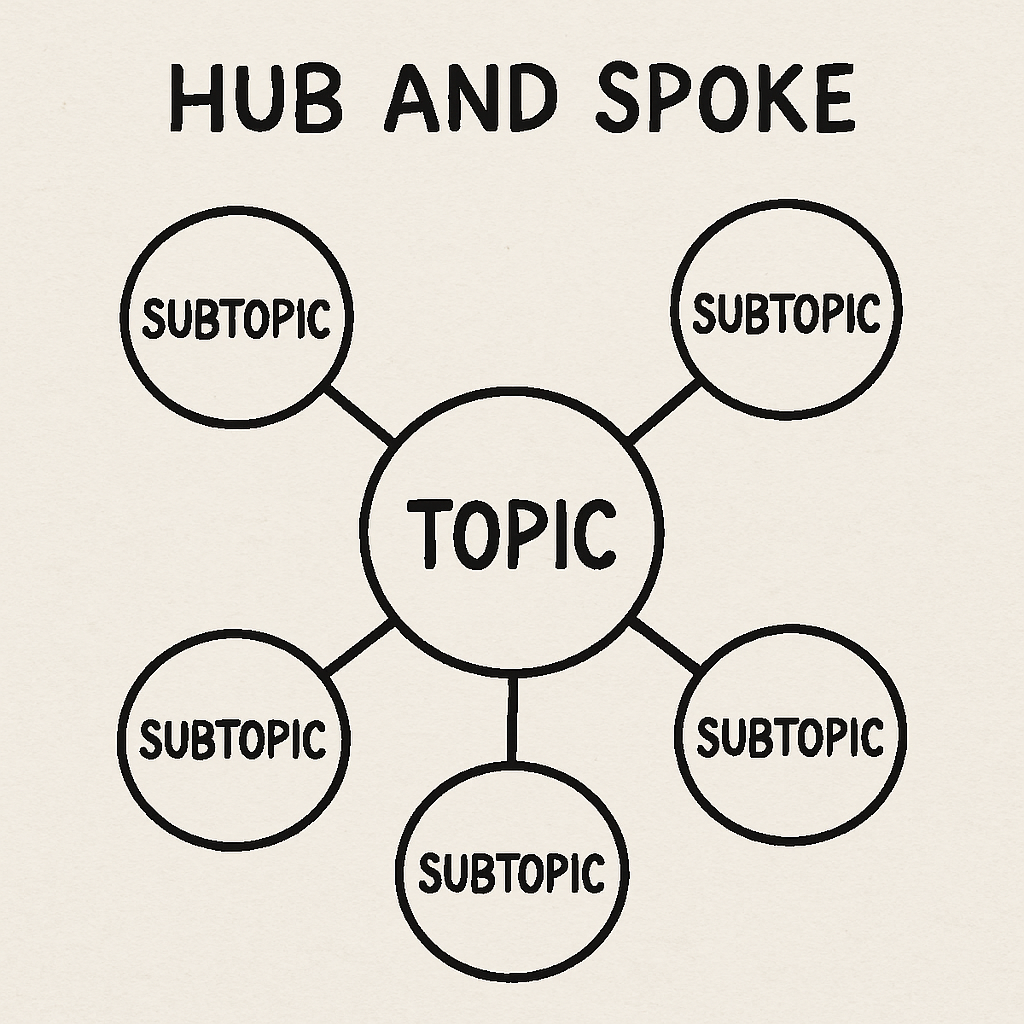
- Content Clustering (using AI) to create topical authority quickly and allow search engines to understand what topics are relevant to the content on your website.
- Optimization of Content (AI) to ensure that you are optimizing your content for search intent while still maintaining your E-E-A-T standards through human reviews and fact-checking.
- Automated Technical Audits – such as crawling errors, broken links, missing meta tags, performance issues, etc.
- Automated Tracking of SERPs and Competitors.
Finally, this article presents a very simple three-step process: 1. Select one keyword tool to utilize, 2. Optimize one existing webpage, and 3. Track conversions for 30 days so that small business owners can continue scaling their organic growth without feeling overwhelmed and allocate more time back to building their core business.
Recommended AI tools for small businesses for students in 2026
Top AI SEO Tools for Entrepreneurs: Top AI SEO tools help entrepreneurs improve rankings, automate optimization, and grow online visibility efficiently

Top AI SEO Tools for Entrepreneurs are no longer “nice-to-have” tools for small teams. Rather, they offer a practical way for small teams to optimize their websites for the highest possible rankings while minimizing time spent on optimization.
Top AI SEO Tools for Entrepreneurs allow you to analyze how much users intend to use your website based upon their search intent; how well you rank against competitors for each topic; and how strong a signal your website sends about its relevance for a particular query. In other words, Top AI SEO Tools for Entrepreneurs enable you to identify which specific types of optimizations will give you the greatest increase in qualified clicks and/or visibility as opposed to simply doing busywork.
Using Top AI SEO Tools for Entrepreneurs makes it easier to automate your keyword research. These tools cluster related keywords, allowing you to easily find long-tail searches with lower demand (i.e., less competition). The ability to quickly estimate the potential difficulty in ranking for those long tails also enables you to make better decisions about where to target.
As such, you will be able to target search queries that are more closely aligned with the things your real customers want to accomplish when using your website (e.g., buy something from you; compare options; solve an issue; etc.). Therefore, there is a higher likelihood that someone searching for one of those topics will become a customer.
Once you begin creating new content or updating existing content, Top AI SEO Tools for Entrepreneurs will help you create more effective content more quickly.
During this process, Top AI SEO Tools for Entrepreneurs can provide suggestions for organizing your content into an outline that mirrors successful formats being used within Google’s Search Engine Results Pages (SERPs); identify areas of missing information or subtopics that could strengthen your overall strategy; identify semantically relevant concepts/entities that may add additional credibility/authority to your content; and even assist with improving internal linking so your content can be found more easily once it has been created.
Ultimately, all of this guidance will help ensure that the content you produce answers questions clearly, demonstrates authority/expertise in the subject matter, and stays up to date as user behavior evolves over time.
From a purely technical perspective, Top AI SEO Tools for Entrepreneurs can automatically perform audits to detect crawl errors, broken links, duplicate content, slow-loading pages, and indexing issues. Traditionally, these issues would be discovered only after the fact — i.e., after the drop in traffic. However, having continuous monitoring and alerting capabilities will ensure that your website remains healthy and consistent — two key factors in maintaining long-term ranking stability.
To maintain consistency in usage, Top AI SEO Tools for Entrepreneurs work best in a straightforward workflow. First, select a high-priority page; next, implement the most critical optimizations first; lastly, track results and measure outcomes such as increases in rankings, CTR (click-through rate), and conversion rates. Perhaps most important of all, Top AI SEO Tools for Entrepreneurs empower entrepreneurs to automate many aspects of SEO, thereby accelerating online visibility. When used consistently, Top AI SEO Tools for Entrepreneurs transform traditional SEO into a repeatable growth system.
Example
A single owner who runs a small business preparing meals in advance used Top AI SEO Tools for Entrepreneurs to audit her home page and three of her blog articles. The tools indicated that searchers would like to see “weekly menu + pricing + delivery areas” on her home page, rather than a long story about her company.
The tools recommended making changes to the H1/H2 headers, creating a frequently asked questions (FAQ) section about the area where she delivers, and linking her “macro-friendly plans” to her pricing page. After making those changes, she tracked how much each article moved up or down in search rankings when users searched for “healthy meal prep near me.” She also saw more calls generated by customers using Google Maps results.
AI SEO Tool Comparison
| AI SEO Tool | Best For | Key Feature | Starting Price | AI Capability |
|---|---|---|---|---|
| Surfer SEO | Content Optimization | NLP Keyword Suggestions | $89/ month | AI SERP Analysis |
| SEMrush AI Toolkit | SEO Research | Competitor Intelligence | $129/month | AI Keyword Insights |
| Ahrefs | Backlink SEO | Site Explorer | $99/month | AI Trend Analysis |
| Frase.io | Conent Briefs | AI Content Optimization | $45/month | AI Writing Assistance |
| Jasper AI | AI Copywriting | SEO Content Generation | $49/month | Generative AI |
Example Insight:
Entrepreneurs using AI SEO tools can reduce manual optimization work by automating keyword research, audits, and content recommendations.
Source:
AI SEO Software: AI SEO software analyzes websites, keywords, and competitors to enhance digital marketing strategies effectively

AI SEO software helps marketers quickly make actionable decisions based on their analysis of complex data. Rather than making educated guesses or manually reviewing their websites, top AI SEO software reviews analyze a marketer’s website structure, content, and technical elements to provide them with a list of potential issues limiting their visibility, such as crawl errors, slow pages, thin content, and/or poorly linked web pages. For small teams who may be unable to spend the time required to diagnose these types of problems, this automation will allow them to focus more time on creating pages that generate results.
In addition to providing tactical support, top AI SEO software offers insights into keywords and search intent. The best part is that it groups related searches, enabling marketers to develop targeted, topical content. Long-tail opportunities are surfaced using top AI SEO tools.
The difficulty of ranking is estimated. Additionally, terms that competitors are ranking for but the user is not are highlighted. Competitive intelligence is one reason Top AI SEO Tools for Entrepreneurs are becoming increasingly popular. They offer the ability to view areas where competing businesses are succeeding and gaining traction from Google-preferred formats. As well as identifying areas where realistic gaps can be filled by the entrepreneur.
Top AI SEO tools also offer support within content optimization workflows. Recommendations on headings, entities, FAQs, and internal links are provided to help marketers ensure their webpage aligns with user search queries. Often, modifying an existing page using recommendations from top AI SEO software yields quicker returns than launching new content. Especially when modifying existing content that has previously been established as having some authority.
Lastly, Top AI SEO Tools for Entrepreneurs also strengthen performance tracking. Rankings, changes in SERP features, and content degradation are monitored. Along with simple reporting, they help connect the dots between all the work done on SEO and business outcomes such as leads, sign-ups, and sales. When utilized regularly, AI SEO software enables marketers to create digital marketing strategies that are more effective, trackable, and competitive.
Example
A B2B accounting startup uses an artificial intelligence (AI) search engine optimization (SEO) software package to identify how its “outsourced bookkeeping” landing page compares to that of top competitors. The software identifies typical search engine results page (SERP) patterns for potential customers of this service: they are looking for evidence or certification that the provider is qualified in this area; a clearly outlined and timely onboarding process; and specific examples related to their industry.
The software identified two missing components from the current version of the page: monthly close, accounts payable/accounts receivable (AP/AR), and QuickBooks online cleanup, and suggested adding a new section to the page that includes a three-step process and a short example case study. The company updated the page using built-in tracking metrics to monitor conversion rates and ranking position. After two weeks, there was an increase in demo request activity due to greater directness in answering questions at the decision stage.
SEO Automation Tools: SEO automation tools simplify repetitive optimization tasks, saving time and improving the accuracy of search performance

SEO Automation tools are designed to help companies reduce the time spent on routine tasks that slow down their SEO efforts. The tedious task of manually reviewing hundreds of webpages for broken links and/or rewriting identical information multiple times can be automated with an SEO automation tool.
In contrast, you will have the ability to run automated audits to review potential SEO issues on your website within minutes as opposed to hours/days. An additional advantage of automating your SEO processes is that it helps reduce human error and ensures accurate assessment of your website’s search performance by ensuring that all critical repairs do not go unnoticed.
Another significant benefit of using SEO automation tools is that they continuously monitor your website’s technical aspects. A few examples include identifying crawlers and indexing issues, finding redirect chains, detecting duplicate content, checking for missing metadata, and identifying Core Web Vitals issues. Because they are automated, you can identify technical issues quickly (before ranking/traffic declines) and prioritize fixes based on importance rather than relying on speculation.
SEO automation tools also help maintain on-page consistency across your website. Many platforms allow you to use them to standardize title tags and meta description tags, ensure proper internal linking, recognize cannibalization, and monitor content changes over time. For smaller teams, this is where Top AI SEO Tools for entrepreneurs provide practical value: while the team focuses on developing products, selling, and ensuring customer satisfaction, automation keeps your website clean.
In addition to supporting your website’s maintenance needs, SEO automation tools also enable better measurement. Examples of how they aid in measuring include tracking your website’s position rankings, alerting you to rapid changes in position, and enabling you to keep tabs on competitors’ movements. These capabilities are particularly beneficial for teams engaged in sprint-style weekly SEO initiatives where fast feedback loops are essential.
To gain optimal benefits from automation tools for your SEO efforts, create a simple workflow that automates audits, implements high-priority fixes, refreshes key webpage elements, and measures changes in rankings, click-through rates, and conversion metrics. When used regularly, the foundation established by implementing SEO automation tools provides a solid structure for repeatable growth, and Top AI SEO Tools for entrepreneurs enable this process to be repeated more quickly, more reliably, and at greater scale.
Example
An e-commerce business with just a few hundred items uses SEO automation tools to perform “weekly housekeeping” on its website. Each Monday, an automated crawl identifies three issues: (1) it has identified new 404 errors as a result of discontinued products; (2) some of the filtered category pages do not have proper canonical tags; and (3) there is a sudden increase in slow images.
For each of these issues, the owner assigns that issue to a checklist: (a) create auto-redirects for those old products; (b) add a canonical rule to the filtered category pages; (c) compress all of the images; and (d) resubmit all of the new/updated URLS to be indexed. The tool will send notifications if the number of web pages indexed by search engines for a particular category drops below a threshold. Because they detected problems before losing traffic, the company avoided a significant drop in revenue over the course of one month while refreshing its product line.
What Are GPT Models and How They Work
AI Keyword Research: AI keyword research tools discover high-ranking keywords and search trends to improve content strategy

Using Artificial Intelligence (AI) for keyword research in marketing and starting a business has moved away from guessing which keywords consumers will search. The process now reveals exactly what people are searching for, how many other companies are competing against them, and the exact intent of the person making that search.
Instead of using intuition to build a content plan, AI Keyword Research uses Machine Learning to look at enormous amounts of data – SERPS, Related Questions, Seasonal Patterns, and Competitor Rankings. As such, your plans should be aligned directly to the actual needs of your consumer base.
The major advantage of doing AI Keyword Research is the ability to use relevance with speed. Using tools to group similar keywords together into categories (themes), finding long-tail opportunities (terms that have lower competition but still get a lot of search volume), as well as identifying emerging trends before they become saturated, allows for better content hub creation, reduces keyword cannibalism, and assigns the correct term to the correct page. For smaller teams, this is why Top AI SEO Tools for Entrepreneurs are so valuable; They allow you to focus on keywords that can realistically bring qualified visitors to your website.
Additionally, AI Keyword Research provides an accurate strategy for creating content by associating specific keywords with intent. It can differentiate among informational queries, comparative searches, and purchase-ready terms, thereby allowing you to provide the content your users want (guides, listicles, landing pages, FAQs).
With the addition of AI Keyword Research, you’re no longer just picking out keywords – you’re also deciding upon the direction and scope of that content.
As a bonus to all of the previously listed benefits, AI Keyword Research provides competitive insights. Most AI Keyword Research platforms allow you to see which keywords your competitors currently rank for, where their strongest pages are located, and where there are gaps in their content. Therefore, it’s much easier to determine which subjects would give you the most return on investment based on your current time and budget.
When combined with continuous monitoring, Top AI SEO Tools for Entrepreneurs can inform you when trends change, new opportunities arise, or when a keyword begins to lose its value.
To successfully implement AI Keyword Research, begin with a central theme and work outward through clusters of relevant information. Prioritize each item based on its intent and ranking difficulty. Then continue publishing and updating your content regularly. Through consistent implementation, you’ll develop a smart content plan that stays aware of current trends.
AI Keyword Research Workflow
| Step | AI Process | Example |
|---|---|---|
| 1. | Seed Keyword Input | "AI SEO tools" |
| 2. | AI Trend Analysis | Detects rising searches |
| 3. | Search Intent Mapping | Informational + Commercial |
| 4. | Long-Tail Suggestions | "best AI SEO tools for startups" |
| 5. | Competition Analysis | Medium SEO difficulty |
| 6. | Content Opportunity | FAQ + comparison article |
Statistic:
AI-driven keyword research tools improve targeting accuracy by up to 45% compared to manual keyword discovery.
Source:
Finding Your Customers’ Digital Breadcrumbs: AI-Powered Keyword Discovery
By leveraging AI Keyword Research, you can stop guessing what your customers are typing, ultimately reducing keyword research time for solo founders by up to 70%. Instead of staring at blank spreadsheets, these automated platforms analyze the digital breadcrumbs your audience leaves behind to deliver immediate, actionable data.
Modern software aligns your strategy with search intent, ensuring your content matches what buyers actually want to accomplish. These tools also use predictive modeling (forecasting future success based on data patterns) alongside precise keyword-difficulty analysis to keep you out of high-competition traps dominated by major brands.
Unlike the old manual guessing game, smart platforms instantly provide three crucial metrics you would otherwise miss:
- Predictive difficulty: Real-time scoring of how hard it will actually be to rank.
- Intent categorization: Grouping phrases by whether users want to buy, learn, or compare.
- Seasonality trends: Forecasting exactly when specific topics will spike in popularity.
Once you uncover these high-value opportunities, organizing them effectively builds immediate topical authority.
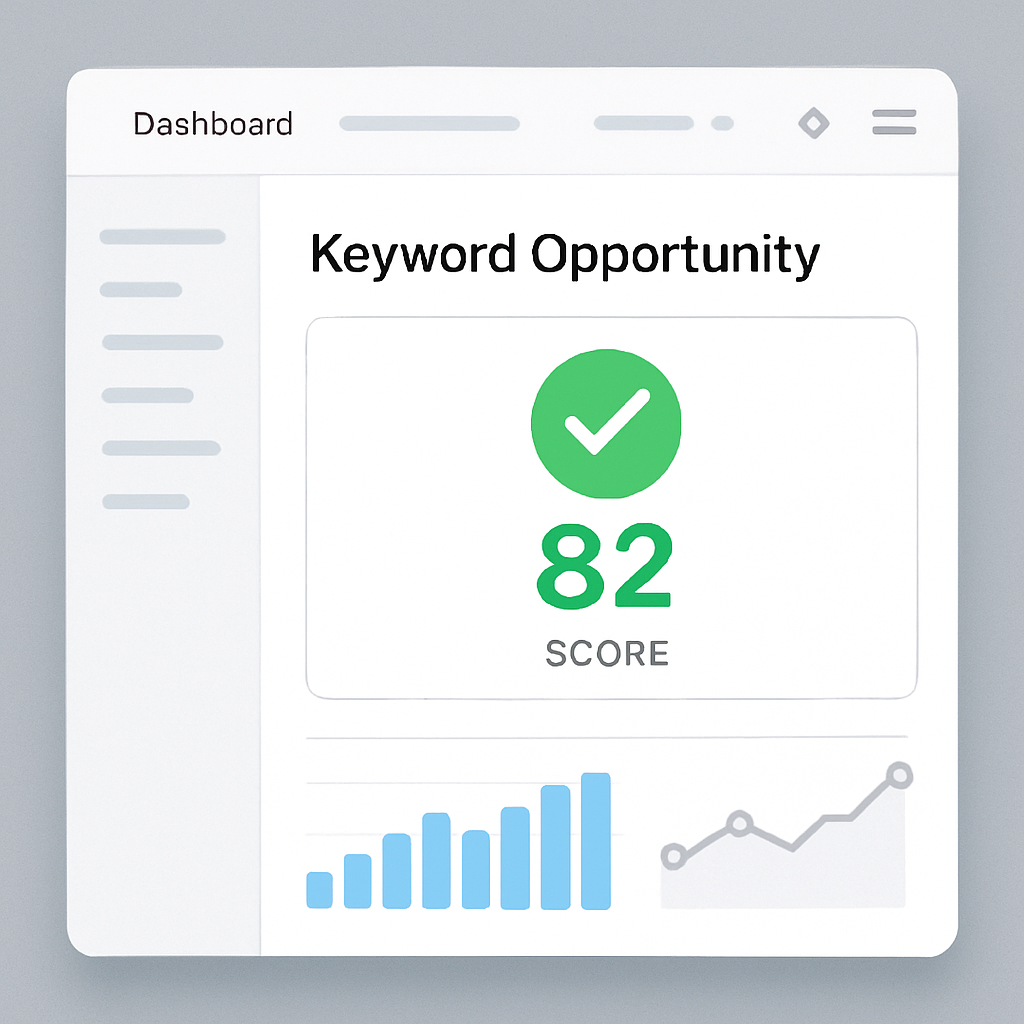
AI Content Optimization: AI content optimization improves readability, keyword placement, and search rankings for better audience engagement

AI Content Optimization helps teams make their current pages and drafts user- and search engine-friendly. A key advantage of AI Content Optimization over subjective editorial review alone is its ability to provide objective feedback on how well an article’s content matches expectations and is competitive in search engine rankings.
One key benefit of using AI Content Optimization is to enhance readability. Many types of optimization tools have been developed to identify areas of articles that may be considered “dense” (e.g., sentences that contain many words or concepts), poorly written/consistently formatted, with poor transition statements, and/or that do not clearly address the query. In addition, some of these tools support stronger engagement signals through optimized header tags, clear paragraph structure, and clearer takeaway messages.
Another way AI Content Optimization provides value is by incorporating keywords naturally into articles. Most optimization tools provide guidance on when to include primary and secondary keywords, specifically in titles headings/introductions/supporting content, while maintaining coherence in writing. This is a major reason why Top AI SEO Tools for Entrepreneurs are important: they allow you to quickly identify how to optimize your content rather than spend hours rewriting entire pages based on limited keyword adjustment needs.
In addition to optimizing keywords, most AI Content Optimization tools support topical completeness. Some of these tools generate recommendations for other topics/entities and subtopics, as well as FAQs typically found in articles ranked at the top of search engine results. The inclusion of these additional topic areas helps articles rank higher for more specific long-tail searches by more closely matching search intent. Additionally, using AI Content Optimization is particularly beneficial for updating older articles, as it yields greater ranking gains more quickly than developing an entirely new article from scratch.
Finally, Top AI SEO Tools for Entrepreneurs utilize AI-powered scoring and change tracking to measure the effectiveness of changes made to articles. Users can tie article optimizations to tangible outcomes such as article rankings, click-through rates, and conversions, and perform subsequent iterations with confidence.
Example
A SaaS founder creates an inventory forecasting guide that ranks number 2 in search results for “inventory forecasting.” Through using AI Content Optimization, she realizes her article has poor readability and lacks typical “how-to” questions people are looking for.
AI Content Optimization provides recommendations to improve this article’s readability by reducing paragraph length, adding clear headings, and creating a comparison table of different forecasting options.
It will also recommend incorporating your main term into both your introduction and H2 headline, as well as including additional related terms (e.g., safety stock and lead time variability).
After making these changes, the guide ranked as the top result for a definition-related search query, and readers spent less time viewing it because they could quickly find their answer.
AI Content Optimization Performance Statistics
| Optimization Factor | Before AI | After AI Optimization |
|---|---|---|
| Readability Score | 58 | 86 |
| Keyword Relevance | Medium | High |
| Organic CTR | 2.3% | 5.8% |
| Average Time on Page | 1m 12s | 3m 05s |
| Content Production Time | 6 Hours | 2 Hours |
Key Statistic:
Businesses using AI content optimization tools report an average 30% increase in organic traffic.
Source:
Building Topical Authority Without a Marketing Degree: AI Content Clusters
Pumping out random articles and hoping they attract buyers is a massive waste of an entrepreneur’s limited time. Today, search engines reward topical relevance over sheer quantity, meaning your website must demonstrate deep expertise in a specific subject rather than surface-level knowledge across many topics.
Instead of spending weeks on whiteboard planning, learning how to build a topical cluster with AI reduces this complex mapping process to a five-minute automated workflow. Leading AI Tools for SEO and AEO instantly outline a powerful structure, seamlessly organizing your main service offering alongside naturally interconnected supporting articles.
This strategic grouping allows algorithms to understand your site’s true context through latent semantic indexing—a sophisticated way of saying the system reads between the lines to recognize related industry terms rather than just counting exact keyword matches. Improving this semantic search accuracy for niche topics guarantees search engines understand your value, but converting those readers requires a distinctly personal touch.
Maintaining the ‘Human’ in AI Content: E-E-A-T and Search Intent Alignment
We’ve all seen AI content that sounds like a robot wrote it. Google notices this too, which is why its algorithm heavily rewards E-E-A-T (Experience, Expertise, Authoritativeness, and Trustworthiness). While AI dramatically speeds up your drafting phase, maintaining E-E-A-T signals in automated content ensures your business actually sounds like an experienced industry leader to both search engines and potential buyers.
Smarter AI Content Optimization acts as a tireless editor bridging this robotic gap. These modern tools use natural language processing to align search intent—meaning they analyze exactly how real people ask questions online. Instead of blind keyword stuffing, the AI suggests phrases that match the conversational tone of your future customers, ensuring you provide the exact answers they need.
To successfully balance this automated efficiency with genuine human connection, always use this quick checklist for reviewing AI-generated content before hitting publish:
- Check for personal anecdotes
- Verify facts
- Add unique brand voice
Blending human trust with algorithmic accuracy prepares your site for front-end success, a combination that must be supported by a solid technical foundation.
Machine Learning SEO: Machine learning SEO uses intelligent algorithms to predict trends and improve search engine performance

Machine Learning SEO uses large-scale predictive models on Search Data to help entrepreneurs make decisions faster. Unlike traditional methods of waiting until after a drop in rank to react to it, Machine Learning SEO allows you to analyze historical data about your search results, the behavior of your users, and the strategies employed by competitors to forecast future success. As such, Machine Learning SEO offers an enormous advantage for entrepreneurs with limited time.
One key function of Machine Learning SEO is its ability to forecast trends. Machine Learning models can identify emerging subjects, seasonal shifts, and changing intent signals before humans can manually assess these trends. Therefore, you may be able to create and/or update content when competition is lower and demand for the subject matter being optimized is higher. One reason many top AI SEO tools for entrepreneurs include machine learning in their functionality is its trend-forecasting capabilities.
Machine Learning SEO also offers the advantage of improving performance through prioritizing actions. Machine Learning SEO tools allow you to determine which page elements (such as how much content exists on each page, whether entities exist within the content on the page, internal linking strategy, and/or technical health) correlate with search engines’ assessments of your website.
The tool then provides recommendations based on those correlations as to where best to apply optimization efforts to produce the greatest returns. In other words, rather than optimizing all aspects of your website, Machine Learning SEO enables you to optimize only those areas that will yield the greatest value given your specific niche and current authority levels.
Finally, Machine Learning SEO can provide more effective segmentation. Through clustering similar keyword phrases together to form groups of related topics, grouping pages according to the type of information they contain and providing insight as to where two or more URL’s are competing for the same exact query; Machine Learning SEO can assist you in creating a more organized site architecture and developing more focused content that aligns with users expectations regarding what they would like to see in response to their queries.
To measure the effectiveness of changes made to your website using Machine Learning SEO, the top AI SEO tools for entrepreneurs utilize machine learning to link the changes you’ve made with the corresponding outcome(s). For example, did the number of clicks increase? Did your ranking improve? Did conversions occur? Machine Learning SEO can track these metrics consistently over time, allowing you to test new approaches, learn from the results, and refine your approach without spending hours or weeks reporting.
Example
A home services business utilizes machine learning and search engine optimization (SEO) to forecast which service pages will generate traffic due to seasonal variations. Over 3 years, the model analyzes past impression data alongside historical weather data. It predicts increased interest in “ac tune up” on a specific date, approximately two weeks before it did last season.
The marketing team updates the AC tune-up page before this predicted surge begins. This includes adding some pricing tiers, providing a short checklist for customers, and including customer testimonials from the local area. Additionally, the model identifies an increasing number of related questions (“how often should I have my air conditioner serviced”) and recommends adding an FAQ section. As a result, when demand surges for “ac tune ups”, the company’s page has been optimized previously; therefore, it generates traffic much quicker than its competition, which has no predictive capabilities.
Best AI Mode SEO Checking Tools: Best AI-powered SEO checking tools help identify website issues and optimize pages for higher rankings

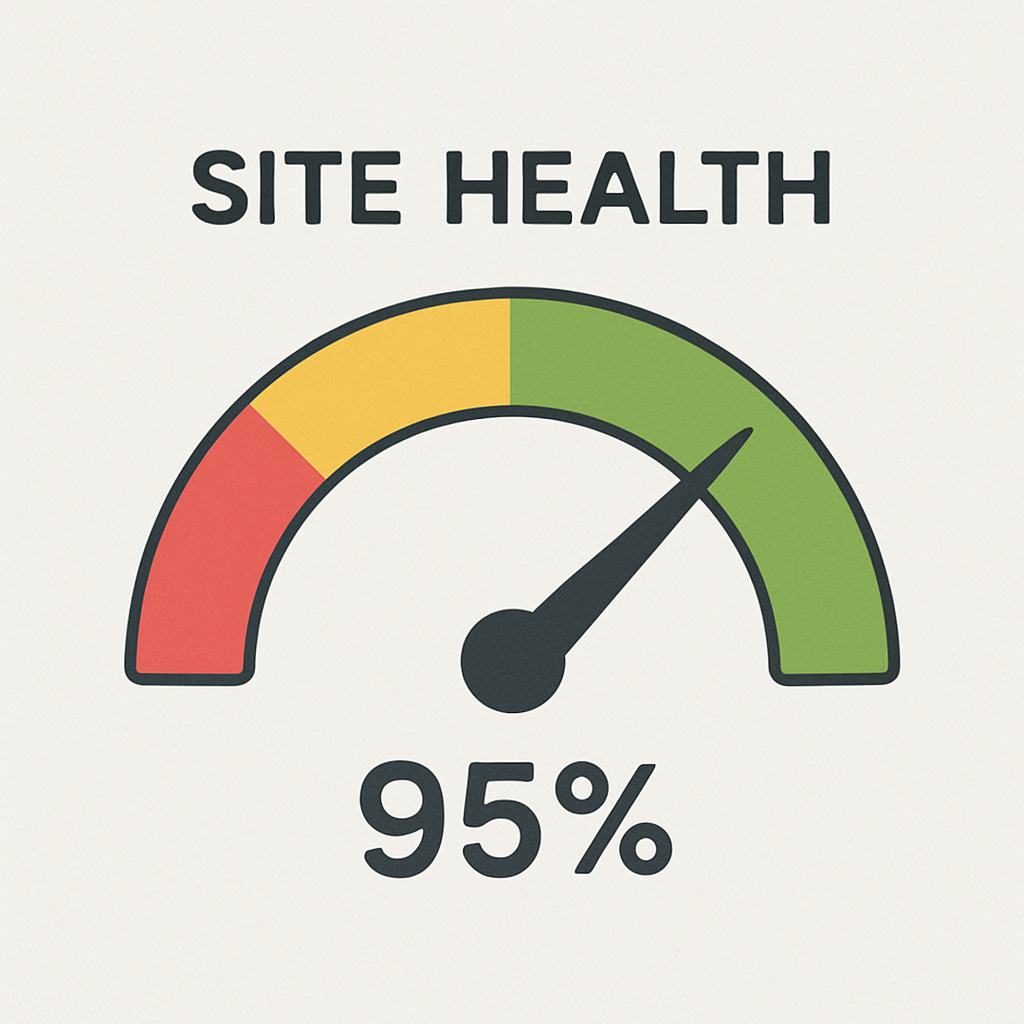
Technical Auditing is one of the best uses for the Best AI Mode SEO Checking Tools. They will point out common crawl errors, long redirects, dead links, duplicate content, missing meta tags, slow loading times, and indexing issues that prevent search engines from fully crawling and ranking your web property correctly. Also with alerting and scheduling capabilities, Best AI Mode SEO Checking Tools allow you to spot problems before they negatively affect your rankings.
Another great use for Best AI Mode SEO Checking Tools is On-Page Diagnostics. The tools look at title tags, heading tags (H1-H6), internal linking, and keyword usage, and recommend optimizations to better align with the user’s expectations. Some even compare your on-page elements to those of top-ranked sites for your keywords and provide recommendations for additional entities, FAQs, and sections that are expected but missing. Therefore, it is no surprise that many of the Top AI SEO Tools for Entrepreneurs offer check and score functions; these give you an immediate idea of where to begin fixing your SEO.
Additionally, Best AI Mode SEO Checking Tools improve measurability and accountability. The tools track progress over time (items changed, errors fixed, etc.) and show how the ranking responds to those changes. This provides a direct link between the optimization efforts and measurable results such as CTRs, leads, or sales. Ultimately, this creates a manageable process to perform SEO.
To achieve maximum ROI, you should combine the Best AI Mode SEO Checking Tools with a regular routine. Run a scan, correct the highest-impact technical issues, optimize the highest-priority pages, and follow up on the results. Regularly using Top AI SEO Tools for Entrepreneurs and currently checking services helps entrepreneurs identify their own website issues and optimize their individual pages to rank higher.
Small Team, Big Impact: Scaling Technical SEO Audits for Startups
Just like a car needs regular maintenance, your website requires constant under-the-hood checks to stay visible to Google. Finding broken links, missing tags, or slow pages used to mean digging through backend settings for days. Now, modern SEO Automation tools handle automating technical SEO audits for small businesses, instantly acting as your dedicated digital mechanic to spot hidden errors before they cost you customers.
These smart platforms do much more than fix invisible bugs; they keep you steps ahead of rivals through real-time SERP tracking and competitive intelligence. SERP (Search Engine Results Page) tracking simply means watching exactly where your website ranks on Google from day to day. By automatically monitoring these position changes, AI alerts you to new traffic opportunities without requiring you to manually search your own keywords every morning.
Regaining this lost time is the ultimate advantage for a stretched founder. Handing these complex diagnostics over to software easily reduces your technical overhead by 5 hours/week, freeing you to focus on building your product.
Technical SEO Audit Checklist for Startups
| SEO Audit Task | AI Automation Benefit | Recommended Tool |
|---|---|---|
| Broken Link Detection | Faster scanning | Screaming Frog |
| Core Web Vitals Analysis | Real-time performance checks | Google PageSpeed Insights |
| Meta Tag Optimation | Automated Suggestions | Rank Math SEO |
| Schema Validation | Rich result improvements | Schema.org Validator |
| Mobile Usability | Mobile-first testing | Google Search Console |
Statistic:
53% of users abandon websites that take longer than 3 seconds to load.
Source:
AI Tools for SEO and AEO: AI tools for SEO and AEO improve search visibility and optimize content for answer engine results.

AI Tools for SEO and AEO help brands remain visible as search goes from “10 blue links” to direct answers, summaries, and assistant-driven results. While prior generations of tools focused only on rankings (the position of an item), AI Tools for SEO and AEO focus on optimizing both the traditional organic performance of those items and the likelihood that the algorithm will select them for answer-style placement. For lean teams with limited resources, this broader view of optimization is increasingly important for sustainably driving traffic to their websites and building brand awareness.
The primary way AI Tools for SEO and AEO help is by aligning intent and format. They can analyze SERPs and user experiences to understand what format users prefer (definition, how-to list, comparison, etc.) and then match that format to your content. By doing this, you increase relevance and, in turn, the chances of earning featured snippets, “People also ask” visibility, and other rich results. This is why many top-rated AI SEO tools for Entrepreneurs are incorporating AEO capabilities into their workflows alongside their traditional SEO workflows.
Another advantage of using AI Tools for SEO and AEO is increased clarity of your content. These tools provide recommendations for short, concise answers, better headlines, FAQs, and entity coverage so that search engines and answer engines alike can easily extract the correct information. Many of these tools can suggest structured data and internal linking improvements, which increase the machine-readability of content and make it more likely to appear in answer-based searches.
Finally, measurement matters. Most top-rated AI SEO tools for Entrepreneurs have built-in ranking tracking, SERP feature tracking, and content update tracking. This allows you to see the correlation between optimization work done and visibility changes/ctrs over time. Alongside ongoing content refresh cycles, AI Tools for SEO and AEO enable a sustainable process to maintain performance as algorithms evolve.
Example
A clinic wants to be visible for “Is laser hair removal safe?” and is using AI Tools for SEO (Search Engine Optimization) and AEO (Answer Engine Optimization) to enhance its search engine rankings for both Answer Style Results and Rankings. The tool advises providing a direct 40-word Answer at the top of this page, followed by a Safety Section that includes Contraindications, Aftercare, and Citations.
Additionally, it provides recommendations for adding an FAQ Schema, Risks & Side-Effects Table, and Short Definitions for Terms such as “Fitzpatrick Skin Type.” The clinic has also added a “Who Should Avoid Treatment?” Bullet List to facilitate Fast Extraction from Answer Engines. In addition to improving organic Search Listings, the Page is now beginning to appear in “People Also Ask” sections and is receiving additional Appointment Form Submissions.
The 3-Step AI SEO Roadmap: From Strategy to Revenue
You once viewed search rankings as a frustrating black box. Now, you can use AI to confidently connect with the exact customers looking for your solution. Remember, a successful data-driven search engine optimization strategy isn’t about chasing vanity traffic—it’s about driving targeted profit.
To avoid overwhelm when scaling organic traffic for early-stage startups, implement this simple three-step workflow tomorrow:
- Pick one tool for keyword research.
- Optimize one existing page.
- Track conversion rate for 30 days.
By shifting this heavy lifting to intelligent software, you improve search accuracy and reclaim the essential time needed to build core business.
AI SEO Roadmap Framework
| Stage | Goal | AI SEO Action | Expected Outcome |
|---|---|---|---|
| Step 1 | Research | AI Keyword Discovery | Better trageting |
| Step 2 | Optimization | AI Content + Technical SEO | Higher ranking |
| Step 3 | Scaling | AI Automation + Analytics | Increased traffic & revenue |
Industry Insight:
Companies using AI-powered SEO strategies experience up to 67% faster content scaling than traditional SEO workflows.
Source:
Conclusion
The primary function of AI-driven Search Engine Optimization (SEO) has shifted from creating additional content and pursuing higher rankings — it is now focused on providing search results with improved relevance, so your company appears for the correct query, in the appropriate format, and at the most opportune time. For small business owners/entrepreneurs, the key benefit of utilizing top-tier AI-based SEO platforms lies within their ability to increase operational efficiencies by automating research, planning, optimization, and reporting processes as repetitive workflow processes that do not necessarily require an extensive team.
Additionally, AI can be used to discover keywords and, therefore, identify intent-based opportunities — and prevent becoming entangled in competitive areas. By utilizing AI for both content clustering and optimization, you can generate web pages that provide users with the information they expect — while continuing to uphold E-E-A-T standards through human review, fact-checking, and real experiences with your brand. Finally, AI can also automate technical auditing and SERP tracking for SEO purposes — thus reducing the probability of unreported errors — while increasing the speed of response regarding what is working.
Therefore, the best method for using AI in this manner is simple and consistent: use a single platform for research, optimize a single page, and track performance over time (e.g., rankings, click-throughs, and conversion rates). Once AI is utilized to perform the heavy lifting, you will have more clarity in making decisions — greater visibility — and more time to focus on building your business.
FAQs
- What are AI SEO tools, and how do they help entrepreneurs?
AI SEO tools use machine learning and automation to speed up keyword research, content optimization, technical audits, and performance tracking. They help entrepreneurs prioritize high-impact actions, reduce manual work, and improve rankings with fewer resources.
2. What does “better search accuracy” mean in SEO?
Better search accuracy means attracting the right visitors—not just more visitors—by aligning content with search intent. It focuses on matching what users actually want (to buy, compare, or learn) so traffic is more qualified and more likely to convert.
3. How does AI keyword research differ from traditional keyword research?
AI keyword research tools cluster related terms, identify intent, estimate difficulty, and spot emerging trends faster than manual methods. This helps you find long-tail opportunities and build a focused content strategy more efficiently.
4. Can AI content optimization replace a human writer or editor?
No. AI can improve structure, readability, topical coverage, and on-page SEO, but human input is still needed for accuracy, unique insights, brand voice, and trust signals like real experience and credible sourcing.
5. What’s the simplest way to start using AI for SEO without getting overwhelmed?
Start with one workflow: pick one target page, use an AI tool to identify keyword intent and areas for improvement, apply the top fixes, and track results for 30 days (rankings, click-through rate, and conversions).

Garikapati Bullivenkaiah is a seasoned entrepreneur with a rich multidisciplinary academic foundation—including LL.B., LL.M., M.A., and M.B.A. degrees—that uniquely blend legal insight, managerial acumen, and sociocultural understanding. Driven by vision and integrity, he leads his own enterprise with a strategic mindset informed by rigorous legal training and advanced business education. His strong analytical skills, honed through legal and management disciplines, empower him to navigate complex challenges, mitigate risks, and foster growth in diverse sectors. Committed to delivering value, Garikapati’s entrepreneurial journey is characterized by innovative approaches, ethical leadership, and the ability to convert cross-domain knowledge into practical, client-focused solutions.